The Soul of the Surface: Choosing Your Foundation Style
In an era where high-end auction sales for vanity pieces have plummeted—down 44% year-over-year in 2024 according to Marketplace—collectors and interior designers are returning to "real application value." This shift prioritizes the authentic, human connection found in hand-painted works over speculative financial assets. Central to this authenticity is the artist's choice of foundation: the spontaneous energy of Alla Prima versus the calculated depth of Traditional Layered Underpainting.
Choosing between these styles is more than an aesthetic decision; it is a choice about the "essential identity" of the work. Research from the University of Chicago suggests that consumers perceive a collapse in value when art lacks this human essence, a phenomenon that explains why a 100% human-created piece carries a 62% commercial premium over AI-generated alternatives, as confirmed by Columbia University.
This guide deconstructs the structural, chemical, and emotional differences between these two foundational techniques to help you secure a piece that resonates with your space and values.

Alla Prima: The Power of the Direct Stroke
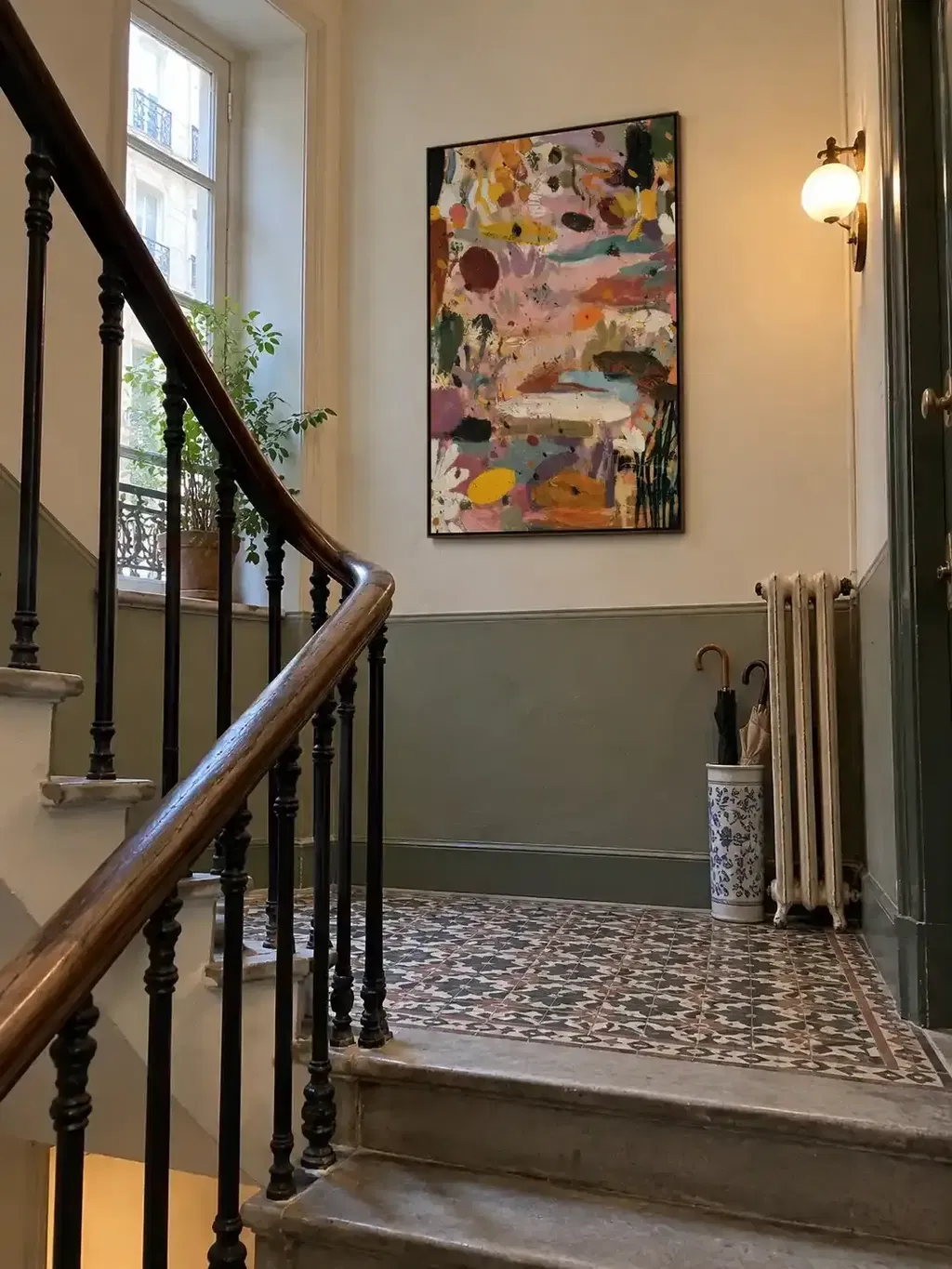
Alla Prima, or "at first attempt," is often referred to as wet-on-wet painting. It is a technique where the artist completes the work in one or a few sessions, applying wet paint over wet paint without waiting for layers to dry.
The Aesthetic of Immediacy
For the aesthetic-driven home improver, Alla Prima offers a sense of "whimsy" and "artisan craftsmanship"—trends that have seen search volume increases of 15% and 21% respectively, according to Zillow and Yelp data. The result is a surface with high tactile relief, where the physical movement of the artist's hand is frozen in time.
Logic Summary: Our analysis of the Alla Prima preference assumes that the "immediacy" of the brushwork acts as a visual proxy for authenticity, which is a primary driver for modern luxury consumers seeking to distance themselves from mass-produced digital prints.
Technical Mastery vs. "Muddy" Pitfalls
While Alla Prima appears spontaneous, it requires rigorous technical discipline. Without specific controls, the colors can quickly blend into an unintended "muddy" gray. Experienced practitioners follow five core heuristics to maintain clarity:
- Fat-over-Lean Ratios: Managing the oil content to ensure adhesion.
- Limited Palette: Typically using only 5–7 high-saturation pigments.
- Value Grouping: Keeping light and dark masses distinct.
- Clean Brush Discipline: Using a fresh or cleaned brush for every major color shift.
- Decisive Application: Avoiding "over-working" the paint, which destroys the micro-texture.
Material Intensity
Contrary to popular belief, Alla Prima can be more resource-intensive than layering. Because the artist cannot rely on thin glazes for depth, they often use 20–30% more premium, high-pigment paint per session. This is further complicated by the use of fast-drying mediums like alkyd resins, which can cost $15–$25 per 100ml.

Traditional Layered Underpainting: The Architecture of Light
Traditional layering is a multi-stage process that begins with a "structural underpainting"—a monochromatic or simplified version of the final image that establishes tonal values and composition.
The Structural Foundation
In this style, the initial layers provide the "bones" of the painting. By using a Grisaille (gray-scale) or Imprimatura (thin stain), the artist creates a roadmap for light and shadow. This method is favored for complex tonal compositions where precision is paramount, such as high-end portraits or surrealist custom pieces, which Design State of Mind identifies as a major trend for 2026 luxury interiors.
The Drying Interval Challenge
The primary barrier for traditional layering is time. Each layer must be "touch dry" before the next is applied to prevent the upper layers from cracking as the bottom layers shift during curing.
- Wait Times: Typically 2–4 weeks between major applications.
- Design Impact: For interior designers, this requires planning for Oil Painting Curing Timelines to avoid installation delays.
| Feature | Alla Prima (Direct) | Traditional Layering |
|---|---|---|
| Visual Texture | High Relief / Impasto | Smooth / Glazed |
| Completion Time | 1–3 Days | 4–12 Weeks |
| Material Use | Heavy Paint Consumption | Economical (with Glazes) |
| Risk Factor | "Muddy" Colors | Cracking / Delamination |
| Best For | Spontaneity & Energy | Tonal Depth & Realism |
Methodology Note: This comparison table is based on common studio heuristics and material science data regarding Oil vs. Acrylic Visual Weight. Ranges are estimates based on standard artist-grade material performance.
Material Science: Durability and the "Cracking" Myth
A frequent concern for collectors is whether the thick application of an Alla Prima work is less durable than a systematic layered piece.
The Role of Medium Chemistry
Durability is less about the number of layers and more about the chemistry of the binder. According to research published in JustPaint, oil films undergo oxidative cross-linking over decades. If an Alla Prima work is executed with a proper oil-to-paint ratio (typically 1:3 to 1:5), it can achieve archival stability comparable to layered works.
However, thick applications are sensitive to environmental shifts. Data from ResearchGate shows that under 83% humidity, certain pigments can swell by over 7%, while 100°C thermal aging can cause catastrophic binder melting in oil-heavy works.
Support Induced Discoloration (SID)
One non-obvious "gotcha" for collectors of heavily textured art is Support Induced Discoloration. As noted by Golden Artist Colors, water-soluble impurities in cotton or linen canvases can be drawn into the paint film as it dries, causing a yellow or brown tint. This is especially prevalent in works using thick transparent mediums. Ensuring your artist uses proper Sizing and Priming is the best defense against this chemical decay.

Health, Safety, and the "Toxic Palette"
For the health-conscious home improver, the choice of paint is as important as the style. Indoor air quality is a significant concern, with the EPA warning that indoor pollution can be deadlier than outdoor.
The Heavy Metal Reality
Traditional oil pigments often contain heavy metals. The International Agency for Research on Cancer (IARC) classifies cadmium and its compounds as Group 1 carcinogens. While ECHA data suggests that artists' paints contribute negligibly to overall environmental cadmium levels, the risk of acute inhalation of pigment dust remains high for the artist.
- Lead White vs. Titanium White: Lead white (lead carbonate) is strictly restricted in the EU (REACH Annex XVII) if concentrations exceed 0.1%. Most modern artists have transitioned to Titanium Dioxide, which now dominates 90% of the white pigment market due to its superior hiding power and safety (NCBI).
The VOC and Microplastic Factor
Solvents like turpentine emit high levels of Volatile Organic Compounds (VOCs). Princeton University warns that chronic inhalation of these vapors can cause central nervous system damage.
- Eco-Friendly Alternatives: Using walnut oil or linseed oil can eliminate the need for toxic solvents.
- The Acrylic Trade-off: While acrylics are lower in VOCs, they are essentially liquid plastics. Plymouth University has identified spray paint and acrylic residues as significant sources of microplastic pollution in soil.
The Commercial and Psychological Value of Original Art
Beyond the canvas, the presence of original, hand-painted art has measurable impacts on property value and human well-being.
Boosting Real Estate ROI
For commercial developers and homeowners, commissioning original work is a strategic investment. A Royal Society study found that neighborhoods with higher "art" geo-tags experienced greater relative house price gains. Furthermore, public art projects, like Chicago’s Millennium Park, have driven $1.4 billion in real estate-related growth (NCREALTORS).
Biophilic Design and Mental Health
Integrating nature-themed murals—a core application of biophilic design—can significantly improve occupant health. A review by the University of Pennsylvania noted that 73% of patients reported mood improvements in art-enriched environments. This "healing" effect is not just psychological; WHO reviews of over 3,000 studies confirm that art interventions can alter clinical indicators for mental illness.
Logic Summary: Our recommendation for "Biophilic Hand-Painted Series" in corporate or healthcare settings is grounded in the 30% reduction in cognitive fatigue observed in high-density office environments when nature-based design is implemented (University of Hawaii).
Making the Choice: A Decision Framework
To determine which foundation style is right for your project, consider the following scenario-based analysis.
Scenario A: The Modern Residential Focal Point
- Style: Alla Prima.
- Why: The high-relief texture and visible brushstrokes provide the "authenticity cues" that modern homeowners crave. It pairs perfectly with minimalist decor by adding "visual weight" without cluttering the space.
- Tip: Look for works with a Heavily Textured finish to maximize light interaction.
Scenario B: The High-End Corporate or Hospitality Lobby
- Style: Traditional Layered Underpainting.
- Why: These spaces require "absolute authenticity" and long-term durability. The systematic layering process allows for large-scale works with complex tonal gradients that remain stable over decades of public exposure.
- ROI: High-quality public art acts as a "permanent physical billboard," driving foot traffic and social cohesion (Avenue of the Arts Study).
The Artist’s Hand as a High-Tech Mechanism
At its core, buying hand-painted art is consuming the biochemical crystallization of human attention. Research from Stockton University reveals that top painters possess a robust neural control that suppresses "perceptual constancy illusions," allowing them to see the world with a clarity that machines cannot yet replicate.
Whether you choose the immediate energy of Alla Prima or the architectural depth of layering, you are investing in a non-renewable cultural heritage asset. As the Creative Economy Outlook notes, the creative industry now accounts for 3.1% of global GDP—a testament to the enduring economic and emotional power of the human touch.
YMYL Disclaimer: This article is for informational purposes only and does not constitute professional medical, legal, or financial advice. Art materials, particularly oil paints and solvents, can contain hazardous chemicals. Always consult a qualified professional regarding studio safety and indoor air quality standards. For medical concerns related to pigment exposure, seek advice from a healthcare provider.