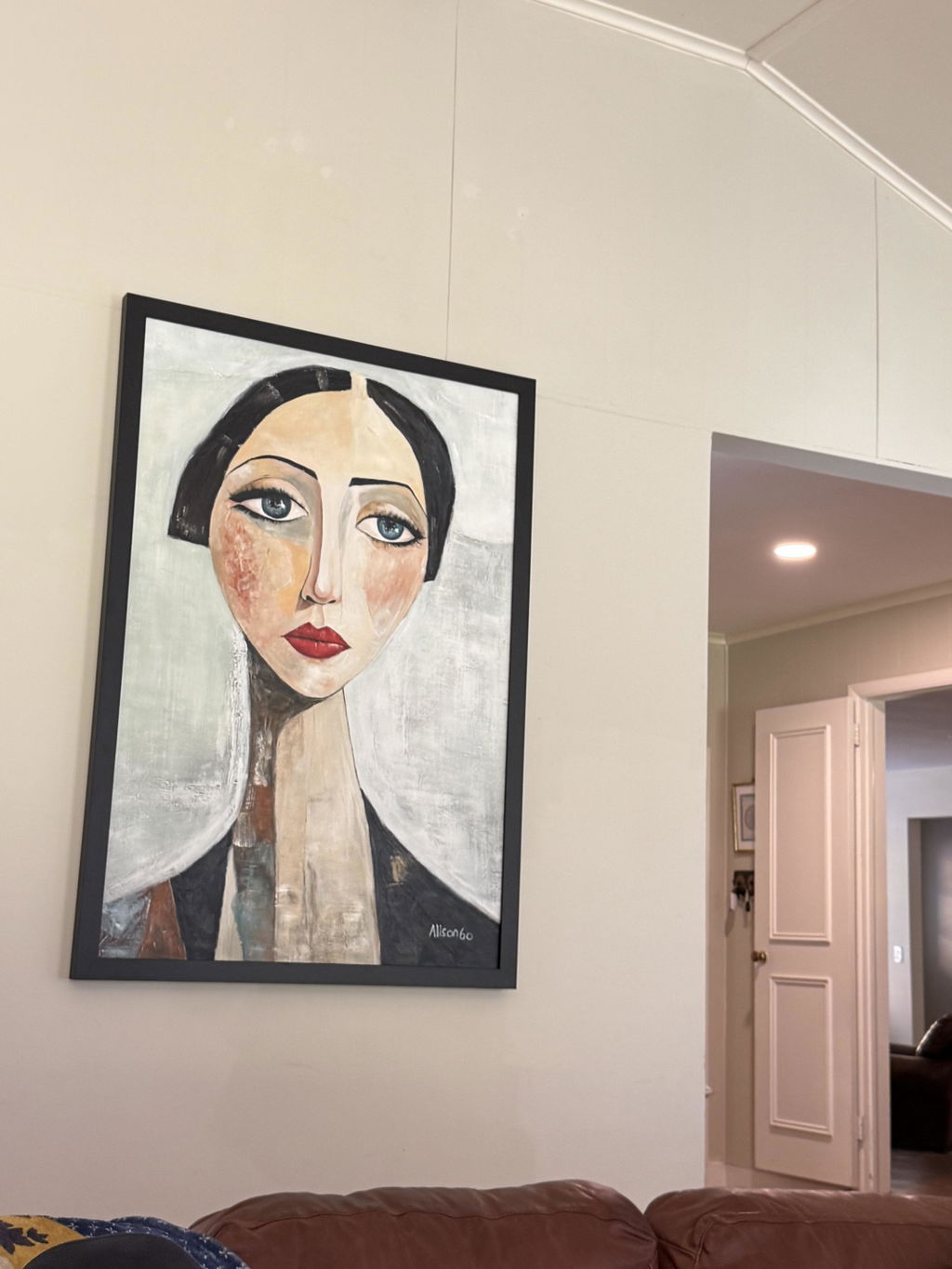
Large art delivery dimensions cover two separate checks: the size of the finished piece on the wall and the size of the fully packed shipment on its way into your home. Before production or dispatch, measure the route from the curb or loading area through doors, hallways, turns, stairs, elevators, and the final room. Then ask the seller for the exact outer package dimensions, weight, orientation requirements, and handling instructions. Measuring the wall or the largest doorway alone does not establish that an oversized shipment will fit.
Map the Route From Curb to Wall
Survey one continuous route from the delivery vehicle or loading area to the intended wall. The tightest usable opening, turn, landing, or staging point—not the wall dimensions—usually controls access. Treat this survey as a screening tool, and have the seller or carrier review difficult geometry against the final packed shipment.
Sketch the route in travel order and add photos where a measurement may not tell the whole story. Include:

- Parking, loading-zone, driveway, or curb access
- Exterior and building-entry doors
- Interior doors, thresholds, trim, and hardware
- Hallways, usable depth, and tight turns
- Stair flights, railings, landings, low ceilings, and approaches
- Elevator door opening, cab space, landing, and approach route
- The route to the final room and a clear staging area
Apartment and condo delivery adds a separate coordination layer. Loading zones, receiving hours, service-elevator reservations, insurance or documentation requirements, and building access rules cannot be resolved by measuring the route alone. Ask property management and the carrier which procedures apply to your address. For additional elevator and stairwell planning, use the building's requirements and the shipment's specifications together rather than assuming a standard process.
Record the Dimensions That Control Fit
Before ordering oversized wall art, record the smallest usable measurements along the entire route and pair them with the exact packed details requested from the seller. Measure clear, usable space rather than nominal construction dimensions, and document unusual geometry with a sketch or photo.
At a minimum, put these items on a route sheet:

- Clear width, height, and usable depth at each opening, hallway, landing, and staging area
- Tight turns, obstructions, pivot space, stairs, and elevator approaches
- Packed length, width, height, depth, and weight for the exact configuration
- Orientation, handling, and unpacking requirements supplied by the seller or carrier
Large Art Delivery Dimensions to Record
Request these large art delivery dimensions for the exact frame, stretcher, mounting, and packaging configuration:
- Packed length, width, height, and depth
- Packed weight
- Required orientation during handling, if any
- Handling or unpacking instructions
- Clear width and height at every opening
- Usable depth through hallways, entries, and landings
- Tight-turn locations, obstructions, and pivot space
- Stair and elevator measurements
- Parking-to-entry distance and staging-space dimensions
A simple route sheet keeps the information organized:
| Route point | Clear width | Clear height | Usable depth or turn space | Obstruction | Photo or document |
|---|---|---|---|---|---|
| Loading area or curb | Record | Record | Record | Distance, slope, gate, or other issue | Route photo |
| Entry and interior doors | Record | Record | Record | Trim, hardware, threshold, or railing | Opening photo |
| Hallway or turn | Record | Record | Record | Corner, furniture, low ceiling, or pivot limit | Sketch or photo |
| Stairs or elevator | Record | Record | Record | Landing, cab, railing, or reservation rule | Building information |
| Final room and staging area | Record | Record | Record | Furniture, pets, blocked exit, or wet area | Staging photo |
Record the narrowest usable point, not just the widest opening. If the route changes after the frame, carton, crate, or mounting method changes, repeat the check.
Doorways, Hallways, and Tight Turns
Use the actual clear opening with the door opened as far as safely practical, while noting trim, hinges, handles, thresholds, railings, and other obstructions. Hallway width alone does not describe a turn: the package may need room to pivot, tilt, or change orientation. Measure the route into the intended room separately from the route into the home, because a piece can clear the entry and still encounter a tighter interior turn.
Elevators, Stairs, and Building Entries
Elevator capacity alone does not establish access. Check the clear elevator-door opening, usable cab dimensions, landing, approach, and any turn between the elevator and the final room. For stairs, record the narrowest flight, landing, railing, ceiling, and turn. Confirm whether the building requires a reservation, a service elevator, a specific loading location, or advance notice.
| Access point | Measurements to record | Detail to confirm | Evidence to provide |
|---|---|---|---|
| Building entry | Clear opening, threshold, and approach | Receiving hours and entry rules | Entry photo and route sketch |
| Elevator | Door opening, cab space, landing, and approach | Reservation, service-elevator, and carrier rules | Building instructions and photos |
| Stairs | Flight width, landing, railing, ceiling, and turns | Whether the delivery service uses the stairs | Stair photos and measurements |
| Loading area | Vehicle-to-entry distance and obstructions | Parking, loading window, and appointment process | Loading instructions and site photos |
Separate Artwork Size From Shipment Size
Use the installed artwork size to plan the wall, but use the exact outer packed dimensions and weight to plan delivery access. The frame or stretcher depth, carton or crate, corner protection, and other packaging can make the shipment larger or heavier than the finished piece. Do not infer the packed size from a listing image or the finished dimensions.
| Detail | What it tells you | Who should confirm it |
|---|---|---|
| Installed artwork length and width | Whether the finished piece suits the wall | Seller and buyer |
| Frame or stretcher depth | Part of the finished object's profile | Seller |
| Protective packaging or crate | Added length, width, height, and depth | Seller or packer |
| Final outer package dimensions | The geometry to compare with the route | Seller or carrier documentation |
| Package weight | The handling and service-planning input | Seller or carrier documentation |
| Orientation requirements | Whether the shipment must stay in a particular position | Seller and carrier |
| Handling instructions | How arrival and unpacking should be organized | Seller or carrier |
Ask for the final packed length, width, height, depth, weight, orientation limits, and handling requirements before production or dispatch. If the seller cannot provide them, the access decision is unresolved. Recheck the route if the frame, mounting, packaging, shipping method, or delivery address changes.
Send a Complete Access Brief Before Dispatch
Give the seller and carrier a written access brief instead of saying only that the property has “tight access.” The brief should connect the exact shipment to the route, building rules, receiving plan, and requested service level.
Use this handoff sequence:
- Request the final packed specifications and handling requirements for the exact order.
- Send the route measurements, photos, building instructions, receiving plan, and requested service level to the seller or carrier.
- Save written confirmation of the service scope, access restrictions, and terms that apply if delivery cannot be completed.
The Access Details to Put in Writing
Include:
- Full delivery address and property type
- Curb, driveway, loading-zone, or dock instructions
- Narrowest clear opening and the location where it occurs
- Hallway, turn, stair, and elevator details
- Parking-to-entry distance and any gate or access-code information
- Building receiving hours, appointment rules, and service-elevator requirements
- Staging area and intended room
- Contact person and delivery-day phone number
- Route photos and a simple sketch showing difficult turns, landings, thresholds, railings, or low ceilings
Ask the seller or carrier to review the route against the final packed specifications. Save the written response with the order. If the address or production configuration changes, send the brief again and request confirmation before dispatch.
Questions About Service, Charges, and Exceptions
Ask these order-specific questions and request written answers:
- Who unloads the shipment, and where does the service end: curbside, threshold, building entrance, or room?
- Is inside placement included, or is it a separate service?
- Is unpacking included? Who removes cartons, crates, or packing materials?
- Is an appointment required, and who coordinates building access?
- What restrictions apply to stairs, elevators, gated entries, or long paths from parking?
- What refusal, reattempt, storage, extra-handling, or return terms apply if access fails?
Do not assume that a standard delivery service includes room placement, unpacking, or a second attempt. Those are separate questions, and the answers depend on the seller, carrier, shipment, and address.
Prepare the Receiving and Unpacking Area
Choose a clear, dry, well-lit staging area close to the final room before the appointment. Clear furniture, rugs, pets, children, trip hazards, and blocked exits from the route, and make sure the area can remain available while the shipment is inspected and unpacked.
Plan where the package will be received and checked so it is not left unnecessarily in a driveway, hallway, elevator lobby, or loading area. Keep the seller's inspection and unpacking instructions available, particularly for framed, textured, or freshly painted work. You can also review guidance on safe lifting points and unpacking fresh oil art as general preparation, but those resources do not replace the shipment's instructions.
Confirm who handles unloading and placement. For a heavy or awkward package, arrange appropriate help or a service that matches the shipment rather than assuming solo handling is suitable. Follow the seller's or carrier's instructions; do not improvise lifting methods based on the finished artwork's appearance.
Choose the Next Step From the Access Results
Use the results to decide whether to order, pause, or reconfigure—not to guess about fit.
- Order after confirmation: The route measurements, final packed specifications, orientation requirements, building approval, receiving plan, and service scope are documented and align for the specific order.
- Pause and request information: Any critical package dimension, weight, handling requirement, building approval, service term, refusal condition, or reattempt term remains vague or unavailable.
- Change the configuration and restart the check: A smaller, differently oriented, or seller-confirmed modular configuration may suit a constrained route, but only if its own packed specifications and service terms are documented. You can compare large vertical art with horizontal wall art as navigation options, not as proof that a particular piece will fit.
Recheck the access brief immediately before dispatch if the address, frame, packaging, mounting, production configuration, or carrier arrangement changes. If one critical fact remains unresolved, pause the order and ask for confirmation rather than treating an estimate as permission to proceed.
FAQs
These questions address alternate routes, measurement limits, failed access, address changes, and building scheduling. The right next step for a specific order depends on the packed specifications and the written requirements from the seller, carrier, or property.
Can a Large Canvas Be Delivered Through a Garage Instead of the Main Door?
Possibly, if the seller or carrier accepts the alternate route and the address and unloading instructions are updated. Measure from the garage to the final wall, including openings, turns, and staging space. Confirm that the area is dry, clear, and suitable for inspection and unpacking.
Should I Measure a Diagonal Opening for a Large Framed Painting?
A diagonal measurement can describe an opening or turn, but it cannot establish fit by itself. Package depth, pivot space, thresholds, and the geometry before and after the opening also matter. Share the measurements, sketch, or photos with the seller or carrier.
What Happens If Oversized Art Cannot Reach the Final Room?
Do not assume a particular workaround or fee outcome. Contact the seller or carrier and review the order's refusal, reattempt, storage, return, and extra-handling terms. Follow the delivery instructions for preserving the shipment's condition and ask what next step applies.
Can I Change the Delivery Address After the Art Is in Production?
Submit the change through the order channel before dispatch. It may affect production status, carrier booking, building rules, and the route survey. Reconfirm the packed specifications and access brief for the new address before relying on the original plan.
How Far in Advance Should an Apartment Reserve Its Freight Elevator?
There is no universal lead time. Contact property management when the delivery window is known and ask about reservations, loading location, receiving hours, documentation, and service-elevator rules. Then give the confirmed details to the seller or carrier and verify that the delivery window matches.