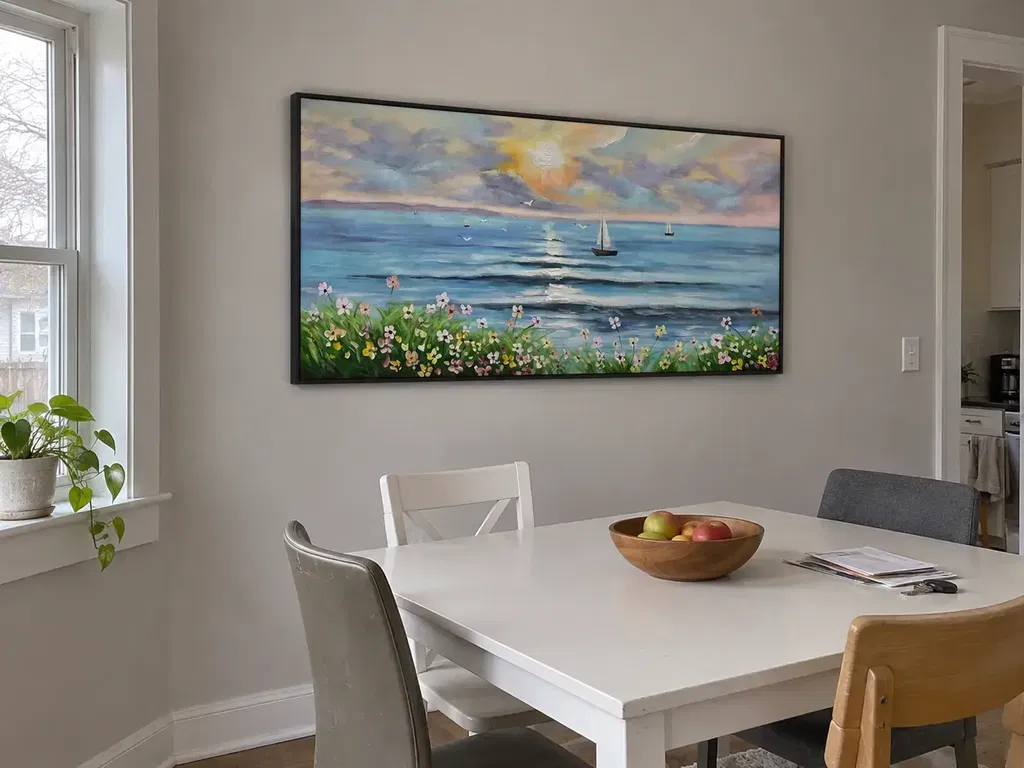
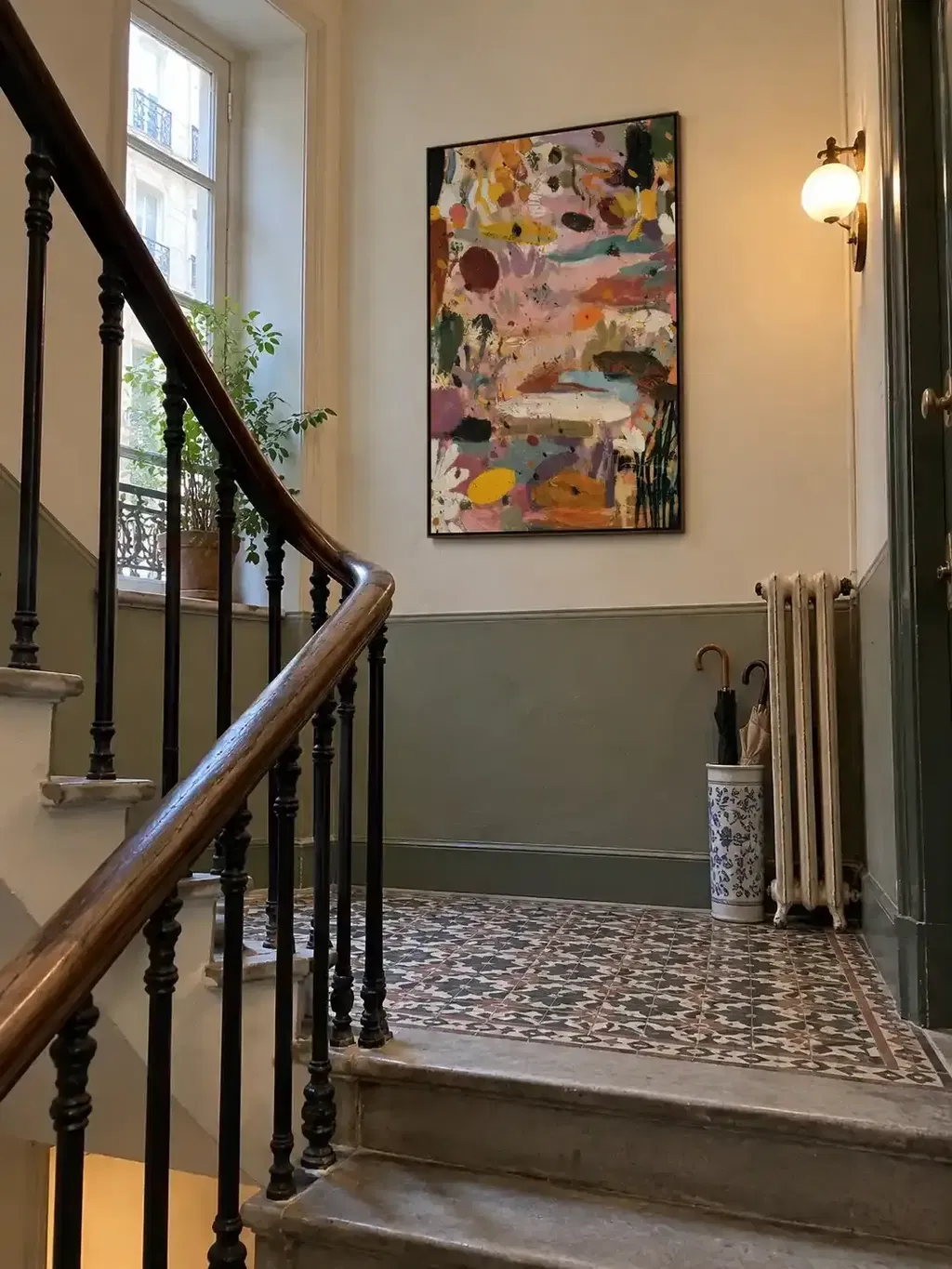
The Technical Foundation of Luxury: Why Absorbency Dictates Art Longevity
The global art market is undergoing a profound structural shift. While high-end auction sales for vanity assets plummeted 44% year-over-year in 2024 according to Marketplace, the demand for authentic, hand-painted works with real application value remains resilient. Data from the Artsy 2024 Art Market Report shows online gallery sales growing 15%, signaling that modern collectors prioritize the tangible "essential identity" of a physical work over digital replicas.
For the interior design enthusiast or the commercial developer, this "essential identity" is not just a philosophical concept; it is a physical one rooted in materials science. The most common frustration we see in custom commissions is "sinking"—a phenomenon where a vibrant, wet painting dries into a dull, chalky, and uneven surface. This isn't a failure of the artist’s vision, but a failure of the foundation. Managing the absorbency of the canvas is the invisible craft that separates a premium investment from a disposable decoration.
The Science of "Sinking": How Foundations Steal Your Sheen
In our studio, we treat the canvas not as a passive surface, but as a dynamic, porous system. Every canvas roll, even those from the same manufacturer, possesses non-uniform absorbency. If the foundation is too "thirsty," it aggressively draws the binder (oil or acrylic polymer) out of the paint and into the substrate.
When the binder is absorbed, the pigment particles are left "starved" on the surface without enough medium to encapsulate them. This leads to two catastrophic results:
- Chromatic Collapse: Without a smooth binder film to reflect light, the colors lose their saturation.
- Structural Fragility: According to the Getty Conservation Institute, when the binder-to-pigment ratio drops too low (sometimes as low as 0.1%), the paint film undergoes rapid decay and becomes prone to flaking.
The Tactile Testing Method
Experienced artists develop a specialized visual-tactile sensitivity to detect these risks before the first stroke is even applied. We use a "diluted wash test": lightly brushing a mixture of solvent and a trace of pigment across the surface. If the paint "sinks in" instantly, the priming is insufficient. To combat this, we employ a 2-3 layer priming approach. The first layer seals the pores, while subsequent layers build a uniform thickness that preserves the pigment's vibrancy.

Optical Mechanics: Why Texture Equals Value
The premium pricing of hand-painted murals is often justified by their "glow," a quality that digital prints cannot replicate. This is governed by the Kubelka-Munk equation, which explains that pigment reflection is dominated by absorption and scattering coefficients. According to Getty color science research, the surface refractive index is the root cause of color saturation.
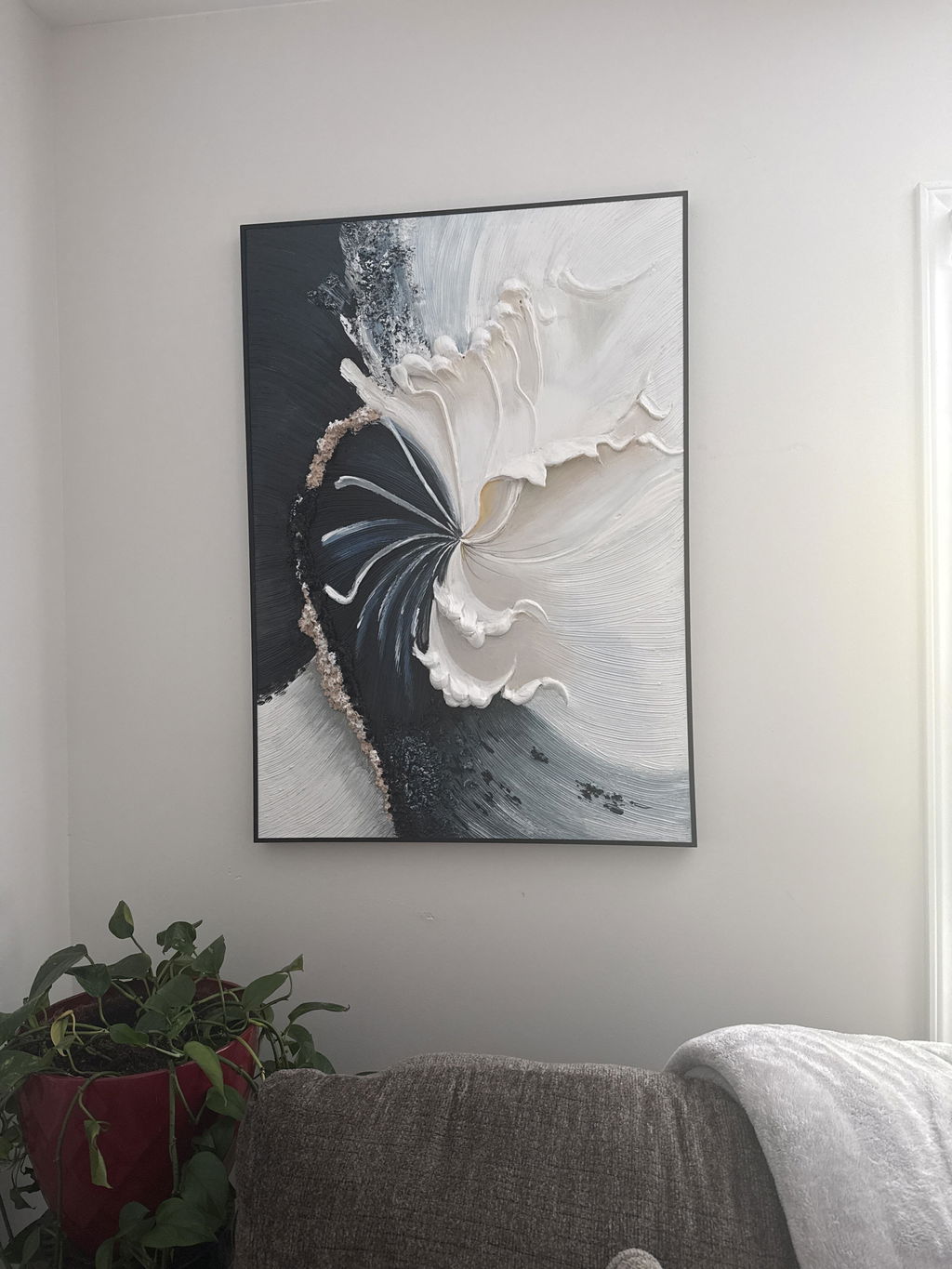
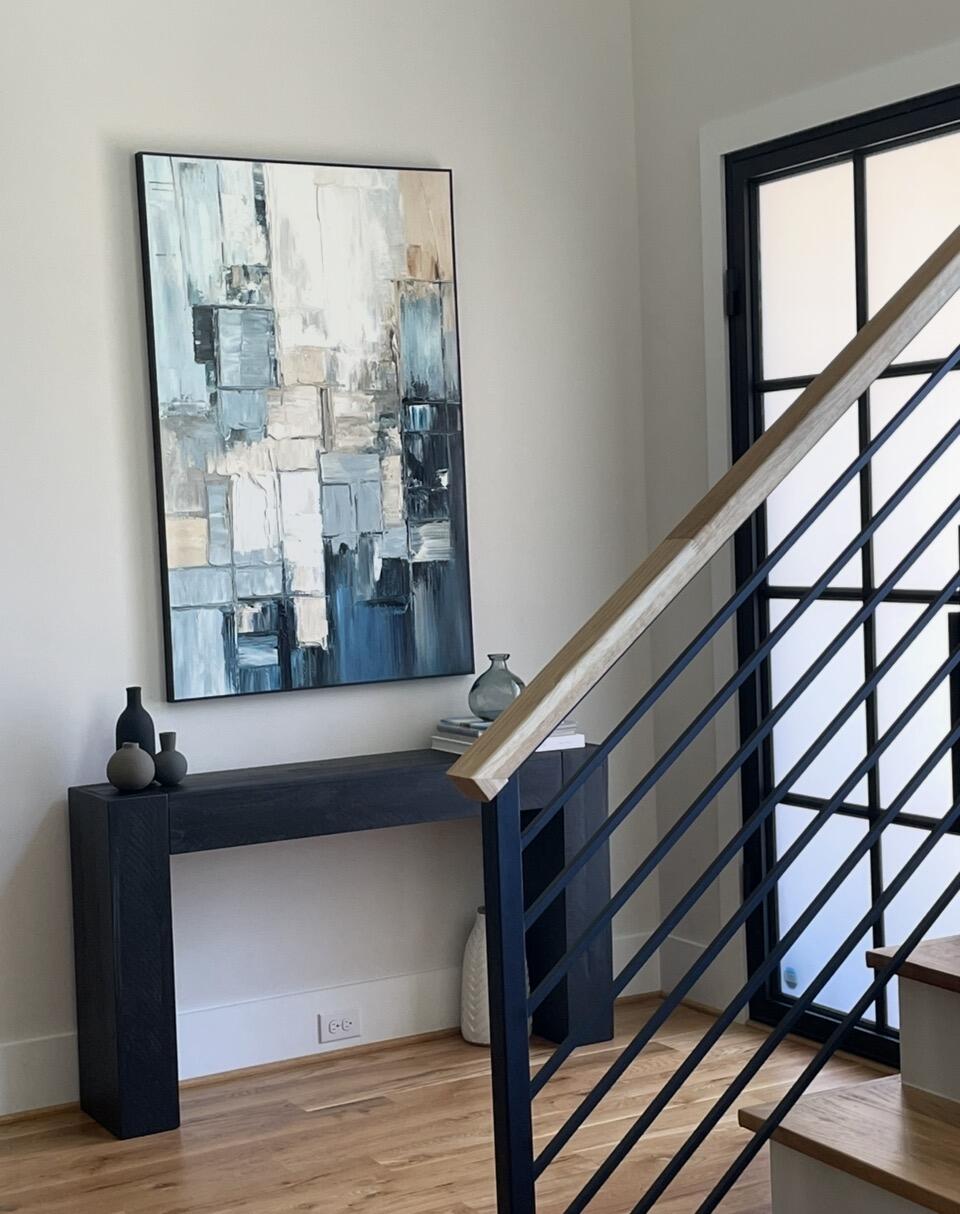
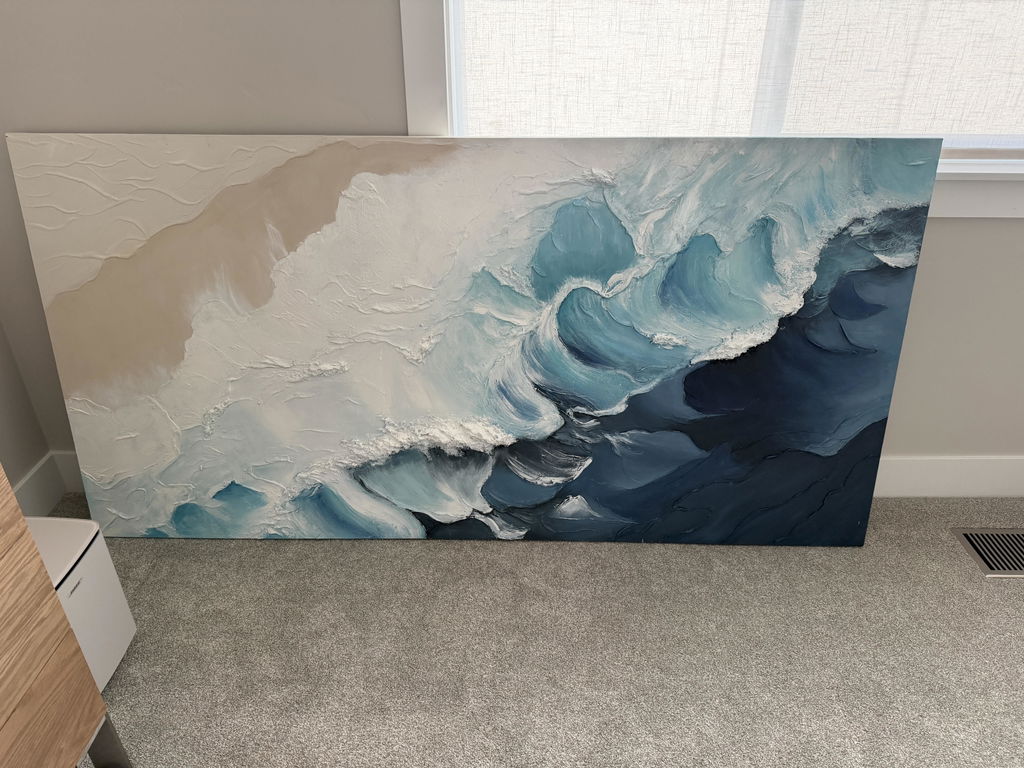
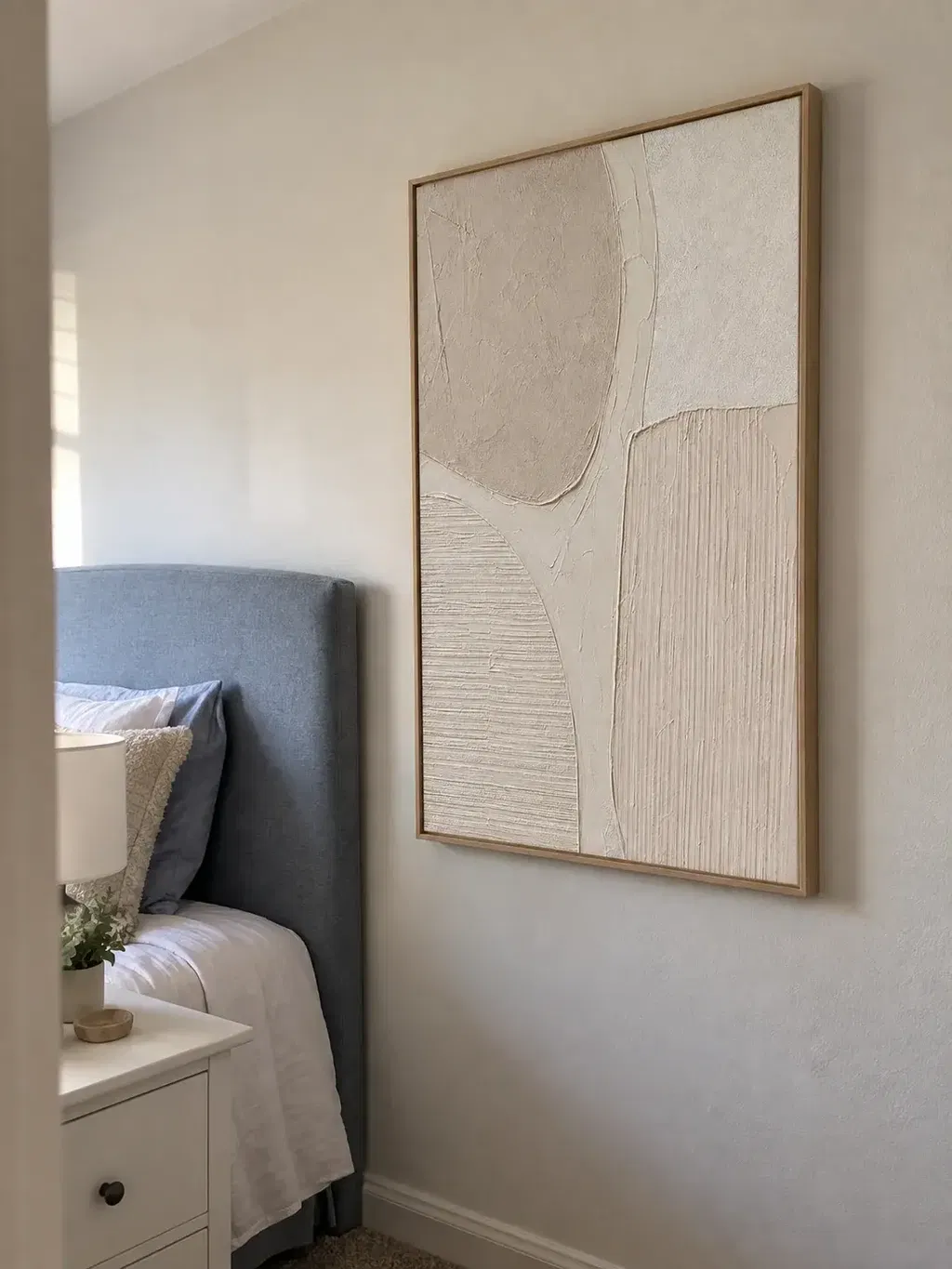
When a foundation is properly sealed, the paint sits on the surface, allowing for "micro-topography"—texture that is measured on a millimeter scale. Research published in MDPI Sensors proves that this micro-texture is crucial to aesthetics; it creates a "geometric metamerism" where the art changes character based on the viewer's angle and the room's lighting.
Logic Summary: Our analysis of "visual depth" assumes that a sealed foundation maximizes the scattering coefficient (S) of the paint layer, preventing the "darkening" or "dulling" effect typically seen on unprimed substrates.
Modeling the Impact of Foundation Absorbency
To demonstrate how foundation prep affects the final product, we have modeled the relationship between priming layers and "Gloss Units" (GU), a standard metric for measuring sheen.
| Parameter | 1-Layer Priming | 3-Layer Priming | Unit | Rationale |
|---|---|---|---|---|
| Binder Retention | ~65% | ~98% | % | Estimated based on common studio wash tests |
| Gloss Rating (60°) | 12–15 | 45–55 | GU | Aligned with HunterLab gloss standards |
| Color Saturation (C)* | Low (Chalky) | High (Vibrant) | - | Qualitative observation of "sinking" |
| Adhesion Strength | Variable | High | - | Based on ASTM D3359 cross-hatch heuristics |
| Risk of SID | High | Low | - | Support Induced Discoloration probability |
Note: This is a scenario model based on typical studio observations, not a controlled laboratory study. Individual results may vary by substrate material and humidity.
The Health and Safety of the Modern Mural
For our B2B clients in healthcare and high-end residential sectors, "authenticity" must never come at the cost of air quality. The EPA warns that indoor air pollution is often more hazardous than outdoor air, making low-VOC (Volatile Organic Compound) materials a prerequisite for LEED and WELL building certifications.
We strictly avoid the "fatal myths" of the art world—such as the idea that "odorless" solvents are non-toxic. According to Princeton University Environmental Health and Safety, chronic inhalation of mineral spirits can lead to central nervous system damage. Furthermore, the International Agency for Research on Cancer (IARC) classifies cadmium compounds—found in many traditional red and yellow pigments—as Group 1 carcinogens.
By selecting modern, water-based acrylics that pass the BS EN 71-3 standard for heavy metal migration, we ensure that a mural in a pediatric ward or a luxury nursery is as safe as it is beautiful.

Economic Catalysts: Murals as Real Estate Assets
Investing in a hand-painted foundation isn't just an aesthetic choice; it’s a proven financial strategy. A Royal Society study found that neighborhoods with higher "art" geo-tags experienced greater relative house price ranking gains. In commercial settings, the impact is even more dramatic. Chicago’s Millennium Park art projects drove an estimated $1.4 billion in real estate-related growth, according to NC Realtors.
For developers, a custom mural acts as a "permanent physical billboard." In an era where e-commerce threatens physical retail, University of Cincinnati research confirms that murals directly correlate with significant increases in pedestrian foot traffic.
The "Biophilic" ROI
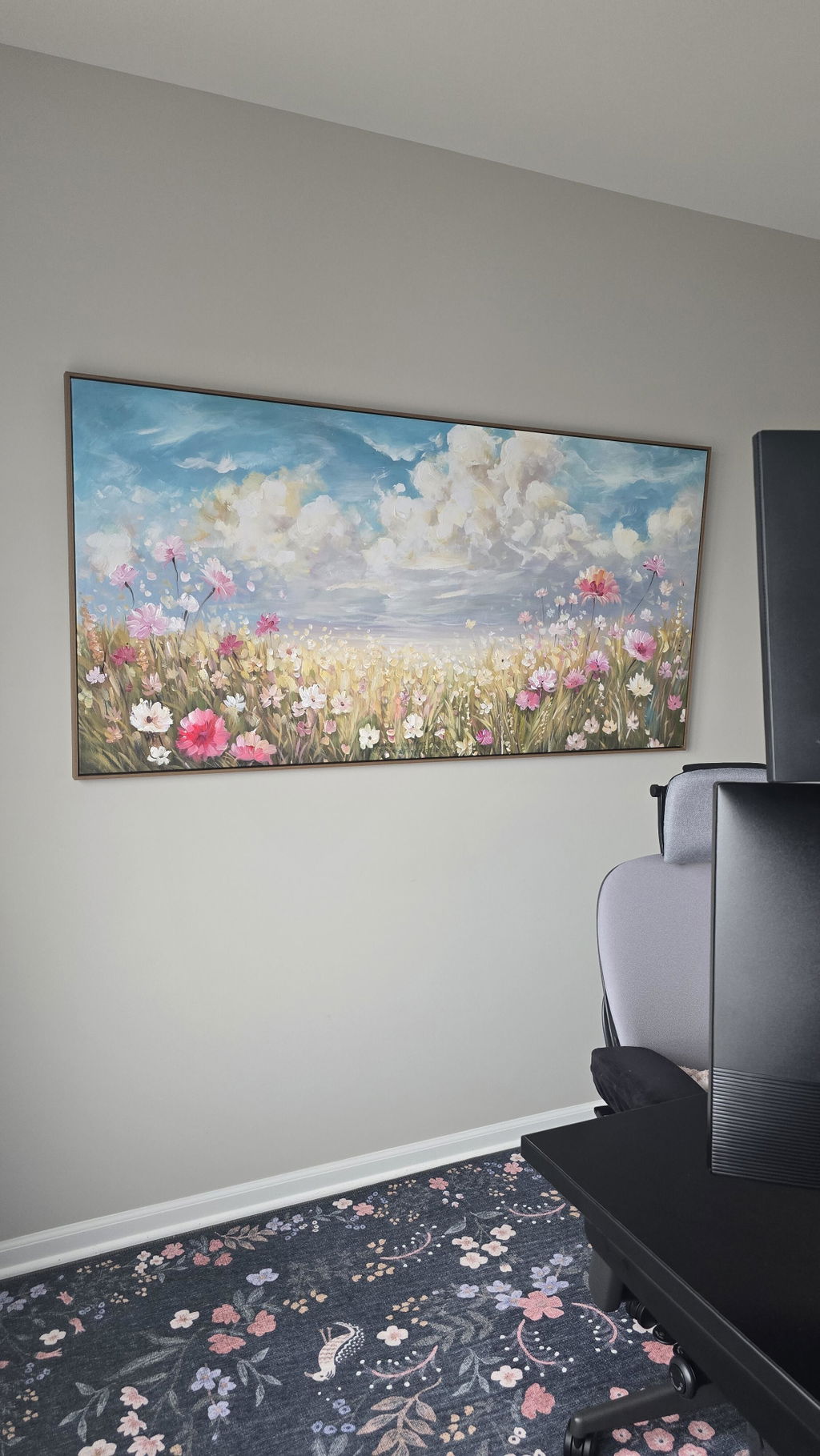
In corporate environments, the foundation of the mural often features natural landscapes. This is not merely decorative; it is "Biophilic Design." A UPenn review noted that 73% of patients in clinical environments reported significant mood improvements when exposed to environmental artworks. For a corporate HR department, this translates to reduced cognitive fatigue and potentially lower turnover rates.
Troubleshooting the Foundation: Avoiding "Support Induced Discoloration"
A common mistake we see in amateur work is applying paint too thickly on a highly absorbent, improperly sized canvas. As the paint contracts during drying, it pulls against the weak foundation, causing premature cracking.
Even more insidious is Support Induced Discoloration (SID). As Golden Artist Colors technical bulletins explain, water-soluble impurities in cotton or linen canvases can be drawn into the paint layer as it dries, causing a white or clear area to turn a bizarre yellow or brown.
To prevent this, we often return to classical techniques: mixing our own sealers using a balance of traditional binders and titanium white. This creates a consistent foundation that prevents canvas rot and preserves the pigment vibrancy for decades.
Ethical Craftsmanship: The 87% Mandate
The value of a hand-painted mural is also rooted in the ethics of its creation. A Wharton School survey found that 87% of consumers believe artists should receive fair compensation, especially in the face of AI-generated alternatives. Furthermore, Columbia University experiments show that consumers value art labeled as "AI-generated" 62% lower than authentic human-created art.
We believe that protecting the artist is as important as protecting the canvas. By ensuring fair pay and safe working conditions, we capture the "social cohesion" benefits documented in Philadelphia’s Porch Light Program, where public murals were found to increase mutual trust and community wellbeing.

Choosing Your Foundation: A Summary for Buyers
When commissioning a mural or purchasing a high-end canvas, the "back of the house" matters as much as the front. To ensure your investment retains its value, look for these quality indicators:
- Priming Depth: Does the surface feel like plastic, or can you see the "tooth" of the canvas through a uniform, sealed layer?
- Surface Consistency: In raking light, is the sheen even? "Flashing" (dull spots) is a sign of foundation absorbency failure.
- Material Transparency: Does the studio provide an Indoor Air Quality (IAQ) promise or use low-VOC pigments?
- Tactile Relief: Can you feel the physical relief of the paint? This is the "essential identity" that UChicago research identifies as the root of perceived value.
The transition from a blank wall to a landmark piece of art is a journey of structural integrity. By managing absorbency and respecting the chemistry of the foundation, we don't just paint walls—we create cultural heritage assets that drive economic value and human wellness.
Disclaimer: This article is for informational purposes only and does not constitute professional medical, legal, or financial advice. While we prioritize the use of non-toxic materials, always consult with a certified industrial hygienist for specific safety protocols in art studios or clinical environments.
Sources
- Marketplace: The expensive art market continues to struggle
- Artsy: 2024 Art Market Report
- Columbia Business School: Human-Made vs. AI Art Study
- Royal Society: Quantifying the link between art and property prices
- Getty Conservation Institute: Organic Materials in Wall Paintings
- EPA: Indoor Air Quality and Low-VOC Paints
- Golden Artist Colors: Support Induced Discoloration (SID)