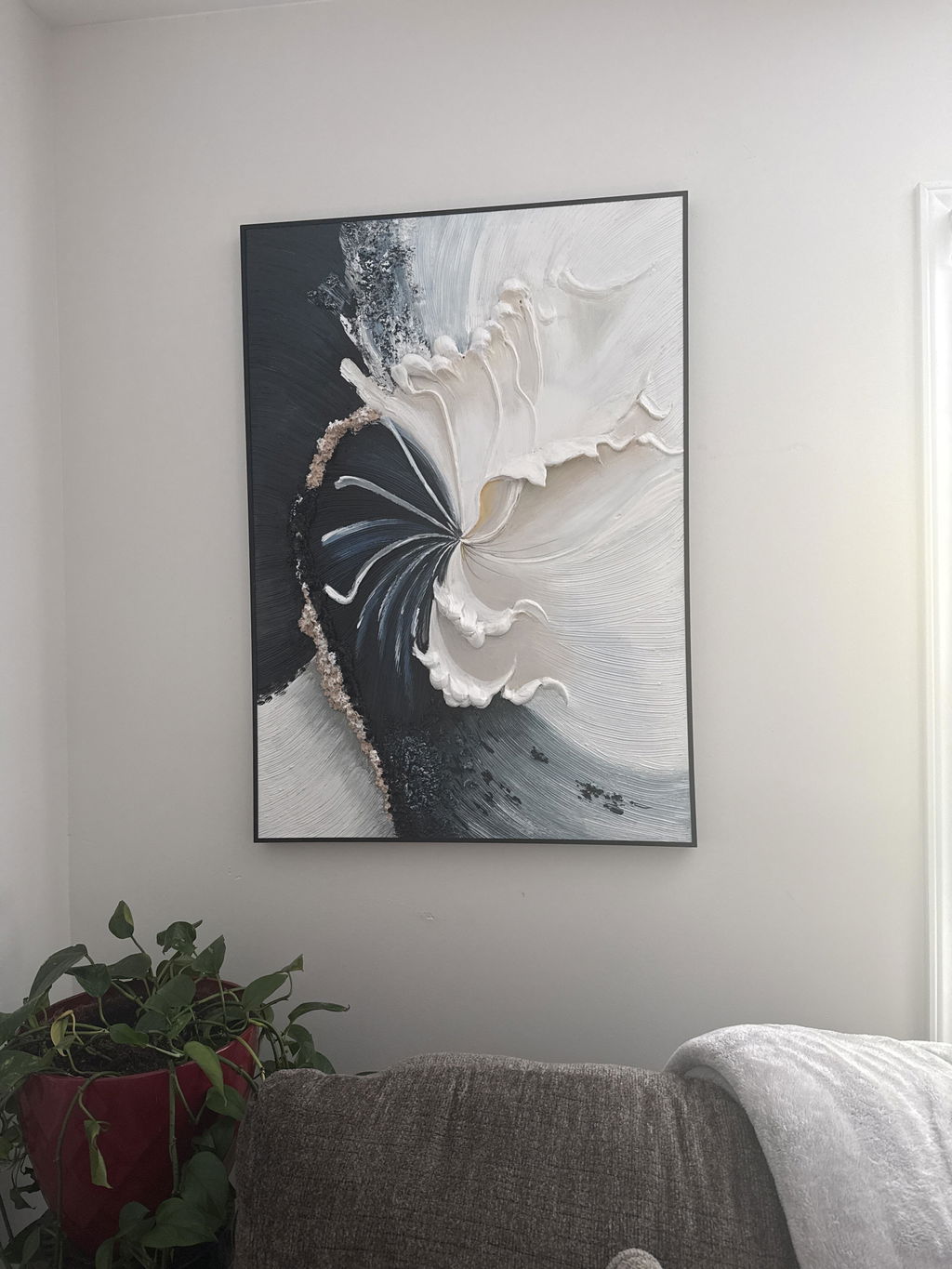
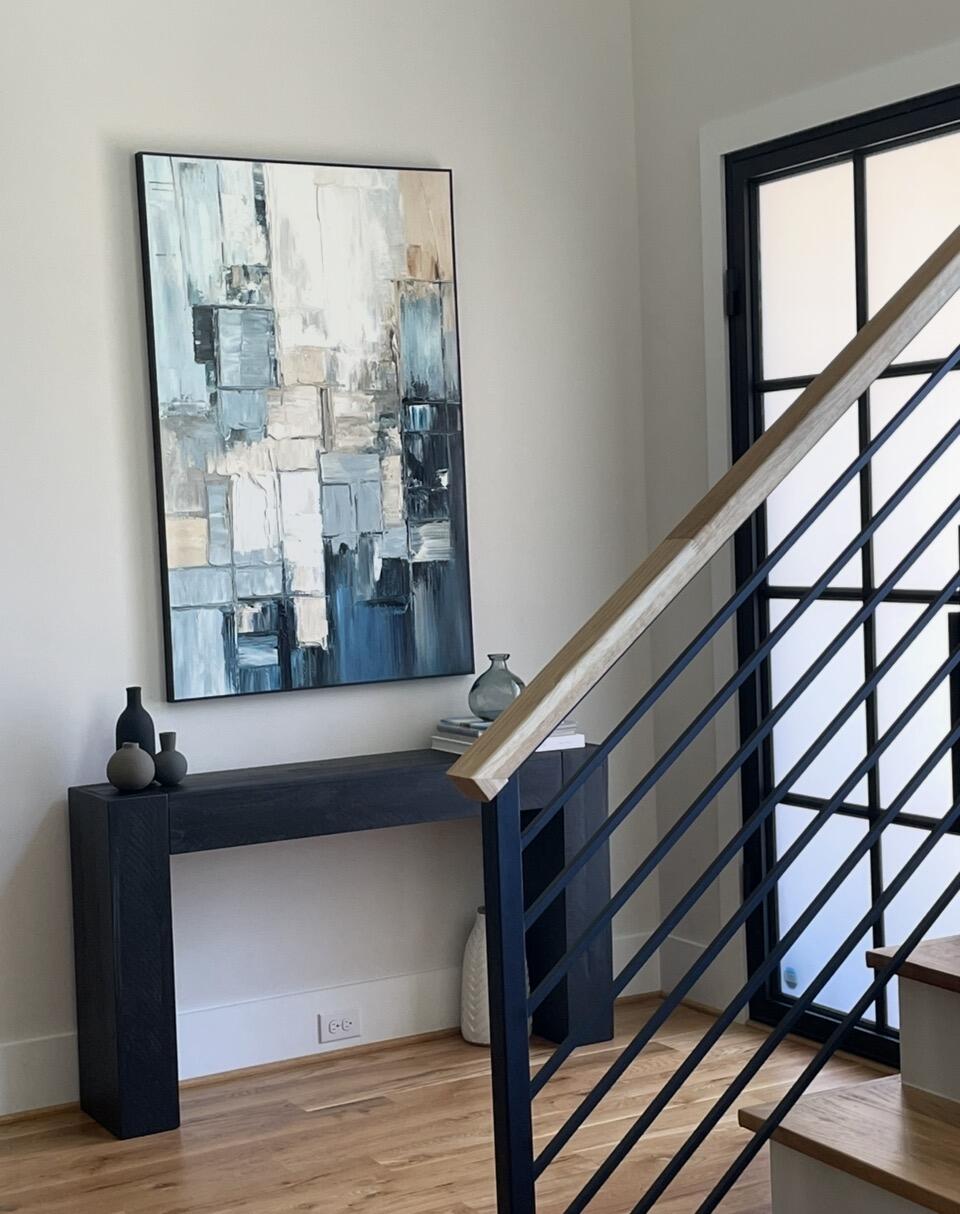
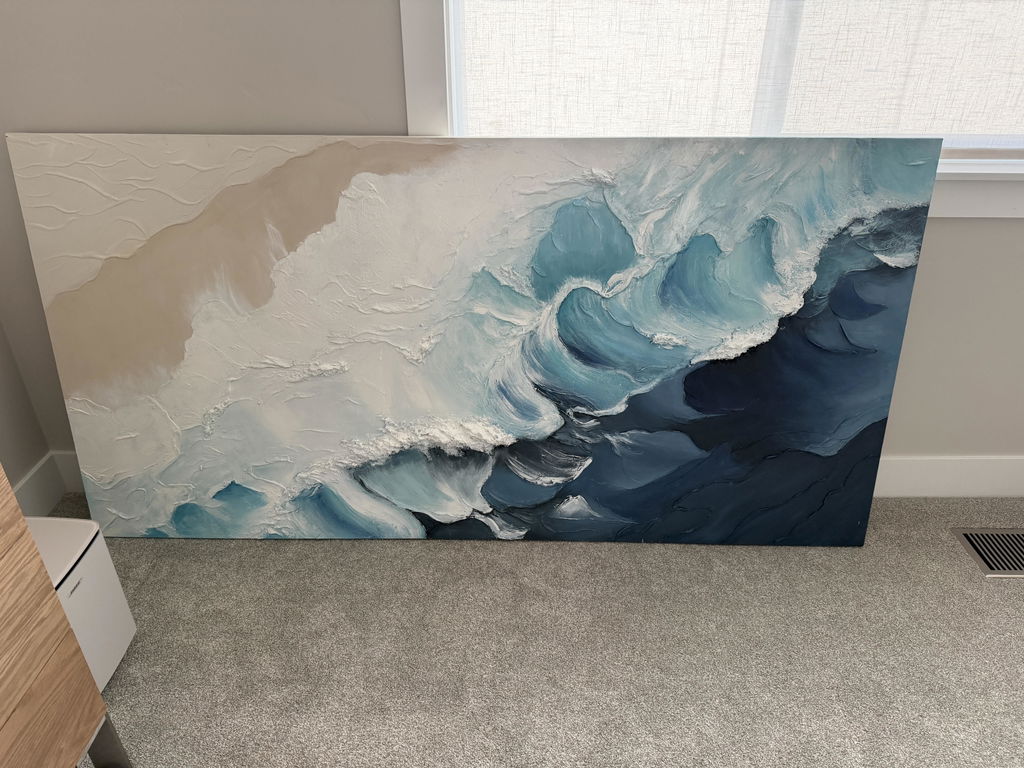
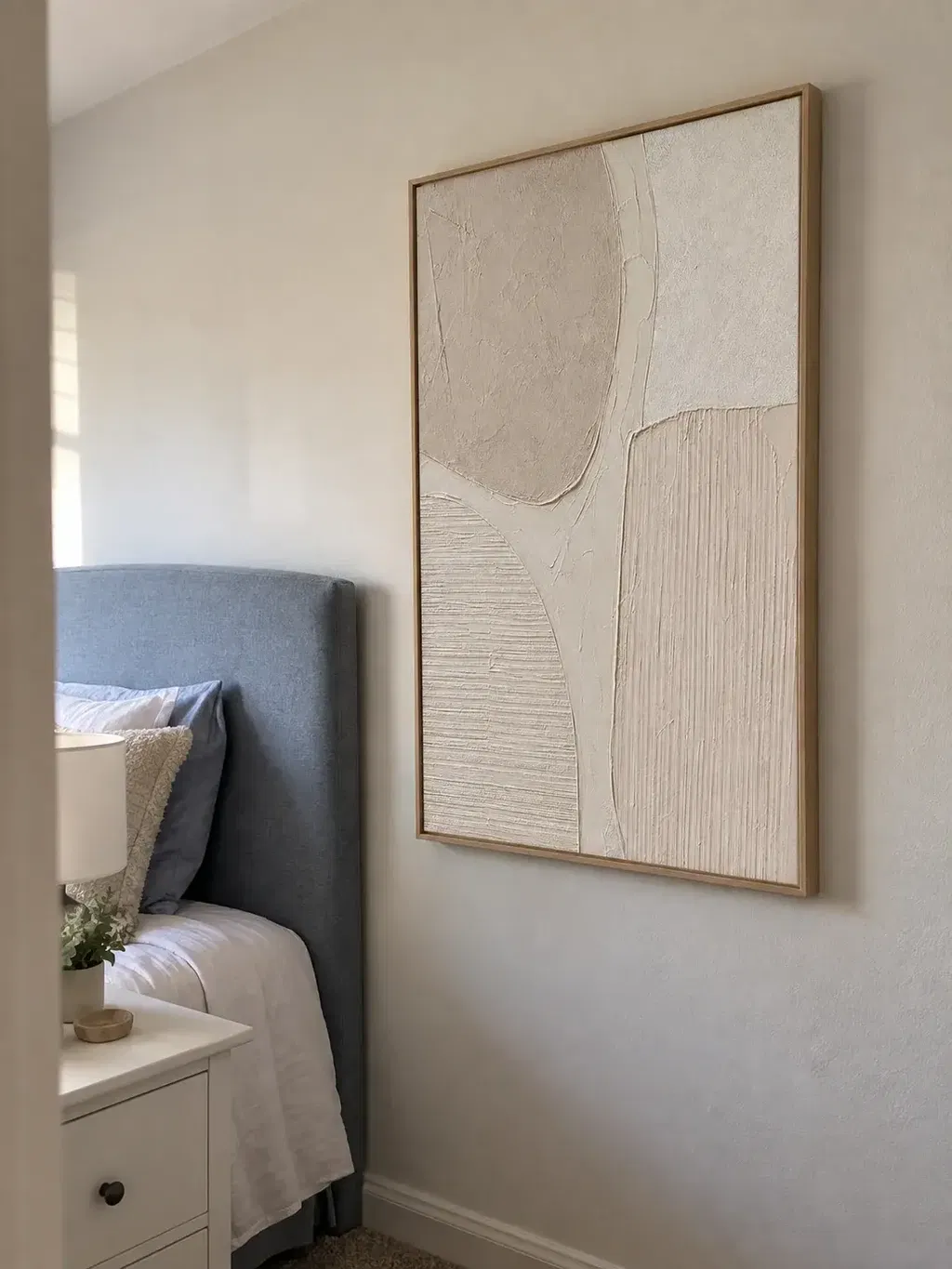
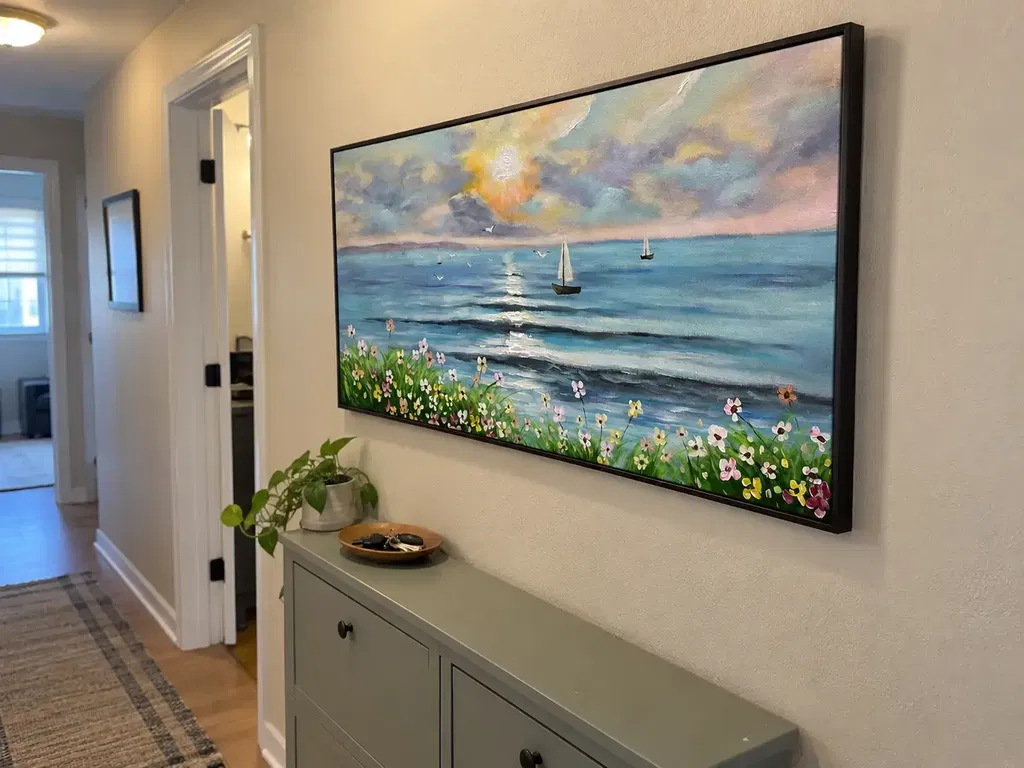
A seller worth considering should identify the specific artwork, explain how it was made, answer material questions in writing, and make shipping and remedy terms easy to find. To buy original art online safely, assess the listing, the seller's replies, and the policies together—not as separate trust signals. Exact-piece photos can help you inspect the object, but no single photo, certificate, review, or reassuring message proves originality or guarantees a refund.
First Checks to Buy Original Art Online Safely
Before paying, determine whether the images show the exact artwork you may receive and whether the written details match the listing. Request enough views and measurements to compare the offered piece with the listing, while keeping in mind that lighting, color, and camera perspective can affect its appearance.
| Check | What It Helps You Inspect | What to Ask If Missing | Limitation |
|---|---|---|---|
| Full front view | Overall composition, finish, and whether the image appears to show one finished piece | "Is this the exact artwork I will receive, or a representative image?" | Lighting and screen settings can change color and contrast. |
| Side angles | Canvas depth, raised texture, and whether the surface has visible dimension | "Can you send left- and right-side views in natural or consistent lighting?" | A side view can show surface form but cannot establish authenticity. |
| Texture close-up | Brushwork, impasto, surface variation, and finish in a defined area | "Can you provide close-ups of the most textured areas?" | Digital images may compress detail or exaggerate texture. |
| Edges | Wrapped edges, paint coverage, framing condition, and signs of how the piece is finished | "Can you show all edges and explain whether the work is framed?" | An edge photo does not prove who made the work. |
| Dimensions | Whether the listed height, width, and depth match the piece you are considering | "Please confirm the finished dimensions, including the frame if applicable." | A listed size still needs to match the delivered object. |
| Listing-message consistency | Whether the photos, title, medium, availability, and seller answers describe the same item | "Please confirm the image, size, medium, and availability in writing." | Consistency reduces avoidable uncertainty; it does not eliminate transaction risk. |
The FTC's online shopping guidance also recommends comparing sellers and products, reviewing delivery and refund terms, and keeping records of listings and promises. If exact-piece photos are unavailable, treat the listing as representative and ask what may vary before paying. Save the reply with the listing instead of relying on memory.
Check What "Original" and "Hand-Painted" Actually Mean
"Original" and "hand-painted" are seller descriptions that need clarification. Before you buy original art online, determine whether you are purchasing one finished piece, a made-to-order recreation, or a reproduction. Then compare the artist, materials, dimensions, and expected variation with the listing.
Separate One-of-a-Kind, Made-to-Order, and Reproduced Work
The production category determines how closely the delivered work should match the image. Ask the seller to name the category plainly rather than inferring it from marketing language.
| Production Category | Expected Image Match | Likely Variation | Buyer Question |
|---|---|---|---|
| One finished piece | The seller should identify the photographed artwork as the piece being offered | Minor differences may still appear because of lighting or display | "Is this exact finished piece available, and is the photographed work the one that ships?" |
| Made-to-order recreation | The delivered work may follow the reference image without being the photographed object | Color, brushwork, texture, and composition details may vary | "What will be recreated, what may change, and who makes the work?" |
| Reproduction | The image may be printed or produced through a repeatable process | Variation may be limited to production and finishing details | "What is the reproduction method, and what part, if any, is hand-finished?" |
| Unclear wording | You cannot reliably predict the relationship between the image and the delivery | The seller has not defined the expected differences | "Which production category applies to this listing?" |
For how to vet a hand-painted art seller, ask for the production explanation before treating the listing as a one-of-a-kind purchase. The hand-painted verification guide can serve as a starting point, but the seller's specific answer still needs to match the listing.
Verify Artist, Materials, and Supporting Details
Ask who made the work or how the studio describes the artist's role. Then compare the answer with the product page and any supplied documents:
- Artist or studio identity: Who made the piece, and is the named artist the painter, designer, or a studio representative?
- Medium and surface: Is it oil, acrylic, mixed media, canvas, panel, or another stated material?
- Dimensions and finish: Do the size, depth, frame, and signature details match the listing?
- Expected variation: For a recreation, which elements can differ from the reference image?
- Certificate or provenance record: Who issued it, which artwork does it identify, and what facts does it actually document?
A certificate may add context, but it is not a substitute for clarifying the production category and matching the artwork details. For more questions about documentation, see proof for original art.
Use the Seller's Answers as a Transparency Test
The best online art seller transparency checklist compares what the listing says, what the seller writes, and what the policy pages allow. Specific answers reduce uncertainty, but responsiveness alone does not prove honesty, authenticity, or reliable fulfillment.
- Send focused questions. Ask whether the photos show the exact piece, which production category applies, what materials and dimensions are used, when it will ship, and which remedy applies if the delivered work does not match the stated terms.
- Request material answers in writing. Use the site's message system or email, and keep the seller's response with the listing. The FTC's marketplace guidance recommends checking seller contact information, asking questions, and choosing another seller if the answers are unsatisfactory.
- Compare the response with the listing and policies. A reply that says "same as shown" does not clarify whether the image is representative, whether the piece is made to order, or whether a return exclusion applies.
- Set a deal-breaker before checkout. Decide which unanswered point would change your purchase: exact-piece identity, final dimensions, shipping timing, damage reporting, return eligibility, or the trigger for a remake or refund.
If the seller answers one question clearly but contradicts the listing on another, pause and request a corrected written explanation. If the seller applies pressure, avoids a material question, or substitutes vague reassurance for clear terms, compare another seller. That is a risk-reduction decision, not a finding that the seller is fraudulent.
Compare Shipping Protection, Approval, Returns, and Remedies
A general promise to "make it right" is not a usable remedy until you know the trigger, deadline, cost, and process. Before ordering, map the shipment from dispatch through inspection, then compare approval, return, repaint, remake, and refund language with the problem each term is meant to address.
| Policy Area | Details to Confirm | If It Is Unclear |
|---|---|---|
| Shipment | Dispatch timing, packaging, tracking, inspection instructions, and the damage-reporting process | Ask which party handles the report and what photos or deadline apply. |
| Approval or inspection | When the period starts, how many days you have, and what counts as approval | Ask what action preserves your options. |
| Return eligibility | Whether finished, custom, made-to-order, oversized, or damaged work is included | Ask whether the rule applies to this exact listing. |
| Condition and shipping costs | Required return condition, return-shipping responsibility, and whether original shipping is refundable | Ask how transit damage is handled separately from a change of mind. |
| Restocking fee | Whether a fee applies and how it is calculated | Do not treat "returns accepted" as the same as a full refund. |
| Refund timing | What event starts the stated timing and whether inspection comes first | Ask when the refund is issued. |
| Repaint or remake | Whether the remedy applies to damage, mismatch, defects, color concerns, or another stated event | Ask whether the replacement is a new interpretation and what variation is expected. |
Map the Shipment From Checkout to Delivery
Confirm when the seller expects to ship, how the artwork is protected, whether tracking is provided, and how promptly you should inspect the package. Ask what photos, message channel, and deadline apply to damage reports. Seller remedies and carrier or platform procedures may be separate, so do not assume that filing one type of claim automatically starts another.
Read Approval and Return Conditions Line by Line
The FTC's return-policy guidance highlights details buyers should check, including the return deadline, who pays return shipping, restocking fees, and refund conditions. Read those terms against the exact listing rather than assuming every seller offers a return or full refund.
A repaint or remake promise also needs a defined trigger. Ask whether it applies to transit damage, a mismatch with the listing, a material defect, color concerns, or only another stated event. Do not assume screen-color differences, a change of mind, or shipping damage are covered unless the written terms say so.
If you are comparing finished ready-to-ship art, use the collection only as a navigation path and check the individual listing and current policies for the actual transaction terms.
Make the Buy-or-Wait Decision Before You Add to Cart
When you buy original art online safely, there are three practical outcomes: continue to checkout, ask one final written question, or walk away. Choose based on specific information about the artwork and transaction—not price, polished branding, reviews, or one reassuring signal.
- Buy when: The exact-piece status or expected variation is clear, the production description matches your expectations, the seller has answered material questions, and the shipping and remedy terms fit your risk tolerance.
- Ask one final question when: One material detail remains and the seller has already provided a specific basis for answering it. Keep the question narrow—for example, "Does the made-to-order return exclusion apply to this listing?"
- Walk away when: The seller remains vague or evasive, contradicts the listing, will not identify the piece or production category, or leaves the remedy trigger and deadline undefined.
- Save the record before checkout: Keep the listing, exact photos, dimensions, production wording, policy version, messages, order confirmation, tracking information, and promised documents. The FTC's guidance on problems with online purchases supports preserving receipts and confirmation emails for later communication or dispute handling, without guaranteeing a refund or payment outcome.
If a material question still has no specific answer, waiting—or choosing another online art seller—is the safer next step.
FAQs
Before ordering, use these questions to check the artwork description, documentation, return terms, and shipping process. They supplement the sections above with specific points to confirm before checkout.
What Photos Should an Online Art Seller Provide for an Exact Piece?
Ask for a full view, detail photos, side angles, edges, and confirmed dimensions. If the images are representative, ask whether you are buying a finished piece or a recreation, and save the answer.
How Can I Tell Whether a Return Policy Covers a Made-to-Order Painting?
Look for custom-work exclusions, the deadline, condition requirements, shipping costs, and refund timing. Ask the seller to apply those terms to the exact listing in writing.
What Should I Save Before Buying Original Art Online?
Save the listing, photos, dimensions, production wording, policy version, messages, order confirmation, tracking information, and promised documents. These records help you compare the order with what arrives, but they do not guarantee a remedy.
Should I Ask for a Certificate of Authenticity Before Buying Online Art?
You can ask, but check who issued it, which artwork it identifies, and whether its details match the listing. Treat it as supporting documentation, not automatic authentication.
How Should I Check an Online Art Seller's Shipping Damage Process?
Ask how the piece is packaged, when to inspect it, what photos are required, where to report damage, and the deadline. Follow the seller's stated process after delivery; do not assume the carrier and seller handle claims the same way.