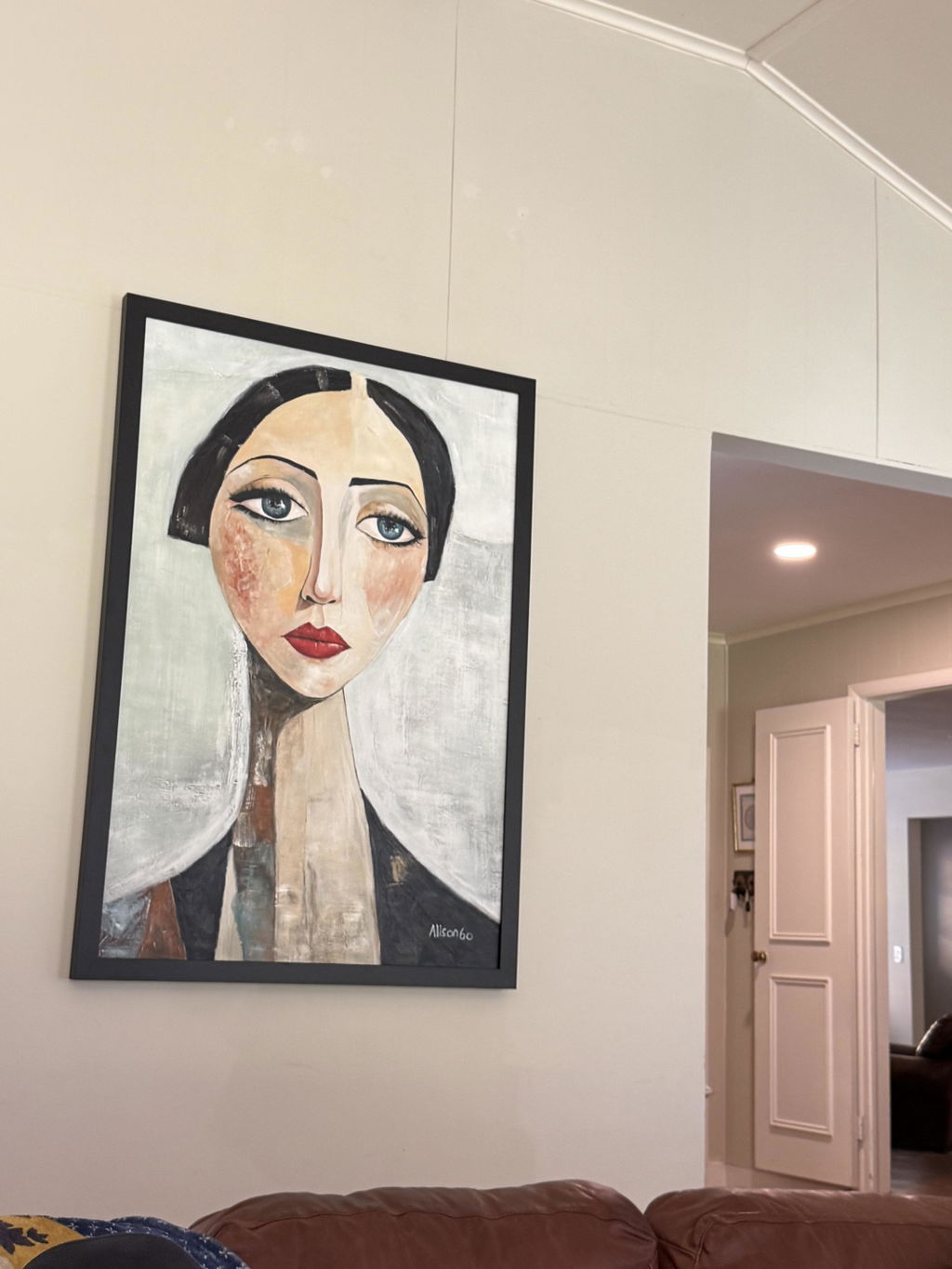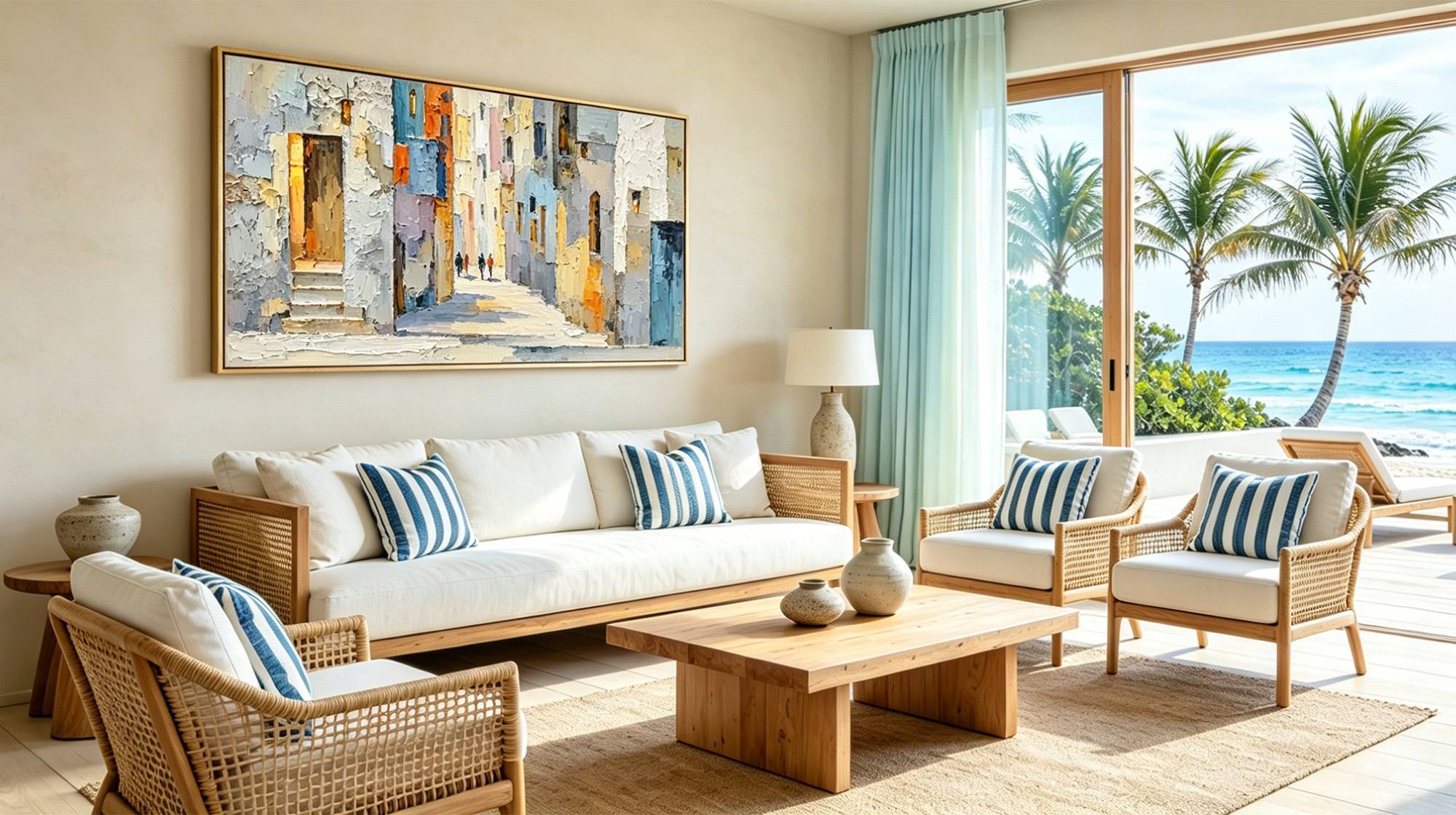
Landscape paintings work best when the scene supports the room around it. A mountain, shoreline, forest, or field may all look beautiful on screen, but the right choice depends on your wall, furniture, lighting, and the amount of visual activity already in the space.
Start by deciding what the artwork needs to do. It may need to anchor a sofa, add warmth to a cool room, create a calmer focal point, or bring depth to a blank wall. Once that role is clear, the scene becomes easier to choose.
Begin With the Room, Not the Scene
Look at the intended wall before comparing artwork. Note its available width and height, the furniture beneath it, nearby windows, and how the room looks in both daylight and evening light.
A simple room with neutral furniture can support a more detailed or high-contrast landscape. A room with patterned textiles, dark shelving, or several decorative objects often benefits from a quieter composition with more open areas.
Use these questions as a starting point:
- Is the artwork meant to be the room's focal point or a supporting layer?
- Does the room need more warmth, openness, structure, or softness?
- Will the artwork be viewed mainly from a sofa, bed, desk, or doorway?
These answers matter more than choosing a subject only because it is appealing in a product image.
Choose a Landscape Scene by Its Visual Structure
Different landscape scenes create different visual rhythms. Focus on their shapes, layers, color range, and density rather than assuming that one subject always creates the same effect.
Mountains and Valleys
Mountain scenes usually contain strong vertical forms and clear layers of foreground, distance, and sky. They can work well above a sofa, fireplace, or desk when the wall has enough open space for a substantial image.
In a compact or already dark room, look for a mountain landscape with lighter skies, visible distance, or less crowded detail. A large dark peak can feel heavy when it competes with dark furniture or limited light.
Coastlines, Lakes, and Open Water
Water scenes often have a broad horizontal structure, making them a natural fit above a bed, sofa, or dining sideboard. A shoreline, lake, or calm sea can give the eye a visible line of distance without overpowering the room.
Look at the relationship between water, sky, and land. A composition with a clear horizon and quieter areas may feel lighter than one filled with dark cliffs, dramatic storm clouds, or highly active waves.
Forests and Woodland Paths
Forest landscapes bring vertical rhythm, organic shapes, and richer green or brown tones. They often suit rooms that use timber, linen, stone, rattan, or other natural materials.
For smaller rooms, choose a forest scene with visible light, mist, a path, or an opening through the trees. Dense foliage can still work, but it needs enough space around the artwork to avoid making the wall feel crowded.
Fields, Meadows, and Desert Landscapes
Fields, dunes, plains, and meadow scenes often use wider areas of color and fewer sharp edges. They can add warmth or depth without the visual weight of a dramatic mountain or cityscape.
These scenes can be useful in minimal interiors, especially when their tones relate to existing neutrals, wood finishes, ceramics, or textiles.
Cityscapes and Architectural Landscapes
Cityscapes can add structure and energy to a hallway, home office, or contemporary living room. Consider the level of detail before choosing one. A quiet skyline may suit a restrained room, while a busy street scene needs a wall with fewer competing elements.

Use Composition to Control Visual Weight
The subject matters, but composition often has a greater effect on how a landscape painting feels in a room. Two coastal paintings can create very different results depending on their horizon, contrast, depth, and amount of open space.
| Composition Cue | What to Look For | Best Use |
|---|---|---|
| Open sky or water | Larger quiet areas around the main subject | Rooms with existing pattern or visual detail |
| Layered depth | A path, shoreline, valley, or overlapping distance | Feature walls where the artwork should invite a longer look |
| Foreground-led scene | Land, trees, rocks, or other near forms dominate | Larger rooms or walls with a strong furniture anchor |
| High contrast | Dark forms against light sky or water | A focused statement wall with limited competing decor |
| Soft transitions | Mist, muted edges, or tonal movement | Bedrooms, reading corners, and neutral interiors |
A landscape painting does not need to make a room physically larger to be successful. The important question is whether the eye can move through the image without the artwork feeling disconnected, too dense, or overly dominant.
Match the Palette to the Room's Existing Materials
Color is easier to manage when you begin with what is already in the room. Choose one or two tones from the painting that relate to nearby finishes. They do not need to match exactly.
A blue-gray seascape may connect with a charcoal rug or brushed-metal lamp. A warm field landscape may relate to oak furniture, terracotta accents, or beige upholstery.
Warm-Toned Landscapes
Landscapes with ochre, rust, amber, clay, or warm green can add depth to rooms with pale walls, cool light, or gray furniture.
If the room already contains many warm finishes, look for a painting with neutral, gray, or softened notes as well. This keeps the palette from becoming too uniform.
Cool-Toned Landscapes
Blue, sage, gray, deep green, and coastal tones can work with crisp white walls, stone, black details, or contemporary furniture.
Check the painting under the lighting you actually use. Deep blue or charcoal details that look rich on a bright screen may lose definition on a dim wall.
Neutral or Monochrome Landscapes
Black-and-white, sepia, gray, or softly neutral landscapes can be useful when the room already has a strong color scheme. They give the wall depth and subject matter without adding another dominant color.

Choose the Right Format and Size
Scale determines whether a landscape painting feels intentional. Even a strong image can look lost if it is too small for the furniture beneath it.
For artwork above a sofa, bed, console, or dining sideboard, use roughly 60 to 75% of the furniture width as a starting point. Then check the usable wall, clearance around doors and lamps, and the empty space at each side.
| Placement | Format to Consider First | Practical Check |
|---|---|---|
| Above a sofa | Horizontal or wide landscape | Mark 60 to 75% of sofa width on the wall |
| Above a bed | Horizontal, square, or paired pieces | Keep a visible gap above the headboard |
| Hallway end wall | Horizontal landscape with visible depth | Check the view from the hallway entrance |
| Narrow wall | Vertical forest, mountain, or city scene | Avoid crowding trim, doors, or switches |
| Large blank wall | Panoramic or substantial horizontal piece | View the planned footprint from the main seat |
Before ordering, outline the artwork's outside dimensions with painter's tape or paper. Include the frame if one is planned. View the outline from the doorway, the main seating area, and under your normal evening lighting.
For artwork above furniture, hanging height should be considered alongside the overall footprint, rather than treated as a separate decision.

Decide Between Realistic and Abstract Landscape Paintings
Realistic and abstract landscape paintings solve different design needs.
A realistic landscape gives the eye a recognizable setting, such as a coast, forest, mountain range, or field. It is a good option when the scene itself is an important part of the room's story.
An abstract landscape focuses more on color, texture, movement, and atmosphere than on a particular location. It can work well in contemporary interiors where the artwork should connect with a palette or material finish rather than describe a destination.
Choose a realistic piece when the place matters most. Choose an abstract landscape when the room needs color, texture, or visual rhythm without literal geographical detail.
Check Light, Frame, and Placement Before You Commit
The same painting can look different against a cool white wall, a warm beige wall, or a dark feature wall. Light also changes how you see subtle colors, surface detail, and frame finishes.
Before making a final decision:
- View the intended wall in daylight and under evening lighting.
- Compare the painting with the wall color, flooring, furniture, and window treatments.
- Check for glare if the artwork will sit opposite a window or beneath a strong ceiling light.
- Choose a frame that supports the room's materials rather than matching every finish exactly.
- Hang the artwork at a comfortable viewing height, then adjust for furniture, sightlines, and the composition itself.
A landscape with a strong horizon does not need to match a universal hanging measurement. It should look balanced from the place where you actually sit, walk, or work.
Find the Landscape That Gives the Room Direction
The right landscape painting does more than fill an empty wall. It can create a focal point, connect the room's furniture and color palette, or bring a sense of distance to a flat surface.
Start with the room itself. Measure the available space, notice how the light changes throughout the day, and compare each composition with the visual activity already present. When the scene, scale, and setting work together, the artwork feels considered rather than simply added.
Landscape Painting FAQs
Can Landscape Paintings Work in Small Rooms?
Yes. Choose a composition with visible depth, open areas, or a clear path for the eye to travel. The artwork should fit the usable wall and avoid competing with dense furniture, dark shelving, or several nearby decorative objects.
Should a Landscape Painting Match My Existing Decor Colors?
It should relate to the room, but it does not need to match exactly. Repeat one or two tones from the artwork in nearby textiles, furniture, or accessories, then allow the painting to introduce some variation.
Are Realistic or Abstract Landscape Paintings Better for Modern Homes?
Both can work. Realistic landscapes provide a clear scene and visible depth, while abstract landscapes often support modern interiors through color, texture, and simplified forms. Choose based on the room's visual density and the role the artwork needs to play.
What Size Landscape Painting Works Above a Sofa?
Use roughly 60% to 75% of the sofa width as a starting point. Mark the proposed dimensions on the wall before ordering, then assess the outline from the seating area and the room entrance.
Can a Dark Landscape Work in a Low-Light Room?
It can, but check how much detail remains visible under the room's evening lighting. If dark areas merge into the wall or furniture, choose a piece with a lighter sky, more tonal variation, or a placement with better-controlled light.