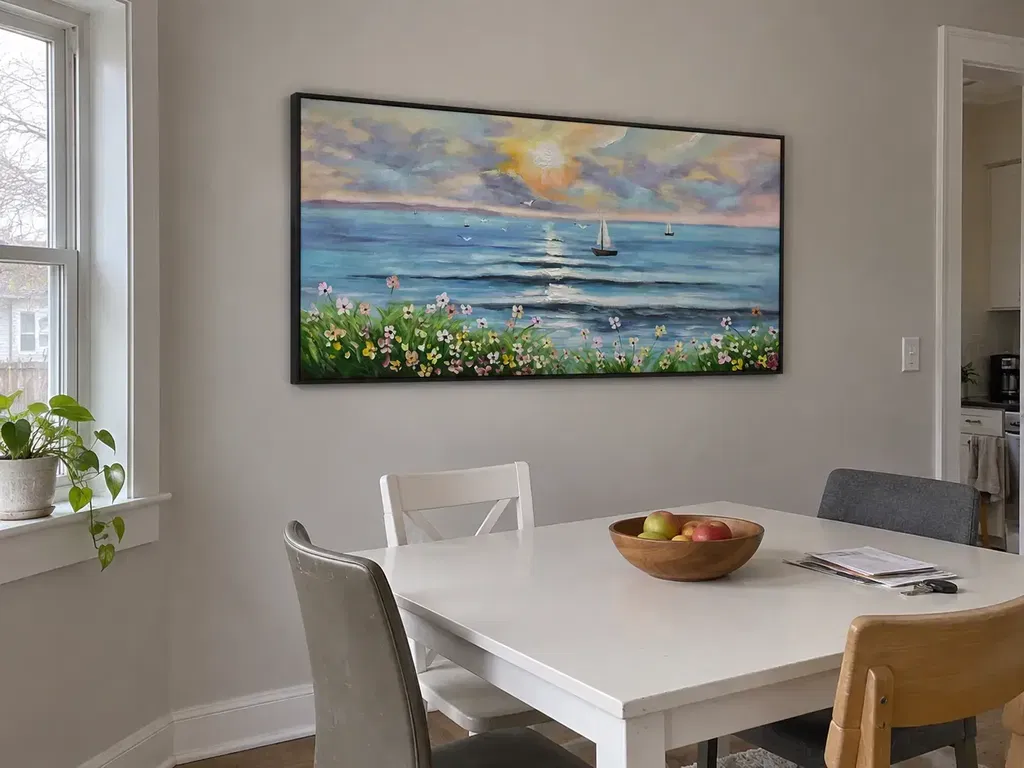
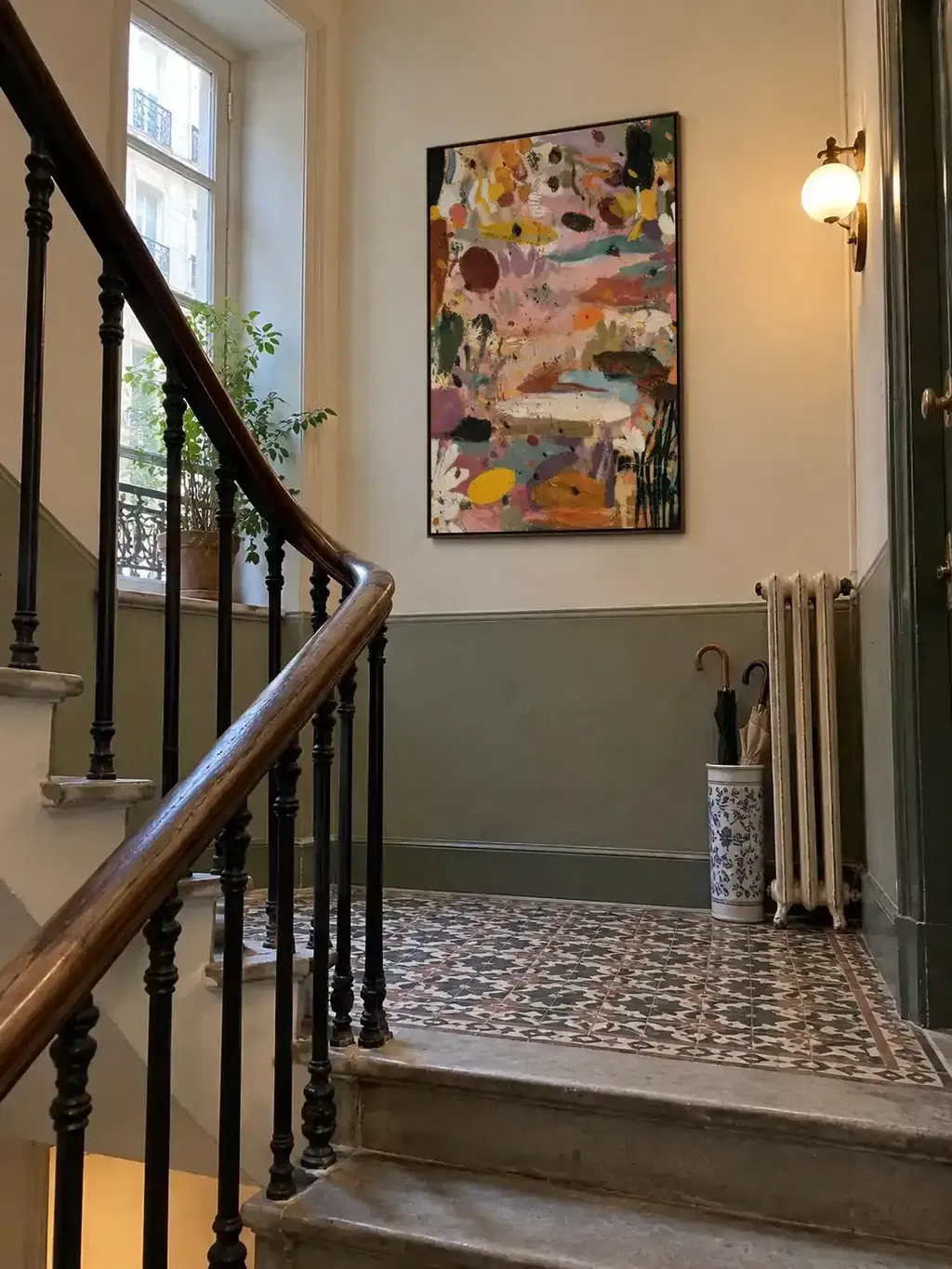
A dining room can have a beautiful table, comfortable chairs, and carefully chosen lighting but still feel incomplete. The missing element is often not more furniture. It is a stronger connection between the artwork and the rest of the room.
Dining room wall art is viewed from several positions. People see it when they enter, walk around the table, and sit down for a meal. A painting that looks balanced from directly in front of the wall may appear too small from across the room.
Instead of asking whether a painting is simply “right for a dining room,” test how it relates to your actual space. Size, shape, color, and lighting should all support the way the room is used.
Why Dining Room Art Should Be Judged from the Table
Many people position artwork while standing close to the wall. That view matters, but it is not the most important one in a dining room.
People may spend more time looking at the painting while seated. Chair backs, flowers, candles, and pendant lights can all change what remains visible. Artwork hung too high may also feel disconnected from the dining area.
Check the empty wall from:
- the entrance to the room;
- your usual dining chair;
- the opposite side of the table;
- the adjoining kitchen or living area.
Notice whether furniture or lighting interrupts the view. The artwork should remain clear from the positions where people naturally see it.
This does not mean every part of the painting must be visible from every chair. The goal is to make sure the piece still creates a strong and balanced presence within the room.
Size the Artwork to the Right Visual Anchor
One of the most common dining room wall decor problems is artwork that looks too small for the furniture below it.
The correct reference point depends on where the painting will hang.

Above a Buffet or Sideboard
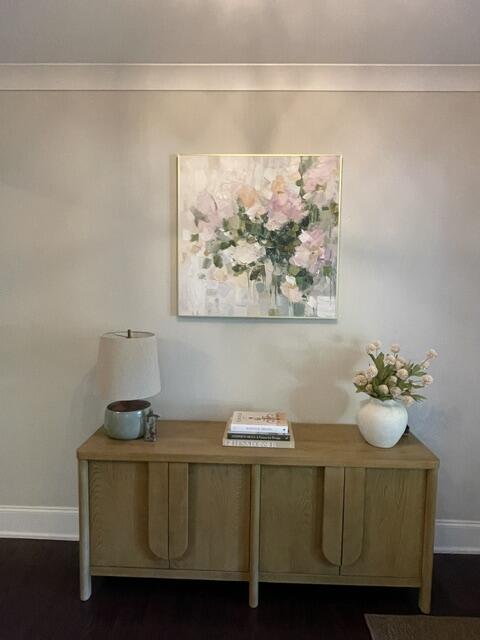
Use the buffet as the visual anchor. As a starting point, artwork often looks balanced when it spans about two-thirds to three-quarters of the furniture width.
This is a design guideline, not a fixed rule. A wide frame, nearby lamps, tall ceilings, or limited wall space may change the final proportion.
The artwork should feel connected to the buffet without making the arrangement look crowded. MontCarta’s guide to art above a dining room buffet provides a more detailed comparison of width and placement.
Above or Near a Dining Table
When the artwork is visually connected to the table, compare it with the table’s length. A narrow painting may look lost behind a long table. A piece that is too wide may compete with windows, sconces, or a large pendant light.
Use painter’s tape to mark the proposed dimensions on the wall. Then view the outline from the table and doorway.
On an Empty Wall
If no furniture sits below the artwork, measure the usable wall rather than the entire wall.
Exclude doors, windows, switches, vents, and spaces blocked by chairs. Large dining room wall art needs enough space to create impact, but it also needs open wall around it.
Choose the Right Shape and Arrangement
The shape of the artwork affects how the eye moves through the dining room.
Horizontal Artwork
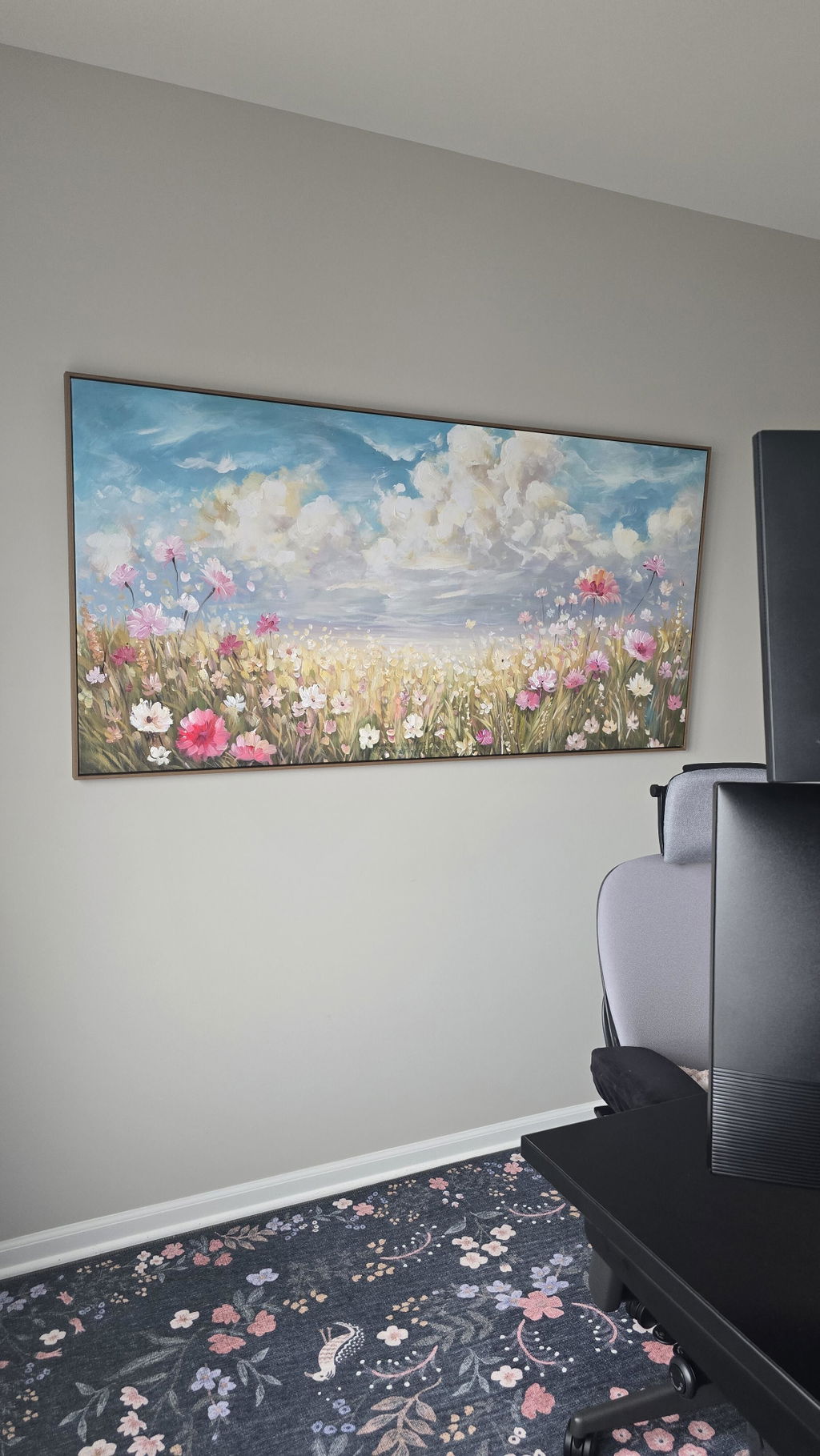
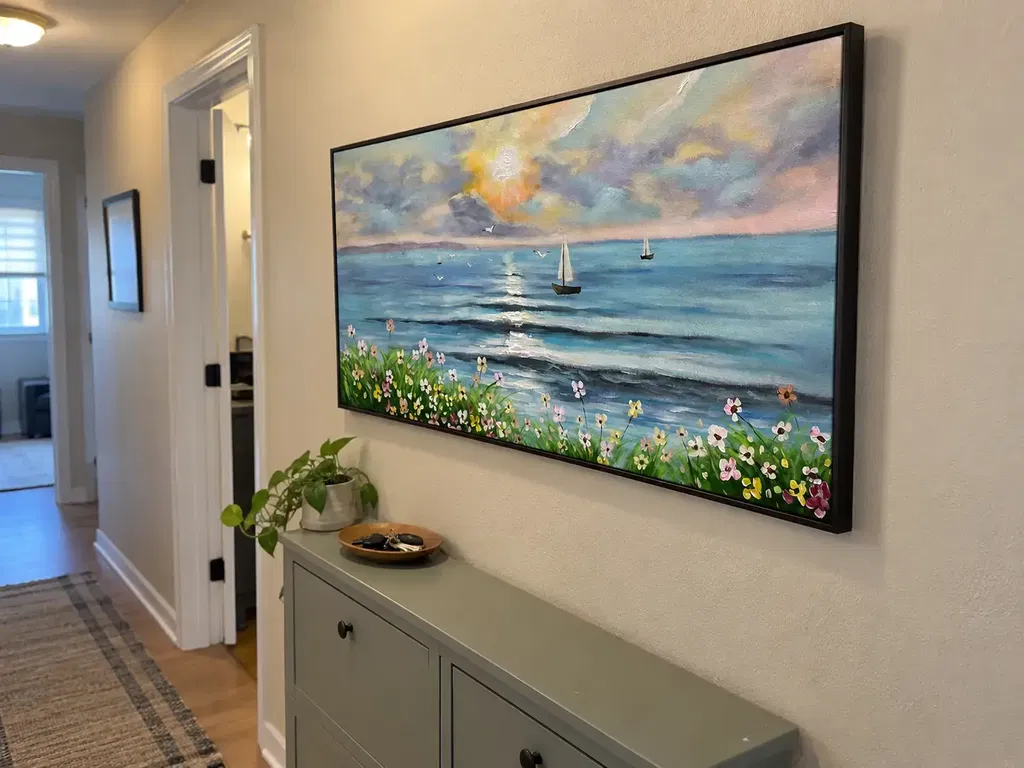
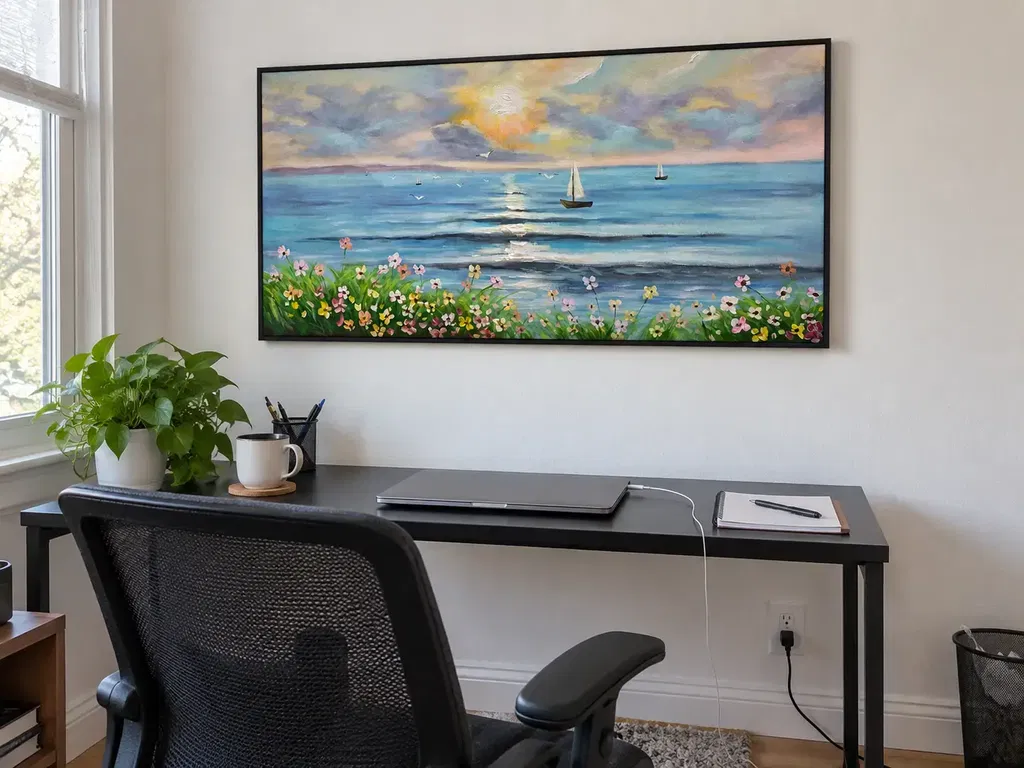
Horizontal paintings usually work well above rectangular tables and long buffets. They follow the width of the furniture and can make the arrangement feel calmer.
This format is also useful when the room already contains tall elements, such as windows, curtains, or cabinets.
Vertical Artwork
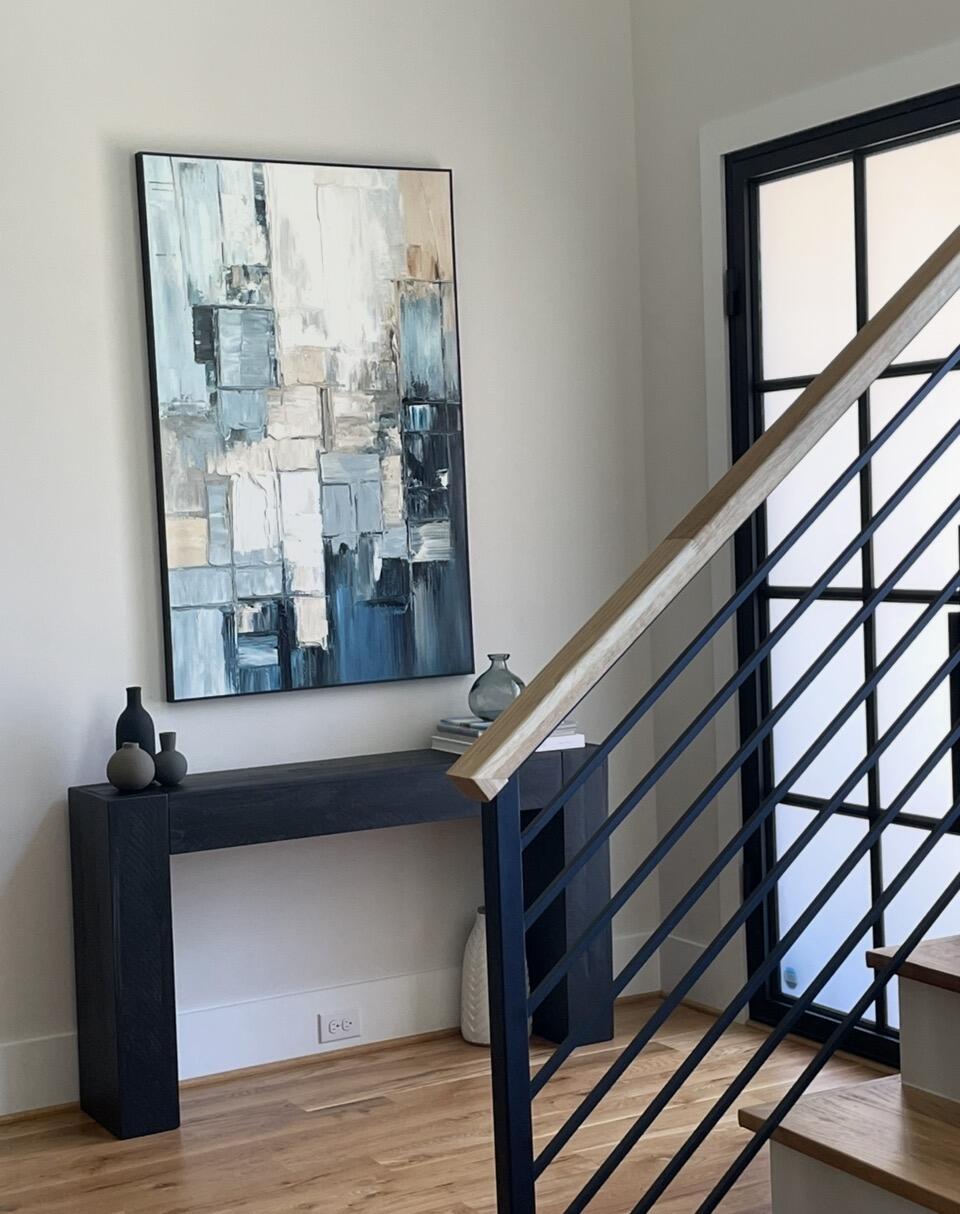
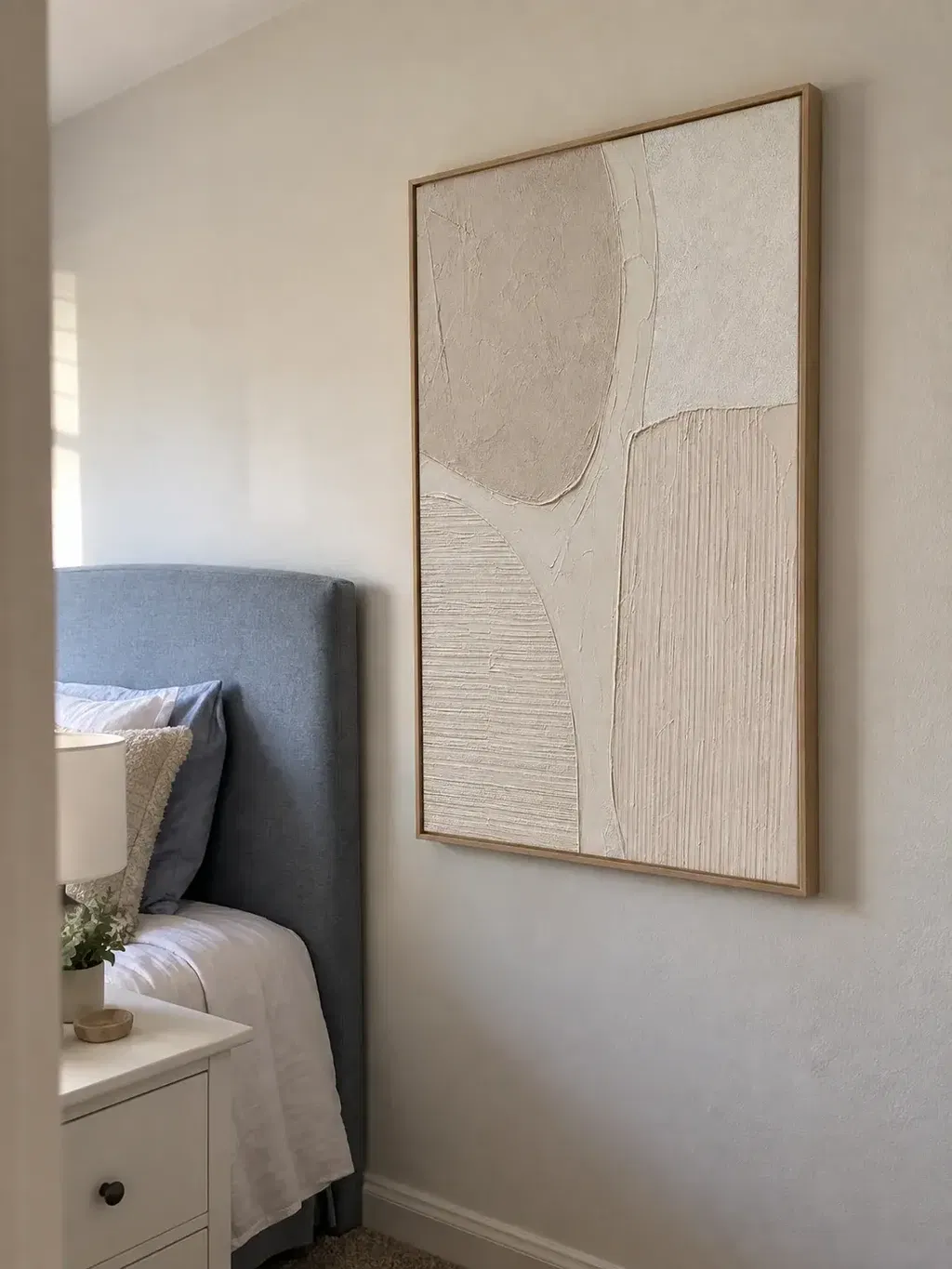
Vertical artwork can give a narrow wall more presence. It may work between windows, beside a doorway, or above a compact sideboard.
A vertical composition can also draw the eye upward when the furniture is low and the wall has unused height.
Square Artwork
A square painting creates a stable focal point. It can work above a short console or on a wall with balanced proportions.
Because a square does not strongly emphasize width or height, it must be large enough to hold the surrounding space.
One Painting, a Pair, or a Grouping
Choose one large painting when the room needs a clear focal point. A single substantial piece often creates a calmer result than several unrelated small works.
A pair can suit a long buffet or a symmetrical dining room. The two paintings should share enough color, style, or visual weight to feel connected.
A grouping works best when it has a clear plan. Keep spacing consistent and judge the entire arrangement as one composition. If the individual pieces feel disconnected, the wall may look busy rather than complete.

Match the Artwork to the Room’s Mood
Dining room wall art does not need to match every chair, plate, or accessory. It should support the overall feeling of the room.
Start by asking what the space already needs.
A pale room with light furniture may need depth or contrast. A colorful dining room may benefit from quieter artwork. A dark formal space may need lighter areas to prevent the wall from feeling too heavy.
Different styles can produce different effects:
- abstract artwork can add movement without introducing a literal subject;
- landscapes can create a calm sense of distance;
- botanical and floral paintings can soften straight furniture lines;
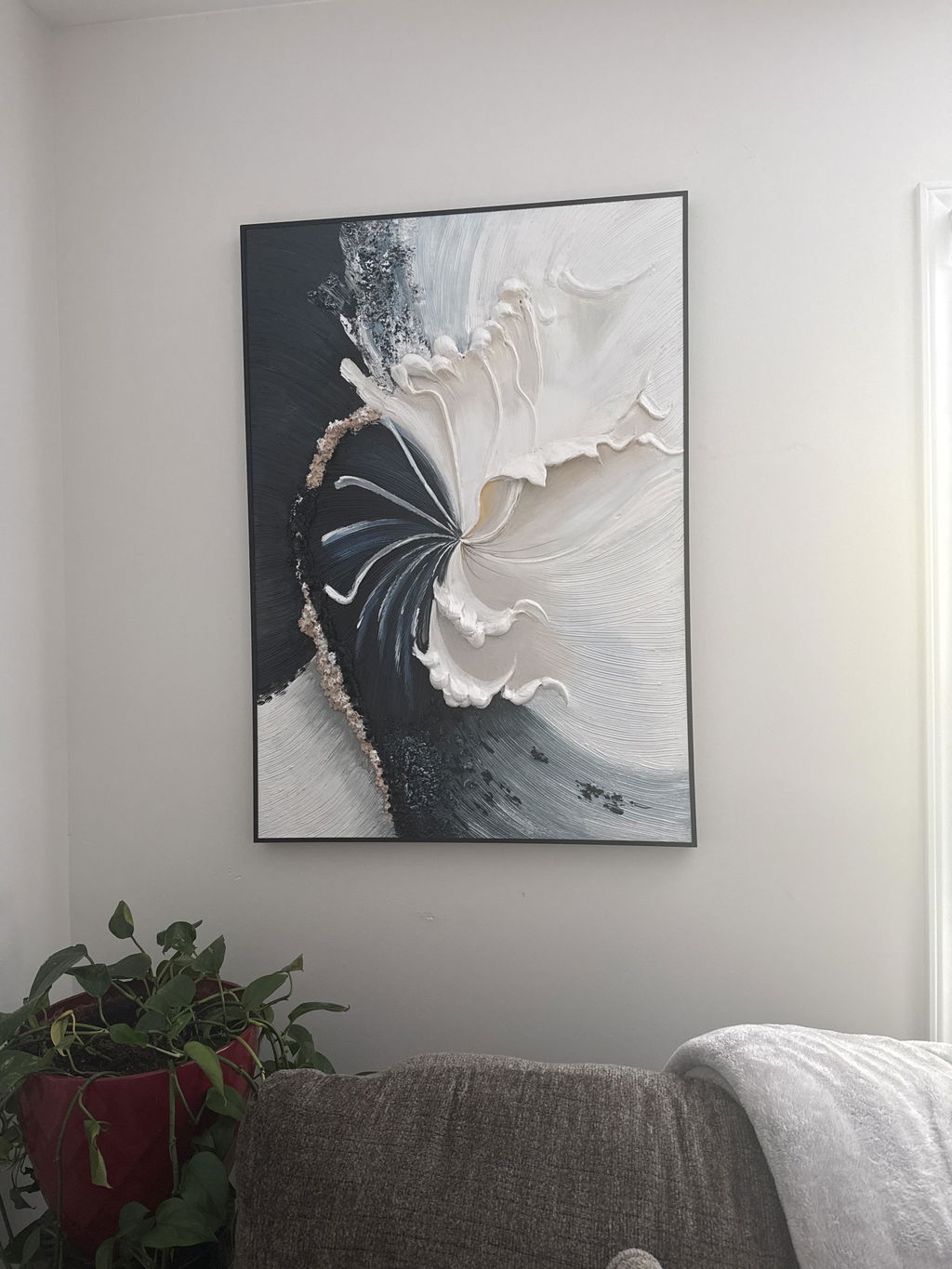
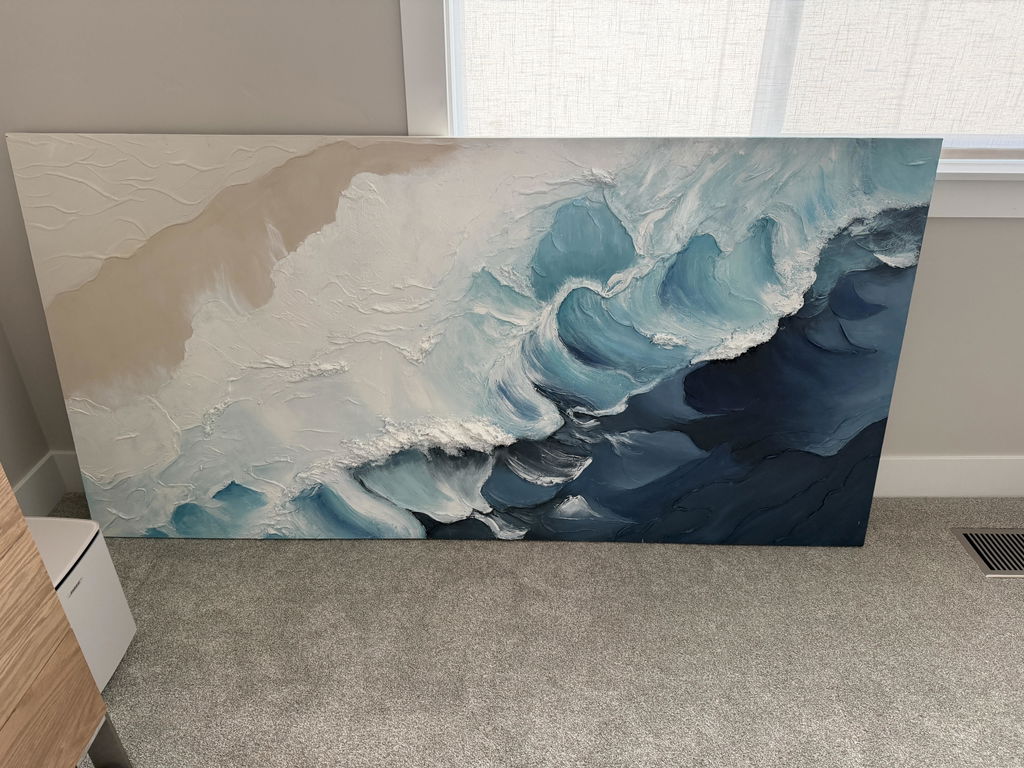
- textured neutral artwork can add depth without adding many colors;
- black-and-white artwork can give a modern dining room more structure;
- warm colors can connect with wood furniture and evening lighting.
Avoid trying to match every color exactly. Instead, look for one or two visual connections.
A warm detail in the painting may relate to the dining table. A dark line may repeat the chair frames. A pale section may connect with the wall, rug, or upholstery.
These small relationships can tie the room together without making it feel overly coordinated.
Check How the Artwork Looks in Evening Light
Dining rooms often look different at night. Daylight may be replaced by pendant lights, sconces, candles, or warm ceiling light.
This can change the artwork’s color, contrast, and texture.
A painting that appears bright during the day may look deeper and warmer in the evening. Raised brushwork can become more visible under side lighting. Smooth or reflective areas may create glare when a light points directly at the surface.
Before deciding on placement, check:
- whether a light faces the artwork directly;
- whether diners will see reflections from their seats;
- whether the colors remain clear at night;
- whether the texture is visible from across the table.
Soft or angled light often reveals texture better than strong frontal light. The objective is not to make the painting as bright as possible. It is to keep the artwork visible while preserving a comfortable dining atmosphere.

A Five-Minute Dining Room Wall Art Test
Before buying or hanging the artwork, use this quick test:
- Mark the proposed dimensions with painter’s tape.
- View the outline from the doorway and a dining chair.
- Compare its width with the table, buffet, or usable wall.
- Switch on the lights normally used during dinner.
- Check whether nearby décor supports or competes with the artwork.
If the taped outline looks lost from across the room, test a larger size. If the wall feels crowded, reduce the width or simplify the surrounding décor.
Also check the relationship between the artwork and anything below it. A large empty gap may make the painting look as though it is floating. Too little space can make the arrangement feel compressed.
This short test is more useful than judging the painting only from a product image. It connects the artwork with the dimensions, furniture, and lighting conditions of your own dining room.
The Right Art Should Belong to the Whole Room
Successful dining room wall art does more than cover an empty surface. It connects the wall with the furniture, lighting, and way people use the space.
Begin with the main viewing positions. Then test the size, shape, arrangement, color, and evening light.
One large painting may create a calm focal point. A pair may support a symmetrical layout. A planned grouping may add personality to a wider wall.
The goal is not to follow every decorating rule. It is to choose artwork that feels balanced from the table, the doorway, and the rest of the home.
Explore MontCarta’s dining room wall art collection to compare horizontal, vertical, abstract, floral, landscape, and textured compositions.
Frequently Asked Questions About The Dining Room Wall Art Test
What Size Wall Art Is Best for a Dining Room?
The artwork should relate to the furniture or usable wall beneath it. Above a buffet, approximately two-thirds to three-quarters of the furniture width is a practical starting point. Adjust the size for the frame, ceiling height, and surrounding wall space.
What Kind of Artwork Works Well in a Dining Room?
Abstract, landscape, floral, botanical, neutral, and textured artwork can all work well. The best option depends on the room’s scale, palette, lighting, and desired mood.
Should Dining Room Artwork Be Horizontal or Vertical?
Horizontal artwork often works above a long table or buffet. Vertical artwork is useful on narrow walls or between windows and doorways. Choose the orientation that fits the usable wall and furniture arrangement.