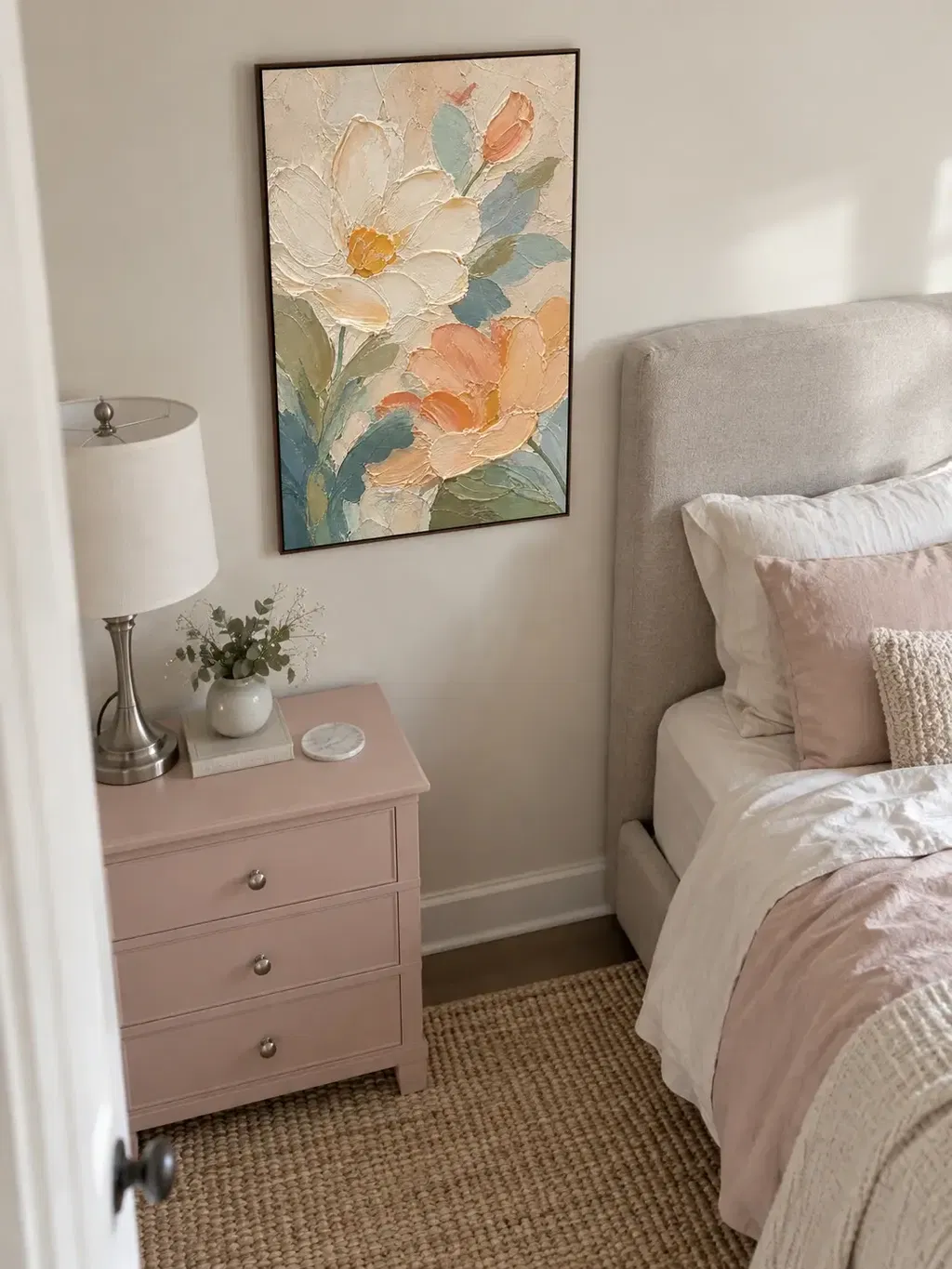
You have chosen the sofa, arranged the dining table, added lighting, and placed a few decorative objects. Everything the room appears to need is already there—yet something still feels missing.
This is a common interior-design problem. A room can be fully furnished without feeling visually finished. Furniture makes the space functional, but it does not always give the eye a clear place to settle or connect the different parts of the room.
In many cases, the missing element is not another chair, lamp, or accessory. It is wall art with enough presence to organize the room visually.
The right painting can create a focal point, connect colors, balance an empty wall, and give the interior a more personal identity. The goal is not simply to fill blank space. It is to select artwork that makes the furnishings already in the room feel intentional.
Why a Fully Furnished Room Can Still Feel Unfinished
A completed shopping list does not necessarily create a completed interior.
When furnishing a room, people often make decisions one object at a time. They choose a sofa for comfort, a table for function, curtains for privacy, and lighting for visibility. Each piece may work individually, but the room can still lack a visual relationship between them.
This is why adding more small décor does not always solve the problem. Extra cushions, vases, and tabletop objects may make the room busier without giving it greater clarity.
Wall art works differently. Because it occupies a large vertical surface, it can influence how the entire room is perceived. A well-chosen painting can define where attention should go and connect the wall to the furniture below it.
If you are wondering how to make a room feel finished, begin by looking at the largest empty wall rather than the smallest empty surface.

Five Reasons Your Room Still Does Not Feel Complete
There Is No Clear Visual Focal Point
A strong room usually gives the eye an obvious place to begin. This might be a fireplace, an architectural feature, a view, or a substantial piece of artwork.
Without a focal point, the sofa, lighting, tables, and accessories may all compete for attention. Nothing appears important enough to organize the rest of the room.
A statement painting above a sofa, console, bed, or dining table can establish that hierarchy. It does not have to be excessively bright or dramatic. Its scale, placement, contrast, or texture may be enough to make it the visual anchor.
The Wall Feels Disconnected from the Furniture
An empty wall above a large sofa or dining table can make the lower half of the room feel visually heavy. The furniture occupies the floor while the wall remains unused, creating an obvious separation between the two areas.
Wall art can bridge that gap. When the width and orientation of a painting relate to the furniture beneath it, the wall and furniture begin to read as one composition.
This is particularly important in open-plan homes, where artwork can help define a dining or seating area without adding a physical divider.
The Room’s Colors Do Not Feel Connected
A room can contain attractive colors and still feel fragmented. The sofa may be neutral, the rug may introduce blue, the wood may add warmth, and a few accessories may bring in green or rust—but no single element connects them.
The painting does not need to match every object. Instead, look for artwork that contains one or two colors already present in the room, along with additional tones that introduce depth.
For example, a predominantly green botanical painting may relate to plants and dark tableware while small yellow or red details add energy. That relationship is more natural than trying to match the painting exactly to the sofa.

The Wall Art Is Too Small for the Space
A painting may be attractive on its own but still feel ineffective when it is undersized.
Small artwork surrounded by a large amount of empty wall can appear isolated. It fails to connect with the furniture and may make the wall feel even larger.
As a general starting point, MontCarta recommends that artwork occupy approximately 60% to 75% of the available wall area. When hanging a painting above furniture, a width of roughly two-thirds to three-quarters of the furniture below often creates a more balanced relationship. These are starting points rather than rigid rules, but they can help prevent a substantial wall from overwhelming a small piece.
Before ordering, mark the proposed dimensions on the wall with painter’s tape. View the outline from the normal entrance and seating position—not only from directly in front of it.
The Room Looks Decorated but Not Personal
A coordinated room can still feel like a showroom if every choice is safe and interchangeable.
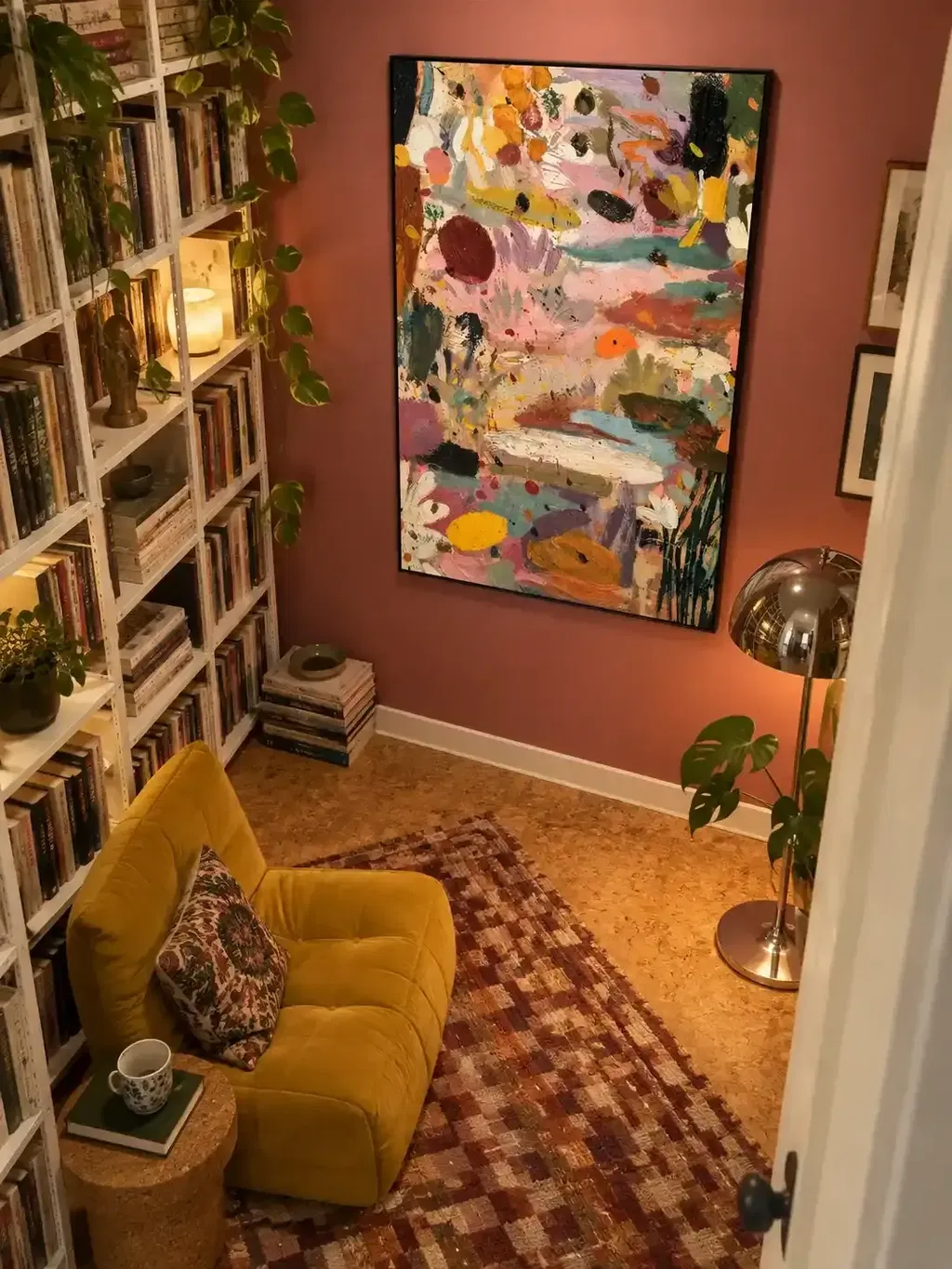
Artwork introduces subject, mood, movement, and visible expression. A quiet landscape may make a bedroom feel calmer. A textured abstract may bring depth to a minimal living room. A moody floral painting may add intimacy and personality to a dining space.
The best choice is not necessarily the painting that matches most perfectly. It is the one that belongs visually in the room while still expressing something distinctive.
How Wall Art Ties a Room Together
Wall art that ties a room together usually performs several functions at once.
First, it balances the visual weight of the furniture. Second, it repeats or complements colors found elsewhere in the interior. Third, it establishes a mood that helps different objects feel as though they were selected for the same space.
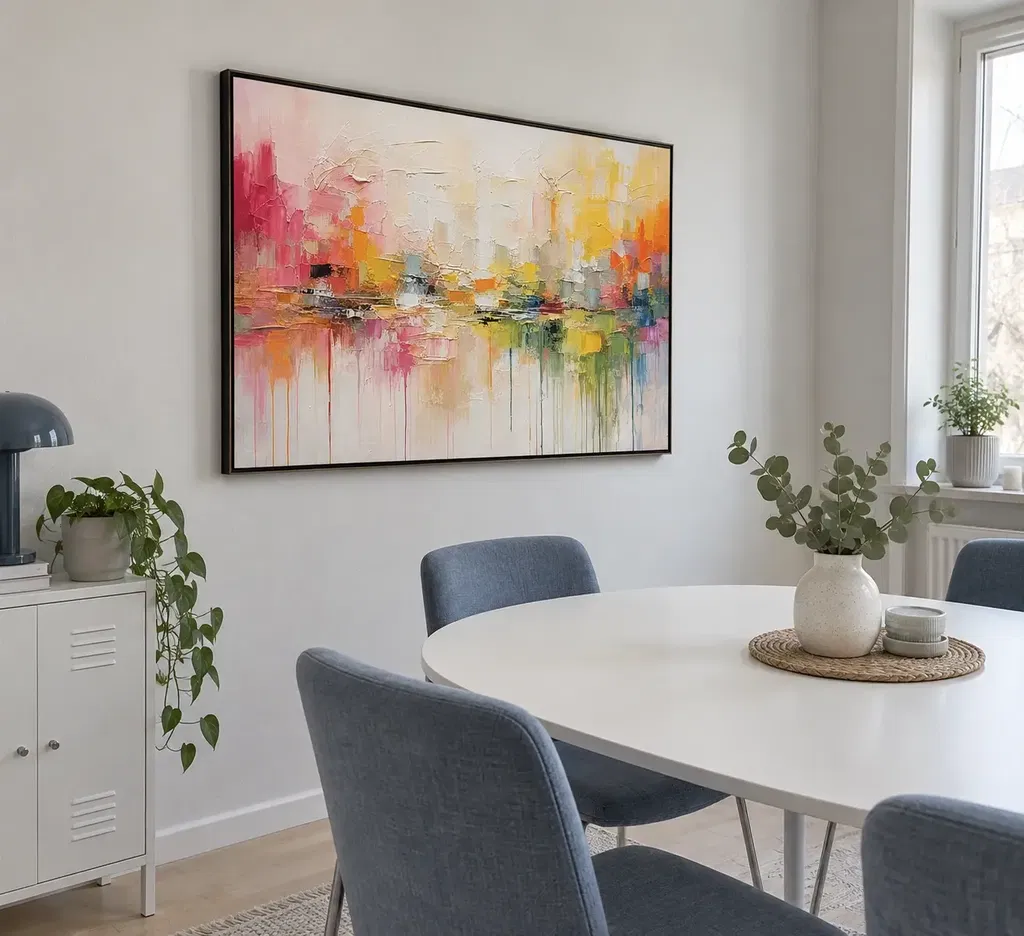
The effect is easiest to see in a dining room. The table, chairs, tableware, lighting, and plants may already form an attractive arrangement, but a blank wall can leave the composition without a visual destination. A substantial painting behind the table creates a background for the entire setting.
In a living room, the same principle applies above the sofa. The painting can visually connect the seating area, rug, cushions, and surrounding accessories without requiring those elements to match exactly.
This is the difference between using art as an isolated decoration and using it as part of the interior architecture.
How to Choose Wall Art That Makes a Room Feel Finished
Choose the Right Size and Orientation
Begin with the shape of the available wall and the furniture below it.
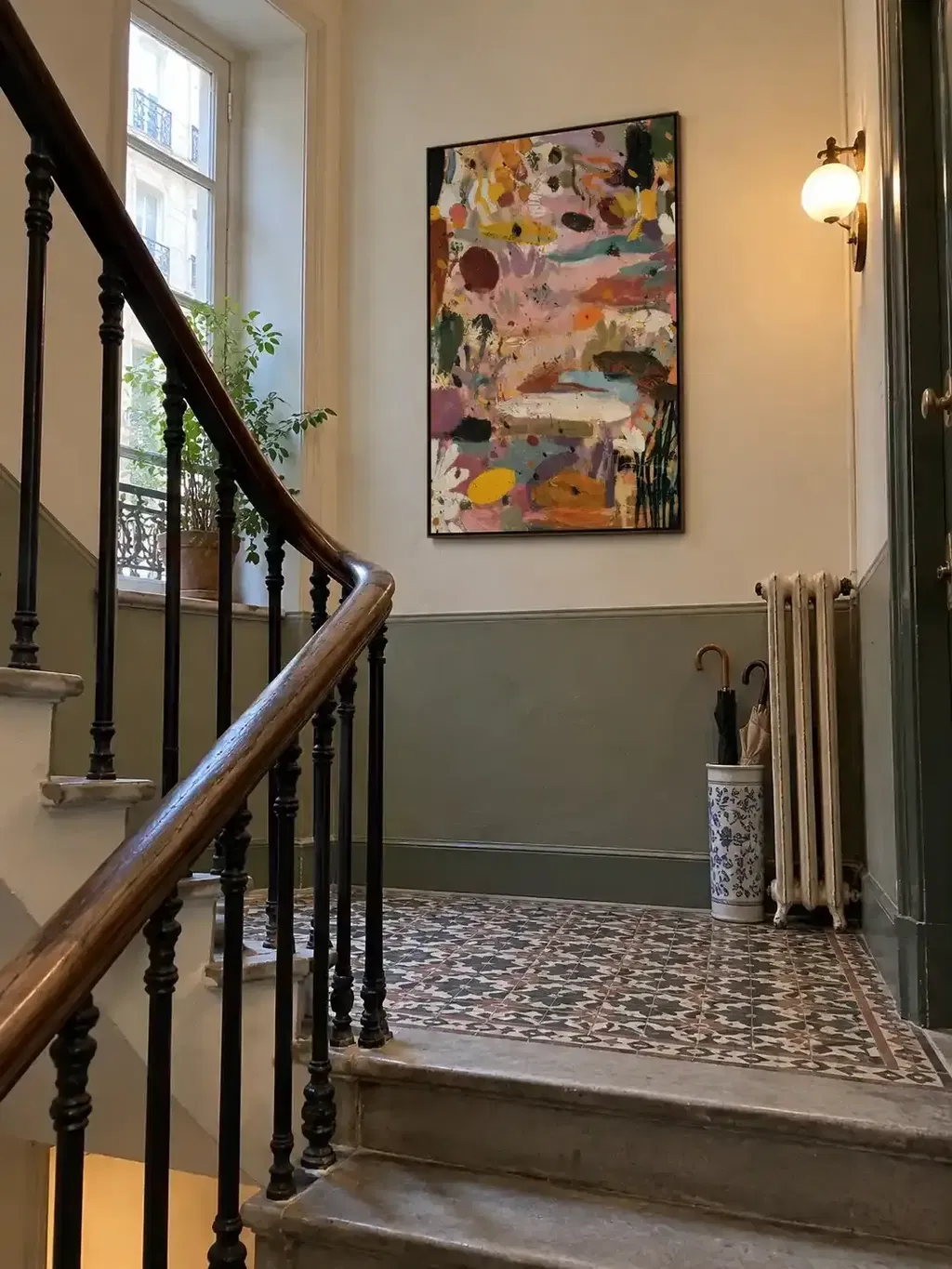
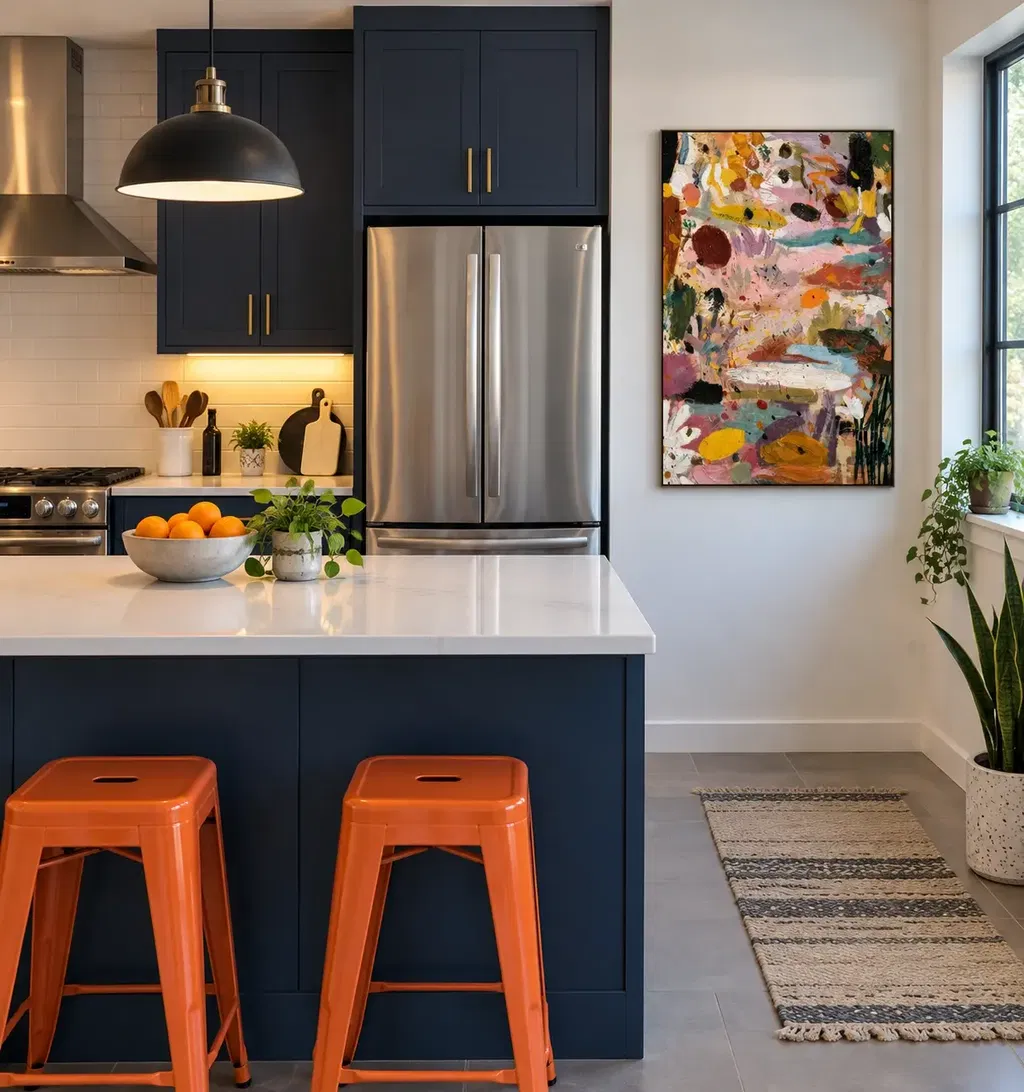
A horizontal painting usually works well above a sofa, bed, sideboard, or dining table because its direction follows the width of the furniture. A vertical painting can suit a narrow wall, the space beside a doorway, or a room with tall ceilings.
For a broad wall, one large painting often creates a clearer focal point than several unrelated small pieces. A coordinated set can also work, but the total arrangement should have enough visual weight for the space.
When comparing sizes, assess the entire wall rather than only the dimensions of the artwork. Ceiling height, furniture width, viewing distance, and surrounding empty space all affect how large a painting appears once installed.
Connect Existing Colors Without Matching Everything
Start by identifying the room’s dominant neutral color, one secondary color, and one accent.
The artwork can reinforce the secondary or accent color while introducing related variations. A beige room, for example, does not require a beige painting. It may benefit more from a painting with blue, green, rust, or gold supported by a quieter neutral background.
Avoid treating color coordination as exact color matching. Materials reflect light differently, and colors viewed on a screen may not appear identical under your home’s natural and artificial lighting.
The objective is visual connection, not duplication.
Consider Texture, Mood, and Viewing Distance
Color is only one part of the decision. Texture and contrast influence how the painting behaves at different distances.
A strongly textured painting may reveal more detail as you move closer, adding physical depth to an otherwise simple interior. A softer, more atmospheric composition may create a calm background when viewed from across the room.
Consider how the room is used. A living room may support a stronger focal point, while a bedroom may benefit from lower contrast. A dining room can often accommodate deeper colors because the artwork is experienced alongside warm lighting, table settings, and conversation.
MontCarta’s wall art collection includes hand-painted works across subjects and styles, allowing the choice to begin with the room’s proportions and atmosphere rather than a single decorative formula.

A Quick Room-by-Room Wall Art Guide
| Room | Common problem | Useful art direction |
|---|---|---|
| Living room | The sofa wall feels empty or visually weak | A substantial horizontal painting or coordinated set |
| Dining room | The furniture feels complete, but the wall lacks atmosphere | A statement painting with enough depth to anchor the table |
| Bedroom | The wall above the bed feels bare | A calm horizontal work with controlled contrast |
| Entryway | The space feels transitional and impersonal | One distinctive vertical or square painting |
| Home office | The room is functional but visually flat | Artwork with texture, movement, or a focused color palette |
| Open-plan room | Dining and seating areas lack definition | Separate focal artworks that give each zone its own identity |
The purpose of this guide is not to impose one style on every room. It is to match the artwork’s scale, direction, and visual strength to the role of the wall.
Complete the Room with Art That Feels Intentional
Before choosing a painting, step back and ask four questions:
- Where does my eye go when I enter the room?
- Does the largest wall feel connected to the furniture?
- Are the room’s colors related or scattered?
- Is the existing artwork large enough to hold the wall?
The answers will usually reveal whether the room needs greater scale, stronger contrast, a clearer color relationship, or a more personal subject.
When considering a MontCarta painting, customers receive photos and videos of the completed work before shipment, and the painting is shipped after approval. This review stage provides an opportunity to examine the finished artwork itself, although final in-room appearance will still depend on wall color, lighting, placement, and viewing distance. Details of this process are available in MontCarta’s Worry-Free Purchase information.
The practical objective is simple: select artwork that supports the room you already have instead of adding unrelated decoration.
The Room May Not Need More Furniture—It May Need the Right Art
When a furnished room still feels unfinished, the instinct is often to buy more objects. But additional décor cannot always correct a missing focal point, an empty wall, or weak visual balance.
The right wall art can do more with less. It can connect furniture to the wall, repeat colors without making the room look overly matched, and give the interior a sense of identity.
A finished room is not necessarily a full room. It is a room in which every major element feels visually related—and sometimes one well-chosen painting is the piece that completes that relationship.

Common Questions About Wall Art and Room Design
Q1. Why Does My Room Still Feel Unfinished?
A furnished room may still feel unfinished when it lacks a focal point, the walls are disconnected from the furniture, the colors do not relate, or the artwork is too small. Before adding more accessories, examine the largest empty wall and the visual balance around it.
Q2. How Do I Choose Wall Art That Ties a Room Together?
Choose artwork that relates to the scale of the wall, repeats one or two existing colors, and supports the mood of the room. It should complement the interior without matching every furnishing exactly.
Q3. How Large Should Wall Art Be Above a Sofa or Dining Table?
A useful starting point is to select artwork measuring approximately two-thirds to three-quarters of the width of the furniture beneath it. Confirm the size by marking the outline on the wall and viewing it from the room’s normal seating and entry points.