The Post-Speculative Art Era: Why Hand-Painted Vibrancy Matters Now
The global art market is undergoing a structural correction. Recent data from Marketplace.org indicates that high-end auction sales plummeted 44% year-over-year in 2024, signaling a retreat from art as a purely financial asset. In its place, we are seeing a return to "real application value"—art that transforms lived environments and provides deep emotional resonance.
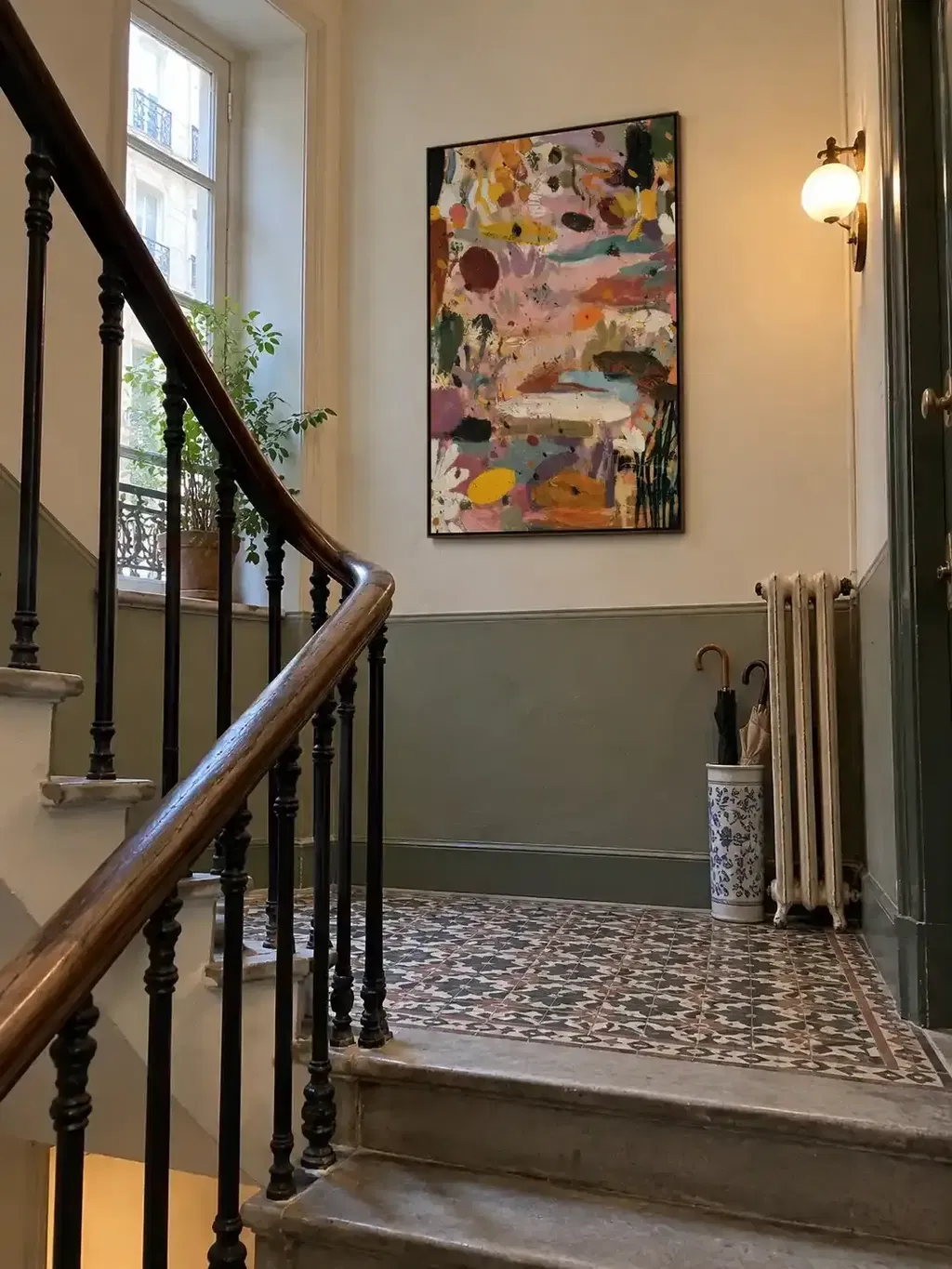
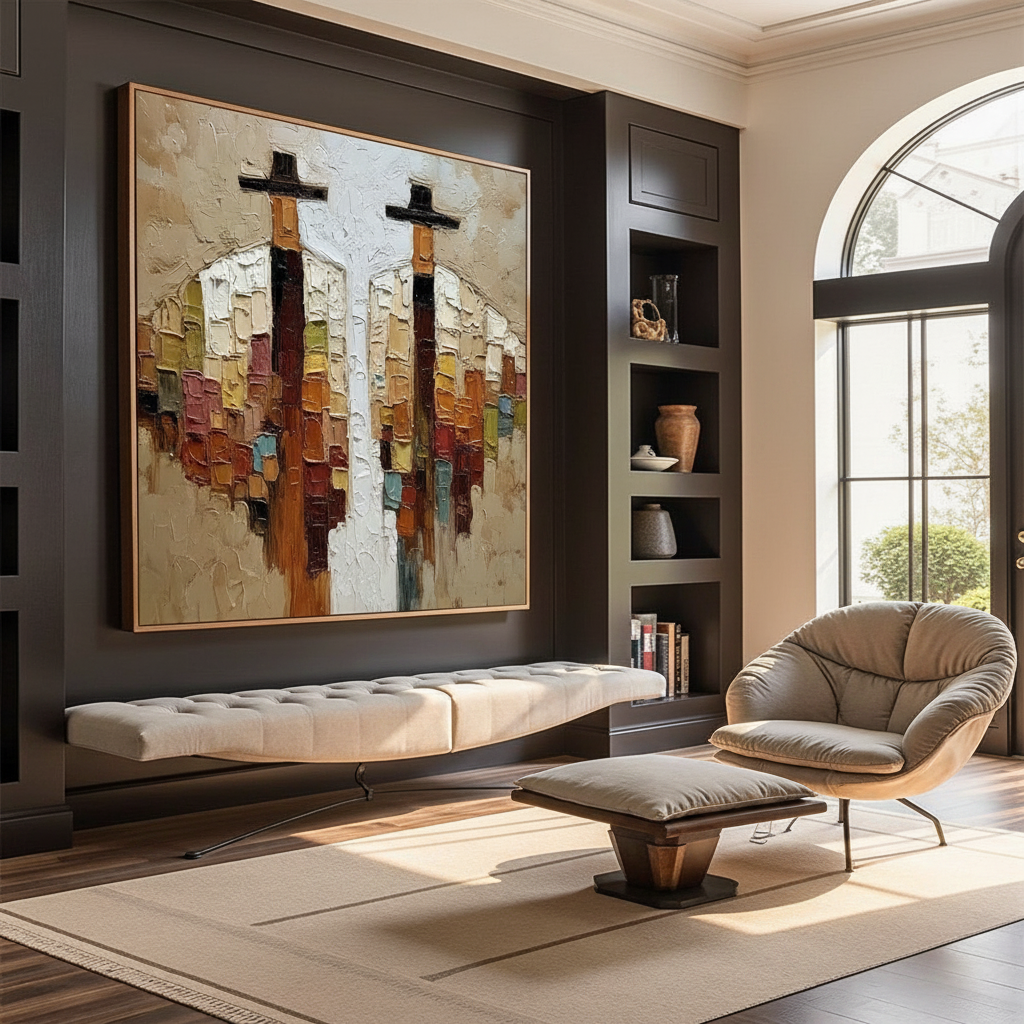
For the modern home improver, this shift is most visible on the walls. As interior trends lean toward moody, dark palettes—charcoals, deep navies, and forest greens—the technical performance of art becomes a primary concern. A standard print often "dies" against a dark wall, losing its depth and becoming a flat, reflective rectangle. In contrast, authentic hand-painted work offers a level of saturation and lightfastness that justifies its premium.
Furthermore, the "human element" has never been more valuable. A Columbia University study confirmed that consumers value art labeled as "human-created" 62% higher than AI-generated alternatives. This premium isn't just sentiment; it is rooted in the physical reality of pigment chemistry and the "essential identity" that University of Chicago research suggests is irreplicable by digital replicas.

The Molecular Battle: Oil vs. Acrylic Binders
To understand why some paintings maintain their "pop" while others fade, we must look at the binder—the "glue" that holds pigment particles together.
Oil: The Oxidative Marathon
Traditional oil paints use drying oils (like linseed or walnut) that undergo a complex chemical process called oxidative cross-linking. Unlike water-based media that dry by evaporation, oil paint gains mass as it absorbs oxygen, creating a tough, flexible film.
Experienced muralists often observe that oil-based reds and yellows maintain exceptional vibrancy on dark walls for decades. This is partly due to oil's slower drying time, which allows pigment particles to settle more uniformly. According to optical theory, when particles are distributed with high precision, the scattering of light is maximized, leading to deeper perceived saturation.
Acrylic: The Physical Coalescence
Modern acrylics dry via "coalescence." As the water evaporates, the polymer spheres deform and fuse into a continuous film. While Tate research confirms that acrylics have excellent anti-aging properties, they are prone to "haziness" caused by the migration of surfactants to the surface.
Modeling Note (Pigment Distribution): Our analysis of pigment behavior assumes a standard indoor environment (20°C, 50% RH).
Parameter Oil Medium Acrylic Medium Unit Rationale Pigment Particle Size (PSD) 20–50 5–20 μm Springer Link Binder Protection Level 60–80% ~100% % Polymer encapsulation vs. Varnish Refractive Index (Typical) 1.48–1.50 1.47–1.49 n Getty Conservation Data Mass Change during Drying +1–2% -40–60% % Oxygen absorption vs. Evaporation Optimal Pigment Volume 25–35% 30–40% % ScienceDirect
Lightfastness Decoded: Beyond the ASTM Label
Most high-end paints carry an ASTM D4303 rating, typically ranging from Lightfastness I (Excellent) to V (Very Poor). However, a "Lightfastness I" rating on a tube of paint is not a guarantee of eternal color.
The Testing Gap
As noted by the ASTM D4303 Standard, manufacturers can choose between several test methods, including natural daylight and xenon-arc lamps. These tests simulate accelerated aging but often fail to account for real-world variables like humidity fluctuations and indoor pollutants.
The Protection Mechanism
The medium itself acts as a shield. Research published in Progress in Organic Coatings suggests that the binding medium's physical protection is often more critical than the pigment's chemistry. Acrylic's polymer encapsulation provides nearly 100% isolation from the environment, whereas oil's natural varnish provides 60–80% protection. This means that while oil pigments may initially appear more vibrant due to their larger particle size and higher gloss, they require proper sealing (varnishing) to match the long-term chemical stability of acrylics.

The "Dark Wall" Strategy: Saturation and Reflectance
When placing art against dark interior walls, the "reflectance ratio" becomes the most important metric for visual impact.
- Contrast Management: Dark walls absorb light. To prevent the artwork from disappearing, you need a medium with high "tinting strength." Hand-painted art typically uses much higher pigment concentrations than mass-produced prints.
- The Gloss Factor: Oil's inherent gloss creates a higher contrast against matte dark walls. This specular reflection helps the artwork "advance" toward the viewer, while the dark wall "recedes."
- Refractive Index: According to the Getty Conservation Institute, differences in the surface refractive index are the root cause of color saturation. Oil binders have a slightly higher refractive index than most acrylics, which reduces internal light scattering and makes colors appear deeper and richer.
Interior designers often recommend oil for permanent statement pieces in low-traffic areas like dining rooms or master suites, where the play of light on texture is paramount. For high-traffic areas or nurseries, high-end acrylics are preferred for their durability and ease of cleaning.
Health, Safety, and the "Eco-Mural" Movement
As consumers become more conscious of indoor air quality (IAQ), the chemistry of murals is coming under scrutiny. The EPA warns that indoor air pollution can be significantly higher than outdoor levels, making low-VOC (Volatile Organic Compound) materials a necessity.
The Toxic Pigment Legacy
While modern art supplies are generally safe, some traditional pigments carry risks. IARC Volume 58 identifies cadmium compounds as Group 1 carcinogens. While the EU has rejected a total ban on cadmium in artist paints (due to the negligible amount released into the environment compared to fertilizers), many professional studios are shifting toward "hue" alternatives that mimic the color without the heavy metal risk.
Sustainable Alternatives
Forward-thinking artists are now utilizing eco-friendly alternatives. Cincinnati Art Museum highlights the use of hemp or flax canvases, which consume half the water of cotton, and walnut oil as a non-toxic replacement for industrial solvents like turpentine.
The Economic Impact: Murals as Infrastructure
Investing in hand-painted art isn't just an aesthetic choice; it’s a proven driver of property value.
- Residential Growth: A Royal Society study using the CAR model found that neighborhoods with higher "art" geo-tags saw significantly greater relative house price gains.
- Commercial Vitality: In Chicago, public art projects in Millennium Park drove an estimated $1.4 billion in real estate-related growth.
- Social Cohesion: Philadelphia’s Porch Light Program demonstrated that large-scale murals increase social cohesion and mutual trust within communities.
For commercial developers, murals serve as "physical billboards" that generate foot traffic and combat the decline of physical retail. University of Cincinnati research confirms a direct correlation between murals and increased pedestrian activity, even when controlling for population density.

Psychological Dividends: Biophilic Design and Healing
The impact of art extends into the realm of public health. The WHO has reviewed over 3,000 studies confirming that art interventions effectively alter clinical indicators for mental illness and brain injuries.
Stress Reduction
A review by the University of Pennsylvania found that 73% of patients in clinical settings reported significant mood improvements when exposed to environmental art. This is linked to the "mPFC and amygdala" activation seen during passive art viewing, which optimizes emotional regulation circuits.
The Biophilic Effect
Nature-themed murals, often referred to as "Biophilic Design," produce stress-reduction effects in the brain similar to being outdoors. In high-density office environments, such as those studied in Tokyo, these murals are used to intervene in high rates of employee burnout and cognitive fatigue.
Choosing Your Medium: A Practical Framework
When deciding between oil and acrylic for your next interior project, consider this decision matrix based on professional practice (not a controlled lab study).
| Feature | Oil Painting | High-End Acrylic |
|---|---|---|
| Best For | Statement pieces, dark walls, luxury textures | High-traffic areas, nurseries, fast-turnaround projects |
| Visual Pop | High (due to gloss and refractive index) | Moderate to High (matte or satin finish) |
| Durability | High (once fully cured and varnished) | Very High (flexible, resistant to cracking) |
| Maintenance | Requires professional cleaning | Can often be wiped with water-based swabs |
| Eco-Profile | Natural oils, but requires solvents | Water-based, but contains microplastics |
Troubleshooting Common Issues
- Yellowing: If your white canvas turns yellow after applying acrylic medium, you are likely experiencing Support Induced Discoloration (SID). This happens when water-soluble impurities are drawn out of the canvas fibers. Using a high-quality primer is essential.
- Fading: If an acrylic piece fades within 5–7 years, it may be due to the use of "student-grade" pigments with high filler content. Always verify that your artist uses professional-grade pigments with documented lightfastness.
- Surface Haziness: This is often caused by surfactant migration in acrylics. Gently wiping the surface (as practiced by Tate conservators) can often restore the original clarity.
Summary: Investing in Longevity
The choice between oil and acrylic ultimately depends on the specific demands of your space. While oil offers an unparalleled depth and "glow" that thrives on dark walls, acrylic provides a modern, durable, and flexible solution for the active home. By focusing on pigment chemistry, particle size, and binder transparency, you can ensure that your investment in hand-painted art remains a vibrant focal point for decades to come.
As the art market shifts away from speculative assets, the value of a well-executed, hand-painted mural lies in its ability to transform a house into a home, boost property value, and improve the mental well-being of its inhabitants.
Disclaimer: This article is for informational purposes only and does not constitute professional health, safety, or financial advice. Always consult with a certified industrial hygienist or professional art conservator when handling specialized art materials or planning large-scale installations.
Sources
- Marketplace.org - Art Market Struggle
- Columbia Business School - Human vs. AI Art Study
- UPenn Neuroaesthetics - Visual Art in the Built Environment
- WHO Scoping Review on Arts and Health
- ASTM D4303 - Standard Test Methods for Lightfastness
- Royal Society - Art and Property Prices
- EPA - Indoor Air Quality and Low-VOC Paints
- Tate - Conservation Concerns for Acrylic Emulsion Paints
- NCBI - Titanium Dioxide Pigment Toxicity
- Springer - Laser Diffraction Measurements of Pigment Size