A dining room can be thoughtfully furnished and still feel incomplete. The table may suit the space, the chairs may be comfortable, and the lighting may work perfectly—but an open wall can leave the room without a clear visual center.
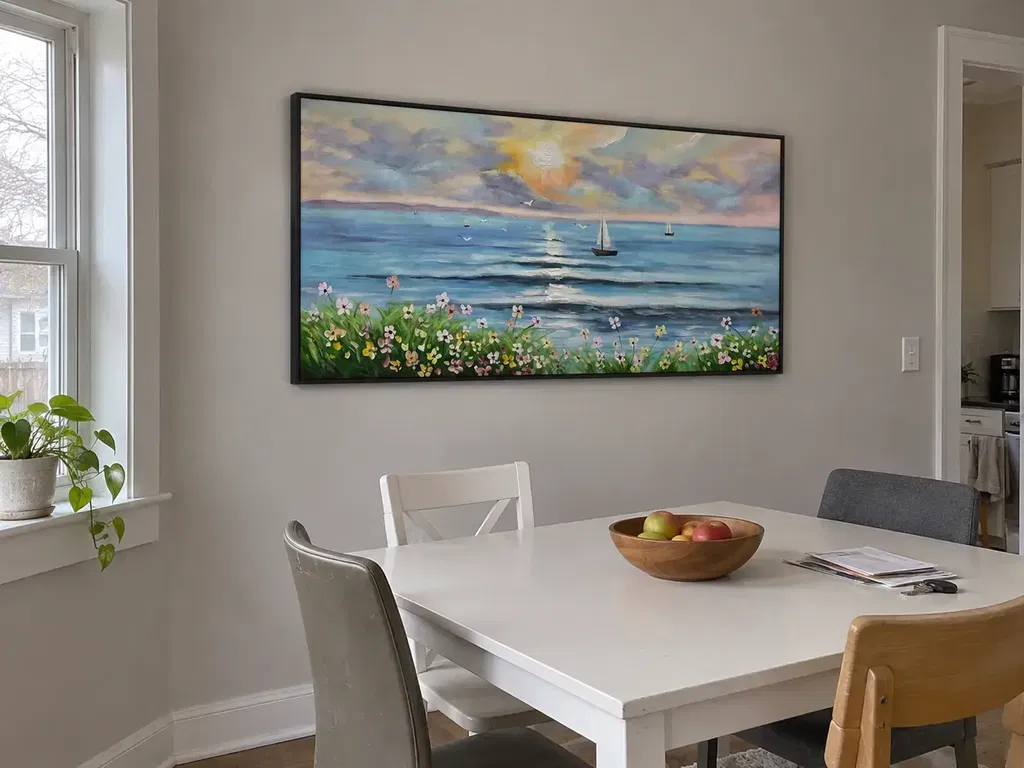
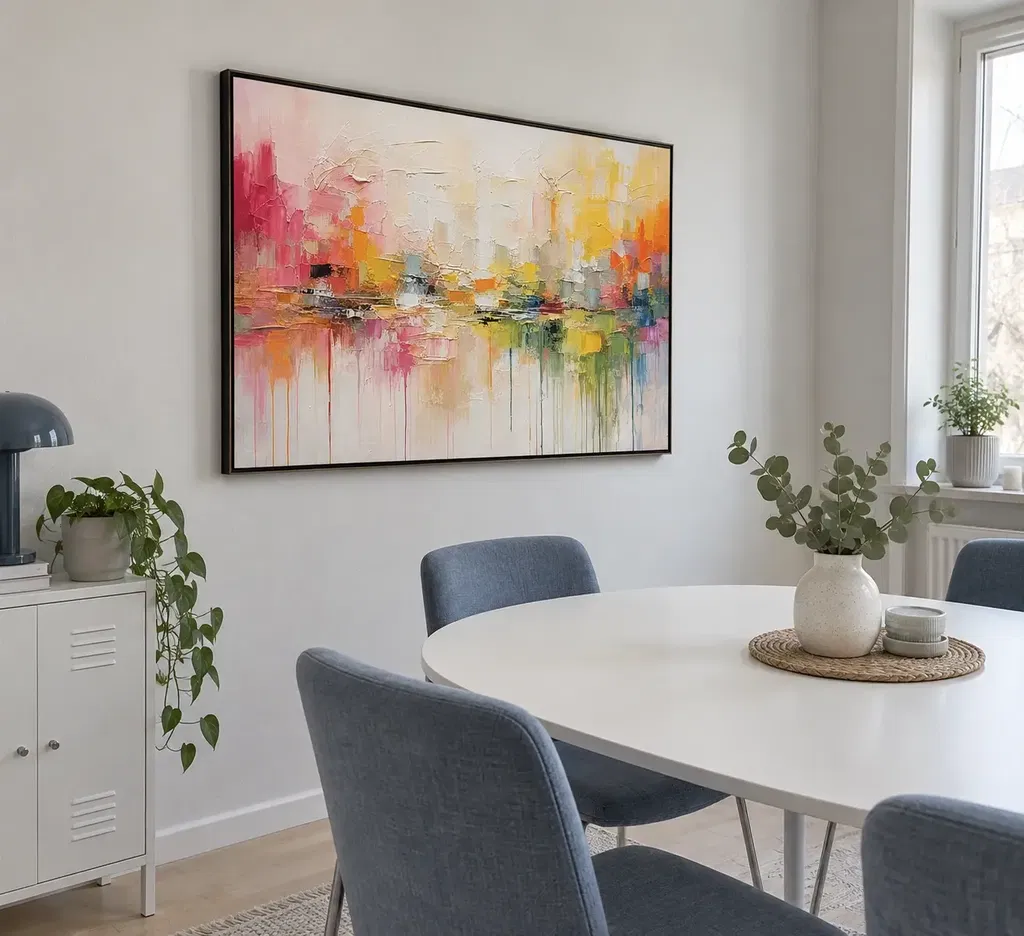
In this real home, a home décor creator selected MontCarta’s Meadow’s Embrace to bring more color, depth, and personality into a light dining room furnished with warm wood, neutral seating, and abundant greenery.
The result shows what carefully selected floral dining room wall art can accomplish. The painting does not merely fill an empty wall. Its dark green background introduces depth, its colorful flowers bring energy, and its botanical subject connects naturally with the plants and materials already present in the room.

The Dining Room Needed a Visual Anchor
This dining space already had a strong natural foundation. A warm wooden table created an inviting atmosphere, while green plants softened the clean walls and brought life to the table setting.
What the room lacked was a visual anchor.
Without a dominant piece on the wall, attention remained divided among the table, shelving, lighting, and decorative objects. Each element worked individually, but nothing brought them together as one composition.
A single piece of dining room wall art changed that relationship. Meadow’s Embrace now gives the eye a natural place to rest. The dining table visually belongs to the wall behind it, and the surrounding plants and accessories feel connected rather than separately arranged.
This is one reason a substantial painting can be especially effective in a dining room. It can organize the space and establish a clear focal point without requiring additional furniture or numerous small wall decorations.
Why Meadow’s Embrace Works in This Space
Meadow’s Embrace features colorful wildflowers emerging against a deep green background. The contrast makes the flowers visible from across the room while preserving a calm, nature-inspired atmosphere.
Several characteristics make the painting particularly effective in this dining room.

The Dark Green Background Creates Depth
The room uses a light wall and predominantly neutral furnishings. Against that setting, the dark green composition introduces contrast without the severity of solid black.
The darker field gives the wall more visual depth and makes the colorful botanical details appear brighter. It also helps the painting remain distinct when viewed from the opposite side of the dining table.
Instead of blending into the light wall, the artwork establishes a defined area of visual weight. That contrast gives the dining space more structure while allowing the surrounding furniture to remain relatively simple.
The Botanical Subject Connects with the Greenery
The room already contains several plants, so the floral subject does not feel like an unrelated decorative addition. The painted flowers and foliage extend an idea already present in the interior.
This natural connection is one reason floral and botanical wall art can work particularly well in dining spaces that feature greenery, wood, woven materials, or other organic elements.
That does not mean the artwork must match every plant or decorative object. Here, the relationship is subtle: real leaves echo the painting’s green background, while the painted flowers introduce colors that do not already dominate the room.
The result feels coordinated without appearing overly matched.
The Floral Colors Add Energy Without Taking Over
Red, yellow, orange, pink, and white flowers bring warmth to the painting. Because these colors appear as smaller accents against a larger green field, the composition feels lively without becoming visually chaotic.
That balance matters in a dining room. The artwork needs enough presence to hold attention, but it should not compete with the table setting, food, lighting, or people using the space.
In this installation, the concentrated floral colors function as accents, while the deep green background keeps the overall effect grounded.
Hand-Painted Texture Adds More Than Color
Color is only part of what the artwork contributes. Its hand-painted surface gives the flowers and background physical variation that cannot be fully conveyed by a completely flat image.
Viewed from the dining table, the surface reveals changes in brushwork, texture, and color density. Highlights become more noticeable as natural or interior light moves across the canvas, allowing the painting to appear slightly different throughout the day.
This quality is especially relevant in a dining room because the artwork may be viewed under several lighting conditions: daylight from nearby windows, overhead lighting during meals, and softer ambient light in the evening.
The texture does not need to dominate the room to be effective. Its value lies in the additional layer of detail that becomes visible when someone spends time in the space or looks at the painting more closely.

How One Painting Connected the Room
The finished installation demonstrates that successful wall art is not only about matching colors. It is about creating relationships among the elements already present in the room.
In this dining room:
- The dark green painting balances the light wall.
- The botanical subject connects with the surrounding plants.
- The colorful flowers enliven the neutral furniture.
- The warm frame relates naturally to the wooden dining table.
- The scale gives the dining area a defined visual center.
The homeowner later described how one painting changed the feeling of the space. She highlighted the colors, details, and hand-painted texture, explaining that they brought a more artistic atmosphere into the room.
That response is consistent with what the completed space shows. The dining room feels more intentional, but it still feels comfortable and lived in. The painting has presence without making the entire room feel staged around it.
Choosing the Right Scale for Your Own Dining Room
The proportions used in this real home should not be treated as a fixed formula for every dining room. The right size depends on the width and height of the available wall, the position of the table, nearby furniture, and the distance from which the painting will usually be viewed.
A piece that works in one home may feel too small or too dominant in another.
Before selecting a size, consider how much visual weight the room needs. A large open wall may benefit from one strong painting, while a narrower section of wall may be better suited to a more vertical format.
You can test the proportions with painter’s tape or a paper template before ordering. If you need a more detailed way to evaluate scale, MontCarta’s large wall art sizing guide explains how artwork can relate to the furniture and wall beneath it.
For additional dining-room considerations—including placement, mixed lighting, and viewing the artwork from a seated position—refer to MontCarta’s dining room wall art placement guide.

Why Choose a MontCarta Painting for a Real Home?
Selecting artwork online involves more than liking an image on a product page. Buyers also need to consider whether the completed canvas will suit the colors, proportions, and atmosphere of their actual room.
MontCarta’s oil and acrylic paintings are hand-painted rather than mechanically reproduced. Natural variations are part of the finished artwork, which is why seeing the completed canvas before shipment is important.
Through MontCarta’s pre-shipment artwork review process, customers receive photographs and videos of the completed painting. They can review the actual canvas and confirm it before the artwork leaves the studio.
MontCarta also offers different size and presentation options on the Meadow’s Embrace product page. This allows customers to choose according to their own wall and interior instead of copying the dimensions used in another home.
The creator featured in this real dining room selected a MontCarta artwork that suited the space she already had. The result was not a complete redesign, but a focused change that gave the room more depth, color, and identity.
How to Recreate This Look
You do not need to reproduce this dining room exactly. The more useful approach is to understand why the combination works.
First, identify the colors and materials already present in your dining room. If the space contains wood, plants, warm metals, or neutral upholstery, botanical artwork can provide a natural connection among those elements.
Next, decide whether the room needs contrast. A dark green floral painting can create depth on a light wall, while smaller areas of bright color prevent the result from feeling heavy.
Finally, give the artwork enough visual space. A statement painting works best when nearby shelves, wall decorations, and accessories do not compete with it. Let the painting establish the main focal point, then use tableware, plants, or a small number of decorative objects to support it.
The goal is not perfect color matching. It is a dining room in which the artwork, furniture, and accessories feel intentionally related.

Discover Meadow’s Embrace
Meadow’s Embrace combines a deep green botanical background with colorful wildflower details and a visibly hand-painted surface. In this real dining room, it brings together the wall, plants, table, and surrounding décor while giving the space a stronger sense of identity.
For anyone considering floral dining room wall art, this installation provides a practical example of how one carefully selected painting can add depth, warmth, and a clear focal point without requiring a complete room redesign.