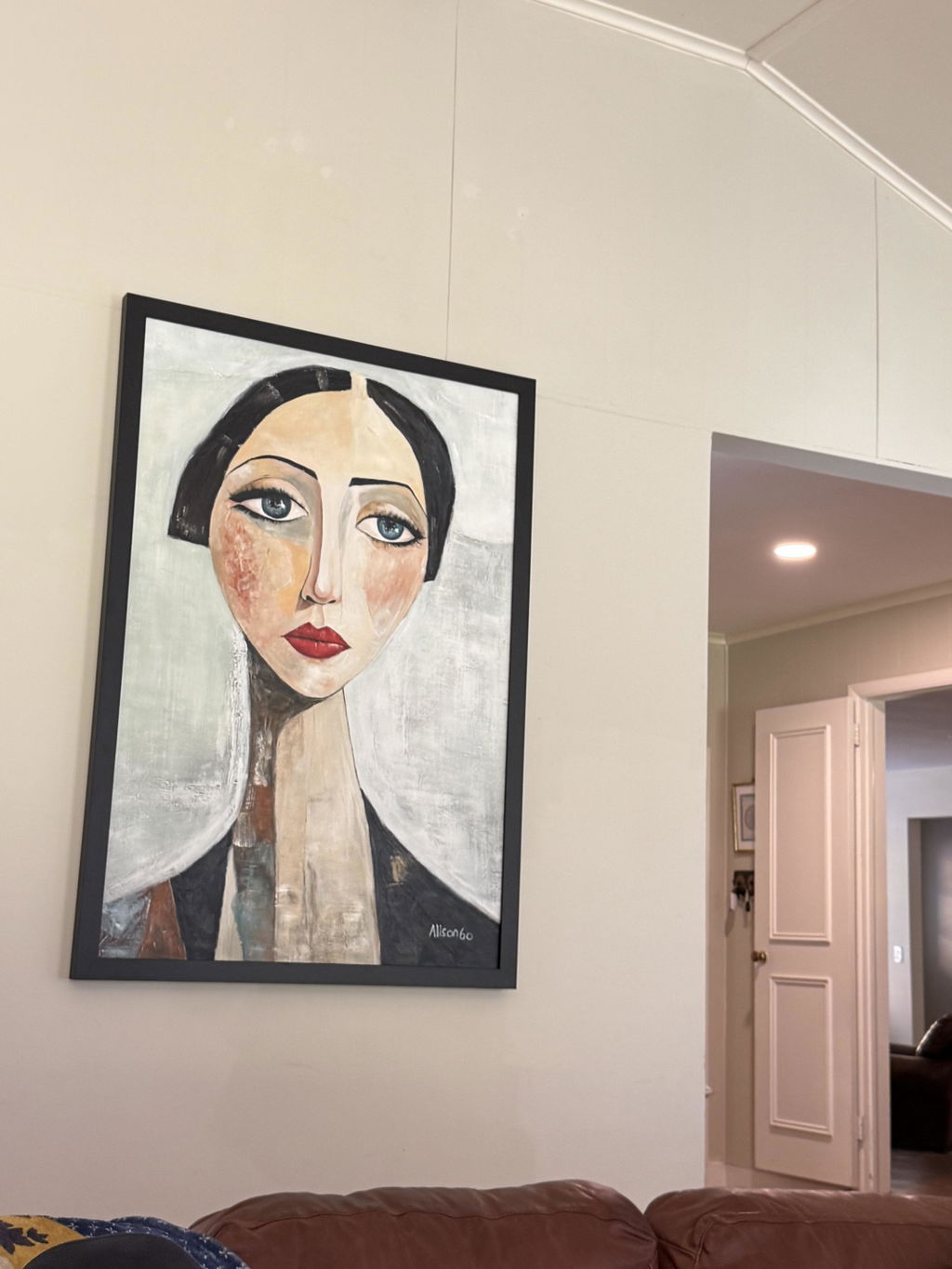
Mixing different wall art styles can make a home feel more personal, layered, and thoughtfully collected. An abstract painting can share a wall with a landscape. A textured artwork can sit beside a floral piece. A black-and-white work can add structure to a room filled with softer colors.
The key is not making every piece look the same. It is creating enough visual connection that the collection feels cohesive rather than chaotic.
Can You Mix Different Wall Art Styles?
Yes. Combining different styles is one of the best ways to create a home that feels individual instead of overly coordinated.
The most successful arrangements usually share at least one connecting element, such as:
- A repeated color
- A similar mood
- A related level of contrast
- Consistent framing
- Balanced proportions
- A shared connection to nature or texture
Your artwork does not need to match perfectly. It simply needs to feel as though each piece belongs in the same visual conversation.

Start with One Unifying Element
Before choosing several different styles, decide what will connect them.
This might be a color palette, a frame finish, or an overall feeling. For example, a muted blue-gray can connect a seascape, an abstract painting, and a textured artwork even if their subjects and techniques are completely different.
Other unifying elements may include:
- Warm neutrals
- Soft, low-contrast colors
- Dark and dramatic tones
- Organic shapes
- Visible texture
- A calm, minimal mood
One strong point of connection is often enough. Trying to make every detail match can make the arrangement feel predictable.
Use Color to Create Visual Harmony
Color is usually the simplest way to make different wall art styles work together.
You do not need every artwork to use the exact same colors. Instead, choose one dominant tone, one supporting color, and perhaps one small accent.
For example, ivory, charcoal, and muted olive can connect a minimalist abstract painting with a botanical piece and a textured landscape.
When selecting artwork, pay attention to the colors already present in your room:
- Upholstery
- Rugs
- Curtains
- Accent chairs
- Decorative objects
- Wall color
The goal is not to copy these colors exactly. A subtle relationship often feels more sophisticated than an obvious match.
Choose Artwork with a Similar Mood
Style is important, but mood can be even more powerful.
A soft landscape and a neutral abstract painting can work beautifully together because both create a calm, spacious atmosphere. A dramatic black abstract piece may pair better with another artwork that has strong contrast and depth.
Consider whether your pieces feel:
- Calm or energetic
- Minimal or expressive
- Soft or dramatic
- Organic or geometric
- Light or grounded
Different styles become easier to combine when they share a similar emotional quality.

Balance Abstract, Landscape, Floral, and Textured Art
Each type of artwork brings a different kind of visual energy.
Abstract art often introduces movement and openness. Landscape paintings create depth and a sense of escape. Floral artwork adds softness and organic form. Textured wall art brings dimension through raised surfaces, brushwork, and changing light.
Avoid placing several highly active pieces together. Instead, allow quieter artwork to balance more expressive work.
You might:
- Pair a bold abstract with a quieter neutral painting.
- Place a detailed floral work beside a piece with generous open space.
- Use textured art to add depth without introducing another strong subject.
- Position a landscape between two more energetic works.
This creates rhythm and keeps the wall from feeling visually overwhelming.
Vary the Scale with Intention
Different sizes can make a collection feel more dynamic, but the arrangement still needs structure.
Start with the largest or most important piece. This becomes the visual anchor. Smaller artworks can then support it without competing for equal attention.
For a gallery wall, lay the artwork out on the floor before hanging it. Keep the spacing relatively consistent, usually around two to five inches between pieces.
For artwork above furniture, consider the total width of the arrangement. A grouping above a sofa, console table, or bed should generally feel connected to the furniture below it rather than floating independently on the wall.
Use Frames to Create Consistency
Different paintings can feel unified when their frames share a related design language.
Consider:
- Natural wood for warm and organic interiors
- Black frames for modern contrast
- Thin metal frames for a refined appearance
- Floating frames for contemporary or textured artwork
The frames do not need to be identical. They can vary slightly while still sharing a similar material, color, or visual weight.
A frame should support the artwork, not become a separate focal point.
Leave Enough Negative Space
One of the most common mistakes is placing too many pieces too close together.
Artwork needs room to breathe. Negative space helps each piece remain visible and gives the overall arrangement a more elevated appearance.
If your room already includes bold furniture, patterned rugs, or architectural details, use fewer artworks and allow more space between them. A restrained arrangement often feels more luxurious than a wall filled from edge to edge.
Common Mistakes to Avoid
When mixing wall art, avoid:
- Combining too many unrelated colors
- Using several oversized statement pieces on one wall
- Placing highly detailed artwork next to other highly detailed pieces
- Ignoring the scale of the furniture below
- Hanging every piece at a different height
- Choosing artwork only to match a single accessory
- Filling every empty section of wall
The most successful collections usually include one primary focal point, several supporting pieces, and enough empty space to keep the room visually calm.
How to Build a Cohesive Wall Art Collection
Start with the artwork you love most. It may be a large abstract painting, a textured landscape, or a quiet floral piece.
Then consider:
- Which colors appear in this artwork?
- What kind of mood does it create?
- Which styles would support it rather than compete with it?
- What size should the next piece be?
- Would the new artwork work better in this room or another space?
Build the collection gradually. Choosing each piece with the room, palette, and atmosphere in mind will create a more personal result than buying several unrelated works at once.

FAQ about Mixing Different Wall Art Styles
Q1. Can You Mix Different Types of Wall Art in the Same Room?
Yes. Abstract, landscape, floral, and textured artwork can work together when they share a similar color palette, mood, or visual weight.
Q2. How Do You Make Different Paintings Look Cohesive?
Repeat one or two colors across the artwork, maintain consistent spacing, and choose frames with a related finish. The paintings do not need to match exactly.
Q3. How Many Different Art Styles Should You Use on One Wall?
For most rooms, two or three related styles are enough. Using too many highly contrasting styles can make the wall feel visually crowded.
Q4. Should All Wall Art Have the Same Frame?
No. Frames can be different, but they should share a similar material, color, or overall design language.
Q5. How Much Space Should You Leave Between Paintings?
For most gallery walls, leave approximately two to five inches between pieces. Larger artwork and larger walls can support slightly wider spacing.
Q6. Can Textured Wall Art Be Mixed With Traditional Paintings?
Yes. Textured artwork adds dimension and can balance smoother paintings such as landscapes, florals, or abstract works.
Q7. How Do You Mix Large and Small Wall Art?
Use one larger piece as the anchor, then arrange smaller works around it. This creates hierarchy and prevents every piece from competing for attention.
Q8. What Is the Biggest Mistake When Mixing Wall Art?
The most common mistake is choosing too many unrelated colors or placing too many focal pieces close together. A clear palette and enough negative space usually create a more refined result.

Final Thoughts
Mixing different wall art styles is not about making every painting identical. It is about finding relationships between color, scale, mood, texture, and space.
Abstract, landscape, floral, and textured artwork can work beautifully together when the arrangement has a clear visual rhythm. Choose a strong anchor piece, repeat a few quiet colors, vary the scale thoughtfully, and leave enough space for each artwork to be appreciated.
The result should feel collected, balanced, and personal, which is exactly what meaningful wall art should bring to a home.