Have you ever walked into a living room that immediately felt complete, even though you couldn't point out exactly what made it work?
The furniture may not have been dramatically different from another home. The colors may have been simple. The decorations may have been minimal. Yet the entire space felt more balanced, more comfortable, and more intentional.
This difference often comes down to something deeper than the individual items inside the room.
A decorated living room is usually built by collecting pieces that look good on their own. A designed living room is created by understanding how those pieces interact with each other—the relationship between scale, color, texture, lighting, and empty space.
The difference is subtle, but it changes how the entire room is experienced.

Decoration Adds Items, Design Creates Connection
Many homeowners approach decorating by asking a simple question: "What else does this room need?"
They add another pillow, another accessory, another frame on the wall, or another decorative object for the shelf. Each item may be attractive individually, but the room can still feel incomplete because the elements do not communicate with each other.
Interior designers often think differently. Instead of starting with more objects, they look at the overall composition of the room. They consider whether the artwork relates to the sofa, whether the lighting enhances the materials, and whether the furniture arrangement creates a natural flow.
A well-designed room does not necessarily contain more things. It usually contains better relationships between the things already there.
The Importance of a Strong Visual Anchor
One of the biggest differences between an average living room and a professionally designed one is the presence of a clear focal point.
Every room needs something that naturally attracts attention. It could be a fireplace, a large window, an architectural feature, or a statement piece of artwork.
Without a visual anchor, the eye moves around the room without finding a place to settle. The space may contain beautiful furniture, but it lacks a sense of direction.
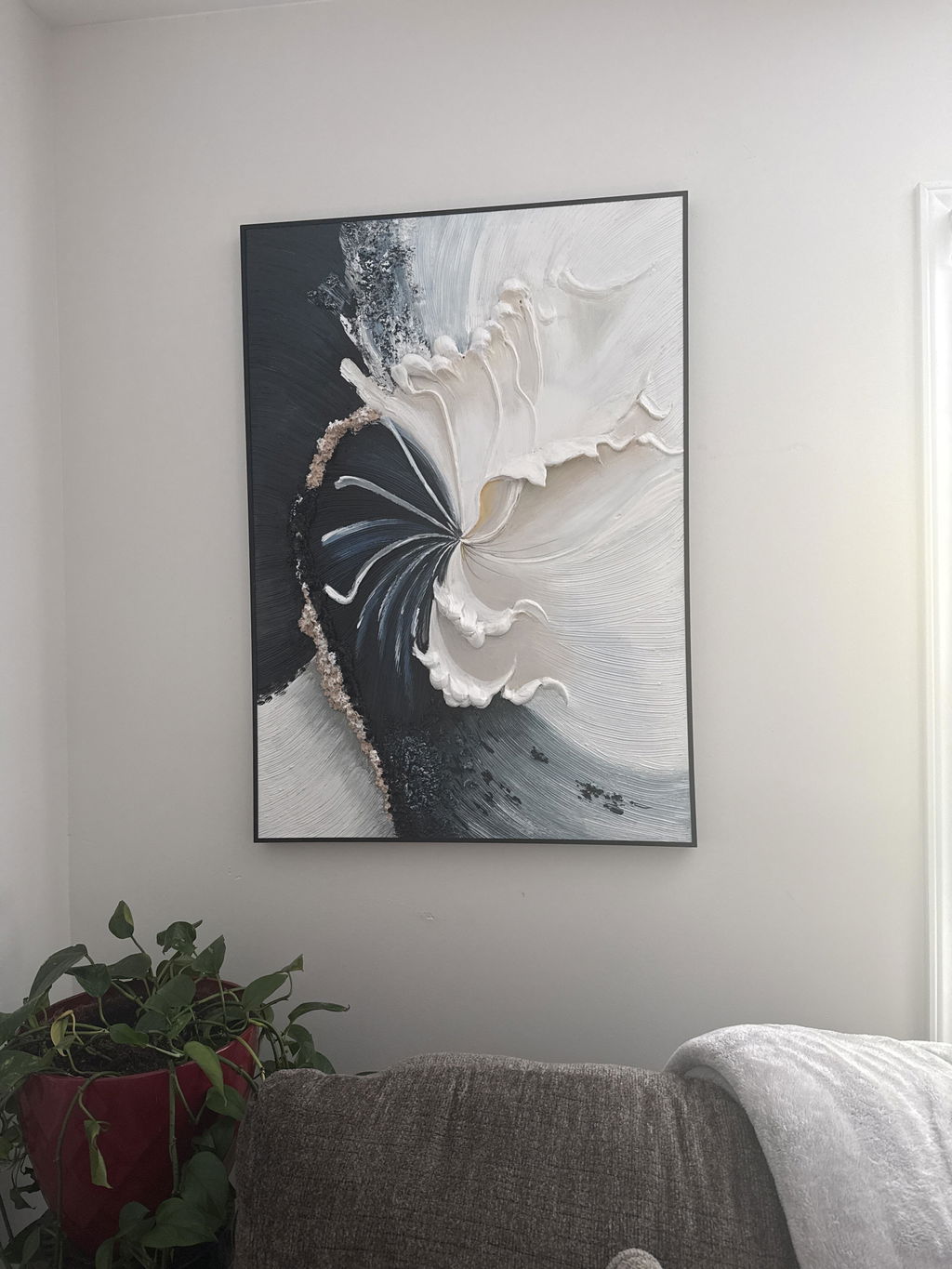
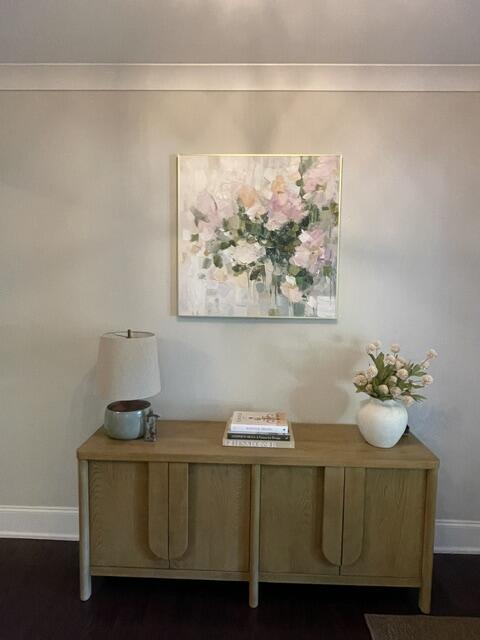
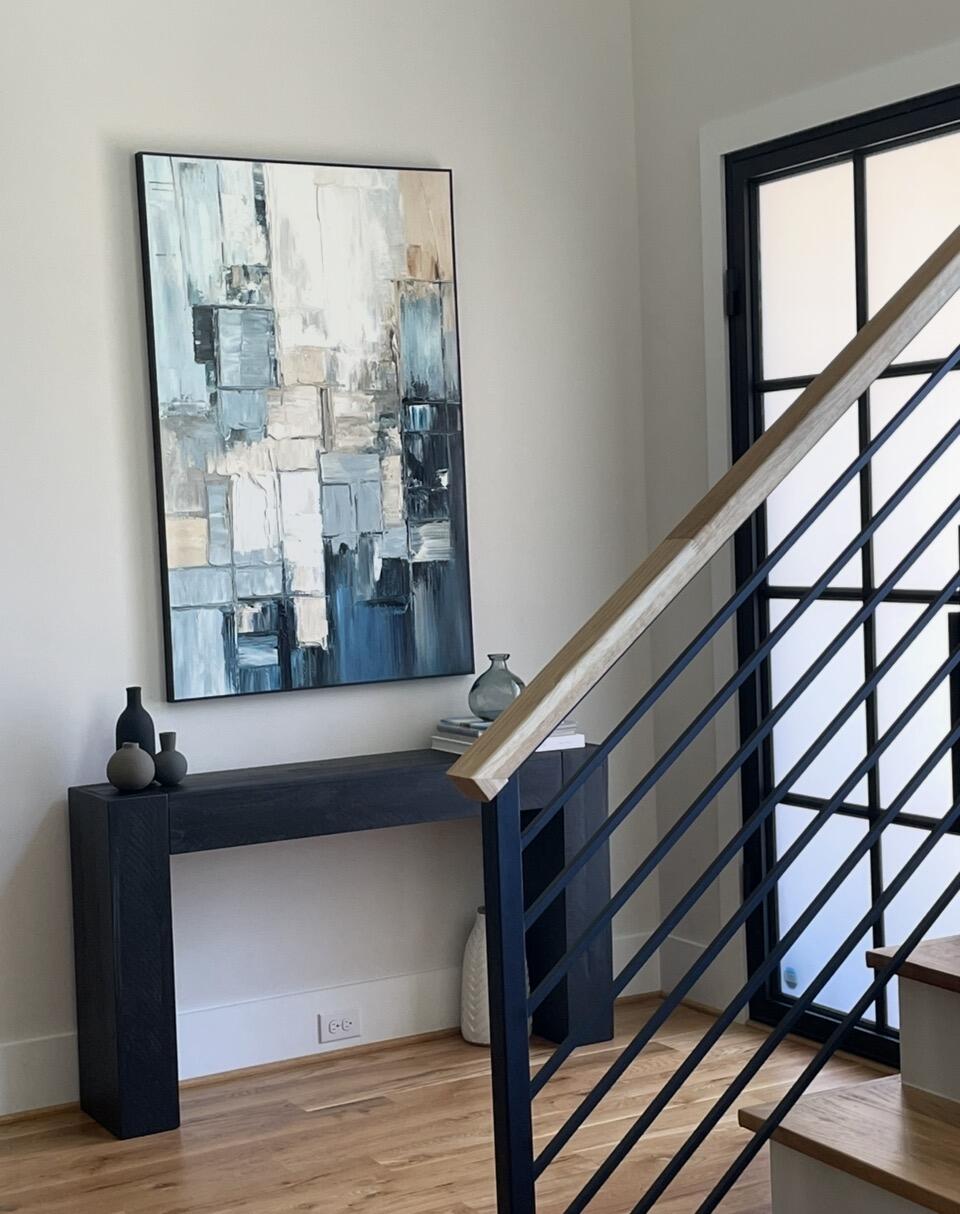
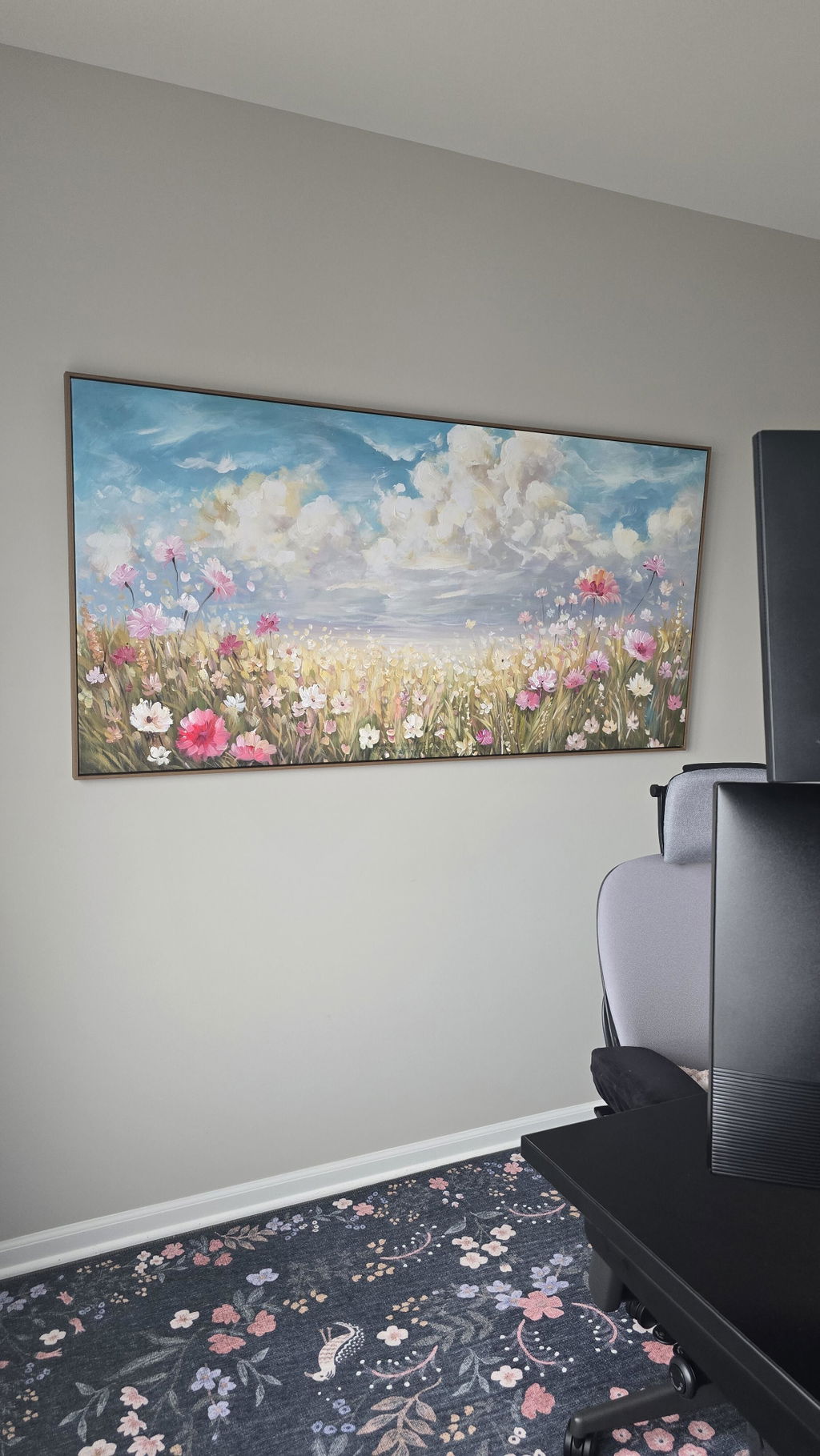
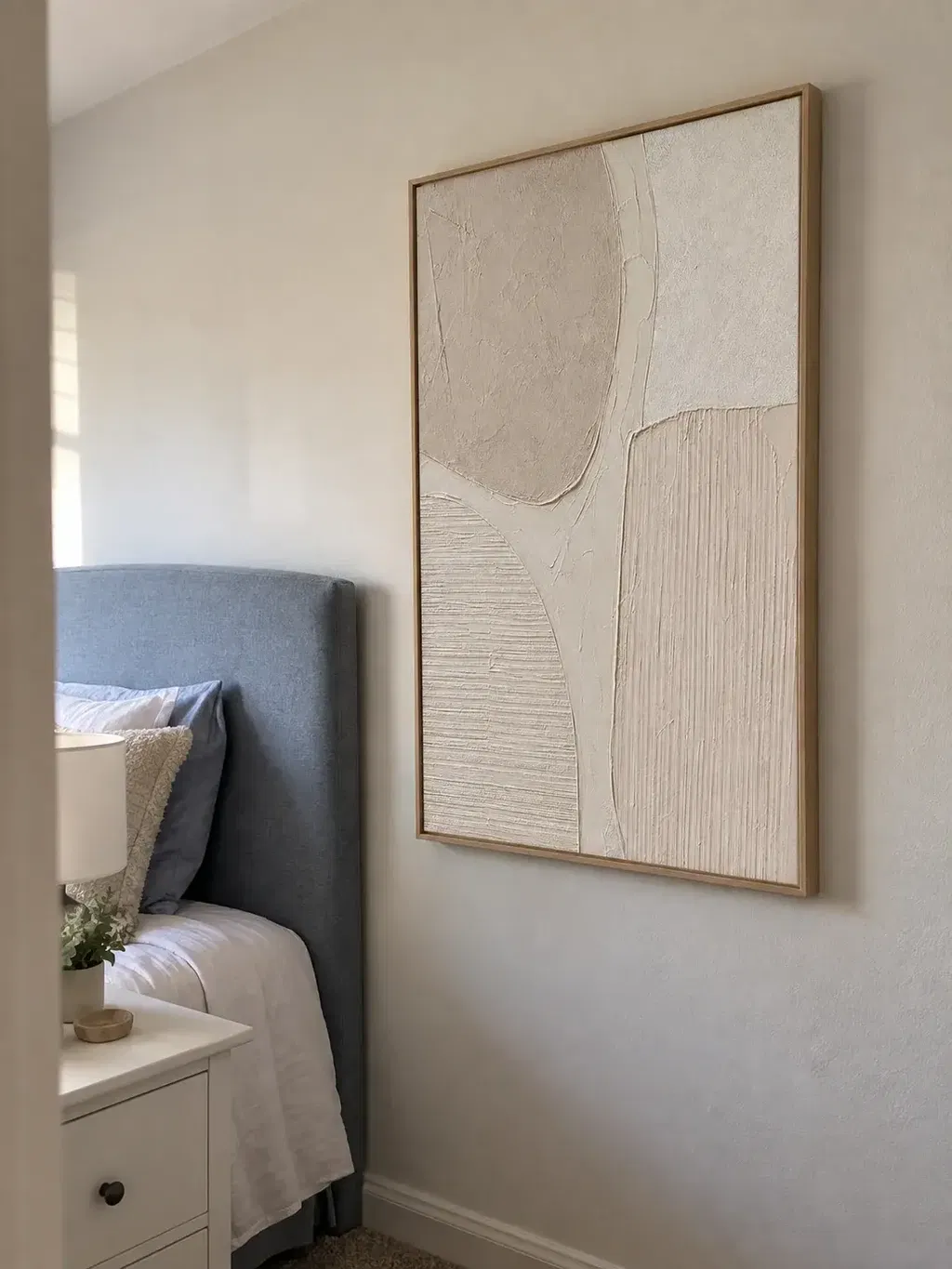
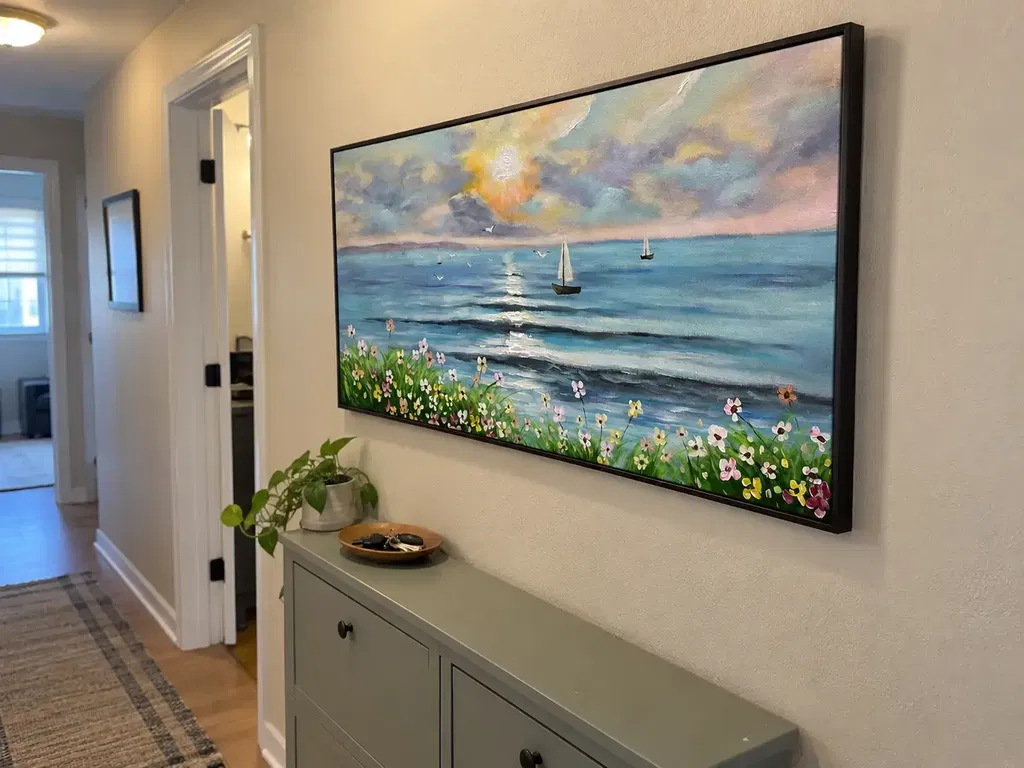
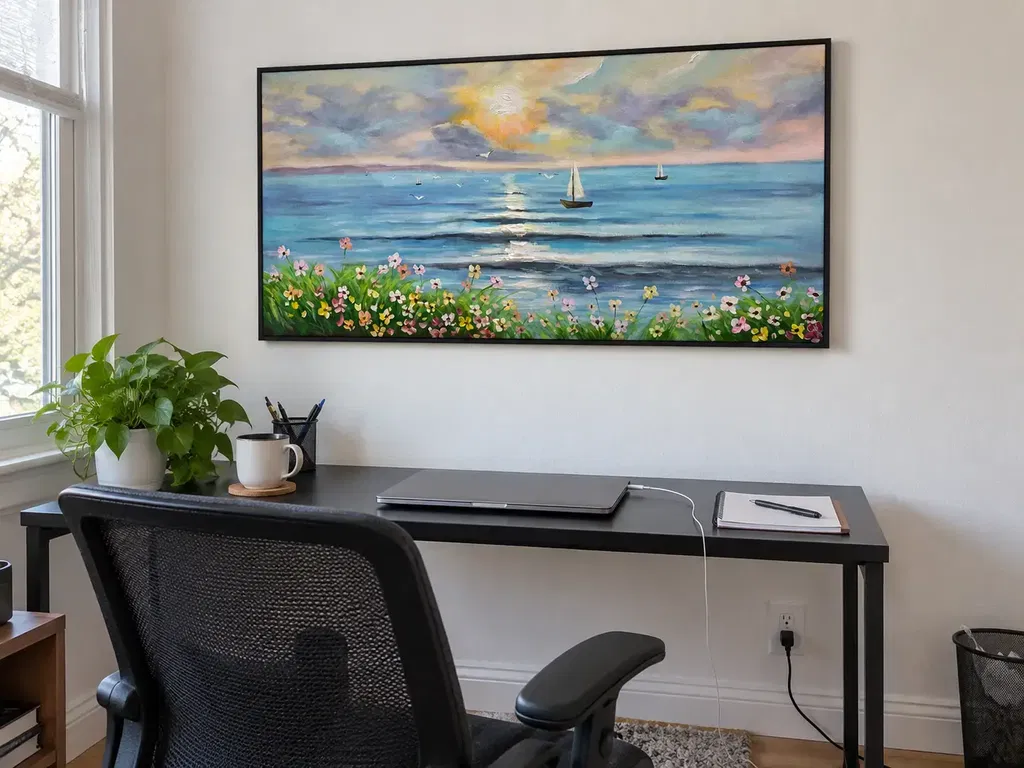
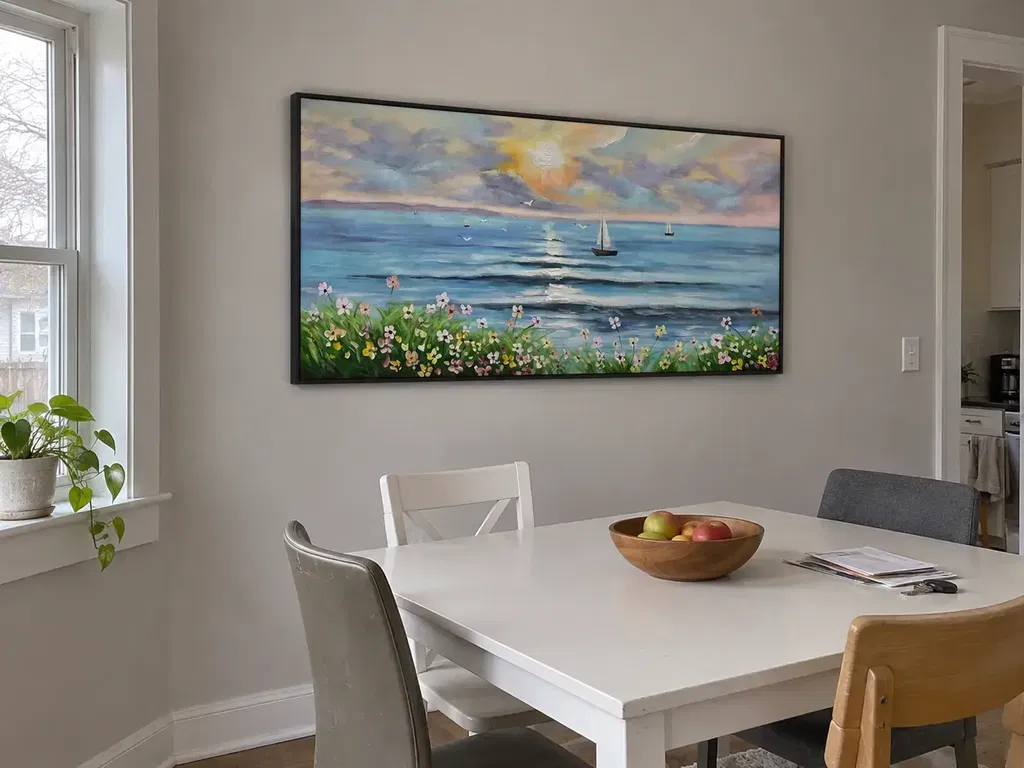
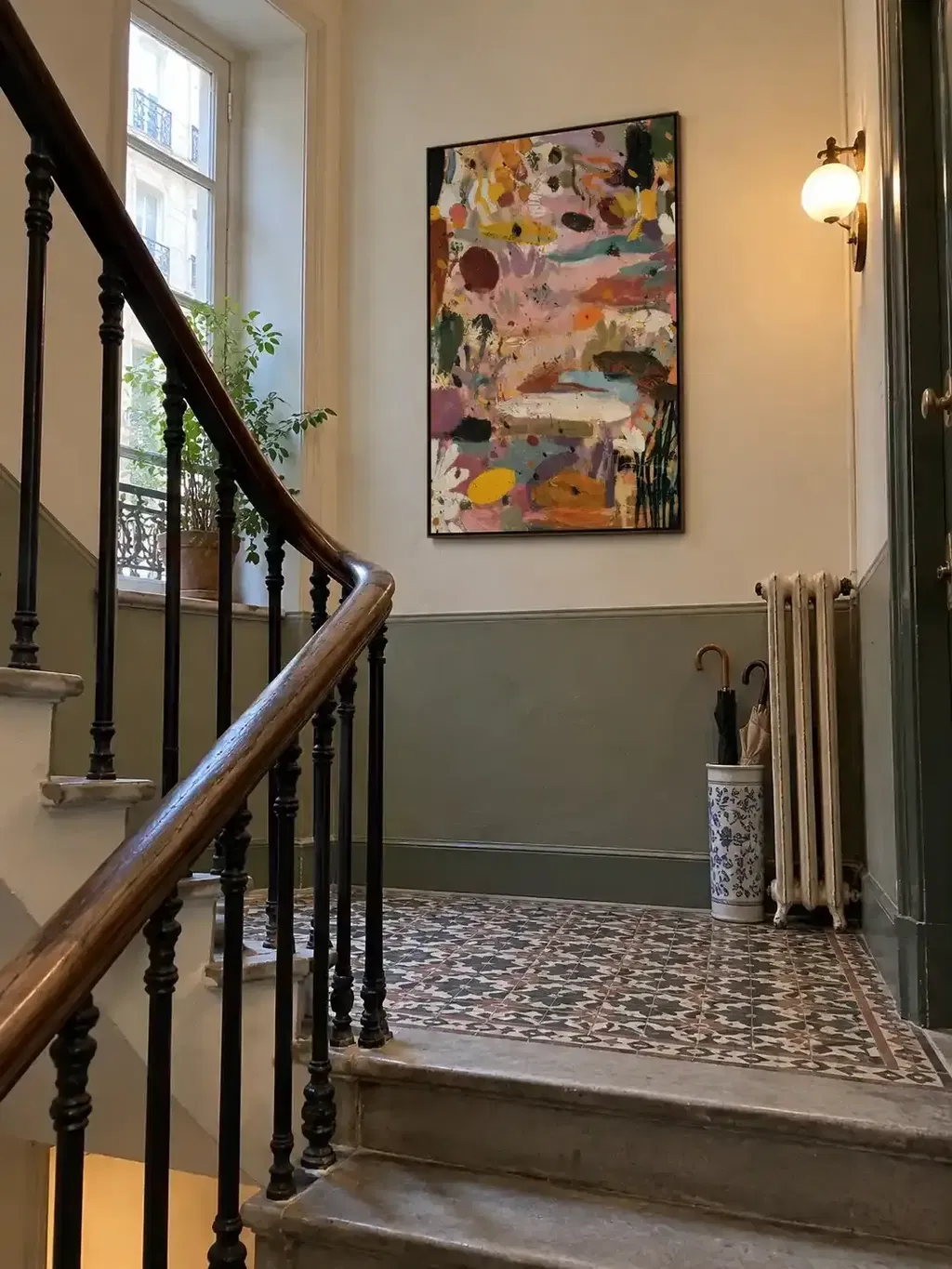
This is why large wall art is often used in living rooms. A properly chosen painting can connect the furniture and the surrounding architecture, giving the room a stronger identity.
The artwork is not simply filling an empty wall. It is helping organize the entire space.
Why Scale Makes a Bigger Difference Than Most People Expect
One of the most common reasons a living room feels unfinished is incorrect proportion.
A large sofa paired with a small piece of artwork creates an imbalance. The lower half of the room feels heavy, while the wall above feels disconnected. Even if the painting itself is beautiful, the overall composition does not feel complete.
Designers pay close attention to scale because our eyes naturally evaluate relationships between objects.
When hanging artwork above a sofa, a good rule of thumb is to choose a piece that's about 60–75% as wide as the furniture beneath it. This creates a balanced focal point while leaving enough negative space around the artwork.
| Sofa Width | Recommended Artwork Width |
|---|---|
| 72 inches | About 48–54 inches |
| 84 inches | About 56–63 inches |
| 96 inches | About 64–72 inches |
The purpose is not simply to make the wall look full. It is to create balance between the furniture and the surrounding space.
Why Texture Makes Interiors Feel More Sophisticated
Many modern homes use neutral colors and simple furniture because they create a calm atmosphere. However, a room filled only with smooth surfaces can sometimes feel flat.
Texture introduces another layer of visual interest.
A linen sofa, wooden furniture, stone surfaces, and textured wall art all create variation that the eye naturally responds to.
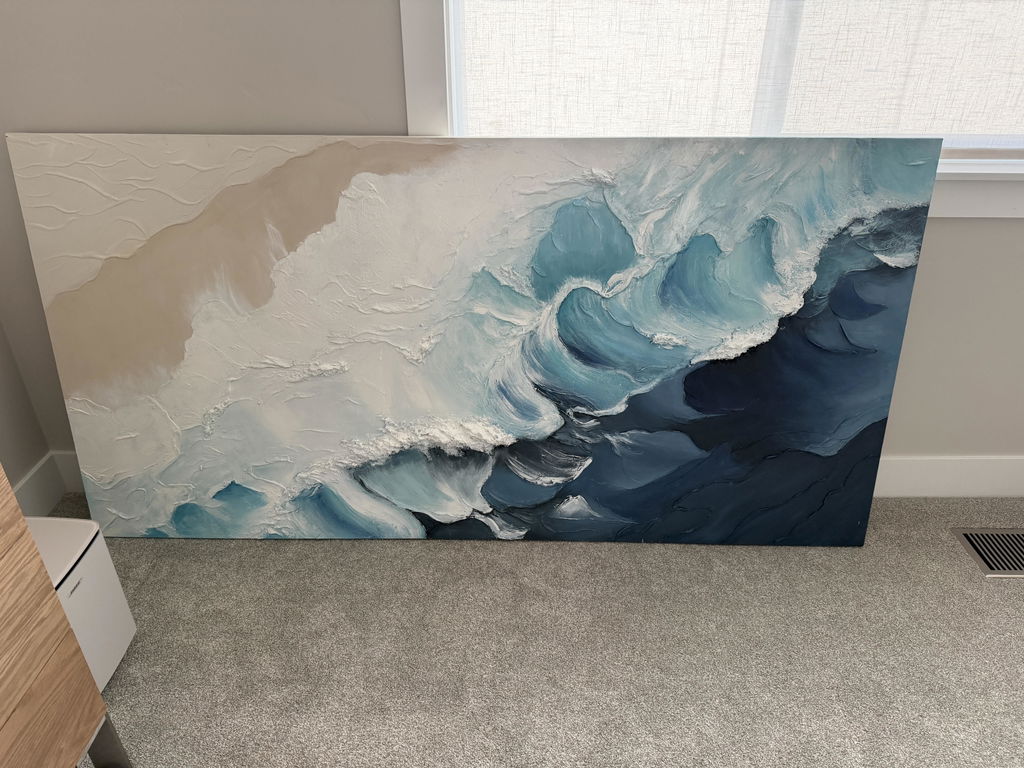
This is one reason hand-painted textured artwork has become popular in contemporary interiors. The surface of the painting interacts with light differently throughout the day, creating depth that a flat image cannot provide.
A printed artwork can introduce a beautiful image.
A textured painting adds material, craftsmanship, and a sense of uniqueness.
Why Luxury Interiors Often Use Less Decoration
A common misunderstanding about high-end interiors is that they require more decorative elements.
In reality, many luxury spaces feel refined because they allow important pieces to have room to stand out.
When every surface is filled, nothing feels special. The eye has too many places to look, and the room loses its sense of calm.
This is why designers often use negative space intentionally. Empty areas are not wasted space; they give important elements more visual importance.
A large painting with enough surrounding space can often create more impact than multiple smaller decorations competing for attention.
The Role of Lighting in Making a Room Feel Complete
Lighting is one of the most overlooked parts of interior design.
The same living room can feel completely different depending on how light interacts with the surfaces inside it.
Natural daylight can reveal colors and textures. Evening lighting can create warmth and intimacy. Accent lighting can highlight artwork and architectural details.
This is particularly important for textured wall art because the raised surface changes throughout the day. Shadows and highlights reveal different parts of the painting depending on the light source and viewing angle.
Good lighting does not just brighten a room.
It reveals the details that make the room interesting.
How to Make a Living Room Feel More Designed
If your living room feels unfinished, the solution is not always adding more decoration.
Start with the elements that have the strongest visual influence:
- Choose artwork that matches the scale of your furniture
- Create a clear focal point
- Use texture to add depth
- Balance decorative objects with empty space
- Consider how lighting affects the atmosphere
Small changes in these areas often create a bigger improvement than adding more accessories.
A thoughtfully designed room is not one where every corner is filled.
It is a room where every element has a purpose.
The Difference People Feel but Cannot Always Explain
When guests enter a well-designed living room, they rarely analyze why it feels comfortable. They simply experience the result.
They notice that the space feels balanced.
They notice that nothing seems random.
They notice that the room has a certain atmosphere.
That feeling comes from design decisions working together behind the scenes.
The most memorable living rooms are not necessarily the ones with the most decoration. They are the ones where furniture, artwork, lighting, and materials create a complete visual story.
A room becomes truly designed when every piece feels connected.

FAQs about Living Room Interior Design
Q1. What Is the Difference Between a Decorated Room and a Designed Room?
A decorated room focuses on adding attractive objects, while a designed room focuses on how every element works together through scale, balance, texture, and composition.
Q2. Why Does My Living Room Still Feel Unfinished After Decorating?
The issue is often not a lack of decoration but a lack of visual structure. Incorrect artwork size, weak focal points, or poor balance between elements can make a room feel incomplete.
Q3. Does Large Wall Art Make a Living Room Look More Expensive?
Yes. Properly scaled wall art can make a living room feel more refined and thoughtfully designed. Large statement pieces help establish a clear focal point, create visual balance, and reduce the need for excessive decoration, which is why they're commonly used in professionally designed interiors.
Q4. How Does Textured Wall Art Improve a Room?
Textured artwork adds physical depth and interacts with light, creating more layers and visual interest compared with flat prints.
Q5. Should Every Item in a Living Room Match?
No. Many sophisticated interiors use contrast rather than perfect matching. The goal is not identical colors but a sense of connection between different elements.