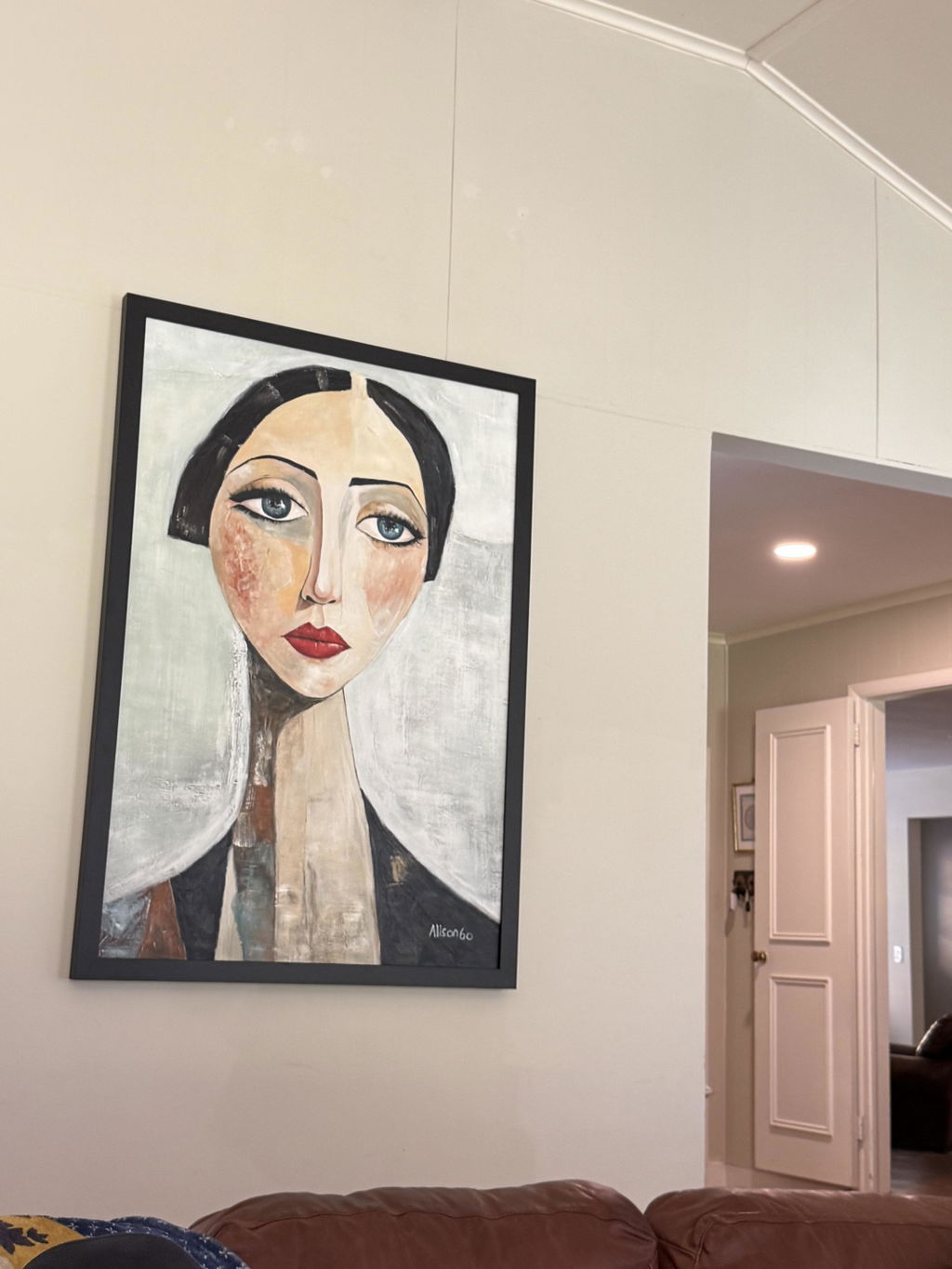
Why are textured originals more expensive? Because you are paying for more material, more hand labor, and a one-of-one result instead of a reproduced image. In a textured art value comparison, the premium is not just about the look on the wall. It also reflects how the piece is made, how long it takes to finish, and how much of the final surface depends on the artist's hand.
Why Textured Originals Cost More
Textured originals cost more for the same basic reason handmade goods usually cost more than mass-produced ones: they take more time, more materials, and more skill to produce. In art, that difference is especially visible because the surface itself becomes part of the value. A textured original is not just a picture printed onto canvas; it is a built surface with depth, ridges, brush marks, and paint volume that have to be created layer by layer.
That matters because the price is tied to the making process, not only the finished image. Artsy's overview of what determines the price of an artwork points to labor, materials, and uniqueness as the main drivers. For buyers, that means the premium is usually paying for the fact that the work is singular and hand-built, not repeatable at scale.

If you want the shortest version: textured originals cost more because they require thicker materials and slower production than a flat print. The visual effect is part of the appeal, but the price also reflects the fact that the piece exists as a unique object, not a duplicated file.
What Drives the Premium
Materials and Surface Build
One of the clearest cost drivers is material volume. Utrecht's comparison of paints and printing inks explains that textured painting relies on paint and media in a way a flat print does not. In practical terms, that usually means more heavy-body paint, more modeling paste or gel, and more surface build to create the raised finish buyers can see and feel.
For shoppers, this is the first real difference between a textured original and a print. A print can reproduce the image, but it cannot reproduce the physical depth of applied paint. If the value you want is tactile depth, you are paying for a different material process, not just a different image.

Manual Labor and Artist Time
The next driver is labor. A textured original takes longer because the artist is shaping the surface by hand instead of printing a finished file. That extra time is easy to miss when you look at the final piece, but it is built into the cost.
Thick layers can also slow the finishing process. In broad terms, heavier impasto-style work can require more drying and curing time before the piece is ready to move on to the next stage. That does not mean every texture-heavy painting takes the same amount of time, but it does mean the schedule is less efficient than producing multiple prints from one digital source.
This is where the premium starts to make sense even for buyers who are not thinking like collectors. If the same visual effect takes longer to build, it is normal for the price to move up with that labor.
One-Of-One Production and Finishing
The last driver is uniqueness. A print can be reproduced again and again. An embellished canvas usually begins with a reproduced base and then gets hand-applied additions. A true textured original is different because the final work is singular, so the artist is not just selling an image. They are selling a finished object that cannot be duplicated exactly.
That one-of-one status does not guarantee future value, and it should not be treated like an investment thesis. It does help explain the pricing logic, though. When the buyer is paying for originality, the price often rises because the work cannot be spread across dozens or hundreds of identical copies.
In other words, the premium is not only about how the piece looks from a distance. It is also about the amount of handwork in the surface, the slower finishing steps, and the fact that the result is not a repeatable product.
Originals vs Prints vs Embellished Canvases
| Format | How It Is Made | Typical Labor Intensity | Texture Depth | Price Position | Best-Fit Use Case |
|---|---|---|---|---|---|
| Reproduced image on paper or canvas | Low | Little to none unless framed or mounted differently | Lowest | Budget decorating, fast refresh, low-risk styling | |
| Embellished canvas | Printed base with hand-applied texture or brushwork | Moderate | Some surface variation | Middle | Buyers who want a more handcrafted look without paying for a full original |
| Textured original | Fully hand-made work with built-up surface | High | Strongest physical depth | Highest | Focal walls, buyers who want authenticity and visible handwork |
That middle tier matters because it explains why some canvases cost more than a plain print but still less than a true original. Posterjack's guide to printed base with hand-applied texture describes embellished canvases as a hybrid: the image starts as a reproduced base, then receives added texture or brushwork by hand.
For buyers, the key question is not "Which one is best?" It is "Which one is doing the job I need?" If you mainly want decoration, a print can be the rational choice. If you want some handcrafted character without paying for full originality, an embellished canvas can be the middle ground. If you want the strongest authenticity signal and the most dimensional surface, the original sits at the top of the ladder.
A useful practical difference is that the price gap is often less about the picture itself and more about the amount of handwork behind it. That is why two pieces with similar colors can land in very different price tiers.
When the Higher Price Makes Sense
Pay more when the art is going on a focal wall, when the surface texture matters to the room, or when you specifically want something that feels hand-made rather than reproduced. Textured originals make the most sense when the piece is meant to carry the space, not just fill it.
Choose a lower tier when the goal is quick decorating, temporary styling, or a tighter budget. A print is often the better value if you want a polished look without paying for one-of-one labor. An embellished canvas is the more balanced choice if you want some texture but do not need a fully original surface.
Here are the fastest filters:
- Pay more when the wall is a focal point and you want visible handwork.
- Pay more when originality matters more than easy replacement.
- Choose a lower tier when the piece is likely to move, rotate, or be replaced soon.
- Choose a lower tier when you want the look of texture without the higher cost.
- Choose a lower tier when upkeep concerns or shipping anxiety would make the purchase stressful.
That last point matters more than many shoppers expect. Textured surfaces can collect dust in creases, and bulky pieces can be more nerve-wracking to receive and hang. Those are not reasons to avoid originals altogether, but they are real reasons some buyers are happier in the print or embellished-canvas tier.
If you are comparing room-ready options, start with canvas art for sale for a broader view, or narrow the search to living room art options if the piece is for a main wall.
How to Judge Texture Value Before You Buy
- Look for side-angle photos. If the listing only shows flat front views, it is harder to tell how much real texture you are paying for.
- Check for visible brush marks, raised edges, and uneven surface depth. Those are stronger signs of handwork than a uniform printed look.
- Read the materials and finish notes. A premium is easier to justify when the listing clearly explains the medium, surface, and construction.
- Verify the size before judging value. Texture reads differently on a small piece than on a large focal-wall piece.
- Think about care and placement. Light, humidity, dust, and cleaning habits all affect how the surface will look in daily use.
The point of this checklist is not to prove authenticity from a photo alone. It is to help you spot whether the premium is tied to visible handwork and a more substantial build, or whether you are mostly paying for presentation language. If a listing gives you texture cues, material details, and a clear finish description, you can judge the price with more confidence.
For buyers who want to compare surface depth and color richness, pigment depth and texture is another useful angle, especially when the finish is part of the appeal.
Choosing the Right Tier for Your Space
The right tier depends on budget, room importance, and how much you care about originality. Textured originals justify the premium when you want a focal piece with visible handwork and a more dimensional surface. Prints are the better value when you want simple, affordable decor. Embellished canvases sit between them when you want some texture without paying for a fully original work.
If you are still deciding, compare the three tiers by what you actually want the art to do in the room, then choose the least expensive option that still meets that goal. That keeps the decision practical instead of emotional. When you want a shorter path from browsing to buying, start with the tier that matches your budget and finish preference.
Final Takeaway
Textured originals cost more because they combine more material, more labor, and true one-of-one construction. If you want a focal piece with visible handwork, the premium can be justified. If you mainly want attractive wall decor at a lower price, a print or embellished canvas is often the better fit. Compare the tiers by room use, budget, and texture preference, then browse the option that matches your goal instead of paying for features you do not need.
FAQs
How Much More Do Textured Originals Usually Cost?
There is no single markup that fits every piece. The gap changes with size, materials, and how much handwork the artist put into the surface, so the best comparison is the full listing, not a fixed ratio. For budget planning, compare the original against a similar print or embellished canvas in the same size before deciding which tier is worth it.
Are Embellished Canvases a Good Middle Ground?
Yes, if you want some texture without paying for a fully original work. An embellished canvas can be a smart compromise when the printed base gives you the image you want and the added handwork gives you enough visual depth. The value depends on how much texture was added and whether the finish is clearly described.
What Makes a Painting Look More Expensive?
Depth, layered color, visible handwork, and larger scale are the most common cues. A piece can look more premium when the surface catches light from different angles and the brushwork feels intentional rather than uniform. That said, a more expensive look is not the same thing as a better value for your budget.
Can a Print Still Be a Good Value?
Absolutely, especially when the goal is affordable decorating or a quick room refresh. A print is often the sensible choice if you want a clean look, easy replacement, or a lower-stakes purchase. It becomes less compelling only when you specifically want a one-of-one surface or a strong tactile finish.
Do Textured Originals Last Longer Than Prints?
Not automatically. Longevity depends on the materials, placement, and care you give the piece. Artist materials can be tested for lightfastness under the ASTM D4303 lightfastness testing standard, but that is not the same as a blanket promise about every artwork's lifespan. Light, humidity, and handling still matter.