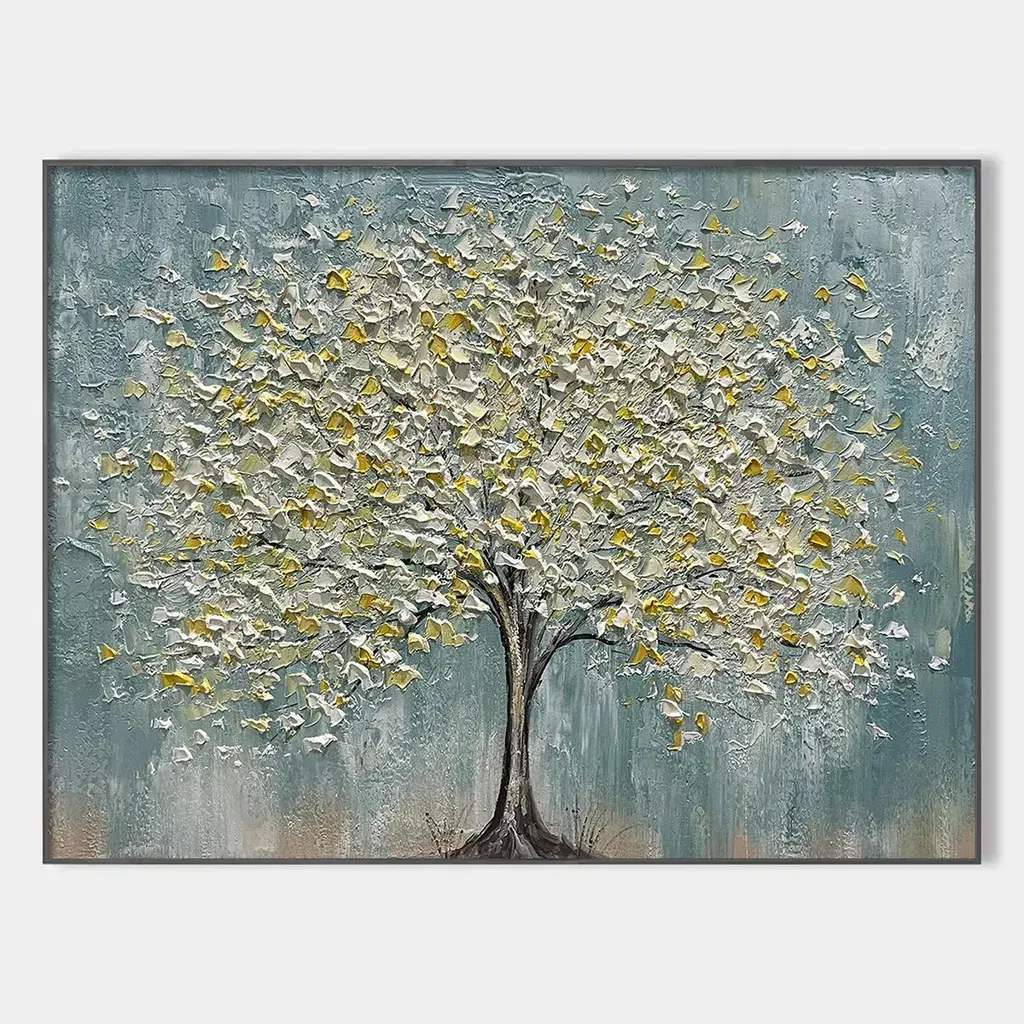
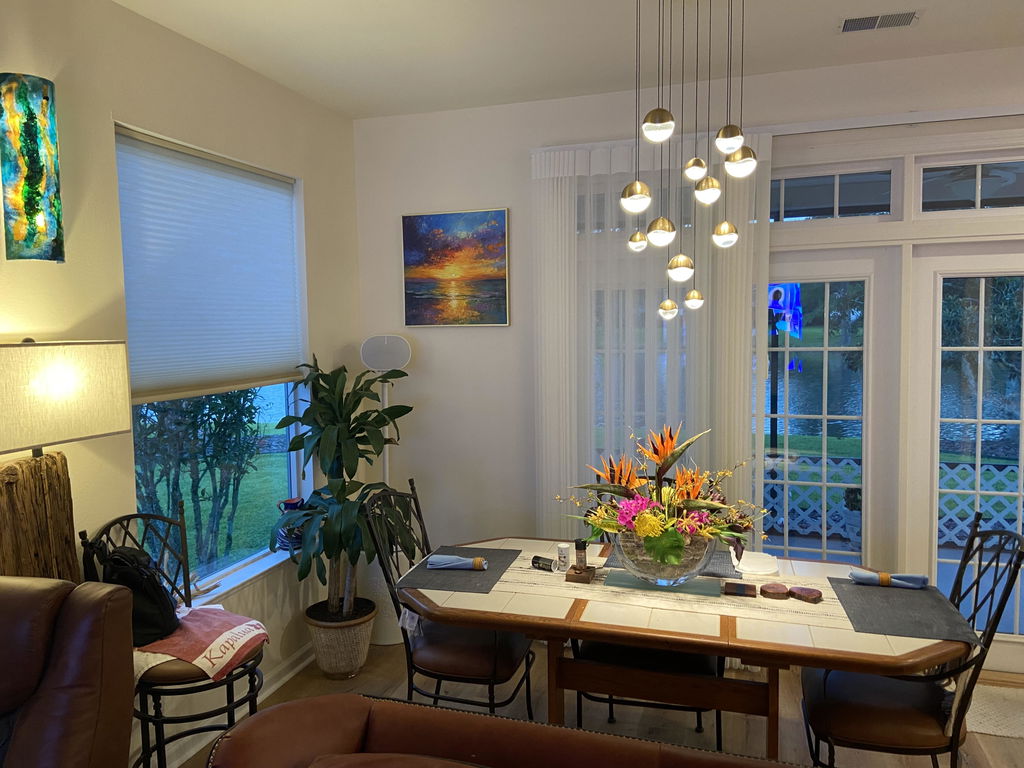
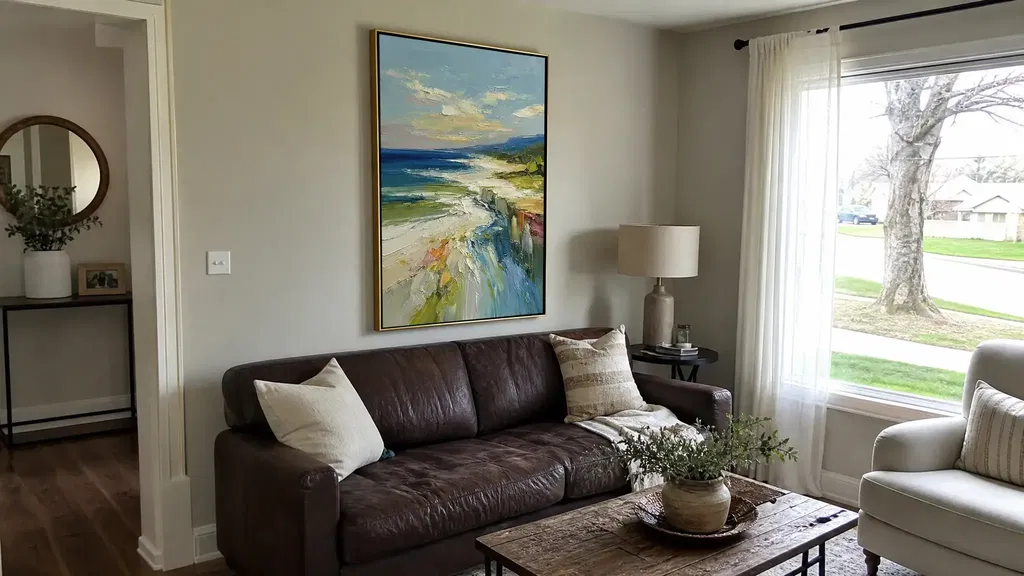
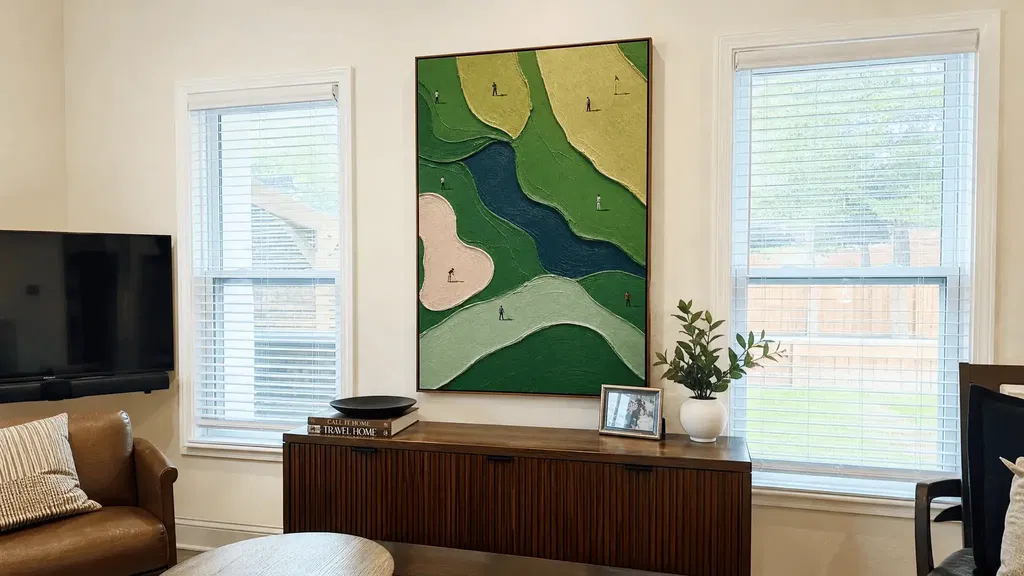
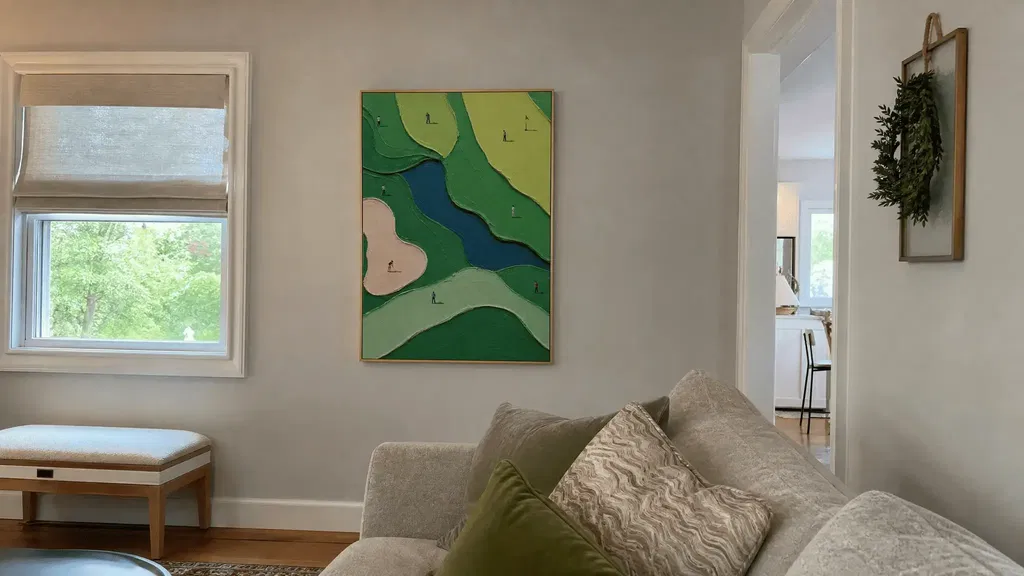
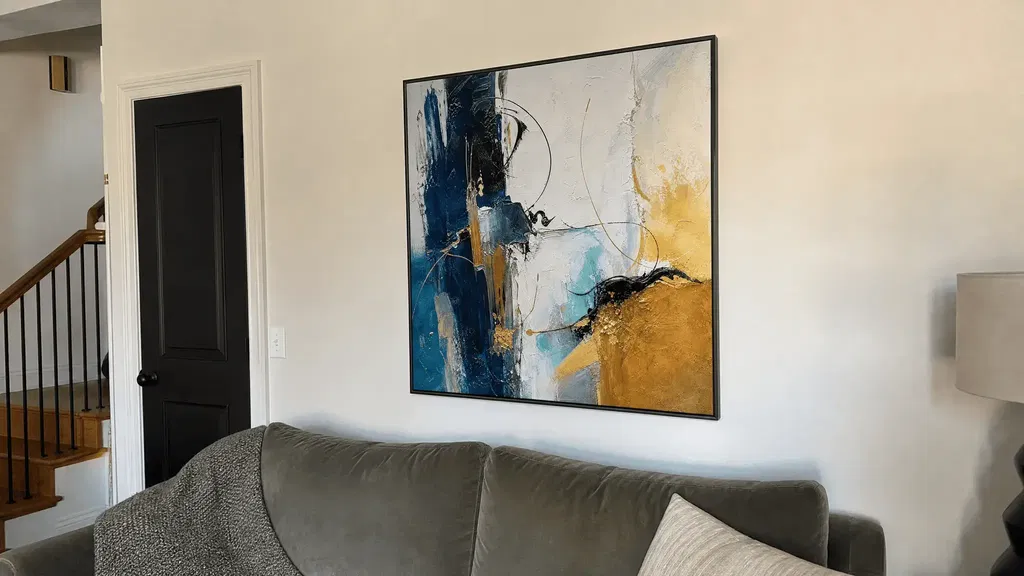
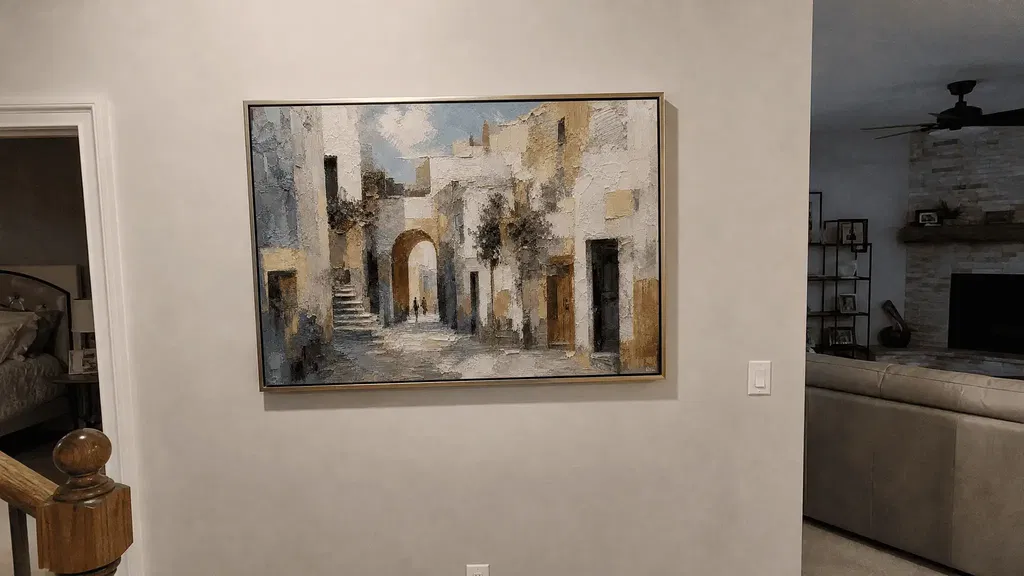
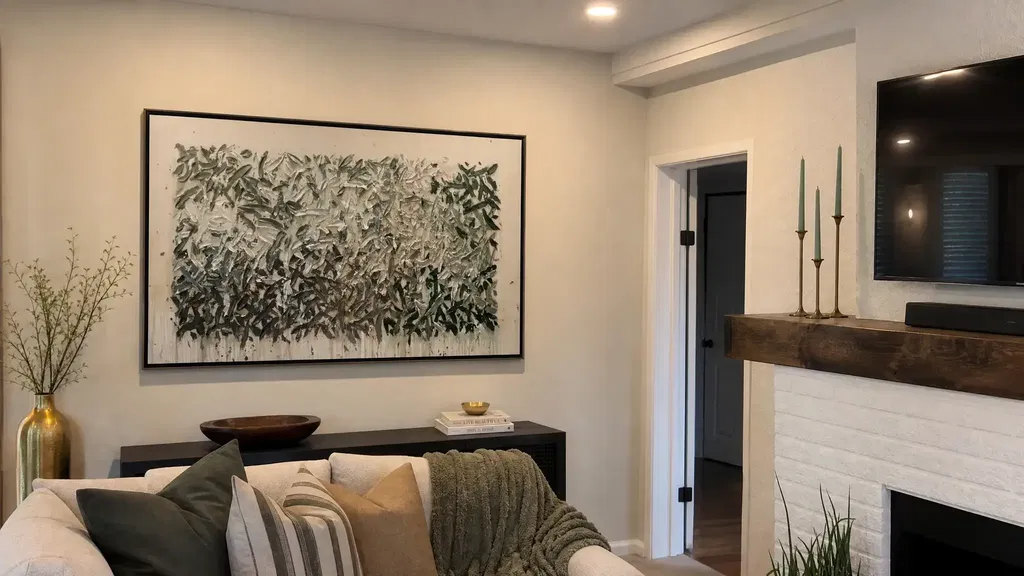
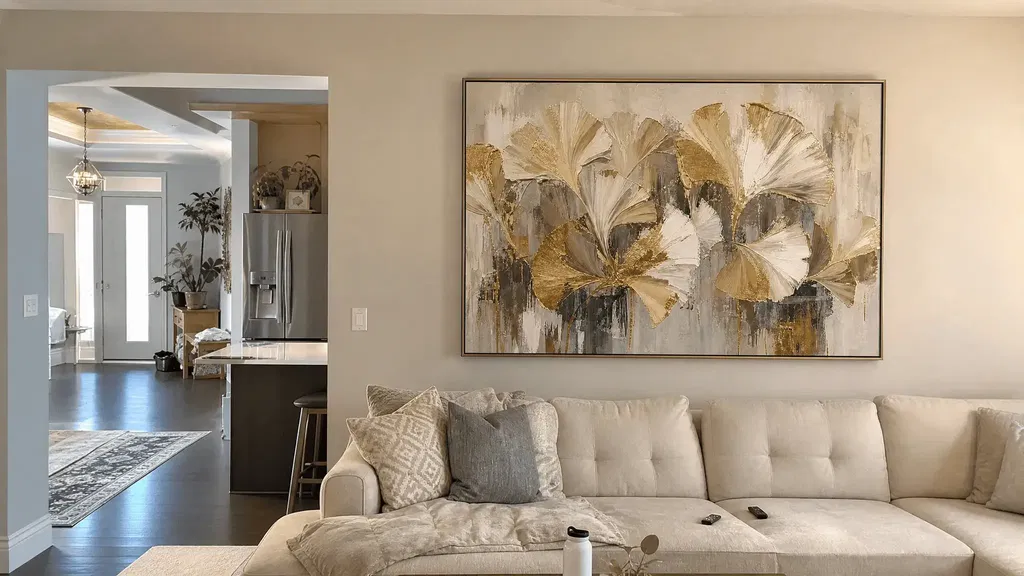
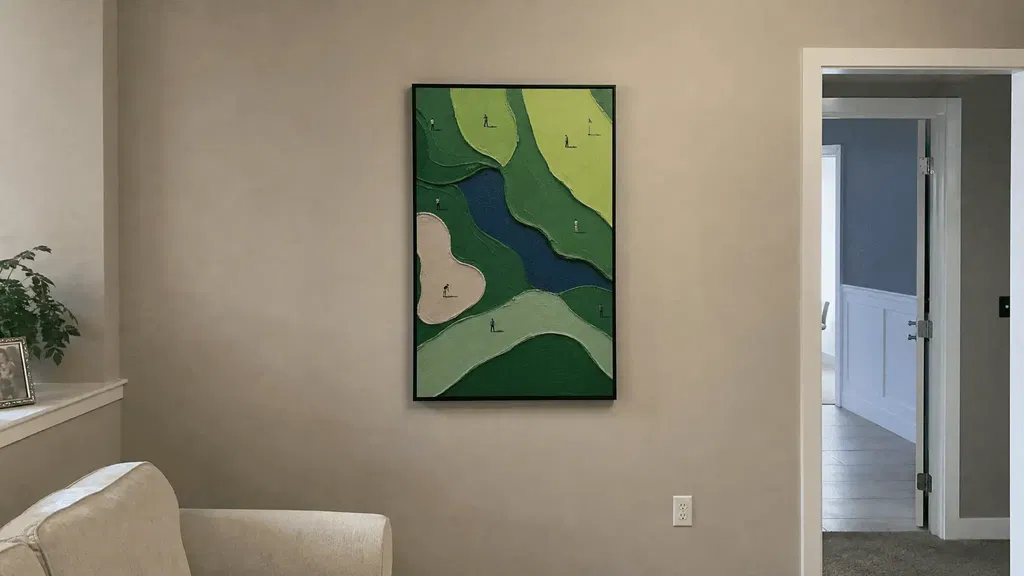
Choosing large wall art becomes much easier when you use your sofa or mantel as a starting point instead of staring at an empty wall. For textured art in a living room, the safest approach is to pick a piece that spans about two-thirds to three-quarters of the furniture's width, then hang it close enough to anchor the piece to the sofa without making the space feel crowded. Keep in mind that texture changes the visual weight—a raised surface often reads as "larger" than a flat print of the same size.
What Size Art Fits Above a Sofa
The Width Rule for Sofa Walls
When deciding on art for a sofa wall, the main goal is ensuring the piece feels connected to the seating rather than like it belongs on a different wall entirely. A reliable rule of thumb is to let the artwork cover about two-thirds to three-quarters of the width above the sofa. This range keeps the art substantial enough to hold the space without extending past the furniture and making the wall look cluttered.
Remember to measure the visible width of the sofa, not the entire wall. A 90-inch sofa usually looks best with art in the 60- to 68-inch range, while a smaller loveseat can handle a narrower piece. Treat this as a guide for visual proportion rather than a strict formula.

Single Piece or Paired Art
One oversized piece usually looks cleaner above seating if the room already has a strong focal point. Pairs can work, but they are most effective on exceptionally wide walls or in rooms that already rely on symmetry. If your seating area is compact, hanging multiple smaller pieces often breaks up the wall too much, making the decor feel underpowered.
A simple test: if the sofa wall feels narrow, opt for one large work rather than splitting the space. If the wall is broad and the furniture is centered, a pair is a great option, provided each piece is large enough to stand on its own.
How Texture Changes Visual Width
Buyers of textured art often notice that a piece feels larger than the measurements suggest. This is because texture creates shadows and depth, giving the artwork more visual mass. Because the surface makes the piece feel "heavier," a size that works for a flat print might feel overwhelming in a textured piece.
For this reason, you don't always need to size up for textured art. If the piece is dark, dense, or heavily layered, it is often safer to stick to the lower end of the width range. The frame dimensions only tell part of the story; the surface finish dictates how much space the art truly commands.
How High to Hang Oversized Art
The Clearance Between Furniture and Art
Once you have the width right, the next common mistake is hanging the art too high. The gap between the top of the sofa and the bottom of the frame is your most important metric. A safe starting point is 6 to 10 inches above the sofa. This is close enough to create a cohesive look without making the art feel cramped.
Err on the side of hanging it slightly lower rather than too high. If the art drifts too far up the wall, the sofa and the artwork will stop reading as a single unit, making the wall feel disjointed.

Sofa Walls Versus Mantel Walls
Mantels require a different approach because the shelf acts as a hard horizontal line. A tighter placement—usually 3 to 6 inches above the mantel—feels more intentional. This smaller gap helps the art relate directly to the fireplace.
The difference comes down to the anchor: a sofa provides a soft top edge, while a mantel offers a hard shelf. If you use mantel-style spacing on a sofa, it may feel compressed; if you use sofa-style spacing on a mantel, the art may look like it’s floating.
Seated View Matters Too
While the "standing eye-level" rule (around 57 to 60 inches) is a standard starting point, it is not the final word for seating areas. Your art should look connected from the sofa, not just from across the room.
Before you hammer in any nails, sit down. If the artwork feels too high from your seated position, lower it, even if it seems slightly low while you are standing. A comfortable seated sightline is much more important than adhering to a textbook measurement.
How Texture Changes Perceived Scale
Texture changes scale because our eyes interpret depth as presence. Raised brushwork and layered materials catch the light, creating shadows that make the art feel more substantial than a smooth print.
Practically speaking, if your wall is narrow or your room is already busy, a highly textured piece can feel overwhelming much faster than a flat one. Darker, high-contrast surfaces tend to amplify this. If you are choosing between two sizes, the more textured option often benefits from a little more breathing room. This doesn't mean textured art is "risky"—it just means you should consider the surface, not just the dimensions.
Compare the Main Seating Scenarios
| Seating Scenario | Proportion Priority | Placement Risk | Safer Art Shape |
|---|---|---|---|
| Standard sofa wall | Keep to 2/3–3/4 width; tie to the sofa | Art too narrow looks like a placeholder; too wide crowds the wall | Horizontal |
| Loveseat wall | Use a more compact width | Oversized work can overwhelm the furniture | Medium-large horizontal |
| Sectional wall | Center over the main seating section | Centering on the wrong span causes imbalance | Wide horizontal or balanced pair |
| Mantel wall | Keep close to the shelf | Excessive height makes art look like it's floating | Horizontal |
For sectionals, center the art over the main backrest rather than trying to span the entire L-shape. This keeps the visual weight focused on where people actually sit. If your wall is broad, you can use a larger piece with confidence; if the layout is tricky, stick to a more conservative size.
If you want to compare shapes before you commit, take a look at large wall art.
A Final Placement Check Before You Buy
Measure the visible width of your sofa or mantel before purchasing. Check your desired placement from a seated position, and remember that texture, dark colors, and dense details will make a piece feel larger. If your room is already full of decor, choose a calmer, more restrained piece rather than the largest possible size. When in doubt, measure first and choose the size that best fits the wall you actually have.