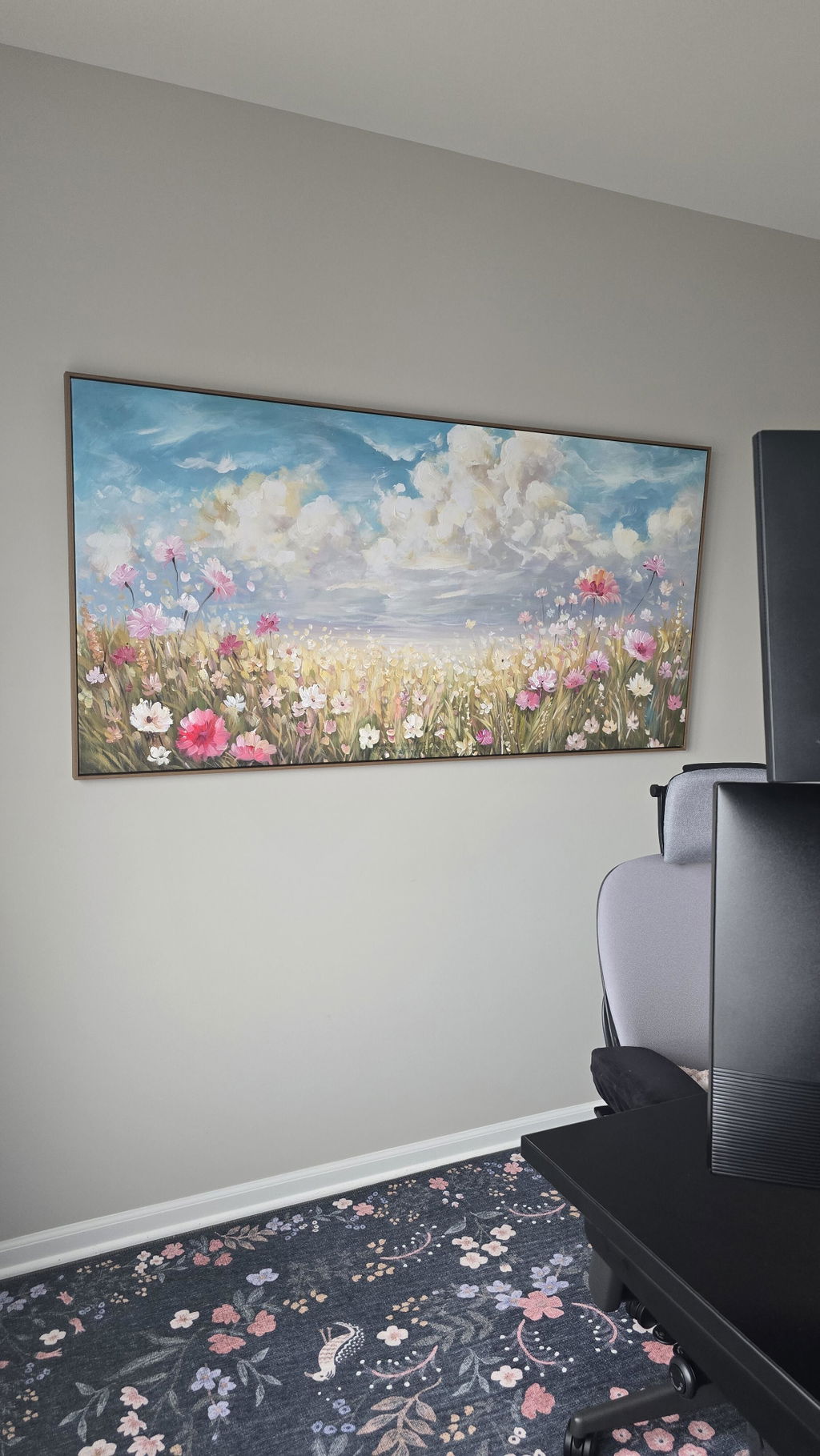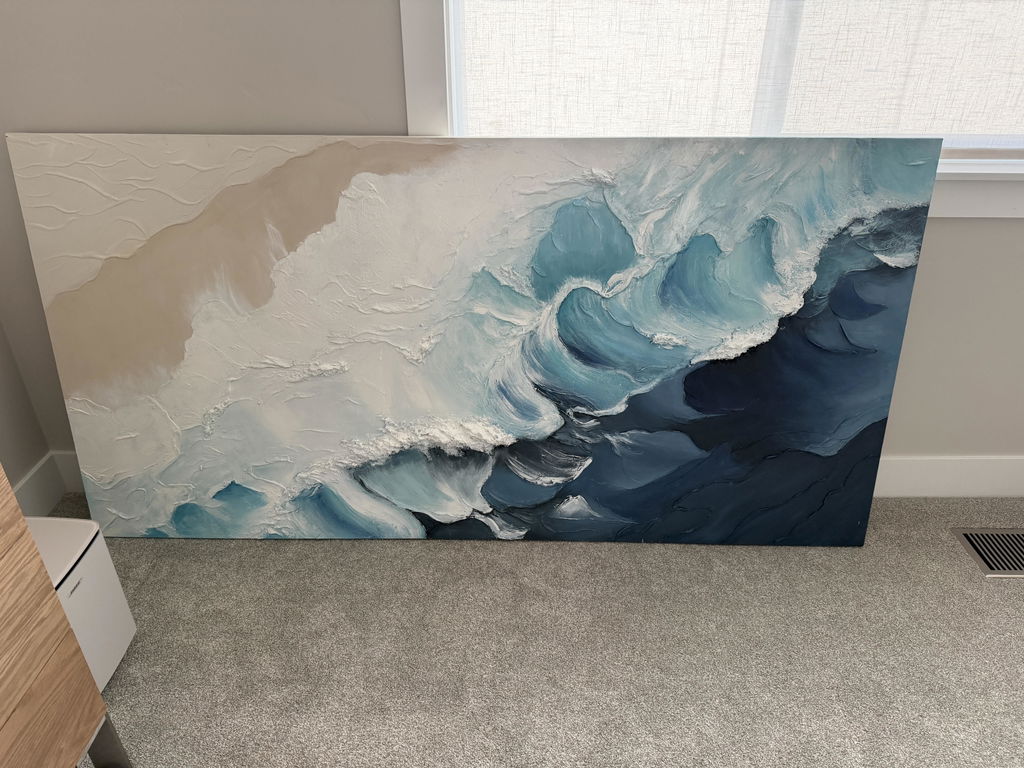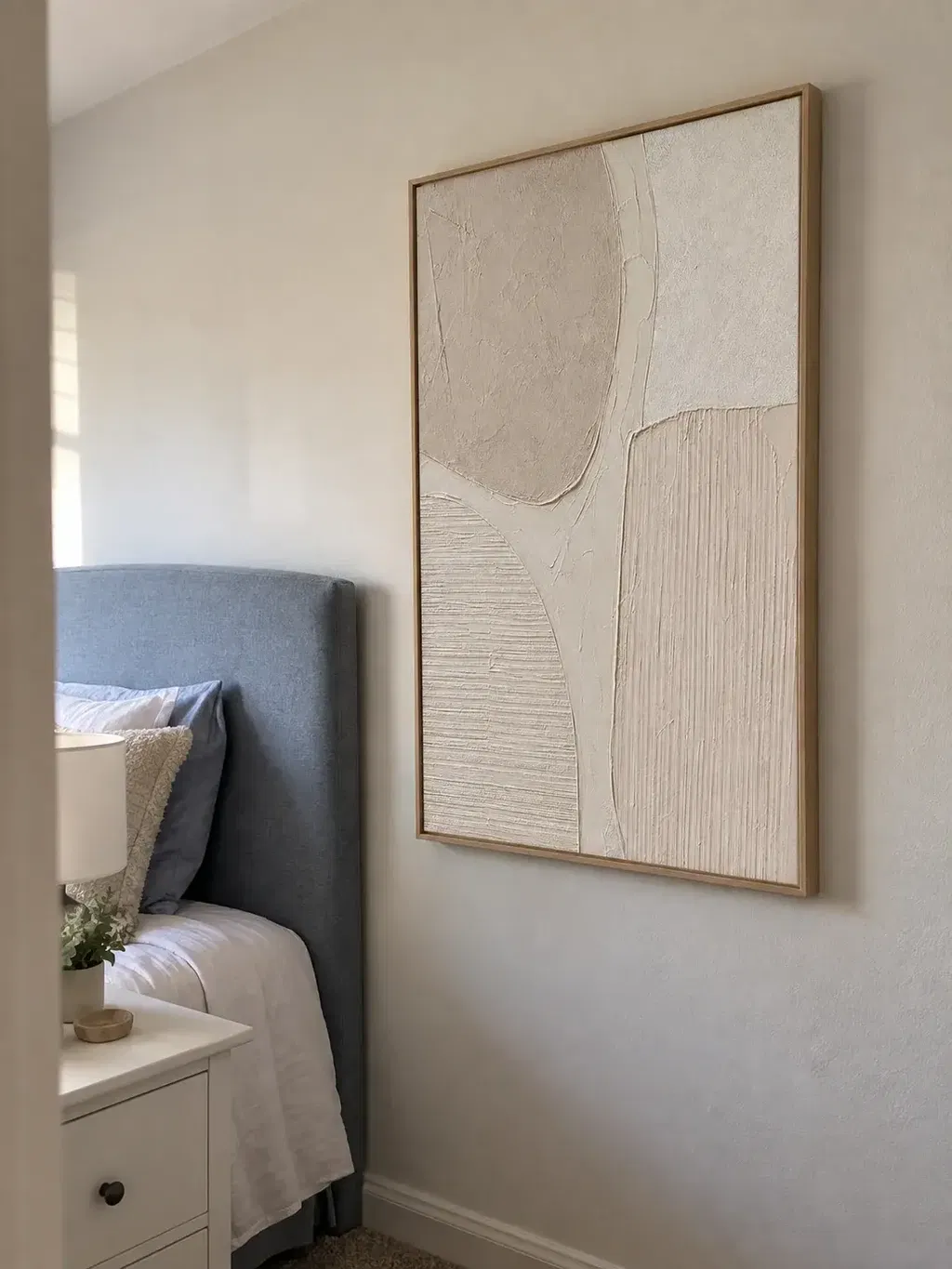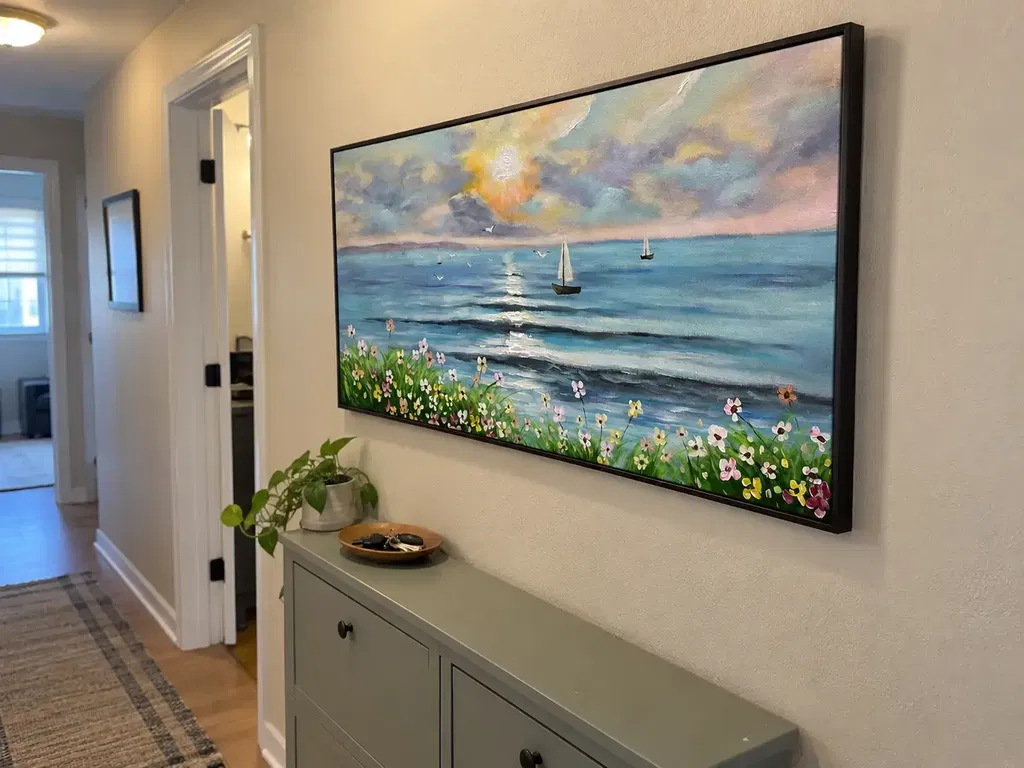
The Shift Toward Emotional Resonance in Social Spaces
The landscape of high-end art acquisition is undergoing a fundamental transformation. While the traditional auction market for vanity assets has seen a significant retreat—with sales of works over $10 million plummeting 44% year-over-year in 2024 according to Marketplace.org—a new priority is emerging among home improvers. Today’s collectors are moving away from speculative financial assets and toward art that provides "real application value": pieces that transform the atmosphere of a home and facilitate social connection.
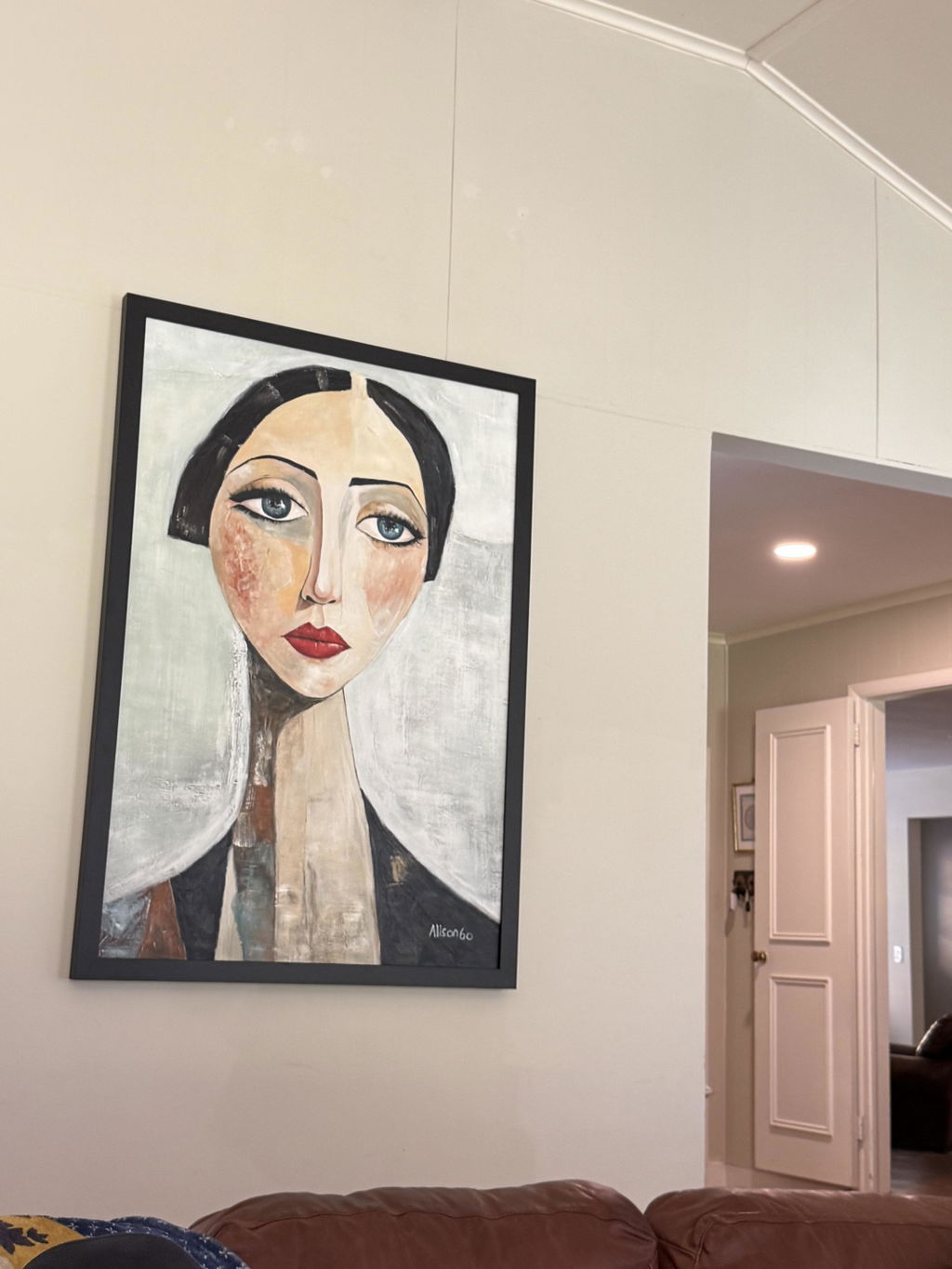
In social areas like living rooms, dining halls, and foyers, the goal is no longer just "decoration." It is about evoking energy. We are seeing a surge in demand for vibrant acrylic works that act as "social catalysts." Unlike the hushed, archival nature of traditional oil galleries, acrylic art in social spaces is designed to be lived with, photographed, and discussed. This shift aligns with broader economic trends; the global art market remains a $65 billion powerhouse, as noted in the Art Market Report 2024, but the growth is increasingly driven by works that prioritize visual impact and emotional harmony over artist provenance.
The Neuroaesthetics of Vibrant Acrylics
Why do certain paintings make a room feel "alive" while others leave it cold? The answer lies in neuroaesthetics—the study of how our brains process visual beauty. According to a critical review by the University of Pennsylvania, environmental artwork can reduce stress in up to 61% of viewers and significantly improve mood in 73% of cases.
Vibrant acrylic subjects—ranging from expressive abstracts to biophilic landscapes—consistently activate the medial prefrontal cortex (mPFC) and the amygdala. These are the neural circuits responsible for emotional regulation and reward. When you place a high-saturation acrylic piece in a social area, you are not just hanging a canvas; you are installing a biological mood-booster.

Biophilic Energy and Wellbeing
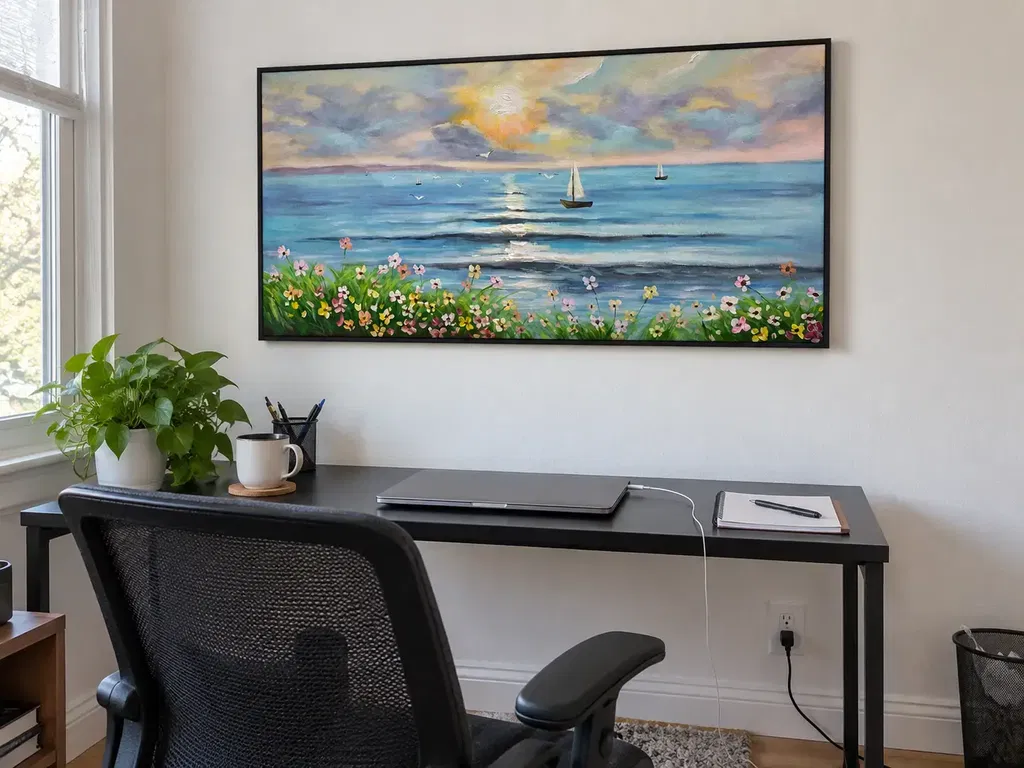
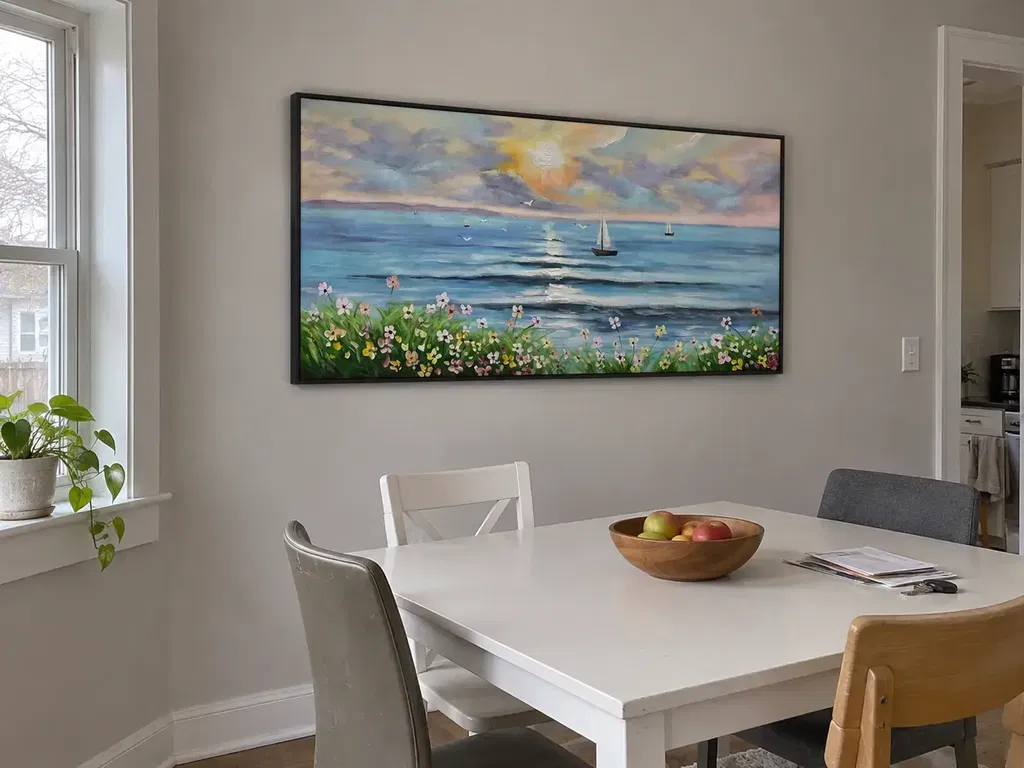
One of the most effective ways to evoke energy is through biophilic design. Research from the University of Central Arkansas suggests that natural landscapes in art produce the same stress-reduction effects as being outdoors. In high-density environments, such as modern urban apartments or offices, these "nature-themed" acrylics effectively intervene in cognitive fatigue and burnout.
Logic Summary: Our analysis of biophilic impact assumes that visual patterns mimicking natural fractals trigger a parasympathetic nervous system response. This is a heuristic used by interior designers to "soften" sterile modern architecture.
Technical Mastery: Why Acrylics Dominate Social Living Areas
While oil paintings have historically held the crown of "fine art," experienced interior designers increasingly recommend acrylics for high-traffic social zones. The reasons are both aesthetic and practical.
The Power of Layering
Acrylics offer a unique advantage in social spaces: rapid drying times that allow for complex, vibrant layering. While a traditional oil painting might take weeks to cure, acrylics dry in minutes. This allows artists to build 3–5 distinct color layers, creating a sense of depth that shifts under varying lighting conditions. We often observe that this layering is what gives a piece its "camera-ready" quality—it prevents the art from looking flat when photographed for social media.
Durability in High-Traffic Zones
Social areas are prone to environmental fluctuations—sunlight, temperature shifts from HVAC systems, and physical proximity to guests. Acrylic polymers consist of long-chain molecules that form films through a physical process called "coalescence." According to technical data from Golden Artist Colors, this makes the paint film more flexible and resistant to embrittlement than traditional oils, which undergo oxidative cross-linking over decades.
However, there is a technical "gotcha" that many owners overlook: thermal expansion.
- The Coefficient: Acrylic has a thermal expansion coefficient of approximately 0.00007/°C.
- The Impact: In a large social space where temperatures might fluctuate by 10°C (50°F) between day and night, a 2-meter canvas can expand or contract by nearly 1.5mm.
- The Solution: For oversized pieces, we recommend specialized mounting systems with a 2:1 hardware safety factor to prevent warping, a strategy we detail in our guide on mounting large canvases.

Curation Logic: Scale, Texture, and Light
Choosing the right acrylic piece is a guided design process. To ensure your art looks "expensive" and intentional, follow these three professional heuristics.
1. The 1:3 Scale Ratio
The most common mistake in social areas is choosing an oversized abstract for a small conversational nook or, conversely, a tiny piece for a massive sofa wall.
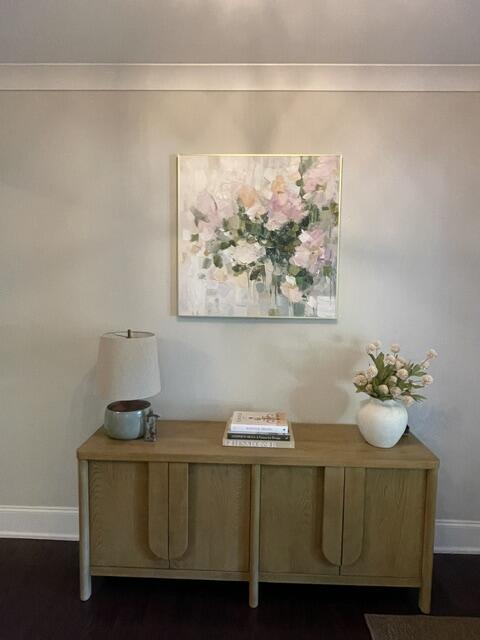
- The Rule: Aim for an art width that is roughly 1/3 the width of the primary seating area or furniture piece it anchors.
- Why: This ratio ensures the art acts as a focal point without overwhelming the room’s architecture. It creates a "visual anchor" that grounds the furniture.
2. Texture and Lighting
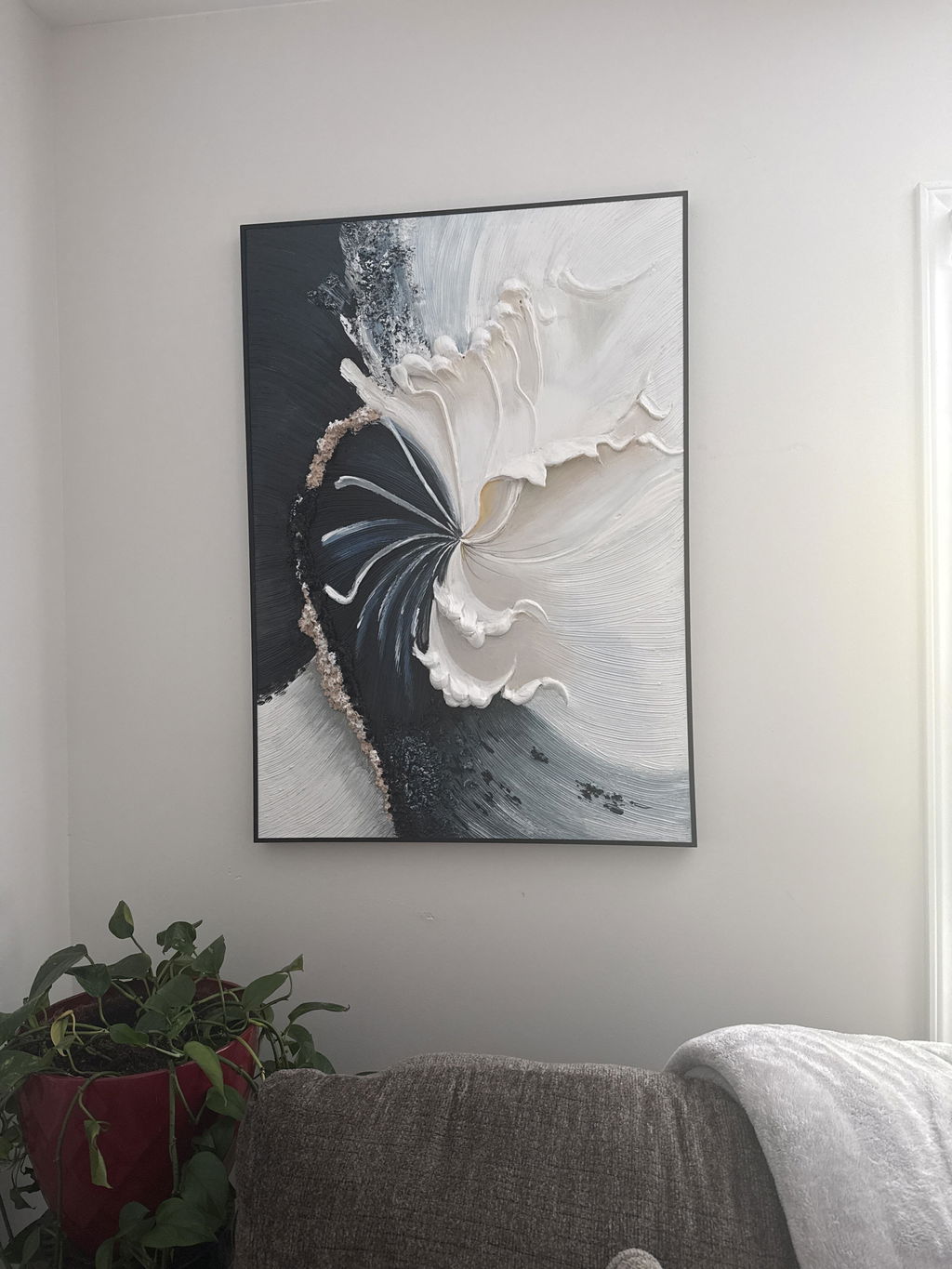
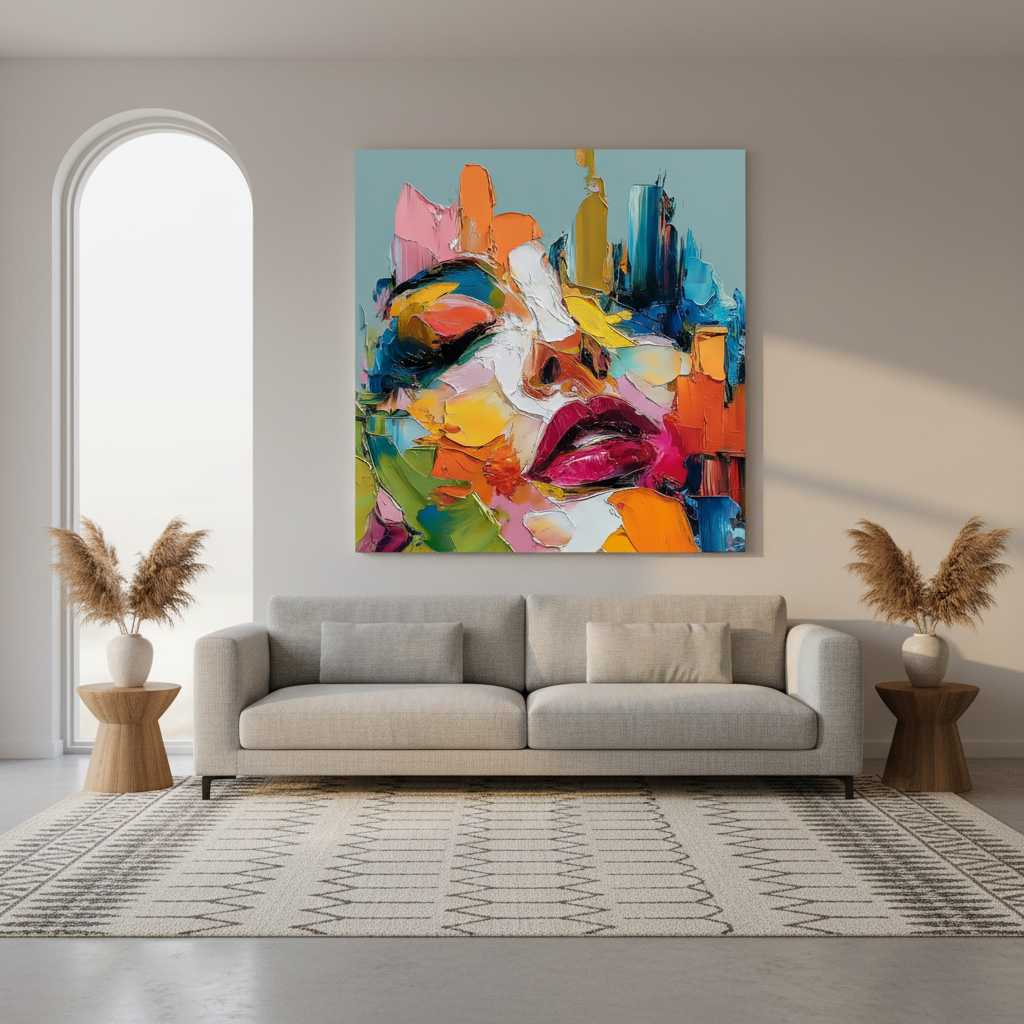
Texture matters significantly in social spaces. Thick impasto techniques—where paint is applied in heavy, visible brushstrokes—tend to hold up better visually in high-traffic areas than delicate washes. Under evening social lighting, these textures catch shadows and highlights, creating a dynamic appearance.
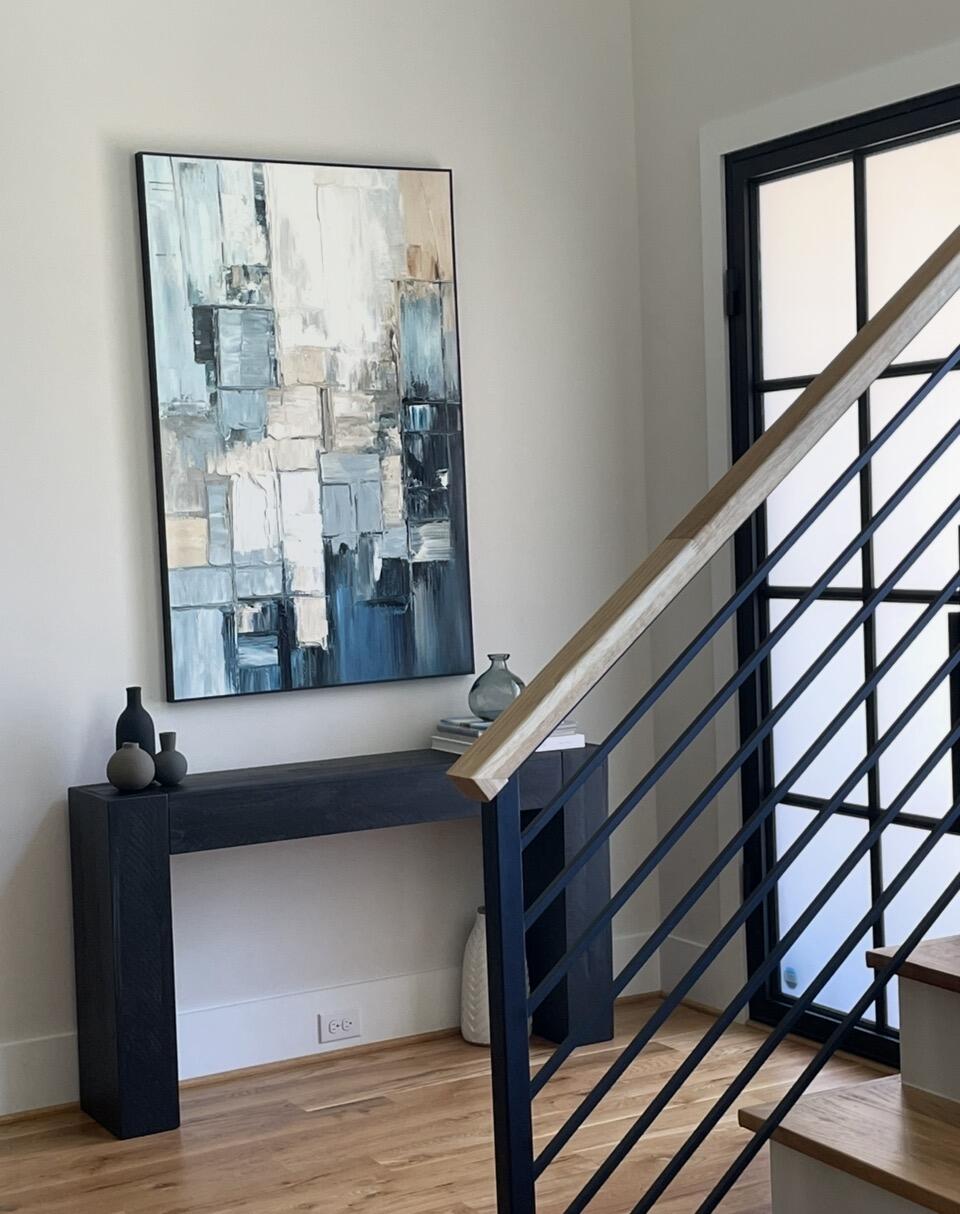
- Color Saturation Tip: Warm-toned acrylics (reds, oranges, golds) often appear more vibrant in evening settings with artificial light. Cooler tones (blues, teals) are optimized for daytime gatherings with natural light.
3. Depth and Refractive Index
The "energy" of a painting is physically linked to its optical properties. Acrylics have a maximum refractive index of approximately 2.5, which dictates how light scatters through the pigment layers. To maximize this, look for pieces that utilize pigment vibrancy and lightfastness to ensure the colors don't "die" in a dimly lit room.
| Curation Parameter | Recommended Value | Rationale |
|---|---|---|
| Scale Ratio | 1:3 (Art to Furniture) | Prevents visual clutter and ensures focal balance. |
| Color Layers | 3–5 Minimum | Provides "camera-ready" depth and prevents flatness. |
| Texture Style | Impasto / Heavy Body | Increases durability and visual interest under social lighting. |
| Varnish Type | UV-Protective Matte/Satin | Prevents glare in social photos while protecting against fading. |
| Mounting Safety | 2:1 Factor | Accounts for thermal expansion in temperature-controlled rooms. |
Methodology Note: These values are estimated based on common interior design practices and structural engineering heuristics for residential art installation. They are intended as a self-check for homeowners, not as mandated architectural specifications.
The Value of the Human Touch: Beyond the Digital Facade
In an era of AI-generated prints and mass-produced décor, the "human element" has become a luxury commodity. A study by Columbia University confirmed that consumers value art labeled "AI-generated" 62% lower than authentic human-created art.
Essential Identity
Why does this gap exist? Research from the University of Chicago suggests that digital replicas lack an "essential identity." A hand-painted acrylic mural or canvas retains the artist's "soul"—the minute, non-verbal decisions made in every brushstroke. This is particularly important in social spaces where guests can view the art up close. The micro-physical texture of hand-painted pigments is something that even the highest-resolution prints cannot replicate.
Furthermore, there is an ethical dimension. The Wharton School found that 87% of consumers strongly agree that artists should receive fair compensation. Choosing original, hand-painted works supports the creative economy, which adds over $1.2 trillion to the U.S. economy annually, surpassing industries like agriculture and transportation.

Safety and Sustainability: The Indoor Air Quality Promise
For families and health-conscious home improvers, the chemical composition of art supplies is a valid concern. Indoor air pollution is often more concentrated than outdoor pollution, and the EPA warns that low-VOC (Volatile Organic Compound) materials are essential for healthy living environments.
VOC Emissions and Pigment Safety
Acrylic paints are generally safer for indoor use than traditional oils because they are water-based. However, not all acrylics are created equal.
- The Curing Process: Research from Aalto University shows that VOC emissions from painted surfaces plummet during the curing phase. High-quality acrylics, once fully cured, provide a stable, low-emission finish.
- Heavy Metals: Some traditional pigments contain heavy metals like cadmium. The International Agency for Research on Cancer (IARC) classifies cadmium as a Group 1 carcinogen. At MontCarta, we prioritize works that use modern, non-toxic alternatives to these pigments, ensuring that the "energy" in your room doesn't come with a hidden health cost.
Support Induced Discoloration (SID)
A common technical frustration for owners of white or neutral acrylic art is a mysterious yellowing over time. This is often not dirt, but Support Induced Discoloration (SID). As identified by Golden Artist Colors, water-soluble impurities in cotton or linen canvases can be drawn into the acrylic medium as it dries. This is why we emphasize the importance of proper priming and high-quality substrates to preserve the vibrancy of your investment.
Enhancing Property Value Through Art
Beyond the immediate social and psychological benefits, investing in high-quality hand-painted art can have a measurable impact on property value. A Royal Society study utilized a CAR model to find that neighborhoods with higher "art" geo-tags saw greater relative house price ranking gains.
In the commercial sector, the impact is even more pronounced. Public art projects, such as those in Chicago’s Millennium Park, have driven over $1.4 billion in real estate-related growth. For homeowners, a custom mural or a large-scale focal piece can turn a standard room into a "commercial landmark" within the digital real estate market, increasing foot traffic for open houses and social media visibility.
The Future of Curated Social Spaces
As we look toward design trends for 2026, the focus is shifting toward "understated elegance" where texture is the soul of the room. Searches for "artisan craftsmanship" are up 21%, while interest in "custom framing" has skyrocketed by 329% according to Zillow and Yelp data.
By choosing vibrant acrylic subjects, you are aligning with a movement that values authenticity, emotional wellbeing, and visual impact. Whether it’s a textured abstract or a vibrant figurative piece, the right art does more than occupy a wall—it evokes the energy necessary to turn a house into a home.
YMYL Disclaimer: This article is for informational purposes only. While we discuss the psychological and health benefits of art and the safety of materials (such as VOCs and pigments), this content does not constitute professional medical, legal, or financial advice. Always consult with a qualified professional regarding indoor air quality, structural mounting safety, or art investment strategies.
Sources
- Marketplace: The expensive art market continues to struggle
- University of Pennsylvania: Visual Art in the Built Environment
- Columbia University: Human-Made vs. AI Art Study
- Royal Society: Quantifying the link between art and property prices
- EPA: Indoor Air Quality and Low-VOC Paints
- Golden Artist Colors: Technical Gels and Mediums
- IARC: Cadmium and Cadmium Compounds