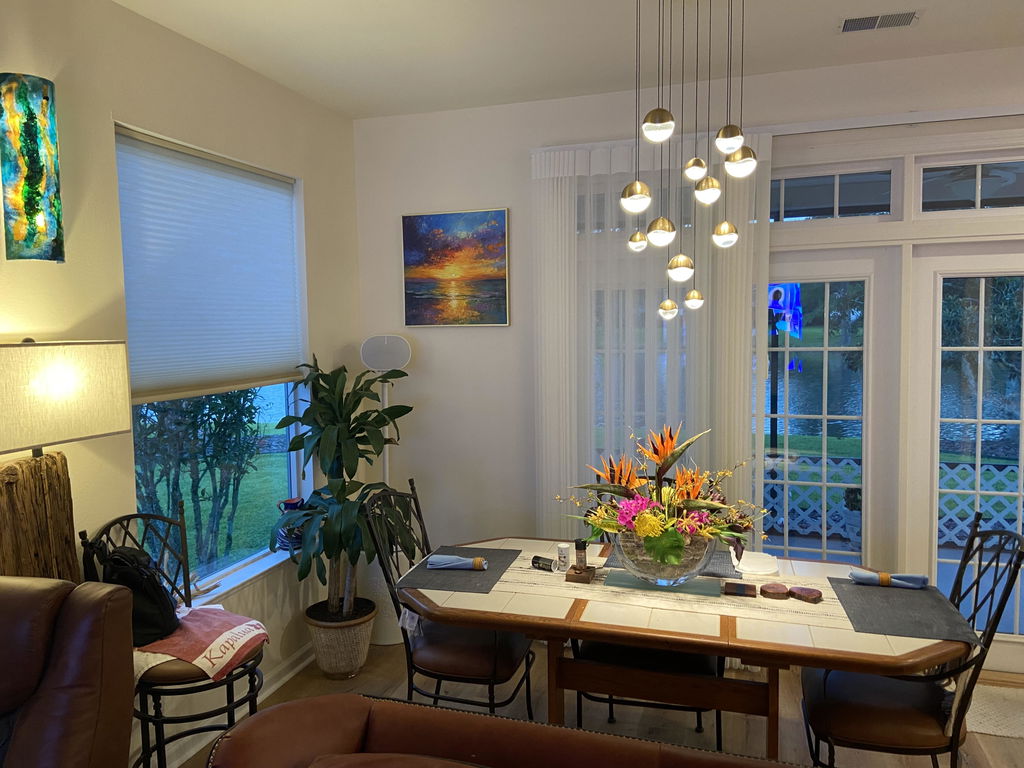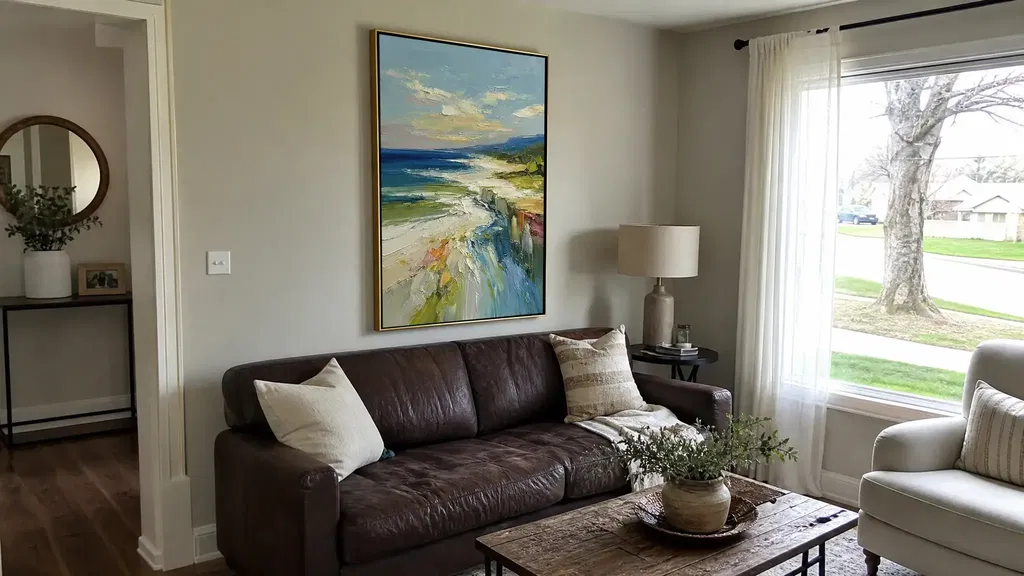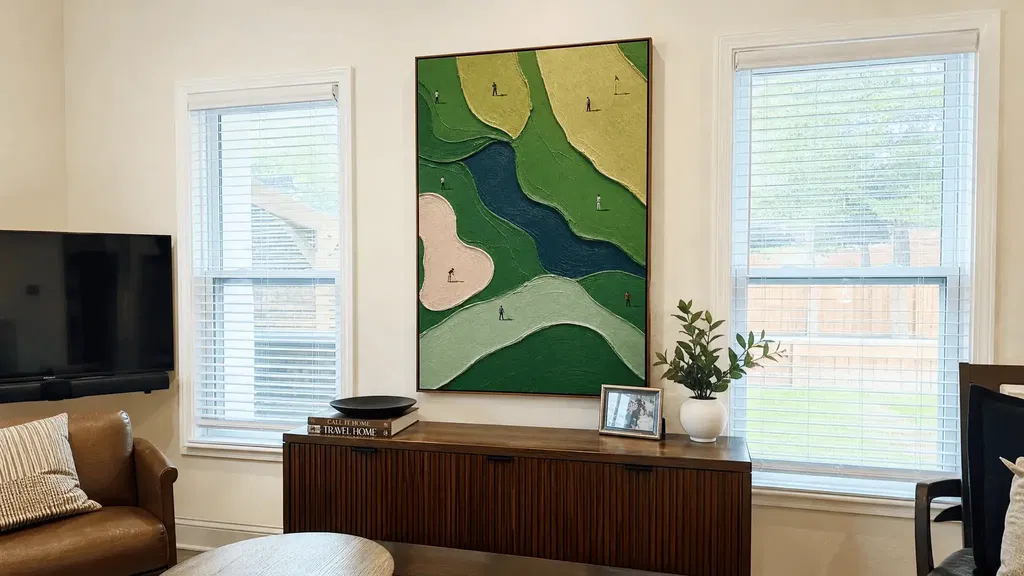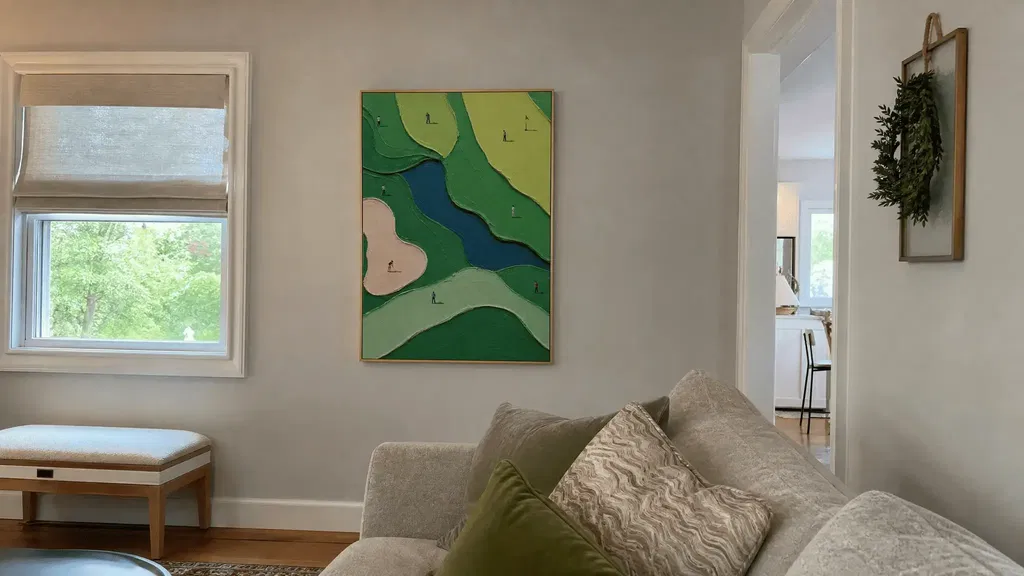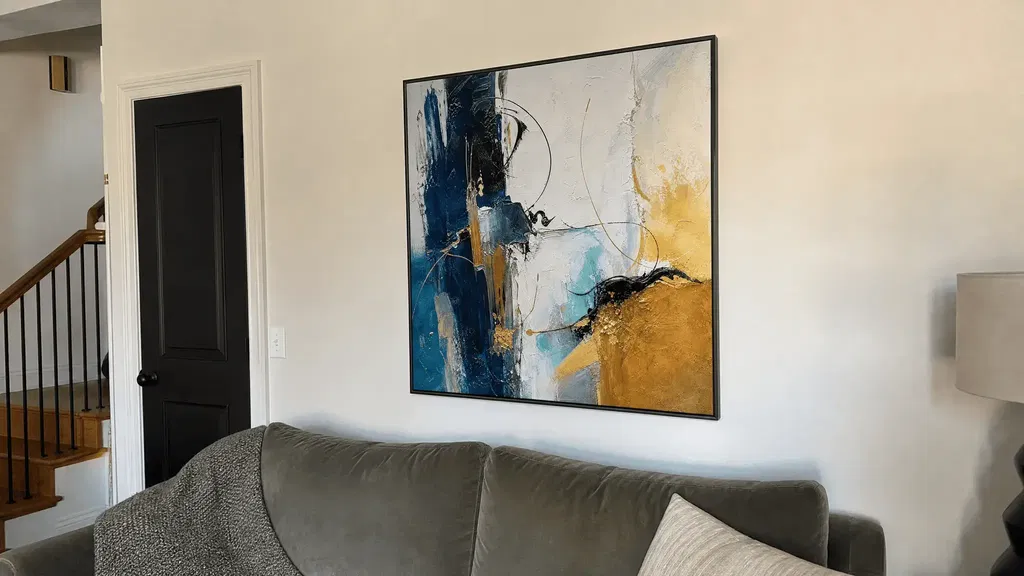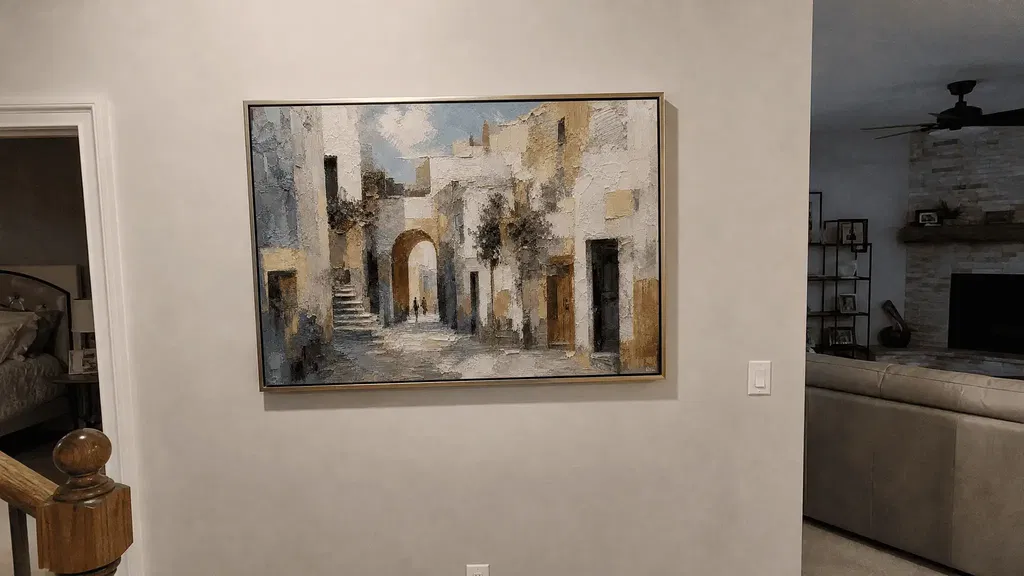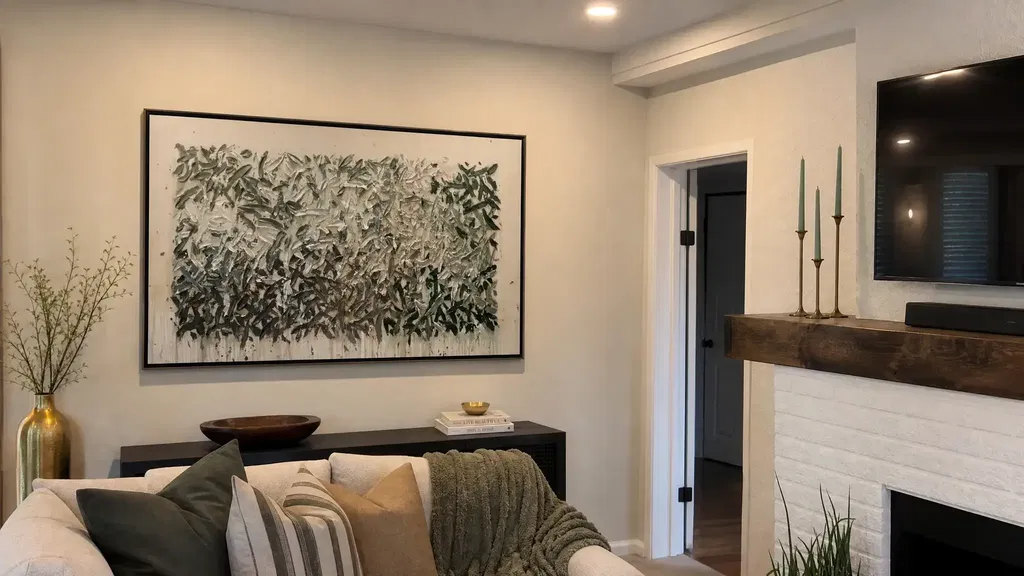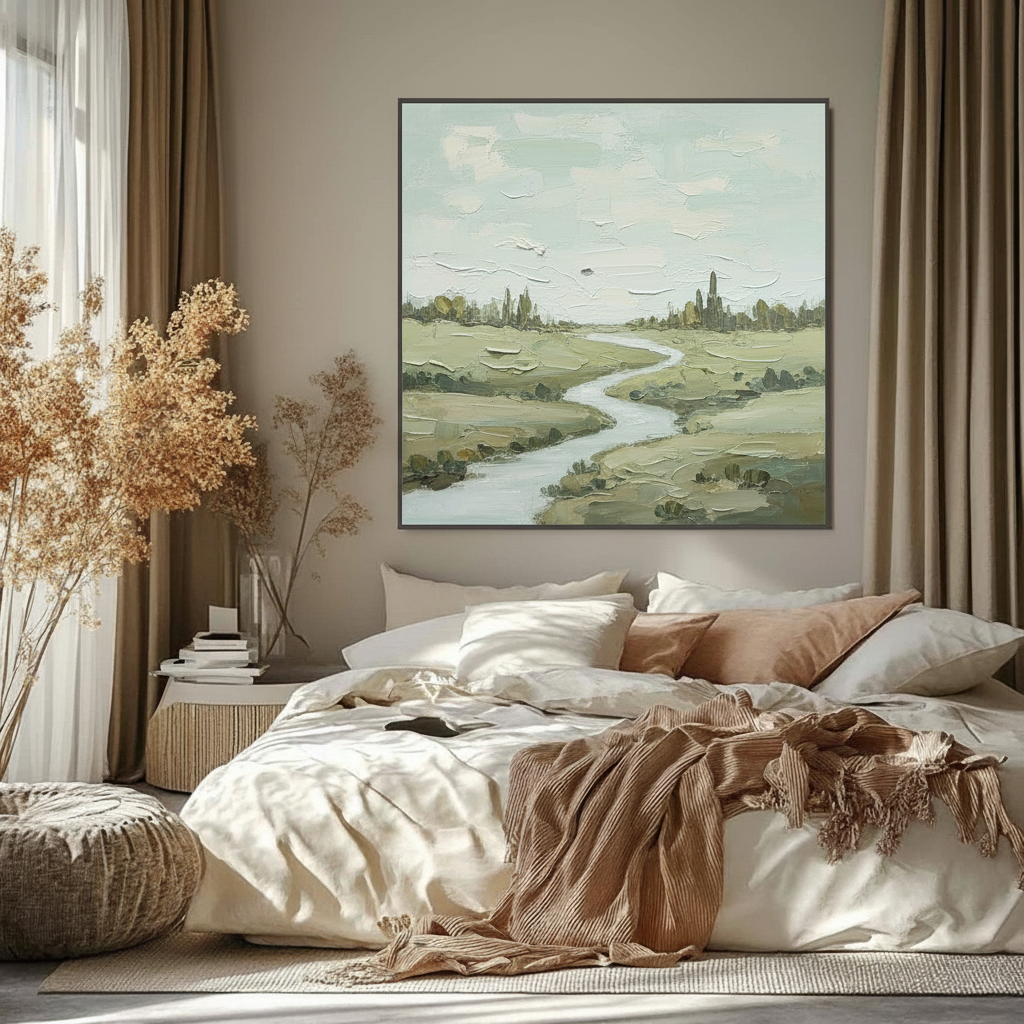
The New Era of Guest Room Curation: Beyond Disposable Decor
The global art market is undergoing a fundamental correction. While high-end auction sales for vanity pieces plummeted 44% in 2024, according to Marketplace, there is a significant retreat toward "real application value." For homeowners and hospitality hosts, this shift marks the end of the era of mass-produced, "fast-fashion" wall art. Today’s guests are increasingly sophisticated; they seek authenticity and emotional resonance rather than generic fillers.
Choosing art for a guest bedroom is a high-stakes design decision. It is a space that must balance personal warmth with universal appeal, all while surviving the logistical challenges of intermittent occupancy and cleaning cycles. Acrylic art has emerged as the optimized solution for this "decision safety" framework. Unlike traditional oils or digital prints, hand-painted acrylics offer a unique intersection of high visual impact and remarkably low maintenance.
In this guide, we will analyze why authentic, human-made acrylic art outclasses digital alternatives, how to select themes that maximize guest comfort, and the technical preservation strategies required to keep your investment pristine for decades.

The Human Premium: Why "Hand-Painted" Matters to Your Guests
In an age of generative AI, the value of the "human touch" has become a measurable economic asset. Research from Columbia University confirms that consumers value art labeled as "AI-generated" 62% lower than authentic human-created work. This isn't just about aesthetics; it’s about what University of Chicago researchers call "essential identity." Guests perceive a hand-painted canvas as retaining the artist’s soul and effort—an irreplicable quality that digital replicas lack.
For a host, this translates directly into "perceived hospitality." A guest who walks into a room decorated with original brushstrokes feels a higher level of care and investment than one greeted by a flat, pixelated print. Furthermore, the Royal Society has quantified a direct link between art and property value, suggesting that curated art environments correlate with higher relative property rankings.
The Psychological ROI of Texture
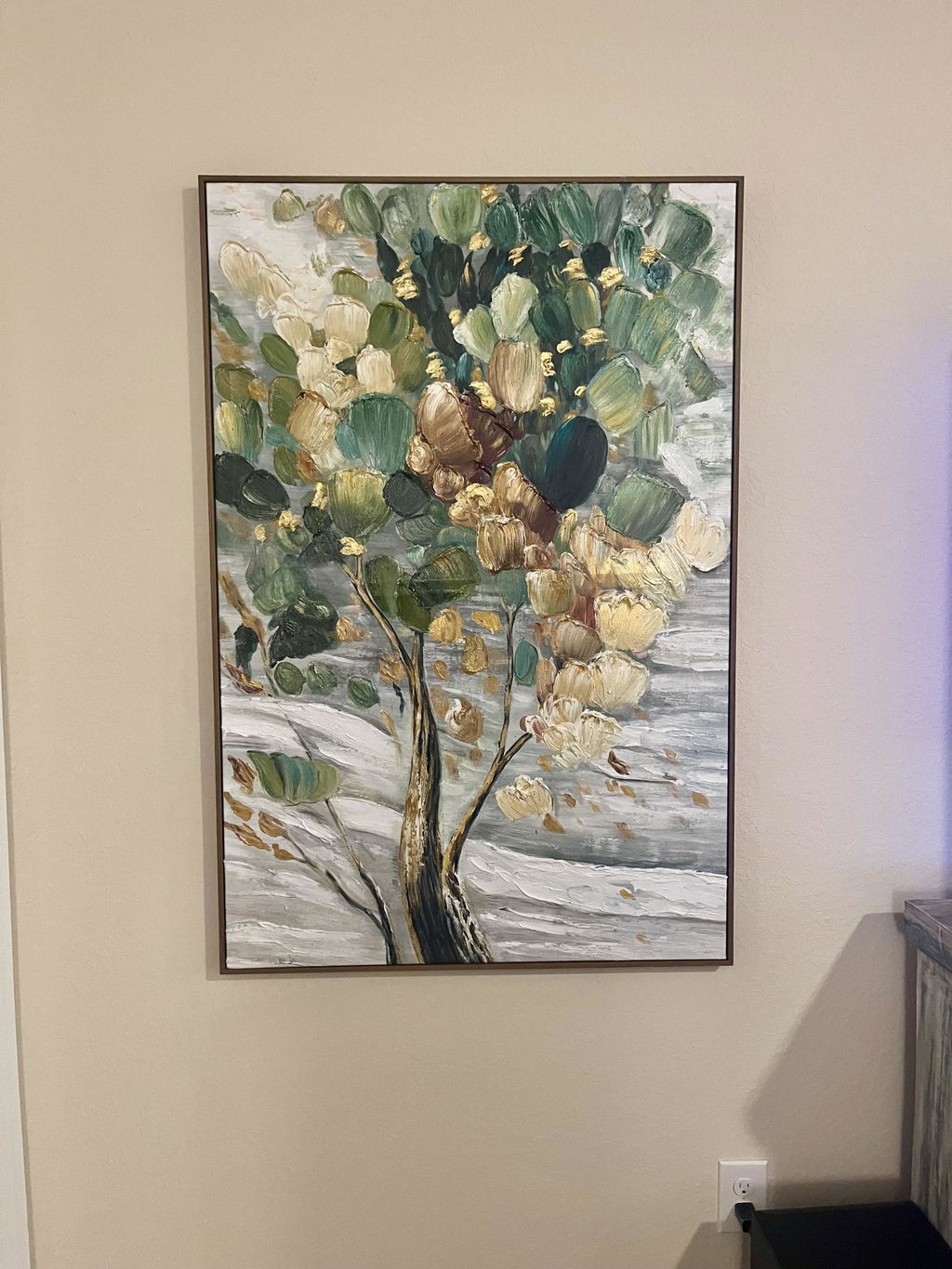
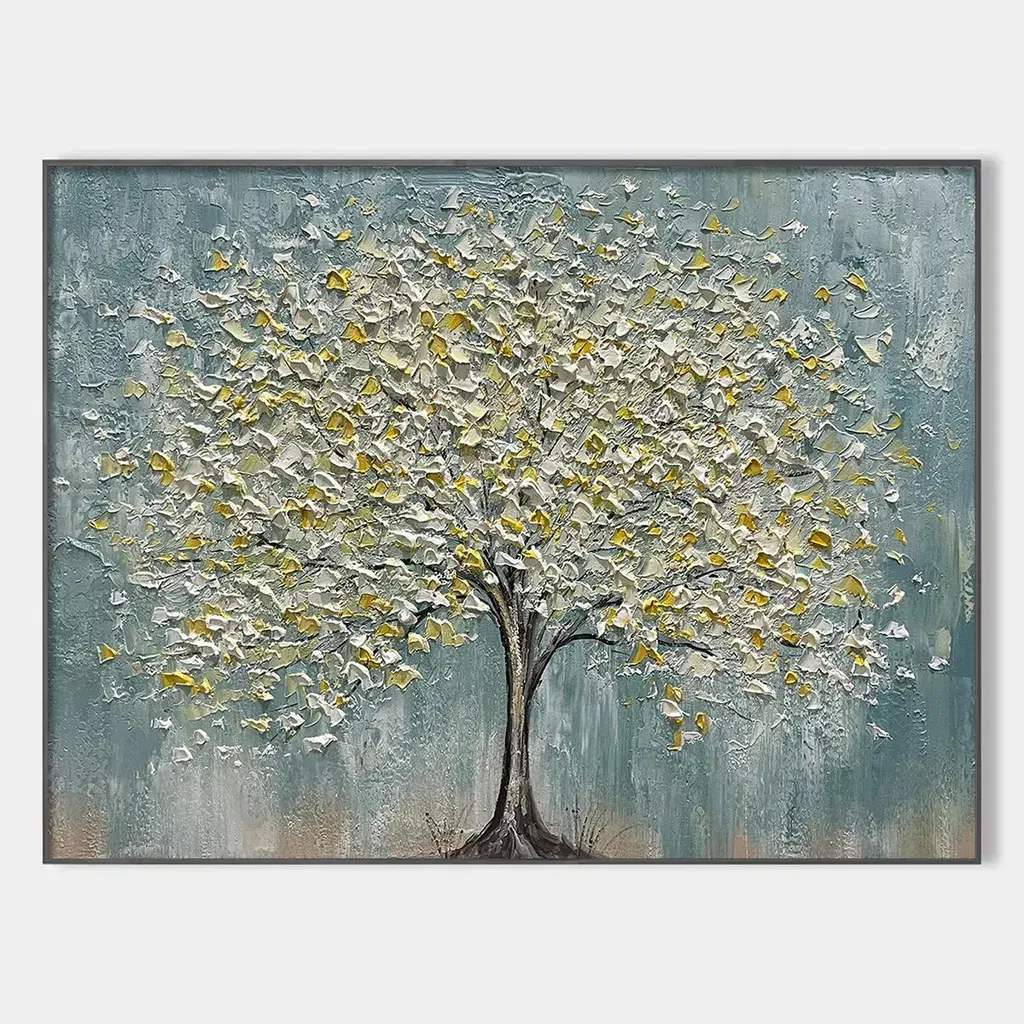
The physical relief of acrylic paint—the "impasto" effect—is not just a visual treat. MUNCH Museum tests confirm that physical textures exponentially stimulate intrinsic motivation and satisfaction in viewers. When your guest sees the light catching the ridges of a palette knife stroke, it triggers a neurological response in the medial prefrontal cortex (mPFC), a region associated with emotional regulation and comfort.
Logic Summary: Our argument for hand-painted art over digital prints is based on consumer perception studies (Columbia/UChicago) and neurological feedback data (mPFC activation), assuming that guest satisfaction is driven by perceived authenticity and physical texture.
Why Acrylics Win the Maintenance War
While oil paintings are often viewed as the "gold standard" of fine art, they are frequently a liability in guest rooms. According to technical bulletins from JustPaint, acrylic polymers consist of long-chain molecules that form films through a physical "coalescence" process. This makes them inherently more flexible and resistant to the embrittlement that plagues oil films as they age.
For rooms that may experience humidity fluctuations—such as guest suites that are closed off when not in use—acrylics provide a critical safety margin.
Durability Comparison: Acrylic vs. Oil for Guest Spaces
| Feature | Acrylic Art | Traditional Oil Art | Rationale |
|---|---|---|---|
| Yellowing | Negligible | High (Linseed oil oxidation) | Acrylic binders are chemically stable and non-yellowing. |
| Humidity Resistance | High | Moderate to Low | Acrylics remain flexible; oils can crack during substrate movement. |
| Cleaning | Water-based solutions | Solvent-only | Tate Modern research shows acrylics can be gently wiped. |
| Curing Time | Days | Months to Years | Faster curing means the art is "safe" for high-traffic rooms sooner. |
| VOC Emissions | Low/Zero | High (Solvents/Turpentine) | Essential for maintaining Indoor Air Quality (IAQ). |
As discussed in our guide on The Designer’s Choice: Acrylic vs. Oil, the "set it and forget it" nature of acrylics makes them the superior choice for high-turnover environments.

Curation Strategy: Designing for "Subconscious Comfort"
The biggest mistake homeowners make is choosing overly personal or intense abstract themes for guest rooms. While a chaotic, neon abstract might work in a personal studio, it can create subconscious "visual stress" for a visitor in an unfamiliar space.
The Biophilic Advantage
University of Pennsylvania reviews indicate that 73% of individuals report significant mood improvements when exposed to environmental artworks featuring nature. This is known as Biophilic Design. By selecting landscapes, gentle botanical themes, or neutral abstracts, you are effectively using art as "public health infrastructure" for your home.
Recommended Palettes for Guest Comfort:
- Soft Blues & Muted Greens: Proven to reduce heart rate and promote sleep.
- Warm Neutrals (Oatmeal, Terracotta): Create a sense of "groundedness" and safety.
- Avoid: High-contrast reds or jagged, aggressive geometries that can trigger the amygdala's "alert" response.
2026 Design Trends: Whimsy and Artisan Craft
According to Zillow and Yelp search data, interest in "artisan craftsmanship" has risen 21%, while "whimsical" custom pieces are up 15%. For guest rooms, this means moving toward "Panoramic Hand-Painted Murals" or oversized canvases that wrap the viewer in an immersive experience—a trend highlighted by the NKBA 2025 Powder Room Finalists.
Technical Installation: Protecting Your Investment
A common pitfall in guest room decor is improper mounting and lighting, which can lead to physical damage over time.
1. The French Cleat System
For heavy acrylic pieces, traditional wire-and-bracket systems are insufficient. Over time, gravity and humidity can cause the canvas to sag or the wire to stretch. We recommend a French Cleat system. This provides a flush, secure mount that distributes weight evenly across the wall, preventing the "tilting" that often occurs when guests accidentally bump into the art.
2. Lighting and Glare Control
Acrylic paint has a natural sheen. To prevent distracting glare, avoid direct spotlights. Instead, use diffused ambient lighting. If the room receives significant sunlight, ensure the art is placed away from direct UV paths. While acrylics are more fade-resistant than watercolors, ASTM D4303 testing confirms that even the best pigments can eventually shift under extreme radiant exposure (typically measured at 1260 MJ/m² in lab settings).
3. Indoor Air Quality (IAQ) and Safety
Guest rooms are often smaller and less ventilated than living areas. Using low-VOC acrylics is a non-negotiable safety standard. The EPA warns that indoor air pollution can be significantly higher than outdoor levels. By choosing hand-painted pieces created with modern, non-toxic emulsions, you ensure that your guests are not inhaling residual solvents from traditional oil paints or cheap industrial coatings.
Methodology Note (Modeling): Our installation and safety advice assumes a standard residential guest room environment (approx. 150-200 sq ft) with standard HVAC ventilation. ROI estimates on "durability" are based on a 10-year lifecycle compared to digital prints which typically require replacement every 3-4 years due to fading or substrate warping.
Maintenance Protocols for the Busy Host
You do not need a professional conservator to maintain acrylic art in a guest room. In fact, over-cleaning is often more dangerous than under-cleaning.
- The 30-Day Dusting Rule: Use a clean, dry microfiber cloth or a soft-bristled brush (like a high-quality hake brush) once a month. This prevents the "haziness" caused by PEG-type surfactants migrating to the surface—a phenomenon documented by Tate conservationists.
- The Water Myth: While Tate's modern paint project confirms that gentle wiping with water-based cotton swabs can remove surface dirt, never "soak" a canvas. Use a damp (not dripping) cloth only for visible stains.
- Avoid "Support Induced Discoloration" (SID): This occurs when water-soluble impurities in the canvas substrate are drawn into the paint film. To prevent this, ensure your art is purchased from artists who use high-quality, pre-primed canvases. If you notice a yellow tint on a white area, it may be SID—a molecular reaction often triggered by applying thick mediums over unsealed cotton.

Strategic Seasonal Rotation
To keep your guest room feeling fresh for returning visitors, consider a seasonal rotation strategy. Because acrylic art is lightweight and durable, it is much easier to swap than heavy, glass-framed prints.
- Summer: Bright, airy botanicals or coastal abstracts.
- Winter: Richer textures and warmer tones (terracotta, deep ochre).
This approach allows you to update the room's "emotional temperature" without a full renovation. It also gives you a chance to inspect each piece for any signs of "chalking" or surface dirt in a well-lit area before re-hanging.
Summary of Decision Safety for Art Curation
Investing in hand-painted acrylic art is a move from "disposable decor" to "cultural heritage." By following a data-driven curation strategy, you maximize both the aesthetic impact on your guests and the long-term value of your property.
| Goal | Action | Expert Insight |
|---|---|---|
| Guest Comfort | Choose Biophilic themes | 73% mood improvement rate (UPenn). |
| Durability | Opt for Acrylic over Oil | Resists yellowing and humidity-induced cracking. |
| Authenticity | Verify human-made status | 62% higher value perception than AI (Columbia). |
| Safety | Check for Low-VOC | Protects IAQ and meets LEED-style standards. |
| Security | Use French Cleat mounts | Prevents sagging and accidental dislodging. |
For more technical insights on maintaining your collection, explore our deep dive on Pigment Vibrancy and Lightfastness.
Disclaimer: This article is for informational purposes only. While art can significantly enhance well-being, it is not a substitute for professional mental health or medical advice. For structural installation of large-scale art, consult with a professional contractor to ensure wall integrity.