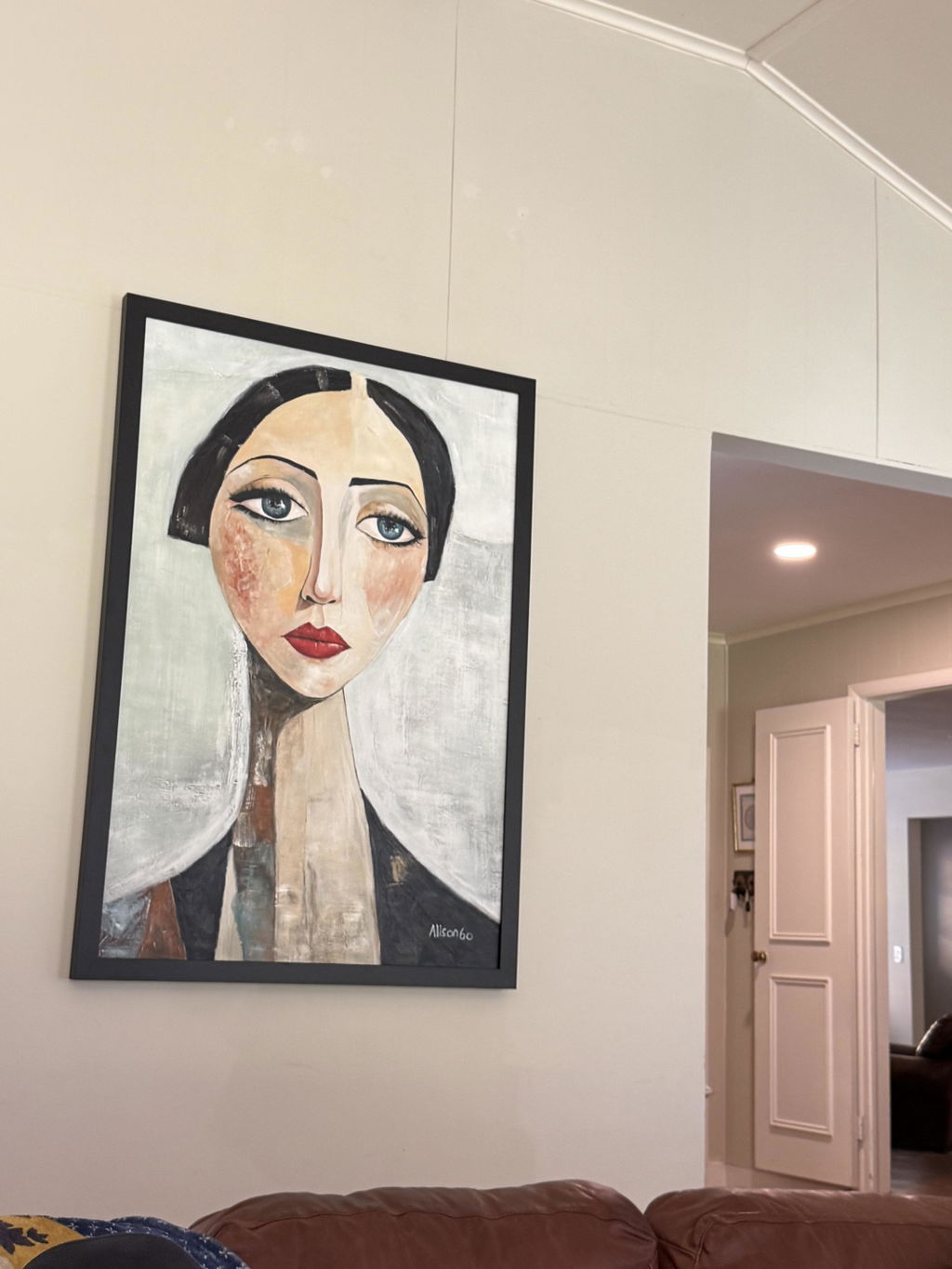
Managing humidity for textured art is all about avoiding the extremes of dry heat, steam, and cold drafts. For most homes, the best approach is to aim for a conservative humidity target, maintain a moderate temperature, and keep your artwork away from the biggest climate stress points.
Why Textured Oil Surfaces React Differently
What Makes Impasto More Sensitive
Thick paint ridges—known as impasto—complicate care. Because raised peaks, knife marks, and uneven layers expose more surface area than a flat print or a smooth oil film, they show signs of movement much faster. That’s why textured art often requires more diligent climate control than flatter pieces.
The primary risks are cracking, lifting, and tackiness, particularly at the highest ridges. Since the surface thickness varies across the canvas, the thin areas and thick peaks may not react at the same rate to changes in the room.

Humidity Versus Temperature
Humidity affects moisture levels, while temperature dictates how quickly materials expand, contract, and cycle. In a typical home, these two factors usually work in tandem, especially when you factor in HVAC use, seasonal weather shifts, and moving art between rooms.
Ultimately, the goal isn't just to hit a specific number on a hygrometer; it's to ensure the artwork sits in a space that stays relatively steady.
Display Risks Versus Storage Risks
A room might be perfectly fine for short-term display but a poor choice for long-term storage. Closets, attics, garages, and basements often trap moisture or heat much more easily than a living room.
This distinction is important because storage issues can go unnoticed for long periods. Displaying a piece gives you a better chance to catch changes early, whereas storage can allow damage to accumulate out of sight.
What Humidity Range Is Usually Best
For most oil paintings, a safe home target is 40% to 60% relative humidity (RH). This is the standard conservation recommendation for paintings and serves as a solid baseline for textured art in most US homes.
Think of this range as a target, not a guarantee. Below 40% RH, the Smithsonian Museum Conservation Institute notes that paint layers can become brittle and shrink, increasing the risk of cracking or flaking. Above 70% to 75% RH, high humidity becomes a significant risk for mold and structural instability.

The most important factor is stability. A room that stays between 45% and 55% is almost always better for art than one that swings from dry to damp every few days. Be extra cautious with bathrooms, kitchens, basements, and poorly ventilated areas. If a room smells musty, shows condensation on windows, or feels noticeably different after cooking or showering, it’s a high-risk space.
Safe Temperature Limits for Home Display
A practical indoor range for oil paintings is roughly 65°F to 75°F. Gamblin’s storage guidance supports this range, which aligns well with standard home comfort levels.
Everyday Room Temperature Targets
The specific temperature is less important than the consistency. A room that stays in the low 70s with minimal day-to-night fluctuation is much safer for original oil art than a room that dips into the cold at night and overheats during the day.
When it comes to textured art, steady beats perfect. If your home is slightly outside the "ideal" range but stays consistent, that is usually a better choice than a room that fluctuates wildly.
Fast Temperature Swings to Avoid
The biggest threats to your art are vents, radiators, sunny windows, fireplaces, exterior walls, and drafty entryways. These spots create hot-and-cold cycling that puts far more stress on paint layers than a stable room.
The Canadian Conservation Institute points out that rapid environmental shifts are more damaging than slow seasonal changes. Even if a room feels comfortable, placing art directly under an HVAC vent or against a cold exterior wall can still be risky.
Home Checks That Lower Climate Risk
- Measure the room. Use a digital hygrometer to get actual data rather than guessing. For textured art, you want a room that consistently stays in that "safe" middle ground.
- Monitor moisture spikes. Kitchens, bathrooms, and laundry areas may seem fine most of the time but can spike after a shower or a meal. If a room frequently hits high-risk levels, move the art.
- Check your walls. Exterior walls and corners with poor airflow can create "microclimates" that differ significantly from the rest of the room.
- Look for warning signs. Musty smells, condensation, peeling paint, or recurring dust clumps in corners are indicators of a room that needs better ventilation.
- Place art away from airflow. Avoid direct blasts from HVAC vents, heat registers, and areas near doors that lead outside.
- Recheck after changes. Seasonal HVAC switches, room renovations, or even keeping windows open for long periods can change the environment enough to affect your art.
- Keep it simple. If a room is close to the ideal range, prioritize placement first—moving the piece away from a vent or window is often enough to stabilize it.
For a deeper dive into how environment affects the drying and stability of your pieces, check out this guide on airflow and oil paint stability.
Protect the Piece Through the Seasons
Consistency is your best defense. Keep textured oil art away from direct heat or cold, and give your space a quick check when you switch your HVAC system from heat to A/C.
A visual inspection every few weeks is usually plenty. If you notice changes in sheen, warping at the canvas edges, or dust settling deeper into the paint ridges than usual, it’s time to move the piece to a more stable location.
If you’re deciding where to hang a new painting, start with the room that holds the most consistent temperature and humidity year-round.
FAQs
How Does Humidity Affect Textured Oil Paintings?
Humidity affects the moisture exchange between the paint layers and the room. Low humidity can make paint brittle, while high humidity increases the risk of mold and instability. The most important thing is that the humidity level remains steady.
What Temperature Is Safe for Original Oil Art?
A range of 65°F to 75°F is ideal for home display. Stability is key: a room that stays within that range without sharp spikes is much better for the art than one that jumps in temperature due to nearby vents, windows, or fireplaces.
Can I Hang Textured Oil Art in a Bathroom or Kitchen?
It’s generally not recommended. These rooms are prone to steam, humidity spikes, and temperature swings. If you must hang art there, ensure the room is well-ventilated and stays dry even after daily use.
Why Do Impasto Surfaces Crack More Easily in Poor Conditions?
Thick paint ridges expand and contract at different rates than the rest of the canvas. In poor conditions, this stress is more likely to manifest as cracks or flaking at the peaks and thicker areas of the painting.
Can a Dehumidifier or HVAC System Help Protect Textured Oil Art?
Yes, provided they make the room more stable. While these systems help keep humidity and temperature in a safe band, they aren't a substitute for smart placement. Keep art away from direct airflow and damp corners, regardless of your climate control settings.