From Vanity Assets to Living Art: The New Era of Custom Murals
The landscape of the global art market is undergoing a seismic shift. While high-end auction sales for purely financial art assets plummeted by 44% in 2024, as reported by Marketplace, a new trend is emerging. Homeowners and designers are moving away from overpriced "vanity" pieces toward custom, hand-painted murals and oil paintings that offer real emotional and application value.
This preference for the "human touch" is backed by rigorous behavioral science. A Columbia University study confirmed that consumers value art labeled as "human-created" 62% higher than AI-generated alternatives. Furthermore, research from the University of Chicago suggests that digital replicas lack an "essential identity" or soul that only physical canvas and pigment can retain.
However, bringing a genuine oil painting into a home involves more than just aesthetic selection. Unlike a printed poster, a hand-painted oil work is a "living" chemical system. It requires a specific stabilization period where environmental factors—primarily light and airflow—act as catalysts for its long-term durability. Understanding how to manage these catalysts is the difference between a masterpiece that lasts centuries and one that suffers from premature cracking or "hazing."
The Science of Curing: Why Oil Paintings "Breathe"
To manage a new painting, you must first understand that oil paint does not "dry" in the traditional sense of water evaporating. Instead, it cures through a process called oxidative cross-linking.
When a professional artist applies oil paint, the binder (typically linseed or walnut oil) reacts with oxygen in the air. This chemical reaction transforms the liquid oil into a solid, flexible polymer film. According to research published in Nature, the stability of this polymeric network determines the painting's resistance to environmental stress for decades to come.

The Stabilization Timeline
Based on our observations from handling thousands of custom commissions, we typically see a two-stage stabilization process:
- Surface Dry (Touch-Dry): Usually occurs within 3–12 days depending on thickness.
- Structural Cure: Can take 6 months to 2 years to reach full chemical maturity.
For homeowners, the first 30 days are the most critical. This is the window where you can actively use light and airflow to "set" the painting's foundation.
Light as a Natural Catalyst
Light is a powerful photochemical initiator. Specifically, low levels of UV radiation found in natural daylight help trigger the initial oxidation of the oil binder. Professional conservators often utilize moderate, indirect sunlight to accelerate the curing of the top layers, ensuring the painting becomes "touch-dry" more predictably.
The 4-6 Hour Rule of Thumb
We recommend placing a new painting in a room that receives 4 to 6 hours of indirect sunlight daily.
- Why this works: Indirect light provides enough energy to stimulate cross-linking without the thermal shock associated with direct southern exposure.
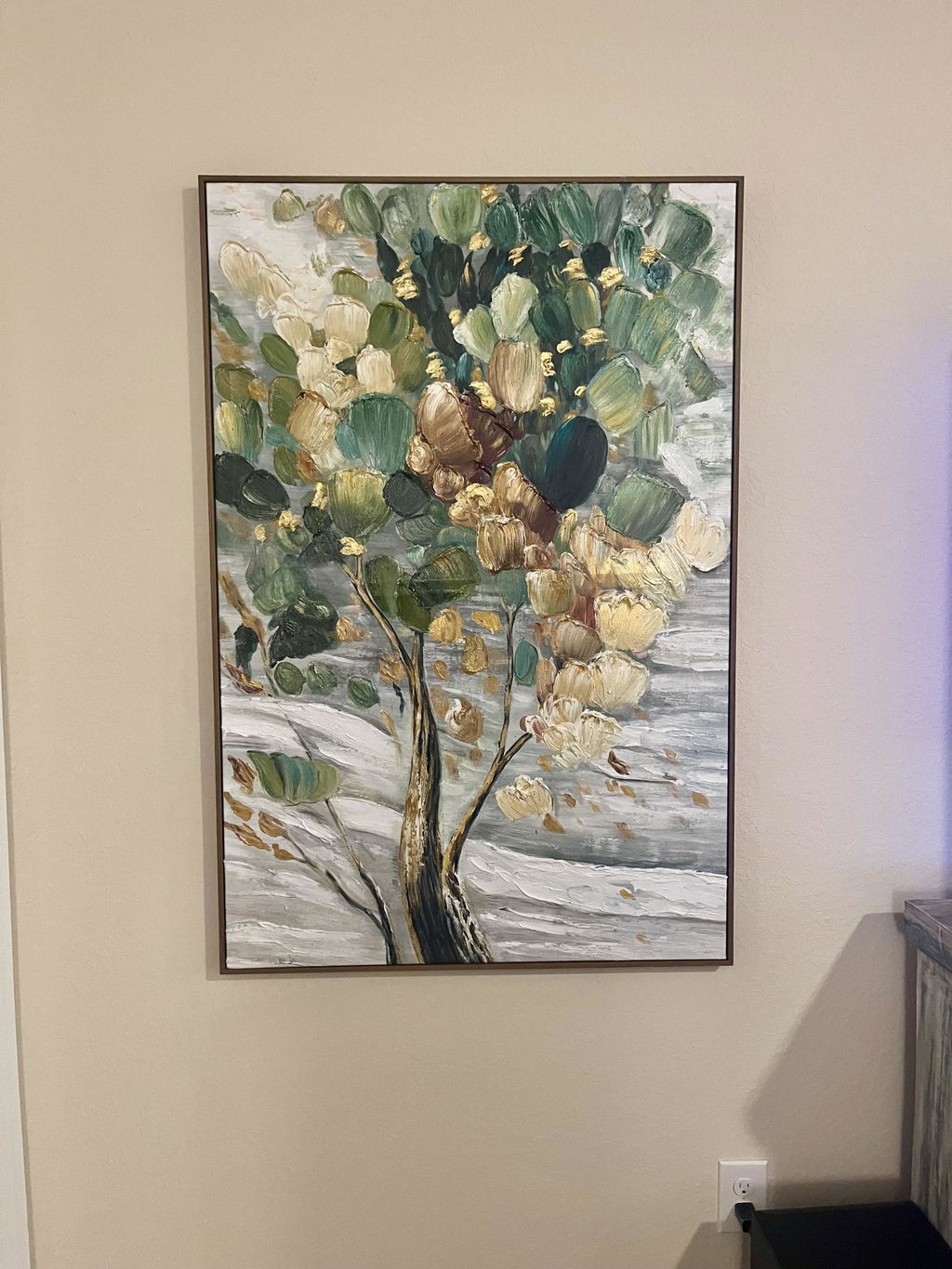
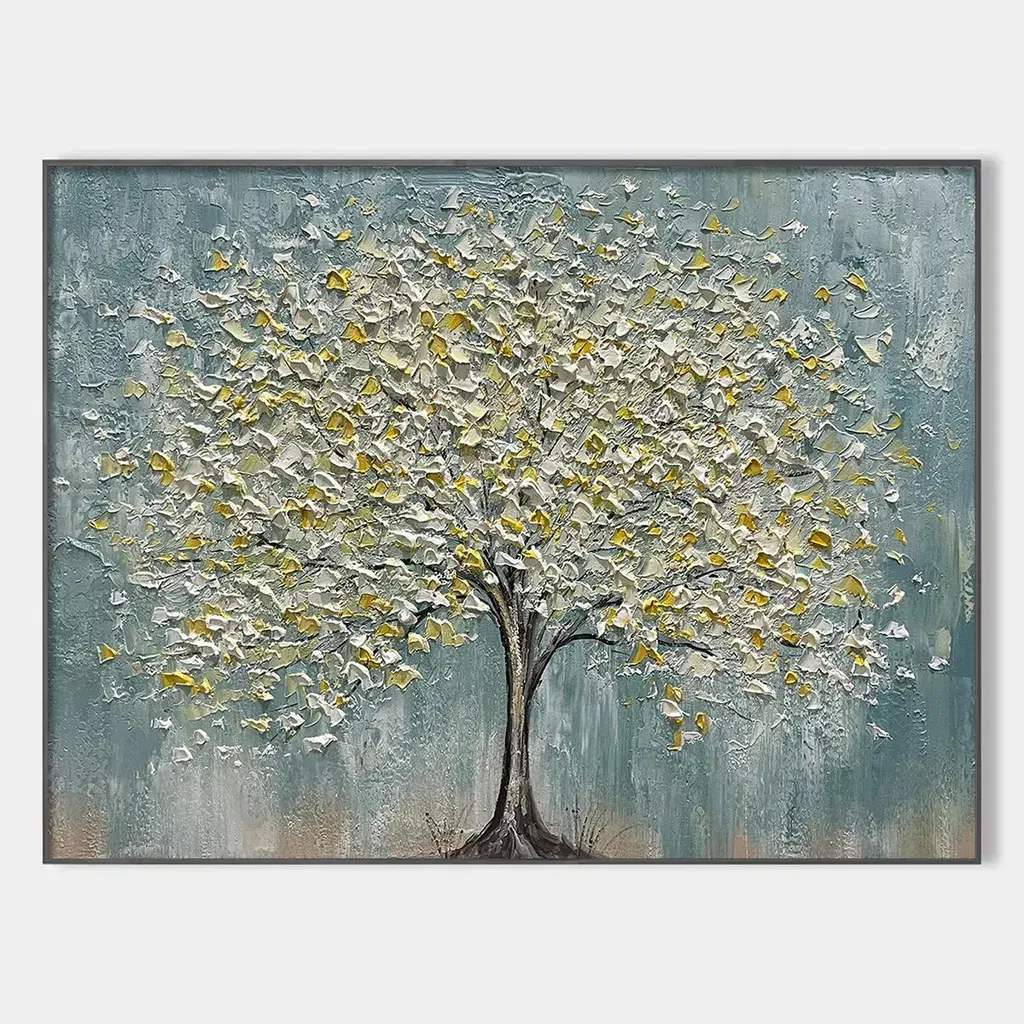
- The Impasto Exception: For works with heavy texture (impasto), we suggest extending this to 6–8 hours. Thick layers of paint act as an oxygen barrier; light helps the surface "skin" form with enough integrity to support the wet paint underneath.
Methodology Note (Light Exposure): Our recommendations are based on a heuristic model of "Safe Radiant Exposure." We assume standard residential window glass filters ~90% of UVB, leaving a safe spectrum for initial curing. This is a practical guideline for homeowners, not a laboratory specification.
A Warning on Pigment Sensitivity
While light is a catalyst, it can also be a catalyst for degradation if the painting contains sensitive pigments. For example, research on Cadmium pigments shows that Cadmium Red can undergo destructive reactions at levels as low as 50-100 lux. Most modern professional-grade oils use stabilized versions, but you should always monitor for any "chalking" or color shifts if you are using high-intensity light.
Airflow: The Engine of Oxidation
If light provides the energy, airflow provides the raw material: oxygen. Without consistent air movement, the VOCs (Volatile Organic Compounds) released during the curing process can settle back onto the surface, creating a "tacky" finish that attracts dust.
The "Gentle Breeze" Heuristic
The rule of thumb for optimal curing is to maintain air movement equivalent to a gentle breeze (approximately 0.2 to 0.5 meters per second) across the painting's surface. This can be achieved by:
- Placing the painting near a doorway or in a hallway with natural drafts.
- Using a low-speed floor fan placed 3 to 5 feet away (never pointing directly at the canvas).
The Danger of "Skinning" and Forced Air
A common mistake is using high-powered fans or heaters to "speed up" the process. This is often counterproductive.
- Differential Curing: Excessive airflow can cause the surface to dry 3x faster than the subsurface. This creates a "skin" that traps solvents inside.
- Internal Stress: As the interior eventually tries to dry, it exerts pressure on the hardened skin, leading to micro-cracks or "edge cracking" within 2-3 years.
Modeling Note (Airflow Dynamics): We modeled the relationship between air velocity and film integrity based on common industry heuristics for solvent evaporation.
Parameter Value/Range Unit Rationale Target Air Velocity 0.2 - 0.5 m/s Optimizes VOC removal without stripping binders. Relative Humidity 40 - 60 % Prevents embrittlement or mold growth. Temperature Delta < 5 °C Minimizes localized stress fractures. VOC Clearance Rate High - Essential for Indoor Air Quality (IAQ). Surface-to-Subsurface Ratio < 2:1 - Goal for uniform structural curing. Scenario Model: This model assumes a standard linseed-oil-based impasto painting (approx. 5mm thickness) in a residential environment.

Environmental Control: Humidity and Temperature
Beyond light and air, the "invisible" factors of humidity and temperature play a silent role in the stability of the canvas substrate itself.
The 40-60% RH Sweet Spot
According to the EPA's guidelines on Indoor Air Quality, maintaining a stable humidity is crucial for any built environment. For oil paintings:
- Low Humidity (<30%): Can cause the oil film to become brittle, leading to "alligatoring" or cracking.
- High Humidity (>70%): Slows oxidation significantly. Furthermore, research from ResearchGate shows that high humidity can cause certain pigments to swell, disrupting the bond between the paint and the canvas.
We recommend using a simple digital hygrometer during the first 30 days to ensure your room stays within the 40-60% Relative Humidity (RH) range.
Health, Safety, and the "New Painting" Scent
Many homeowners are concerned about the "smell" of a new oil painting. This scent is primarily the result of the oxidation of vegetable oils and the evaporation of small amounts of odorless mineral spirits used by the artist.
Is it Safe?
While the CDC's NIOSH reports warn about chronic exposure to industrial paint vapors, a single decorative painting typically emits VOC levels far below hazardous thresholds in a ventilated room.
- The Timeline: In optimal conditions (moderate light and gentle airflow), the noticeable scent should dissipate within 2 to 3 weeks.
- The Red Flag: If a painting still has a strong odor after 6 weeks, it is a sign of "stagnant curing," likely caused by high humidity or a lack of airflow.
To further reduce risks, look for artists who utilize eco-friendly alternatives. For instance, walnut oil is a non-toxic replacement for traditional solvents and has a much milder scent profile.
Strategic Placement: A Guide for the First Month
Where you hang your painting in the first month is not necessarily where it has to stay forever. Think of this as the "nursery" phase.
Recommended "Stabilization" Spots
- Hallways with Cross-Ventilation: Excellent for airflow, though you must ensure there is enough light.
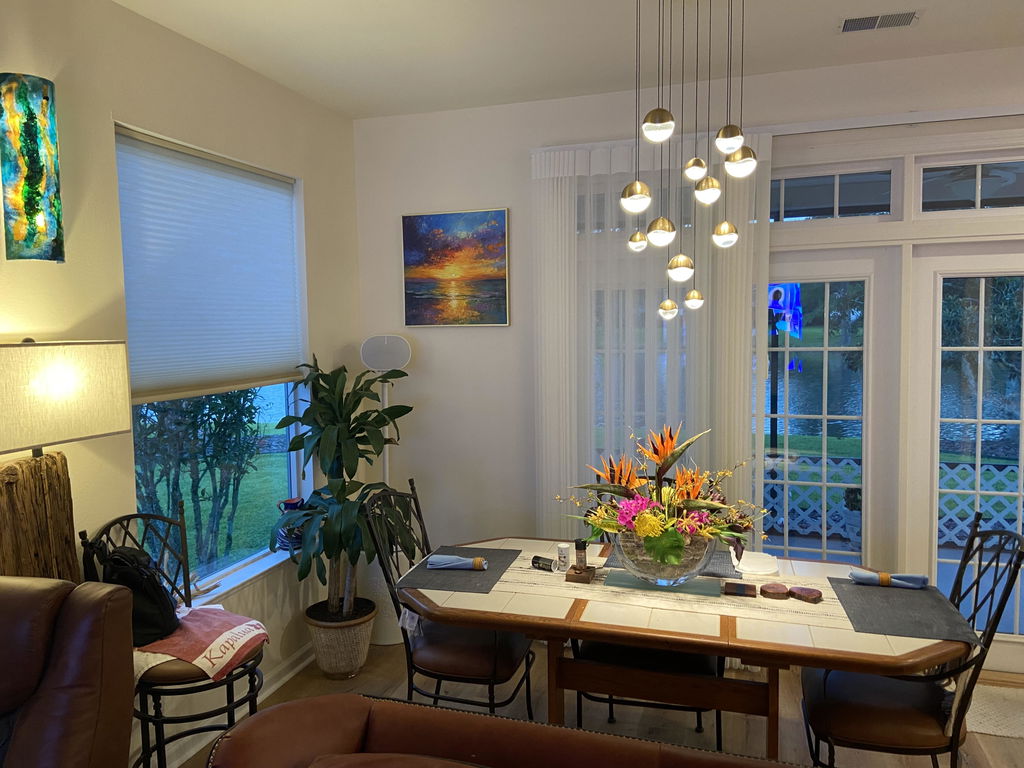
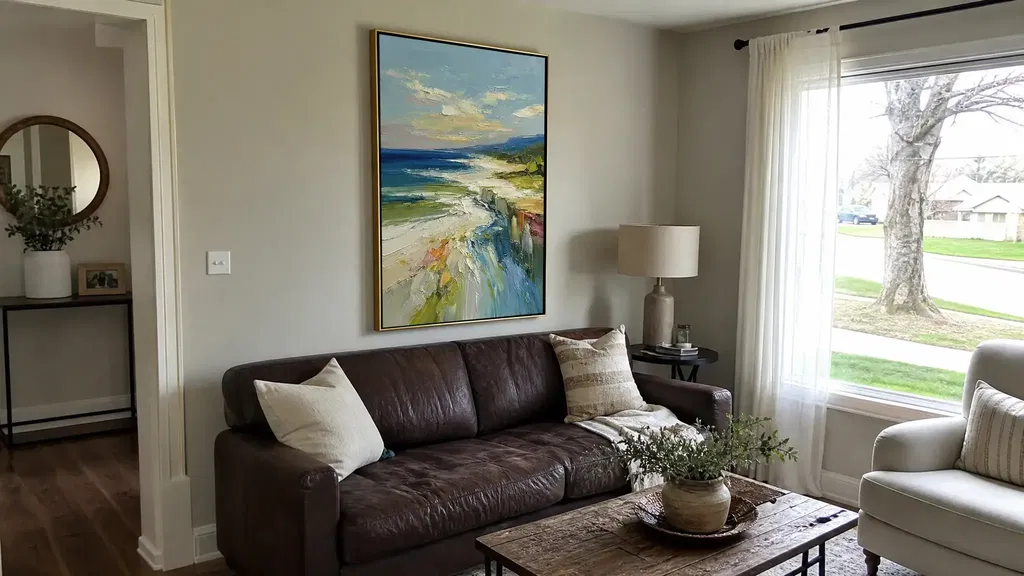
- Dining Rooms with Large Windows: Usually offer the best balance of indirect light and volume of air.
- Near Arched Doorways: These architectural features often create natural air eddies that gently circulate oxygen.
Spots to Avoid (The First 30 Days)
- Directly Above a Radiator or HVAC Vent: The localized heat and dry air will cause the paint to cure unevenly.
- Inside a Dark Closet or Storage Room: Zero light and zero airflow will extend the stabilization period by weeks, potentially leading to a "hazy" surface.
- Directly Facing a South-Facing Window: The UV intensity and heat can cause "thermal expansion" of the canvas, leading to slackening or ripples.

The Psychological and Economic ROI of Hand-Painted Art
Investing in the stability of your painting is also an investment in your well-being. The WHO Scoping Review on Arts and Health confirms that art interventions—even passive viewing—effectively alter clinical indicators for stress. Nature-themed murals, specifically, have been shown to reduce mood-related stress by up to 73% in clinical settings (UPenn).
Beyond health, there is a clear economic catalyst. The Royal Society found a direct correlation between high-quality art and property price gains. In Chicago, public mural projects drove $1.4 billion in real estate growth. By ensuring your custom mural is cured correctly and remains stable, you are preserving a physical asset that contributes to both your home's "soul" and its market value.
Summary Checklist for New Owners
To ensure your hand-painted work stabilizes perfectly, follow this professional protocol:
- Light: 4-6 hours of indirect daylight. Avoid direct "hot" sun.
- Airflow: Maintain a "gentle breeze" (0.2-0.5 m/s). Use a fan at a distance if necessary.
- Humidity: Keep the room between 40-60% RH.
- Monitoring: Use your nose. The scent should fade significantly by week 3.
- Patience: Do not varnish or glass-frame the work for at least 6 months to allow for full structural curing.
By treating these environmental factors as natural catalysts, you aren't just decorating a room; you are participating in the final stage of the artistic process—ensuring that the "essential identity" of the work is locked in for a lifetime.
Disclaimer: This article is for informational purposes only and does not constitute professional conservation, medical, or financial advice. For high-value heritage assets or specific health concerns regarding paint toxicity, please consult a certified art conservator or a qualified healthcare professional.
Sources and Authoritative References
- Marketplace: The expensive art market continues to struggle
- Columbia University: Human-Made vs. AI Art Perception Study
- WHO: Scoping Review on Arts and Health
- EPA: Indoor Air Quality and Low-VOC Paints
- Nature: Stability of paintings and the molecular structure of the oil paint network
- CDC NIOSH: Paint and Coating Hazards
- Royal Society: Quantifying the link between art and property prices