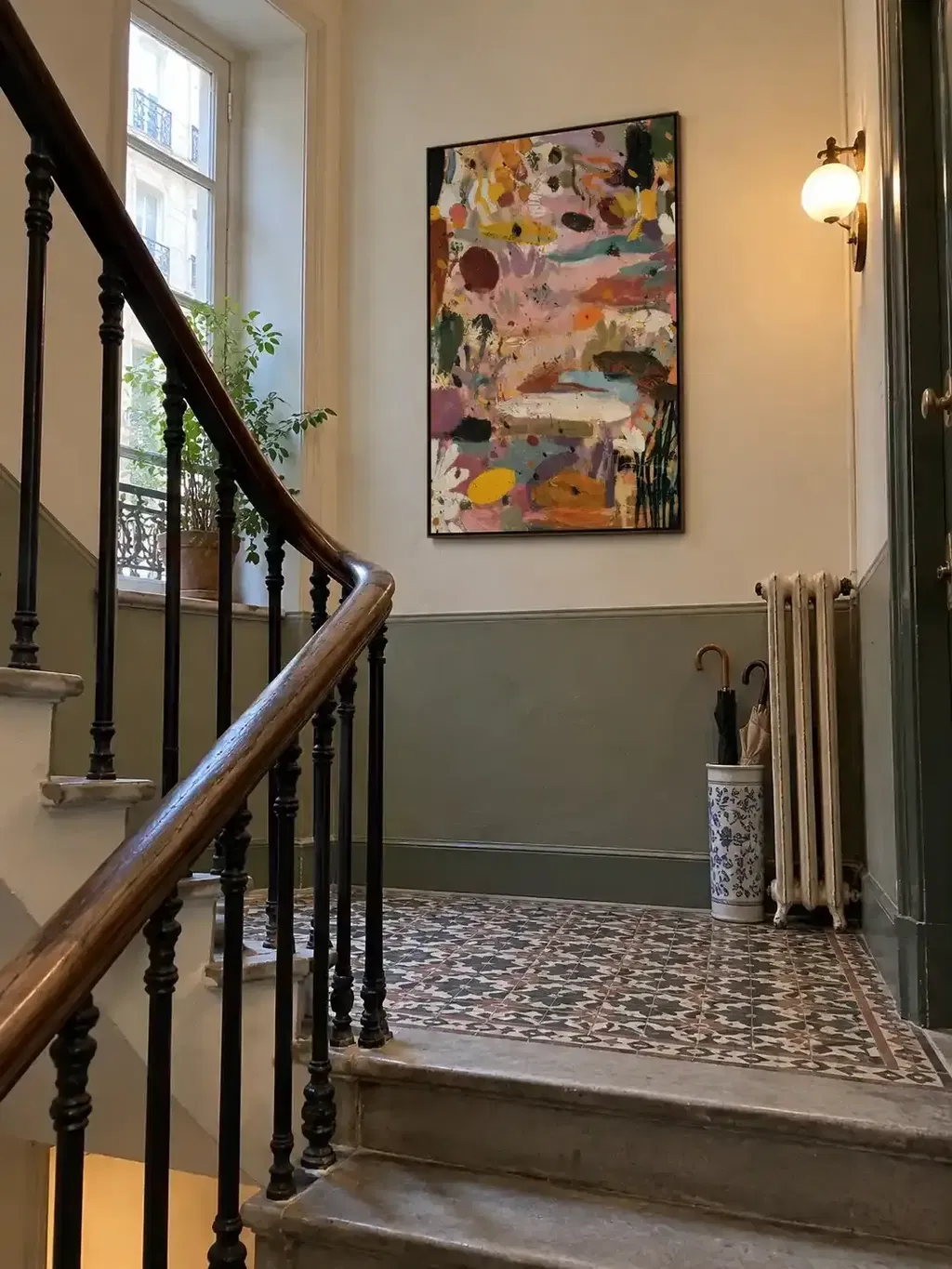
Textured art coastal homes can be a strong match when the room feels calm, the palette stays natural, and the piece is placed with humidity in mind. The style can read relaxed and handmade without leaning into shells or anchor decor, but the environment still matters more than the look alone.
Why Textured Art Can Fit Coastal Interiors
Texture often works well in beach settings because it echoes sand, water movement, weathered wood, and other surfaces people already associate with coastal rooms. In practice, that means the best fit is usually a question of palette, scale, and surface character, not whether the piece has literal seaside symbols.
Neutrals, soft blues, sea-glass greens, sand tones, and worn white finishes tend to feel easy in these spaces. A quieter impasto surface can add depth without shouting for attention, while a very heavy or high-contrast texture may feel better in a room with simple furniture and clear sightlines. That is the first decision layer: if the room is already busy, keep the art calmer; if the room is sparse, texture can carry more visual weight.

For buyers comparing textured art coastal homes options, the real question is whether the piece feels coastal in mood, not whether it uses coastal clichés. A refined abstract often works better than literal beach imagery when you want the room to feel collected rather than themed. If you want a browsing shortcut, a coastal art styles collection can help you compare the softer end of that look, while textured impasto pieces are better when you want the surface itself to do the work.
What Salt Air and Humidity Change
Humidity is the bigger conservation issue than the ocean view itself. The Canadian Conservation Institute notes that repeated humidity fluctuations are more damaging to paintings than a single steady level, because canvas support and paint layers move at different rates over time. The humidity swings that matter most are the ones that keep cycling up and down as the home opens, closes, cools, and warms.
Humidity and Seasonal Swings
That pattern matters a lot in second homes. A vacation property may sit closed for weeks, then change quickly once the HVAC runs, doors open, or guests arrive. Stable indoor conditions are the safer target. If you are already seeing condensation on windows, a damp smell, or visible softening around a canvas edge, the piece deserves closer inspection before you hang it back up.
The National Park Service also flags relative humidity above 65% to 70% as a mold-risk zone for canvases. That is a caution boundary, not a universal failure point, but it gives coastal homeowners a practical checkpoint. If your home repeatedly lives in that range, especially during humid seasons, textured original art needs a more conservative placement plan.

Salt Air Near Openings
Salt air is most relevant near open doors, windows, screened porches, and rooms that catch direct ocean breezes. The strongest practical takeaway is simple: the closer the artwork sits to direct airflow from outside, the more cautious you should be. Salt exposure is less about dramatic damage in one day and more about what it adds to moisture and surface contamination over time.
That is why a piece can be perfectly suited to a coastal interior and still be a poor choice for a breezy wall right beside a patio door. In a beach house, the environment around the frame is part of the buying decision.
Sunlight, Windows, and Fading
Bright coastal light is its own issue. Large windows, reflective water, and strong afternoon sun can increase glare and heat around the artwork, even when humidity is under control. If a piece will face direct sun for long stretches, move it deeper into the room or use extra protection through framing and window treatment choices.
Warning Signs to Watch
Pause and inspect the piece if you notice warping, softening, cracking, a musty odor, mildew, or a change in surface appearance. In a coastal home, those signs are more useful than trying to guess from the calendar alone. After storms, seasonal reopening, or a long vacancy, a quick check is worth the time.
For a maintenance follow-up, see protecting textured oil paintings from humidity and temperature and humidity and temperature care.
Where to Place It in a Beach House
The safest placement is usually an interior wall away from direct sun, salt-laden airflow, and steam. Rooms are not all equal in a coastal property, so the best choice depends on how much moisture and light the wall actually gets. The table below turns that into a simple map.
| Room Or Location | Exposure Level | Why It Matters | Best Fit Or Precaution |
|---|---|---|---|
| Interior living room wall | Lower | Usually farther from outdoor airflow and easier to keep stable | Good for most textured original art |
| Entryway away from the door swing | Lower to moderate | Still visible, but less exposed than the door edge itself | Works if the wall stays dry |
| Primary bedroom | Lower | Often more stable and less humid than shared wet zones | Good for larger or more detailed texture |
| Hallway on an interior wall | Lower | Limited moisture exposure if it is not near a bath or exterior wall | Good for moderate texture and natural light |
| Wall near a bright window | Moderate to higher | Fading, glare, and heat can add stress | Use only if the piece is not in direct sun |
| Exterior wall in a coastal home | Higher | Can create micro-condensation behind framed art | Prefer another wall if possible |
| Kitchen-adjacent or bath-adjacent wall | Higher | Steam and repeated moisture changes are harder on the piece | Only with extra caution and distance from the source |
| Screened porch or ocean-facing opening | Higher | More airflow, salt exposure, and weather swings | Usually a poor fit for textured originals |
The rule of thumb is straightforward: if the wall is colder, wetter, brighter, or closer to open air, the risk rises. That is why interior wall placement is usually the safer call in a beach house, especially when the room already gets seasonal moisture swings.
How to Reduce Risk Without Overdoing It
You do not need museum-level measures for every piece, but a few practical choices can reduce avoidable stress. The goal is to buffer the art, not to pretend the room is immune.
Framing and Backing Choices
The Canadian Conservation Institute notes that archival backing board and glazing with a spacer can help buffer rapid humidity swings and reduce salt-air exposure. That is useful when a piece sits near a more exposed wall or when the house sees noticeable seasonal changes.
Treat that as risk reduction, not a guarantee. Not every textured painting should be glazed, and not every frame setup fits a thick surface. If the artwork has heavy relief, check the construction and make sure the framing plan does not press against the surface.
Ventilation and Wall Clearance
A little breathing room helps when a wall tends to hold moisture. Do not crowd the artwork into a corner where it sits in stale air or against a surface that already feels damp. If the room has reliable HVAC and normal circulation, the main point is simply to avoid the worst dead-air spots.
Vacancy-Ready Care for Second Homes
Vacation homes need simpler routines because problems can sit unnoticed for weeks. Before closing the house, note what the room feels like, dust the piece lightly, and make sure the frame, hanging hardware, and wall area look dry. After a long vacancy, inspect the same spots again, especially after storms or a hot, humid stretch.
If you are comparing protection methods, a quick check on canvas backing boards for humidity control can help you decide whether the added buffering is worth it for the room.
Choosing Pieces That Feel Coastal, Not Costume
- Start with color temperature. Cooler blues and greens, muted neutrals, and sandy off-whites usually feel easier in coastal rooms than high-saturation colors.
- Match the scale to the wall. A large textured piece can anchor a simple room, but the same surface can feel cluttered if the wall is already crowded.
- Use texture intensity as a mood tool. Light impasto can read relaxed; very deep texture reads bolder and works best when the rest of the room stays calm.
- Let the furniture and flooring lead. If the home already has natural wood, linen, rattan, or bright sunlight, choose art that supports that material mix instead of fighting it.
- Keep the theme subtle when the room is small. A room does not need shells, sailboats, or obvious wave imagery to feel coastal.
- Choose a quieter abstract when you want longevity in the decor. Strongly literal beach art can work, but it is easier to tire of in a lived-in vacation home.
If you want a more restrained direction, a quiet coastal texture look often fits better than a heavily themed piece. In a room that already has a lot going on, that balance matters as much as the subject.
A Coastal Art Checklist Before You Buy
- Check the room first: humidity risk, interior or exterior wall, windows, doors, steam, and direct sun.
- Pick the wall second: choose the safer interior wall before a more exposed spot.
- Decide on protection third: ask whether glazing, a spacer, or backing makes sense for the room.
- Verify the light fourth: if the wall gets strong sun or bright reflected glare, move the art or add window control.
- Plan the upkeep fifth: in a coastal property, inspection is part of the purchase.
If the room is stable and the placement is sensible, textured art coastal homes can support a beach house without feeling fussy. If the wall is exposed, damp, or hard to check, choose a calmer location or a more buffered setup before you buy. Browse the coastal art collection only after you have ruled out the risky wall, then pick the style that fits the room you actually have.
FAQs
Does Textured Art Work in Humid Coastal Homes?
Yes, it can work well if the room stays reasonably stable and the art is not placed on a damp, sun-baked, or highly exposed wall. The real test is not the style alone; it is whether the wall sits away from repeated humidity swings and whether you can inspect it during the year, especially in a second home.
Where Should I Hang Textured Oil Paintings in a Beach House?
An interior wall in a living room, hallway, or bedroom is usually the safer choice. If you can avoid exterior walls, direct window sun, and bath or kitchen steam, you lower the risk. The easiest check is simple: if the wall feels colder or more exposed than the rest of the room, look for another spot.
What Kind of Framing Helps in a Coastal Property?
A frame with archival backing and a spacer can help buffer the piece from humidity swings, but it is a risk reducer, not a preservation guarantee. That matters most for exposed walls or seasonal homes. If the artwork has thick texture, make sure the frame does not press on the surface and that the backing does not trap moisture.
How Often Should Vacation-Home Art Be Checked for Humidity Damage?
Check it before closing the home, again when you reopen it, and any time there is a storm, a long humid stretch, or a smell that suggests moisture. There is no universal schedule that fits every beach house. The practical rule is to inspect after condition changes, not just on a calendar.
Can I Use Coastal-Themed Textured Art Without Making the Room Look Too Themed?
Yes. Palette, scale, and texture intensity usually matter more than obvious seaside imagery. If the room already has natural materials and a light, open feel, a quiet abstract or wabi-sabi direction can read coastal without looking like a souvenir display. The more subtle the room, the less literal the art needs to be.