The Evolution of Residential Curation: Beyond the Auction House
The landscape of high-end art acquisition is undergoing a structural shift. According to recent reporting from Marketplace, sales of high-end auction art—specifically pieces exceeding $10 million—plummeted by 44% year-over-year in 2024. This retreat from purely financial art assets suggests that discerning collectors are returning to "real application value." For the design-conscious homeowner, this means moving away from vanity auction pieces and toward custom, hand-painted murals and canvases that offer authentic emotional resonance and architectural precision.
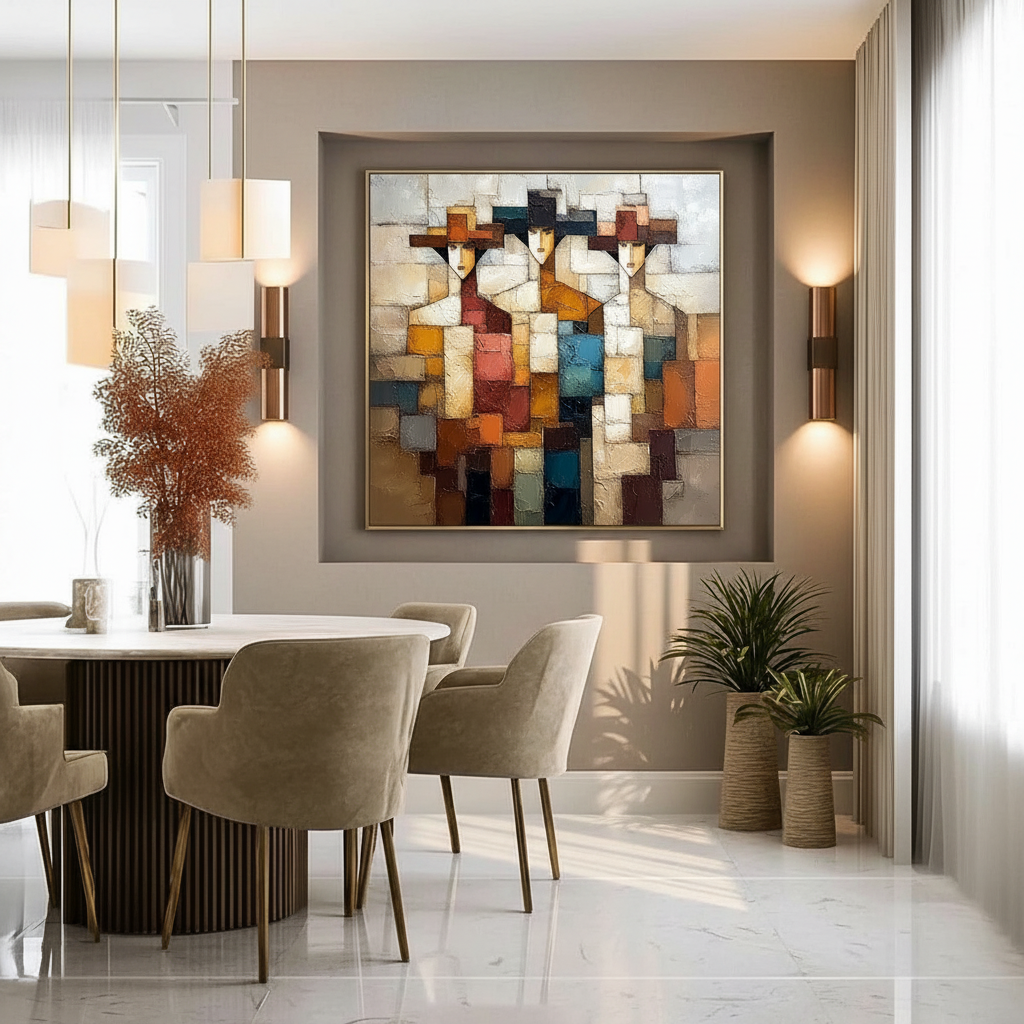
In the context of dining alcoves and recessed walls, the challenge is no longer just finding a "beautiful" piece; it is about achieving 'decision safety.' Homeowners require retail-grade certainty that a large-scale work will not only fit the physical dimensions of an inset wall but will also harmonize with the specific lighting and depth of the architectural feature.
Logic Summary: Our analysis of current market trends assumes a pivot from speculative art investment to "experiential luxury," where the value is derived from the artwork's integration into the living environment rather than its resale potential on the secondary market.
The Technicality of Scaling: Master the Inset Wall
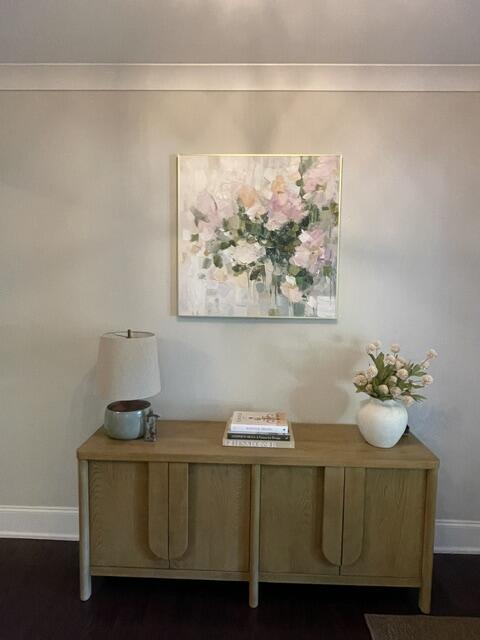
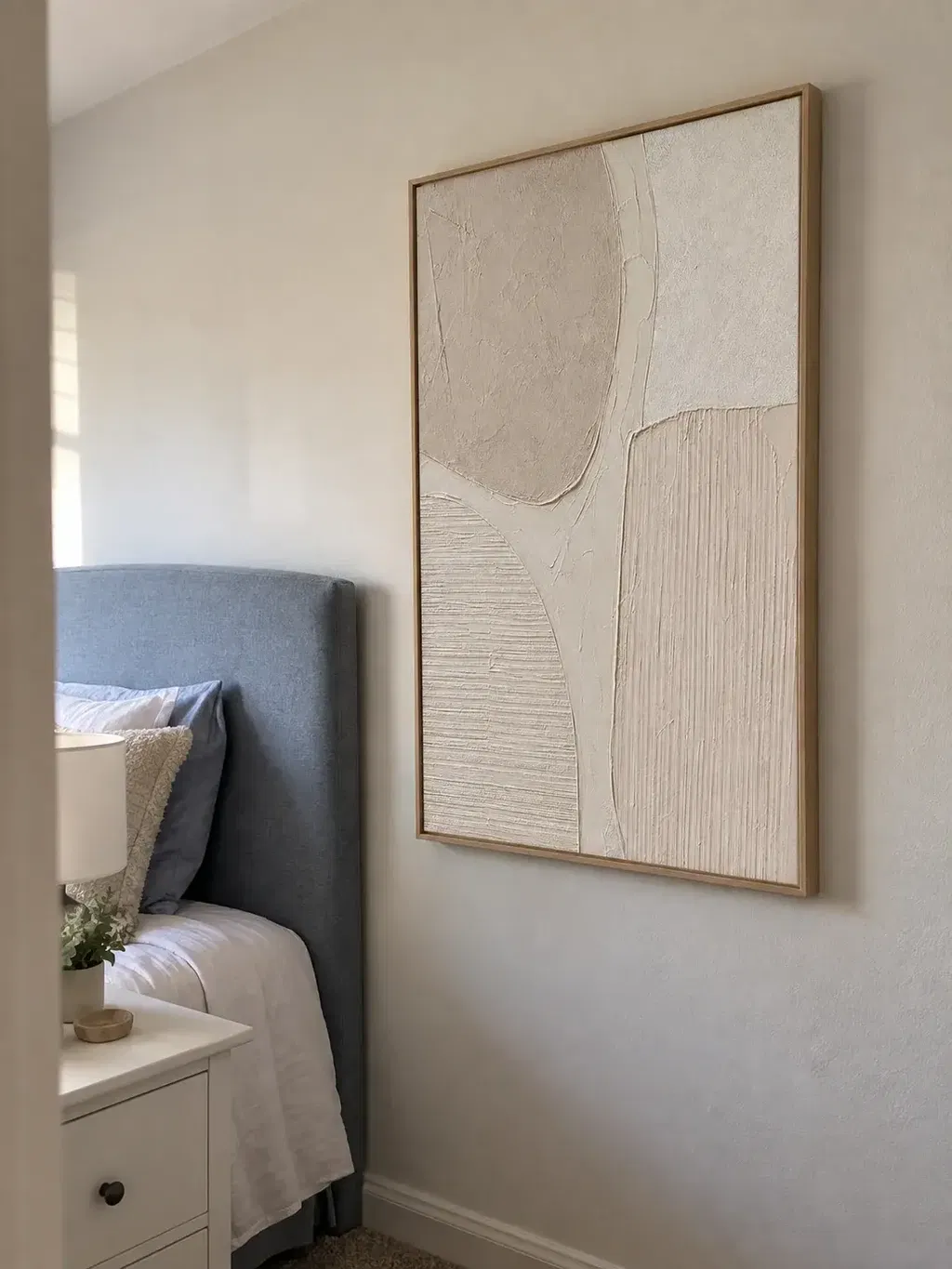
Dining alcoves are restrictive by nature. Unlike an expansive gallery wall, an inset or recessed niche provides a predefined frame. Scaling art for these spaces requires a departure from standard hanging heights. A common mistake we observe in residential styling—based on patterns from interior design consultations and site-specific installs—is the "wallpaper effect," where a canvas is sized too closely to the alcove's edges.
The 2-Inch Clearance Heuristic
To prevent a "crammed" appearance that mimics mass-produced wallpaper rather than a curated piece, professionals utilize the 2-inch clearance rule.
- The Rule: Art should ideally leave at least 2 inches of visible wall space on all sides of the alcove.
- The Purpose: This "shadow gap" creates a visual breathing room, emphasizing that the art is a distinct, three-dimensional object rather than a flat surface treatment.
- Variation: For exceptionally large alcoves (over 8 feet wide), this gap may increase to 4 inches to maintain proportional balance.

Accounting for Frame Protrusion and Depth
When measuring for an inset, the depth of the frame is as critical as the height and width. We often see homeowners overlook "frame protrusion." If a frame is too deep, it can break the visual plane of the wall, making the alcove feel shallower and effectively shrinking the perceived size of the room.
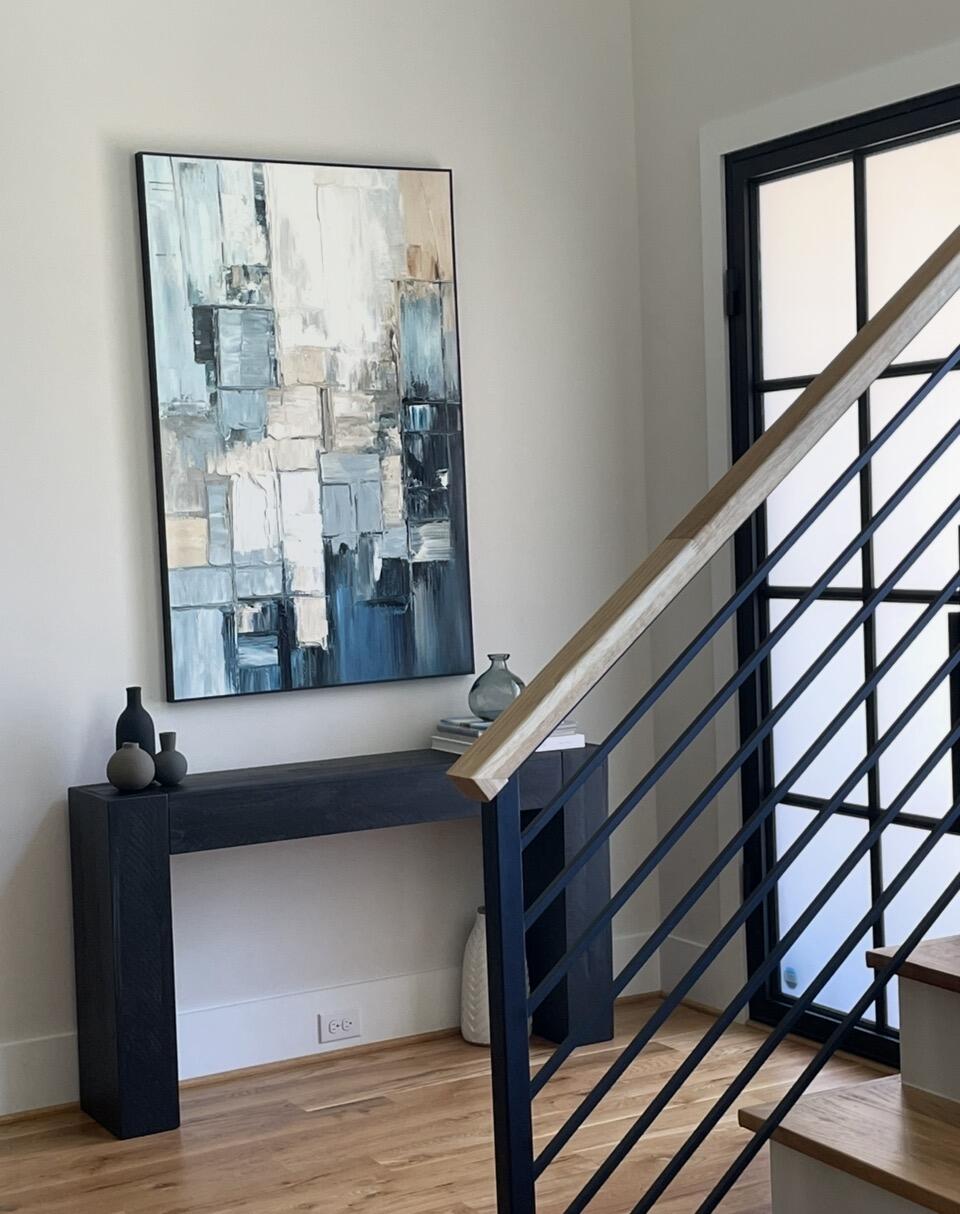
A "floating" mount—where the canvas appears to hover within the alcove without a traditional heavy frame—often provides a more modern, architectural look. This is particularly effective in narrow dining nooks where a bulky frame would create a physical and visual bottleneck.
| Fit Category | Width Ratio (Art:Wall) | Visual Result | Recommended Scenario |
|---|---|---|---|
| Architectural Inset | 0.90 - 0.95 | "Built-in" look, mimics a mural | Deep alcoves with integrated lighting. |
| Curated Gallery | 0.75 - 0.85 | Traditional focal point | Standard dining alcoves with side sconces. |
| Minimalist Float | 0.60 - 0.70 | Airy, modern, emphasizes wall | Smaller niches or multi-use social spaces. |
Texture and Light: The Alcove’s Hidden Variables
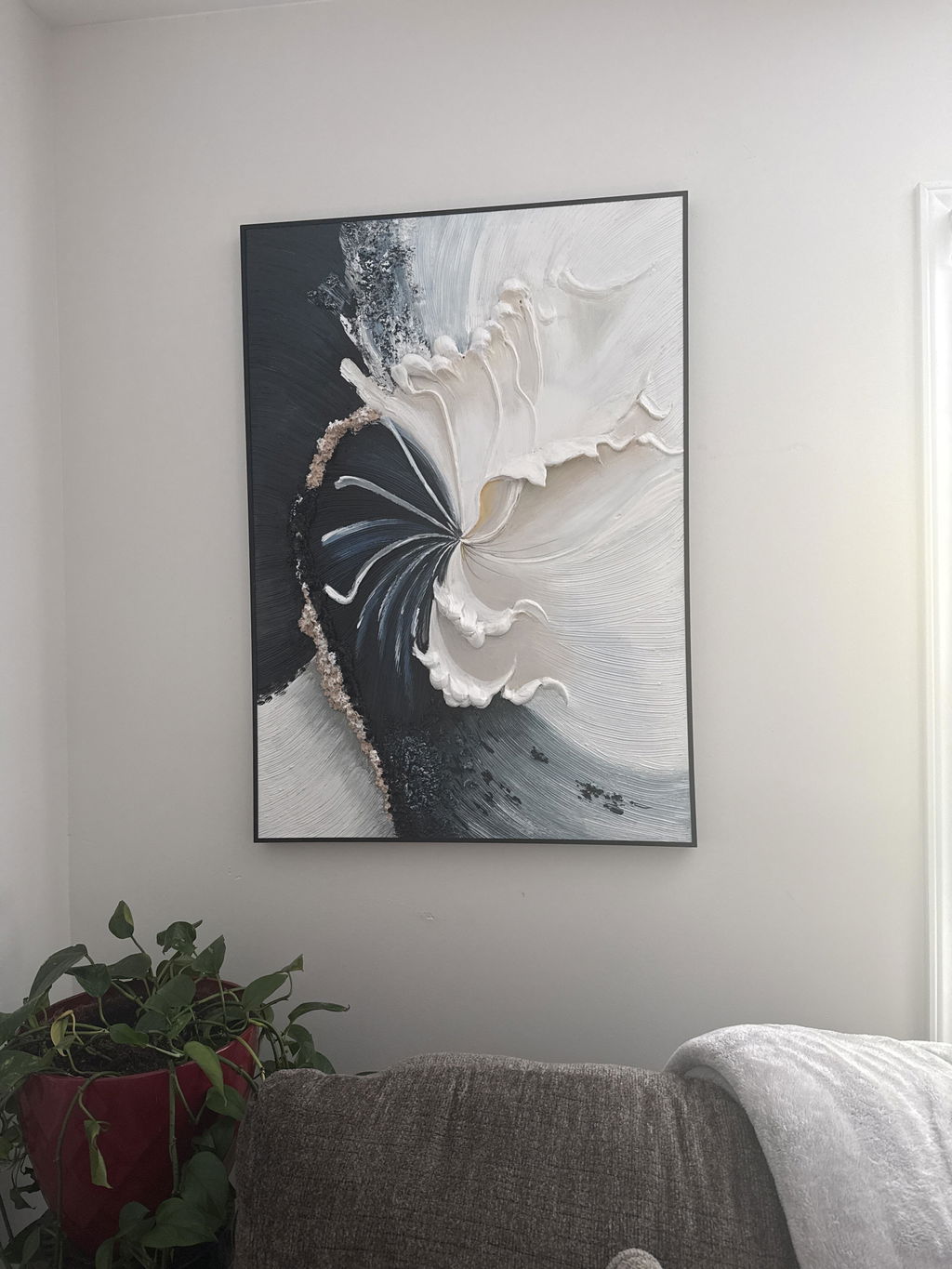
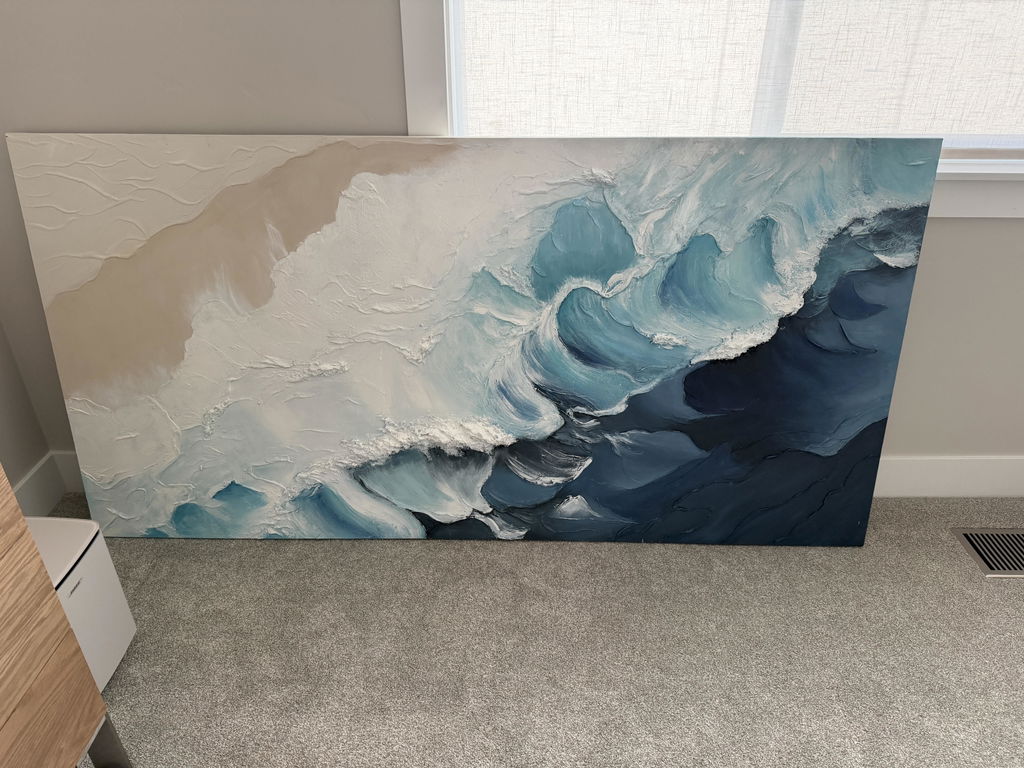
Recessed walls are naturally shadowed. While a flat print might disappear in the gloom of a dining nook, hand-painted art thrives. The Getty Conservation Institute notes that pigment reflection is dominated by absorption and scattering coefficients. In low-light alcoves, the physical topography of the paint—specifically heavy impasto—is the most effective tool for capturing directional light.
The Role of Impasto in Shadowed Spaces
Because alcoves are often lit by overhead sconces or recessed cans, the angle of light is sharp. Heavy texture (impasto) creates micro-shadows and highlights on the canvas itself. This tactile quality ensures the art remains dynamic throughout the day.
However, there is a chemical reality to consider. Research from Tate identifies that PEG-type surfactants in acrylic paints can migrate to the surface in varying humidity, occasionally causing a "haziness." In a dining environment where humidity might fluctuate due to proximity to a kitchen, choosing high-quality, stabilized pigments is essential.
Methodology Note: Our recommendation for high-contrast palettes in alcoves is a heuristic based on optical physics—specifically the maximize of scattering capability when particle diameters approach half the wavelength of visible light, as detailed in Optica.
Decision Safety: The Human-Centric Advantage
The rise of AI-generated art has created a "value collapse" for digital replicas. A study by Columbia University confirmed that consumers value art labeled as "AI-generated" 62% lower than authentic human-created art. Furthermore, research from the University of Chicago suggests that digital prints lack the "essential identity" of the artist, which is preserved in the physical layers of a hand-painted canvas.
For the homeowner, 'decision safety' is achieved through a preview-and-approve process. Technical scaling ensures the dimensions are correct, but the human element—seeing the actual brushstrokes via high-resolution video or photos before the piece ships—eliminates the risk associated with high-ticket online art purchases. This O2O (online-to-offline) model aligns with National Endowment for the Arts (NEA) data showing a positive correlation between digital art consumption and physical art participation.

Material Integrity and Environmental Health
Art in a dining space must be "clean" in more ways than one. The EPA warns that indoor air pollution is often more concentrated than outdoor pollution. For large-scale murals or oversized canvases, the choice of paint is a health priority.
The Low-VOC Mandate
Professional muralists and high-end studios are increasingly moving toward low-VOC (Volatile Organic Compound) paints and water-based acrylics. According to Aalto University, coatings on wood and canvas emit significantly lower VOCs after a 28-day curing period. For families with children or pets, ensuring that art materials pass strict air quality tests is a non-negotiable aspect of luxury curation.
Avoiding Toxic Pigments
While historical "master" palettes included dangerous elements, modern standards are much stricter.
- Cadmium: The International Agency for Research on Cancer (IARC) classifies cadmium as a Group 1 carcinogen. While some professional oil paints still use it for its vibrancy, many studios now offer cadmium-free alternatives that provide the same lightfastness without the health risk.
- Lead: EU REACH regulations comprehensively prohibit lead carbonate (Lead White) in concentrations exceeding 0.1%.
Trust & Safety Sidebar: When purchasing art, look for the ASTM D-4236 label. However, be aware that this merely means the warning labels comply with regulations—it does not guarantee the product is non-toxic. Always verify with the studio that they use zero-VOC sealants, especially for Zoning with Art in high-traffic dining areas.
The Economic and Wellness Dividend
Commissioning art for a dining alcove is not just an aesthetic choice; it is an investment in property value and mental well-being.
Quantifying the Real Estate Boost
A Royal Society analysis found that neighborhoods with higher "art" geo-tags saw greater relative house price gains. In the commercial sector, the Chicago Millennium Park public art projects drove $1.4 billion in real estate-related growth. While a single residential alcove is smaller in scale, the principle of "creative placemaking" remains. A custom mural can mask architectural blights and make a home more attractive to long-term buyers.
Biophilic Design and Stress Reduction
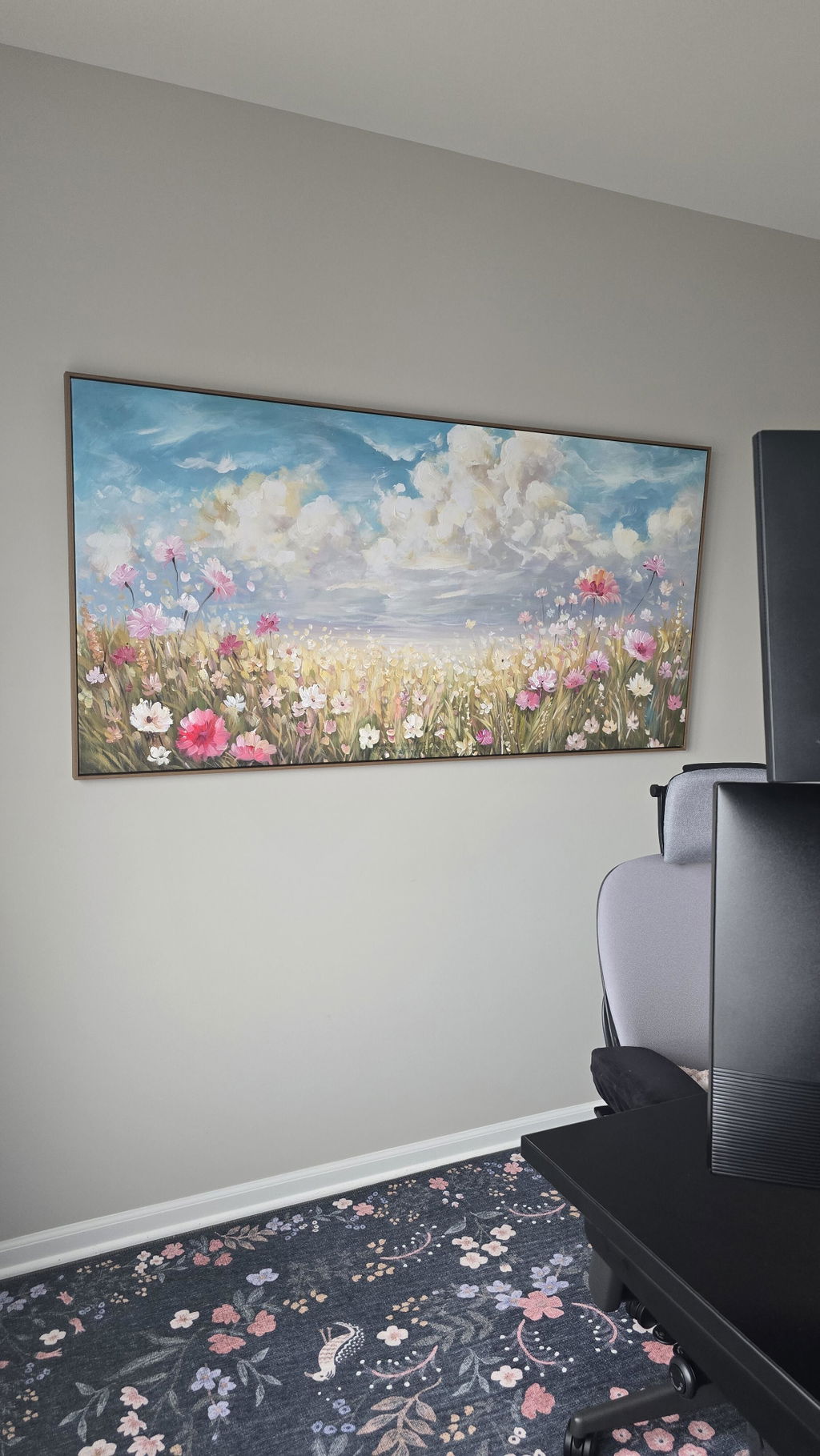
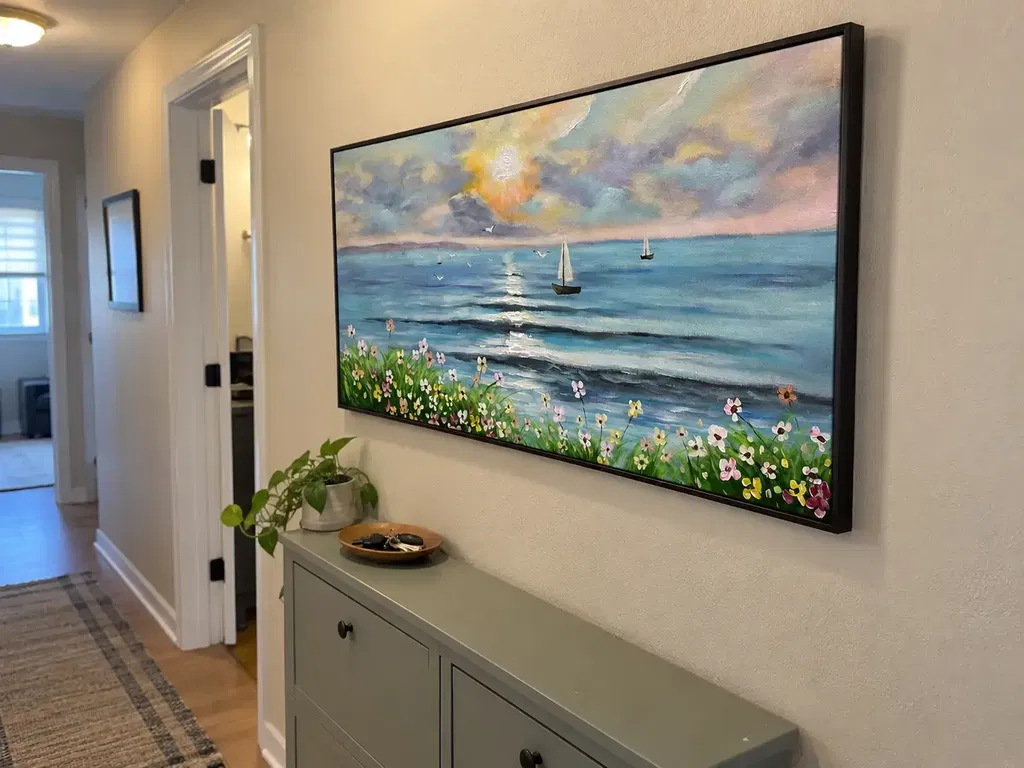
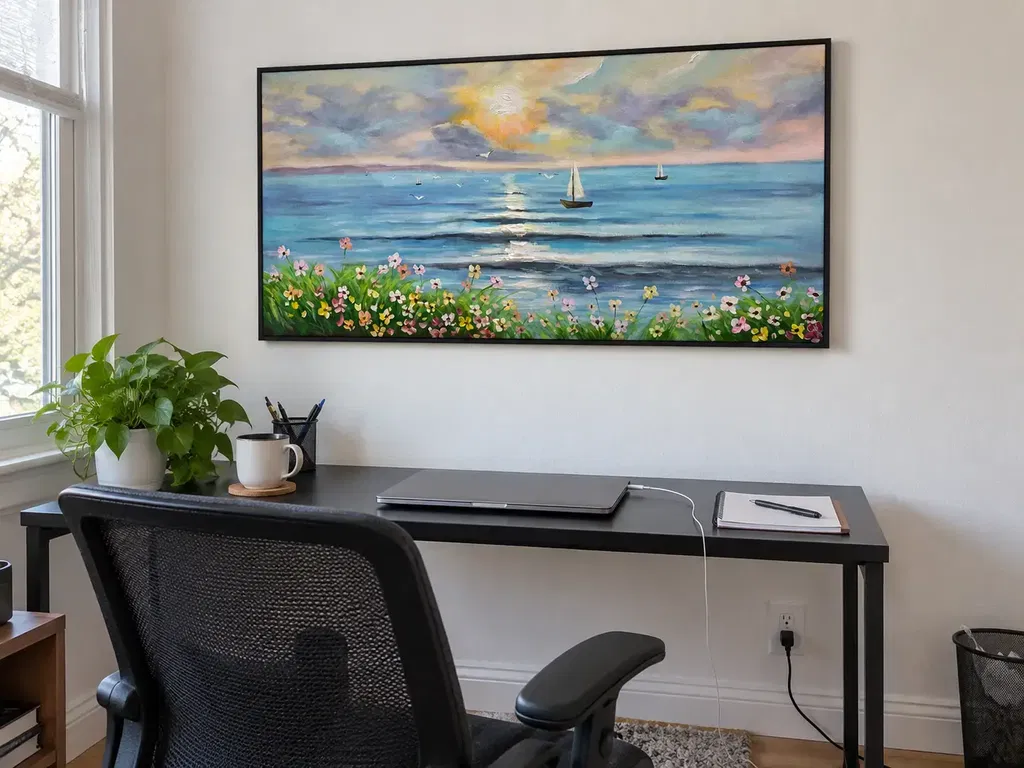
The University of Pennsylvania notes that 73% of patients in clinical settings reported mood improvements when exposed to nature-themed art. Integrating "Biophilic" hand-painted scenes—landscapes or organic abstracts—into a dining alcove can produce the same stress-reduction effects as being outdoors. This is particularly relevant for urban dwellers facing "cognitive fatigue" (as researched in Tokyo office spaces).

Modeling the ROI of Custom Curation
To understand the value of gallery-quality hand-painted art versus mass-produced prints, we can model the long-term cost of ownership.
| Parameter | Hand-Painted Mural/Canvas | Retail Digital Print | Rationale |
|---|---|---|---|
| Initial Cost | $1,500 - $5,000 | $150 - $400 | Custom labor vs. mass production. |
| Annual Appreciation | 3% - 7% | -10% (Depreciation) | Uovo data on archival art. |
| Lifespan | 50+ Years | 5 - 10 Years | UV lightfastness and material decay. |
| Maintenance | Minimal (Dusting) | High (Fading/Peeling) | MoMAA on conservation varnishes. |
| Perceived Value | High (Authentic) | Low (Generic) | Columbia University consumer study. |
Modeling Note: This is a deterministic scenario model based on common industry heuristics. It assumes the artwork is kept in standard residential conditions (30-50% RH) and away from direct, unshielded sunlight.
Integrating Art into Modern Dining Features
Beyond simple alcoves, modern architecture often includes wainscoting, wall niches, and paneled sections. Scaling large canvases for open-plan living rooms requires a similar technical rigor. For narrow walls, vertical stacking of segmented art can create a sense of height, while sizing art around windows and molding demands precise "fill ratios" to avoid visual clutter.
The ultimate goal of scaling art for a dining alcove is to create a space that feels intentional. By leveraging technical scaling, prioritizing material safety, and embracing the "essential identity" of hand-painted work, homeowners can transform a simple inset wall into a permanent cultural asset.
YMYL Disclaimer: This article is for informational purposes only. When handling art materials or planning structural installations, please consult with professional conservators or licensed contractors. Information regarding pigment toxicity and indoor air quality is based on available research and does not constitute medical advice.
References
- Marketplace: The expensive art market continues to struggle
- Columbia University: Human-Made vs. AI Art Study
- EPA: Indoor Air Quality and Low-VOC Paints
- Royal Society: Quantifying the link between art and property prices
- Getty Conservation: Color Science and Pigment Mixture
- WHO: Scoping Review on Arts and Health