Zoning with Art: Using Large Acrylics in Multi-Use Rentals
The modern rental landscape is shifting. As the "expensive art market" sees a significant retreat from purely financial vanity assets—with high-end auction sales plummeting 44% year-over-year in 2024—consumers are returning to the real application value of art. According to Marketplace.org, the focus has moved from investment speculation to how art functions within a home. For renters in studios or open-plan apartments, this function is "zoning": the ability to define distinct living areas without the permanence of walls.
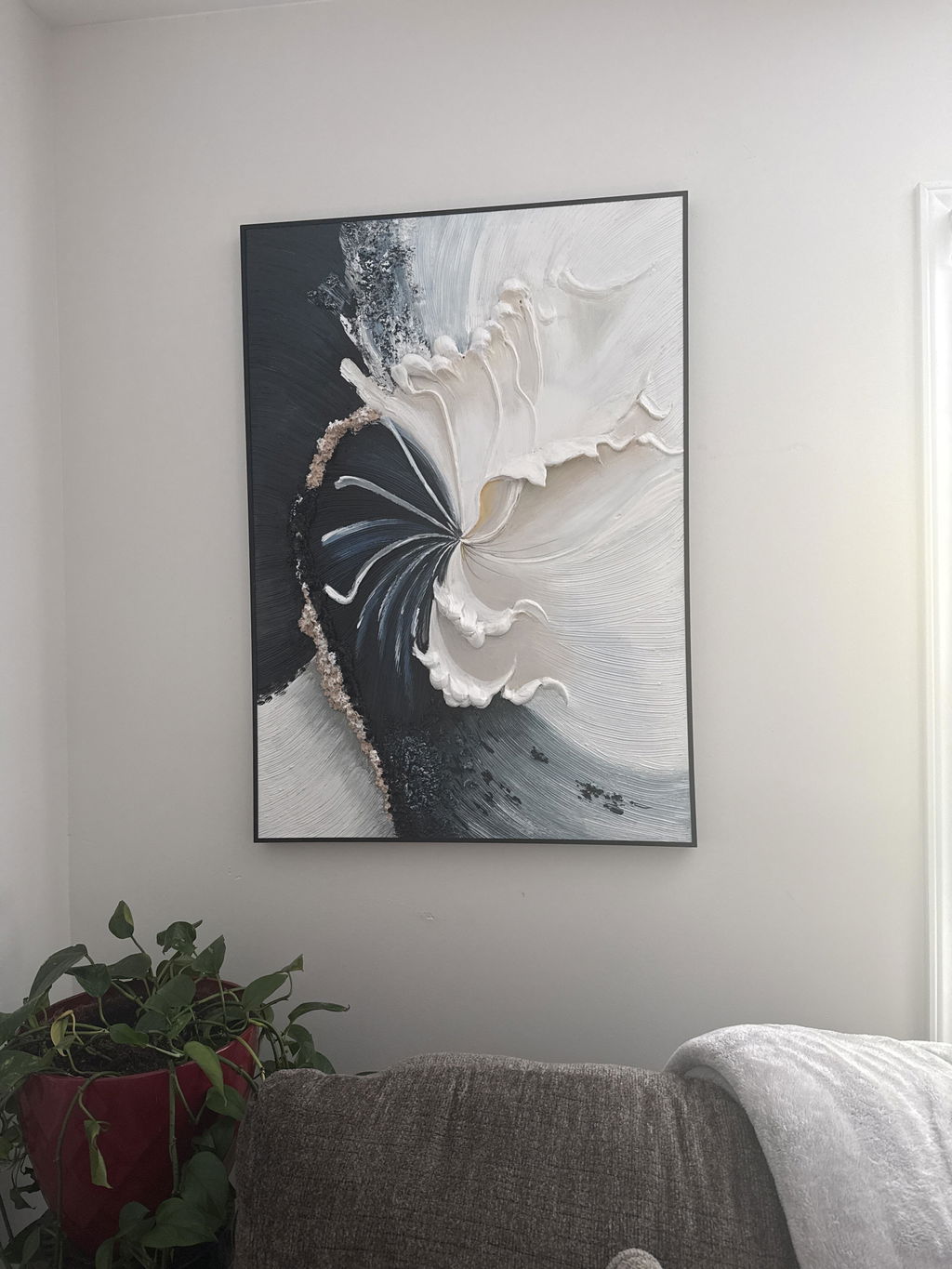
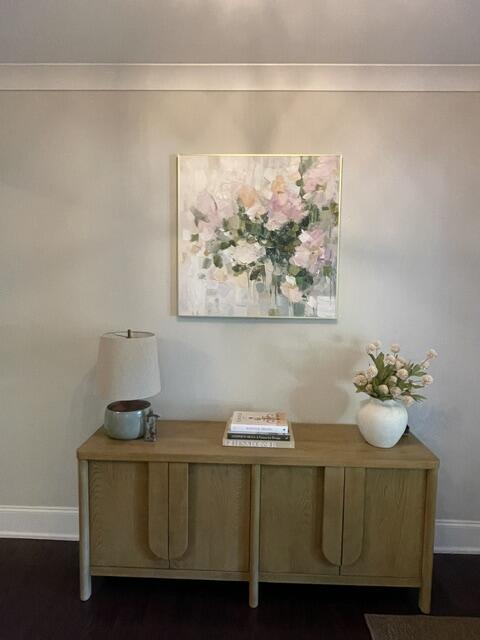
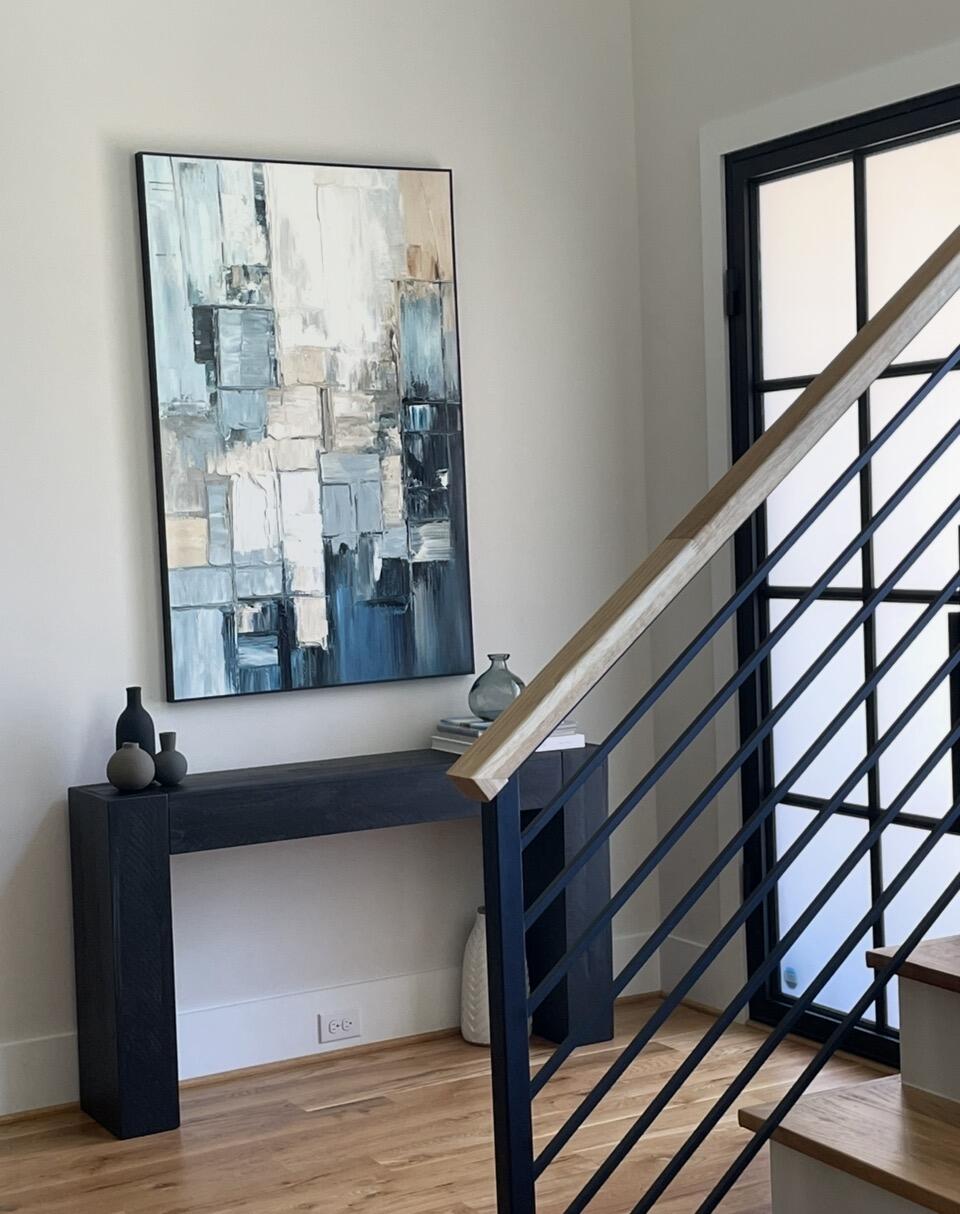
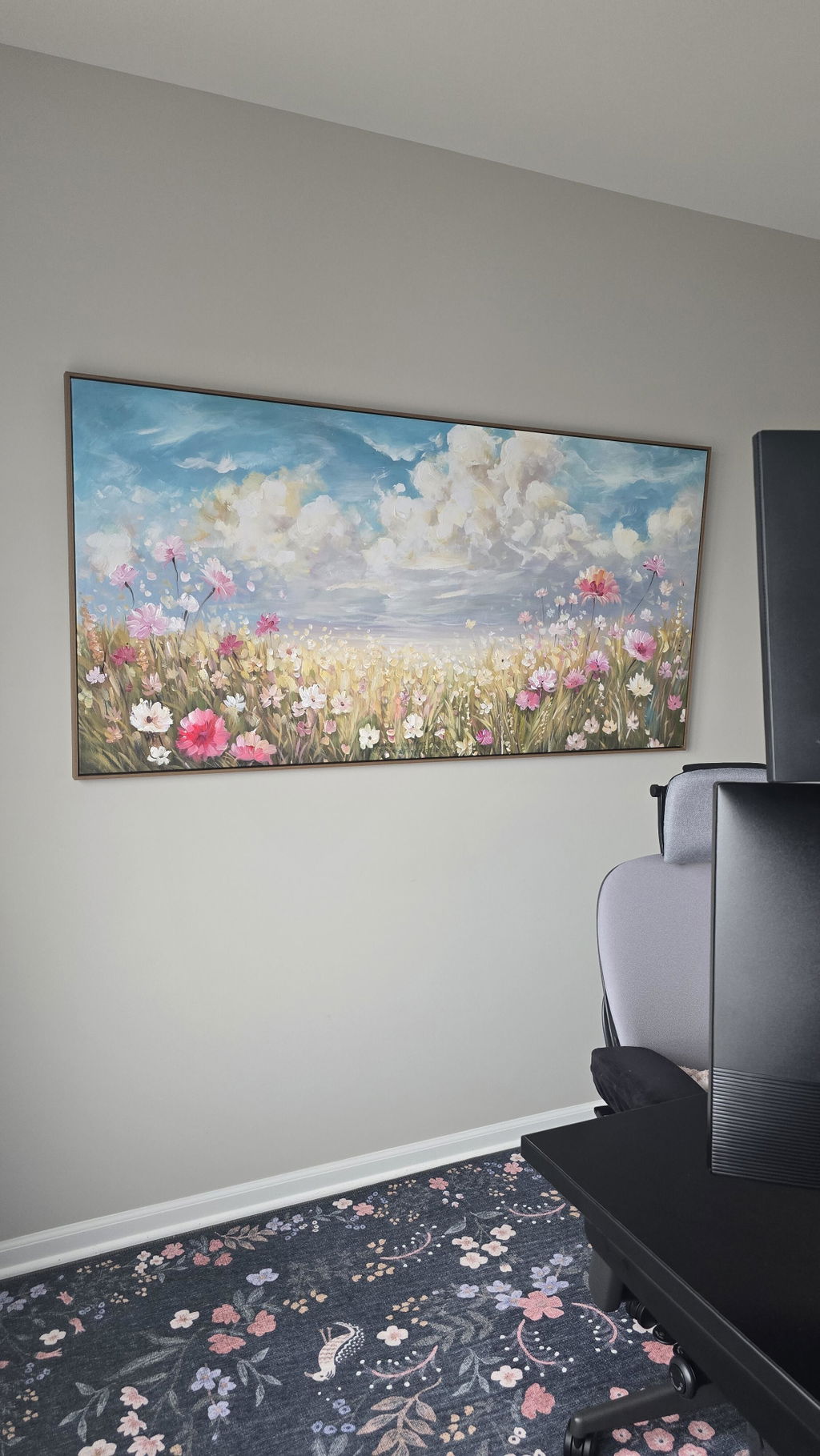
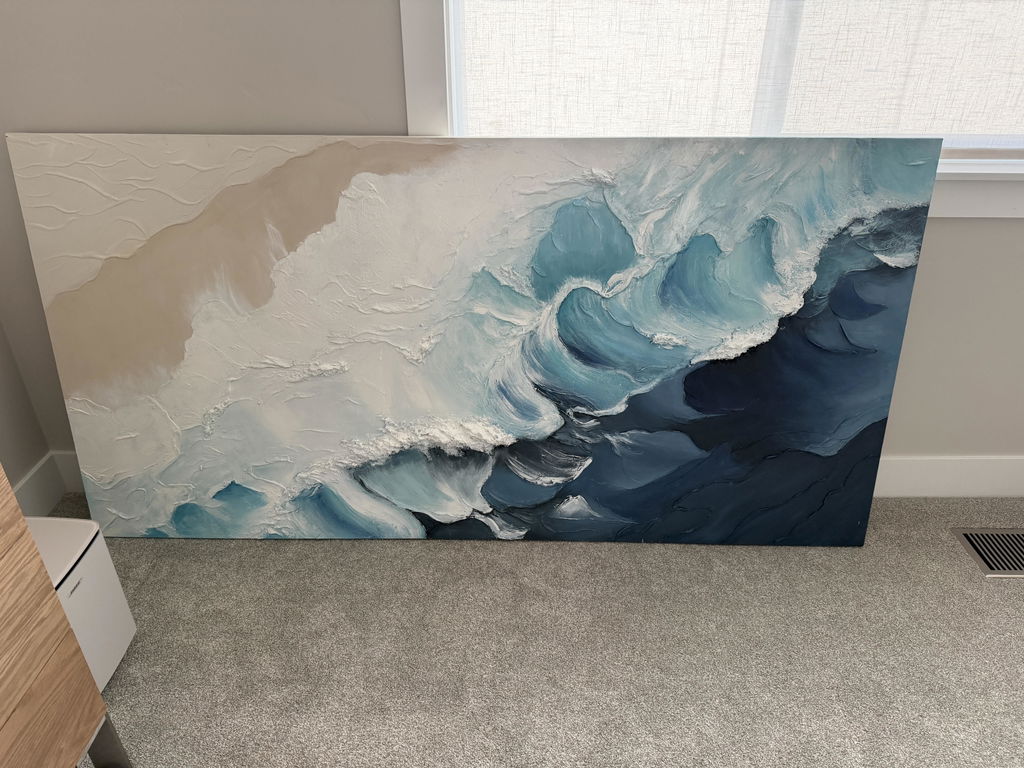
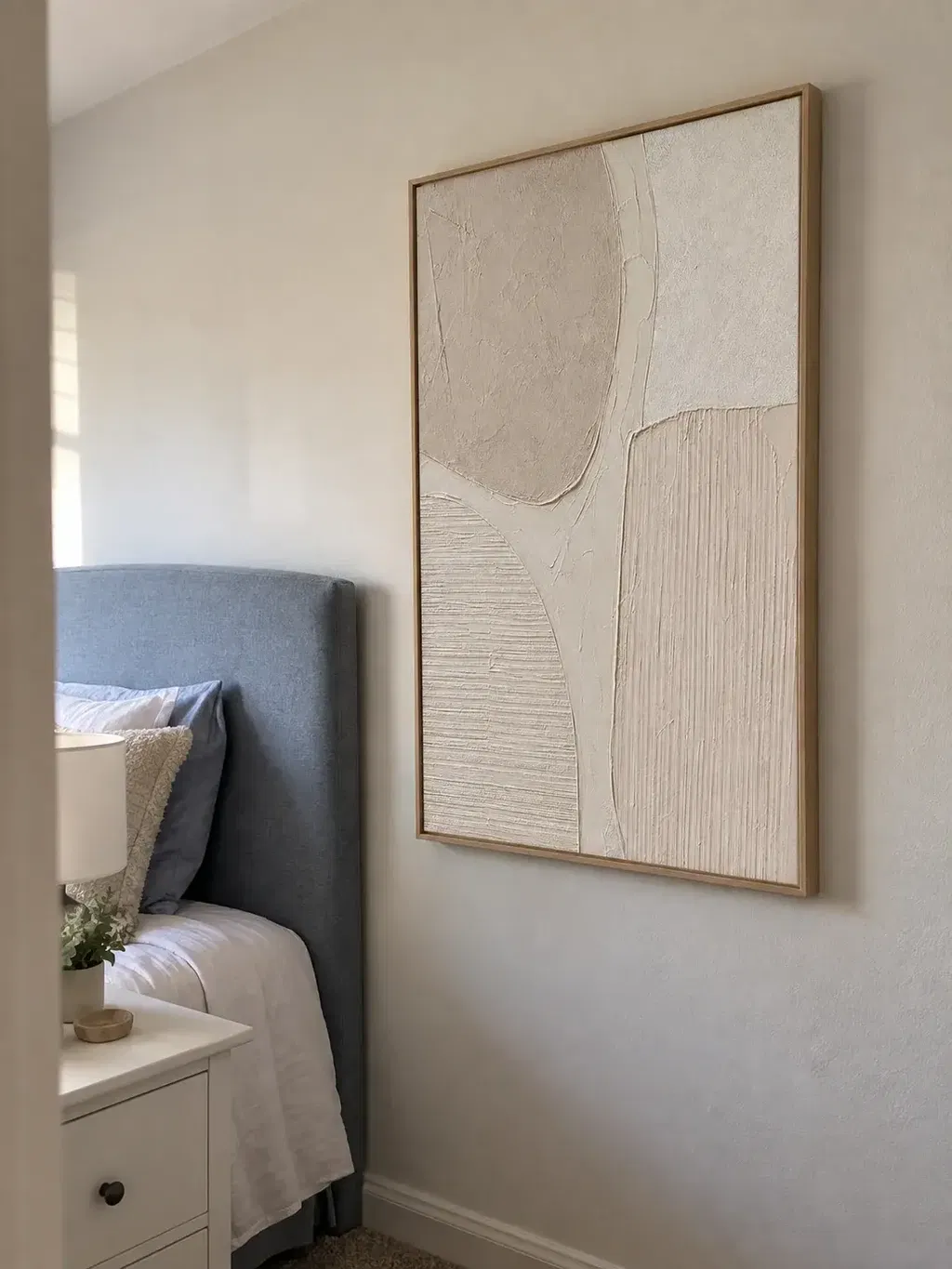
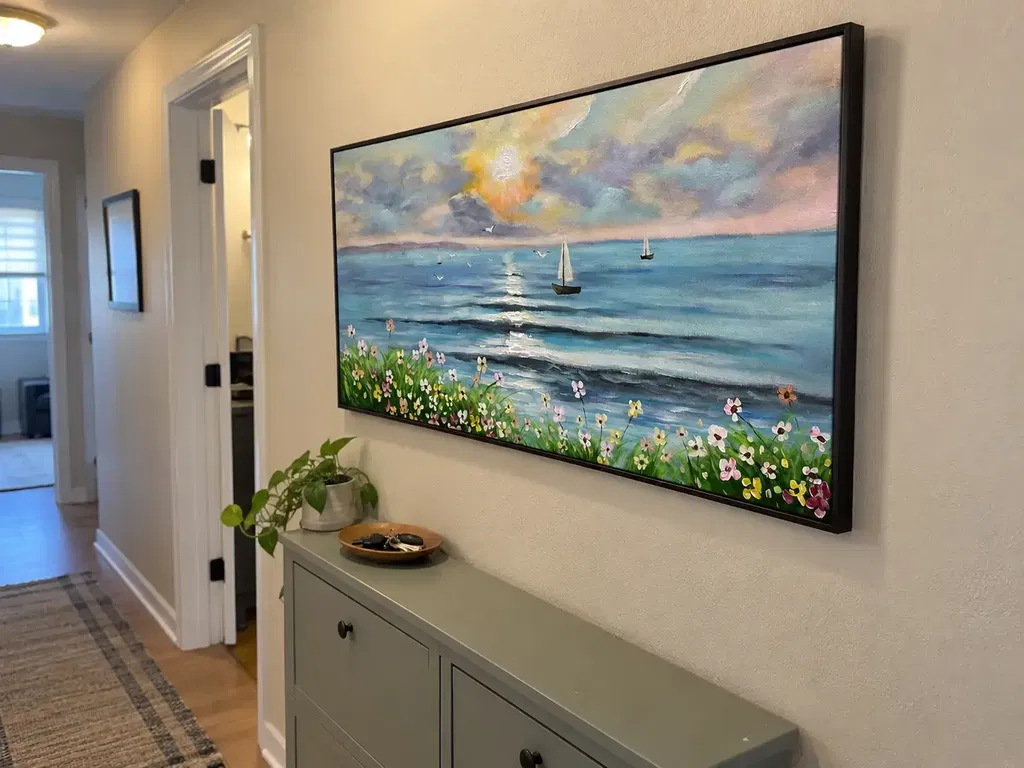
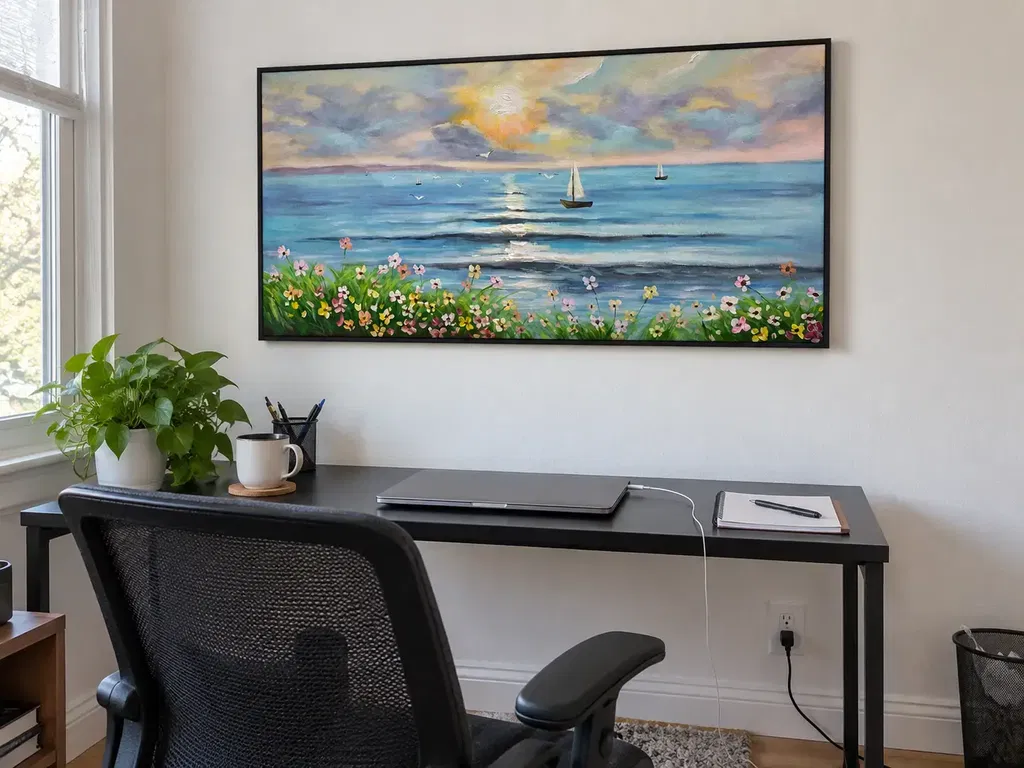
In a multi-use space, a large-scale acrylic painting does more than decorate; it acts as a visual anchor that separates the "bedroom" from the "office" or the "dining nook" from the "lounge." However, for a temporary occupant, the challenge lies in balancing this high-impact scale with landlord restrictions and the need for portability. This guide explores the technical and aesthetic strategies for using large-scale hand-painted acrylics to master spatial planning in a rental environment.
The Psychology of the "Essential Identity" in Space Planning
Why choose a hand-painted acrylic over a mass-produced print? The answer lies in human perception and the "essential identity" of the work. Research from the University of Chicago indicates that consumers perceive physical artwork as possessing an irreplicable "soul" or identity that digital replicas lack. This psychological weight is what allows a painting to physically "command" a section of a room.
Furthermore, a Columbia University study found that consumers value art labeled as "human-created" 62% higher than AI-generated alternatives. In a rental, where furniture is often modular or lightweight, the "heavy" presence of a human-made piece provides the necessary gravitas to anchor a zone.
Logic Summary: Our spatial anchoring model assumes that "Visual Weight" is a product of both physical size and perceived authenticity. A hand-painted surface with 3D texture creates a focal point that "pulls" the surrounding furniture into a cohesive functional group.
The 60-70% Heuristic: Sizing for Spatial Division
A common mistake in rental decorating is choosing art that is too small for the space. In an open-plan studio, small pieces get "lost" on large walls, failing to create the visual boundary required for zoning. To effectively define a zone, we recommend the 60-70% Width Rule.
The Sizing Framework
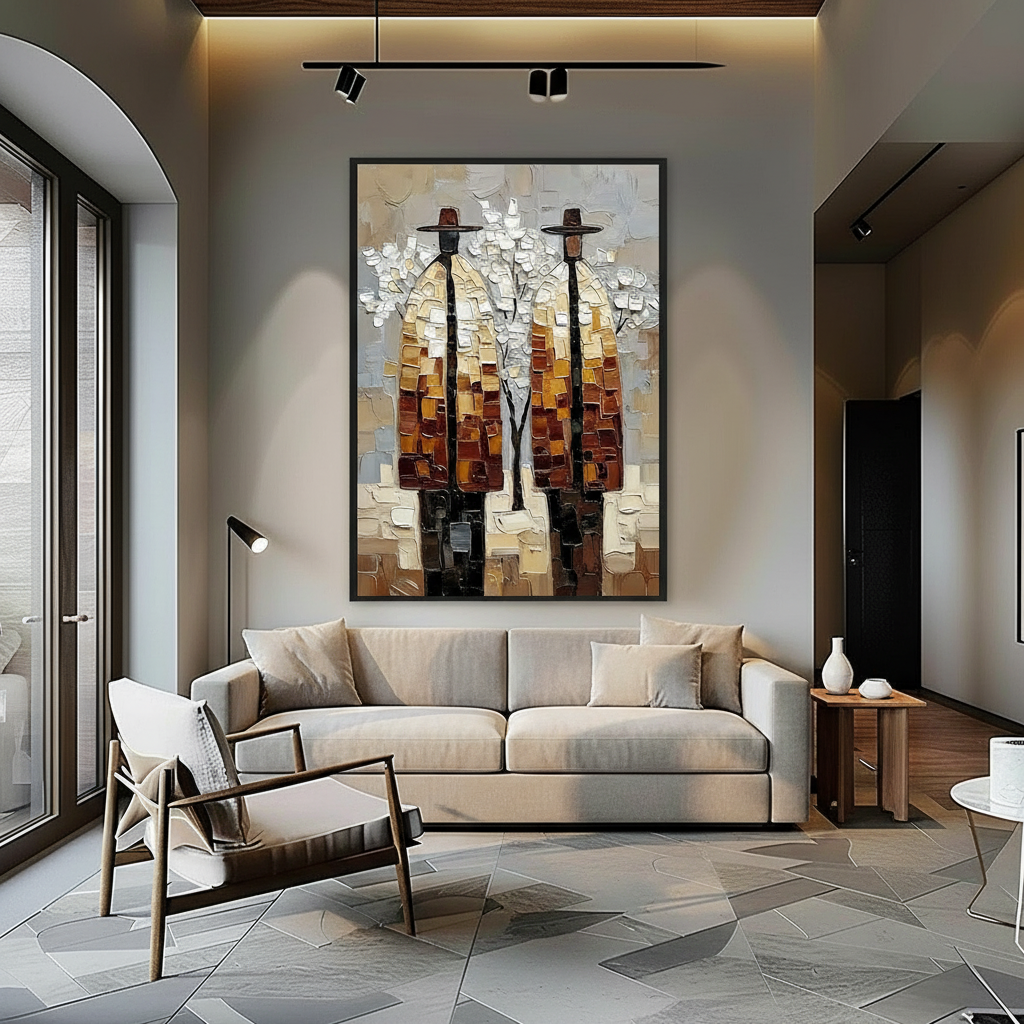
Art should typically span 60% to 70% of the width of the furniture grouping it is meant to define. For example, if you are zoning a living area around an 80-inch sofa, your artwork should be approximately 48 to 56 inches wide.
| Furniture Width | Recommended Art Width (60-70%) | Impact Level |
|---|---|---|
| 60" (Loveseat) | 36" - 42" | High Anchor |
| 80" (Sofa) | 48" - 56" | Dominant Zone |
| 36" (Entry Bench) | 22" - 25" | Subtle Transition |
Why this works: When art matches the scale of the furniture, the brain perceives the two items as a single "unit" or room. Anything smaller feels like a temporary decoration; anything larger can overwhelm the furniture and "bleed" into the next zone.

Technical Advantages of Acrylic for Renters
For the temporary occupant, the medium matters as much as the image. While oil paintings offer classic prestige, acrylics provide several technical advantages specifically suited for the rental lifestyle.
1. Weight and Portability
Acrylic paintings are significantly lighter than their oil counterparts. Based on technical data from Acrylite, extruded and cast acrylic sheets weigh approximately 1.19 lbs per square foot at 1/8" thickness. In the context of canvas art, acrylic's rapid drying and polymer structure allow for a thinner, more flexible paint film that reduces the overall load on the stretcher bars.
This lighter profile—often 30-40% less than a heavily layered oil painting—is critical for damage-free mounting. It allows renters to use high-capacity adhesive systems that would fail under the weight of traditional oil canvases.
2. Durability in High-Traffic Zones
Rentals are often tight, multi-use spaces where art might be bumped or touched. Tate Modern's research confirms that while acrylics are not solvent-resistant, they have extremely strong anti-aging properties and are more resistant to embrittlement than oil films, which undergo oxidative cross-linking over decades. This makes them the optimal choice for high-traffic projects.
Damage-Free Installation: The Renter's SOP
The primary barrier to large-scale art in rentals is the fear of losing a security deposit. However, "damage-free" does not mean "unsecured." By using a combination of modern hardware and professional placement techniques, you can hang large works with zero wall impact.
Mounting Heuristics
- The Sightline Rule: For an intentional, "gallery" feel, place the center of the painting 57 to 60 inches from the floor. This aligns with the average human eye level and creates a consistent horizon line that defines the zone.
- Adhesive Logic: For pieces under 15 lbs, use multiple removable adhesive hooks rated for 10+ lbs each.
- The Museum Gel Trick: To prevent large canvases from shifting or vibrating (which can cause scuff marks), apply a small pea-sized amount of clear museum gel to the bottom corners of the frame. This provides a non-permanent grip that stabilizes the piece.
Methodology Note (Modeling): Our mounting safety model assumes a "Factor of Safety" of 2.0. If a painting weighs 10 lbs, we recommend hardware rated for a minimum of 20 lbs to account for humidity fluctuations and adhesive aging.
Environmental Health: VOCs and Indoor Air Quality
Renters in small studios must be particularly sensitive to Indoor Air Quality (IAQ). Traditional oil paints often require solvents like turpentine, which emit high levels of Volatile Organic Compounds (VOCs). The EPA warns that indoor air pollution can be significantly more concentrated than outdoor air.
Aalto University's chamber experiments show that modern coatings on wood and canvas emit significantly lower VOCs once cured. Choosing high-quality, water-based acrylics ensures that your zoning solution doesn't compromise your health.
Pigment Safety Checklist
When selecting large-scale art, ensure the artist uses professional-grade materials that adhere to safety standards:
- ASTM D-4236: Ensures the materials have been reviewed by a toxicologist for chronic health hazards.
- Cadmium-Free Options: While the IARC classifies cadmium as a Group 1 carcinogen, many modern acrylic brands offer "Cadmium-Free" alternatives that provide the same vibrancy without the toxicity.
Enhancing the Zone with Lighting
Lighting is the "final layer" of zoning. The same painting can feel like a bright, energizing morning workspace or a moody evening lounge depending on the light temperature.
Professional designers recommend using LED picture lights with adjustable color temperatures.
- 3000K (Warm White): Best for relaxation zones, dining areas, and living rooms.
- 4000K (Neutral White): Ideal for home offices or "active" zones where you need to stay focused.
This flexibility allows a single large acrylic to adapt to the changing functional needs of a multi-use rental throughout the day.

The "Support Induced Discoloration" (SID) Factor
When investing in a large-scale piece, technical longevity is key. A common issue with acrylics on canvas is Support Induced Discoloration (SID). Technical bulletins from Golden Artist Colors reveal that water-soluble impurities in cotton or linen canvases can be drawn into the paint as it dries, causing a yellow or brown tint.
To avoid this, ensure your artwork has been properly primed with a high-quality Gesso or that the artist uses synthetic supports. This technical detail ensures that your "white" zones stay white for the duration of your lease and beyond.
Biophilic Design: Art as Public Health Infrastructure
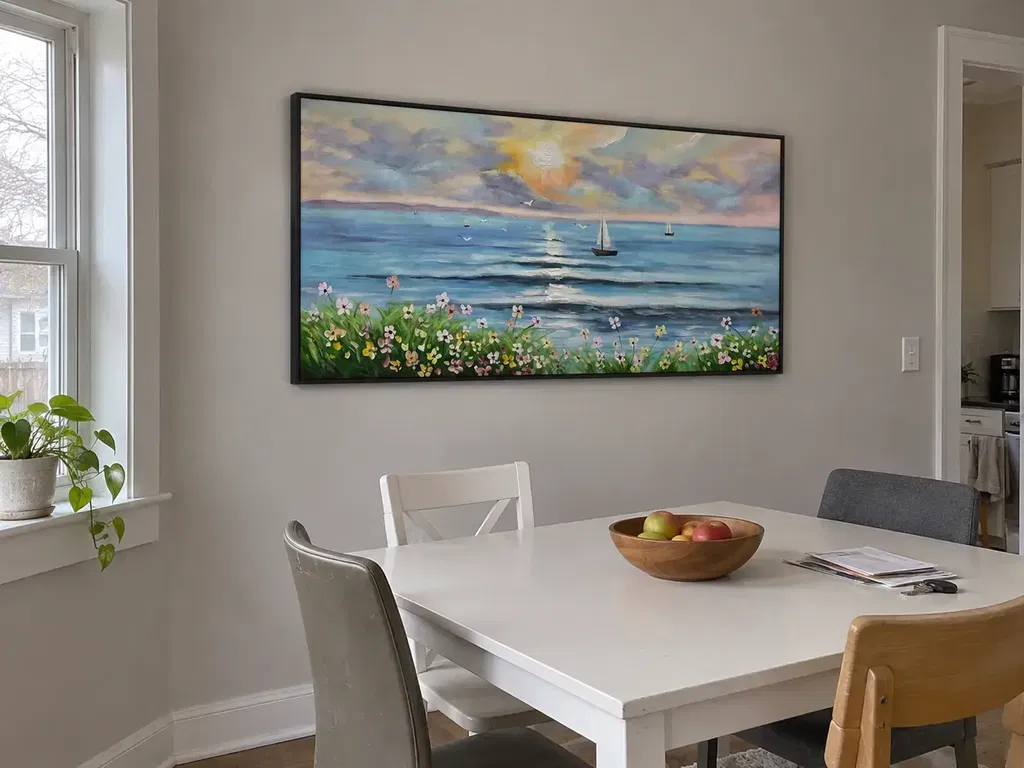
Zoning isn't just about physical boundaries; it's about emotional regulation. The WHO Scoping Review confirms that art interventions effectively alter clinical indicators for mental health. In a cramped rental, a large-scale "Biophilic" painting—one featuring natural landscapes or organic forms—can produce the same stress-reduction effects as being outdoors.
UPenn research found that 73% of individuals reported significant mood improvements when exposed to environmental artworks. By zoning your sleeping area with a nature-themed acrylic, you aren't just decorating; you are creating a "healing zone" that counters the cognitive fatigue of urban living.
Conclusion: A Strategy for the Modern Occupant
Mastering a multi-use rental requires a shift in perspective: from seeing art as a finishing touch to seeing it as a structural tool. By leveraging the visual weight of textured acrylics, adhering to the 60-70% sizing heuristic, and utilizing damage-free mounting SOPs, renters can create a sophisticated, functional home that feels permanent without the commitment.
When you choose hand-painted art, you are investing in a "cultural heritage asset" (as recognized in mural conservation studies) that moves with you. It is the ultimate "portable wall," providing privacy, identity, and health benefits in any space you choose to inhabit.
Disclaimer: This article is for informational purposes only and does not constitute professional legal, safety, or interior design advice. Always check your lease agreement and test mounting systems on a small, inconspicuous area before full installation. If you have pre-existing respiratory conditions, consult a professional regarding VOC levels in your specific environment.
Sources
- The Art Basel and UBS Art Market Report 2024
- WHO Scoping Review on Arts and Health
- Acrylite: Weight per Sq. Ft. of Acrylic Sheet
- Columbia University: Consumer Perception of AI Art
- Golden Artist Colors: Technical Support Bulletins
- EPA: Indoor Air Quality and Low-VOC Paints
- University of Chicago: Does Artwork Preserve Essential Identity?