Safe Unpacking: Handling Fresh Oil Art Upon Delivery
The arrival of a hand-painted oil masterpiece is a significant moment in any interior design project. However, for many home decorators, that initial excitement is often shadowed by a specific anxiety: the fear of damaging a physically delicate, high-value investment before it even reaches the wall. Unlike mass-produced prints, an original oil painting is a living, breathing object of chemistry.
In recent years, we have observed a fundamental shift in the art market. According to Marketplace, sales of high-end auction art plummeted 44% year-over-year in 2024, as buyers moved away from purely financial "vanity assets" toward pieces with real emotional and application value. This transition toward custom, hand-painted works brings a new responsibility for the collector: understanding the material reality of oil paint.
At MontCarta, we prioritize fast shipping and authentic artistry. However, the very nature of oil as a medium—specifically its long oxidation timeline—requires a specialized protocol for unboxing and initial handling. This guide provides a professional framework for safely receiving and transitioning your new artwork from its shipping crate to its permanent home.

The Material Reality: Why Oil Paint Stays "Live"
To handle an oil painting safely, one must first understand that "dry" is a relative term in the world of fine art. Most consumers are accustomed to acrylics or digital prints that are inert within hours. Oil paint, however, does not dry through evaporation; it cures through a complex process of oxidative cross-linking.
The Curing Timeline
Based on our observations of professional studio workflows and chemical analysis of drying oils, we categorize the life of a paint film into three distinct phases:
- Touch Dry (6–8 Hours): The very surface of the paint has formed a thin skin. While it may feel dry to a light tap, the layers underneath remain soft and mobile. Research from SD Custom Painting confirms this 6-8 hour window as the baseline for surface stability.
- Handling Dry (72 Hours to 2 Weeks): The paint film has gained enough structural integrity to withstand gentle movement. However, in areas of heavy impasto (thick application), the core remains fluid.
- Fully Cured (6 to 24 Months): The chemical transition from a fluid binder to a solid, stable film is finally complete. A study published in ACS Applied Polymer Materials tracked this chemistry for up to 24 months, highlighting the long-term molecular changes that occur as the oil medium stabilizes.
Logic Summary: Our handling protocols assume that any painting delivered via fast-shipping methods is in the "Handling Dry" phase. We treat the piece as chemically "live" for at least the first 72 hours after unboxing to account for potential reactivation of the medium due to transit vibrations and temperature fluctuations.
| Stage | Estimated Duration | Physical State | Risk Factor |
|---|---|---|---|
| Surface Dry | 6–12 Hours | Skin formed | Smudging under pressure |
| Handling Dry | 3–14 Days | Firm to touch | Impasto compression/indentation |
| Cured | 6–24 Months | Solid film | Embrittlement (long-term) |
The Unboxing Protocol: A Step-by-Step Guide
The moment you break the seal on your shipment is the highest-risk period for accidental damage. Based on patterns identified through logistics and art-handling feedback, we recommend the following professional sequence.
1. The 72-Hour Rule
Regardless of how long the painting spent in transit, treat it as "wet" for the first 72 hours. Temperature changes inside delivery vehicles can occasionally soften the oil medium. Allow the package to acclimate to your room temperature for at least 4 hours before opening to prevent moisture condensation on the paint surface.
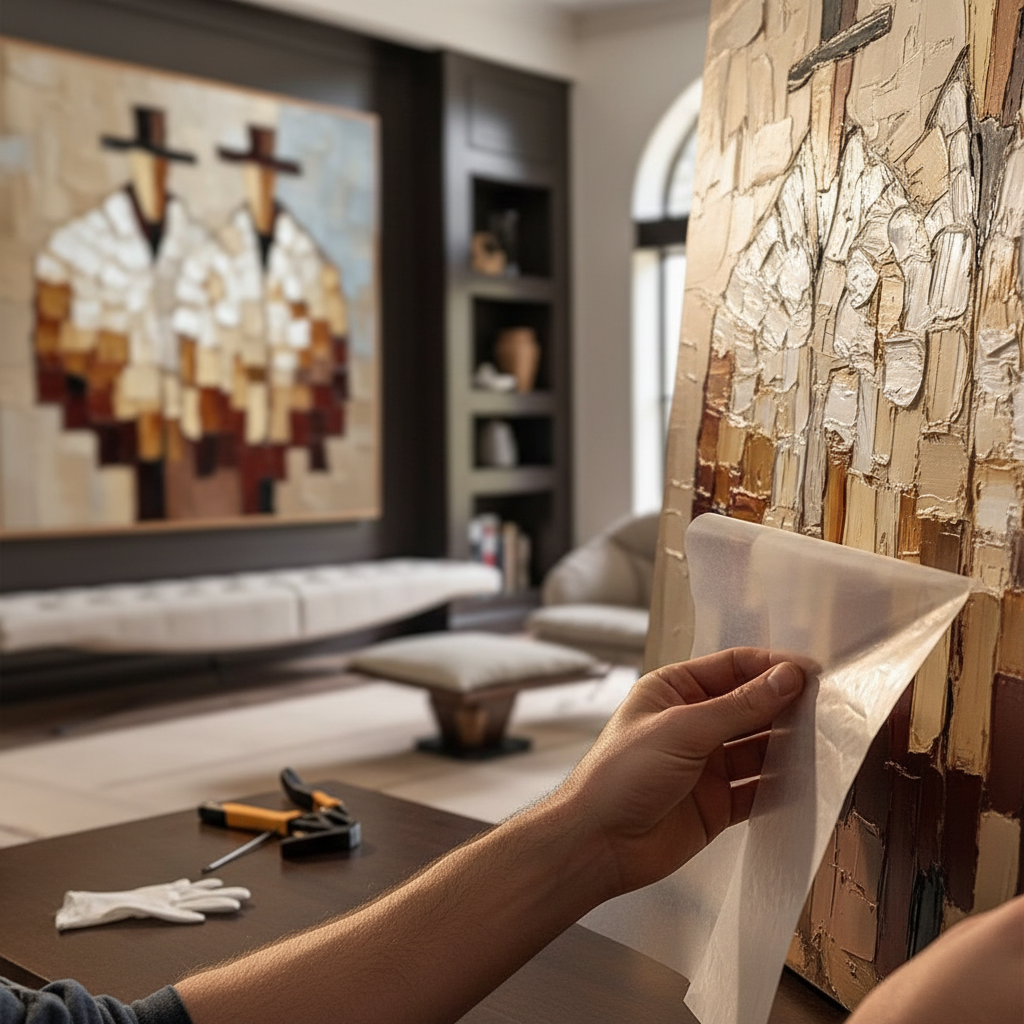
2. The Shallow-Angle Film Peel
Most high-end paintings are shipped with a protective layer (often glassine or a specialized non-stick film). A common mistake is pulling this film straight up. This can create a vacuum effect that momentarily pulls on the paint layer.
- The Technique: Peel the film back slowly at a very shallow angle (nearly parallel to the canvas). If you feel any resistance or "tackiness," stop immediately and allow the piece to sit in a cool, dry room for another 24 hours.
3. Inspecting the "Vulnerable Zones"
Before fully removing the piece from its internal supports, check the canvas edges and the stretcher bars. Look for any transfer of pigment. If paint has migrated to the edges, it indicates the piece shifted during transit. In such cases, avoid touching those areas and contact professional support for guidance on Professional Oil Cleaning.
4. Avoiding Texture Transfer
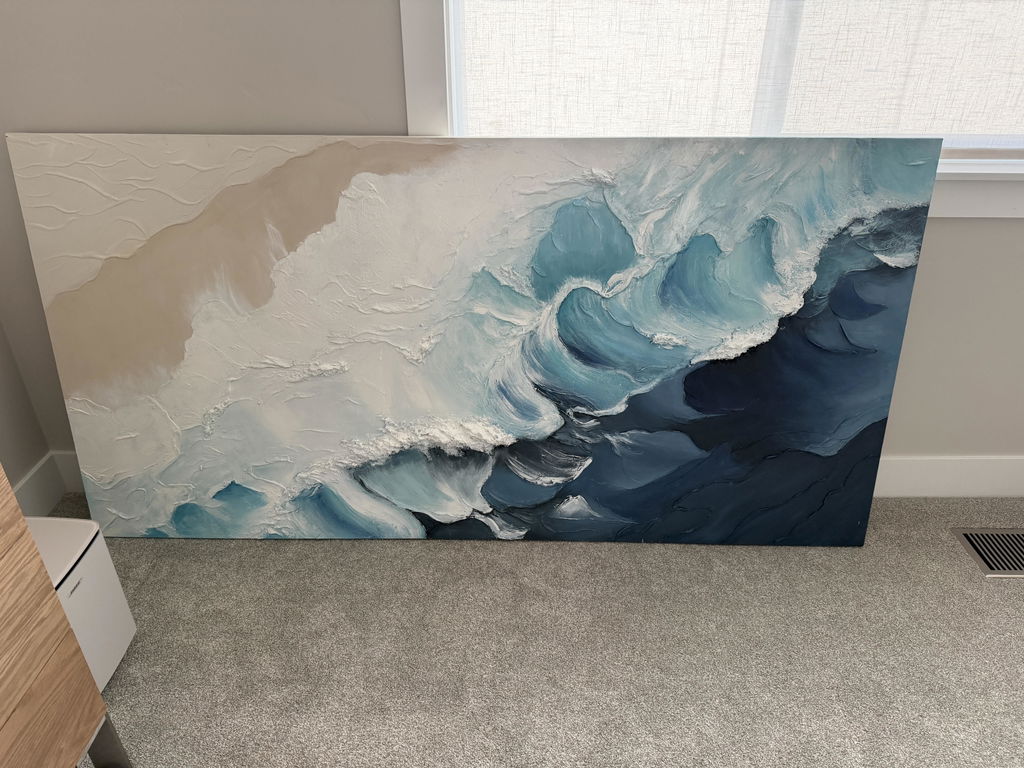
The most costly error collectors make is leaning a freshly unpacked canvas against a wall or furniture. Even if the surface feels dry, the weight of the canvas creates constant pressure on the impasto areas. This pressure can transfer the texture of the wall or the backing material (like bubble wrap) onto the paint, creating permanent, irreversible impressions. Always store the painting vertically on an easel or a dedicated art rack during the first few days.

Environmental Stabilization: Temperature and Humidity
Once the painting is unpacked, its immediate environment dictates how well it will settle. Fine art is sensitive to "environmental shock"—rapid shifts in the air around it.
Ideal Atmospheric Ranges
According to Lowy 1907, maintaining a stable environment is the single most effective way to protect your investment. We recommend the following parameters for the first 30 days:
- Relative Humidity: 40%–60%. High humidity can cause the canvas to swell (acrylic yellow pigments can swell by up to 7% in mass under 83% humidity, according to ResearchGate).
- Temperature: Above 50°F (10°C) but below 75°F (24°C). Extreme heat can cause binder separation, while extreme cold can make the paint film brittle.
Indoor Air Quality (IAQ) and Safety
A common concern for home decorators is the "scent" of fresh oil paint. While traditional oils used toxic solvents like turpentine, modern professional-grade paints have evolved. Research from Aalto University shows that coatings on wood with proper moisture levels emit significantly lower VOCs during the curing process than previously thought.
Furthermore, the EPA emphasizes that using low-VOC materials is a prerequisite for healthy indoor environments. At MontCarta, we ensure our artists utilize pigments that meet modern safety standards, often substituting toxic lead-based whites with Titanium Dioxide, which now dominates 90% of the market due to its safety and superior hiding power.
The Psychological and Aesthetic Value of Human Artistry
Why go through the effort of specialized handling? Because the value of a hand-painted work extends far beyond its visual appearance.
Human vs. AI Art
A consumer perception study by Columbia University found that consumers value art labeled "AI-generated" 62% lower than authentic human-created art. Similarly, research from the University of Chicago indicates that digital replicas and NFTs lack the "essential identity" of the artist, which is physically preserved in the brushstrokes and textures of a hand-painted canvas.
The "Biophilic" Effect
Integrating large-scale hand-painted art into a home or office isn't just about decor; it's about well-being. A review by the University of Pennsylvania noted that 73% of patients reported significant mood improvements when exposed to environmental artworks. This "biophilic" effect—where natural landscapes and human-made textures reduce stress—is a core reason why Interior Designers Demand Acid-Free Canvas Prep and high-quality pigments.
Methodology Note: These psychological benefits are modeled based on "Busy Streets Theory" and "Creative Placemaking" research (e.g., University of Michigan), which shows that transforming spaces with art can reduce social friction and improve cognitive function.
Long-Term Care: Beyond the First Week
Once your painting has stabilized in its new environment, your focus should shift to long-term preservation.
- Varnishing Wait Times: Never varnish a new oil painting immediately. The historical and ideal practice is to wait 6 to 12 months until the oxidation process is complete. Applying varnish too early can trap moisture or cause the varnish to bond permanently with the paint layer, making future cleaning impossible.
- Light Exposure: While professional oils are designed for longevity, no pigment is immune to the sun. We utilize standards aligned with ASTM D4303 to ensure lightfastness. Avoid hanging your art in direct, unfiltered sunlight, which can cause "metamerism"—a shift in how colors appear under different lighting.
- Cleaning: For the first year, avoid any liquid cleaners. A soft, dry microfiber cloth is sufficient for Safe Dusting.

Investing in Authenticity
The decision to choose hand-painted art over mass-produced prints is a decision to support a creative economy that adds $1.2 trillion to the U.S. GDP annually (NEA). By following these safe unpacking and handling protocols, you are not just protecting a purchase; you are preserving a piece of "essential identity" that will appreciate in both emotional and aesthetic value over time.
Treat your new arrival with the patience its chemistry demands. The 72 hours you spend being cautious during unboxing will ensure that the Premium Oil Binders and vibrant pigments remain pristine for decades to come.
YMYL Disclaimer: This article provides general guidance on art handling and material safety. It does not constitute professional conservation, medical, or legal advice. If your painting shows signs of severe transit damage or if you have respiratory sensitivities to art materials, consult a certified art conservator or a qualified health professional.
Sources
- Marketplace: The Expensive Art Market Struggles
- Columbia Business School: Human vs. AI Art Perception
- ACS Applied Polymer Materials: Oil Paint Curing Chemistry
- EPA: Indoor Air Quality and Low-VOC Paints
- UPenn Neuroaesthetics: Visual Art in the Built Environment
- ASTM International: Standard Test Methods for Lightfastness
- SD Custom Painting: Oil Paint Drying Times