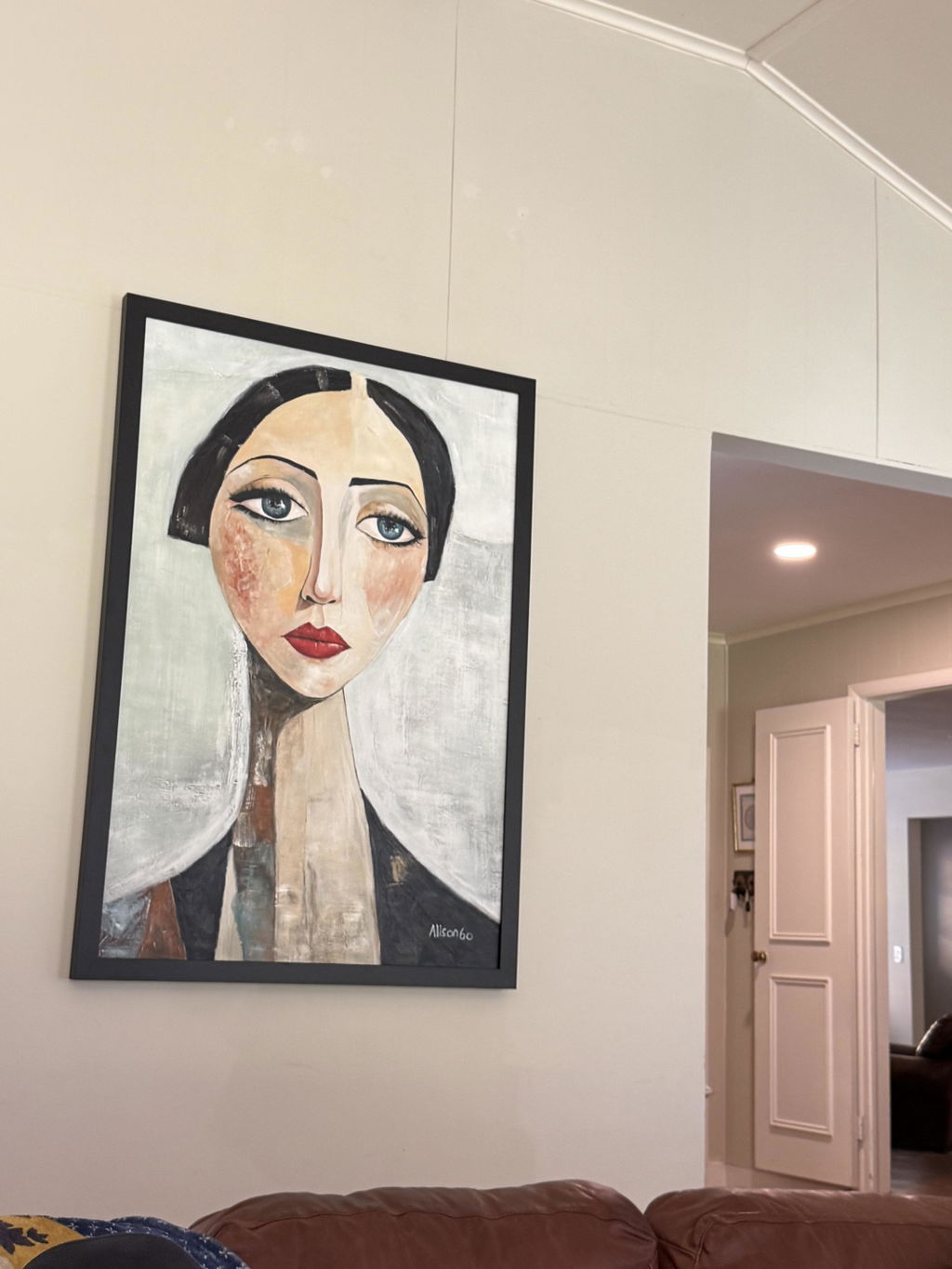
A successful custom abstract painting order starts with a documented brief, not just an inspiration image. Before requesting a quote, gather wall photos, usable measurements, lighting and viewing details, palette and texture preferences, and the date or format you need. Then put creative freedom, revisions, framing, delivery, approval, shipping, rights, and after-arrival support in writing. This approach cannot guarantee identical color or a specific final result, but it makes assumptions visible before production begins.
Before You Request a Custom Abstract Painting Quote
Have the room context, practical requirements, visual direction, and open questions ready before treating a quote as complete. Your first message should help the artist understand what is being made, where it will go, when you need it, and which terms still need confirmation.
Send both a straight-on photo of the wall and a wider room view. Identify temporary items, nearby furniture, doors, outlets, trim, and the lighting in which the piece will normally be viewed. Include the intended room and use, such as a living room focal point, bedroom accent, office installation, or gift.

A useful request also states the approximate budget, required date, preferred orientation, and whether you want a one-off original, a custom-sized piece, or another format. The budget can be a range if you are still comparing options. Ask which materials, services, revisions, frame choices, installation items, and delivery options are included or priced separately. Penn State's contract-planning framework treats intended use, essential characteristics, budget, date, transport, and damage responsibility as useful fields to clarify—not universal legal requirements.
Use this short opening checklist:
- Intended room, viewing distance, and purpose
- Straight-on wall photo plus wider room context
- Usable wall width and height, orientation, and clearance limits
- Preferred palette, texture, detail level, and exclusions
- Approximate budget and required date
- Desired format, frame status, and installation constraints
- Questions about revisions, approval, shipping, damage, and support
Build the Custom Wall Art Brief Around Your Space
A strong custom wall art brief connects the artwork to the actual wall, then separates measurable requirements from preferences the artist may interpret. Treat references as direction rather than proof of identical color, texture, or composition.
Show the Wall and Its Viewing Conditions
Send a straight-on wall image, a wider room photo, and—if texture or placement matters—views that show the surrounding furniture and normal lighting. Mark or explain anything temporary in the photos so the artist does not treat a lamp, plant, or movable shelf as a permanent constraint.
Record the expected viewing distance and note whether the wall faces strong daylight, warm lamps, or mixed lighting. Furniture, trim, outlets, doors, adjacent art, and a mantel can all affect the usable area. If you are commissioning custom textured wall art, ask whether the seller can provide a close-up or side-angle example for texture reference. These views may help you evaluate surface direction, but they cannot show exactly how the finished commission will look in your room.

For additional guidance on screen-based color expectations, you can check online color expectations before sending references.
Specify Dimensions, Orientation, and Placement
Measure the usable wall area, not just the full wall. Record the width and height, preferred artwork dimensions, landscape or portrait orientation, and clearance above furniture, below the ceiling, and beside adjacent objects. If the work will hang over a sofa, console, or bed, include the furniture width and the space you want to preserve around it.
Ask the artist or seller to confirm what the quoted measurement describes: the painted surface, canvas or stretcher, or complete framed object. A frame can change the outside dimensions and affect clearance. Also confirm whether the orientation is fixed, whether hanging hardware is included, and which installation items remain your responsibility.
Define Palette, Texture, and Composition Freedom
List colors to prioritize, colors to avoid, and colors that may appear only as accents. Name the visual references you are sharing and explain what you like about each one: muted contrast, broad movement, visible marks, layered texture, geometric structure, or a particular level of detail. If you are unsure whether you prefer a loose or precise result, compare painterly or precise detail before writing the brief.
Describe texture in practical terms, such as subtle relief, visibly built-up areas, or a smoother surface, while recognizing that a reference cannot guarantee the same material effect. Separate your choices into four labels: required, preferred, flexible, and excluded. This makes it easier to show where the artist may interpret the composition and where you need a specific response.
If texture is central to the request, browse textured wall art for vocabulary and visual direction only. A collection page does not establish that a particular seller offers custom sizing, custom materials, or a matching commission service.
Set Creative Freedom and Revision Boundaries
Give the artist room to interpret flexible elements, but record what is fixed, what approval covers, and when a change becomes new scope, cost, or time. The goal is not to control every brushstroke; it is to prevent a preference from being mistaken for a guaranteed deliverable.
A written agreement or quote should identify the artwork, deliverables, payment timing, schedule assumptions, and revision boundaries. General artist-contract guidance supports documenting these fields before production: document the artwork, payment timing, deadline, and revision boundaries.
Use a scope table like this in your custom abstract art consultation checklist:
| Requirement category | Example | How to confirm it | What to ask about changes |
|---|---|---|---|
| Required | Portrait orientation, usable size, no red | Put it in the quote or order summary | Would changing it require a new scope review? |
| Preferred | Warm neutrals, layered marks, subtle movement | Describe the desired effect and references | How much interpretation is expected? |
| Flexible | Exact motif placement or balance of open space | Let the artist identify the treatment | What does approval cover? |
| Excluded | Glossy finish, certain colors, specific symbols | State the exclusion plainly | Can the artist propose an alternative before production? |
Ask these questions before approving the work:
- How many revision rounds, if any, are included, and at which milestone do they occur?
- Is approval based on a concept, progress image, final image, or another checkpoint?
- What does approval lock, and how long do I have to respond?
- What counts as a revision within the brief versus a new direction?
- Could a post-approval change add cost or affect the schedule?
- How do buyer delays, late feedback, or missing information affect the timeline?
A design-contract template describes post-approval additions as potential additional services; use that as a reason to ask for the seller's process, not as a universal fee rule: changes after approval may become additional work and affect timing.
Confirm Framing, Timeline, Approval, and Support
Before a custom artwork enters production, the order record should identify what is being made, what is included, when each timing estimate applies, how approval works, and what happens if the package or artwork arrives with a problem. Do not treat an informal message or general product description as a complete custom-order agreement.
- Confirm the artwork and included materials. Record the final dimensions, orientation, surface or medium description, price, payment schedule, included accessories, and exclusions. Clarify whether you are buying the physical original, another format, or both.
- Confirm framing and installation exclusions. Ask whether the work is framed, whether the quoted dimensions include the frame, and whether hanging hardware, installation, or local mounting is included. For general framing ideas, you can frame an abstract canvas, but that article is not the seller's contractual promise.
- Separate production, dispatch, and arrival. Ask whether the target date means production completion, carrier handoff, or delivery to your address. Request the expected shipping method, who pays shipping and insurance, what can delay the order, and how a revised date will be communicated. Bespoke timing can depend on approvals and shipping conditions, so do not turn a general delivery rule into a guaranteed deadline for every commission.
- Document approval and response deadlines. State what you will review, how approval is given, and what happens if you miss a response deadline. Ask whether approval applies to the concept, an in-progress image, or the final artwork. If color is important, ask what level of matching or approval is actually offered rather than assuming a screen reference is exact. You can check online color expectations as preparation, not as a substitute for seller-specific terms.
- Write down inspection, damage reporting, and support steps. Ask how quickly you must inspect the package, what photos or other evidence are required, where to report damage, and what remedy or support process is stated. Clarify packaging responsibility and shipping expense before purchase. A purchase-agreement template is a useful field model for discussing title, copyright treatment, shipping expenses, and risk of loss, but it is not a universal consumer contract: document title, copyright treatment, shipping expenses, and risk of loss.
Turn the Checklist Into a Ready-to-Send Order Summary
Turn your preferences into one message that distinguishes room facts, required results, flexible choices, exclusions, and open questions. Then compare the seller's response with every material field before paying a deposit, approving production, or treating a date as final.
Use this ready-to-send structure:
- Room evidence: intended room, wall photos, lighting, viewing distance, furniture, trim, outlets, doors, and adjacent art
- Size and orientation: usable width and height, desired artwork dimensions, portrait or landscape orientation, clearances, and whether measurements include framing
- Palette, texture, and exclusions: priority colors, colors to avoid, texture direction, reference images, desired detail level, required elements, flexible elements, and prohibited elements
- Creative freedom and revisions: what the artist may interpret, approval milestone, included revision process, post-approval change treatment, response deadlines, and schedule effects
- Price, framing, timing, and support: deliverables, materials, frame status, accessories, payment, production timing, dispatch, arrival estimate, shipping responsibility, inspection process, damage reporting, rights, and after-arrival support
Review the reply line by line. If the dimensions, frame status, revision process, approval milestone, delivery meaning, shipping responsibility, damage procedure, or rights treatment remains blank, request clarification before proceeding. A vague answer may be acceptable for a flexible artistic choice; it is not a useful substitute for a missing material order term.
For visual comparison only, you can browse modern abstracts or view a neutral textured painting. The supplied product and collection information does not establish that either destination offers customization, custom sizing, framing, delivery terms, or commission support.
FAQs
These questions address documentation gaps that can affect a custom abstract painting order. Use the answers as prompts for the seller's written terms, not as guarantees about a particular commission.
What Photos Should I Send for a Custom Art Consultation?
Send a straight-on wall image, a wider room view, and enough context to show furniture, trim, lighting, and nearby art. Identify temporary objects. Ask whether the seller has preferred file types, image sizes, or a consultation form.
How Should I Measure a Wall for a Custom Painting?
Record usable width and height, furniture and trim clearances, orientation, and the space around the piece. Ask the seller to state whether the quoted measurement covers the artwork alone, the canvas or stretcher, or the complete framed object.
Can I Request a Color Match for Custom Abstract Art?
You can request a color direction or ask what level of matching is realistic, but do not assume a screen image will produce an exact result across different lighting, displays, pigments, and artistic interpretation. Ask whether the seller offers a defined color-approval step.
Who Owns the Rights to a Custom Artwork After Purchase?
Ask separately who owns the physical original, who retains copyright, and whether reproduction, portfolio, promotional, or commercial use is permitted. U.S. Copyright Office guidance treats copyright and possession as separate questions, and work-made-for-hire treatment is fact-specific rather than automatic. Put the rights you need in the agreement.
What Should I Do If Custom Artwork Arrives Damaged?
Inspect the package promptly and photograph the box, packing materials, labels, and artwork before altering or installing it. Follow the seller's notification window and damage process. Ask before purchase what evidence, carrier contact, return shipping, replacement, repair, or refund steps may apply; do not assume an undocumented remedy.