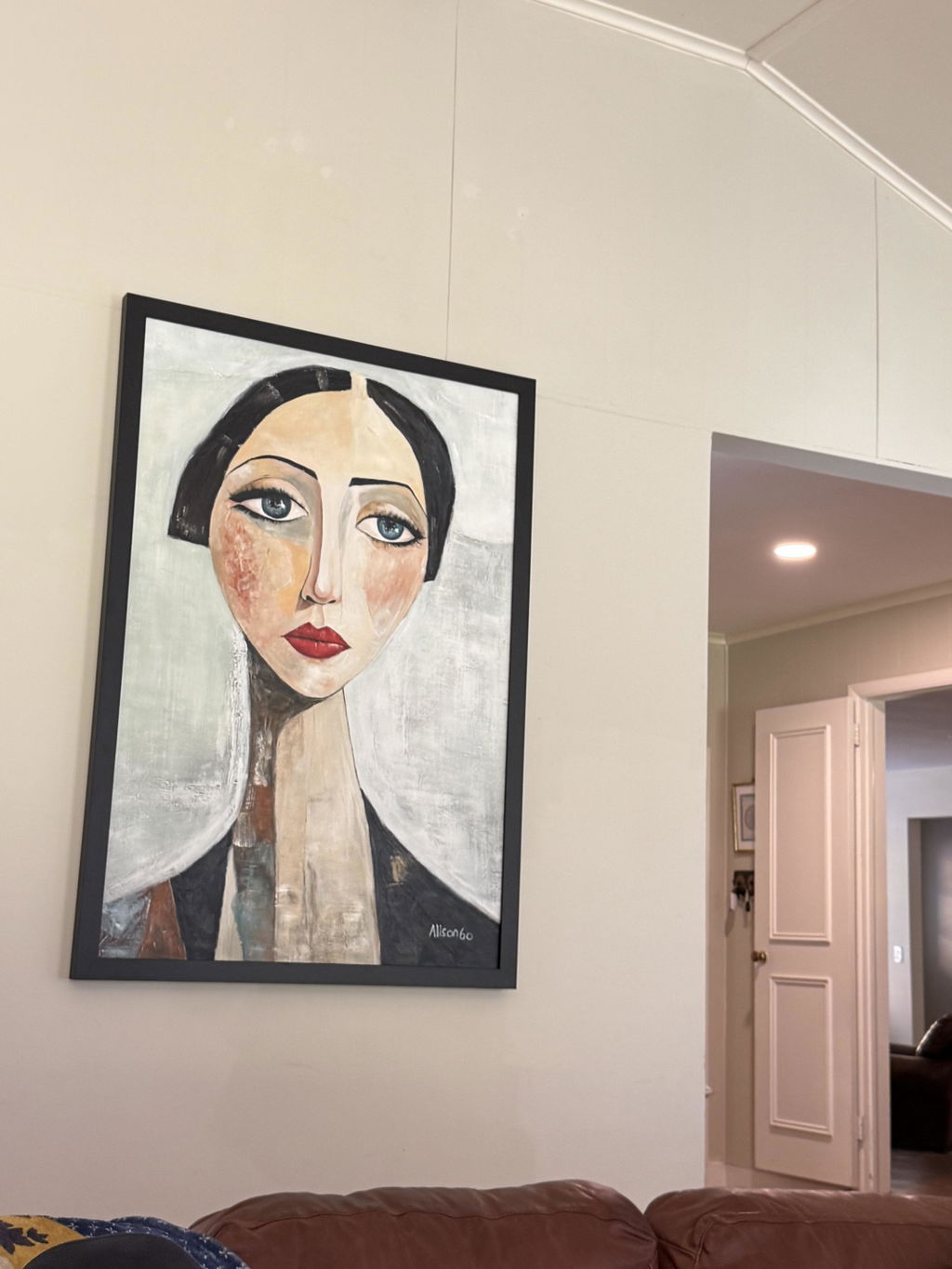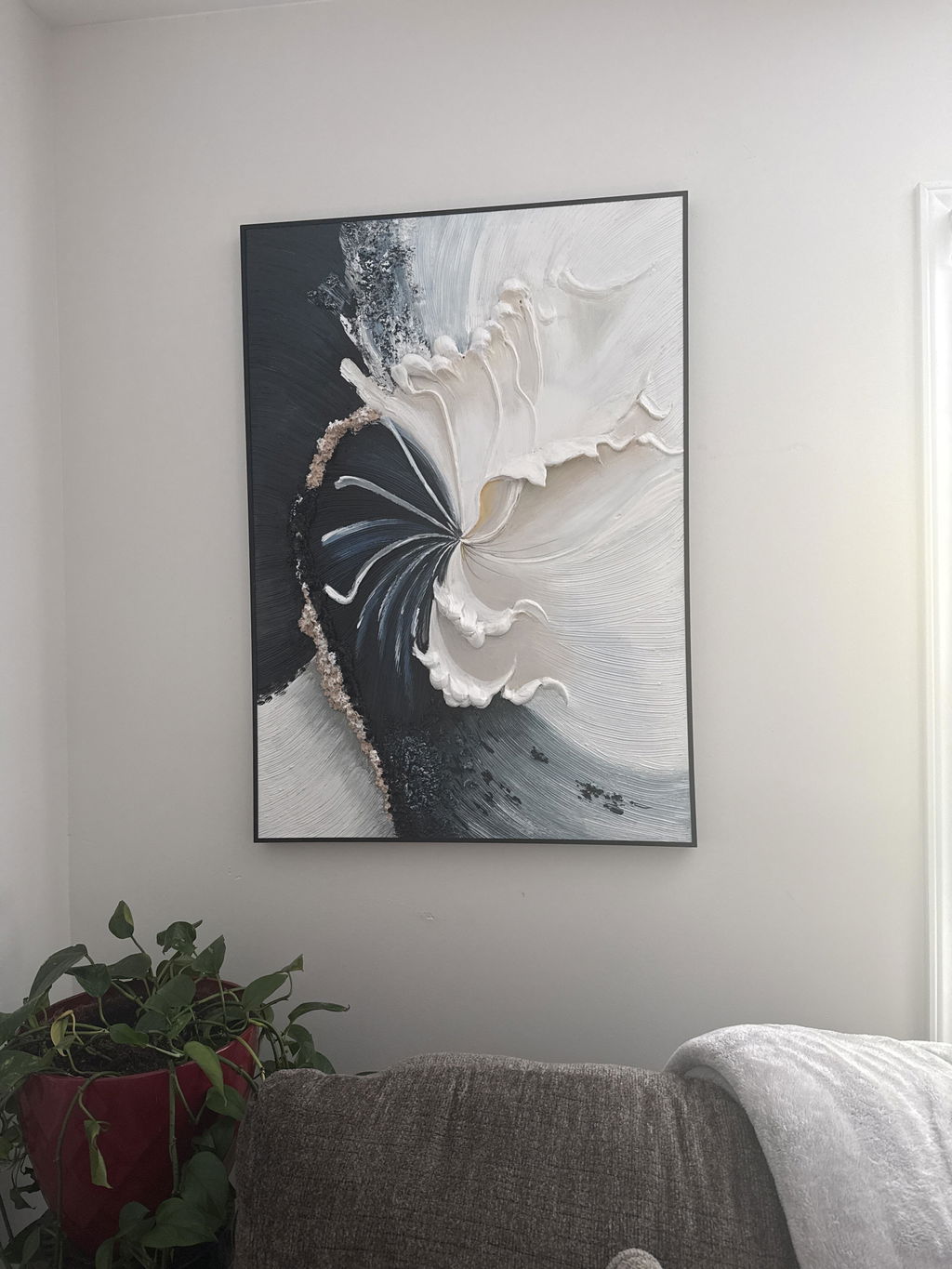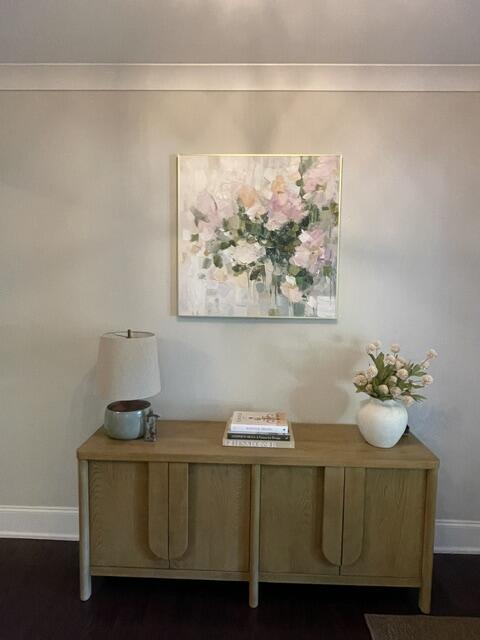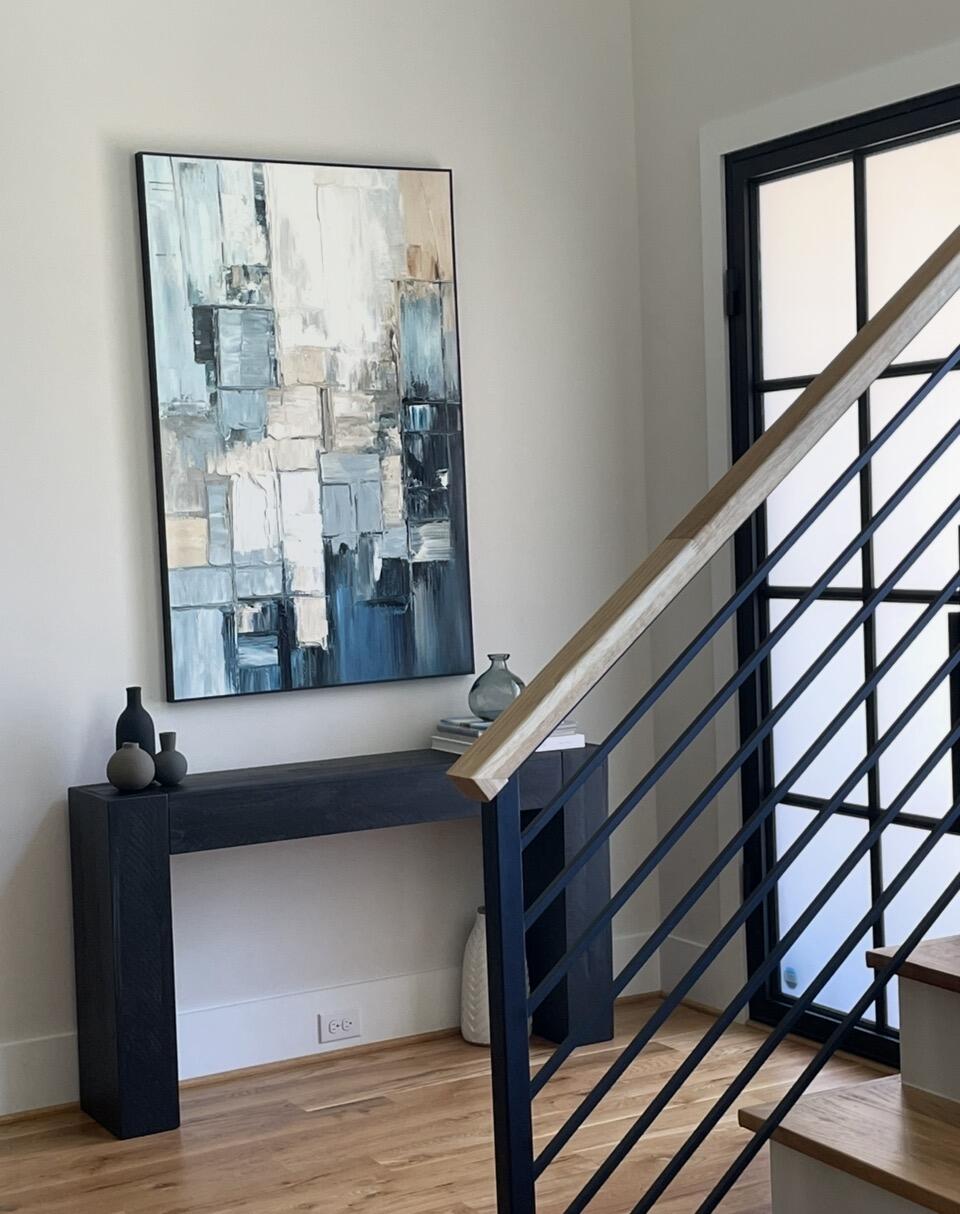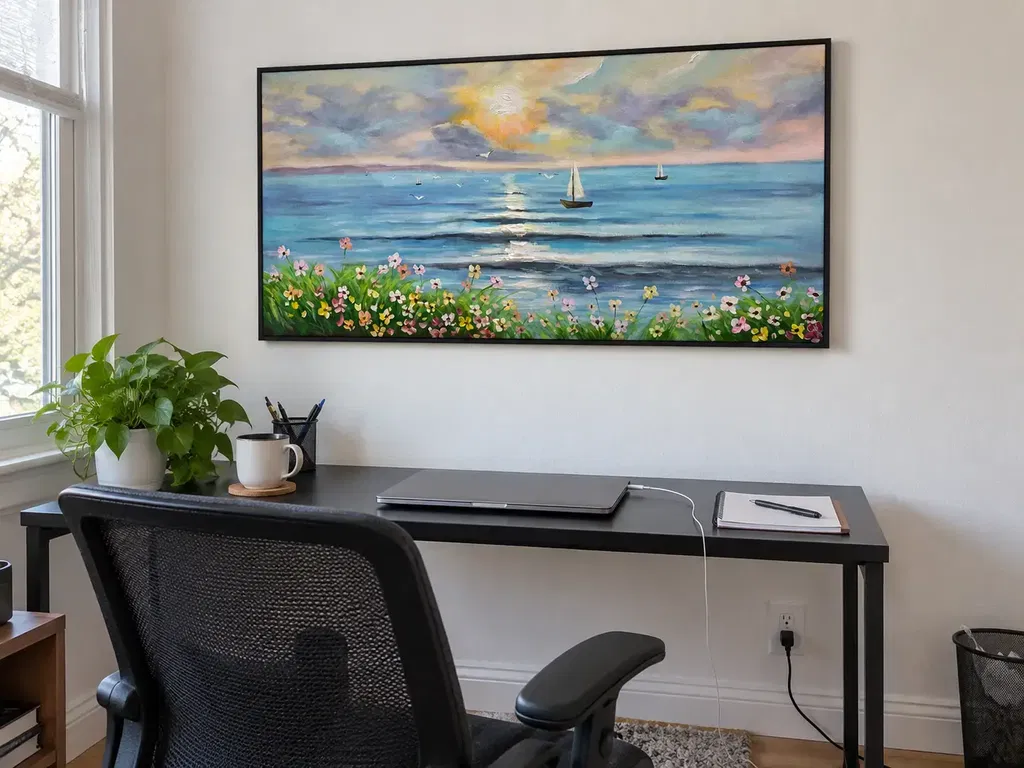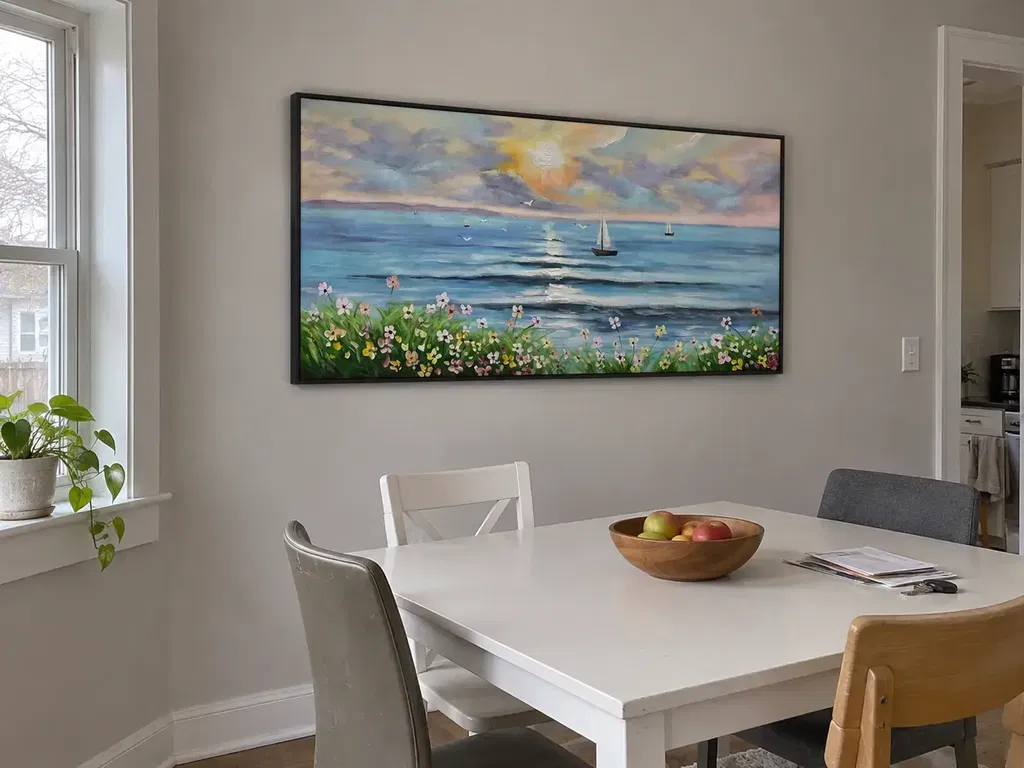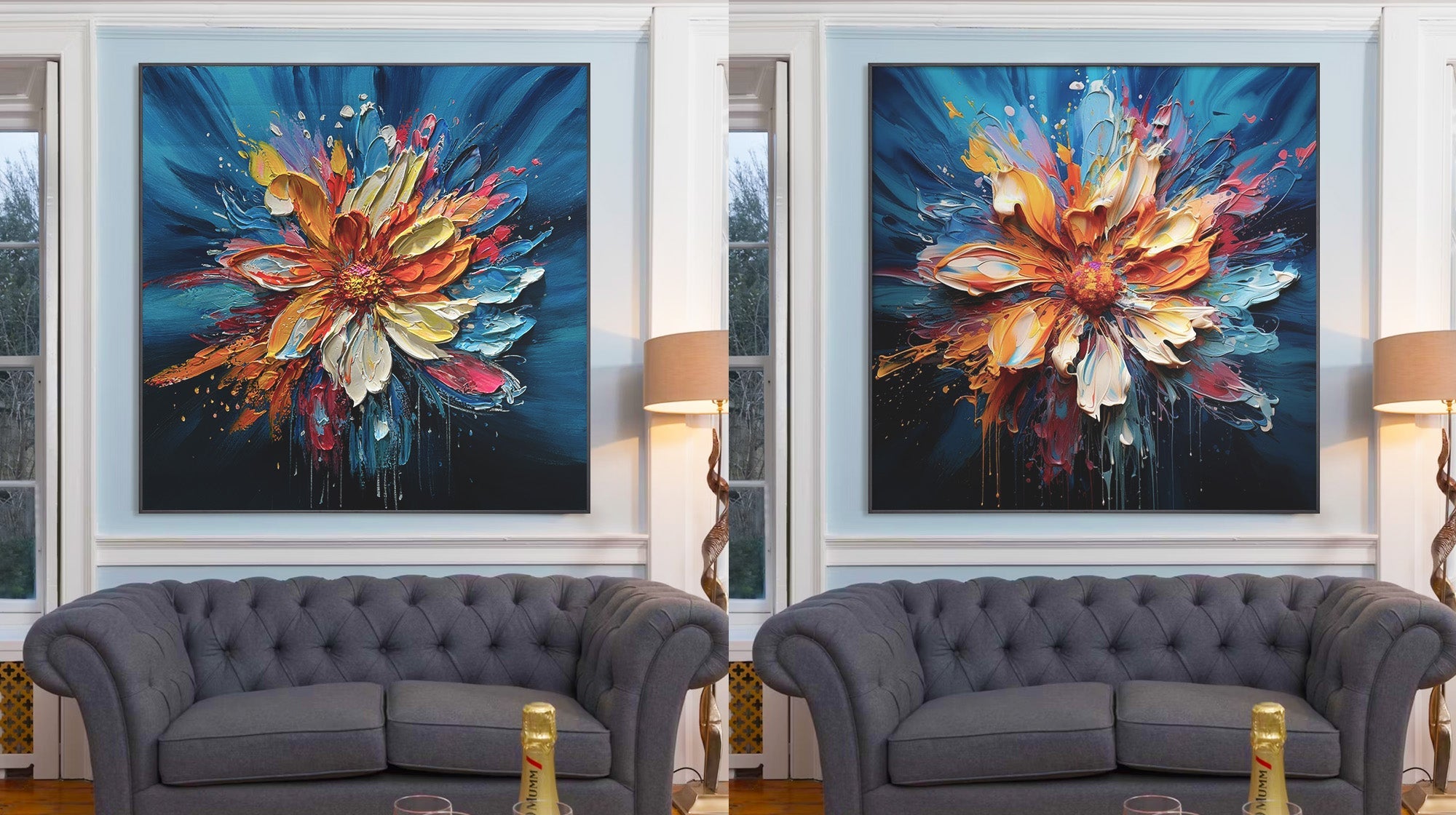
An abstract masterpiece can change a room's ambiance completely. However, without the right frame, that masterpiece looks like a work in progress. The frame connects your art to your walls and gives it a finished style statement. Here is how to pick the perfect frame without dampening the artwork's energy.
The Frame Needs to Support Art but Not Compete with It
The artwork must remain the main focus. Abstract paintings rely on color, movement, and expression. While portraits often use heavy, ornate frames to create a "window" effect, abstract paintings require something different. A heavy frame can overwhelm the art.
Your objective is to keep this energy contained without dampening it. The frame defines where the artwork ends and the world begins. If you have chaotic lines on your abstract wall art, a simple frame design avoids visual confusion.
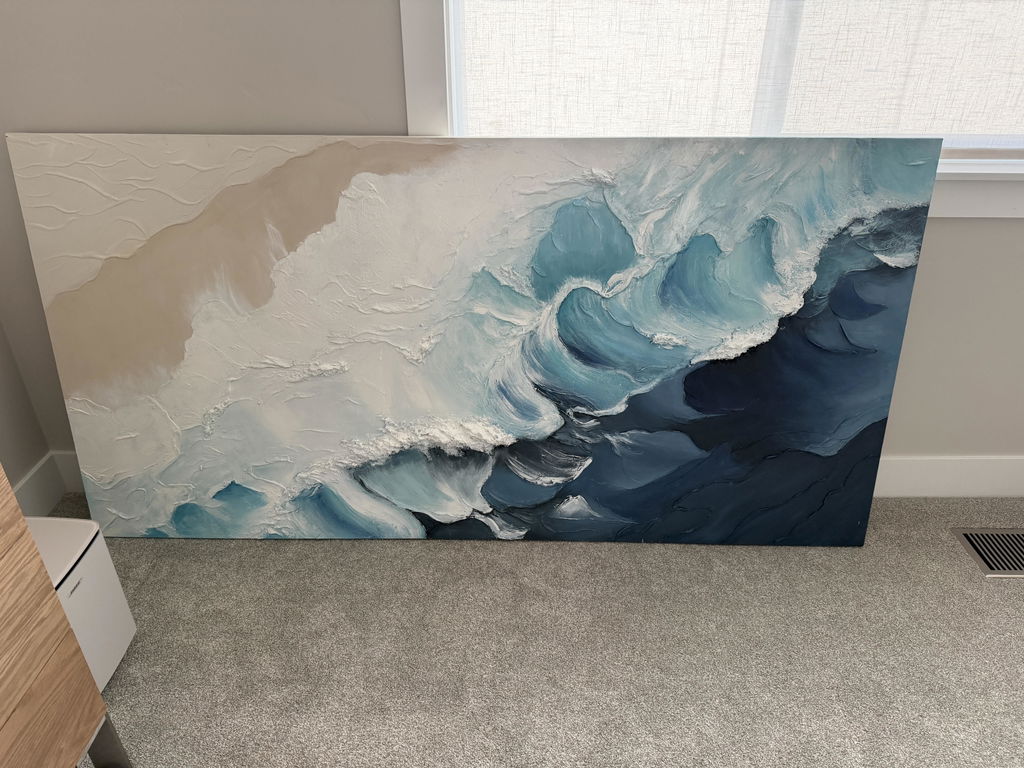
Pick a frame that acts as a silent supporter, directing the viewer to look within the canvas. Textured paintings, such as the waves in Ocean Whispers at Montcarta, require breathing space. A thick frame creates pressure that suffocates these details. Therefore, you need a frame as smooth and contemporary as the art itself.

Floating Frame vs. Traditional Frame: Which is Better?
Consumers typically have two options: the conventional frame and the floater frame. For abstract canvas art, the choice is simple.
The Traditional Frame
This standard style has a "lip" that overlaps the edge of the art to keep it secured. While ideal for flat paper prints, it is problematic for canvas. Abstract brushstrokes often extend to the edges, and a standard frame truncates them, hiding parts of the composition.
The Floater Frame
This is far better suited to canvas wall art. A floater frame attaches to the back of the stretcher bars, leaving a small gap (typically 1/4 inch) between the canvas and the frame. This creates two main benefits:
- Full Visibility: You see the whole face of the canvas. Nothing is hidden by a lip.
- Added Depth: The shadow in the gap makes the art look like it is floating, adding structure to the wall.
Galleries prefer floating frames on contemporary canvas art due to their clean, professional look.
Matching Frame Colors & Materials
The choice of frame material and color mediates between the art and the environment. It must communicate with both.
Choosing Materials
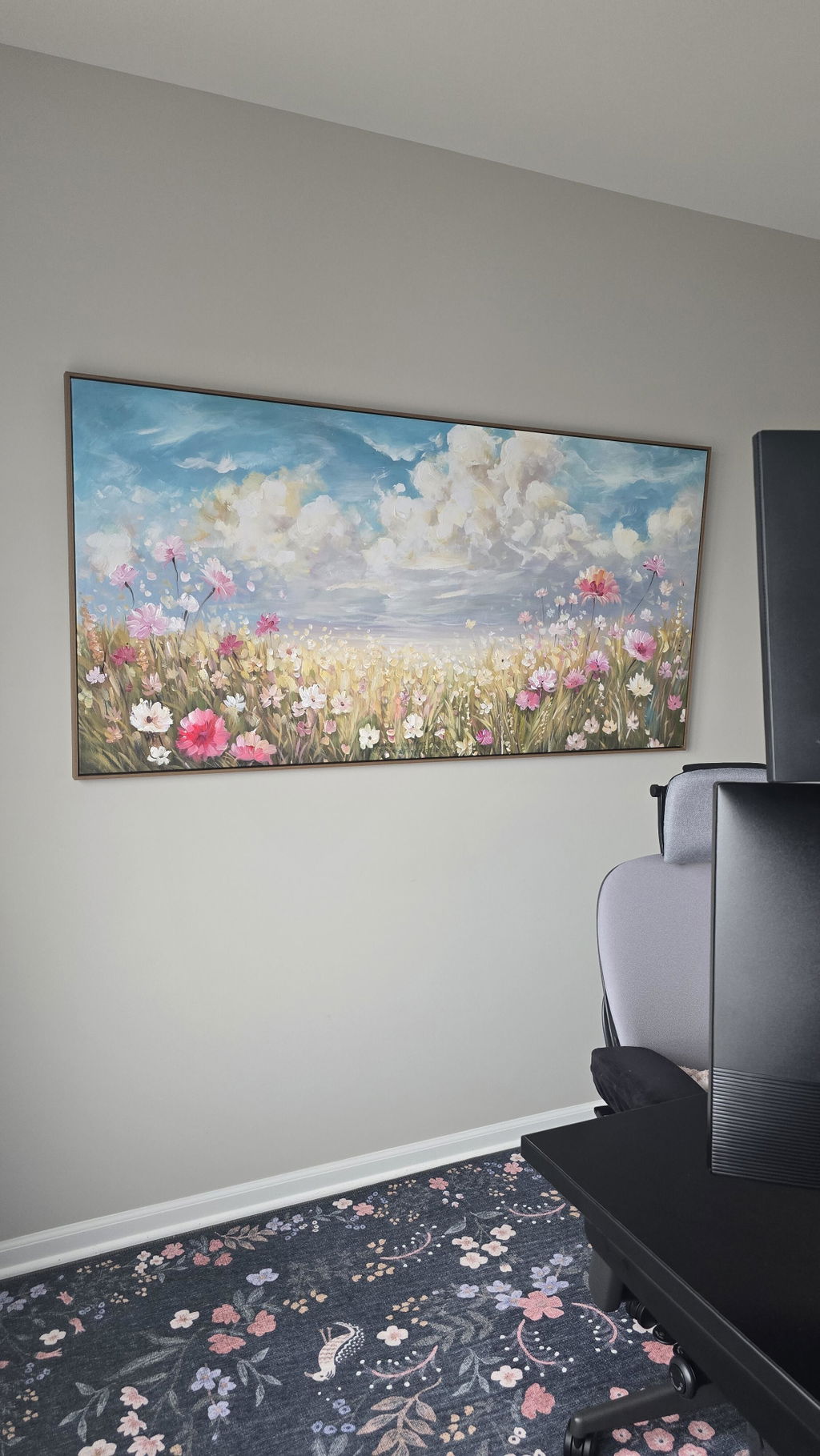
- Natural Wood: Imbues warmth into your space. Organic textures balance out energized art pieces, particularly nature-inspired works like Golden Resilience.
- Metal: Available in black, silver, and gold. These offer a slim, sharp edge ideal for modern abstract paintings that require clean lines.
Choosing Colors
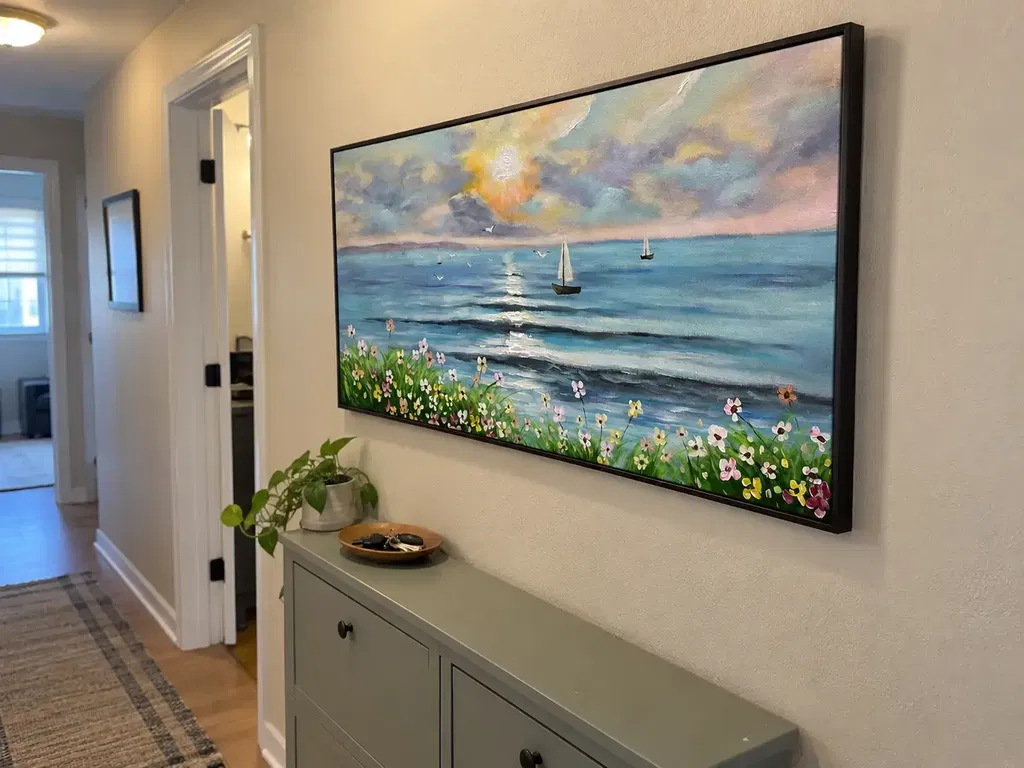
- Black: A black frame is like a period at the end of a sentence. It creates a complete boundary that contains bright colors and focuses attention solely on the image.
- White: Ensures a light and airy feel. If you hang art in a bedroom for a relaxing ambiance, a white floater frame keeps the mood intact.
- Gold or Silver: These should complement colors found within the painting. Use a gold frame to highlight warm yellows or ochre. Use silver or brushed nickel to complement blues and grays.

Matching Room Designs
The picture frame is not a standalone item; it must account for your furnishings and wall colors.
Scandinavian & Minimalist Spaces
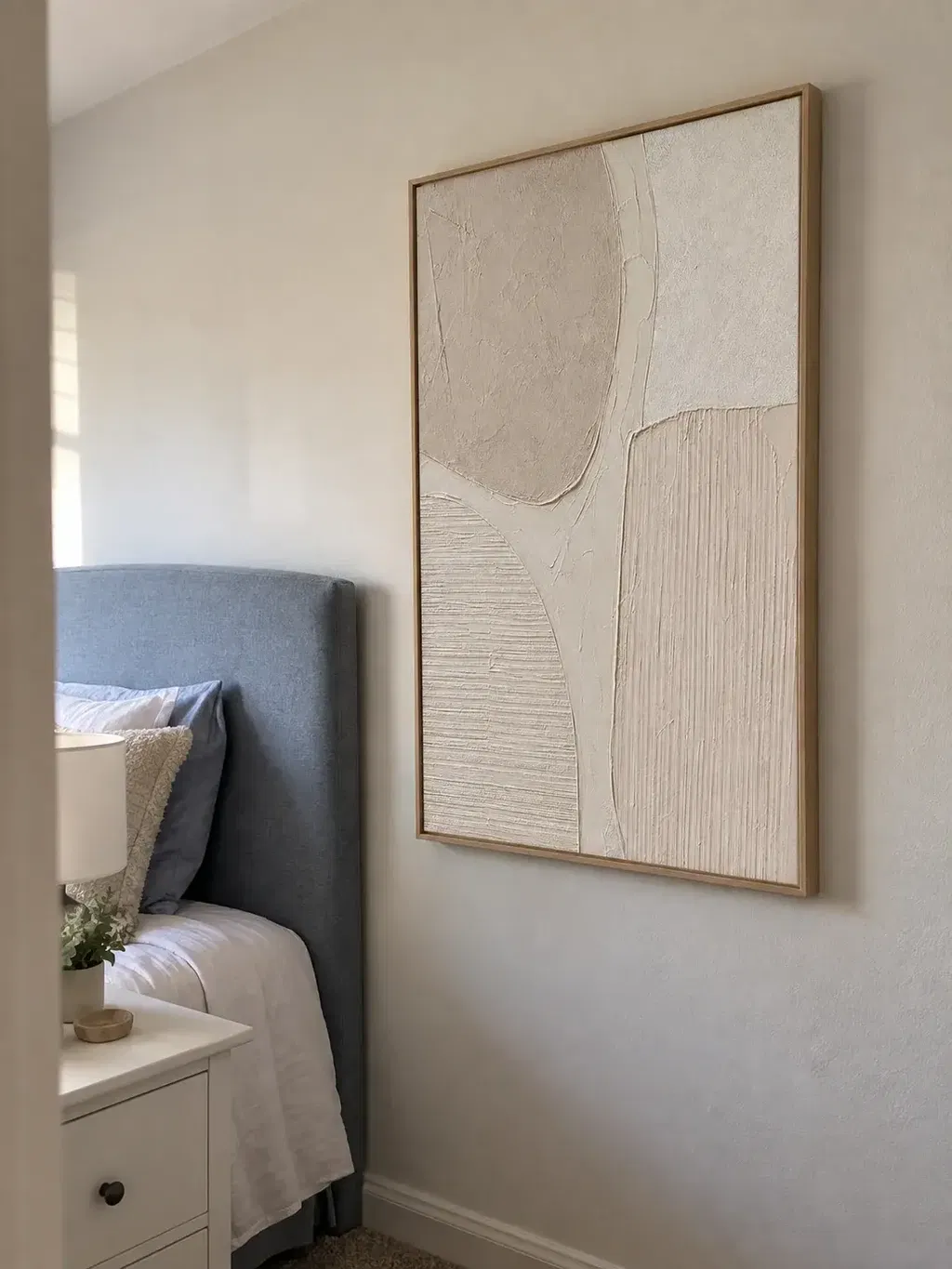
These spaces work on the principle of simplicity. Keep the frame slim. A minimalist oak floater frame or matte white is ideal to incorporate the "less is more" look, allowing the art to add interest without cluttering the space.
Industrial Lofts
Raw materials dominate these spaces. Black metal or dark wood frames work best here, complementing elements like brick, concrete, and steel. A large art piece with a bold dark frame provides a strong anchor for high ceilings.
Traditional Homes
For those who prefer classic aesthetics, the frame width can be slightly wider to correspond with classic furniture. A walnut wood frame connects a modern abstract piece to a classic sofa, ensuring modern art feels at home in a traditional environment.

Why Framing Abstract Art is Important
Framing errors can detract from expensive art. Avoid these common pitfalls:
Glass on Textured Canvas
Using glass is an error. Canvas painted with oil or acrylic needs to breathe. Glass traps moisture, which can damage the paint over time. Visually, glass flattens the texture, killing the 3D effect of the brushstrokes. Never frame canvas work with glass.
Matching The Frame To The Wall
Never pick a white frame for a white wall unless you want your art to disappear. A frame must offer contrast to set the art apart. A matching frame makes the art resemble a sticker hovering on the wall.
Overlooking Scale
A fragile frame on a large canvas is inadequate; a heavy frame on a small piece is extravagant. Large wall art calls for a frame thick enough to counterbalance its visual weight.
Perfect Abstract Art Framing
A "perfect" frame is one you don't notice at first glance. You should say, "What a beautiful painting!" rather than "What a beautiful frame!" To achieve this:
- Respect the Texture: No glass on canvas.
- Create Space: Use float frames to show the complete perimeter.
- Harmonize: Choose a color that draws a secondary color from the picture or provides clean contrast.
Whether you are installing a bold green piece like Emerald Mosaic in a hallway or a relaxing blue abstract in a master suite, Montcarta can complete your design plan with a carefully selected frame.
Conclusion
The final step is framing. This is how you can make sure the artwork is protected while integrating art into life. The secret is to choose a frame that honors the unique qualities of abstract art.
Are you ready to find art worthy of such an impeccable frame? Browse our gallery at Montcarta. From the tactile waves within our piece to our bold landscape art, each and every one of our hand-painted art pieces contains emotion and sophistication. Discover your hand-painted masterpiece at Montcarta today.
FAQs About Choosing Abstract Art Feame
Q1: What is the best frame for abstract art?
The best frames to use on abstract canvas paintings are floater frames. While an ordinary frame uses a lip to cover the edges of the art, a floater frame is attached to the back of the canvas. This creates a small margin between the canvas and the frame, resulting in a shadow effect that gives depth to the art. This is crucial because abstract art often uses brushstrokes that extend to the very edges.
Q2: What is the rule of thumb for framing?
The golden rule is that the frame is supposed to support the art, not distract from it. To make your art stand out, follow the "contrast rule," which recommends picking a color that is either lighter than the lightest color in your picture or darker than the darkest color. Never pick a color that matches your wall paint exactly.
Q3: What are the framing trends for 2025?
The style is shifting towards "Organic Minimalism." The idea is to bring nature inside by using natural materials. There is more emphasis on natural, raw woods such as oak and walnut with visible grain. There is also a style called high-contrast, which involves using dark wood frames to accentuate light, airy abstract paintings.