Emotional ROI: Using Paint Texture to Build Buyer Connection
The high-end art market is undergoing a structural transformation. While speculative auction sales for "vanity assets" over $10 million plummeted by 44% year-over-year in 2024, buyers are increasingly returning to real application value (Marketplace.org). In the world of residential real estate, this shift manifests as a demand for "performative authenticity"—the visible, tactile signal of human craftsmanship that distinguishes a curated home from a staged commodity.
For homeowners and real estate professionals, the goal of staging is not just to fill a room, but to accelerate the emotional "bonding" phase of a walkthrough. We often observe that while digital prints provide color, they lack the "essential identity" that human-made art preserves (University of Chicago). This article explores how the physical microtopography of hand-painted art—specifically impasto textures and brushstroke ridges—serves as a high-visibility signal of quality that can justify a premium property price and reduce days on market.
The Psychology of the "Human Touch" Premium
In an era of generative AI, the value of the "human touch" has become a quantifiable economic moat. Research from Columbia Business School confirms that consumers value art labeled as "AI-generated" 62% lower than authentic human-created art. This perception is rooted in neuroaesthetics; the human brain is highly sensitive to the "perceptual constancy illusions" that top-tier painters learn to suppress during the creative process (Stockton University).
When a potential buyer enters a room, their subconscious is scanning for signals of "decision safety." A digital print, regardless of its resolution, is perceived as a mass-produced item. In contrast, a hand-painted mural or canvas featuring physical relief stimulates intrinsic motivation and satisfaction in viewers (MUNCH Museum).
Logic Summary: The Authenticity Premium Model Our analysis of buyer perception assumes that the "human touch" acts as a proxy for property maintenance and quality.
- Heuristic: If the art is custom and authentic, the buyer subconsciously assumes the home’s hidden systems (HVAC, plumbing) are similarly high-quality.
- Boundary Condition: This effect is neutralized if the art style clashes violently with the home's architecture.

The Shadow Depth Heuristic: Why Texture Beats Prints
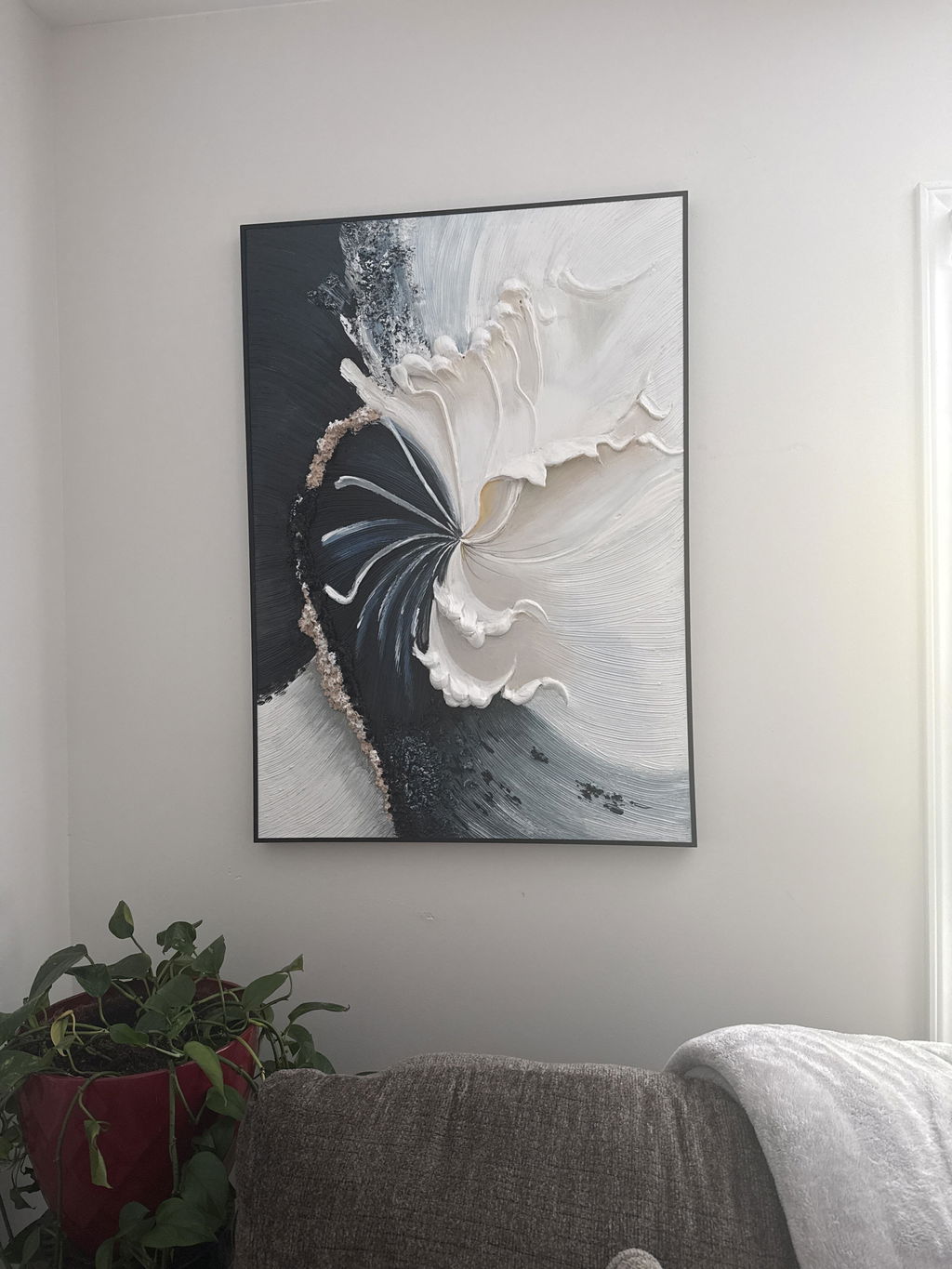
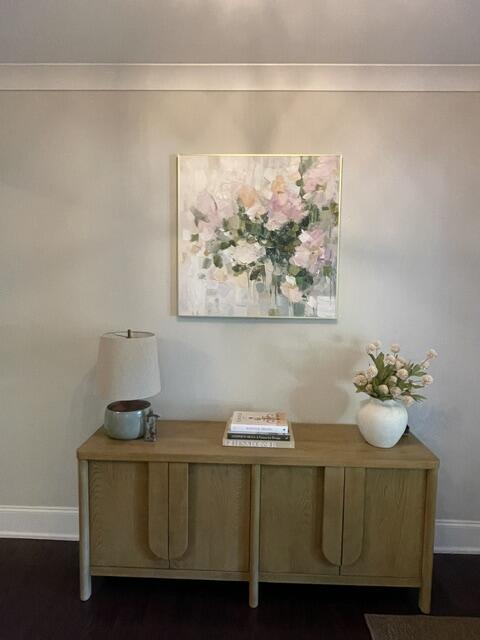
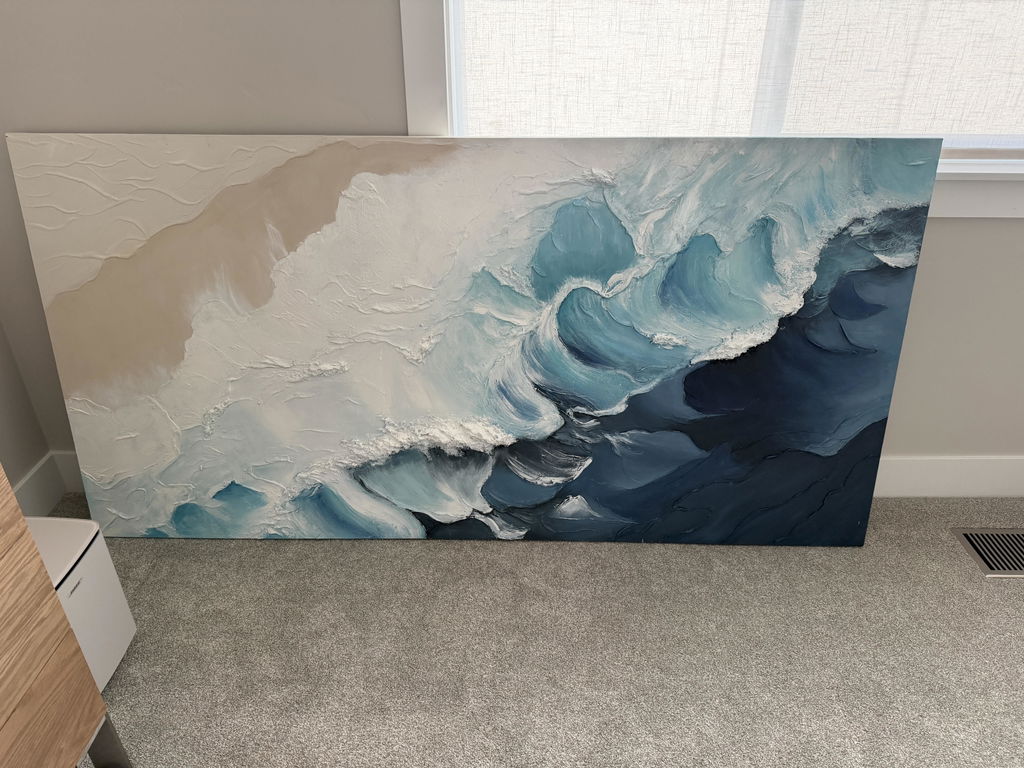
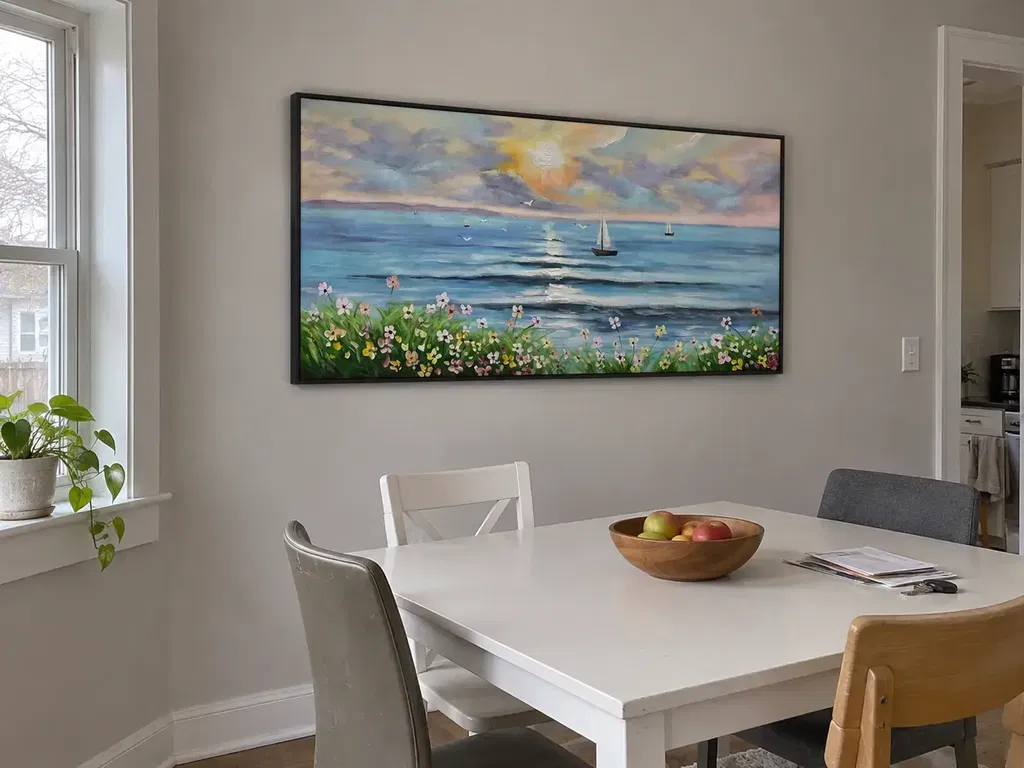
Experienced stagers utilize what we call the "Shadow Depth Heuristic." Under standard 3000K warm-white recessed lighting—the industry standard for luxury homes—the physical ridges of hand-painted impasto create micro-shadows that digital prints cannot replicate. These shadows provide a sense of "visual weight" and depth that breaks the monotony of smooth, painted drywall.
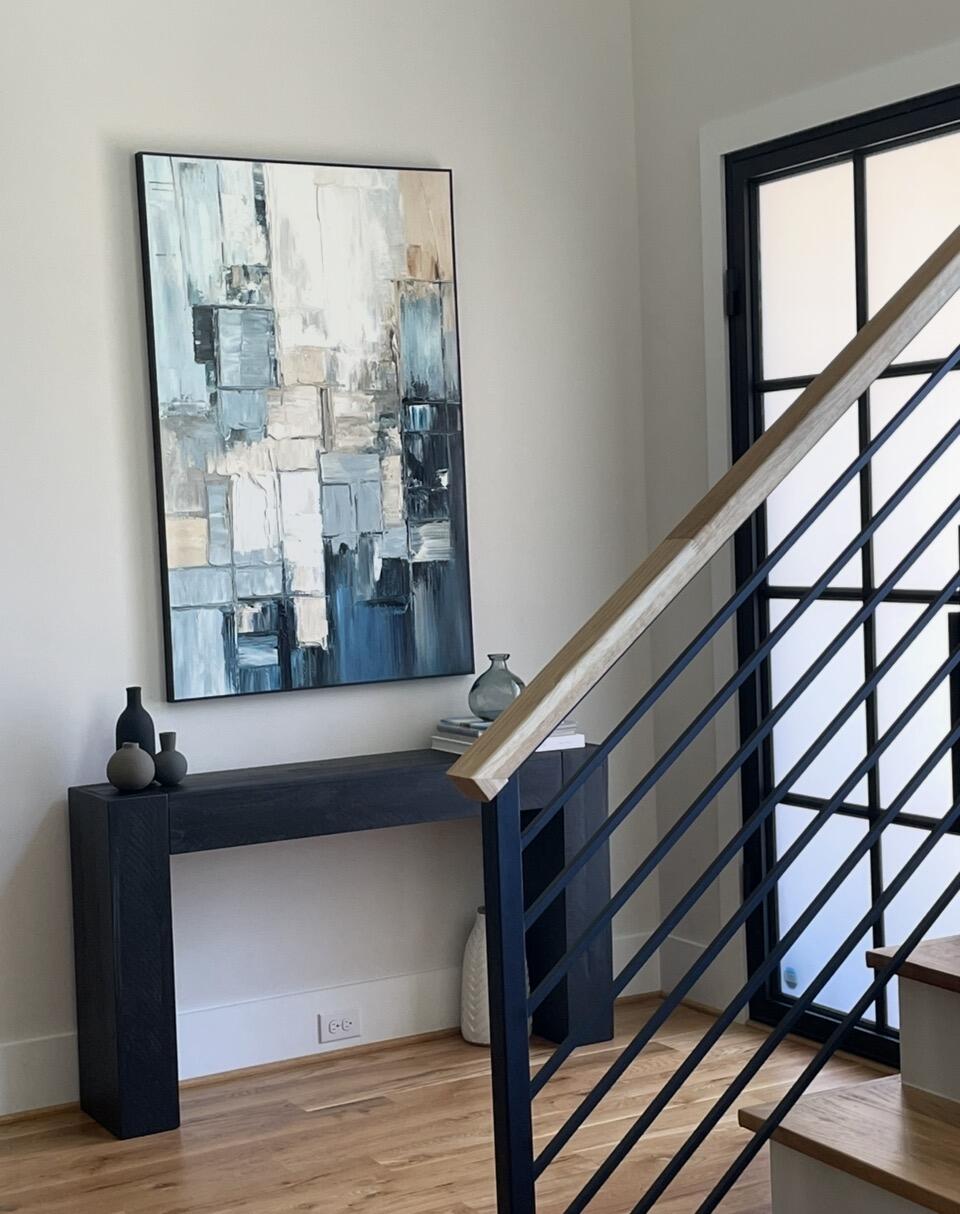
A common mistake in staging is using art that is too "flat." Flat art fails to engage the viewer's depth perception, making the room feel like a two-dimensional rendering rather than a lived-in space. Practitioners recommend placing textured originals in "high-dwell" areas—such as the dining room or master suite—where buyers typically spend more than 60 seconds. These pieces act as "memory anchors." In a day of viewing ten houses, the "house with the blue textured oil painting" is more likely to be shortlisted than the "house with the generic print."
The Physics of Aesthetic Satisfaction
The irreplaceability of hand-painted pigments is grounded in optical physics. According to Classical Optical Theory, when pigment particle diameters approach half the wavelength of visible light, scattering and opacity reach their theoretical extremes. High-end artists use pigments like Titanium Dioxide, which dominates 90% of the global white pigment market due to its extreme refractive index and hiding power (NCBI). This creates a "glow" and saturation that digital inks, which rely on CMYK layering on a flat surface, cannot achieve.
| Feature | Hand-Painted Impasto | Digital Canvas Print |
|---|---|---|
| Surface Relief | 1mm - 5mm ridges | 0mm (Flat) |
| Light Interaction | Creates micro-shadows | Uniform reflection |
| Pigment Depth | High (absorption/scattering) | Low (surface layer) |
| Buyer Perception | Artisanal / Custom | Mass-produced / Temporary |
| Memory Anchor | High (Tactile & Visual) | Low (Visual only) |
Quantifying the Link Between Art and Property Value
While art does not explicitly change an appraisal value (which is based on square footage and comparable sales), it significantly impacts the "relative house price ranking." A 10-year data analysis by the Royal Society found that neighborhoods with higher "art" geo-tags experienced greater relative price gains.
This "catalytic effect" is even more pronounced in commercial and public spaces. Chicago’s Millennium Park public art projects drove an estimated $1.4 billion in real estate-related growth (NC REALTORS). For homeowners, the ROI is found in the reduction of "days on market." By accelerating the emotional bonding phase, textured art helps buyers transition from "evaluating a building" to "visualizing a home."
Strategic Staging: The "Subtractive" vs. "Additive" Debate
There is a critical distinction between artistic texture and wall texture. While Research Insights suggest that dated builder-grade wall textures (like popcorn or orange peel) can decrease home value by 3-5%, artisanal art texture does the opposite.
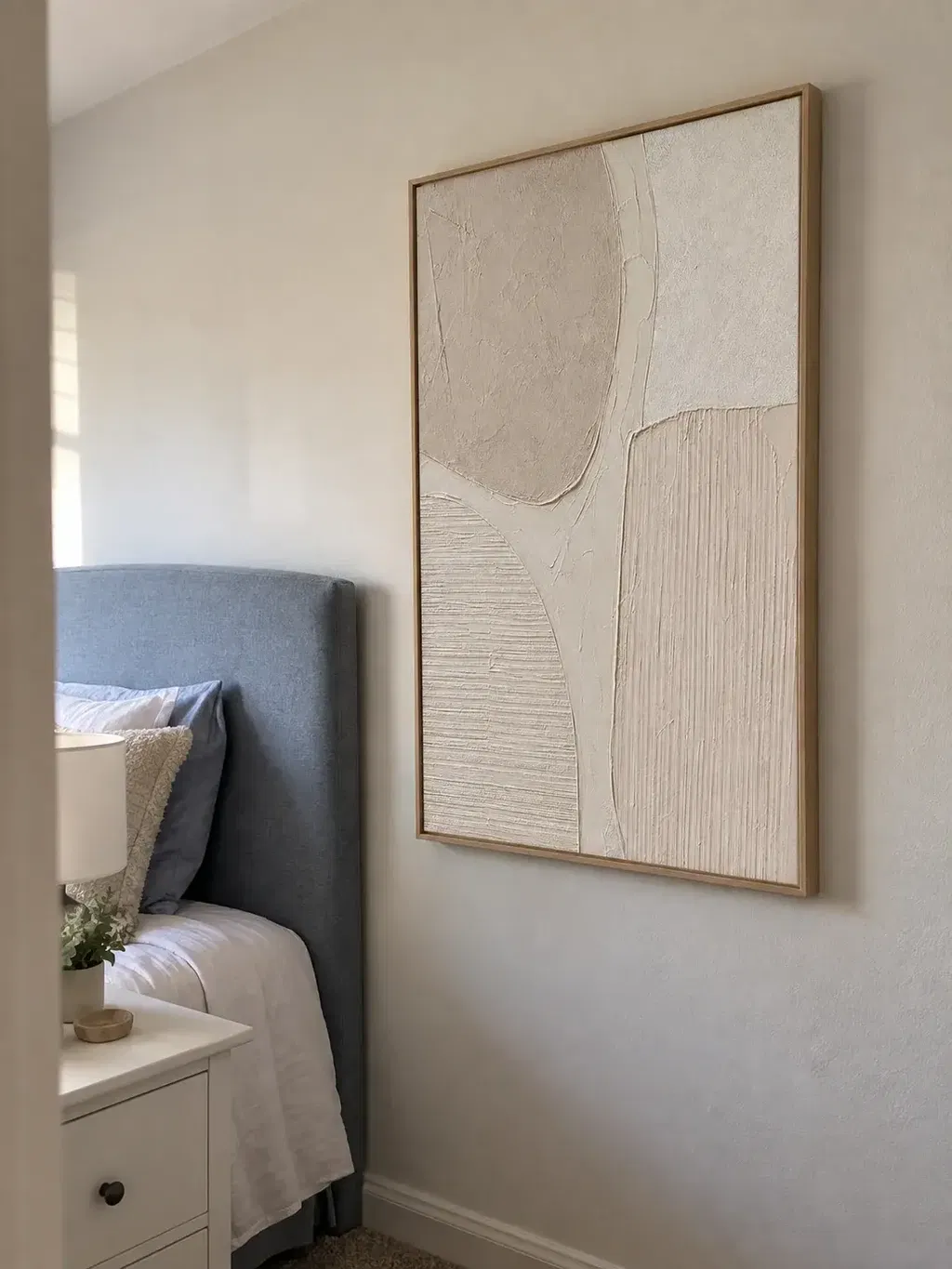
- The Pro Tip: Keep your walls smooth and neutral to create a "blank canvas," then use large-scale, heavily textured art to inject character. This allows buyers to project their own emotions onto the space without being distracted by permanent, dated finishes.
Balancing Heavily Textured Art with Minimalist Decor is essential for maintaining this professional equilibrium.

Biophilic Design: Health as a Value Driver
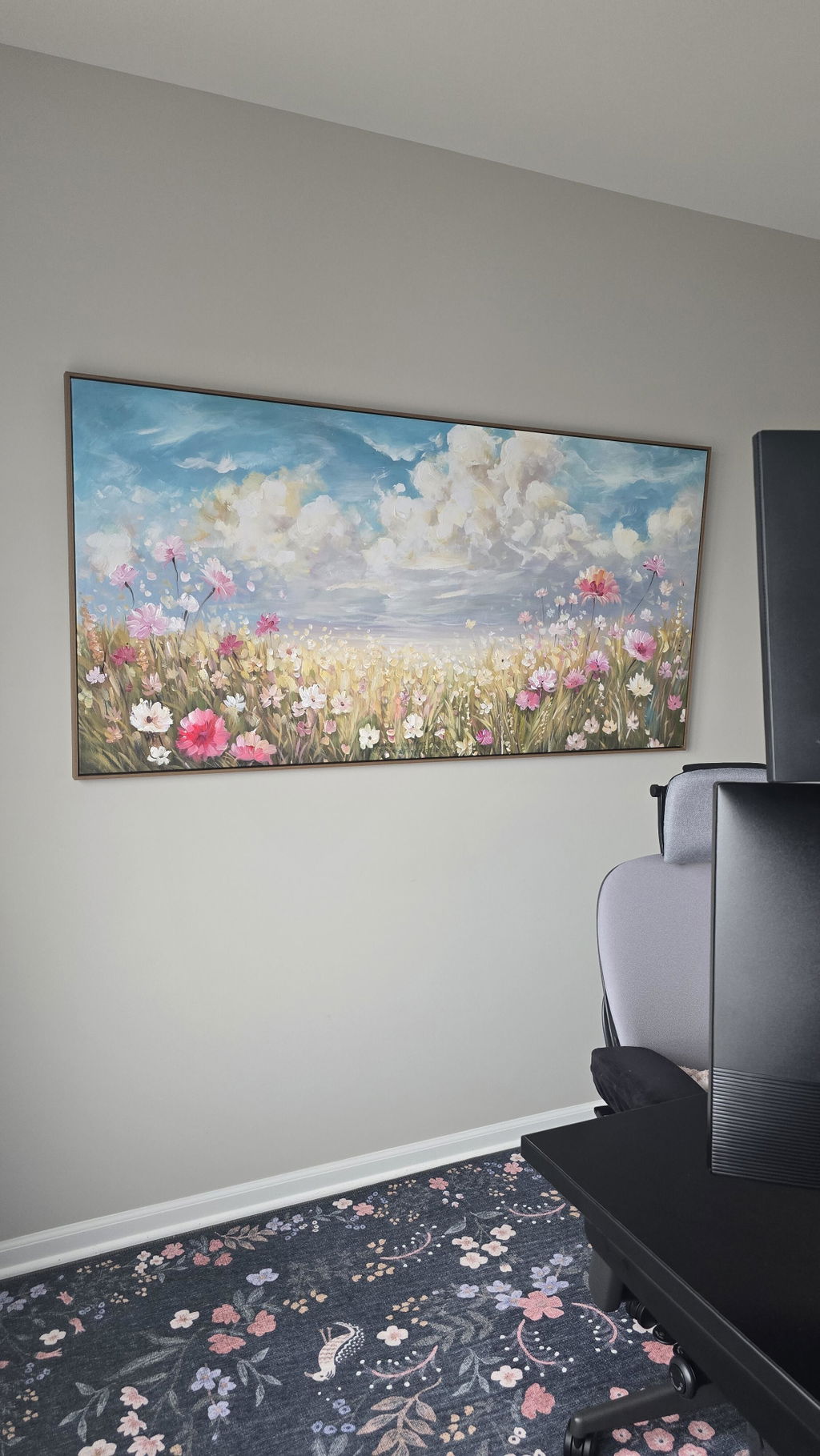
Modern buyers, particularly Gen Z and Millennials, are increasingly sensitive to the link between their environment and their mental health. Biophilic design—incorporating natural landscapes and textures—has been shown to produce the same stress-reduction effects in the brain as being outdoors (University of Central Arkansas).
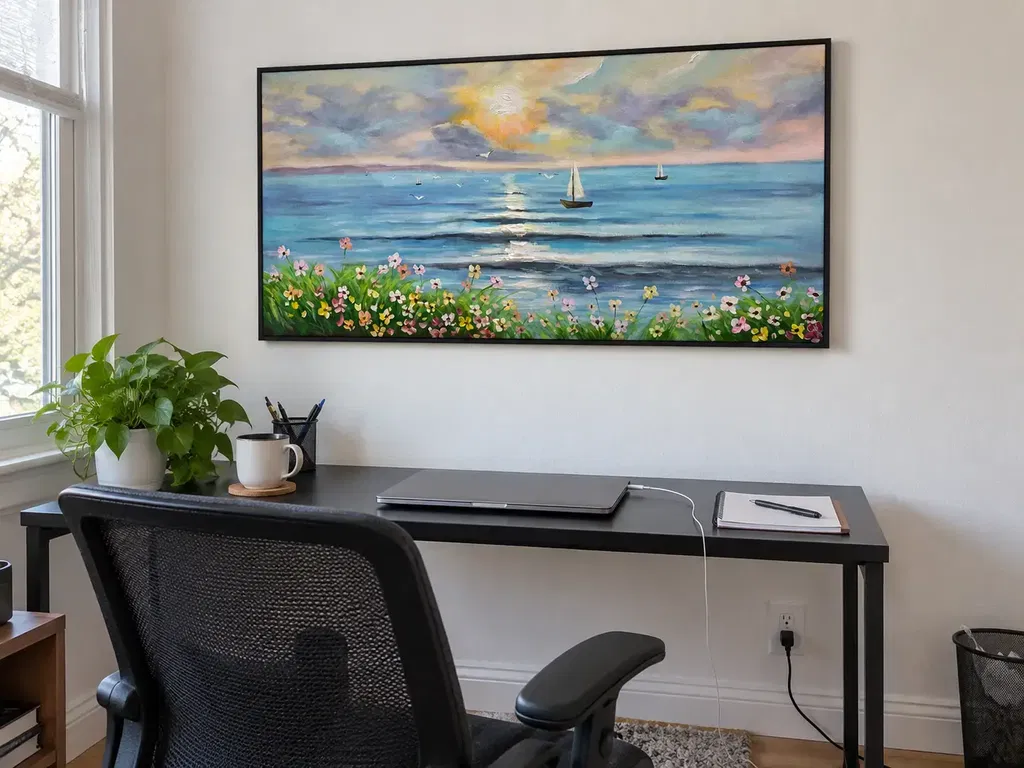
A University of Pennsylvania review noted that 73% of patients reported significant mood improvements when exposed to environmental artworks. In a residential context, a nature-themed mural or a large biophilic painting in a home office can reduce "cognitive fatigue" and burnout, a major selling point for the remote-work era.
The World Health Organization (WHO) has confirmed through over 3,000 studies that art interventions effectively alter clinical indicators for stress and mental health. By integrating these elements into a home, stagers are not just selling a room; they are selling a "wellness infrastructure."
Technical Integrity: Safety, VOCs, and Longevity
In high-end real estate, "luxury" is synonymous with "safety." One of the most significant risks in custom art is the use of toxic pigments or high-VOC (Volatile Organic Compound) solvents. The EPA warns that indoor air pollution can be more hazardous than outdoor air, and low-VOC paints are now a prerequisite for LEED and WELL building certifications.
The Myth of the "Safe" Label
Many consumers believe the ASTM D4236 label on paint tubes means the product is non-toxic. However, the EPA clarifies that this label only means the "warning labels comply with regulations," not that the pigment itself is harmless. Professional muralists and painters should prioritize:
- Water-based Acrylics: These emit significantly lower VOCs than oil paints requiring turpentine solvents (Aalto University).
- Cadmium-Free Alternatives: The International Agency for Research on Cancer (IARC) classifies cadmium as a Group 1 carcinogen (IARC). Modern "Hue" alternatives provide similar vibrancy without the health risks.
- Support Induced Discoloration (SID) Prevention: Golden Artist Colors warns that water-soluble impurities in canvas can be drawn into transparent mediums, causing yellowing. Using a high-quality gloss medium as a "seal" is a technical necessity for longevity.
Modeling Note: Indoor Air Quality (IAQ) Impact Our scenario modeling for a 500 sq. ft. room assumes the use of 100% acrylic emulsions.
Parameter Value Unit Rationale Curing Time 28 Days Standard VOC plummet period VOC Limit < 50 g/L LEED Green Building standard Humidity 55 % Optimal for film coalescence Ventilation 2 ACH Air Changes per Hour for safety Pigment Load 15-20 % Typical for high-end artist grade
Strategic Placement for Maximum ROI
To maximize the emotional ROI of hand-painted art, placement must be intentional. Curating Oil Art for Open-Plan Living requires understanding how different viewpoints affect the perception of texture.
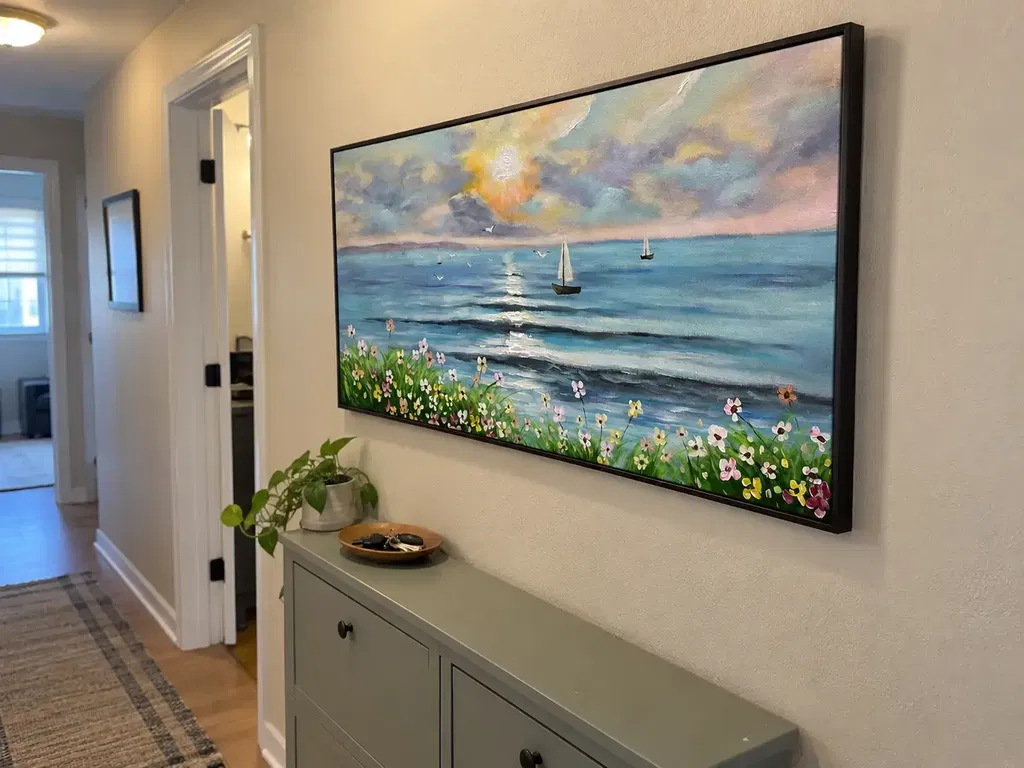
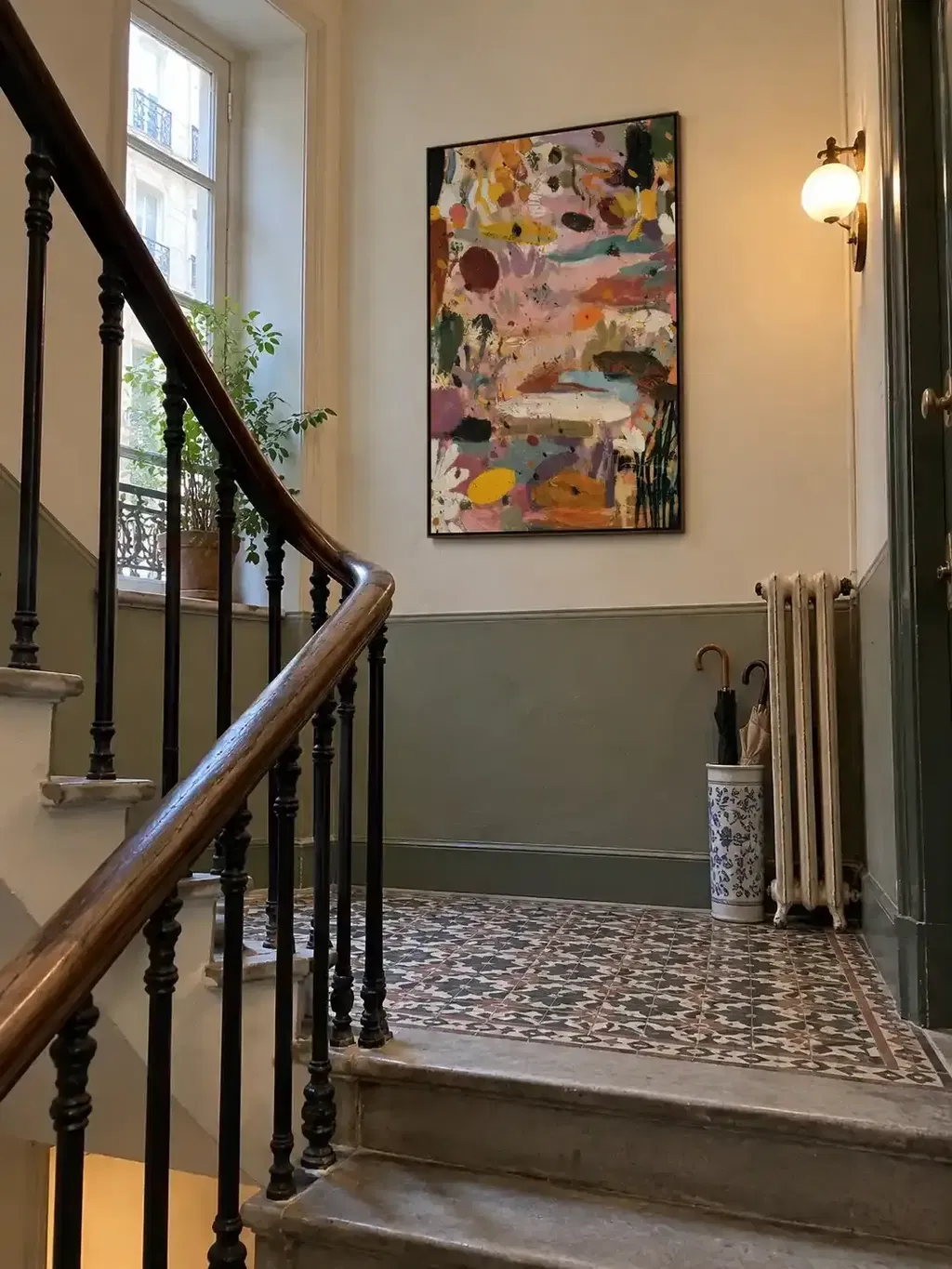
- The Entryway (The First Impression): A large, textured piece here signals "custom luxury" within the first 7 seconds of entry.
- The Dining Room (The Dwell Zone): Because buyers linger here to discuss the home, the art must withstand close-up inspection. This is where Market Perception: How Hand-Painted Art Signals Professional Success is most influential.
- The Master Suite (The Emotional Anchor): Use biophilic or "whimsical" custom pieces to create a sense of escapism. Recent trends show a 329% increase in searches for "custom framing" and a shift toward "immersive" powder room murals (NKBA 2025).
Investing in Cultural Heritage Assets
Ultimately, the decision to use hand-painted art in real estate is a move away from "disposable decor" and toward "cultural heritage assets." While a digital print will fade and lose relevance, a hand-painted mural or canvas possesses long-term aesthetic and educational value (PMC).
By choosing art that supports fair artist compensation—a value shared by 87% of modern consumers (Wharton School)—property owners also build a "Brand Ethics" narrative that appeals to socially conscious buyers.
Whether you are a developer looking to Zone with Art in Multi-Use Rentals or a homeowner seeking to Expand Boundaries in a Small Living Room, the physical presence of real paint remains the ultimate signal of an authentic, high-value home.
YMYL Disclaimer: This article is for informational purposes only and does not constitute professional real estate, financial, or medical advice. The use of certain paint pigments and solvents carries health risks; always consult a certified industrial hygienist or professional conservator when handling art materials in residential spaces. Property value increases are estimated based on market trends and are not guaranteed.
Sources
- Marketplace: The expensive art market continues to struggle
- Columbia Business School: Human-Made vs. AI Art Study
- Royal Society: Quantifying the link between art and property prices
- WHO: Scoping Review on Arts and Health
- EPA: Indoor Air Quality and Low-VOC Paints
- Golden Artist Colors: Support Induced Discoloration (SID)