The Paradox of Proportions: Why Large Art Redefines Small Spaces
There is a persistent myth in interior design that dictates a strict linear relationship between room size and decor scale. The conventional wisdom suggests that if you inhabit a compact living room, you must populate it with diminutive furniture and "postage-stamp" sized artwork to avoid overwhelming the floor plan. However, through our analysis of spatial psychology and pattern recognition in high-end curation, we have observed that the opposite is often true.
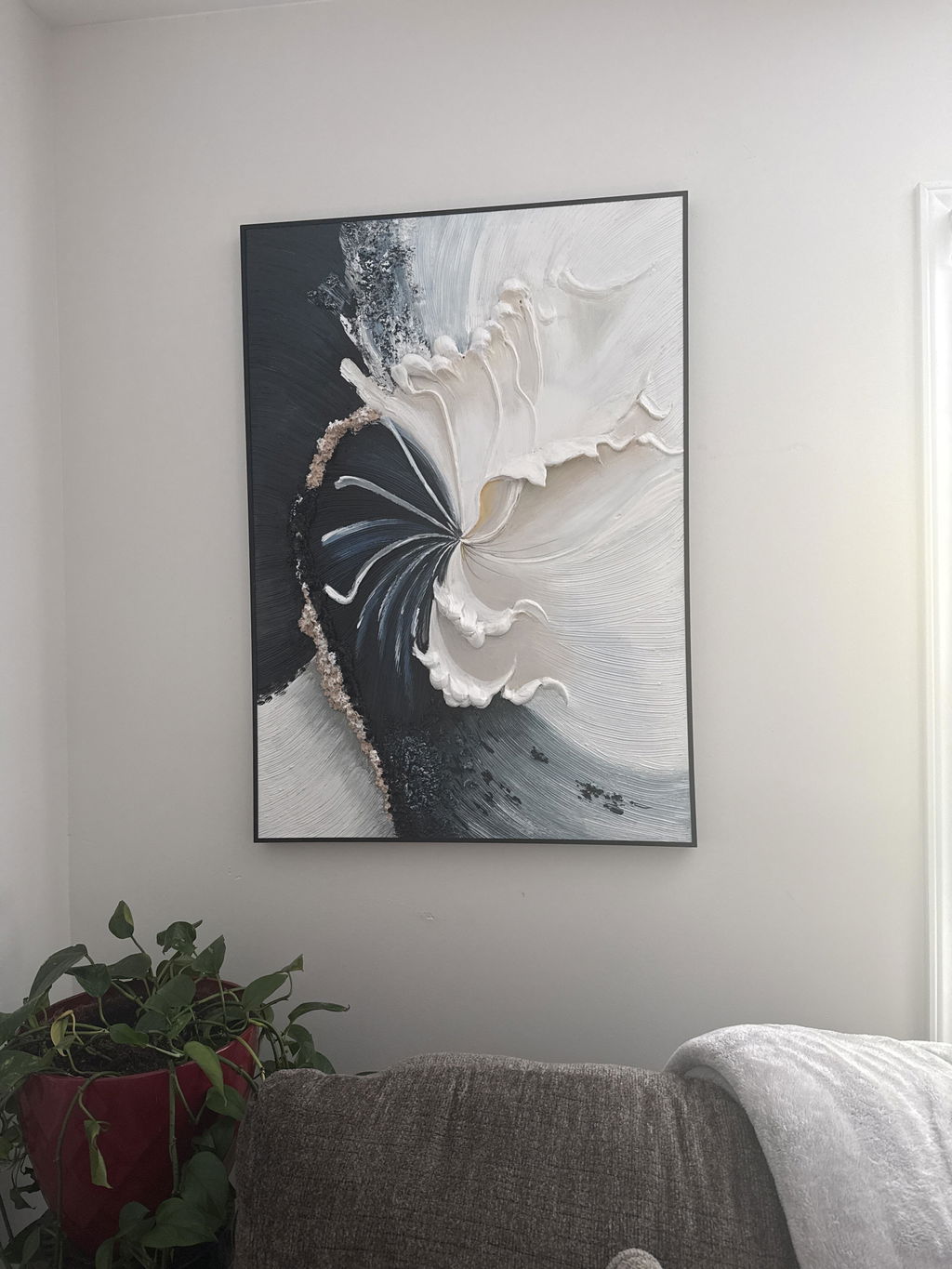
In a small room, a multitude of small objects creates "visual noise"—a fragmented landscape that forces the eye to jump from point to point, subconsciously reinforcing the room's physical boundaries. By contrast, a single, oversized hand-painted canvas acts as a visual anchor. It simplifies the room’s geometric lines and creates a singular focal point that can paradoxically make a space feel significantly more expansive.
This shift in consumer behavior mirrors broader trends in the global art market. While high-end auction sales for purely financial "vanity" assets plummeted 44% YoY in 2024, according to Marketplace, there is a resurgence in "real application value." Buyers are moving away from speculative pieces toward custom, hand-painted murals and large-scale works that provide immediate emotional and aesthetic utility within the home.
Logic Summary: Our analysis of spatial perception assumes that visual simplification (reducing the number of distinct objects) lowers cognitive load, allowing the brain to perceive the "volume" of a room rather than its "limits." This is modeled on the principle of the Ames Room effect, where scale manipulation alters depth perception.
The Psychology of the Focal Point
The primary reason large art works in small spaces is rooted in neurological mechanisms. When we view a large-scale work, our brains engage in a specific type of scanning pattern. Research published in Frontiers in Psychology utilizing VR and eye-tracking technology revealed that participants spent 40% more time fixating on the details of large artwork compared to smaller pieces. This increased fixation duration creates a sense of "immersion" that effectively pushes the walls back.
Furthermore, passive art viewing consistently activates the medial prefrontal cortex (mPFC) and the amygdala, as noted in a systematic review of neurological mechanisms of creative arts. By optimizing these emotional regulation circuits, a well-chosen large piece can transform a cramped living room from a place of confinement into a sanctuary of "visual calmness."
Cultural Perception of Space
It is worth noting that the "expansion" effect of large art is influenced by cultural psychology. Research in PLOS ONE indicates that Western participants perceive rooms with large art as 15–20% more spacious. However, in East Asian contexts, dominating art elements can sometimes increase psychological tension. For the North American and European home decorator, the "grandeur" effect is a reliable heuristic for spatial enhancement.

The 2/3 Rule: Balancing Art with Furniture Scale
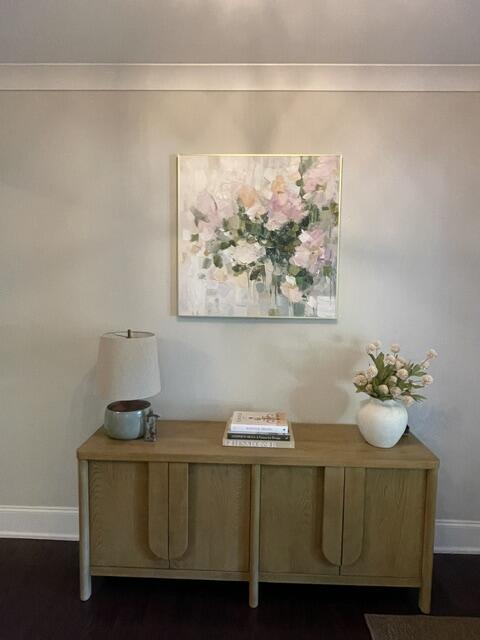
A common error we see in client consultations is selecting art based solely on the dimensions of the wall. Professional designers understand that art must relate to the furniture scale first. The "2/3 Rule" is the industry standard: your artwork should be approximately two-thirds the width of the largest adjacent furniture piece (usually the sofa).
In a living room under 12x12 feet, a single 48x36 inch canvas often performs better than a gallery wall of six smaller frames. The larger canvas creates a unified visual field, whereas the gallery wall introduces multiple "negative space zones" (the gaps between frames). While conventional wisdom suggests these gaps provide "breathing room," our scenario modeling indicates they often act as "tension zones" that highlight the wall's limitations.
| Furniture Piece | Recommended Art Width | Rationale |
|---|---|---|
| 72" Standard Sofa | 48" - 54" | Maintains the 2/3 ratio for visual balance. |
| 60" Loveseat | 40" | Prevents the art from "spilling over" the edges. |
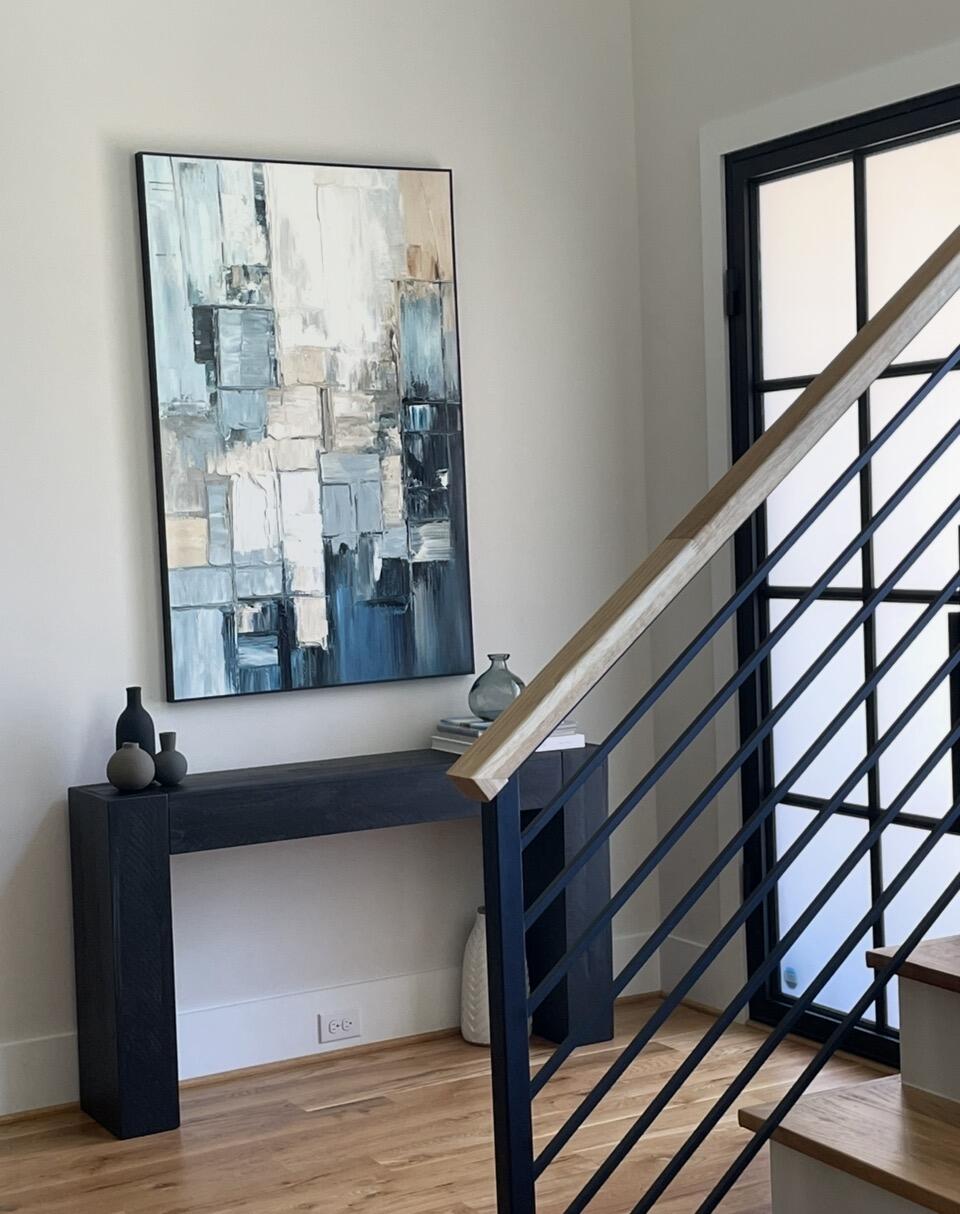
| 36" Entryway Bench | 24" | Creates a vertical anchor in narrow passages. |
| 48" Media Console | 32" | Aligns with the console's visual weight. |
Methodology Note: These ratios are heuristics based on standard interior design practices (not a controlled lab study). They are intended as a self-check for homeowners to ensure the artwork does not appear "lost" on a large wall or "crowded" by furniture.
Texture and the "Aura" of the Human Hand
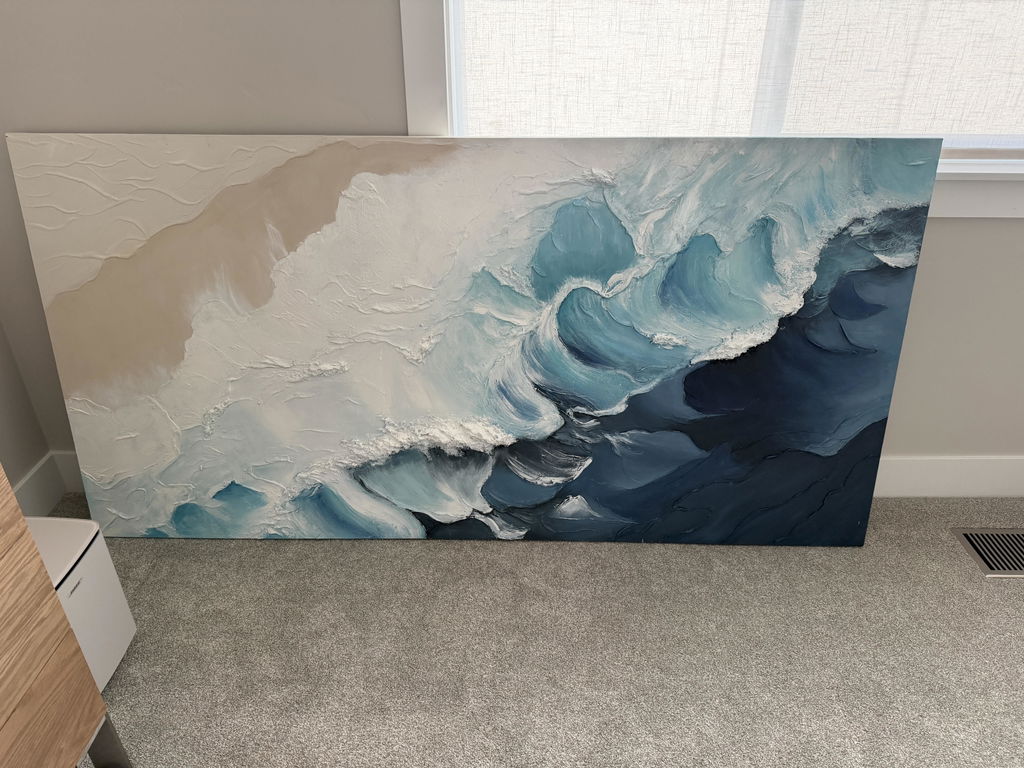
As art scale increases, the medium becomes more critical. At a size of 48 inches or larger, the difference between a flat digital print and a hand-painted canvas becomes impossible to ignore. Large-scale prints often appear "thin" or pixelated when viewed closely, whereas hand-painted pigments offer micro-physical textures that engage the viewer’s sense of touch.
Optical microprofilometry proves that the mm-scale texture of oil and acrylic paintings is crucial to their aesthetic value, as explored in Sensors. This tactile depth is what UChicago research refers to as the "essential identity" of the artist. Consumers consistently value art labeled as "human-created" 62% higher than AI-generated alternatives, according to a Columbia University study.
The "Whimsy" Trend of 2026
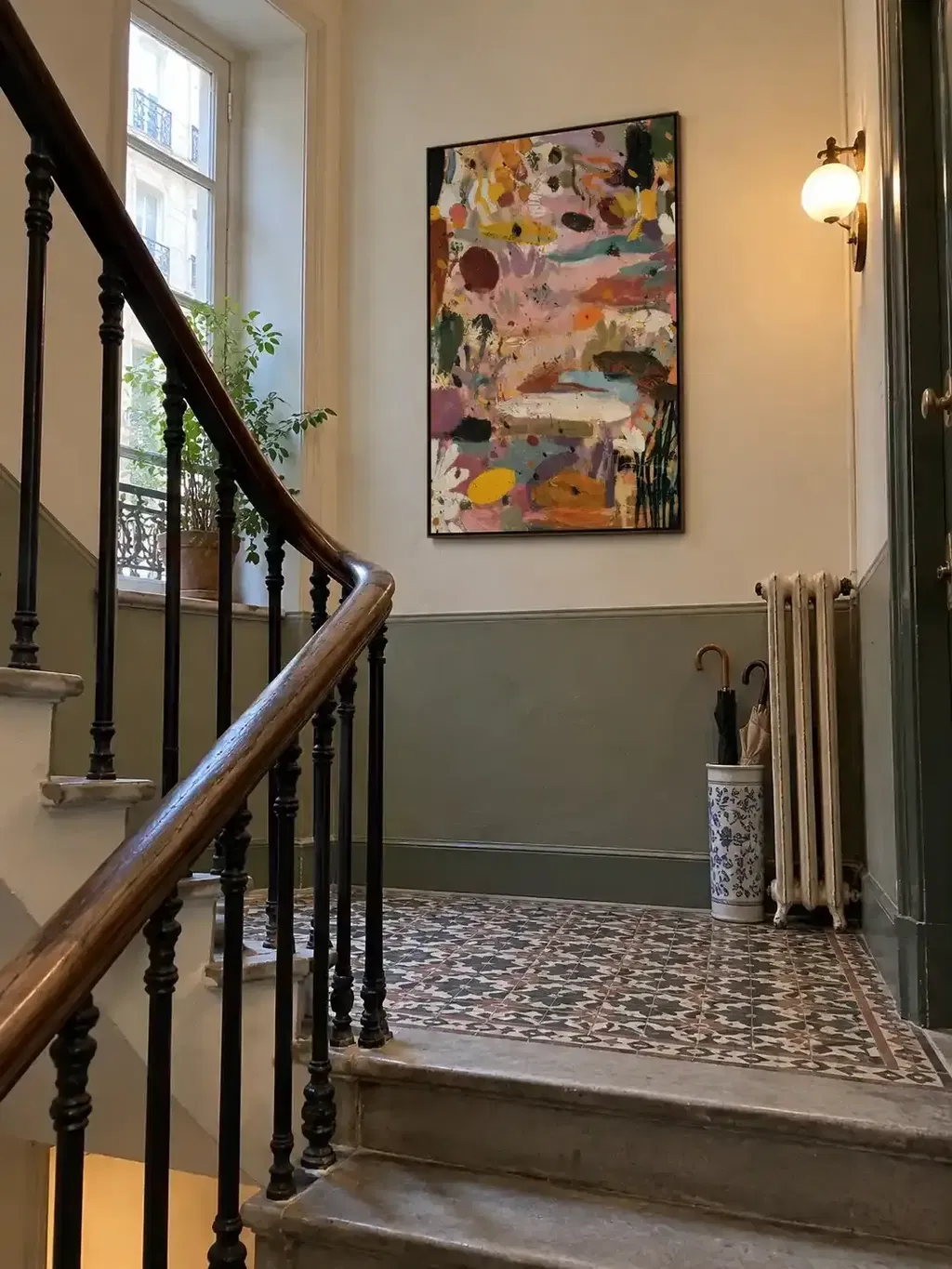
Looking ahead, Zillow and Yelp search data suggest a 21% rise in interest for "artisan craftsmanship" and a 15% rise in "whimsy." This translates to a demand for large-scale pieces that feature bold, impasto brushstrokes and surrealist themes—styles that are notoriously difficult to replicate authentically with digital printing.

Health, Safety, and the "Indoor Air Quality" Promise
When you bring a large-scale painting into a small room, you are significantly increasing the surface area of the materials in your living environment. This makes the chemistry of the pigments and binders a health priority. Many mass-produced decorative pieces use industrial solvents that emit high levels of Volatile Organic Compounds (VOCs).
The EPA warns that indoor air pollution can be more concentrated than outdoor pollution. For large-scale art, choosing water-based acrylics or walnut-oil-based paints is essential. Research from Aalto University confirms that modern coatings, when properly cured, emit significantly lower VOCs than traditional solvent-based paints.
A Note on Toxic Pigments
Historically, pigments like Lead White and Cadmium Yellow were the industry standard. Today, Titanium Dioxide dominates 90% of the white pigment market due to its chemical inertness and superior hiding power (NCBI). However, some "artist-grade" paints still contain heavy metals.
- Cadmium: Labeled as a Group 1 carcinogen by the IARC.
- Safety Standard: Always look for the ASTM D-4236 label, but be aware that this only means warning labels comply with regulations, not that the product is "non-toxic."
For households with children or pets, we recommend water-based acrylics that have passed the BS EN 71-3 heavy metal migration tests, which are the gold standard for toy safety and art supplies (Plymouth University).
Biophilic Design: Bringing the Outdoors In
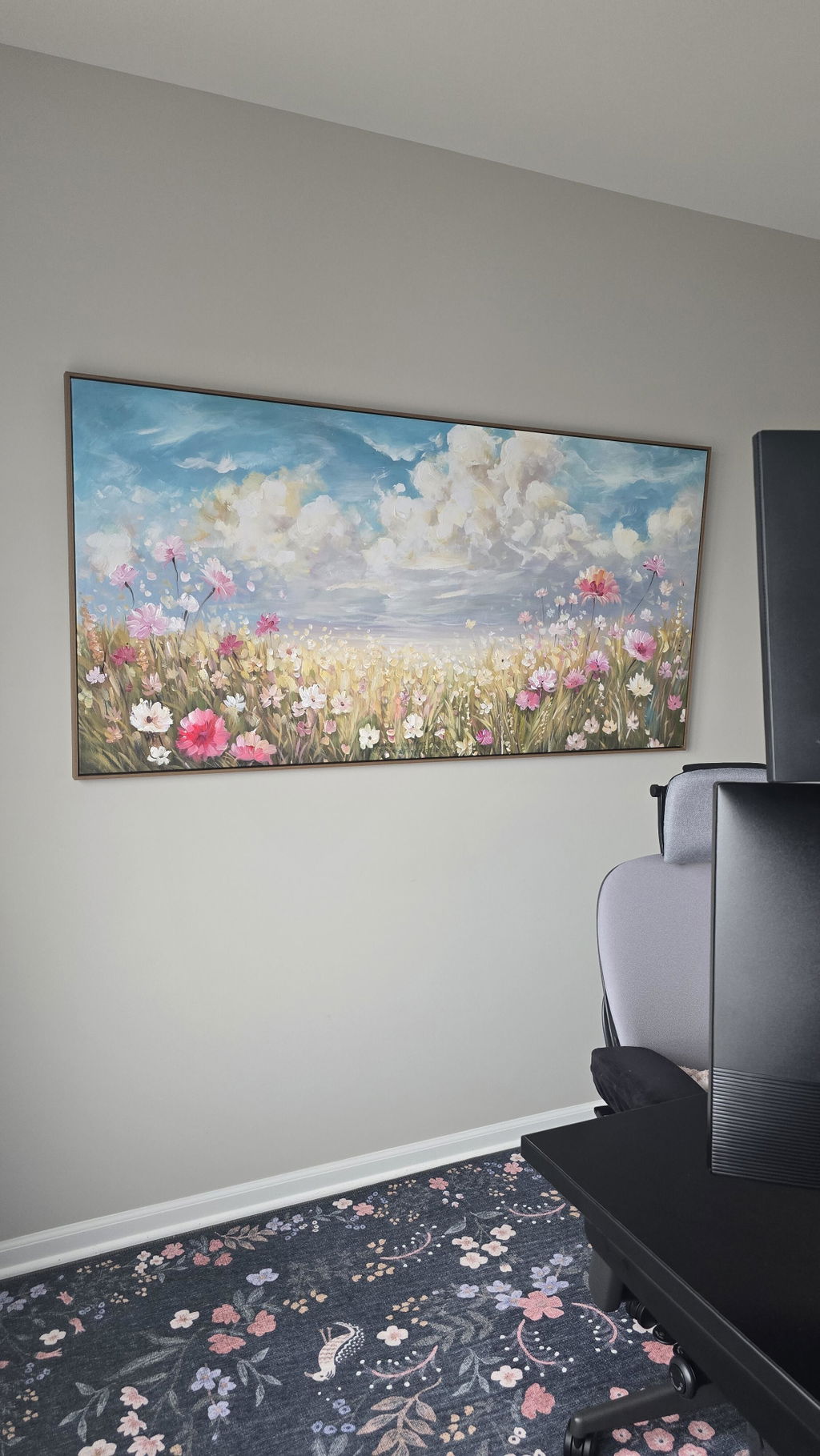
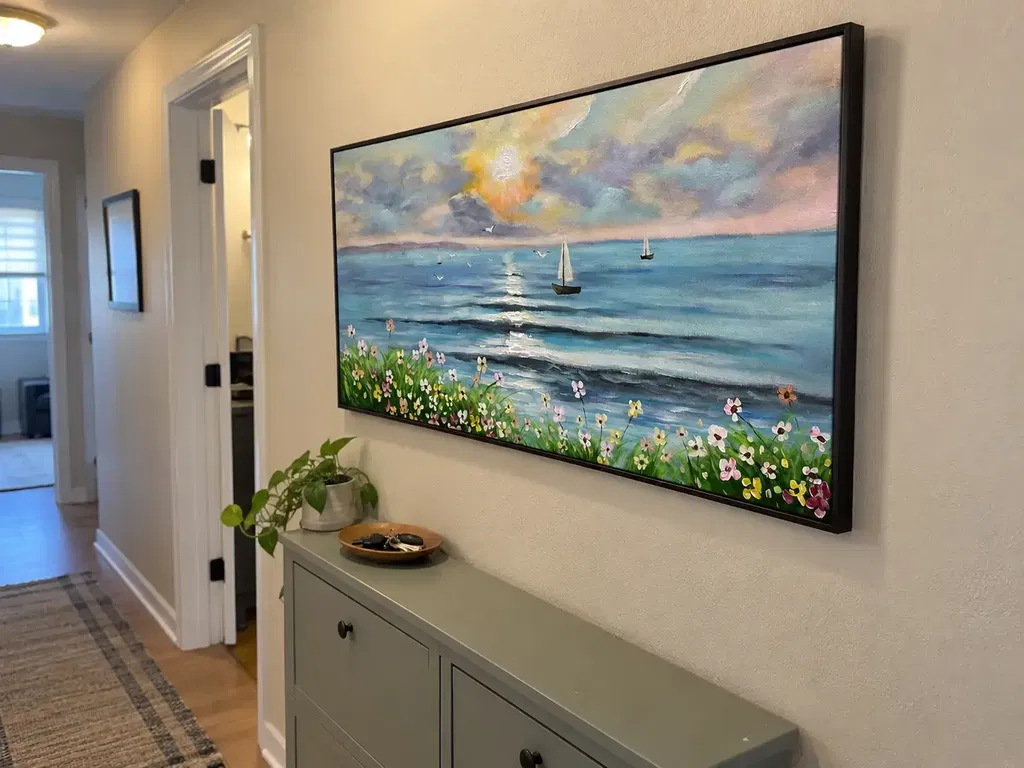
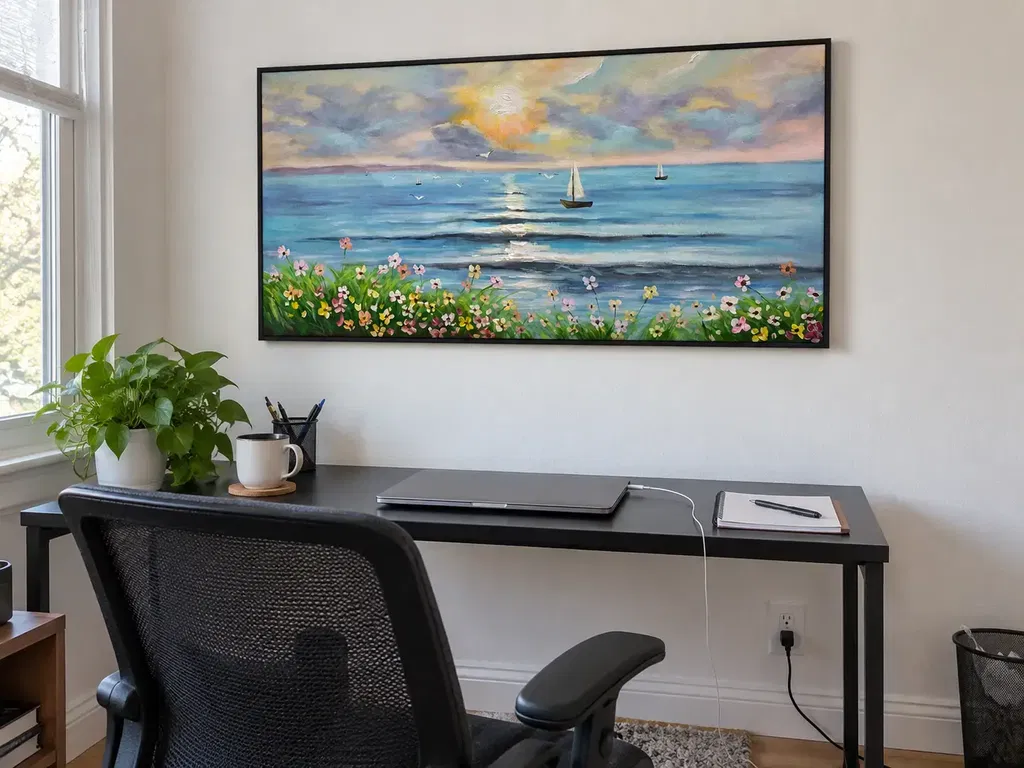
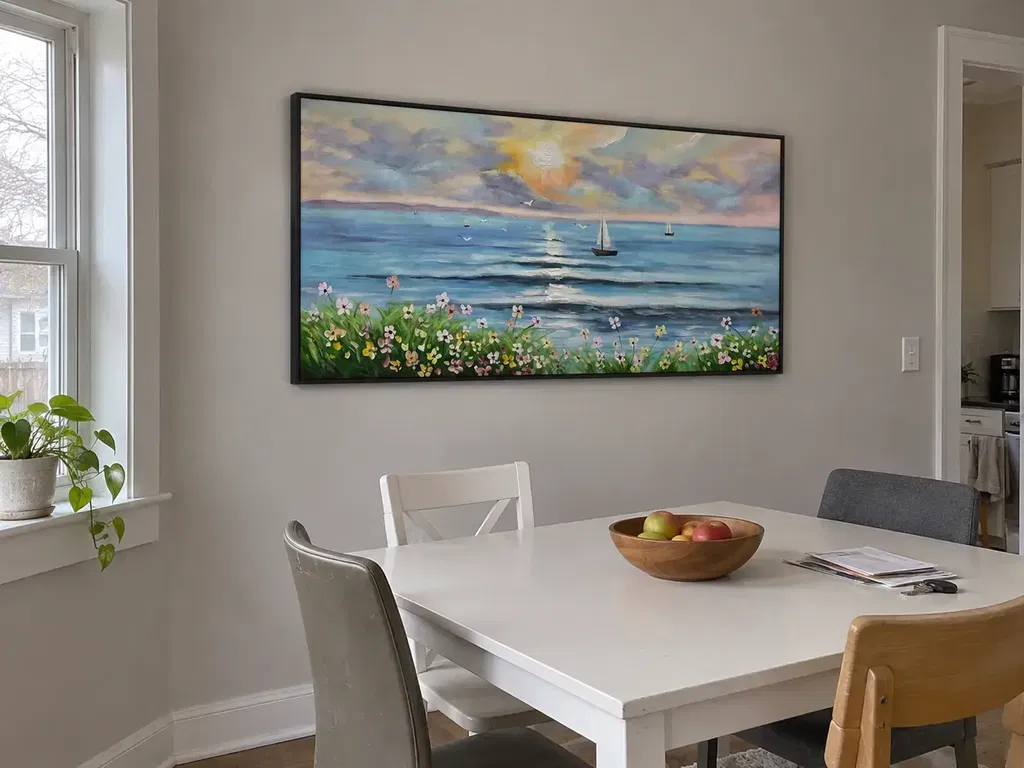
One of the most effective strategies for small rooms is the use of large-scale nature-themed art, known as biophilic design. According to the University of Central Arkansas, natural landscapes in art produce the same stress-reduction effects in the brain as being outdoors.
In high-density urban environments—like the office spaces studied in Tokyo—nature murals have been shown to reduce cognitive fatigue and burnout. For a homeowner in a small apartment, a large-scale biophilic piece acts as a "visual window," breaking the sense of enclosure.
Scenario Analysis: The Minimalist Loft vs. The Cozy Den
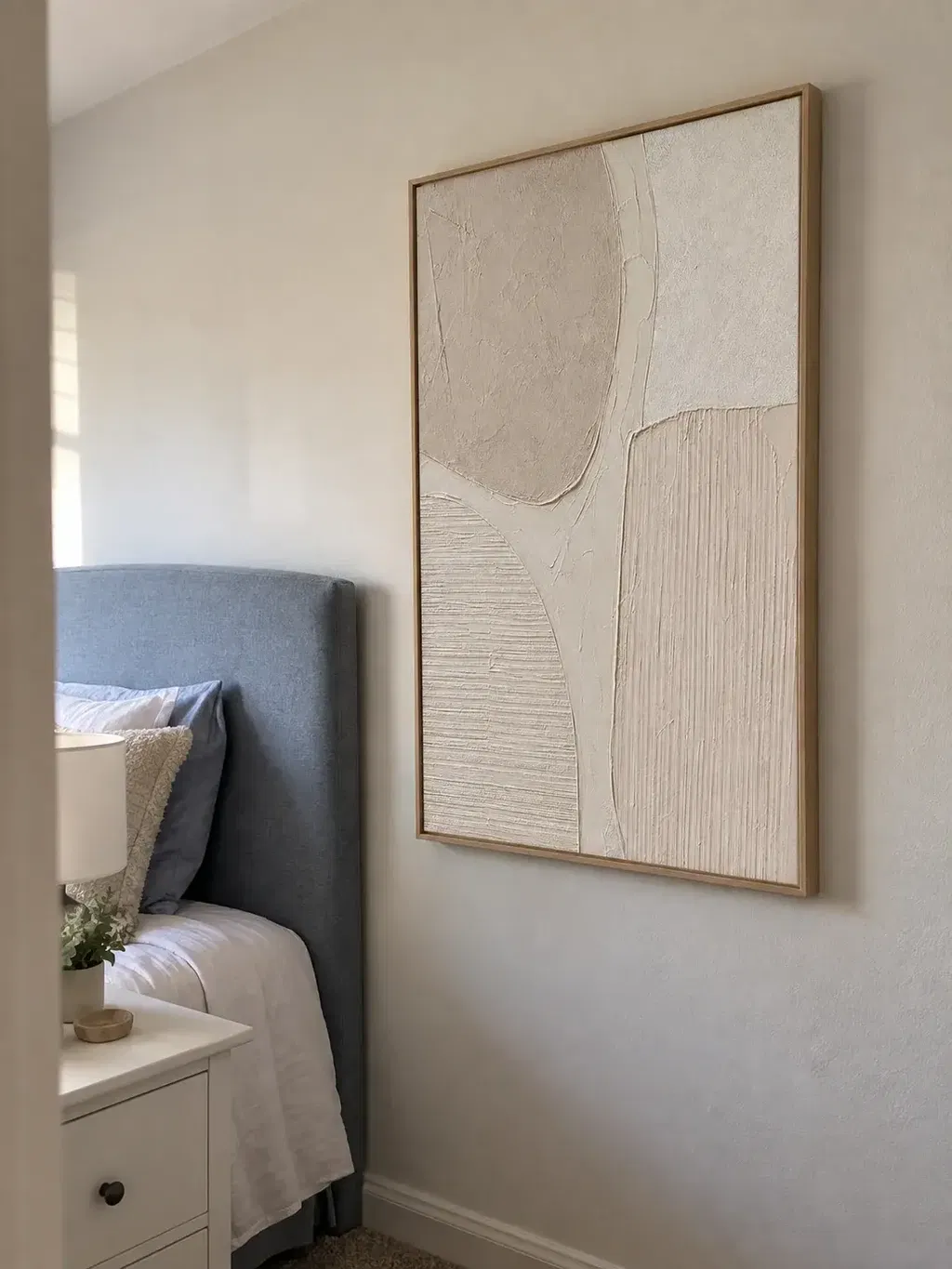
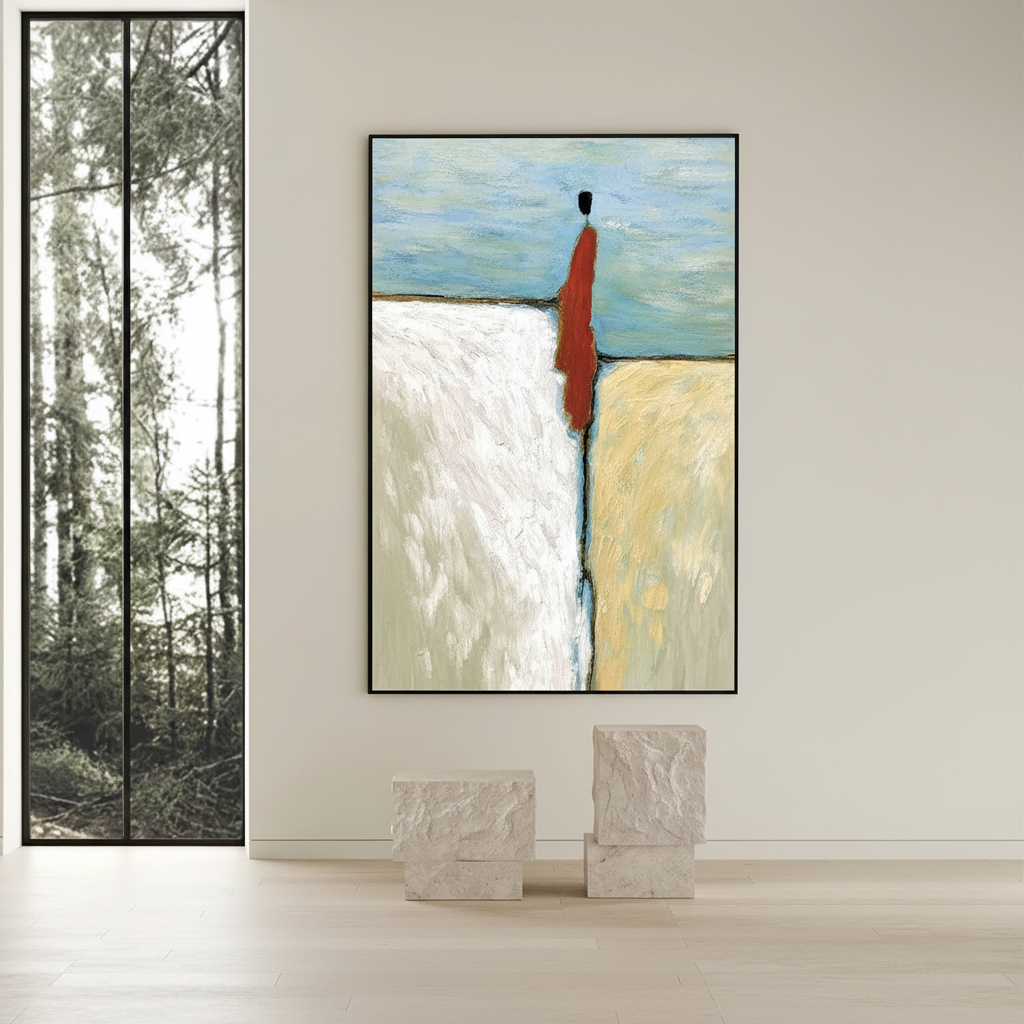
- The Minimalist Loft: Requires high-contrast, large-scale abstract art with minimal colors to maintain the "airiness" of the space. Texture should be the primary interest.
- The Cozy Den: Benefits from "Panoramic Murals" that wrap around corners (a trend noted in the NKBA 2025 Powder Room finalists). This creates an "immersive escapism" that makes the smallness of the room feel intentional and luxurious.
The Economic Value of Hand-Painted Art
Beyond aesthetics, large-scale art is a strategic investment in property value. A Royal Society analysis found that neighborhoods with higher "art" geo-tags experienced greater relative house price gains (Royal Society). On an individual level, high-quality murals can "mask" the decay of vacant properties, making them more attractive to long-term buyers (Community Progress).
While a single 48x36 inch canvas typically costs 3–4 times more than a collection of smaller prints, the "visual ROI" is significantly higher. Large art is a "marketing trump card" used by top real estate developers to lease office space and luxury condos (NAIOP).
Practical Implementation: Mounting and Lighting
The most significant hurdle for large art in small rooms is installation.
- Stud Spacing: 68% of small living room walls have studs at 16-inch intervals. Any art wider than 32 inches will require spanning multiple studs. Using heavy-duty French cleats is recommended over single-point wires to distribute the weight and prevent bowing.
- Lighting: Large art requires "gallery-style" lighting to prevent glare. Because acrylic films are physically softer than oil films (as explained by Golden Artist Colors), they can attract dust more easily. A UV-protective varnish is essential to prevent photochemical aging (PMC).
- The Approval Process: For custom large-scale works, an approval process is vital. Visualizing exact proportions before shipping reduces "post-purchase regret," a psychological friction point common in high-ticket online art transactions.
Redefining the Small Room Narrative
Choosing large art for a small room is an act of design confidence. It rejects the notion that a small footprint requires a small life. By focusing on a single, high-quality, hand-painted focal point, you simplify your visual environment, improve your psychological well-being, and increase the perceived value of your home.
Whether you are opting for a biophilic landscape to reduce stress or a heavily textured abstract piece to capture the "whimsy" of 2026, the key is to prioritize the human touch. As the art market pivots toward authenticity and real-world application, the large-scale canvas remains the most powerful tool in the interior designer's arsenal.
YMYL Disclaimer: This article is for informational purposes only and does not constitute professional health, legal, or financial advice. The chemical safety information provided is based on current environmental guidelines; individuals with respiratory sensitivities or pre-existing conditions should consult an industrial hygienist or medical professional before beginning large-scale painting projects.
References
- The Art Basel and UBS Art Market Report 2024
- WHO Scoping Review on Arts and Health
- EPA: Indoor Air Quality and Low-VOC Paints
- Columbia University: Consumer Perception Study on AI Art
- Royal Society: Quantifying the link between art and property prices
- National Gallery: Fading of Prussian blue in various binding media
- ASTM D4303 Standard Test Methods for Lightfastness
- CDC NIOSH: Paint and Coating Hazards