Curating Oil Art for Open-Plan Living: The Science of Multi-Viewpoint Curation
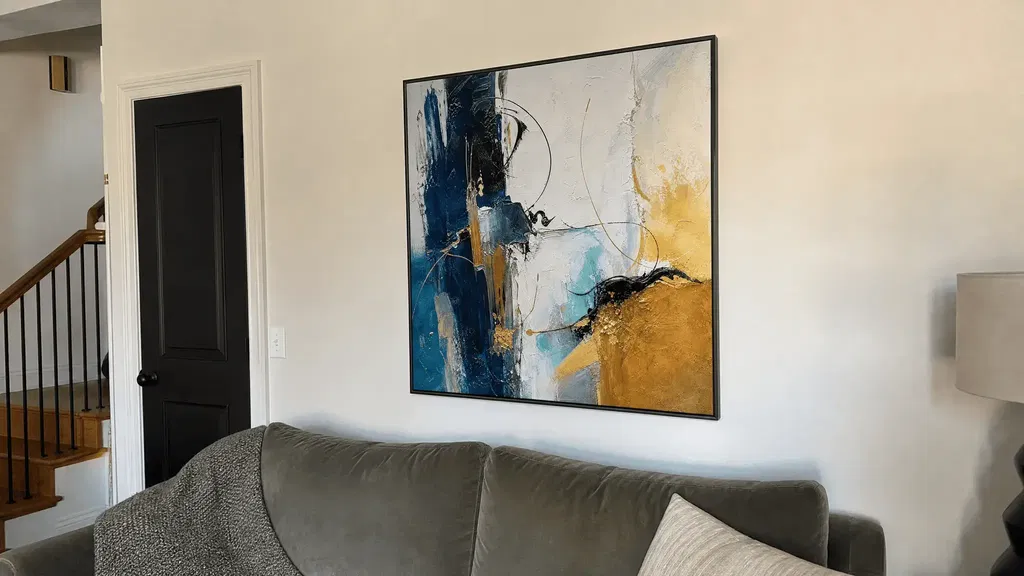
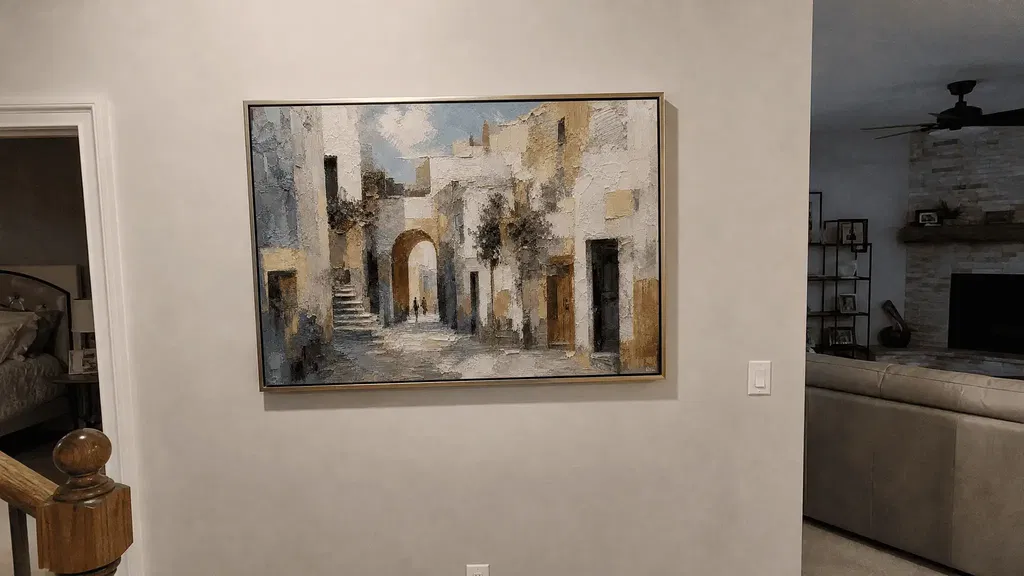
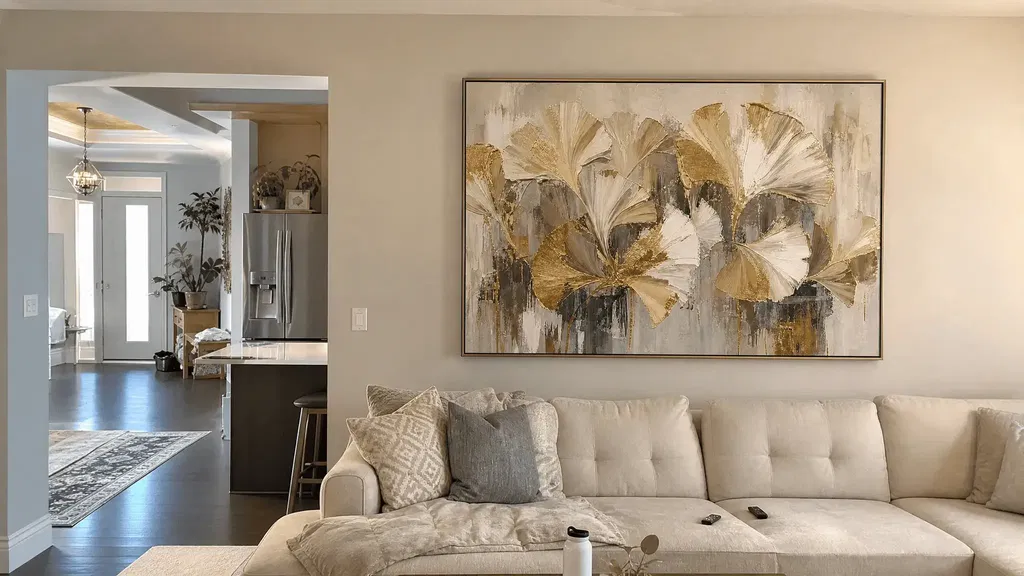
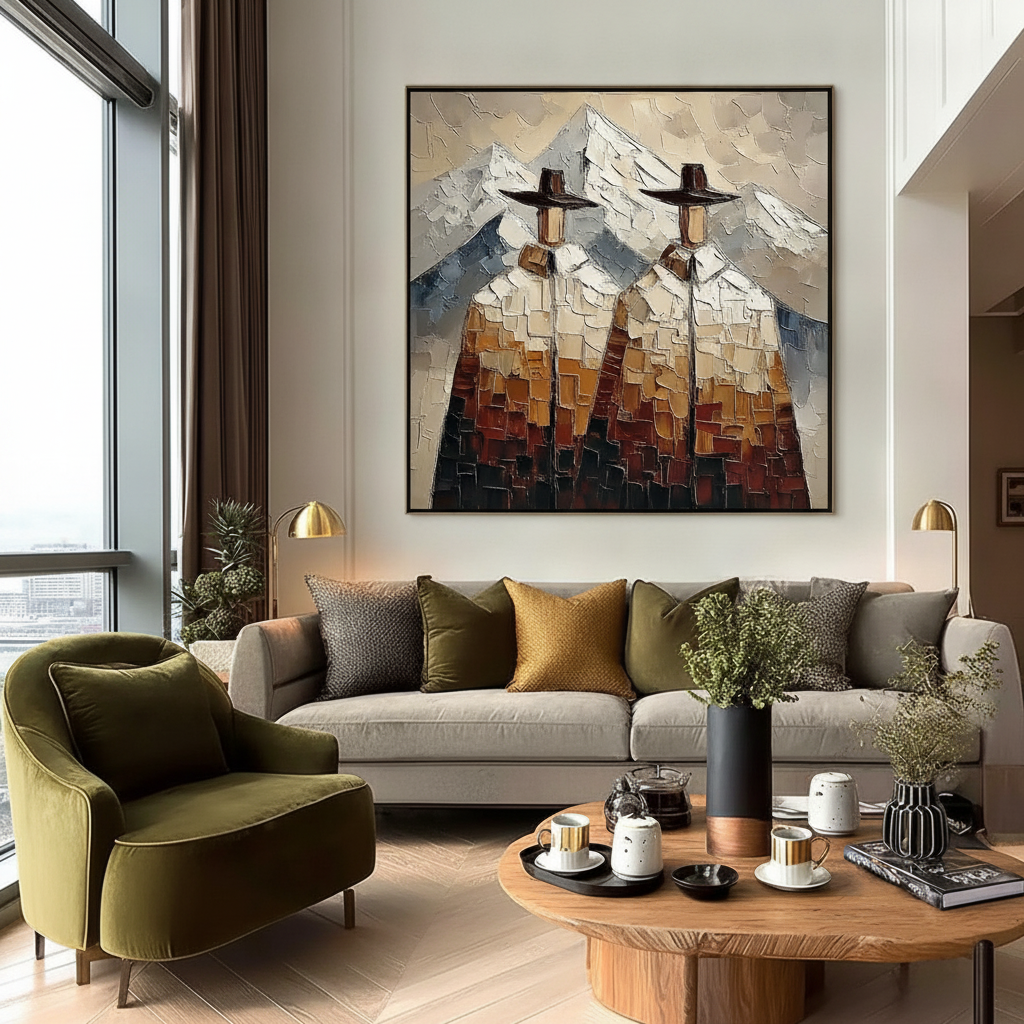
The architectural shift toward open-plan living has fundamentally changed how we interact with art. In a traditional "closed" room, a painting has a single primary audience and a predictable light source. In a modern expansive social zone—where the kitchen, dining, and living areas merge—an oil painting must perform from dozens of different angles, distances, and lighting conditions.
This transition occurs at a time when the global art market is undergoing a structural correction. According to Marketplace.org, sales of high-end auction pieces (over $10 million) plummeted 44% year-over-year in 2024. This retreat from "vanity assets" marks a return to real application value. Homeowners and interior designers are increasingly prioritizing "performative authenticity"—the tangible, textured presence of hand-painted work over mass-produced digital prints.
However, placing a high-visibility oil painting in a multi-functional space introduces functional and emotional risks. Will the texture look "flat" from the kitchen island? Will the afternoon sun turn the canvas into a reflective white-out zone? This guide breaks down the technical strategies for curating oil art in high-visibility residential zones, ensuring your investment maintains its soul from every viewpoint.

The Science of Sightlines: The 10:3 Rule and Parallax Texture
In an open-plan layout, art readability is not a static metric; it is a function of distance. We often observe a "compositional collapse" when a piece looks stunning from across the room but loses its narrative when viewed up close (or vice versa). To manage this, we utilize a heuristic known as the 10:3 Rule.
The 10:3 Readability Heuristic
A successful oil painting for a shared space must possess two distinct layers of data:
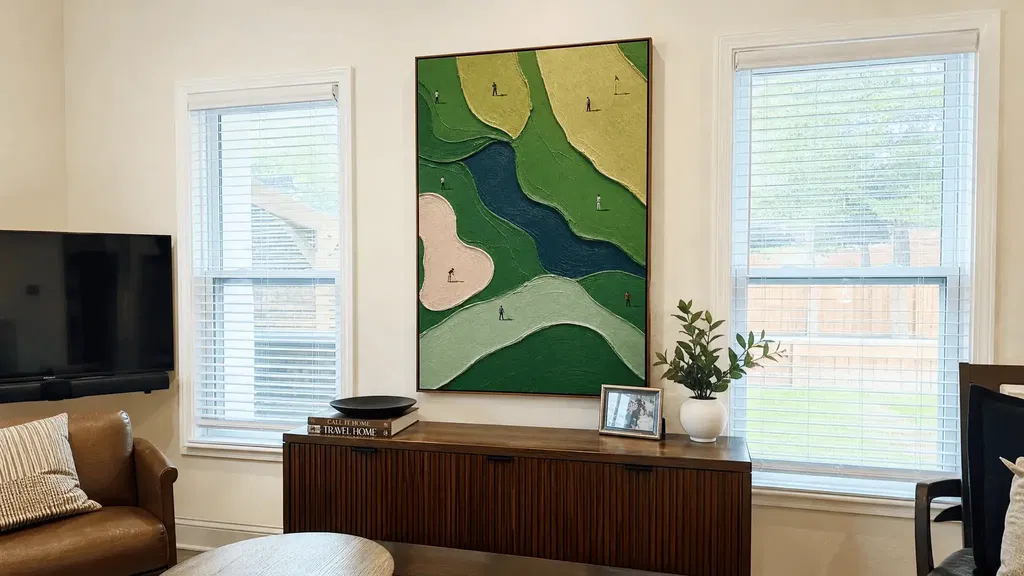
- The Macro Composition (10 Feet): From the kitchen or entry flow, the "big shapes" and primary color blocks must establish the room's mood and zone the space.
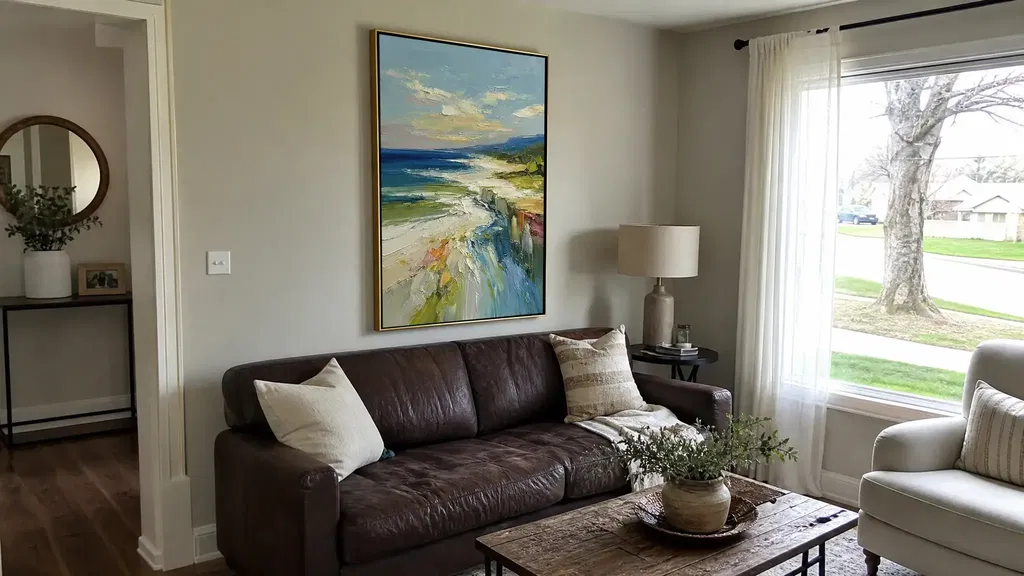
- The Micro Texture (3 Feet): When a guest is seated on a sofa or walking past the canvas, the physical brushstrokes—the impasto peaks and palette knife ridges—must provide a secondary "reward" of detail.
Modeling the 10:3 Readability Heuristic
Parameter Macro Layer (Flow) Micro Layer (Engagement) Rationale Viewing Distance ~10–12 Feet ~2–3 Feet Standard social vs. intimate distance Visual Element Primary Color Fields Impasto Texture / Glazing Cognitive recognition vs. tactile interest Design Goal Spatial Zoning Emotional Resonance Based on UPenn Neuroaesthetics Research Common Failure Busy, small-scale details Flat, printed surfaces Causes "visual noise" or "perceived cheapness" Neural Response mPFC Activation Amygdala Regulation Optimizes emotional regulation circuits
The Parallax Texture Effect
One of the most profound advantages of hand-painted oil art is what practitioners call the Parallax Texture Effect. Unlike a flat print, heavy impasto strokes cast minute shadows that shift as the viewer moves through the room. As you walk from the dining table to the lounge, the painting’s perceived depth and color saturation actually change because the light hits the "peaks" of the paint at different angles.
This phenomenon is why Columbia University research found that consumers value art labeled "human-created" 62% higher than AI-generated prints. The human brain craves the "essential identity" found in physical materials—a concept further supported by UChicago studies showing that digital replicas lack the "soul" perceived in original canvases.
Managing Light: The 45-Degree Glare Test
Open-plan spaces often feature floor-to-ceiling windows or complex recessed lighting. For oil paintings, which are naturally reflective due to their binder, light is both a tool and a threat.
The 45-Degree Glare Test
A common mistake in high-visibility zones is placing art directly opposite a primary window. This often results in a "white-out zone," where the glare from the varnish obliterates the painting's colors. To prevent this, designers use the 45-Degree Glare Test:
- Identify the primary seated viewpoint (e.g., the sofa).
- Trace the path of the strongest light source (the window).
- If the light hits the canvas at an acute angle (less than 45 degrees) relative to the viewer, the painting will likely suffer from significant glare.
Satin vs. High-Gloss: The Sheen Dilemma
While high-gloss varnishes can make colors "pop," they are typically avoided in open-plan areas with multiple light sources. A satin varnish is the professional preference. It preserves the "wet" look of fresh oil—maintaining the rich saturation of dark tones—while scattering light just enough to minimize "hot spots" from ceiling LEDs.
According to Daler-Rowney’s technical guides, matte varnishes can reduce color intensity by 15–30% due to light-scattering matting agents. For homeowners who prioritize color accuracy but need glare management, a custom-mixed "semi-satin" finish is often the optimal compromise.

The Functional Risks: The "Kitchen Conflict"
While open-plan living is aesthetically pleasing, it creates a hostile environment for oil art. The "Kitchen Conflict" refers to the trade-off between the desire for high-end decor and the reality of cooking grease, humidity, and temperature fluctuations.
Degradation and Cleaning Costs
In an integrated kitchen-living space, airborne grease and smoke can settle on an oil painting's surface. Data from professional conservationists at Brushstroke Ann suggests that oil paintings in these environments can begin to show signs of surface yellowing or "tackiness" within 2–3 years. Professional cleaning to remove these layers can cost between $500 and $1,500, and repeated interventions can eventually damage the original paint or varnish layers.
Support Induced Discoloration (SID)
A more insidious threat is Support Induced Discoloration (SID). As highlighted in Golden Artist Colors' technical bulletins, water-soluble impurities in common cotton or linen canvases can be drawn into the paint layer during the drying process or during periods of high humidity. This is particularly prevalent in open-plan homes where the humidity fluctuates due to cooking or natural ventilation.
To mitigate these risks, we recommend:
- Distance: Keep original oil art at least 12–15 feet away from active cooking surfaces.
- Climate Control: Maintaining a 40–50% relative humidity range is vital for long-term preservation, though this can increase energy bills in expansive spaces by 15–25% (Brushstroke Ann).
- Protective Glazing: For ultra-high-value pieces, consider museum-grade, non-reflective glass that protects against both UV rays and airborne contaminants.
Material Safety: Beyond the "Odorless" Myth
For homeowners, especially those with children or pets, the chemical composition of their art is a health consideration. The "performative authenticity" of oil art should not come at the cost of indoor air quality (IAQ).
The VOC and Heavy Metal Reality
The EPA warns that indoor air pollution can be more concentrated than outdoor pollution. While many modern paints are "low-VOC," the pigments themselves often contain heavy metals.
- Cadmium: The International Agency for Research on Cancer (IARC) classifies cadmium compounds as Group 1 carcinogens. Even "insoluble" cadmium yellow can release free ions in slightly acidic environments (Australian Industrial Chemicals Evaluation).
- Solvents: Princeton University’s EHS guidelines warn that "odorless" mineral spirits are not non-toxic; they simply lack the warning scent. Chronic inhalation can lead to central nervous system issues.
At MontCarta, we prioritize health-conscious curation. We focus on artists who utilize walnut oil—which perfectly replaces toxic VOC-emitting turpentine—and hemp or flax canvases that consume significantly less water than traditional cotton (Cincinnati Art Museum).
The Economic Case: Art as Property Value Catalyst
Beyond personal enjoyment, strategic art placement in open-plan spaces is a proven driver of real estate value. For developers and homeowners looking to sell, a well-curated "mural-scale" piece acts as a permanent physical billboard for the property’s luxury status.
Regression Data on Art and Property
A Royal Society CAR model analysis found a direct correlation between high "art" geo-tags and relative house price gains. In Chicago, public art projects like Millennium Park drove an estimated $1.4 billion in real estate-related growth (NC Realtors).
In the residential sector, this translates to the "Flipping Hack": using a large-scale hand-painted mural to mask architectural blight or "boring" walls in vacant properties, instantly making them more attractive to long-term buyers (Community Progress).
Logic Summary: The ROI of Custom Murals
- Zillow Search Trends: Mentions of "artisan craftsmanship" rose 21% in 2025-2026 (PA Realtors).
- Commercial Impact: Large murals are the lowest-cost physical foot traffic generators for urban business districts (University of Cincinnati).
- Social Value: Every $1 invested in the arts yields a 7:1 ROI in local economic activity (Americans for the Arts).

Ethical Curation: Supporting the "Human" in Art
As AI-generated art floods the market, the value of the "artist's hand" has become a social and ethical differentiator. According to a Wharton School survey, 87% of consumers believe artists should receive fair compensation when their style is utilized or emulated.
However, the freelance creative workforce remains vulnerable. A 2024 NYC Comptroller report highlighted that despite the recovery of museums, individual artists at the bottom of the industry face severe financial instability. Furthermore, women still face a severe gender pay gap in the arts, comprising only 40% of gallery-represented artists (NMWA).
Choosing hand-painted art is an act of ESG (Environmental, Social, and Governance) responsibility. By ensuring fair trade pay for painters, collectors protect local jobs and sustain the "invisible labor" that goes into every inch of brushstroke texture—a human effort that cannot be compressed by an algorithm.
The Definitive Multi-Viewpoint Checklist
Before commissioning or purchasing a large-scale oil painting for an open-plan space, use this final checklist to ensure "decision safety":
- The 10:3 Validation: Stand 10 feet away. Does the macro composition ground the room? Stand 3 feet away. Is there enough impasto texture to engage the eye?
- The 45-Degree Light Audit: Check your primary seating. Will the afternoon sun create a "white-out" zone? If so, consider a satin varnish or shifting the placement by 15 degrees.
- The Kitchen Buffer: Is the painting at least 12 feet from the stove? If not, do you have a plan for professional cleaning every 3 years?
- The "Essential Identity" Check: Does the piece show the biochemical crystallization of human attention? (i.e., Can you see the unique "top-down" visual selection of the artist's brain?)
- Certification & Safety: Does the paint meet ASTM D-4236 labeling standards? If intended for a nursery or clinic, has it passed the EN 71-3 heavy metal migration test?
By treating art curation as a blend of spatial science and emotional storytelling, you transform a simple wall into a high-performance anchor for the modern home. In an era of digital saturation, the physical relief of oil paint remains the ultimate luxury—a tactile reminder of human presence in a multi-viewpoint world.
Disclaimer: This article is for informational purposes only and does not constitute professional health, legal, or financial advice. Art conservation and installation requirements vary based on specific environmental conditions and material compositions. Always consult with a professional conservator or structural engineer for large-scale installations.
Sources
- Marketplace: The Expensive Art Market Struggles
- Columbia Business School: Human-Made vs. AI Art Perception
- WHO: Scoping Review on Arts and Health
- Royal Society: Quantifying Art and Property Prices
- EPA: Indoor Air Quality and Low-VOC Paints
- IARC: Cadmium and Cadmium Compounds
- Americans for the Arts: Economic Prosperity Report
- Daler-Rowney: How to Varnish Paintings