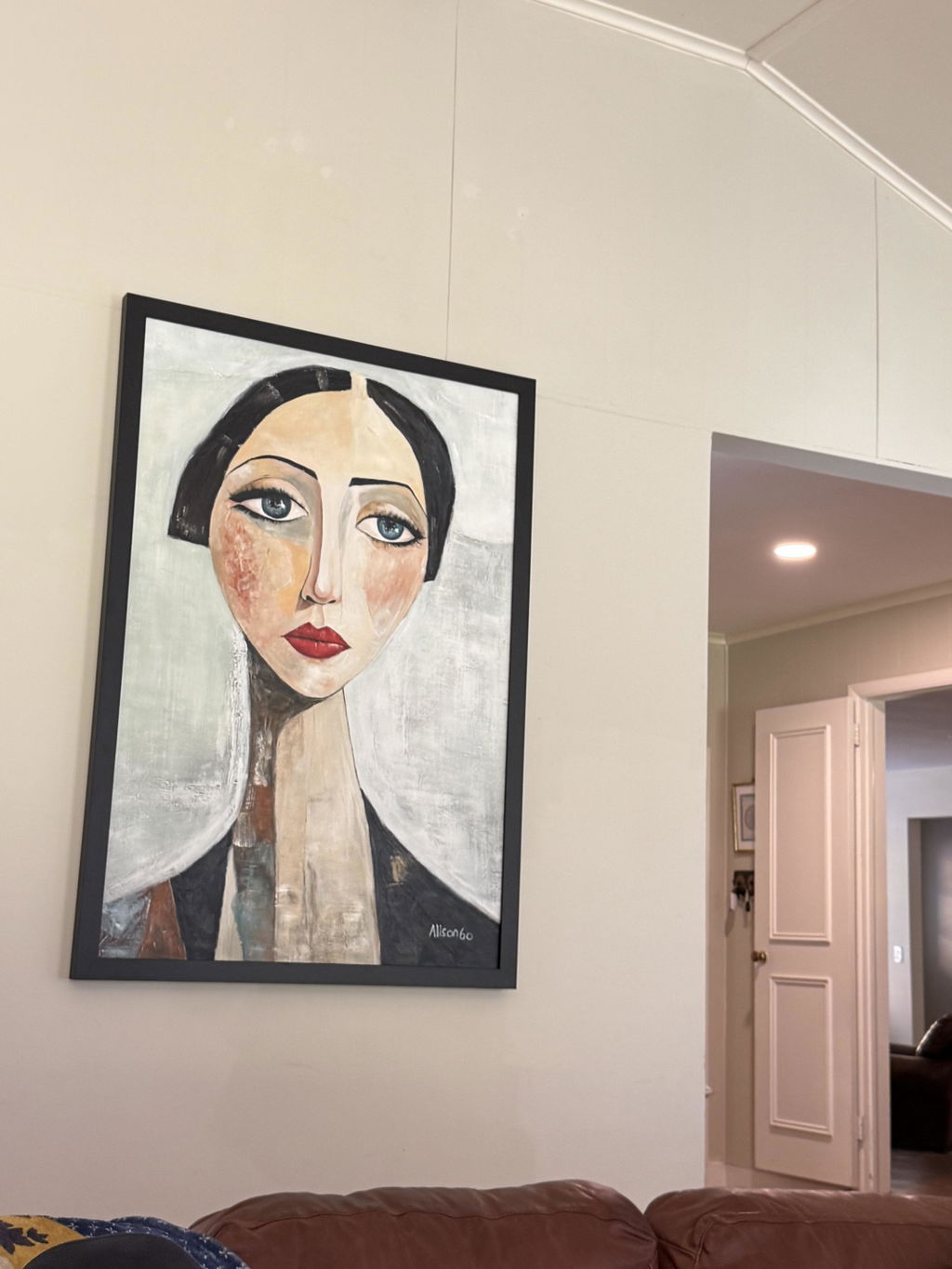
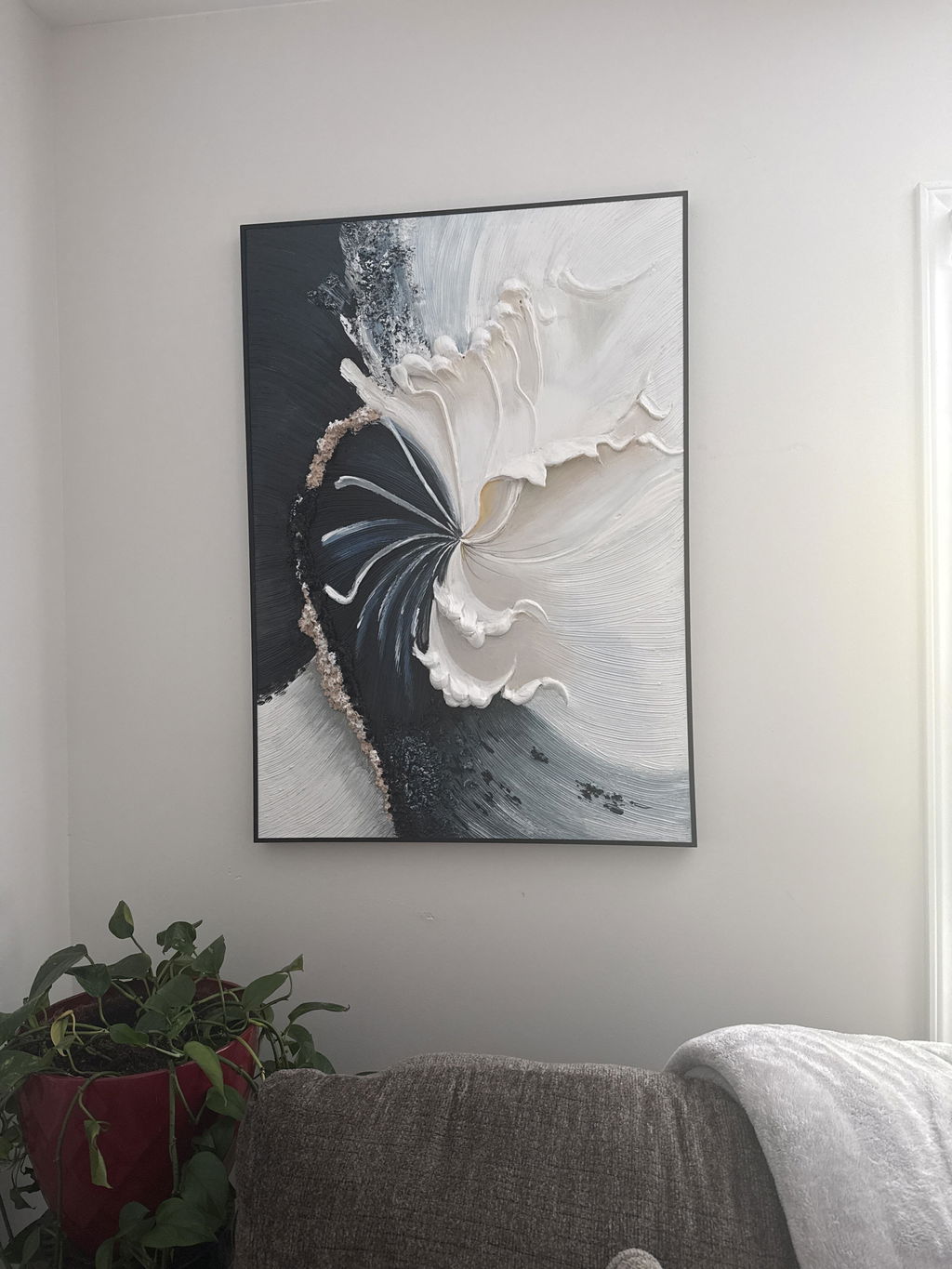
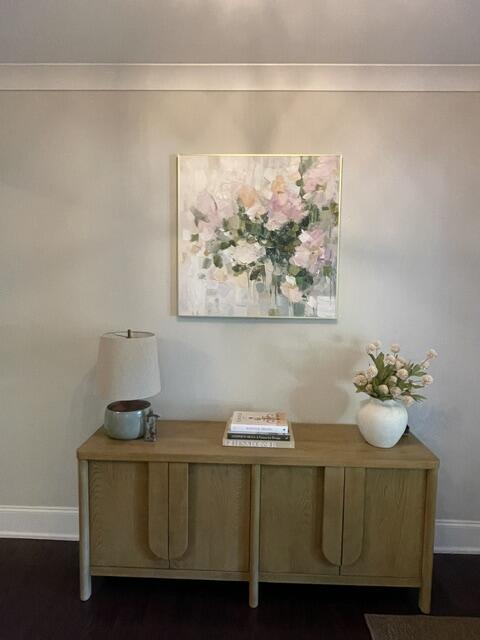
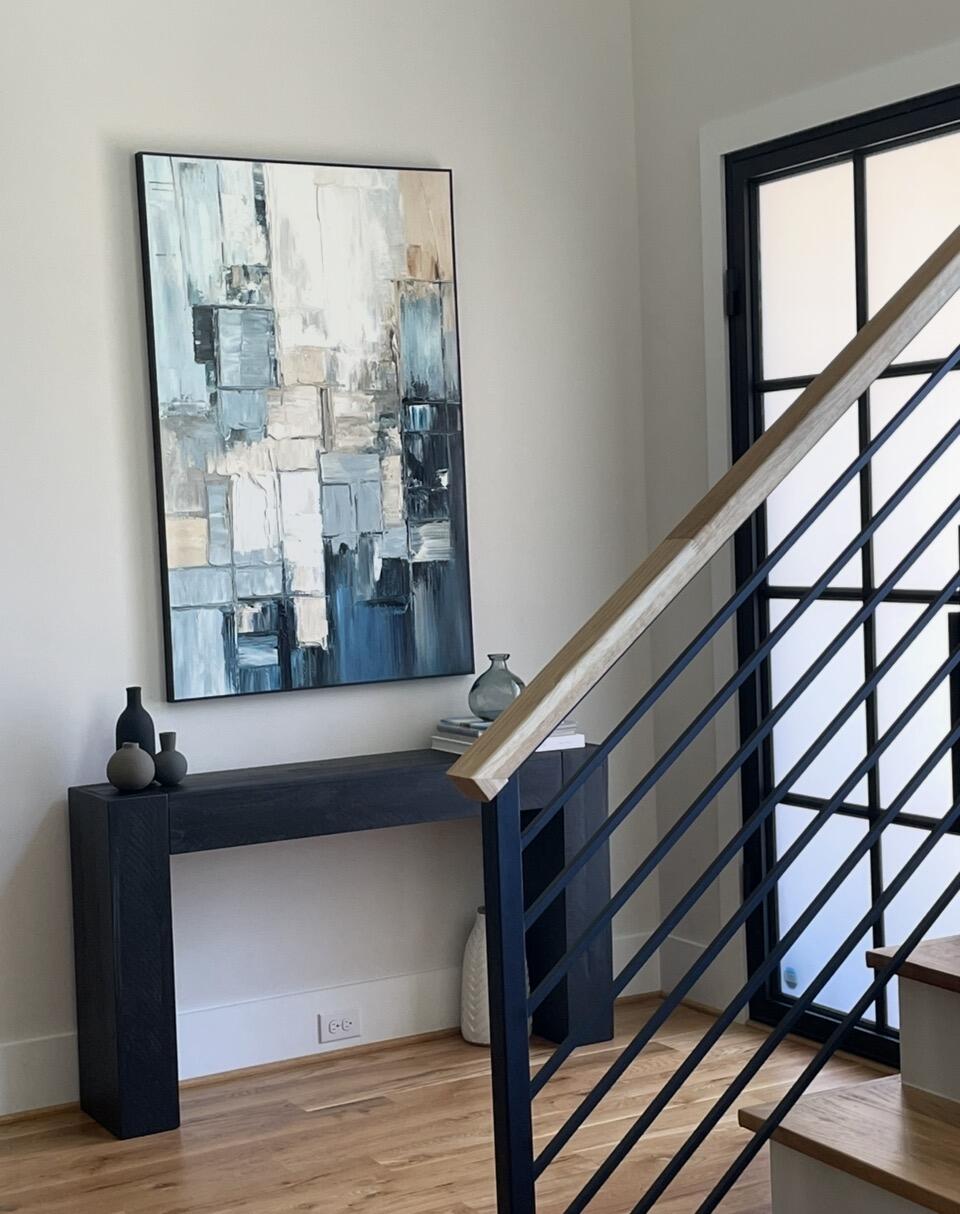
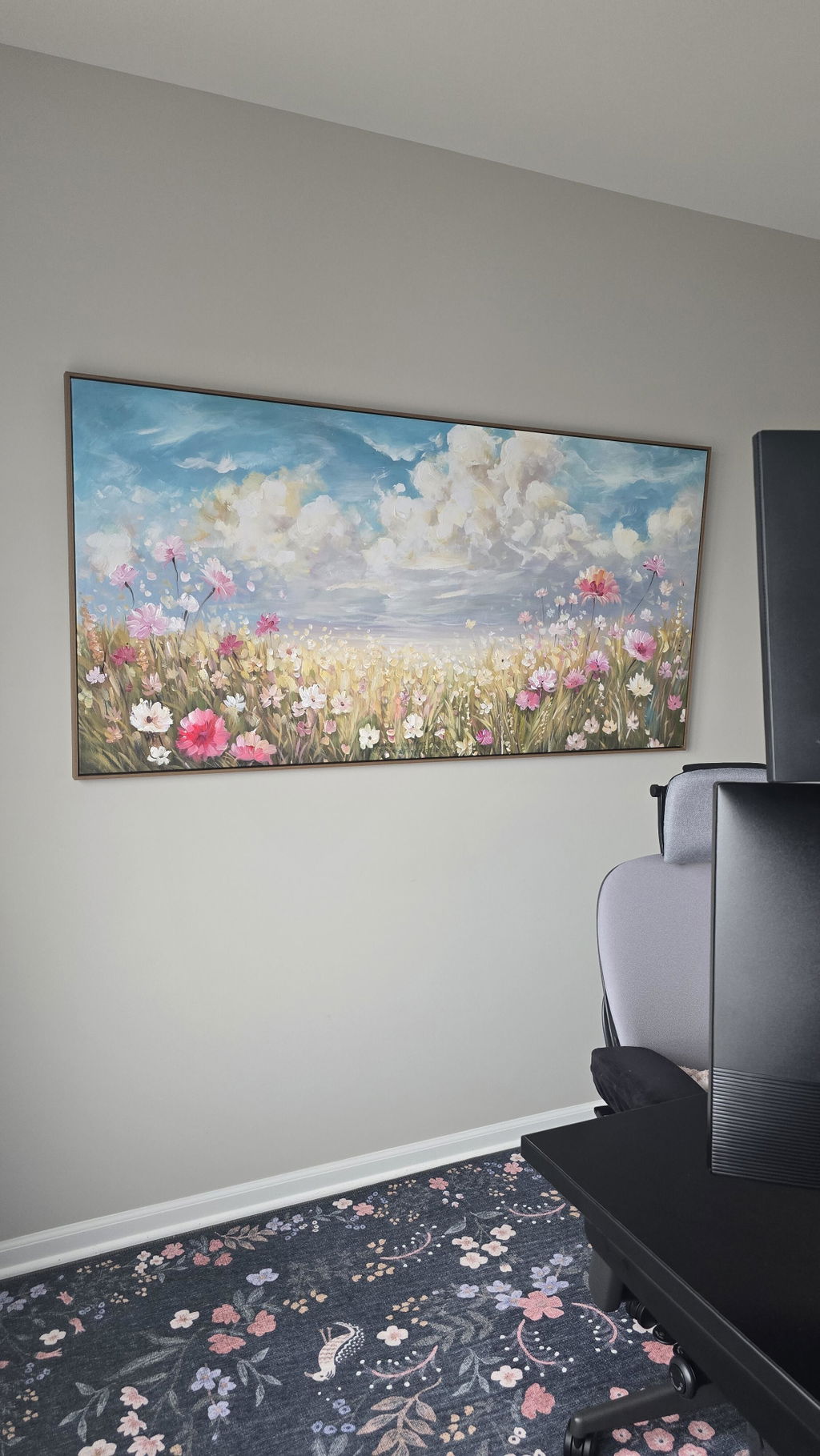
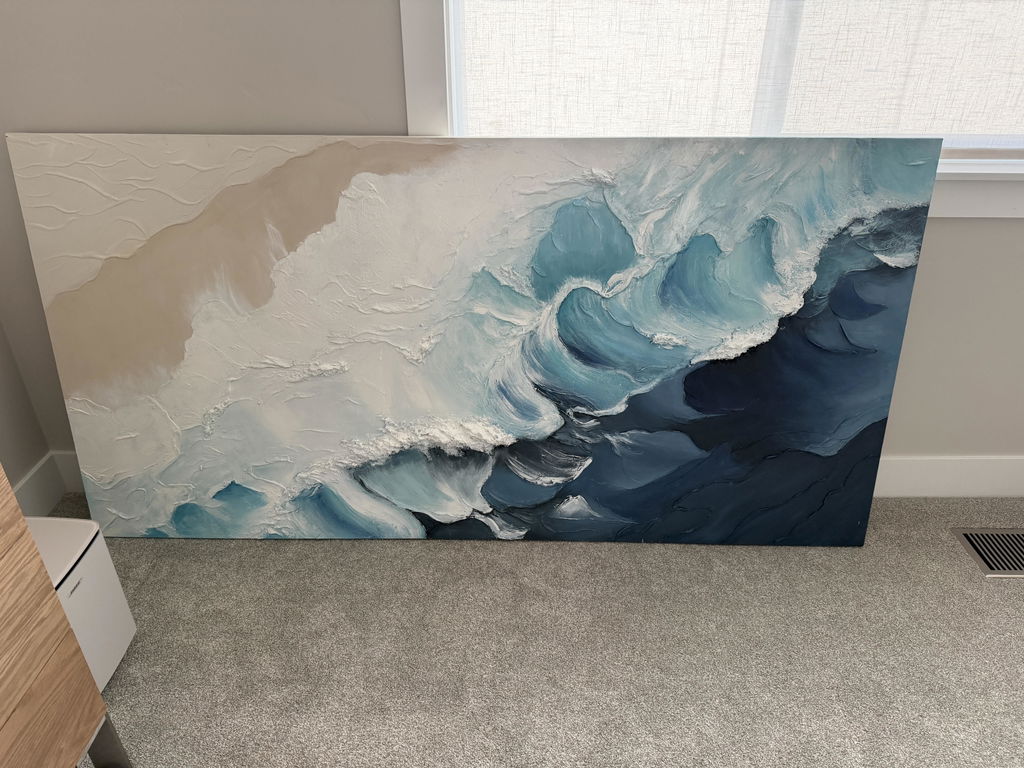
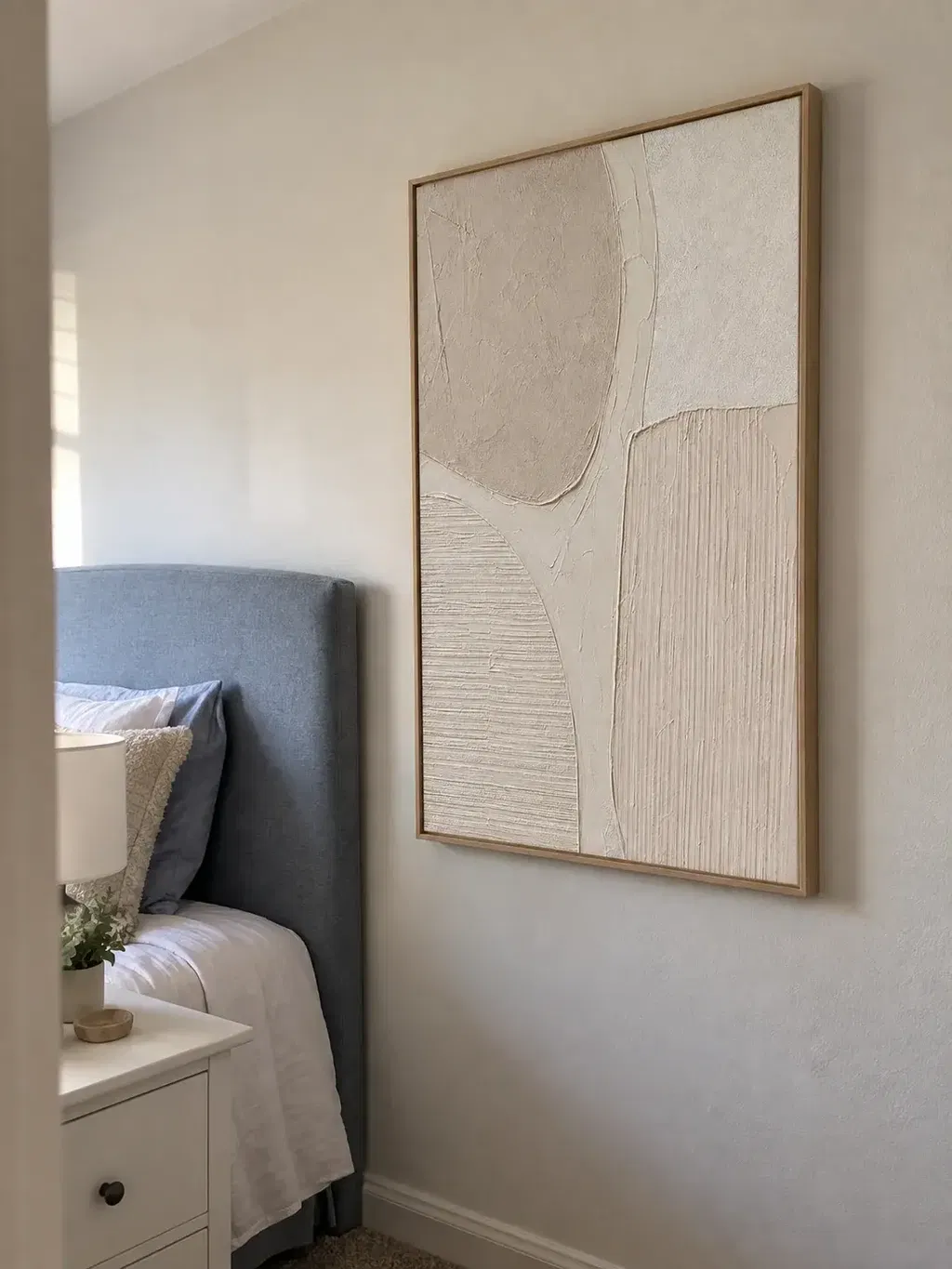
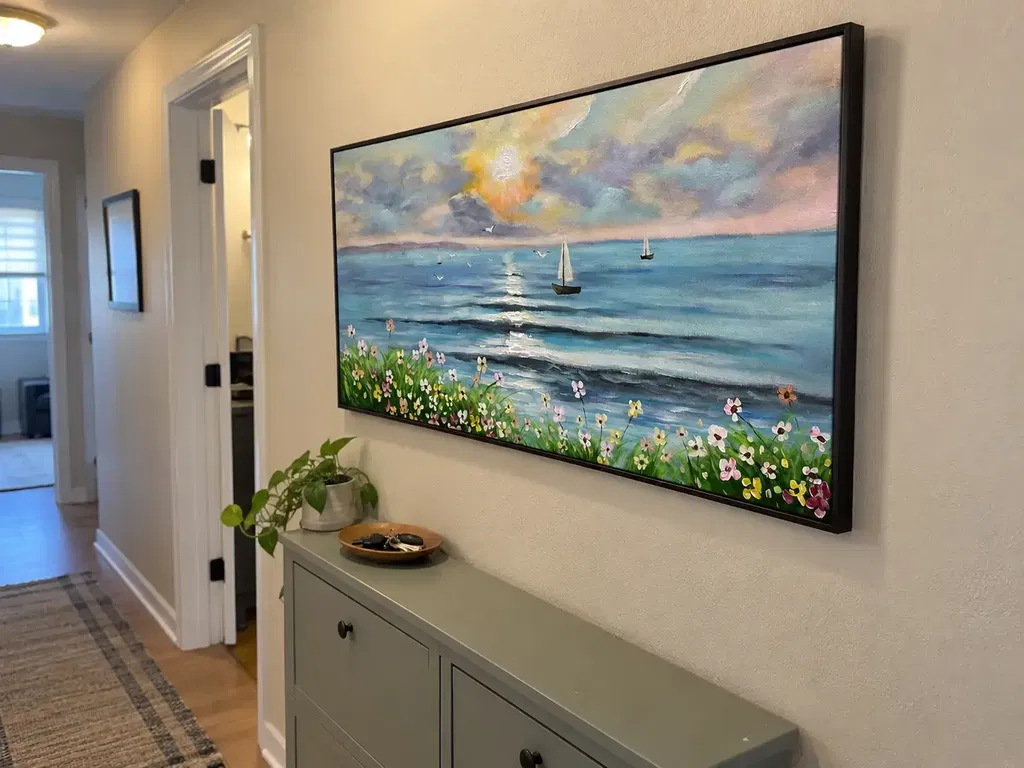
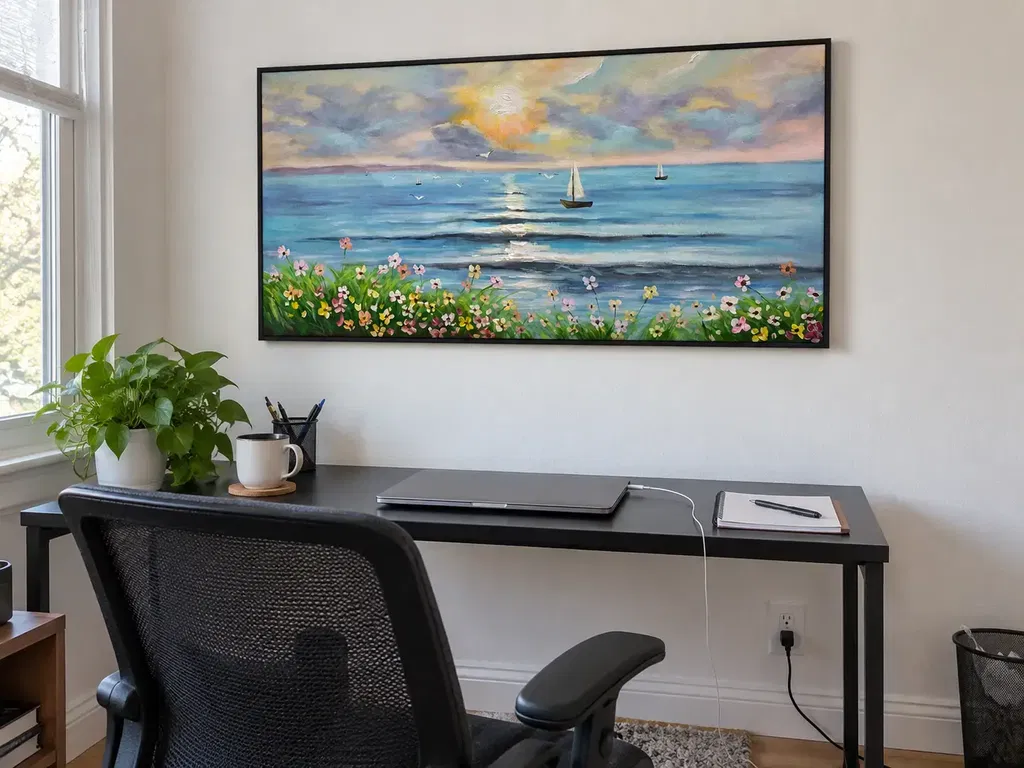
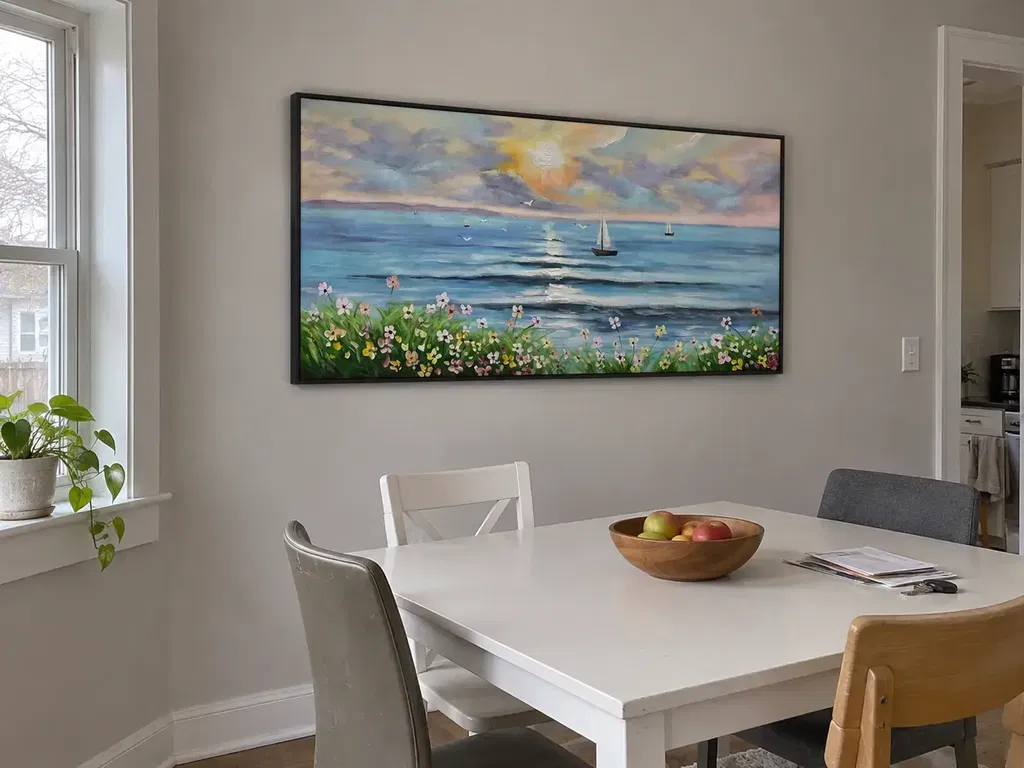
Before adding framed wall art to your cart, compare the complete framed footprint with your usable wall, inspect front and edge views, confirm the hanging setup, and read the current delivery and return terms. A polished room photo is only one part of the decision: the listing should also make its finished dimensions, orientation, frame presentation, and post-purchase process clear. If one missing detail could affect the fit, installation, arrival date, or your options if something goes wrong, pause and ask the seller before checkout.
Measure the Wall Before Choosing the Size
The right size is the complete framed piece—not just the canvas or artwork shown in the listing. Measure the usable wall, test the proposed footprint in the room, and compare that marked area with the listing's finished dimensions and orientation.
- Measure the usable wall. Record the width and height available around furniture, doors, outlets, switches, and walking paths. Note whether the piece must be vertical or horizontal, and account for anything that would make the full frame extend beyond the practical display area.
- Mark the proposed footprint. Use painter's tape or paper to outline the listed footprint on the wall. Stand where the piece will be viewed and check how it relates to the furniture below it, nearby windows, and the room's sight lines. This test is more useful than judging size from a styled product photo.
- Compare complete dimensions and orientation. Check whether the stated measurements include the frame. If the page gives only canvas or artwork dimensions, ask for the finished framed size before treating the piece as a fit. Use a room mockup for context, not as a guarantee that the image is shown to scale.
For a particularly broad wall, you can continue browsing oversized wall art options, but still verify the dimensions of each individual listing.

Verify What the Framed Wall Art Listing Actually Shows
A framed abstract wall art listing is more useful when it shows the complete presentation from several relevant angles. Front imagery can help with color and composition, while frame, edge, profile, surface-detail, dimension, orientation, and room-context evidence answer different questions. None should be treated as proof of authenticity, exact materials, or guaranteed in-person appearance.
Use Frame and Edge Photos to Check the Profile
Look for a dedicated frame view, side or edge photo, and profile angle. These views can help you judge the visible relationship between the artwork and frame, the apparent depth, and how much of the finished object is actually shown. Independent online framing guidance also supports comparing presentation, support, and post-purchase terms rather than relying on a styled image alone (independent guidance on comparing frame presentation and post-purchase support).
Look for a stated frame finish and profile description, but do not fill in a blank based on a presumed industry standard. If the page shows only the front, does not clearly identify the frame, or leaves the edge hidden, record that as an unanswered question. A close-up may show surface texture or brushwork as a visual signal, but it cannot establish authenticity or guarantee how the work will look under your room's lighting.
Match the Listing to the Room You Actually Have
Judge the listing against the conditions you measured instead of evaluating the image in isolation. Use the table to identify which evidence matters for each buying decision.
| Buyer condition | Listing evidence to compare |
|---|---|
| Wall size and orientation | Finished framed dimensions, orientation, and a frame-view photo |
| Palette and lighting | Front image, close-up detail, and any stated color notes |
| Desired visual impact | Room-context image, with scale treated as illustrative rather than exact |
Visual proof and policy proof solve different problems. Photos help you decide whether the displayed object appears suitable; the seller's written support, shipping, damage, and return terms determine what process may be available if the delivered piece differs. A return policy does not prove frame quality, and attractive photos do not prove strong post-purchase protection.
If you are comparing categories as well as presentation, canvas paintings with frames provides a relevant browsing path—but each product page still needs its own verification.
Confirm the Hanging Setup Before Checkout
Do not assume that framed means ready to hang, that hardware is included, or that the setup suits every wall. Before buying, match the listing's stated hardware and mounting points to your wall type and installation ability, and ask the seller about any missing information.
Check whether the page explicitly states:
- whether hanging hardware is included;
- where the mounting points are located;
- whether the piece can be displayed in the listed orientation or more than one orientation;
- the finished framed size and weight, if weight is provided; and
- what installation responsibility remains with the buyer.
A wall-specific installation decision may require different fasteners or a different approach than another wall, so a generic "ready to hang" assumption is not enough. If the listing does not state the hardware, mounting points, weight, or installation requirements, treat the setup as unconfirmed and contact the seller before purchasing. You can browse abstract painting options afterward, but do not infer that every item in a collection shares the same hanging details.
Check Delivery, Packaging, and Damage Steps
Evaluate delivery based on the exact listing, selected configuration, destination, and required arrival date. Ask whether the estimate includes production or framing time, then confirm the stated shipping method, tracking, packaging description, inspection instructions, and damage-reporting channel before paying.
Ask Delivery Questions Before Paying
Use the seller's current product and policy pages—or a written seller response—to check:
- What is the estimated production, framing, handling, and transit timeline?
- Does the estimate change for the selected frame, size, orientation, or destination?
- Will tracking be provided, and when should it become available?
- What packaging or inspection instructions are specifically stated for this order?
- How much time remains between the expected arrival and the move, gift, or event date?
Do not infer free shipping, insurance, packaging quality, replacement coverage, or a guaranteed arrival date from a product photo or collection label. For U.S. online orders, the FTC's guidance on stated shipping times and delayed orders is relevant to promised shipping times and delayed shipments; it does not turn an estimate into a universal delivery guarantee. Work backward from the date you need the art, leaving time to inspect it and resolve an issue.
For a store-specific example, a current product page may describe packaging or delivery for one selected configuration. Treat that language as applying only to that listing, configuration, and destination, and recheck it at checkout rather than generalizing it to all framed art.
Document Damage Before Starting a Claim
If the package arrives visibly damaged or the artwork appears damaged, preserve evidence before deciding what to do next:
- Document it. Photograph the package, labels, visible exterior damage, artwork, frame, and any condition that differs from the listing or order.
- Preserve it. Keep the packaging, inserts, paperwork, and shipping label unless the seller gives different written instructions. Avoid repairing, disposing of, or altering the piece before support responds.
- Follow the stated process. Contact the seller through the official channel, use the required deadline and evidence format, and ask whether the item should be held, returned, or inspected. Do not substitute a generic carrier process for the seller's instructions.
These steps protect your record; they do not guarantee a replacement, refund, or approval. For a practical follow-up, see our damaged art delivery steps. If a deadline matters, an art buying deadline checklist can help organize the schedule.
Review Returns Before You Add to Cart
Read the current policy that applies to the selected listing before you buy, and save a copy or screenshot with the product page and order confirmation. The useful comparison is not simply "does this store accept returns?"—it is whether the terms distinguish an unsuitable piece from damage, an incorrect item, or a material mismatch with the listing.
Check these points in the written policy:
- eligibility and exclusions for the selected artwork or configuration;
- the deadline for starting a return or reporting a problem;
- the required condition and packaging;
- who pays or arranges return shipping, if a return is permitted;
- when and how a refund is issued; and
- whether damaged, incorrect, or materially misdescribed orders follow a separate process from change-of-mind returns.
A piece that does not suit the room may be handled differently from one that arrives damaged or differs materially from its listing. Save the dimensions you used, the product photos, frame information, correspondence, and policy version that informed your purchase. The federal rule's limited shipping-delay and refund provisions concern specific mail, Internet, or telephone-order circumstances; they are not a general return window or a promise of a remedy for every damaged or unwanted artwork order. For ordinary returns and damage, follow the seller's current written process and applicable law.
If the applicable policy is unclear, treat that uncertainty as purchase risk and ask the seller before adding the piece to your cart. Online art verification steps can provide another way to organize your pre-purchase questions, but the selected listing and current policy control the transaction.
Make the Checkout Decision From Verified Details
Move from comparison to checkout only when the details that could change the decision are clear enough for your room, wall, installer, deadline, and risk tolerance. Use this final checklist:
- Wall footprint: The complete framed width, height, and orientation fit the marked usable area.
- Frame evidence: Front, frame-view, and edge or profile evidence show enough of the visible presentation for your decision.
- Dimensions: The page distinguishes finished framed dimensions from canvas or artwork dimensions, or the seller has clarified the difference.
- Hanging setup: Hardware, mounting points, weight if relevant, and installation responsibilities are stated well enough for your wall.
- Delivery and packaging: The current timeline, destination terms, tracking expectations, and stated inspection or packaging instructions fit the date you need.
- Recourse: You know which current process applies to a change of mind, damage, incorrect item, or material listing mismatch.
If one unresolved detail could change the fit, installation, timing, or your options if something goes wrong, pause and contact the seller. Once those checks are documented, you can shop framed canvas art and apply the same listing-by-listing checklist to each option.
Framed Wall Art Buying FAQs
Is Framed Wall Art Worth It for a Rental or Temporary Home?
It can be practical when the finished footprint, mounting requirements, moving plans, and applicable return terms work for the space. First check whether your lease or building rules limit wall mounting, then ask what hardware and installation steps the listing actually includes. If you may move soon, compare the piece's complete dimensions and packing or return requirements with how you will transport it; do not assume the frame or hardware is lightweight, removable, or included.
How Can I Compare Two Framed Art Listings With Different Image Sizes?
Normalize both listings around the complete finished framed dimensions and orientation, not the size of the image displayed on your screen. Record canvas or artwork dimensions separately, compare the visible frame proportions in edge or profile photos, and ask the seller to clarify any measurement that does not say whether the frame is included. A larger online image does not establish that the physical piece is larger.
What Should I Do If the Delivered Frame Looks Different From the Product Photos?
Photograph the delivered frame, artwork, packaging, labels, and the details that appear different; keep the packaging and compare the order with the saved listing images and description. Then contact the seller through the stated support channel and ask whether the issue is handled as a mismatch, incorrect item, damage claim, or another category. Do not assume that a visual difference automatically qualifies for a return or refund, and do not repair or ship it back before receiving instructions.
How Early Should I Order Framed Wall Art for a Move or Gift Date?
Start with the date the piece must be in the recipient's hands, then work backward through the exact listing's production, framing, handling, and shipping estimates. Add time for tracking uncertainty, delivery inspection, and seller instructions if the piece arrives damaged or differs from the listing. If the page gives only a broad estimate or does not separate production from transit, ask for clarification before ordering—or choose a different option with terms that leave usable margin.