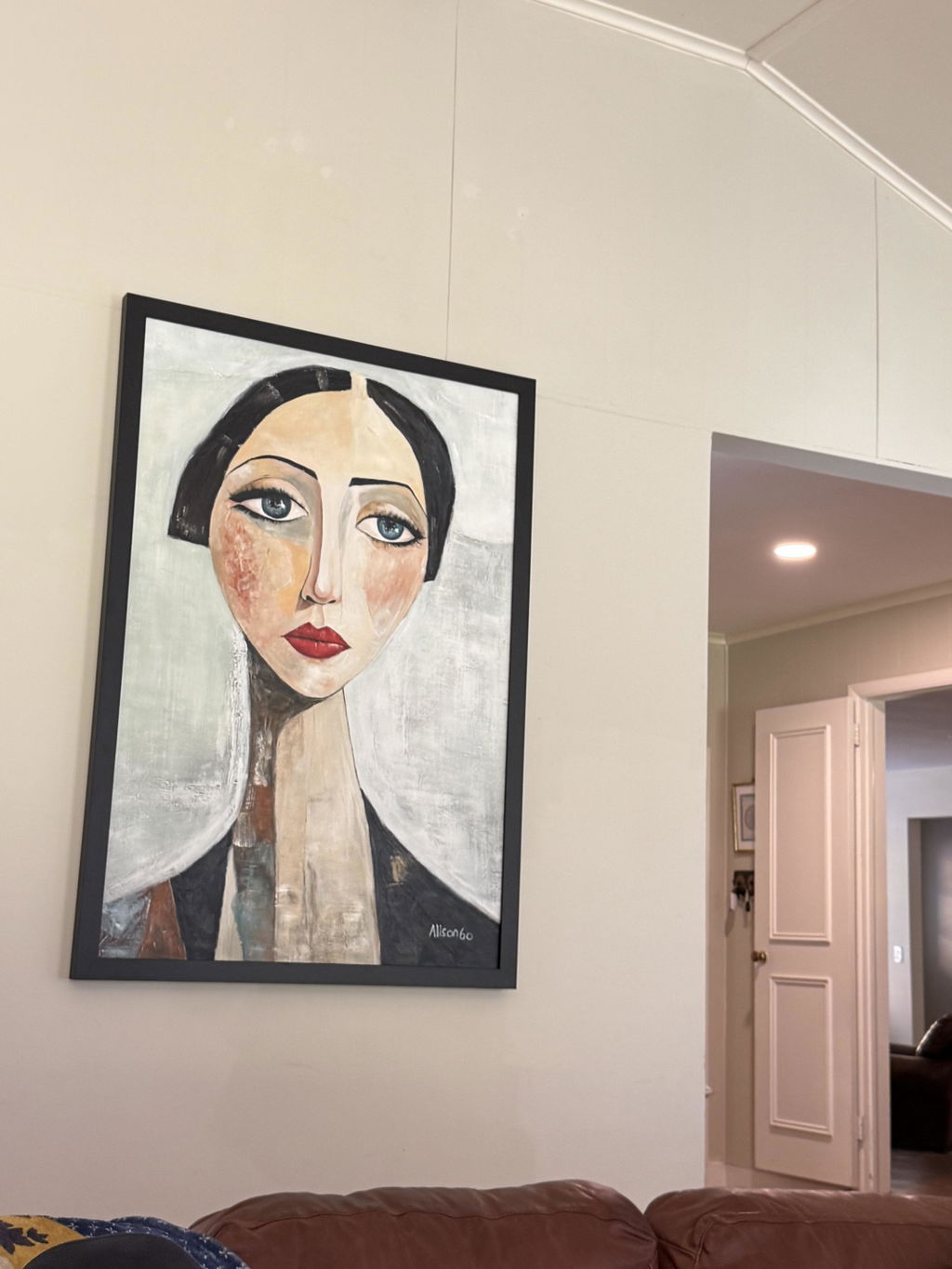
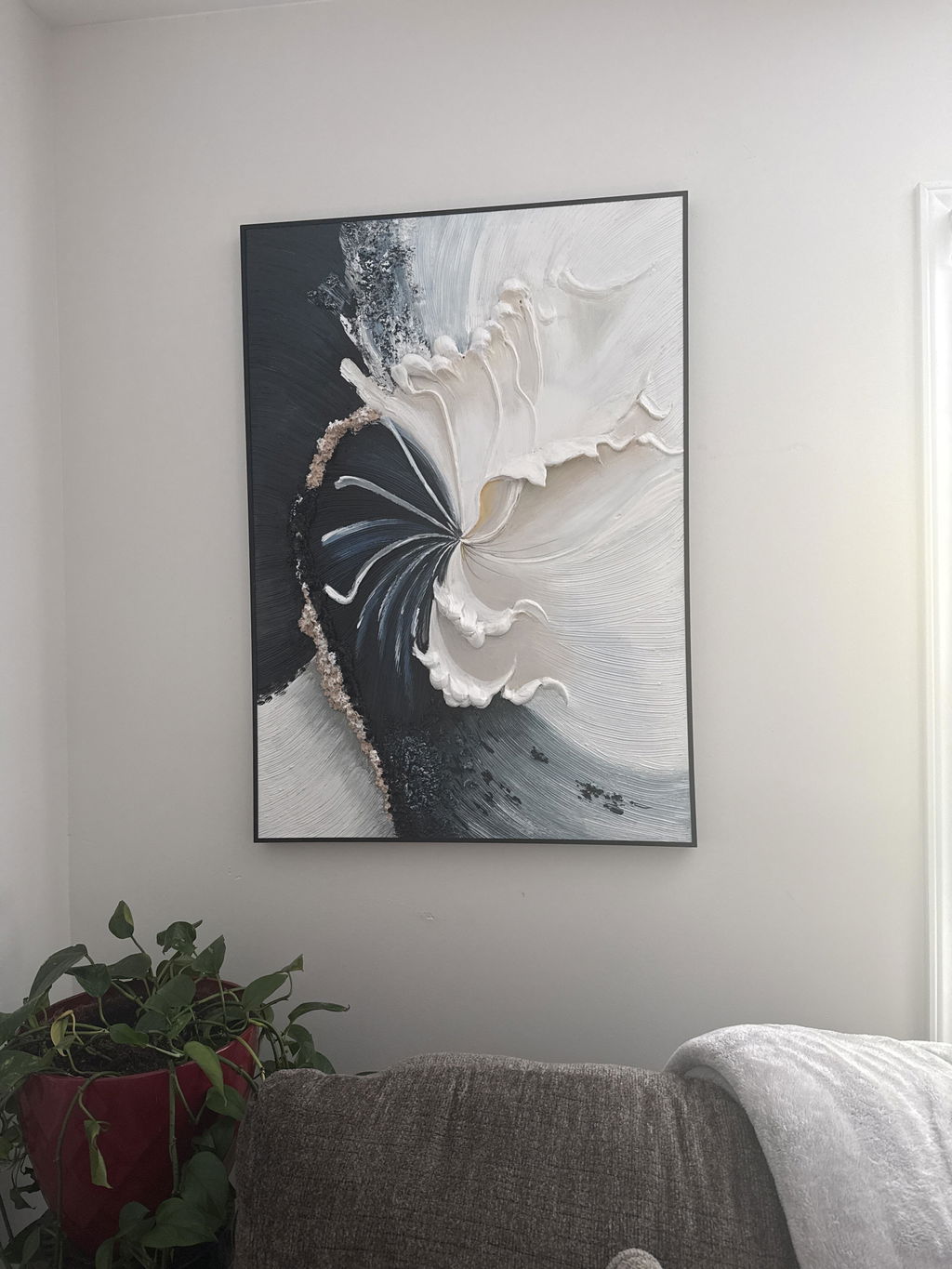
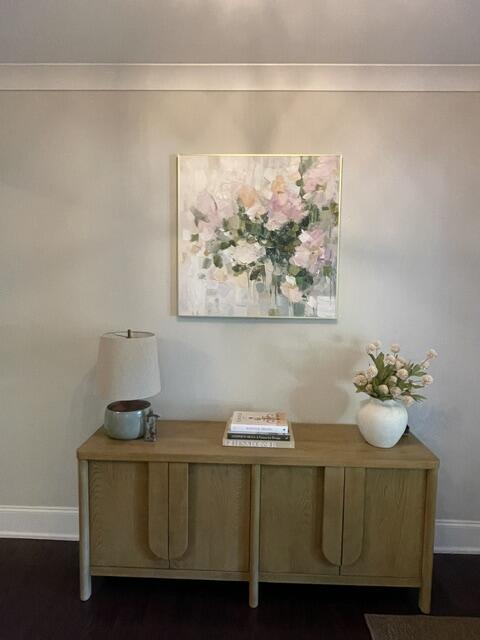
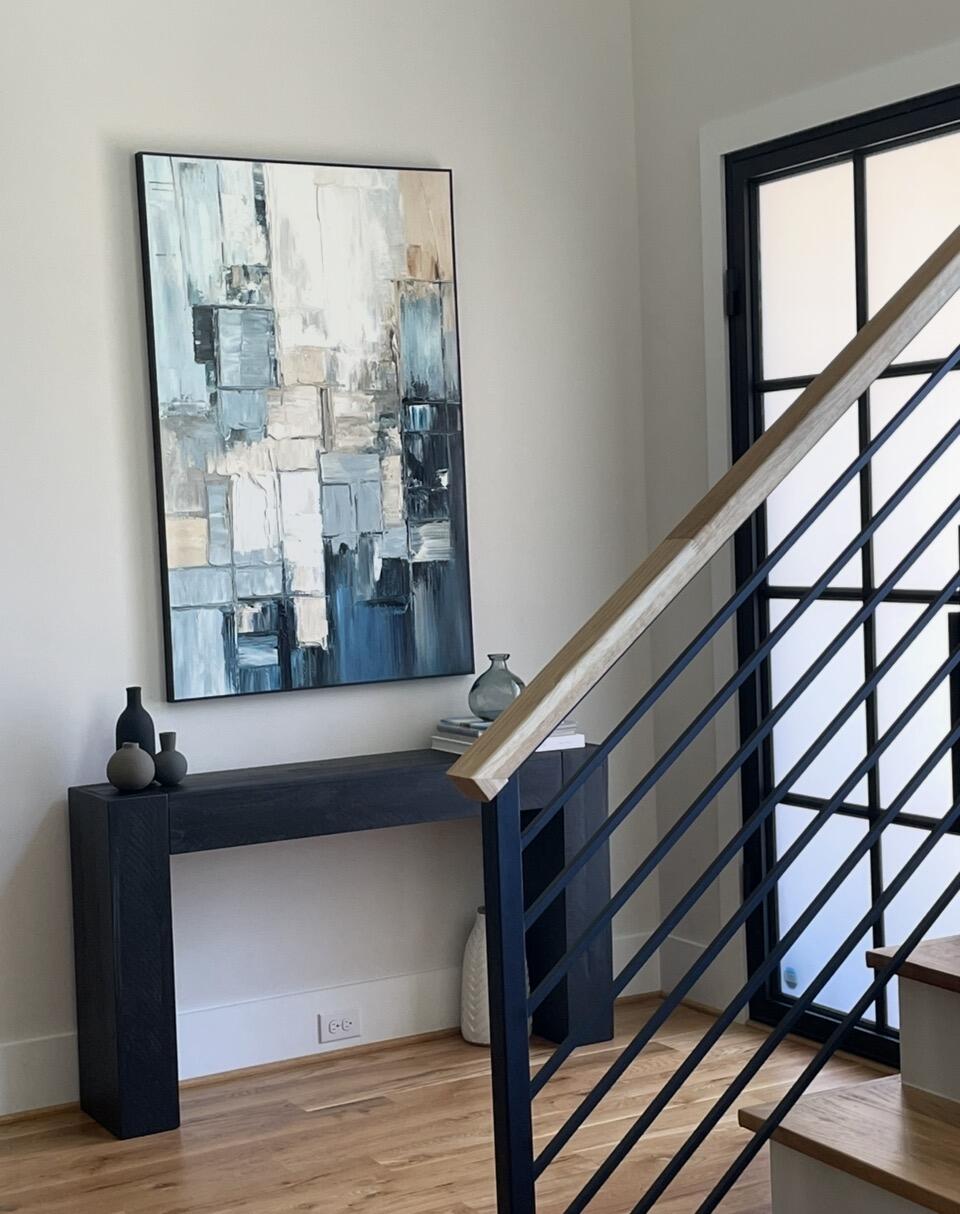
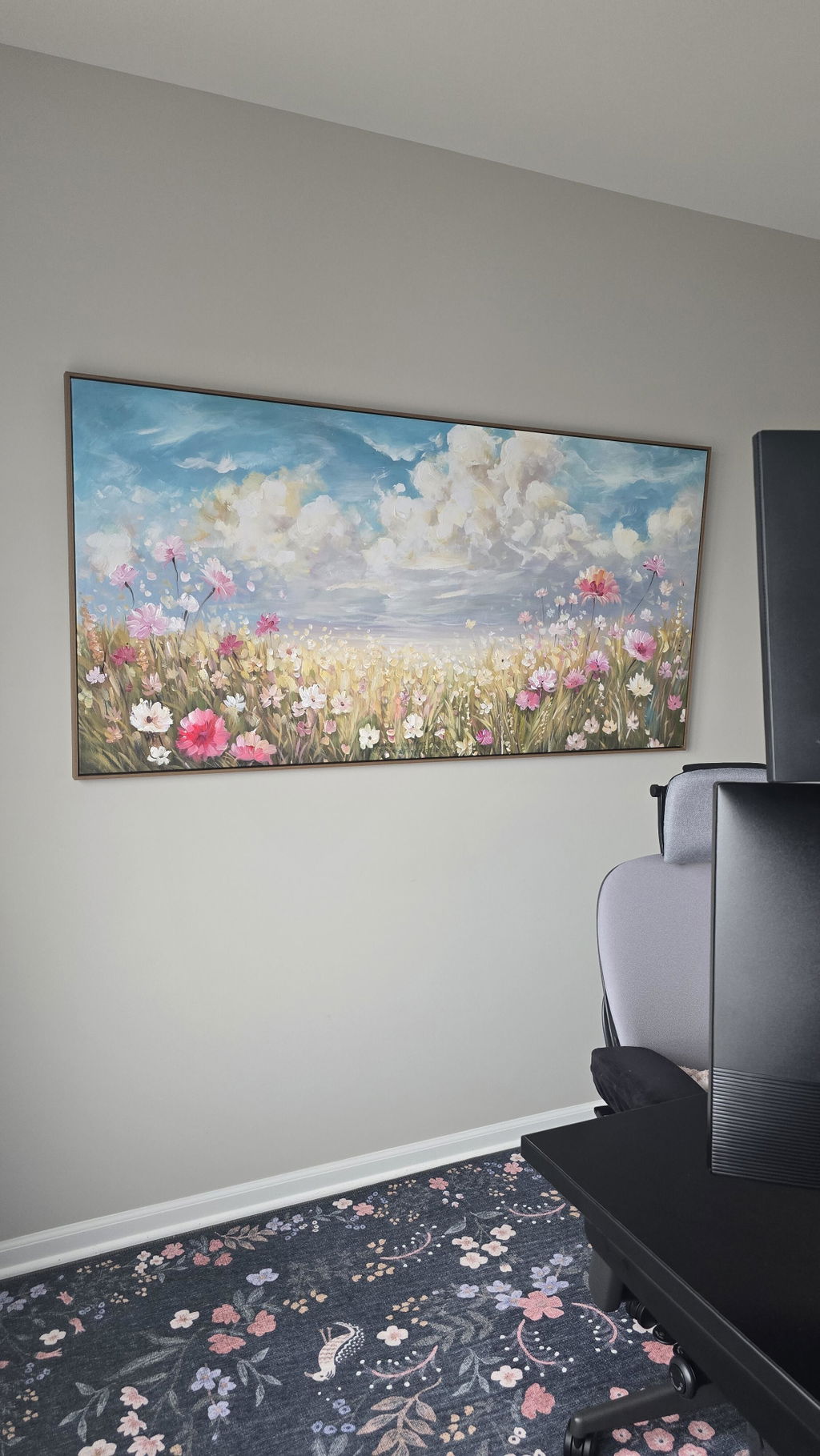
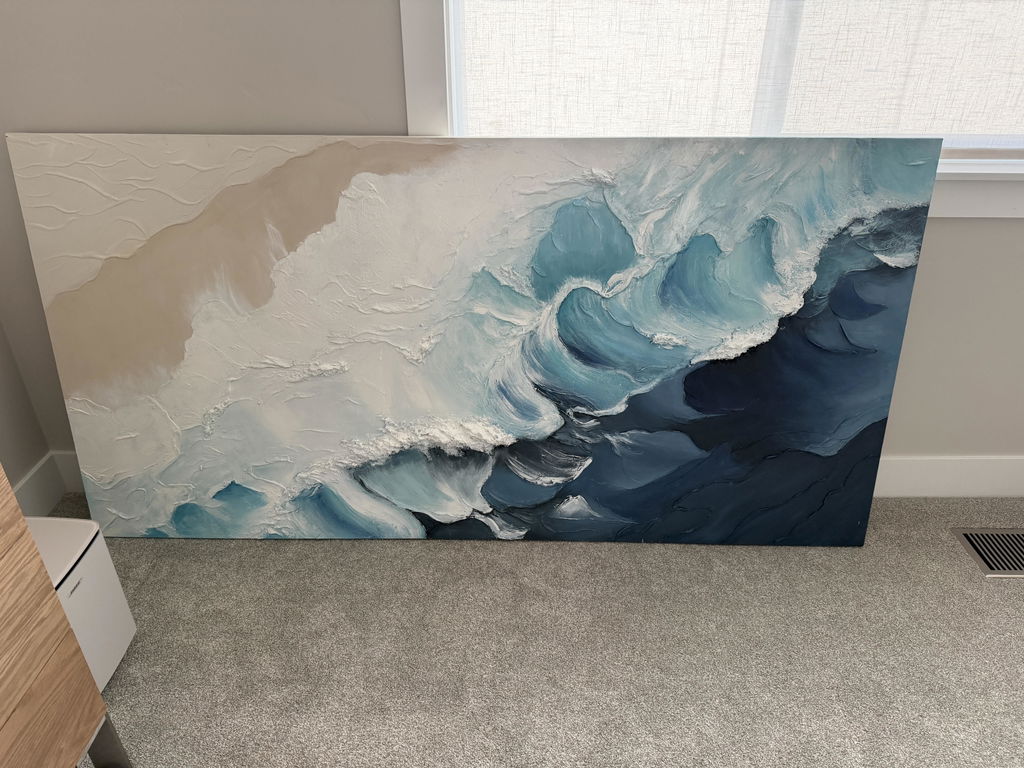
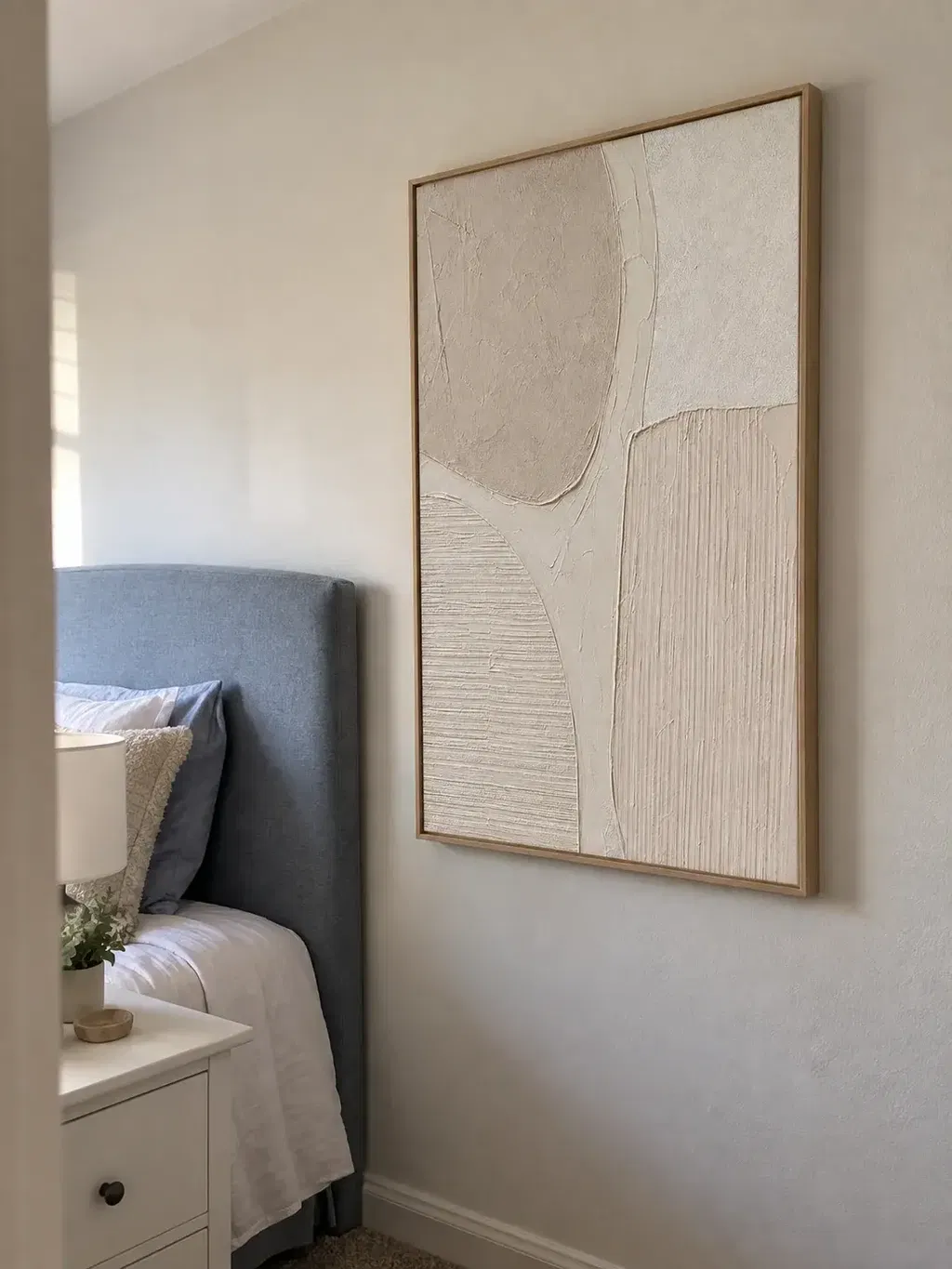
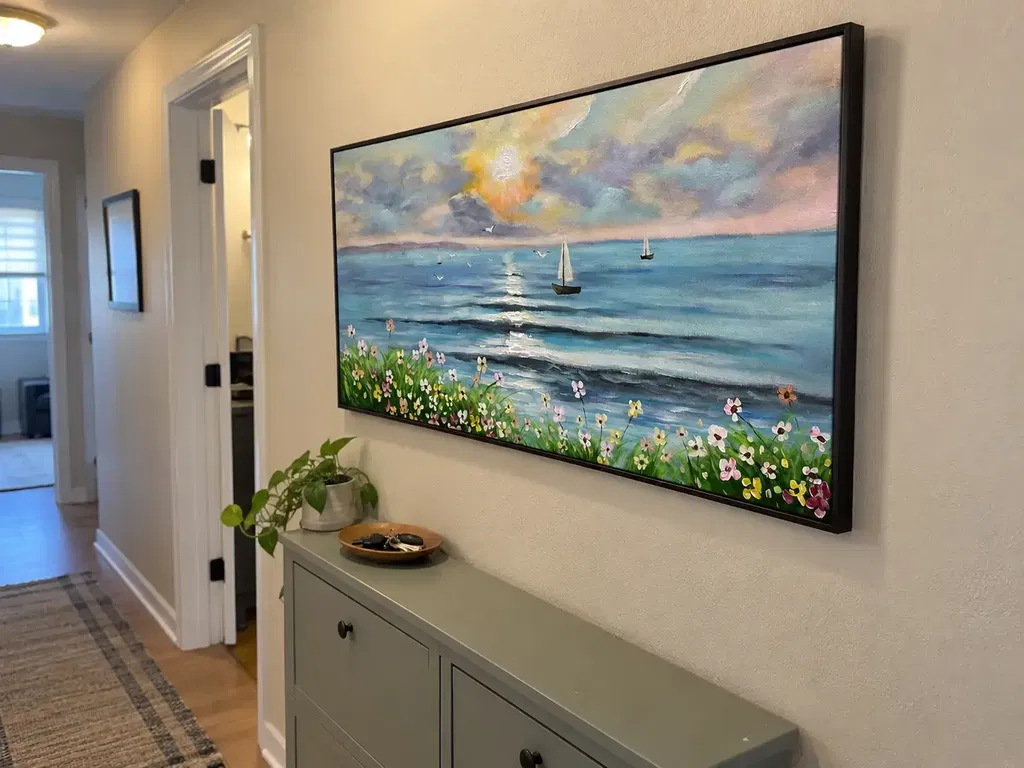
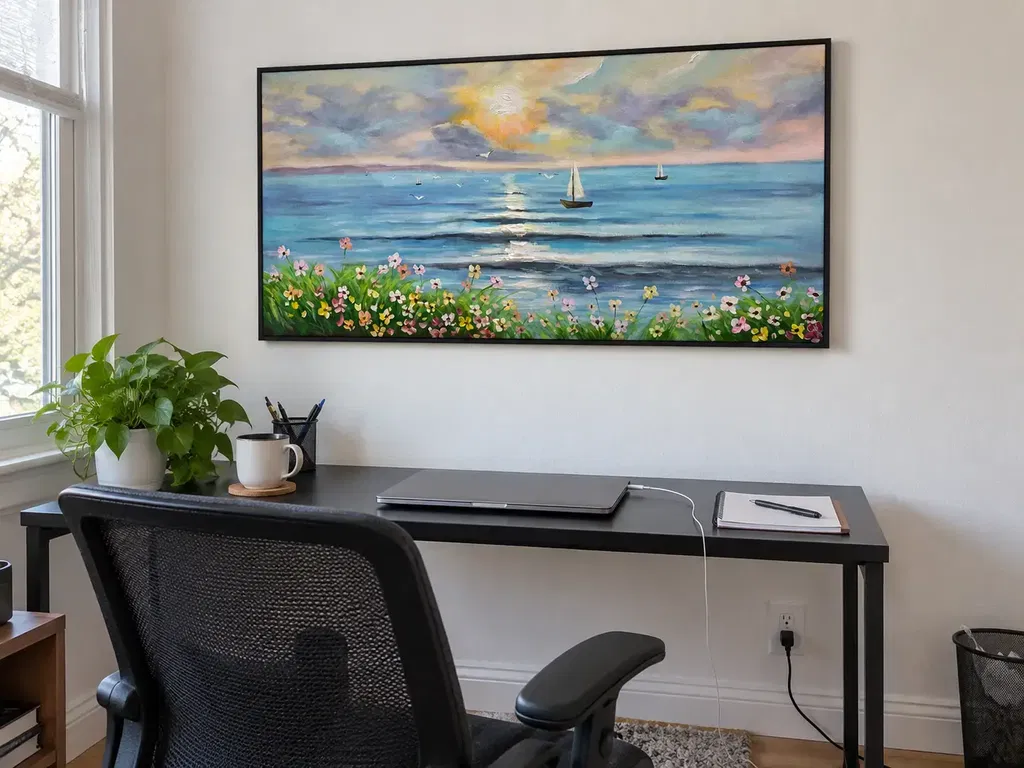
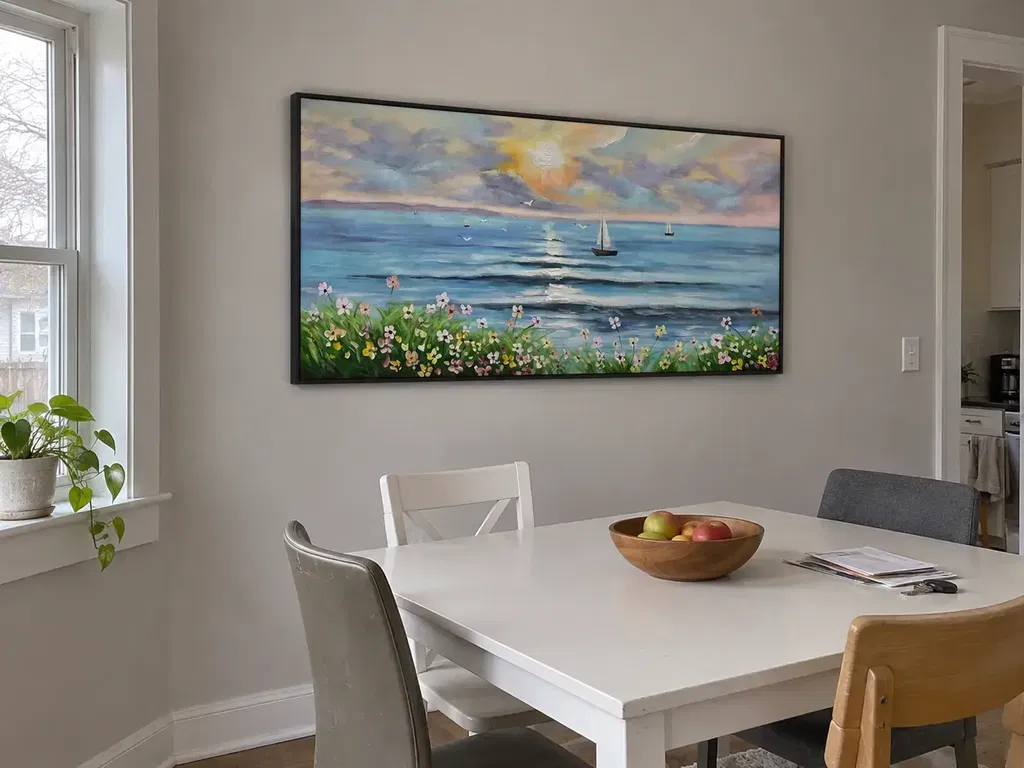
Wall art with 3D effect looks genuinely sculptural when the surface projects beyond the flat image plane, shows a visible profile at the edge, and changes how highlights and shadows move across it. A front-facing product photo can suggest depth, but it cannot establish the construction method on its own. Before adding a piece to your cart, compare at least two views—ideally a close-up plus an angled or side-lit image—and distinguish visible relief from claims about materials, originality, or hand-built work.
What Makes Wall Art with 3D Effect Look Sculptural?
Wall art with 3D effect looks sculptural when its surface has observable physical projection, edge definition, and changing shadow behavior across more than one view. The term "3D" is a reason to inspect the listing, not proof that the piece has a particular depth or construction process.
A useful distinction is the difference between what the artwork appears to do and what the seller confirms about how it was made. A raised area that catches light differently from the surrounding surface supports a judgment that visible dimensionality may be present. An image that merely depicts ridges, brush marks, or shadows does not provide the same evidence.

Check these four cues:
- Projection: Does any surface appear to stand above the supporting plane?
- Profile: Does an angled or edge view show a change in the surface contour?
- Shadow change: Do highlights and shadows shift when the lighting or viewing angle changes?
- Texture scale: Does the depth still read in a normal-distance image, or only in a tightly cropped close-up?
If a listing shows only a straight-on image with uniform lighting, describe the sculptural impression as unverified. For broader context on how a raised surface adds depth, rely on the visual evidence for the individual listing rather than assuming every textured piece uses the same process.
From Printed Texture to Hand-Built Impasto
Surface labels describe different possibilities, but they do not replace product-level evidence. A flat image can depict texture, a coating can alter surface sheen, and genuinely raised material can create a profile; evaluate the photos and explicit listing details separately.
The following is a buyer framework, not a universal commercial classification:

| Surface type | Likely physical relief | Visible photo cues | What remains uncertain | Useful buyer question |
|---|---|---|---|---|
| Flat decoration | None or minimal | Texture appears through color, shading, or a printed pattern | Whether any coating or slight surface variation exists | "Is the texture printed, or does the surface physically rise?" |
| Printed texture | Usually none in the printed image itself | Repeated marks, consistent shading, and a flat-looking edge may appear | Whether a separate finish was added over the print | "Does the image include a raised finish or only printed detail?" |
| Gel or clear coating | Possible, but amount is listing-dependent | Gloss, raised accents, or highlights may be visible from one angle | Thickness, composition, durability, and whether the effect is evenly applied | "What coating is used, and how much physical texture does it add?" |
| Raised relief | Yes, if the design projects from its support | Edge projection, directional shadows, and contours may remain visible across views | Exact depth, material, and construction method | "Can you provide a profile image and confirm the relief material?" |
| Impasto | Yes when paint is applied thickly enough to stand out | Raised paint, marks, or brushwork may affect highlights and shadows | Whether the specific work uses impasto, who applied it, and whether it is original | "Does the listing explicitly confirm impasto and the painting process?" |
In art terminology, relief projects from a supporting surface, while impasto means paint applied thickly enough to stand out. Those definitions help explain the visible difference between built-up paint and a flat printed image, but they do not prove that a particular listing uses either method.
You can browse categories such as impasto paintings or palette knife texture as navigation paths. Do not treat a collection name, product title, or brush-like mark as confirmation that every item has the same medium, depth, or making process. More texture is not automatically better; it is simply a different visual and physical feature to evaluate.
The Photo Cues That Reveal Real Depth
The strongest photo-based screen combines directional light, multiple angles, and two texture scales. These cues can support a judgment that visible relief is present, but photos cannot prove originality, hand-built construction, the exact medium, durability, or material quality.
Side Lighting Shows Shadow Behavior
Side or raking light makes shallow ridges and depressions easier to see because they create directional highlights and shadows, a principle described by the Getty Conservation Institute. In a product listing, compare a side-lit image with a softer or more evenly lit view. Dramatic lighting can exaggerate shallow texture, so one high-contrast photo should not determine the entire decision.
Look for shadows that correspond to visible contours rather than a uniformly applied tonal effect. If the lighting makes the surface impossible to read, request a more neutral image instead of assuming the piece is either deeply textured or flat.
Edge Views Show the Surface Profile
An angled or edge image can show whether the design projects from its support—information that a straight-on image cannot provide. The Metropolitan Museum of Art's guidance on viewing three-dimensional objects supports comparing front, angled, and profile views when applying this principle to online shopping.
Use the visible contour to assess dimensionality only. A profile can show that a surface rises, but it cannot tell you whether the work is hand-built, original, or made with a particular material unless the seller confirms it.
Texture Scale Separates Presence From Pattern
Compare a close-up with an image showing the artwork at a normal room distance. Fine surface grain may be convincing in a macro crop but disappear from several feet away, while broad relief may continue to shape the room-level impression.
This comparison also helps expose a common mismatch: a listing may use a dramatic close-up to show texture that occupies only a small portion of the piece. Ask whether the close-up represents a typical area, and compare it with the full composition before deciding how prominent the texture will feel in your space.
For a practical image-review reference, you can examine guidance on close-up photo details. Use it to inspect what the image shows, not to infer facts the listing does not document.
Irregularity and Brush Marks Need Visible Proof
Irregular ridges or brush marks may support the presence of applied texture when they are clearly visible at useful resolution. They are not conclusive proof of hand-built, hand-painted, unique, or original construction.
Compression, sharpening, reflections, and screen size can create marks that look more physical than they are. If a listing's "brushwork" appears only in a small, heavily edited crop, treat the process as unconfirmed. The safer question is not "Does this prove the piece is handmade?" but "What physical variation can I actually see, and what does the seller explicitly state?"
A Buyer's Verification Checklist Before You Order
Before ordering, compare multiple image types with confirmed listing facts, then review the seller and sale terms. Visual confidence in the surface should be one part of the decision—not a substitute for dimensions, shipping information, returns, or other purchase details.
- Start with the full image. Identify whether the texture is a dominant feature, a narrow accent, or visible only in a styled close-up.
- Find a close-up. Check whether ridges, depressions, or marks remain coherent at a useful resolution rather than appearing as digital noise.
- Look for an angled or edge view. A profile can support a judgment that the surface projects, but a missing profile does not prove the work is flat.
- Compare the lighting. Place side-lit, neutral, and room-style images side by side when available. If only dramatic lighting is shown, ask for another view.
- Read the construction wording. Separate "textured," "3D," or "impasto-style" language from an explicit statement about materials and process. Do not turn a descriptive label into proof.
- Ask one focused question. For example: "Is the visible texture physically raised, and can you share an angled image of the surface?" If depth is central to your choice and the answer remains vague, keep comparing.
- Confirm dimensions and orientation. Check the overall size, format, and any depth information supplied. A close-up cannot tell you whether the piece will read correctly on your wall.
- Review transaction terms. Confirm the seller identity, shipping terms, return policy, payment protections, and warranty information when supplied. The Federal Trade Commission's online-shopping guidance recommends knowing the seller and terms of sale before buying.
When a key image or product fact is missing, treat the listing as incomplete for your decision—not as proof that the art is deceptive or flat. Request clarification before checkout, particularly when physical relief is the feature that justifies the purchase.
Match Sculptural Texture to the Room and Viewing Distance
The right amount of sculptural texture depends on viewing distance, lighting, and the visual density around the piece. Choose based on the relief shown in the listing and the effect you want in your room, while recognizing that no universal depth threshold guarantees the same result in every space.
- Several feet away: Broad ridges or larger changes in contour are more likely to remain legible than fine surface grain. Compare the full-size room image with the close-up.
- Daylight: Natural light may reveal changing shadows across the surface. Check whether the piece still looks balanced without the listing's studio lighting.
- Evening light: Lamps and overhead fixtures can create a different shadow direction. Consider the wall after sunset, especially if the art will sit near a reading lamp or accent light.
- Nearby furnishings: Pronounced surface movement may compete with heavily patterned furniture, busy trim, or other focal points. Fine texture may provide a quieter layered effect.
- Evidence confidence: If the piece's depth is central to the room plan but the listing lacks an angled or profile view, pause before ordering.
You can use organic textured art or Whitewater Whisper as navigation starting points for style exploration. Those links do not establish a particular piece's relief depth or construction. Proceed when the listing shows enough visual evidence and confirms the facts that matter to your decision; otherwise, ask for the missing detail or keep comparing.
FAQs
The answers below focus on what the 3D label, photographs, and texture cues can establish—and where you still need explicit seller information.
What Is 3D Wall Art?
3D wall art is a broad shopping term for decoration with a visually or physically dimensional effect. It may refer to raised material, layered surfaces, a coating, or imagery designed to look dimensional. The label does not establish relief height, materials, or construction method, so use the listing's images and specifications to determine what is actually confirmed.
Is 3D Wall Art Always Hand-Painted?
No. "3D" does not prove hand-painting. A listing may describe physical relief, applied paint, a coating, or printed imagery. Look for an explicit process statement from the seller, and do not treat visible brush-like marks or a collection title as confirmation. If the process affects your purchase, ask who made the surface and what material was applied.
How Can You Tell If Textured Wall Art Is Real From Photos?
Compare a close-up with an angled or edge view and, when available, a side-lit image. Physical relief may show corresponding contours, profiles, and changing shadows, but compression, lighting, and screen size limit certainty. If depth is essential and those views are missing, request them before ordering rather than treating the absence as proof either way.
Does More Texture Make Wall Art Look More Expensive?
No. More texture can increase visual presence, but it does not establish quality, value, durability, or craftsmanship. Compare the artwork's proportion, finish, confirmed construction details, and purchase terms instead. A heavily textured surface may suit one room while a restrained surface works better in another; relief amount is not a reliable shortcut for price or artistic value.
What Lighting Is Best for Showing Relief in Wall Art?
Directional side light is useful for revealing shallow contours, while softer ambient light helps you judge how natural the piece may look in everyday conditions. Dramatic lighting can exaggerate subtle texture, so compare it with an edge or normal-view image. At home, check the wall under both daytime and evening lighting before deciding whether the relief has the presence you want.