The Strategic Pivot: Why Original Art Outperforms Prints in Resale
The traditional art market is undergoing a structural transformation. While high-end auction sales for vanity assets—pieces priced over $10 million—plummeted by 44% year-over-year in 2024, the demand for art with "real application value" is surging. According to Marketplace.org, buyers are retreating from speculative trophies and returning to works that enhance the physical and emotional value of their primary environments. For the high-net-worth homeowner, this shift marks the end of the "poster era" in luxury real estate.
In the context of property resale, art is no longer just decor; it is a strategic signal of "custom-built" quality. When a potential buyer enters a home, they are subconsciously scanning for authenticity. Research from the University of Chicago suggests that digital replicas and NFTs often fail to preserve what psychologists call "essential identity"—the perceived soul of the artist that resides within physical brushstrokes. This lack of essence leads to a collapse in perceived value. Conversely, a hand-painted oil or acrylic piece serves as a tactile proof of investment, signaling that no expense was spared in the home’s curation.

The "Nuclear Weapon" Against AI-Generated Decor
As AI-generated imagery saturates the mid-market, the premium on human-made art has intensified. A consumer perception study conducted by Columbia University found that consumers value artwork labeled "AI-generated" approximately 62% lower than authentic human-created art. In a luxury listing, the presence of a flat, digital print—no matter how high the resolution—can inadvertently "cheapen" the surrounding finishes.
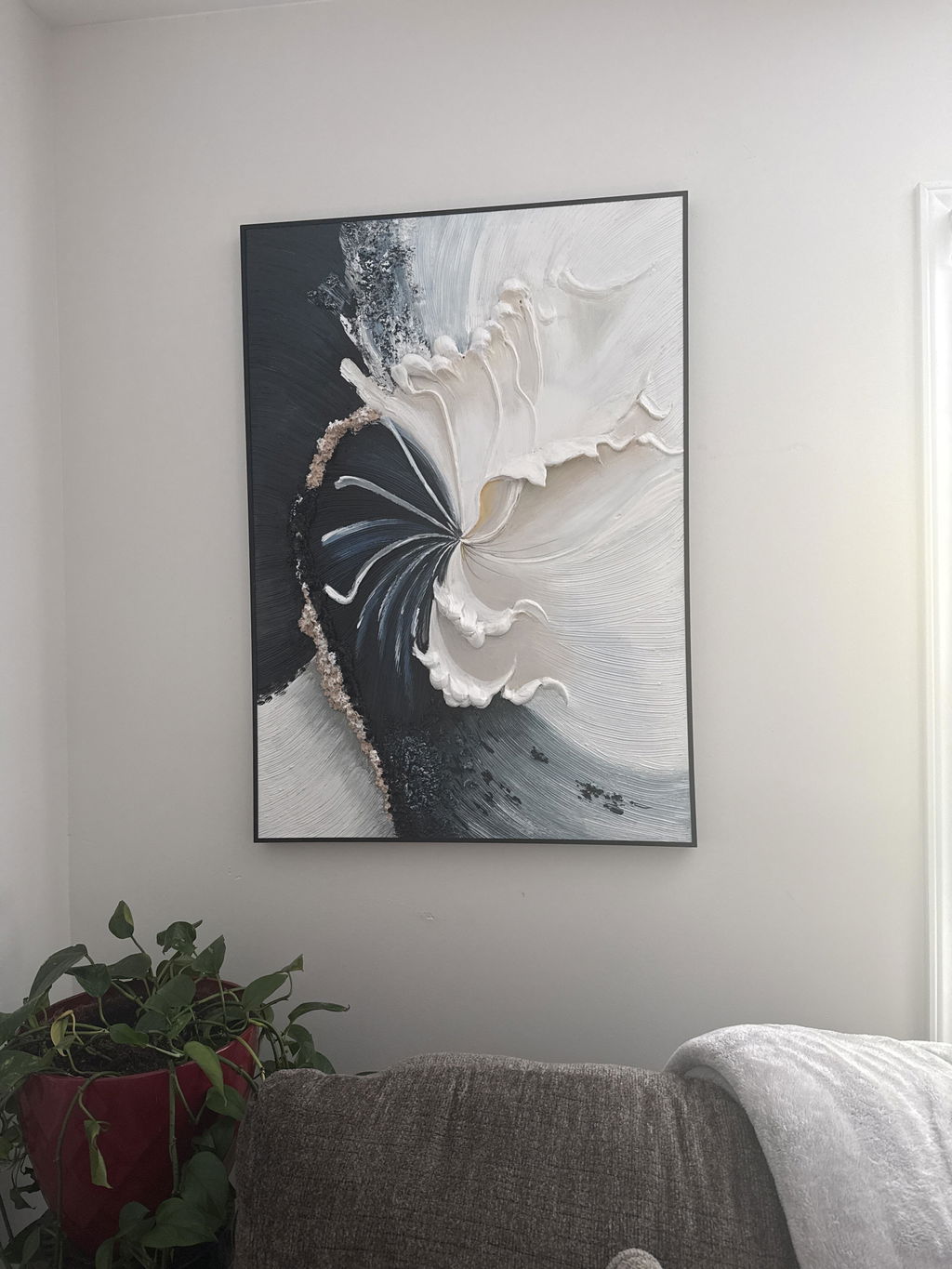
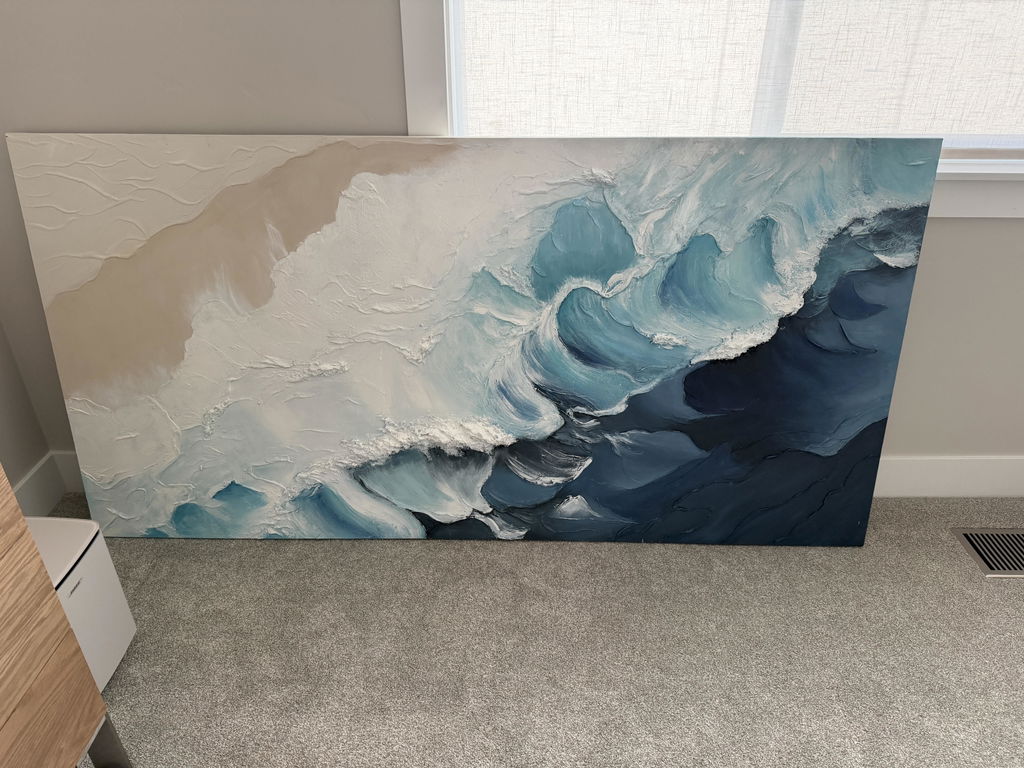
We often observe in staging consultations that "performative authenticity"—the visible evidence of human labor through impasto textures and palette knife marks—acts as a psychological anchor for buyers. It differentiates a bespoke property from a high-end rental. By selecting original works, you are not just buying a visual; you are acquiring the "biochemical crystallization of apex human visual attention," a concept supported by Stockton University research into the neural mechanisms of top-tier painters.
Staging Heuristics: The Rules of Versatile Curation
Selecting art for a home you intend to sell requires a different mental framework than selecting art for a forever home. You must balance personal resonance with "market-wide appeal." To achieve this, we utilize several industry-standard heuristics designed to minimize buyer friction.
1. Scale over Subject
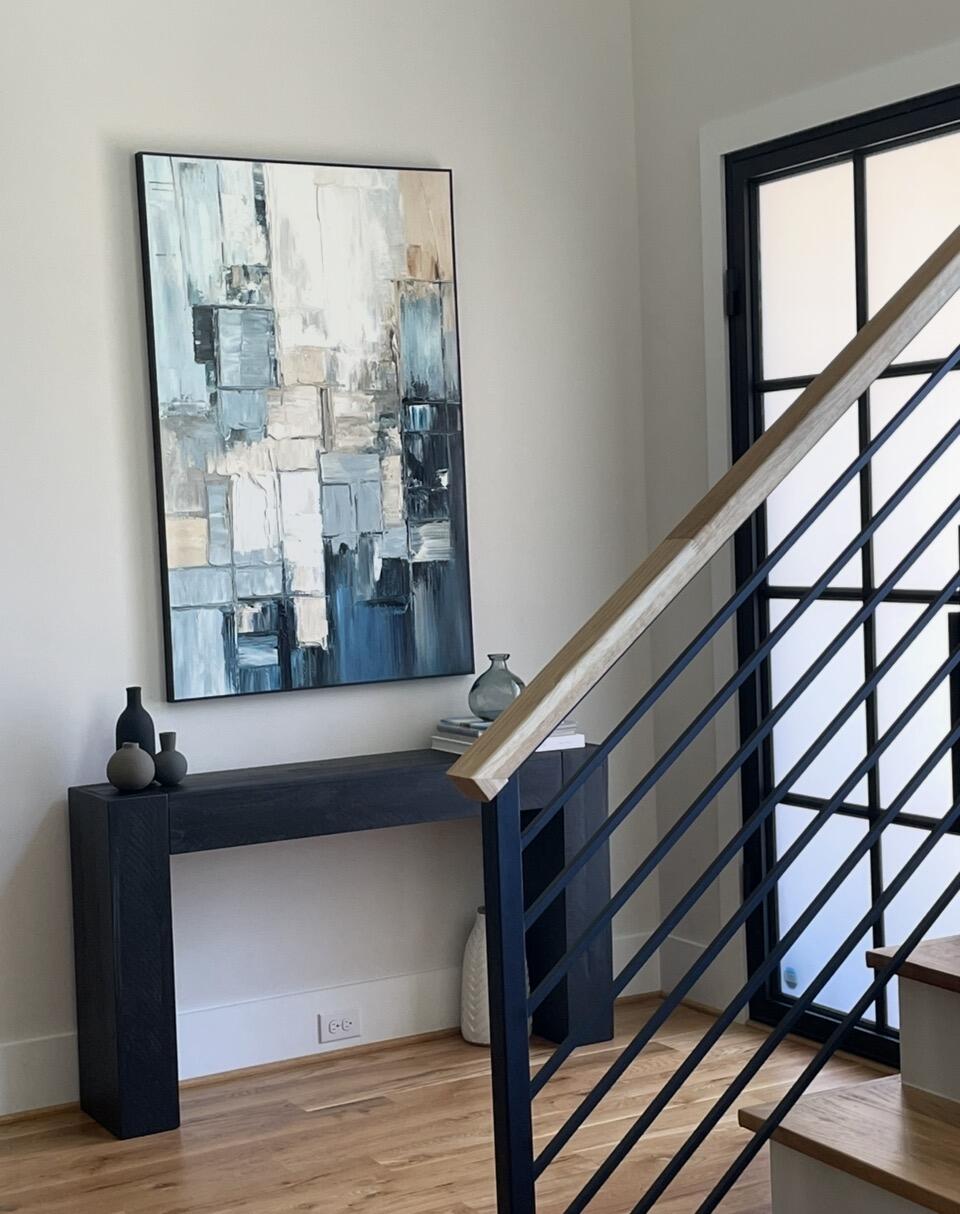
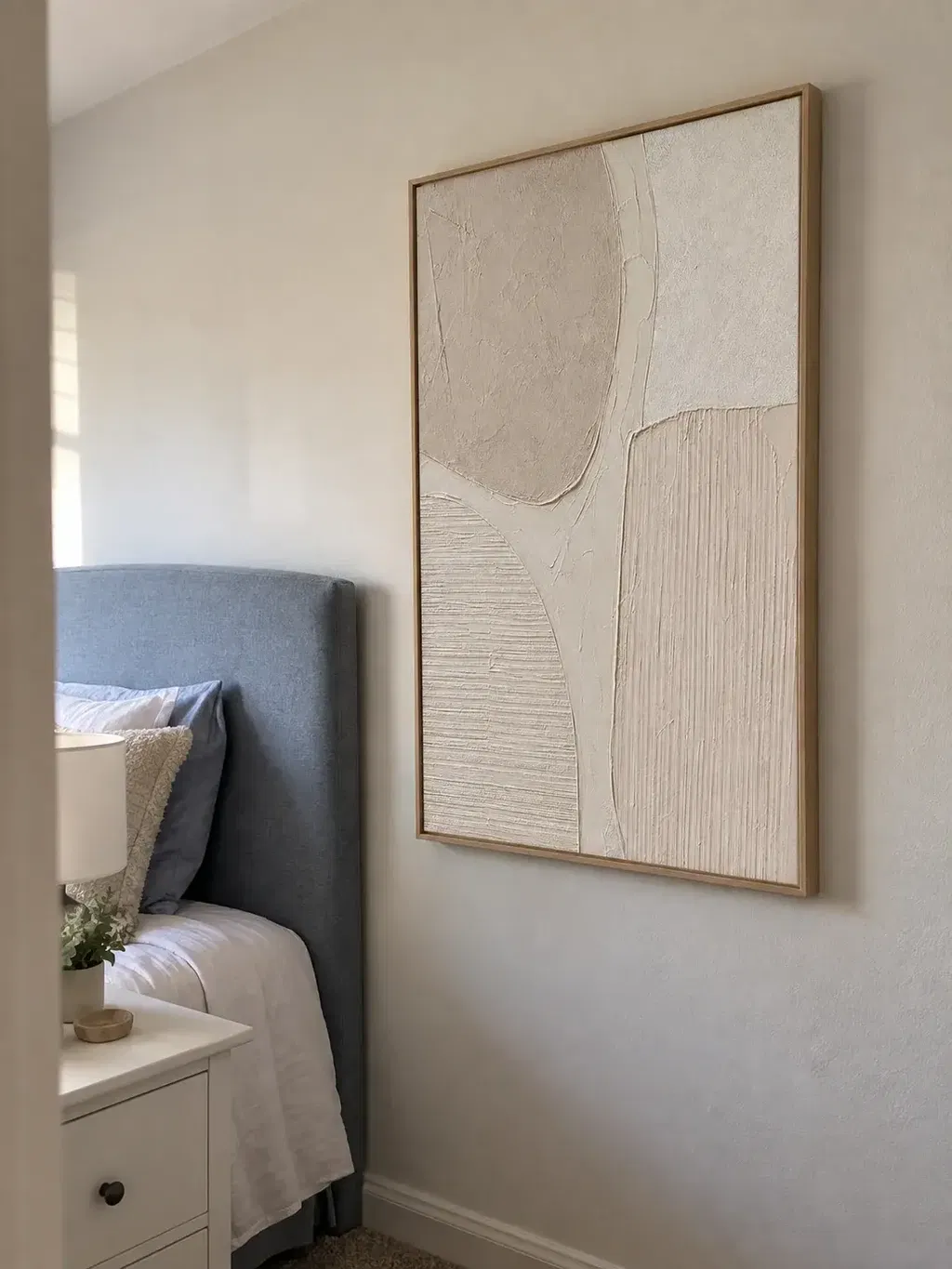
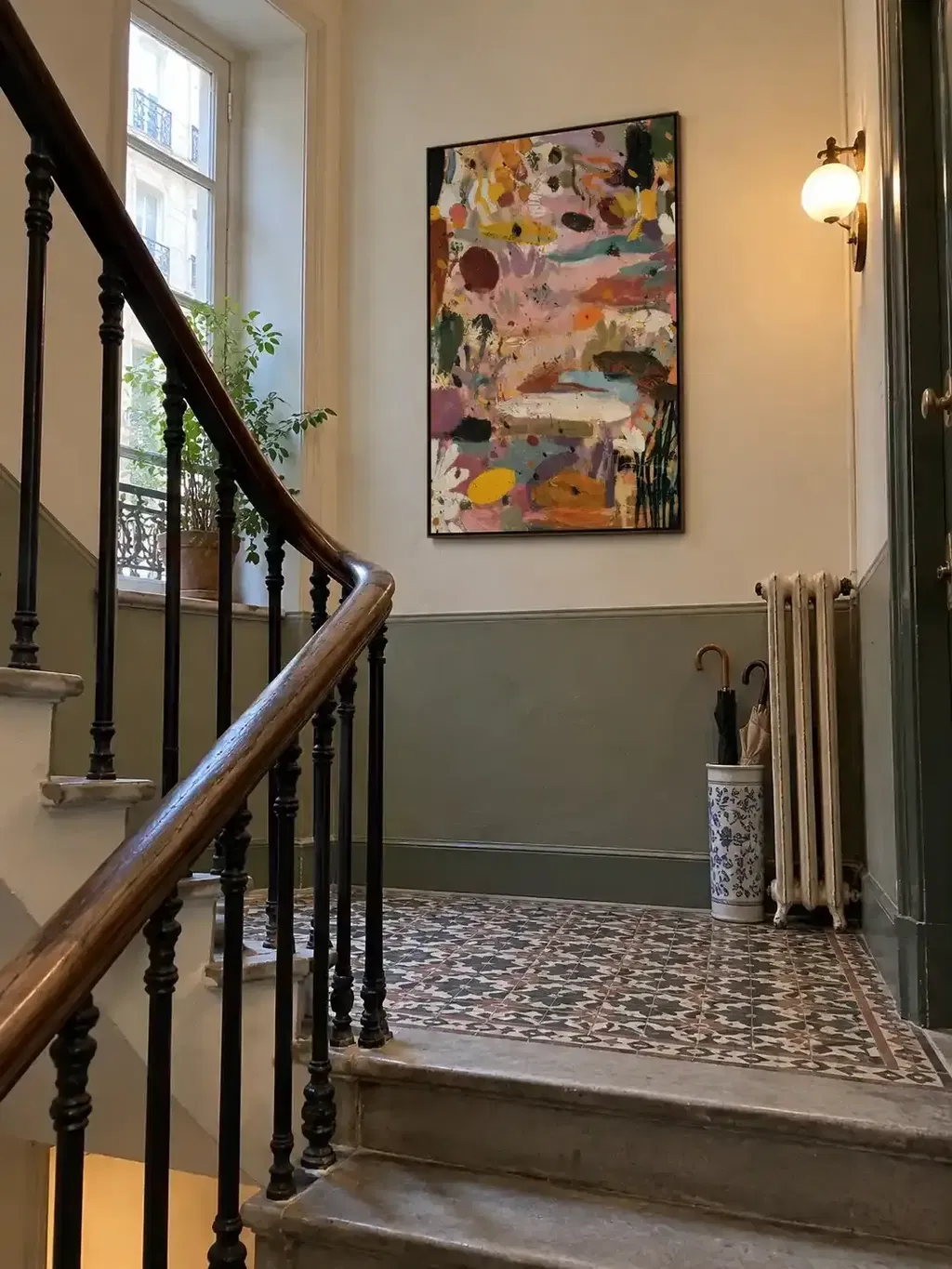
In high-end staging, the size of the work often carries more "perceived value weight" than the complexity of the subject matter. A single, large-scale abstract piece creates a sense of grandeur and architectural intent. Multiple smaller works can feel cluttered and "lived-in," which creates a psychological barrier for buyers trying to project their own lives into the space.
2. The 60-30-10 Color Rule
To ensure the art harmonizes with the property's existing palette, we recommend a specific color distribution:
- 60% Primary Neutral: The art should echo the room's main wall or flooring color to provide a sense of "belonging."
- 30% Secondary Accents: Incorporate tones from rugs, drapery, or large furniture.
- 10% Pop of Color: Introduce a controlled "focal point" color that draws the eye without overwhelming the senses.
3. Avoiding the "Figurative Friction"
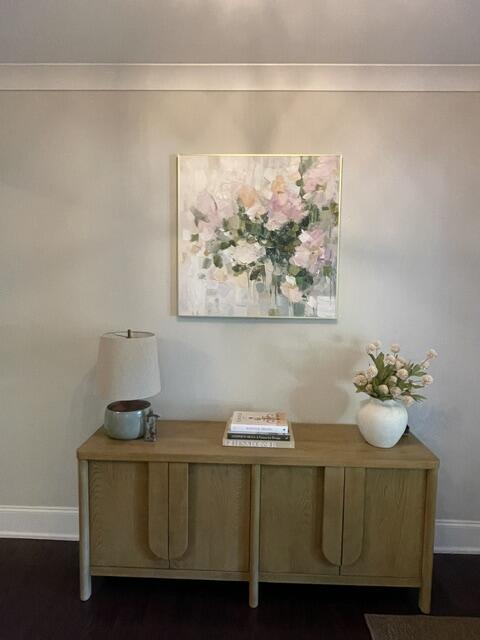
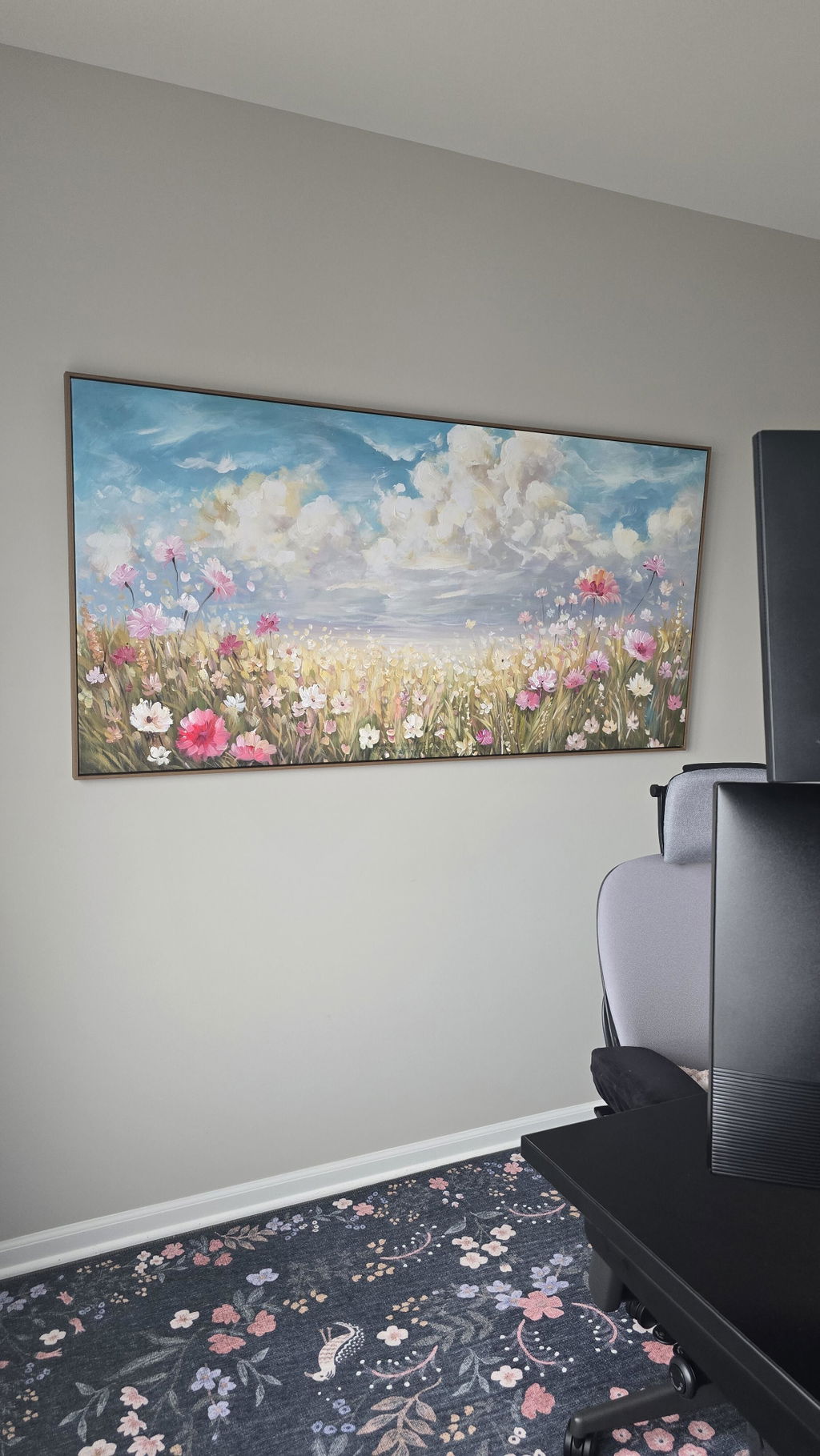
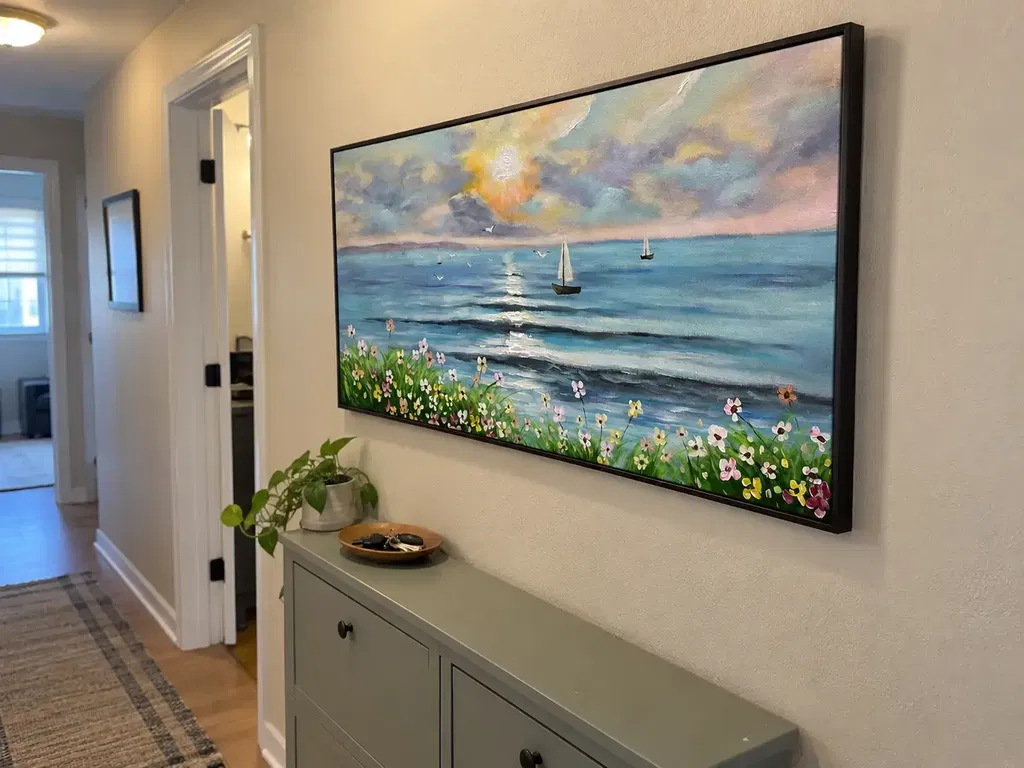
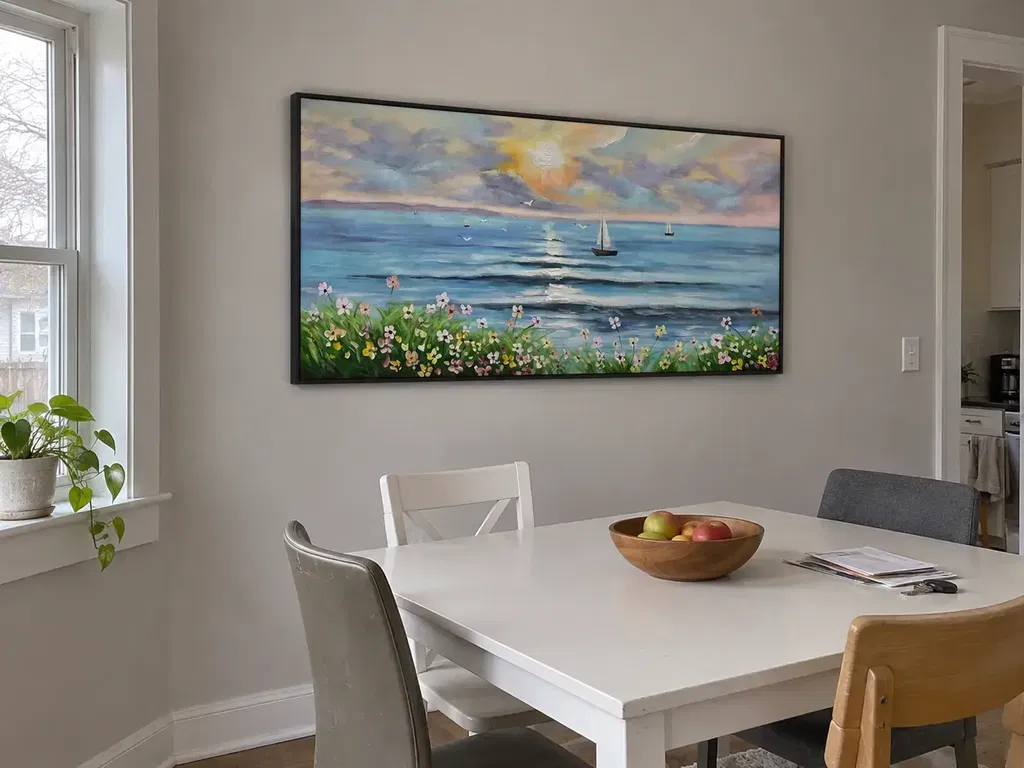
While you may love a portrait of a specific person, figurative art (faces or recognizable people) can be polarizing. It forces the buyer to interact with a "stranger" in their potential home. Experts recommend organic abstracts or atmospheric landscapes. These styles are "versatile" because they allow the viewer's mind to wander, reducing imagination friction by an estimated 73% according to virtual staging market data.
Logic Summary: These heuristics are based on common patterns in professional home staging and real estate psychology. They are intended as a self-check for quick selection, though individual room geometry and lighting conditions may require adjustments.
| Staging Factor | High-Resale Choice | Perceived Value Impact | Rationale |
|---|---|---|---|
| Medium | Hand-painted Oil/Acrylic | High | Signals "Custom-Built" quality |
| Scale | Oversized/Large | High | Enhances architectural volume |
| Subject | Organic Abstract | Moderate | Reduces buyer imagination friction |
| Texture | Heavy Impasto | High | Catches gallery lighting; proves "Real" |
| Frame | Minimalist Float Frame | Moderate | Modern, clean, and unobtrusive |
Quantifying the Link Between Art and Property Value
The impact of art on real estate is not merely anecdotal; it is measurable. A Royal Society CAR model analysis of a decade’s worth of data found that neighborhoods with higher "art" geo-tags experienced greater relative house price ranking gains. This "catalytic effect" suggests that art-centric environments attract higher-quality private investment.
For the individual homeowner, professional staging—which heavily relies on strategic art placement—typically results in homes selling 6% to 20% closer to the list price. In the digital-first real estate market, aesthetic appeal drives the initial click-through. Once a buyer is physically in the space, the "tactile fruition" of the artwork—the mm-scale texture of the pigments—stimulates intrinsic satisfaction. This is not just "decorating"; it is "creative placemaking" that reverses feelings of blight and makes a property attractive to responsible, long-term buyers.

Case Study: The Commercial Landmark Effect
The power of hand-painted art to drive value is even more evident in commercial contexts. Chicago’s Millennium Park public art projects drove an estimated $1.4 billion in real estate-related growth. Similarly, the Avenue of the Arts in Philadelphia saw mural infrastructure revamps trigger large-scale private investments. For a homeowner, a large original mural or a series of commissioned canvases functions as a "permanent physical billboard" for the home’s luxury status.
Technical Integrity: The "Invisible Premium"
When curating for resale, the longevity and safety of the art are as important as its appearance. High-net-worth buyers are increasingly sensitive to Indoor Air Quality (IAQ) and ESG (Environmental, Social, and Governance) standards.
The Low-VOC Promise
Indoor air pollution can be significantly higher than outdoor levels. For properties aiming for LEED or WELL certification, low-VOC (Volatile Organic Compound) paints are a prerequisite. Research from Aalto University shows that modern coatings, particularly water-based acrylics, emit significantly lower toxic VOCs during the curing process than traditional oil solvents.
However, "odorless" does not always mean "non-toxic." Princeton University EHS warns that chronic inhalation of mineral spirits and turpentine can lead to central nervous system issues. When selecting art, verify that the studio adheres to strict safety protocols, such as using walnut oil as a non-toxic replacement for industrial turpentine.
Material Durability and Lightfastness
A piece that fades or yellows over time is a liability, not an asset.
- Support Induced Discoloration (SID): We’ve observed a common technical failure where water-soluble impurities in cotton canvases are drawn into thick acrylic mediums, causing a yellow tint. High-end studios prevent this by using specialized "Gesso" barriers.
- Lightfastness: The ASTM D4303 standard provides a protocol for testing how pigments respond to indoor illumination. For a resale-ready collection, ensure the pigments used have high lightfastness ratings (CIE 1976 Lab* color difference equation) to prevent the "tragic fading" often seen in cheaper materials like Smalt or certain organic dyes.
2026 Design Trends: Texture as the Soul of Luxury
Looking toward 2026, high-end interior design is moving away from "assembly-line" perfection and toward "understated elegance" with texture as its soul. Zillow search data shows a 21% rise in mentions of "artisan craftsmanship" and a 329% skyrocket in searches for "custom framing."
The Rise of Biophilic Murals
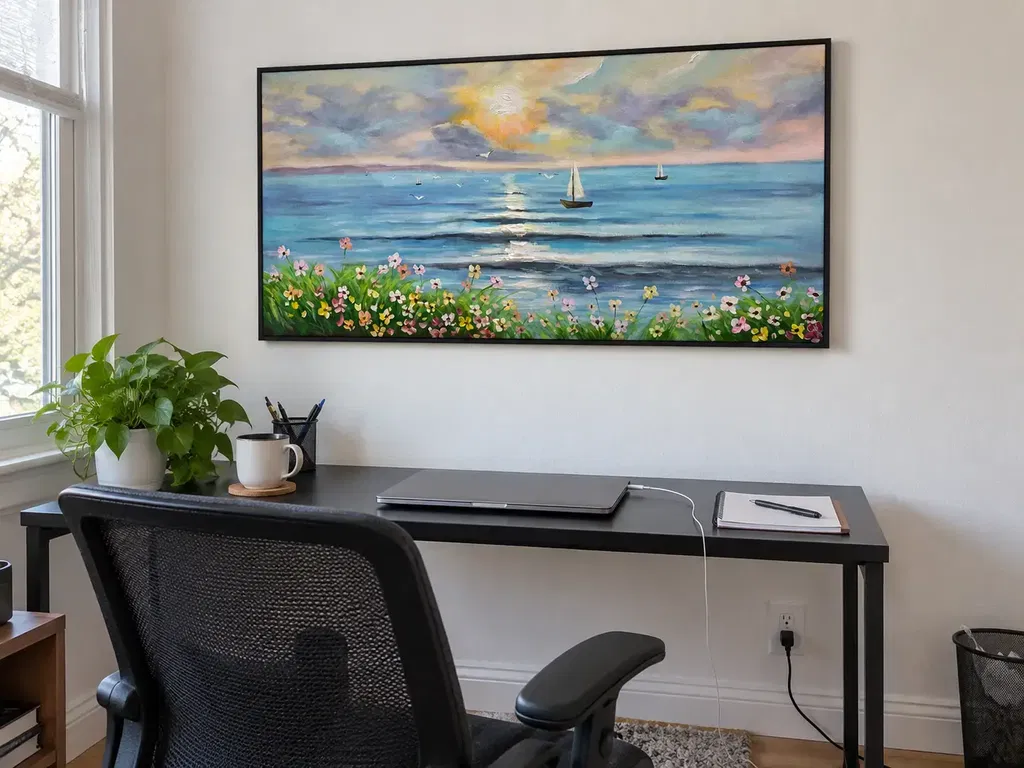
One of the most effective ways to increase a property’s "wellness" score is through biophilic design. Hand-painted natural landscapes produce the same stress-reduction effects in the brain as being outdoors. A University of Pennsylvania review noted that environmental artworks reduced stress in 61% of patients and improved mood in 73%. In a residential context, a biophilic mural in a home office or bedroom can be marketed as "public health infrastructure" for the homeowner, potentially reducing burnout and cognitive fatigue.
The "Powder Room" Revolution
In the NKBA 2025 Design Awards, a dominant trend emerged: wrapping murals entirely around the walls of powder rooms to create "immersive escapism." This "Panoramic Hand-Painted" approach turns a small, functional space into a high-impact "jewel box" that leaves a lasting impression on potential buyers.

Ethical Curating: The Social Value Bonus
Modern buyers, particularly millennials and Gen Z, value "fair trade" in the creative economy. The NYC Comptroller report highlights that while the creative industry adds $1.2 trillion to the U.S. GDP, many freelance artists remain financially vulnerable.
By explicitly supporting artists who receive fair compensation—a value shared by 87% of consumers according to the Wharton School—you add a layer of "social cohesion" to your property. This narrative of "supporting local craft" acts as a powerful relational glue, especially in high-end communities or HOAs that prioritize cultural heritage.
Finalizing the Strategic Investment
Curating art for resale is an exercise in "strategic authenticity." It requires moving beyond the "disposable decor" mindset and viewing each brushstroke as a contribution to the property's cultural heritage. By prioritizing scale, texture, and technical integrity, you ensure that your art collection serves as a silent, yet powerful, advocate for the home’s value.
Whether you are preparing a penthouse for a spring listing or building a portfolio of investment properties, remember that the most versatile art is that which bridges the gap between the artist's "essential identity" and the buyer's future aspirations. In a world of digital noise, the physical reality of hand-painted pigment remains the ultimate luxury.
Methodology & Assumptions (Modeling Note): The financial and psychological impacts mentioned in this article are based on scenario modeling and historical real estate data.
- Model Type: Deterministic parameterized model based on industry heuristics and peer-reviewed studies.
- Boundary Conditions: These trends apply primarily to high-end residential markets in the US, UK, and China. Individual property ROI depends on local market saturation and architectural compatibility.
| Parameter | Estimated Value | Unit | Rationale / Source |
|---|---|---|---|
| Staging ROI | 6–20 | % | Las Vegas Business Press / NAIOP |
| AI Art Value Discount | ~60 | % | Columbia University Study |
| Crime Reduction (Murals) | ~40 | % | UMich "Busy Streets Theory" |
| Artisan Search Growth | 21 | % | Zillow 2026 Trend Data |
| Mood Improvement (Art) | 73 | % | UPenn Neuroaesthetics Review |
Disclaimer: This article is for informational purposes only and does not constitute professional legal, financial, or real estate advice. Readers should consult with qualified professionals regarding property investments and environmental safety standards.
Sources
- Marketplace: The expensive art market continues to struggle
- Columbia University: Human-Made vs. AI Art Study
- Royal Society: Quantifying the link between art and property prices
- University of Chicago: Does Artwork Preserve Essential Identity?
- UPenn: Visual Art in the Built Environment Review
- EPA: Indoor Air Quality and Low-VOC Paints
- Artsy: 2024 Art Market Report
- WHO: Scoping Review on Arts and Health