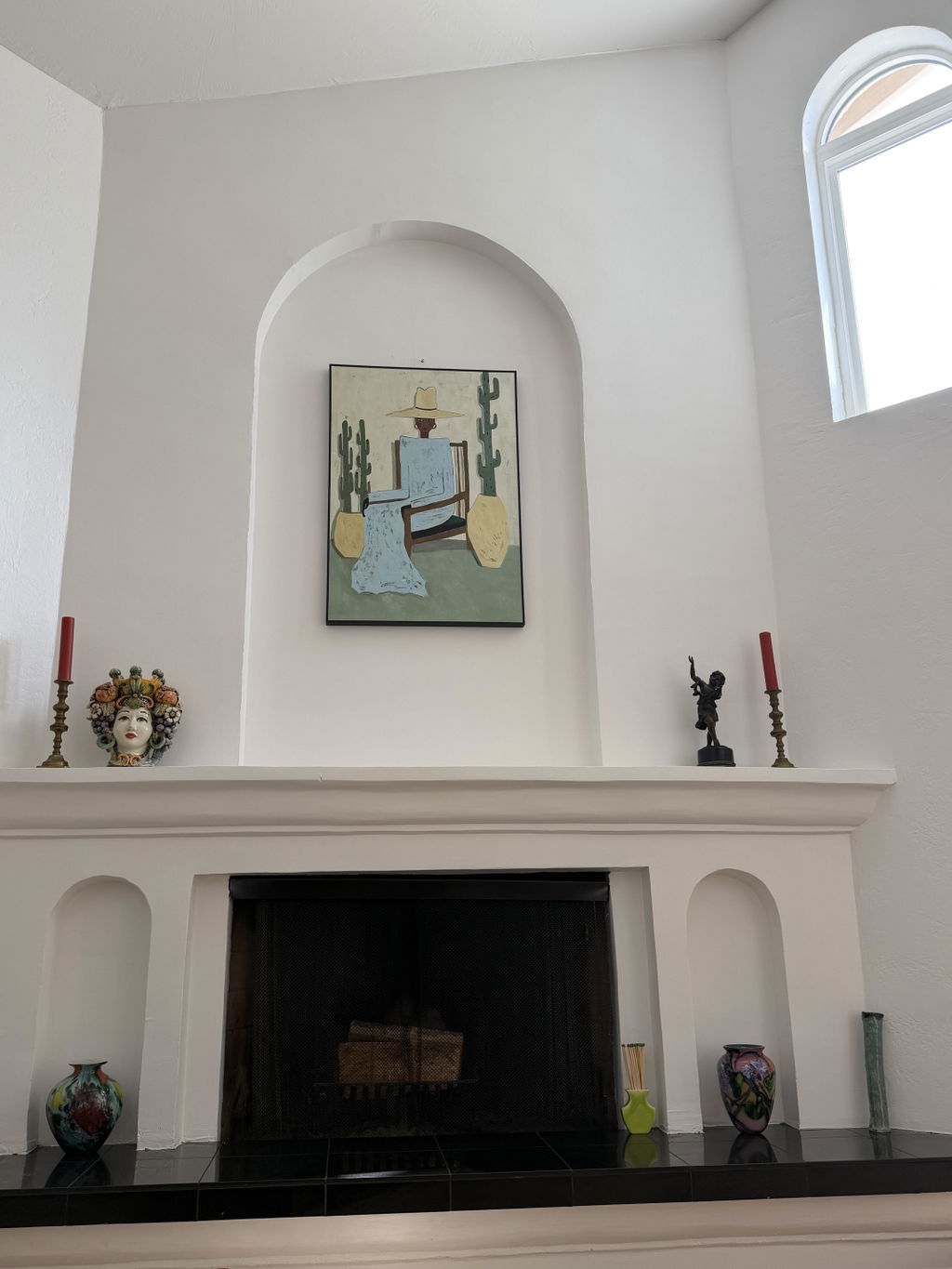
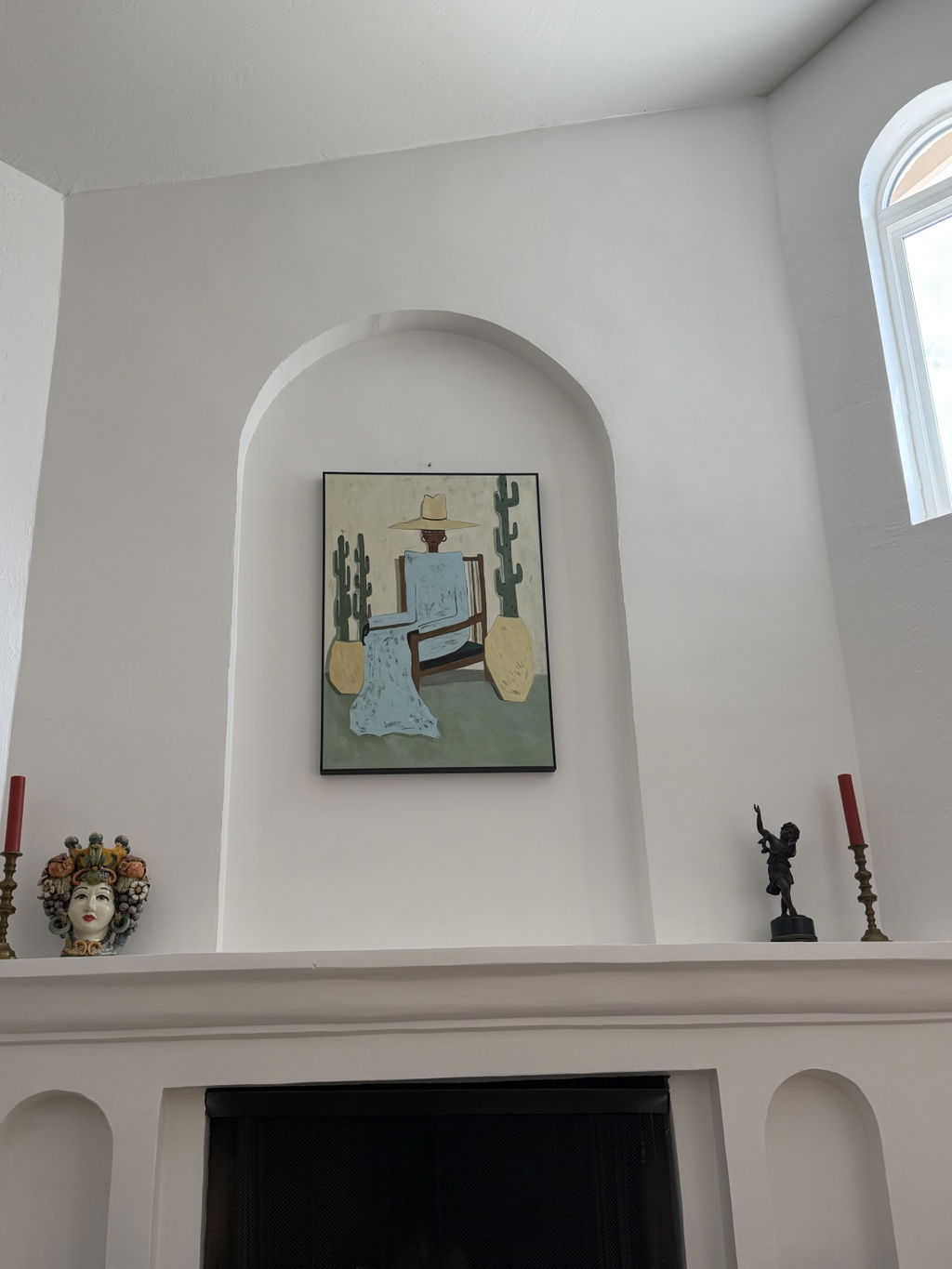
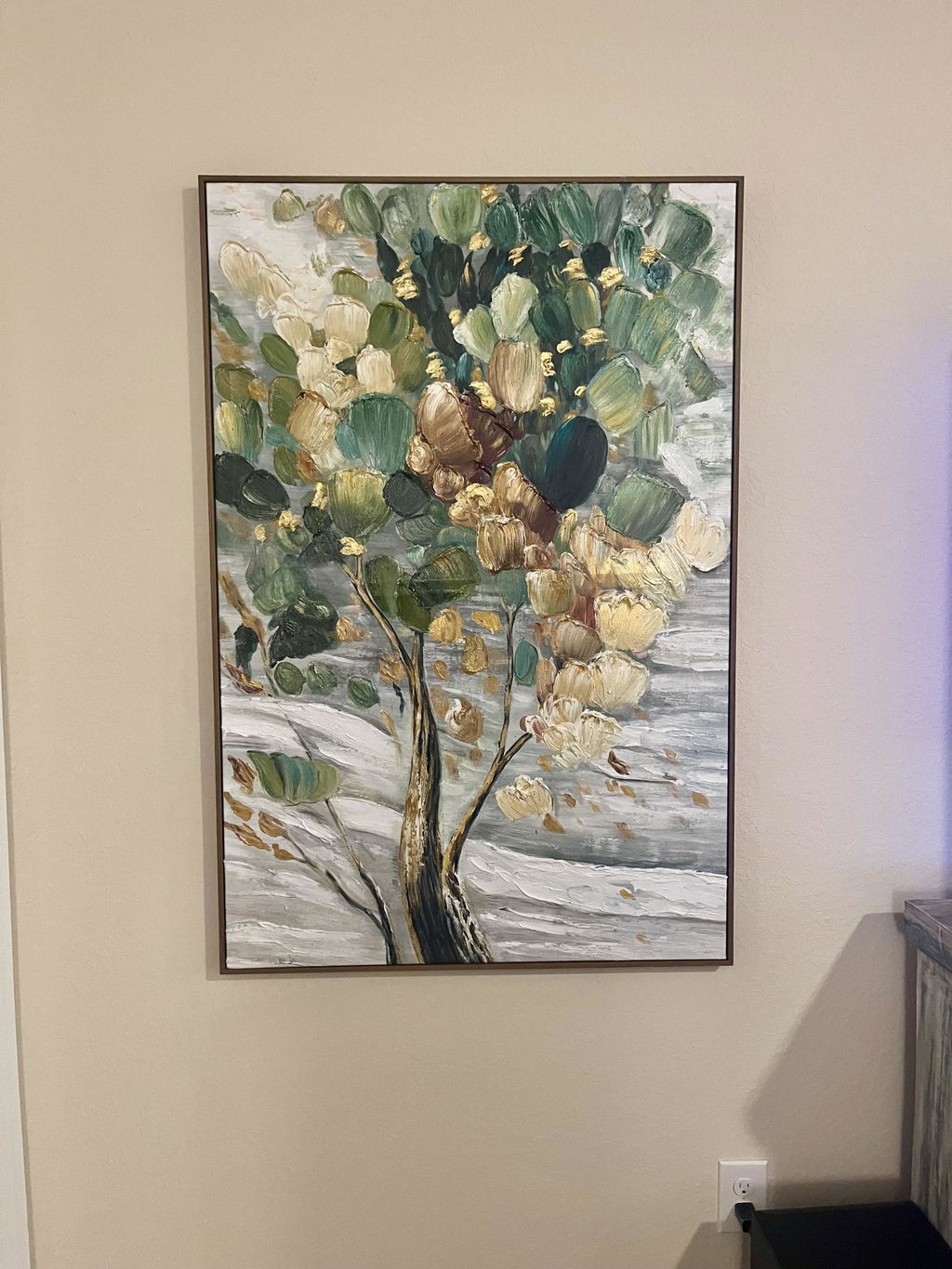
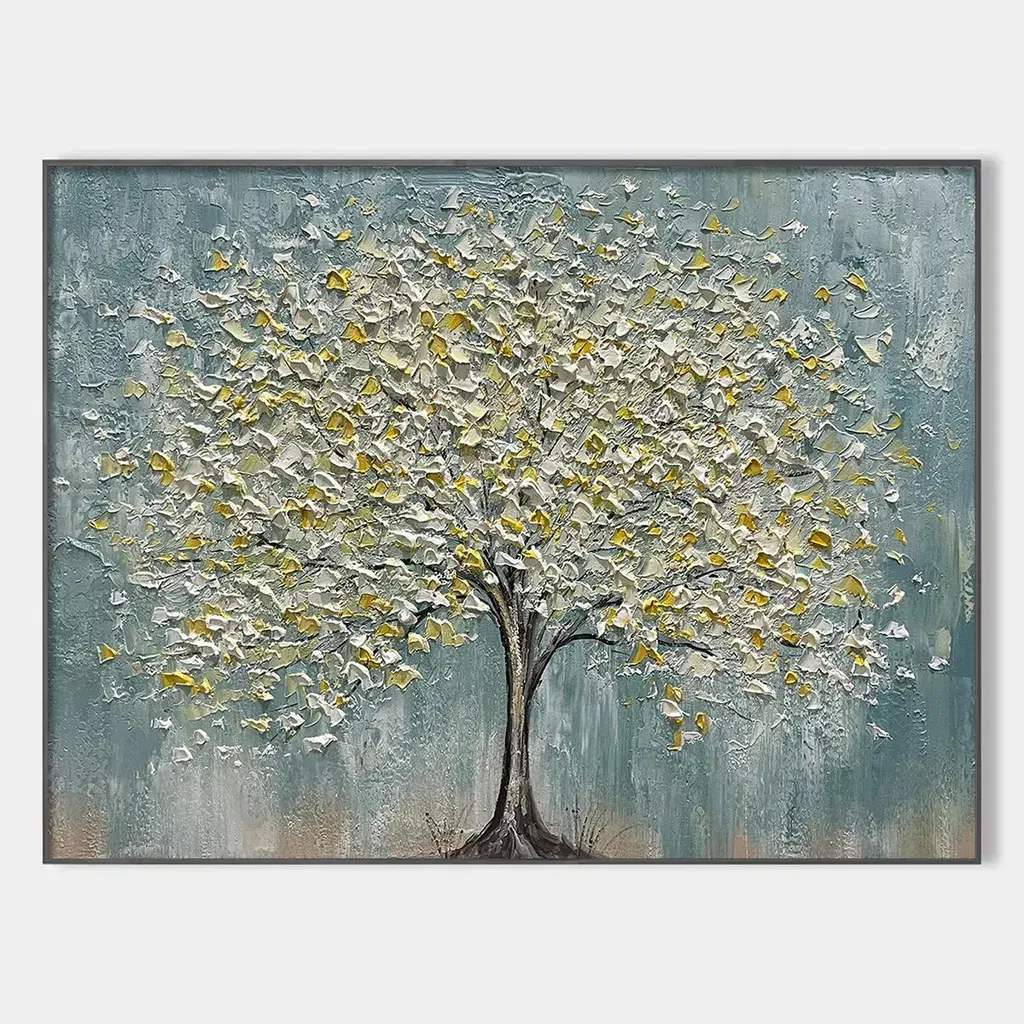
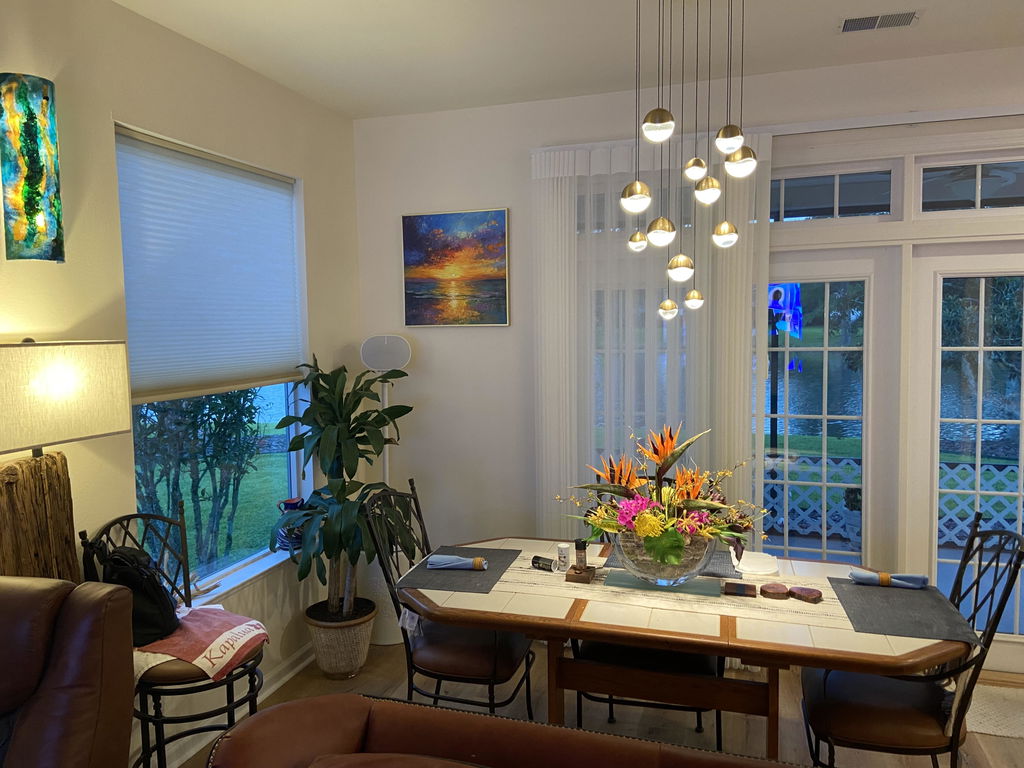
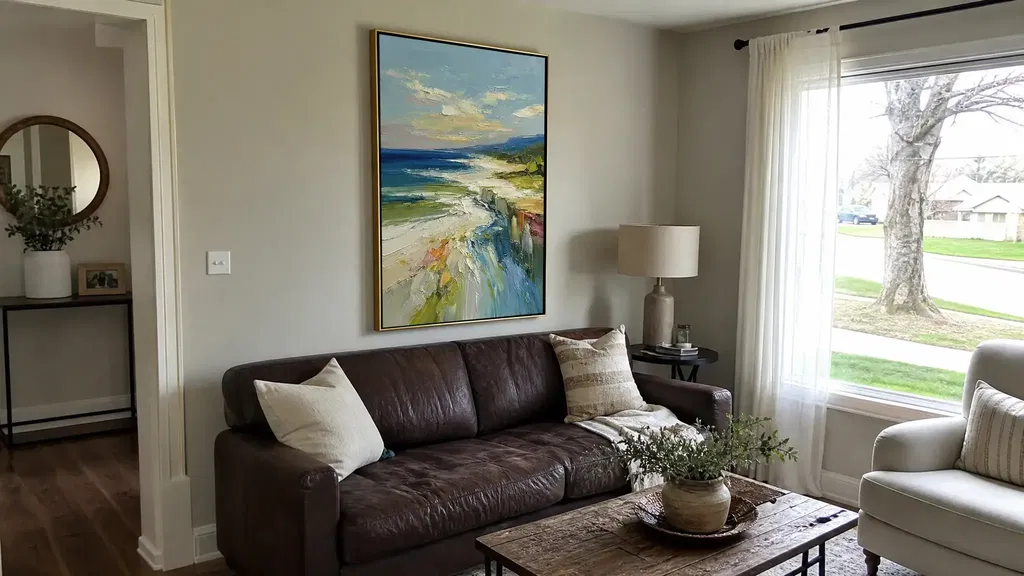
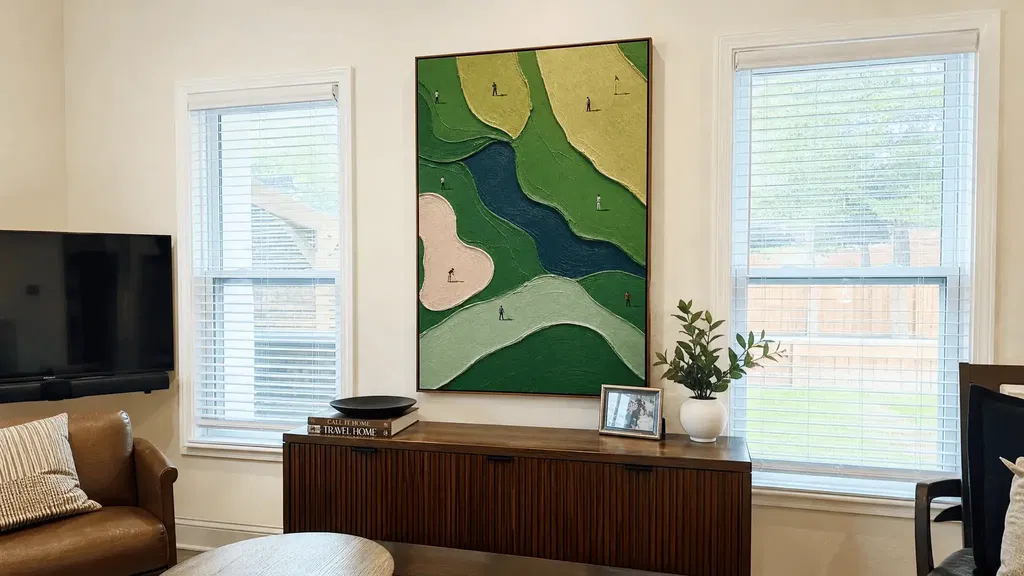
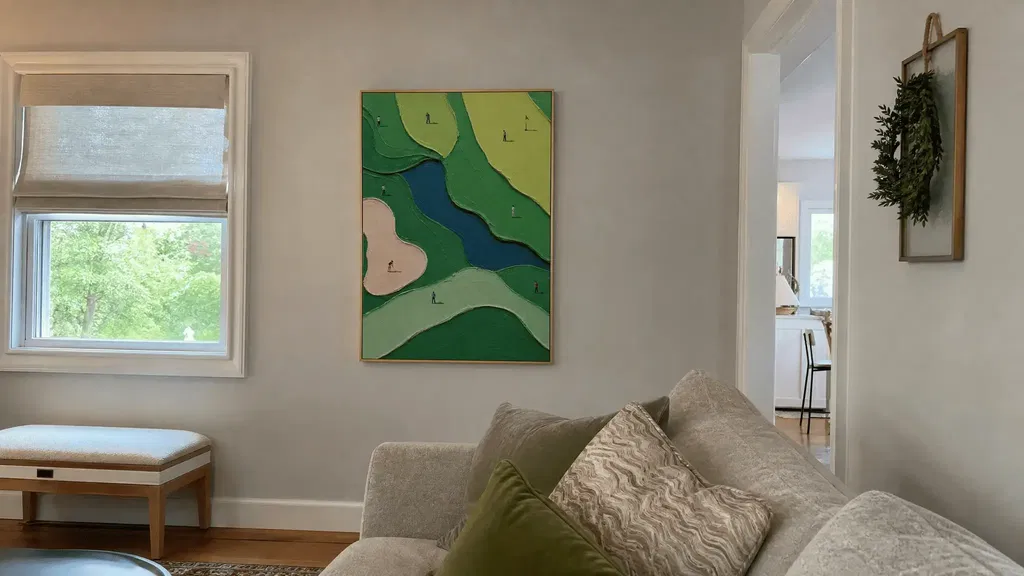
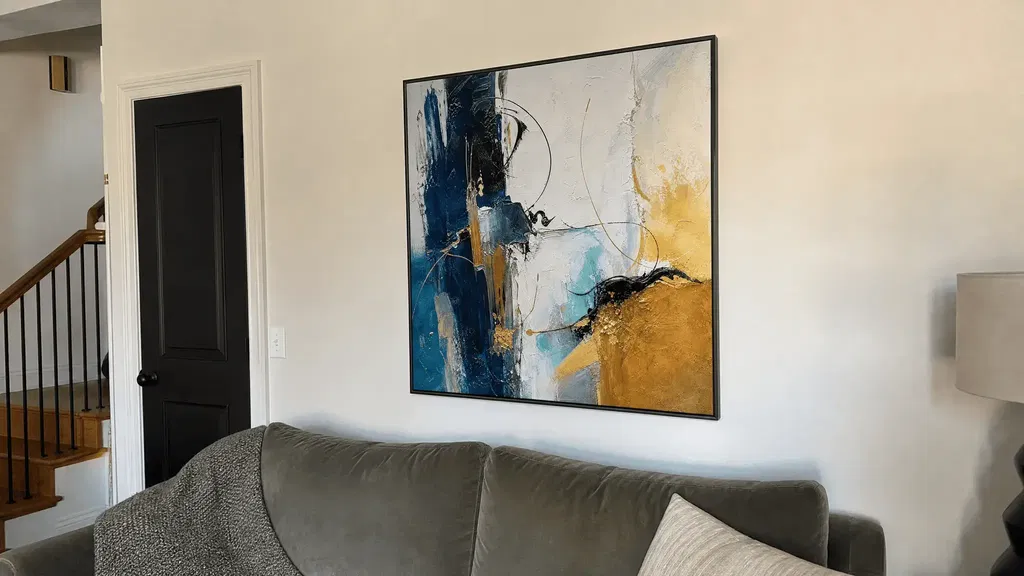
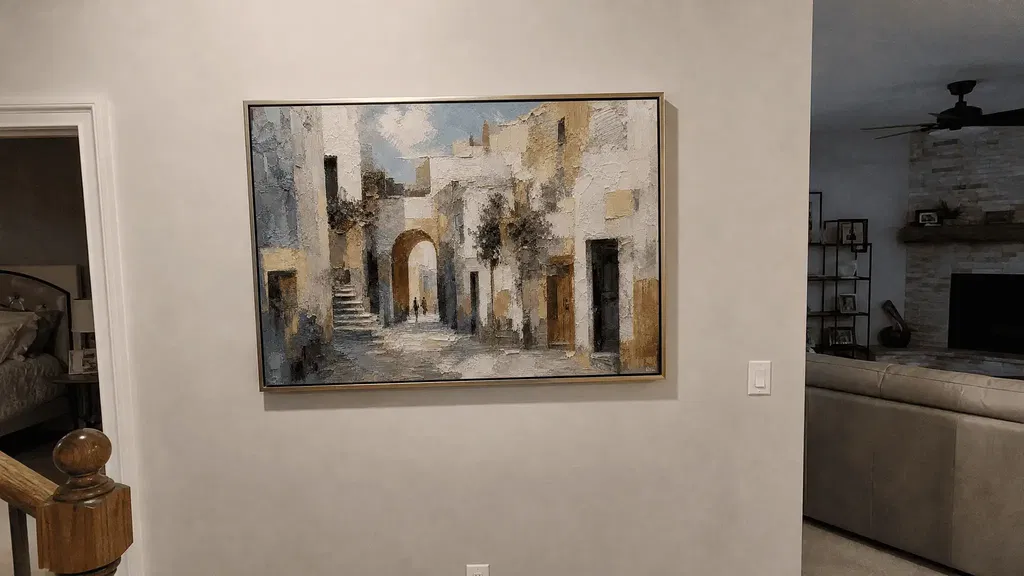
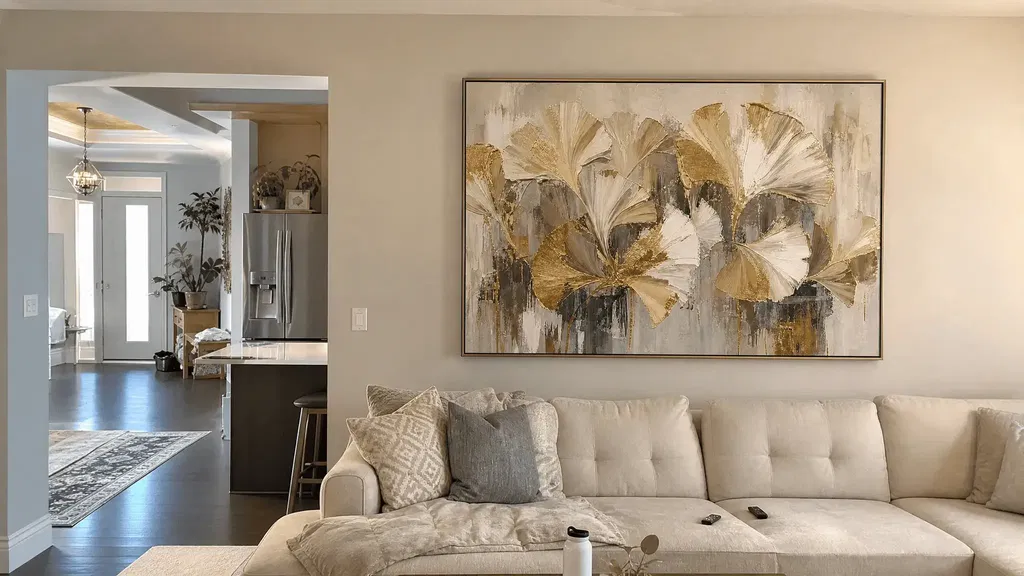
Original art vs print comes down to one simple question: do you want the room to feel more dimensional and one-of-a-kind, or do you mainly need a polished look at a lower price? The premium makes the most sense when the piece will be seen up close, act as a focal point, or carry personal meaning. If you just need wall coverage or easy styling flexibility, a good print can be the smarter buy.
What Changes When You Buy Original Texture
Original, Print, and Hand-Embellished Print
A true original is one-of-one artwork, so the surface, brushwork, and small variations are part of what you own. A standard print reproduces the image on a flat or lightly textured base, which makes it easier to mass produce and usually easier on the budget. A hand-embellished print sits in the middle: it starts as a print, then gets added surface work by hand, so it may pick up some texture without becoming a fully original painting.
That difference matters because buyers often compare the image and miss the surface. In the original art vs print decision, the label tells you more than the picture does. The closer the surface is to a real painted build-up, the more likely the piece is to catch light, show shadows, and feel less like a repeatable decor item.

Why Texture Changes the First Impression
Texture changes the first impression because it adds visual weight. Interior design coverage on wall art notes that raised surfaces create depth and movement that flat prints cannot fully replicate, which is why textured pieces often anchor a room more strongly than smooth reproductions do. In plain terms, a textured piece tends to look more substantial from across the room and more interesting when you walk past it.
That is why original textured wall art vs canvas print is not just a surface preference. In a living room, entryway, or bedroom wall that you see every day, texture can make the art feel more present. A print can still look clean and stylish, but it usually reads flatter and more uniform.
What Photos Can and Cannot Show
Online photos help, but they rarely show the full effect. A wide listing image can make two pieces look more similar than they will in person, especially if the texture is shallow or the lighting is soft. Buyers should look for close-ups, side-angle shots, and edge detail, because those are the quickest clues that a listing is showing real surface variation rather than just a textured-looking image.
A practical check is to ask yourself whether the texture is visible from the same distance you will actually view it at home. If you will stand six to ten feet away from the wall, the question is not whether every ridge is visible in the photo. It is whether the piece still feels dimensional at room distance. That is the part a product page can underplay.
If you want a deeper verification path, authenticity checks can help you separate original work from a listing that only looks dimensional.
Flat prints and impasto depth also helps explain why flat surfaces rarely match the same visual effect.
Why the Premium Costs More
Originals cost more for the same reason custom work usually costs more: they take manual labor, they cannot be duplicated at scale, and each finished piece is inherently unique. A print can be reproduced repeatedly once the image file exists. An original has to be created, finished, and handled as a single object. That is the basic price logic behind the premium.
| Format | Uniqueness | Surface Feel | Production Logic | Best Use Case |
|---|---|---|---|---|
| Original textured art | One-of-one | Strongest tactile and visual depth | Manual work, no true mass reproduction | Statement walls, gifts, focal spaces |
| Hand-embellished print | Hybrid and limited | Some added texture | Printed base plus hand-applied detail | Buyers who want some depth at a lower cost |
| Standard print | Repeatable | Flatter, cleaner surface | Easy to reproduce at scale | Budget-led decorating, larger coverage, flexible styling |
The table does not mean the original is always the better purchase. It means you are paying for uniqueness, handwork, and the chance that the surface itself becomes part of the appeal. If those are not important to you, the premium can be wasted on a room where a print would do the job just as well.

Hand-painted art value is the better follow-up when you want the story behind the price difference, not just the visual one.
Does Original Textured Art Hold Its Value?
Original textured art may retain perceived value better than a mass-produced print, but that is not the same as resale value or appreciation. Decorative worth and financial worth are different questions. If you buy for the room, the piece can feel worth it because you enjoy seeing it every day, not because it behaves like an investment.
A safer way to think about original textured art is this: the value is strongest when the artist, condition, and demand line up, and weakest when you are hoping the artwork will pay you back later. For original textured art vs prints, the original usually has more uniqueness and presence, but that does not make it a financial asset.
If you want a cautious value check, focus on whether the piece still feels desirable if you never resell it. That question is usually more useful than asking whether it will hold value in a market sense.
When the Premium Makes Sense
Choose an Original When Impact Matters Most
Paying for an original is easiest to justify when the art is doing real work in the room. That usually means a main living room wall, an entryway, a dining area, or a gift where you want the piece to feel personal instead of generic. Architectural Digest's buying guidance points to the same basic idea: textured, distinctive work is often the right premium choice for statement spaces and close viewing.
A good rule of thumb is simple. If the wall is important enough that you will notice it every day, and the budget can handle the upgrade without shrinking the rest of the room, an original textured piece is easier to defend. If the wall is background space, the premium is less likely to matter.
Choose a Print When Budget or Flexibility Leads
Choose a print when you need coverage, easy styling changes, or a lower upfront cost. That is especially true for secondary bedrooms, hallways, home offices, and temporary spaces where you may change the decor later. A print can still look polished; it just gives you more freedom to scale up without paying for handwork.
This is where the decision often flips. If you need a larger piece and the budget is tight, a print is usually the more rational choice. If you need one wall to carry the room, the original becomes more attractive because the extra depth has a better chance of paying off visually.
Where Hand-Embellished Prints Fit
Hand-embellished prints are best treated as a middle option, not a substitute for an original. They can give you some surface variation and a little more dimensionality than a plain print, which makes them useful when you want texture but cannot justify a full original. The catch is that the amount of handwork can vary, so the label alone does not tell you how close the piece will feel to a true painting.
This option makes sense if you want a softer upgrade than a standard print and you are willing to verify the listing closely. If the goal is a real one-of-one feel, a hand-embellished print is usually a compromise, not the final answer.
A Quick Buyer Checklist
Before you click buy, check four things: room importance, viewing distance, budget ceiling, and how much originality matters to the person who will see it most. If one of those is a strong match for a textured original, the premium is easier to justify. If all four point toward convenience, a print is probably enough.
A simple shortcut helps: choose an original for impact, a print for flexibility, and a hand-embellished print only when the listing clearly shows real hand-applied detail. That keeps the decision tied to what you will actually get at home, not just what looks good in a thumbnail.
How to Judge the Difference in Person
- Check close-up and side-angle photos first. If the listing never shows the surface from an angle, it is harder to judge whether the texture is real or just suggested by lighting.
- Confirm the format. Make sure the listing clearly says original, hand-embellished print, or print, because those labels change what you should expect.
- Compare the piece at room distance. Ask whether the texture still reads from the same distance you will use in your home.
- Look for proof details. Authenticity notes, edition language, material descriptions, and return terms tell you more than a polished hero image.
- Check timing if the purchase is for a gift or deadline. Shipping and return windows matter more when the art has to arrive on a date.
For a broader browse, wall art options make more sense after you know whether you are shopping for an original, a hybrid piece, or a standard print.
Final Takeaway
Original textured art vs prints is really a choice between presence and practicality. If the piece will be seen up close, anchor a main room, or carry personal meaning, the premium can be worth it. If you mainly need coverage, flexibility, or a lower cost, a print is often the better fit. Compare the texture, check the listing proof, and then browse our modern abstract wall art if an original fits your room and budget.
FAQs
How Do I Know If I'm Looking at a True Original or a Print?
Check the listing language first, then verify the surface. Originals usually show uneven brushwork, layered paint, or other one-of-one surface details, while prints often use edition language or flat production descriptions. If the photos only show a straight-on image, ask for side-angle or close-up shots before you decide.
What Is a Hand-Embellished Print, and Is It Worth Buying?
A hand-embellished print is a printed base with added surface work by hand, so it can feel more dimensional than a standard print. It is worth buying when you want a middle-ground upgrade and the listing clearly shows real added texture. It is less compelling if you want the uniqueness of a true original.
Can Original Textured Art Work in Smaller Rooms?
Yes, if the scale and placement fit the wall. In a small room, a smaller original can still feel premium when it is easy to see up close and does not crowd the space. The key check is viewing distance, because texture matters most when the piece can be appreciated without overwhelming the room.
Why Does a Flat Print Sometimes Feel Less Special?
Flat prints can look clean and intentional, but they usually do not create the same shadow, depth, or tactile presence as a textured piece. That difference matters most in rooms where the art is a focal point. If the wall is mostly background, the gap may matter less.
Can You Mix Prints and Originals in the Same Room?
Yes, and that is often the smartest way to balance budget and impact. Use an original where you want the room to lead, then let prints fill secondary walls or larger stretches of space. Mixing formats works best when the color palette stays consistent and the premium piece has enough room to stand out.