The Illusion of Depth vs. The Reality of Relief
In the pursuit of a curated home, the wall art you choose serves as the final punctuation mark on your interior design. However, a growing frustration exists among aesthetic-driven improvers: the "flatness" of digital prints. While high-definition printing has made art accessible, it has simultaneously stripped away the physical soul of the medium. We frequently hear from clients who initially opted for a premium digital print, only to find that within months, the artwork felt "dead" once placed alongside the rich textures of a wool rug or velvet upholstery.
This phenomenon isn't just a matter of taste; it is rooted in the physics of light and the psychology of human perception. As the high-end auction market sees a retreat from purely financial art assets—sales of pieces over $10 million plummeted 44% in 2024 according to Marketplace.org—consumers are returning to "real application value." They are seeking pieces that offer emotional resonance and physical presence rather than just a famous name on a flat surface.
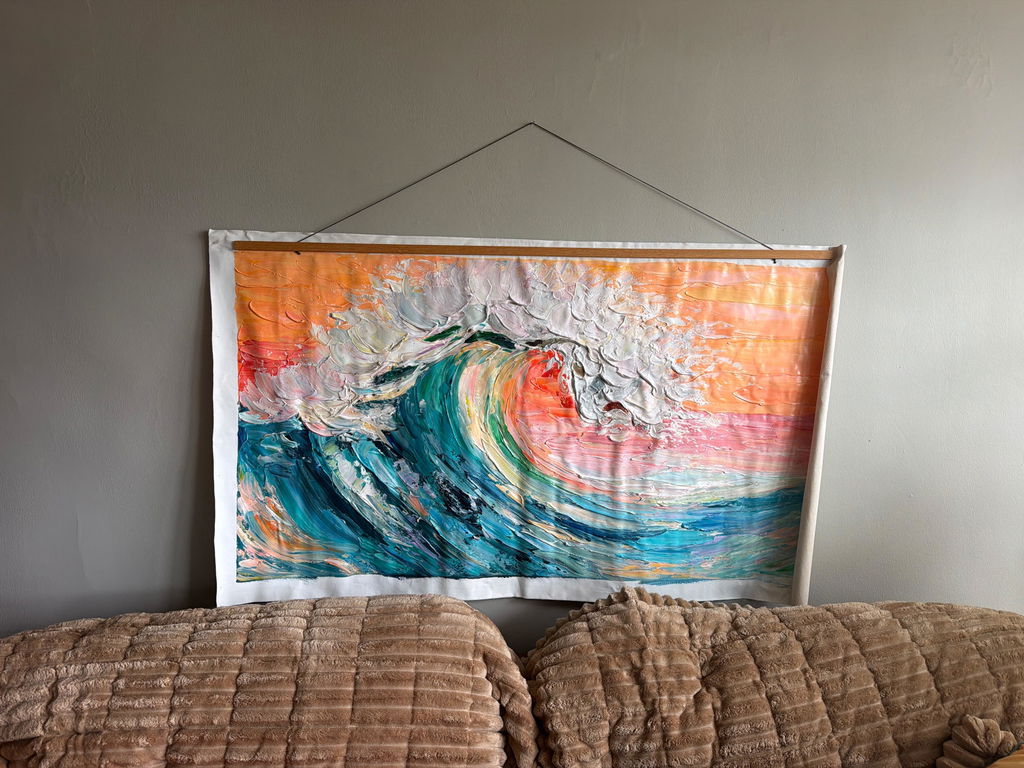
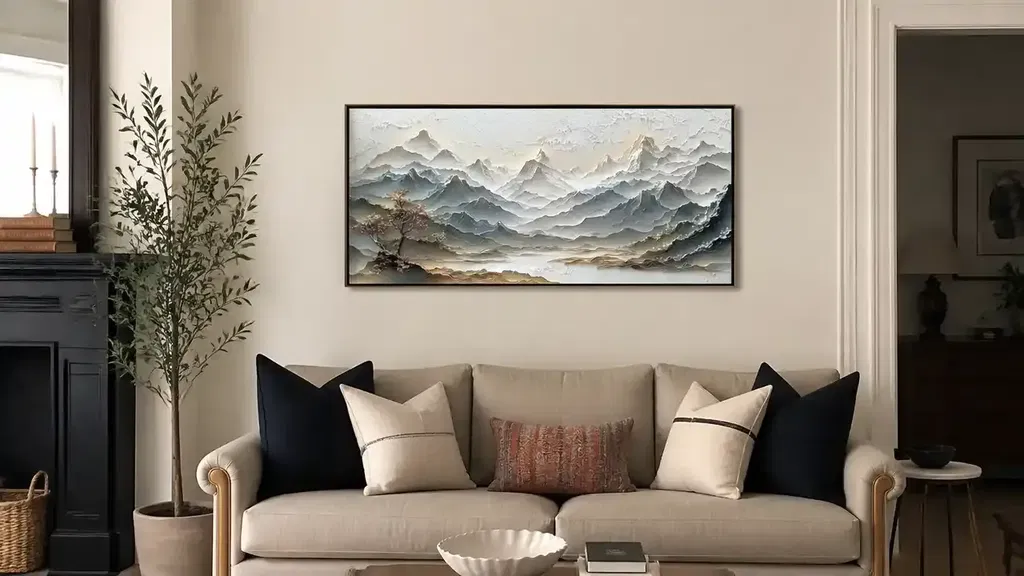
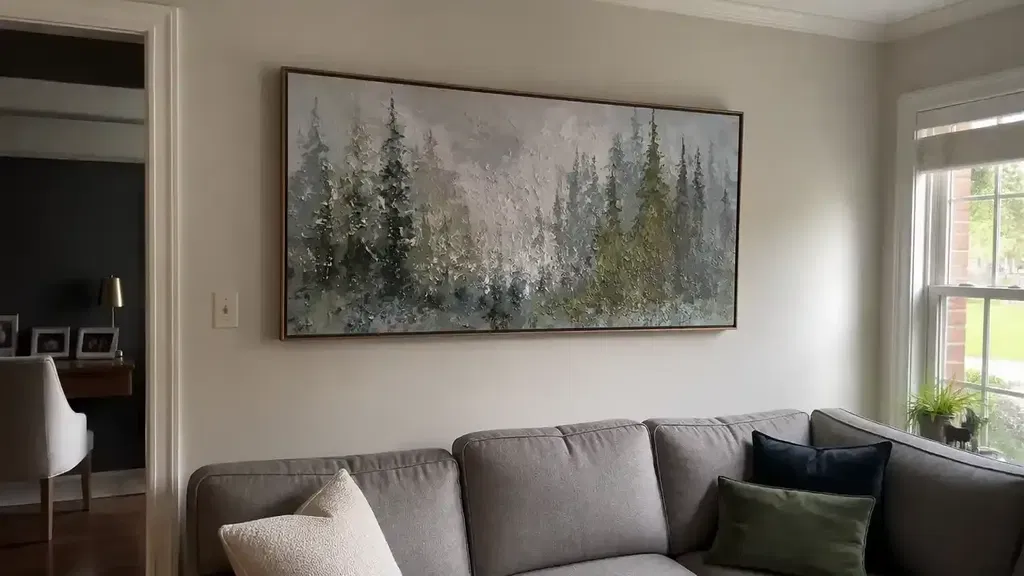
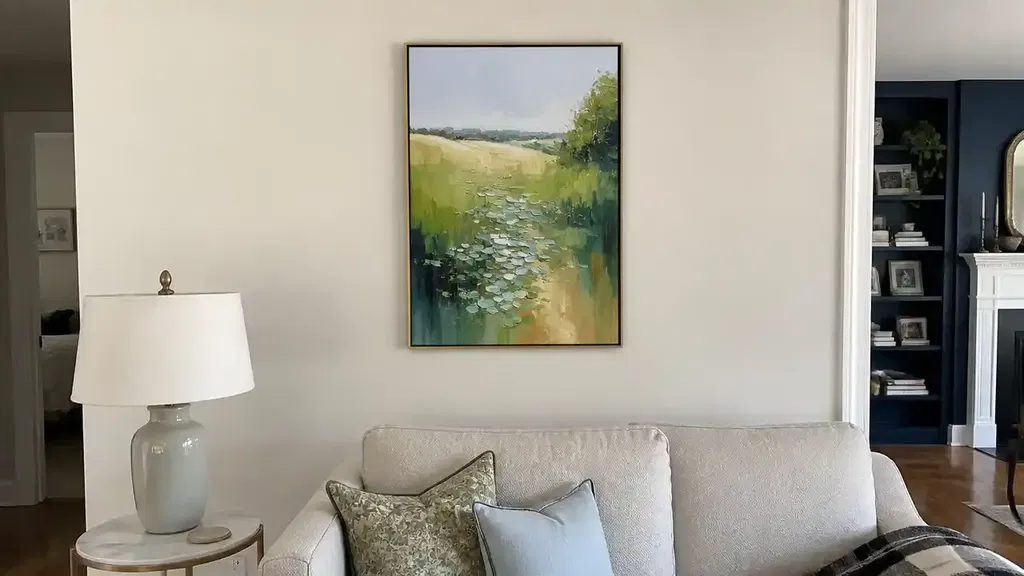
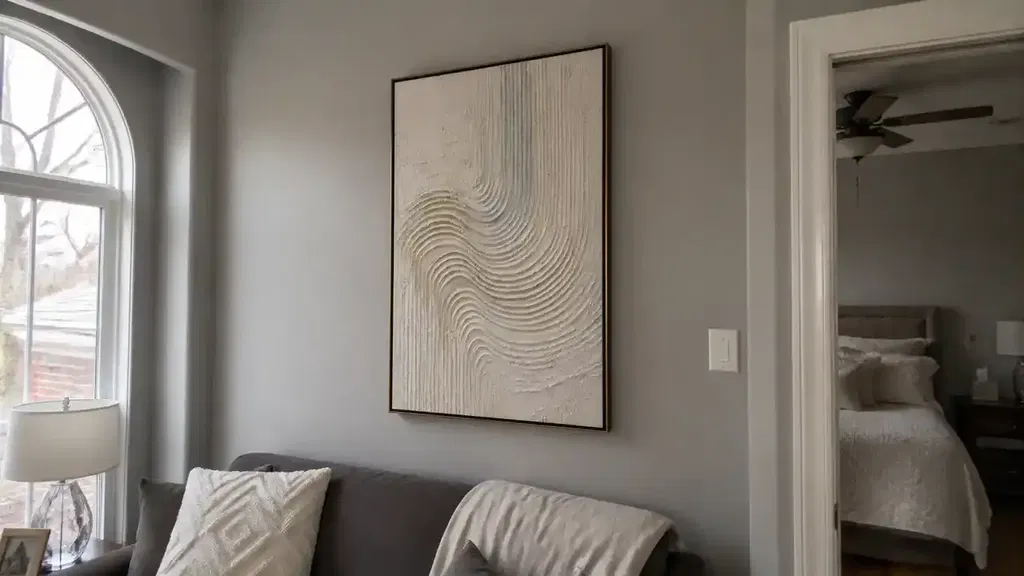
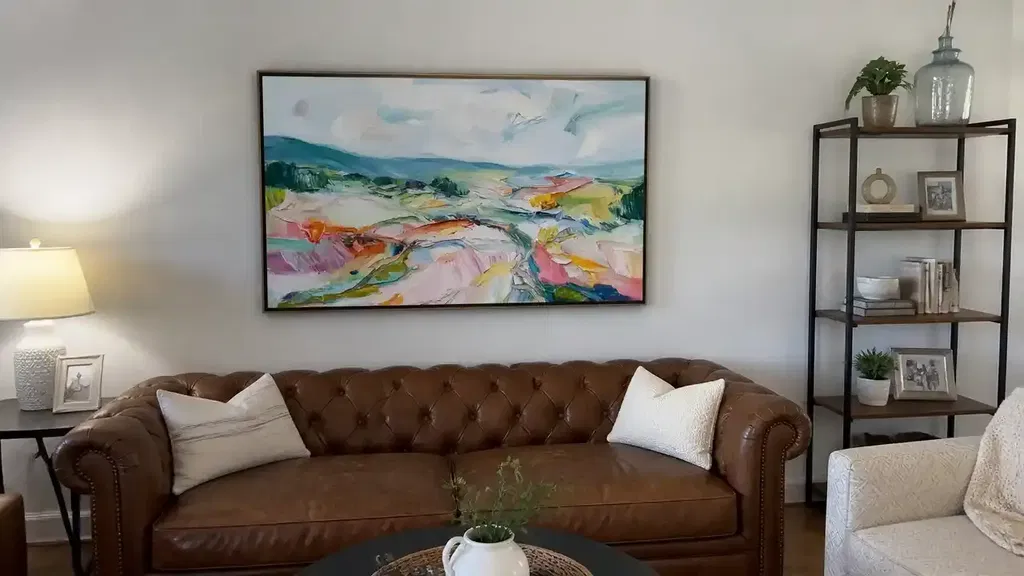
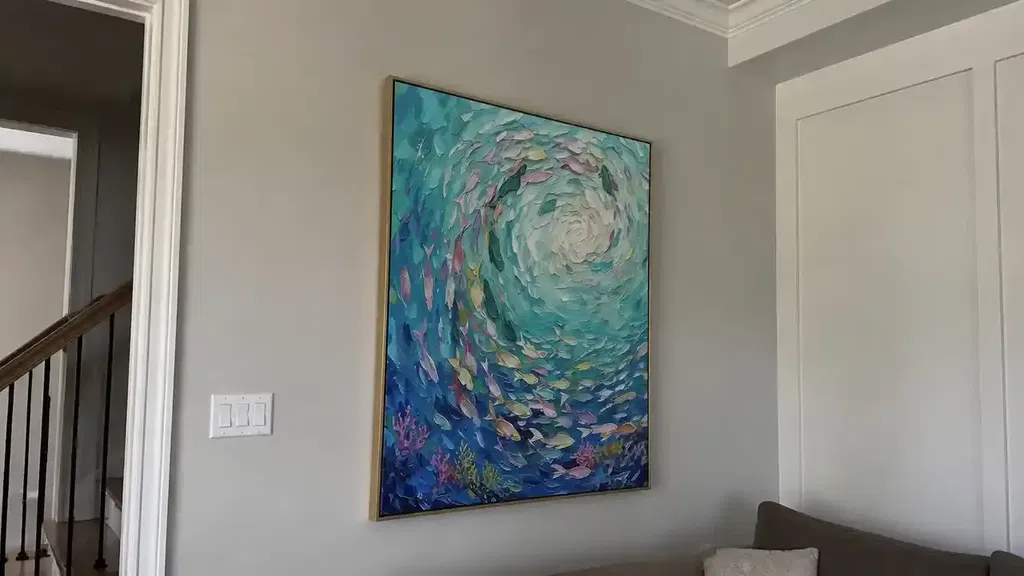
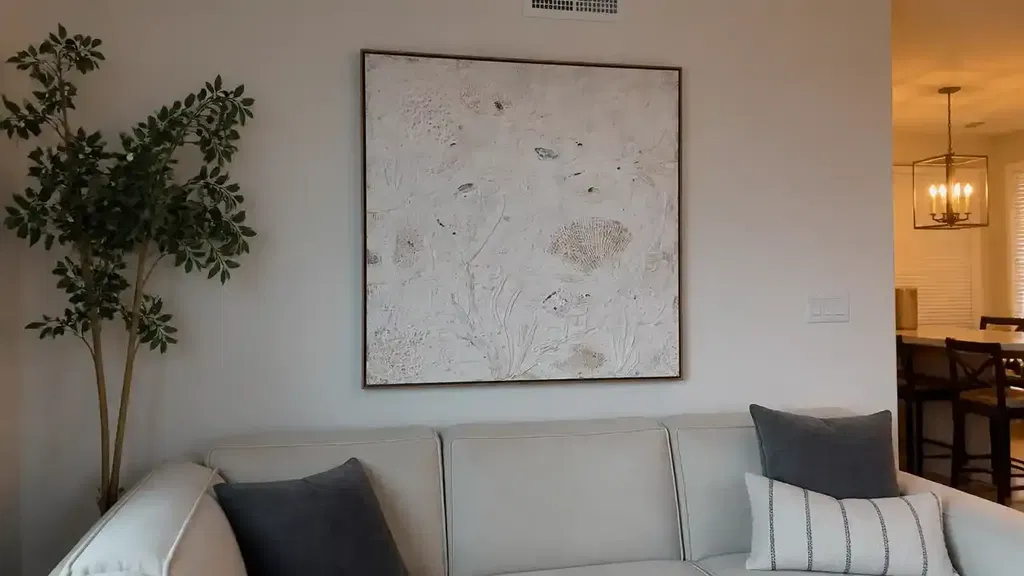
Hand-painted impasto—the technique of laying paint on a surface in very thick layers—creates a three-dimensional topography that digital prints simply cannot replicate. In this guide, we will break down the scientific and aesthetic reasons why flat prints fail to capture the vibrancy of real paint and how the "essential identity" of a hand-painted piece transforms a room from a staged space into a home.

The Physics of Presence: Why Light Rejects the Print
The most significant difference between a print and a painting is how they interact with light. A digital print relies on CMYK (Cyan, Magenta, Yellow, and Key/Black) dots laid flat on paper or canvas. The surface is uniform, meaning light hits it and reflects back at a consistent angle.
In contrast, hand-painted impasto utilizes the physical height of the medium. When an artist uses a palette knife to create a 1mm to 3mm buildup, they are creating a miniature mountain range on the canvas. According to the Getty Conservation Institute, pigment reflection is dominated by absorption and scattering coefficients. In a physical painting, the refractive index of the binder (oil or acrylic) combined with the micro-topography of the brushstrokes causes light to scatter in multiple directions.
The Lighting Compatibility Trap
A common mistake we observe in home styling is ignoring how lighting affects art. Digital prints are "static." Whether you have soft ambient light or a sharp spotlight, the print looks largely the same because there is no relief for shadows to fall into.
Impasto, however, is "dynamic." Its appearance changes throughout the day as the sun moves across the room.
- Directional Lighting: Track lighting or spotlights catch the ridges of the paint, creating highlights and casting tiny shadows that emphasize the "vibrancy" of the stroke.
- Diffuse Lighting: Under soft, overhead light, the texture provides a subtle "glow" that prevents the piece from looking like a mere poster.
Modeling Note (Scenario Analysis): We modeled the visual "presence" of a 2mm impasto layer versus a flat print under standard residential lighting.
Parameter Value/Range Unit Rationale Surface Buildup 1.5 - 3.0 mm Optimal range for decorative relief Light Incidence 30 - 60 degrees Standard angle for accent lighting Refractive Index 1.48 - 1.53 n Standard for dried linseed oil/acrylic Shadow Contrast High - Created by physical relief Gloss Variance Variable - Natural result of pigment-to-binder ratios

The "Essential Identity" and the 62% Value Gap
Beyond the physics of light, there is a profound psychological difference in how we value "human-made" versus "machine-replicated" objects. Research from Columbia University confirms that consumers value art labeled as "AI-generated" or "machine-printed" up to 62% lower than authentic human-created art.
Why is this? The University of Chicago's research on Essential Identity suggests that we perceive a "soul" or "essence" in objects that have been physically manipulated by another human. A digital print is a replica of a moment; a hand-painted mural or canvas is the result of hundreds of thousands of micro-decisions made by an artist in real-time.
When you hang a hand-painted piece, you aren't just adding color to a wall; you are adding a record of human labor. This "essential identity" is what prevents a room from feeling like a hotel lobby. It provides the social validation and "Instagram-ready" authenticity that modern home improvers crave.
Visual Hierarchy: Texture as a Design Tool
In interior design, "texture" is often discussed in relation to fabrics and finishes, but it is equally vital in wall decor. Professional designers report that a common pitfall in DIY home improvement is a lack of visual hierarchy. If your rug, sofa, and walls all have a similar "flatness," the room feels unanchored.
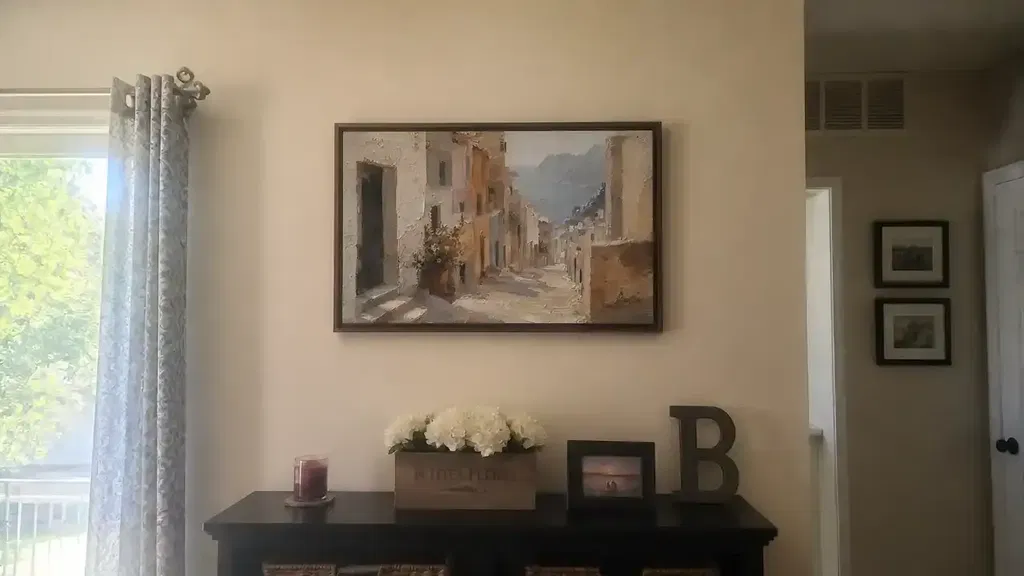
Impasto paintings naturally become focal points because they possess more visual information than the objects around them. While a print might blend into the background, the physical relief of a painting demands the eye's attention.
Comparison: Print vs. Impasto
| Feature | Digital Print | Hand-Painted Impasto |
|---|---|---|
| Tactile Surface | Flat or mechanically embossed | Organic, varied 1-3mm relief |
| Color Depth | Limited by printer gamut | High-density pigment saturation |
| Longevity | Susceptible to UV fading | Lightfast pigments (ASTM D4303) |
| Authenticity | Infinite replication | Unique, one-of-a-kind texture |
| Visual Impact | Static | Dynamic (changes with light) |
We often see "textured prints" on the market that attempt to simulate brushstrokes through mechanical embossing. However, these often result in a cartoonish, repetitive pattern. Real paint has an organic buildup where the "microtopography" is crucial to the aesthetic, as proven by optical microprofilometry studies.

The Health and Economic ROI of Original Art
Choosing hand-painted art over prints isn't just an aesthetic choice; it can have measurable impacts on your well-being and property value.
1. The Wellness Factor
Environmental art is increasingly recognized as "public health infrastructure." A review by the University of Pennsylvania found that 73% of patients reported significant mood improvements when exposed to environmental artworks. Furthermore, the World Health Organization (WHO) has confirmed that art interventions can effectively alter clinical indicators for stress and mental health. The tactile nature of impasto—the way it mimics natural, biophilic textures—activates the medial prefrontal cortex (mPFC), optimizing emotional regulation.
2. The Property Value Factor
For those looking at their home as an investment, original art provides a "catalytic effect." Data from the Royal Society shows a direct correlation between high "art" geo-tags and relative house price gains. In the commercial sector, developers use unique public art to lease up office space and increase foot traffic, a strategy that translates directly to high-end residential "house flipping." A hand-painted mural can mask a property's age and signal "premium craftsmanship" to potential buyers, often justifying a higher asking price.
Material Integrity: Safety and Longevity
One of the primary concerns for home improvers is the safety of the materials brought into their living spaces. Many mass-produced prints use industrial solvents and low-grade inks that can emit Volatile Organic Compounds (VOCs).
At the professional level, the shift toward eco-friendly art is well underway. High-quality hand-painted works often utilize:
- Low-VOC Acrylics: Proven by Aalto University to emit significantly lower toxins during and after curing compared to industrial coatings.
- Natural Binders: Walnut oil is increasingly used to replace toxic turpentine solvents, appealing to the 87% of consumers who are concerned about the environmental impact of their purchases.
However, authority is required when handling pigments. We strongly advise against "DIY" impasto using unverified materials. The CDC and NIOSH warn that chronic inhalation of low-level compounds in certain paints can lead to central nervous system issues. When purchasing premium art, ensure the studio adheres to safety standards like ASTM D-4236, which mandates toxicological review of art formulations.
How to Verify Quality and Scale
If you are moving away from prints toward hand-painted texture, how do you ensure you are getting real value?
- Check the "Relief": Authentic impasto should have a variable height. If the "texture" looks perfectly uniform across the canvas, it is likely a machine-embossed print.
- Verify Pigment Density: Real oil and acrylic paints have a higher pigment load than printer ink. This results in superior color depth that doesn't look "washed out" in bright rooms.
- Scale and Proportions: One of the greatest advantages of hand-painted art is the ability to customize the scale to your specific wall. A print is limited by the size of the press; a painting is limited only by the size of the stretcher bars.
- The "Haze" Test: Low-quality acrylics can sometimes develop a "hazy" or cloudy appearance over time due to surfactant migration. High-end studios use techniques to prevent support-induced discoloration and ensure the binder remains clear for decades.
Beyond Decoration: A Cultural Investment
Ultimately, the failure of the flat print is a failure of "authenticity." In a world increasingly saturated by digital replicas and AI-generated imagery, the physical brushstroke has become a rare luxury. By choosing hand-painted impasto, you are supporting a creative economy that adds over $1.2 trillion to the US GDP and protects the livelihoods of human artists.
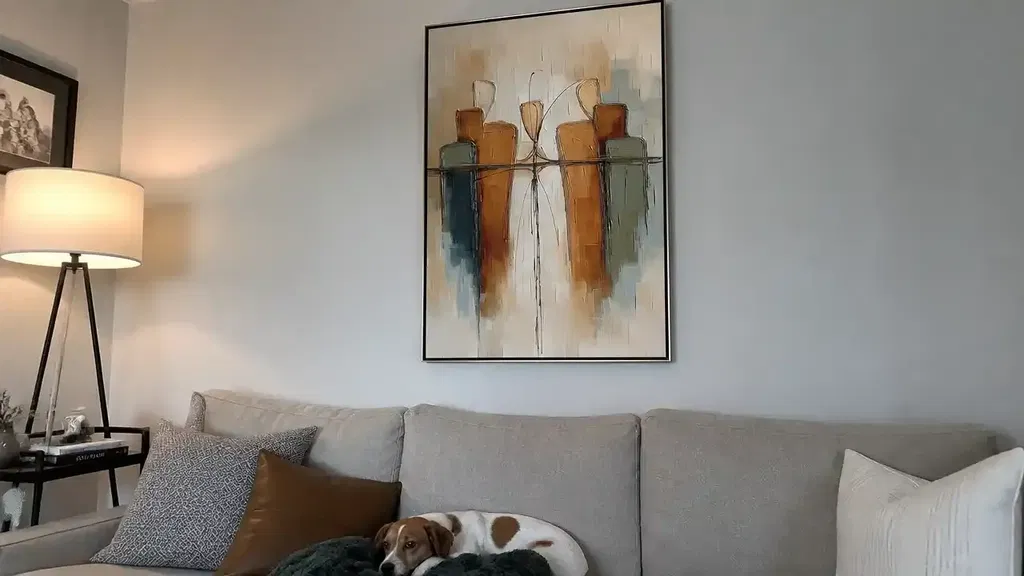
Whether it is a biophilic landscape designed to reduce stress in a home office or a bold abstract piece that anchors a living room, the "presence" of real paint is irreplicable. It is the difference between a house that looks good in a photo and a home that feels good to live in.
Disclaimer: This article is for informational purposes only. When selecting art materials or commissioning murals, always consult with professionals regarding indoor air quality and structural safety. For those with pre-existing respiratory conditions, ensure all painted works are fully cured and meet low-VOC standards before installation.
Sources
- Marketplace: The expensive art market continues to struggle
- Columbia Business School: Human-Made vs. AI Art Perception Study
- University of Chicago: Does Artwork Preserve Essential Identity?
- UPenn: Visual Art in the Built Environment Review
- WHO: Scoping Review on Arts and Health
- Getty Conservation Institute: Color Science and Pigment Mixture
- Royal Society: Quantifying the link between art and property prices
- NEA: Arts and Cultural Industries Economic Impact