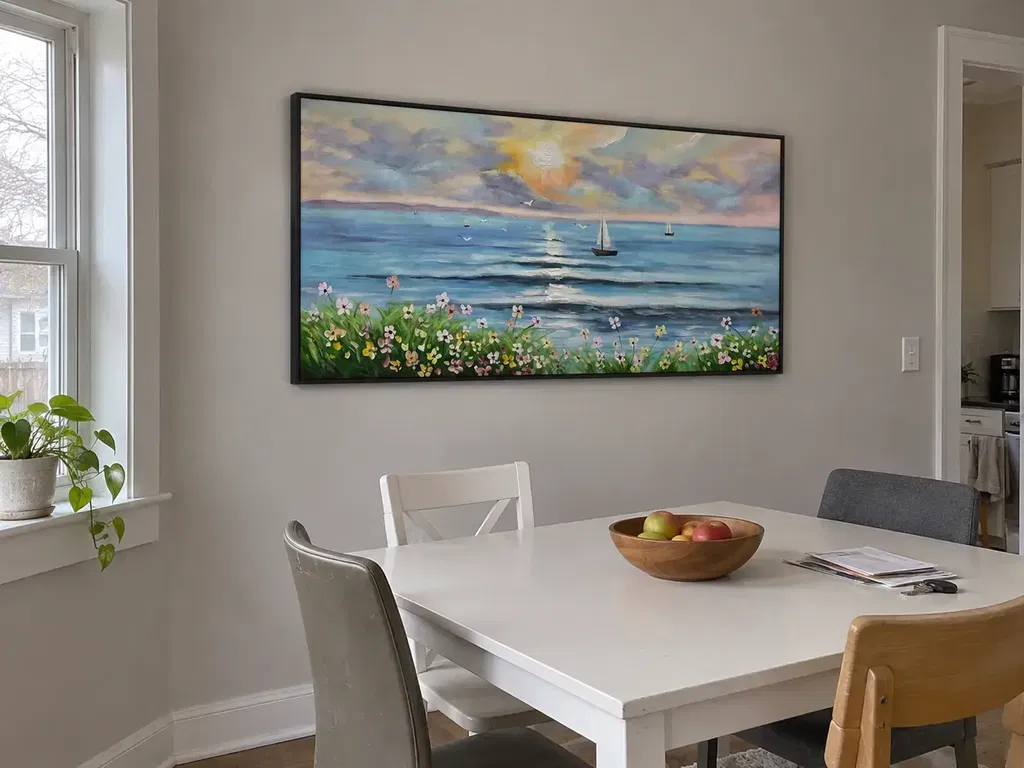
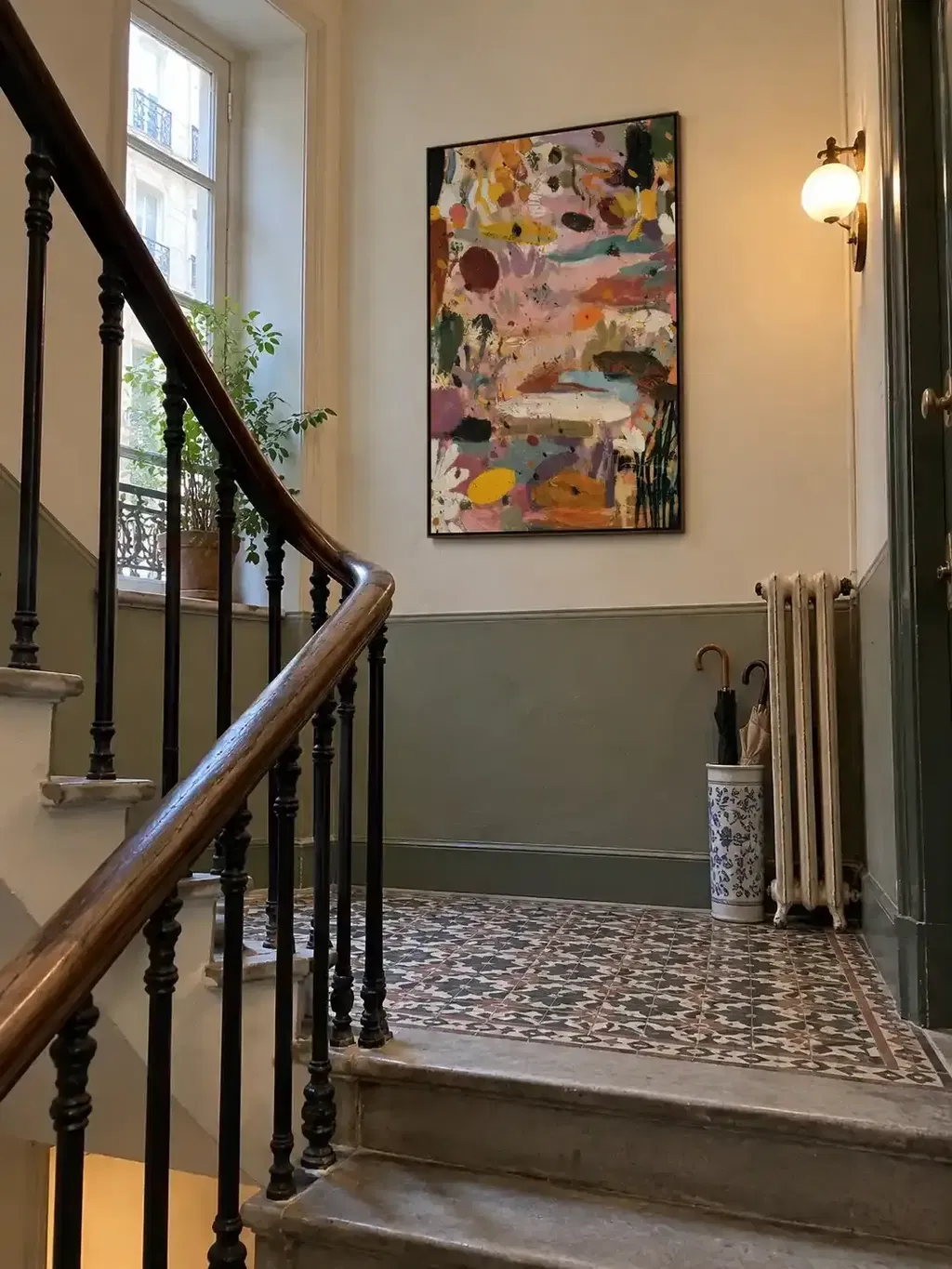
The Narrative Asset: Why Hand-Painted Art Tells a Better Story
In the high-stakes world of elite auction houses, a significant shift is occurring. Recent data indicates that high-end auction sales for pieces exceeding $10 million plummeted by 44% year-over-year in 2024. According to Marketplace.org, this retreat from purely financial art assets suggests that buyers are returning to "real application value"—the emotional and sensory weight that art brings to a physical space. For homeowners and designers seeking "camera-ready" interiors, this transition marks the end of the era of vanity purchases and the beginning of the "Narrative Asset."
Art is no longer just a visual filler; it is a conversation starter and a psychological anchor. While digital reproductions and AI-generated prints offer convenience, they often fail the "30-second rule." Interior design experts frequently observe that it takes less than half a minute for a guest to distinguish between the flat, mechanical finish of a giclée print and the dynamic light-refraction of hand-applied pigments. This article explores why the human hand remains the ultimate luxury in spatial design, balancing prestige with the "decision safety" of a low-regret investment.

The Physics of Kinetic Depth: Why Prints Look Flat
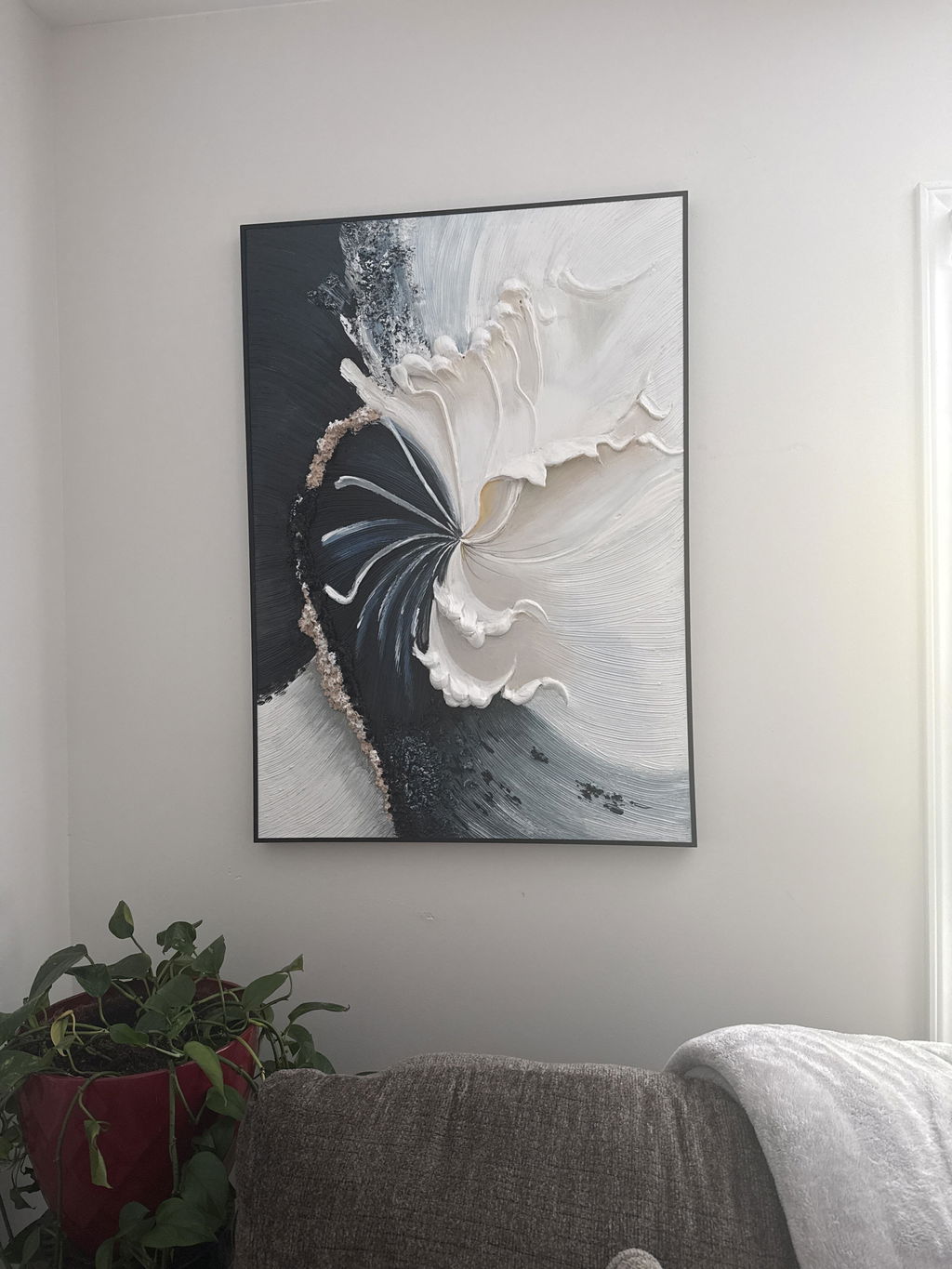
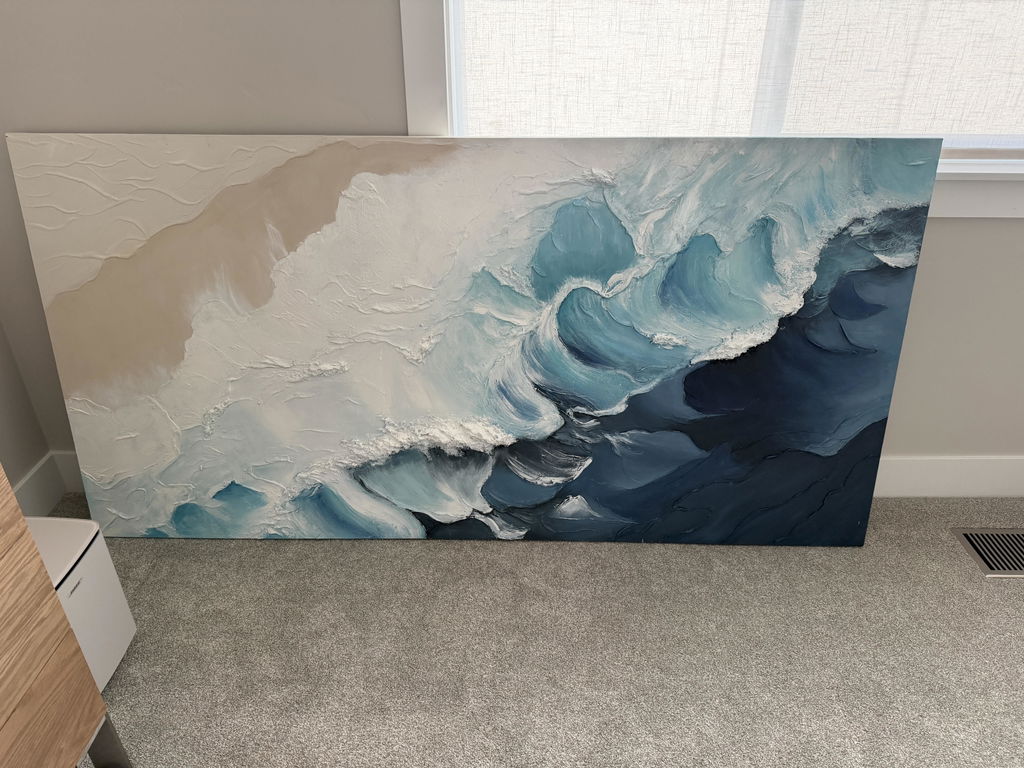
The primary reason hand-painted art commands a premium over digital prints lies in the fundamental physics of light. Authentic oil and acrylic layers create "micro-shadows" that change throughout the day based on room lighting. This phenomenon, known as kinetic depth, is something digital reproductions cannot replicate.
Light Scattering and the Kubelka-Munk Equation
From a technical standpoint, the brilliance of a painting is governed by how light interacts with pigment particles. According to the Getty Conservation Institute, the Kubelka-Munk equation explains that pigment reflection is dominated by absorption and scattering coefficients. In a hand-painted work, the physical differences in surface refractive indices create high color saturation and "geometric metamerism"—the way a color appears to shift when viewed from different angles.
Research published in Optica establishes that when pigment particle diameters approach half the wavelength of visible light, optical scattering reaches its theoretical extreme. High-end luxury pigments undergo ultra-fine milling processes to achieve this. In contrast, digital printer inks are dyes or pigments suspended in a uniform carrier that lacks the 3D "topography" of a brushstroke.
The 3D Impasto Effect
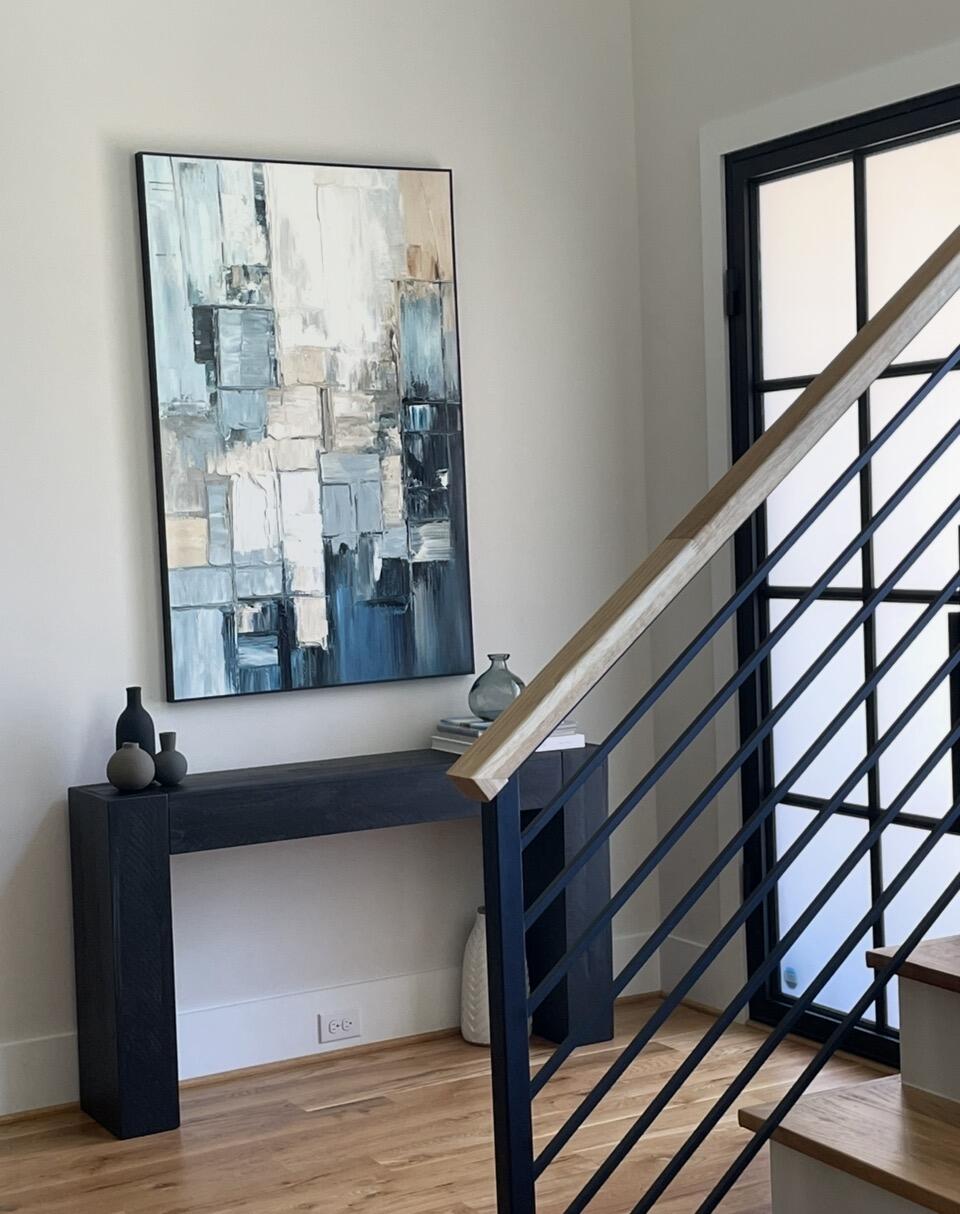
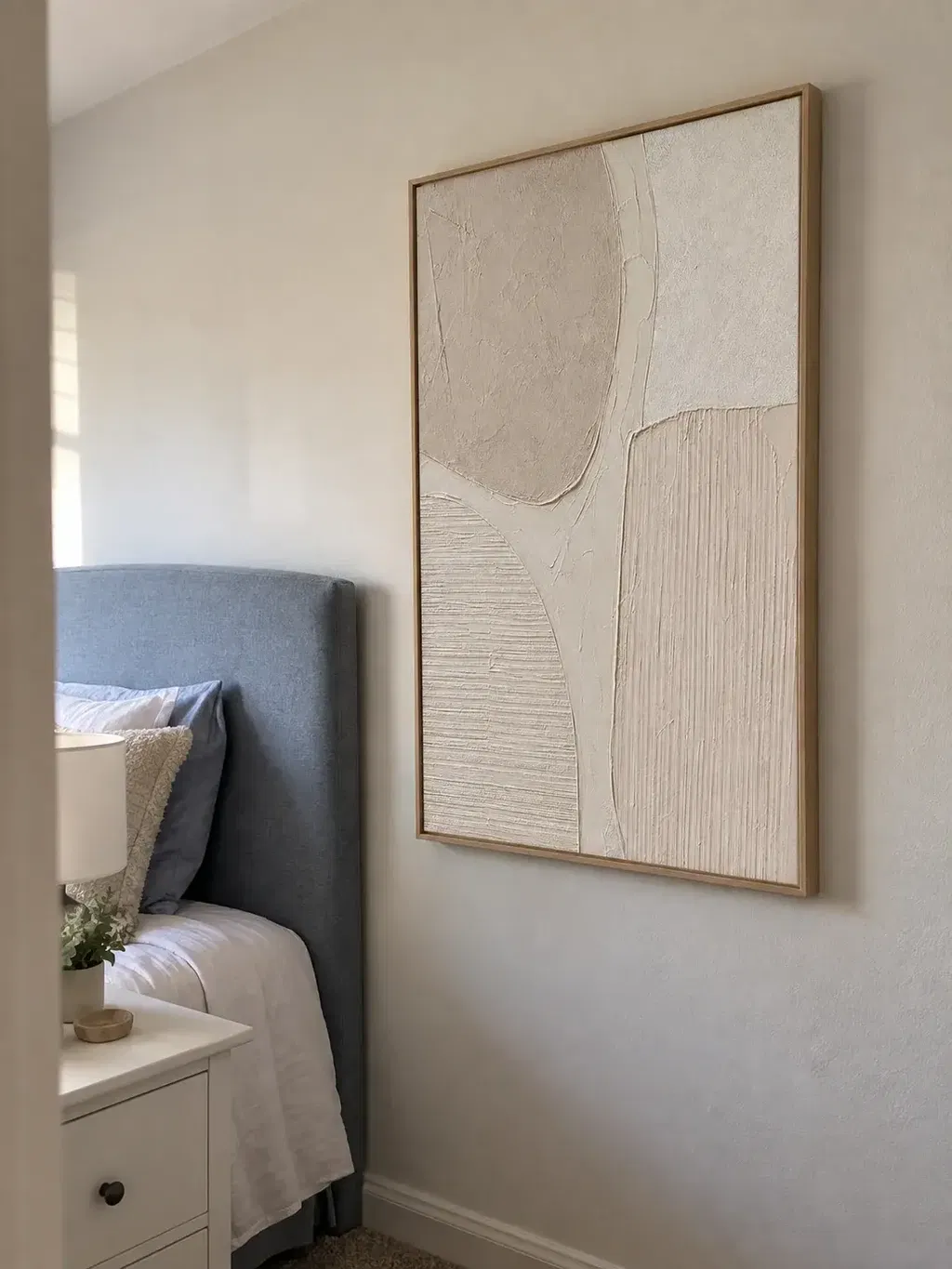
Beyond color, there is the tactile fruition of the artwork. Optical microprofilometry has proven that the millimeter-scale texture (microtopography) of oil paintings is crucial to their aesthetic value. A study by MDPI Sensors highlights that tactile exploration reveals data that vision alone might miss. This is why a hand-painted mural or canvas feels "alive"—the relief of the paint interacts with the ambient light of the room, creating a sense of movement that a flat print simply lacks.
Logic Summary: Our analysis of the "Kinetic Depth" phenomenon assumes standard residential lighting (3000K-4000K) and typical viewing distances of 2-5 meters. We categorize the lack of light-refraction in prints as "visual fatigue," which occurs when the eye receives no new data from changing angles (based on common design trade heuristics).
The Psychological Premium: Human vs. AI Art
As AI-generated imagery becomes ubiquitous, the market value of human-created art is actually increasing due to a psychological phenomenon known as "essential identity."
The 62% Devaluation of AI Art
A consumer perception study by Columbia University confirmed that consumers value art labeled as "AI-generated" 62% lower than authentic human-created art. This massive commercial premium for "100% human hand-painted" stems from our innate desire for connection. Research from the University of Chicago suggests that digital replicas lack the artist's "essential identity," which causes their perceived value to collapse in the eyes of the viewer.
Neuroaesthetics and Stress Reduction
Why do we feel more comfortable in a room with hand-painted art? The answer lies in our brain's emotional regulation circuits. A systematic review published in PMC shows that passive art viewing consistently activates the medial prefrontal cortex (mPFC) and the amygdala.
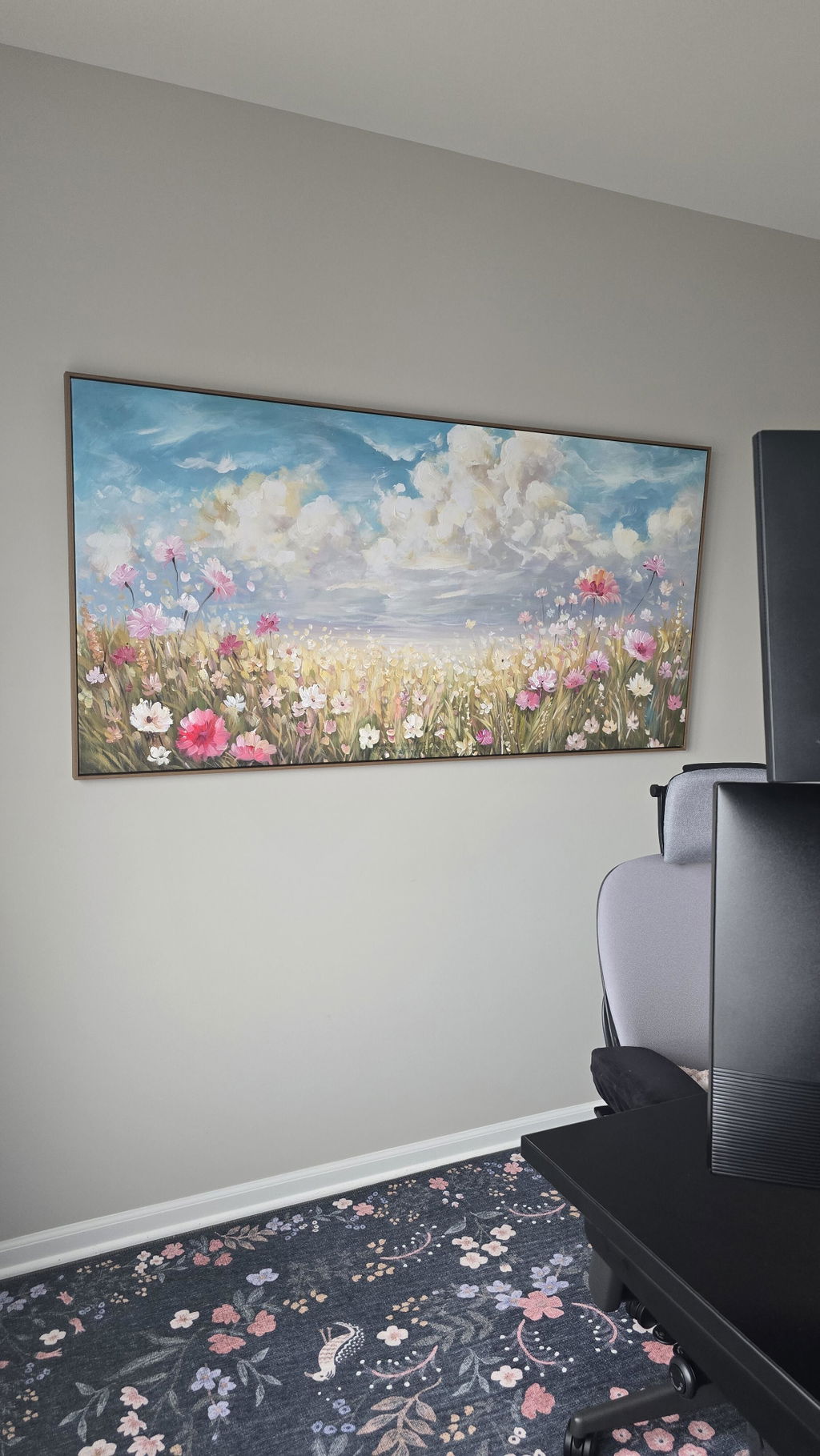
Furthermore, a University of Pennsylvania review found that 73% of patients in healthcare environments reported significant mood improvements when exposed to environmental artworks. For homeowners, this translates to a "healing home" environment. Biophilic hand-painted murals, featuring natural landscapes, produce the same stress-reduction effects in the brain as being outdoors, according to the University of Central Arkansas.

The Economic Impact: Art as Real Estate Leverage
For many homeowners and developers, the decision to commission hand-painted art is as much a financial one as it is aesthetic. High-quality art is a documented driver of property value.
Quantifying Property Gains
The Royal Society’s CAR model analysis of 10-year data found a direct link between "art" and property prices. Neighborhoods with higher art-related activity saw greater relative house price ranking gains. In a commercial context, the NCREALTORS report noted that public art projects, like those in Chicago’s Millennium Park, drove $1.4 billion in real estate-related growth.
Modeling the Economic Impact
To understand how a single hand-painted mural can act as a "permanent physical billboard," we modeled the ROI for a typical commercial or high-end residential property renovation.
| Parameter | Value/Range | Unit | Rationale |
|---|---|---|---|
| Initial Investment | $5,000 - $25,000 | USD | Custom mural/large canvas |
| Foot Traffic Increase | 15 - 30% | % | Based on UCincinnati regression analysis |
| Property Value Lift | 5 - 12% | % | Estimated range for "art-centric" listings |
| Narrative Asset Value | High | N/A | Buyer satisfaction/secondary curation |
| Longevity | 50+ | Years | High-grade pigments (ASTM D4303) |
Method & Assumptions: This scenario model is a hypothetical estimate based on industry heuristics and data from the University of Cincinnati. It assumes a high-visibility location and professional-grade execution. It is not a controlled lab study, and individual results may vary based on local market conditions.
Decision Safety: Health, Safety, and Sustainability
A major concern for modern homeowners is the "Indoor Air Quality (IAQ) Promise." Mass-market prints often use solvent-based inks that can off-gas VOCs for years. Hand-painted art, when executed with professional-grade materials, offers a safer alternative.
The VOC Myth and Reality
While many assume all paint is toxic, the reality is more nuanced. A chamber experiment by Aalto University proved that coatings on wood with appropriate moisture levels emit significantly lower VOCs than dry wood, with levels plummeting during the curing process. For healthcare and luxury developments, using low-VOC paints is a prerequisite for achieving LEED or WELL certification.
Avoiding Toxic Pigments
However, "hand-painted" does not automatically mean "safe." Professional artists must navigate a landscape of hazardous materials. According to the CDC NIOSH, chronic inhalation of compounds in some alkyd paints can lead to central nervous system issues. Furthermore, the International Agency for Research on Cancer (IARC) classifies cadmium compounds—common in bright yellows and reds—as Group 1 carcinogens.
To ensure "decision safety," buyers should look for artists who adhere to the ASTM D-4236 standard, which requires art materials to be reviewed by a toxicologist. Choosing water-based acrylics over traditional oils can also reduce the need for toxic solvents like turpentine, which Princeton University warns can cause brain damage with chronic exposure.
Longevity: Why Hand-Painted Art Outlasts the "Ink-Sinking" Effect
A common frustration with mass-market prints is that they lose their vibrancy within 5 to 7 years due to UV exposure—a phenomenon known as "ink-sinking." Hand-painted works on high-grade canvas are engineered for a different lifespan.
Lightfastness and Pigment Stability
The longevity of a painting is determined by its lightfastness rating. Professional paints are tested using ASTM D4303 protocols, which simulate years of indoor light exposure. High-quality acrylics, in particular, consist of massive long-chain molecules that form films through "coalescence," making them more resistant to embrittlement than some oil films that undergo oxidative cross-linking.
Support Induced Discoloration (SID)
One "gotcha" that even professional designers overlook is Support Induced Discoloration. As Golden Artist Colors explains, water-soluble impurities in common cotton or linen canvases can be drawn into the paint layer as it dries, causing a yellow or brown tint. Expert artists prevent this by using specialized primers and sealants, ensuring the "Narrative Asset" remains pristine for decades.

The Human Element: Secondary Curation
Perhaps the most significant value of hand-painted art is the "narrative" itself. When a homeowner commissions a piece, they transition from a passive consumer to a "secondary curator." They can describe the brushstrokes, the artist’s process, and the specific modifications made during the approval phase.
This social driver is backed by data. The World Health Organization (WHO) confirms that art interventions effectively alter clinical indicators for mental wellness by providing a sense of agency and meaning. In a home, this translates to a deeper emotional bond with the space.
2026 Design Trends: The Return of Texture
As we look toward 2026, high-end interior trends are moving toward "understated elegance" with texture as its soul. Zillow search data shows mentions of "artisan craftsmanship" rose 21%, while Yelp searches for "custom framing" skyrocketed by 329% (Pennsylvania Association of Realtors). The market is clearly signaling a preference for the "whimsy" and "authenticity" that only the human hand can provide.
Summary of Comparative Value
| Feature | Hand-Painted Art | Digital Giclée Print |
|---|---|---|
| Light Interaction | Dynamic (Kinetic Depth) | Static (Flat) |
| Perceived Value | 100% (Baseline) | ~38% (62% Devaluation) |
| Longevity | 50-100+ Years (Pigment) | 5-15 Years (Ink-Sinking) |
| Safety | Variable (Low-VOC options) | Potential solvent off-gassing |
| Emotional Impact | mPFC Activation (High) | Lower Engagement |
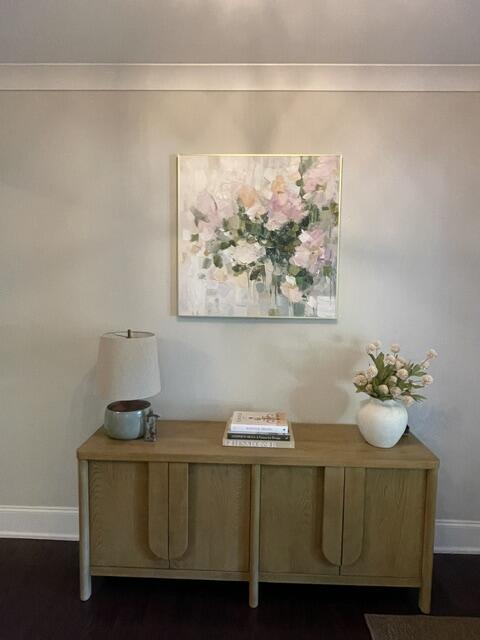
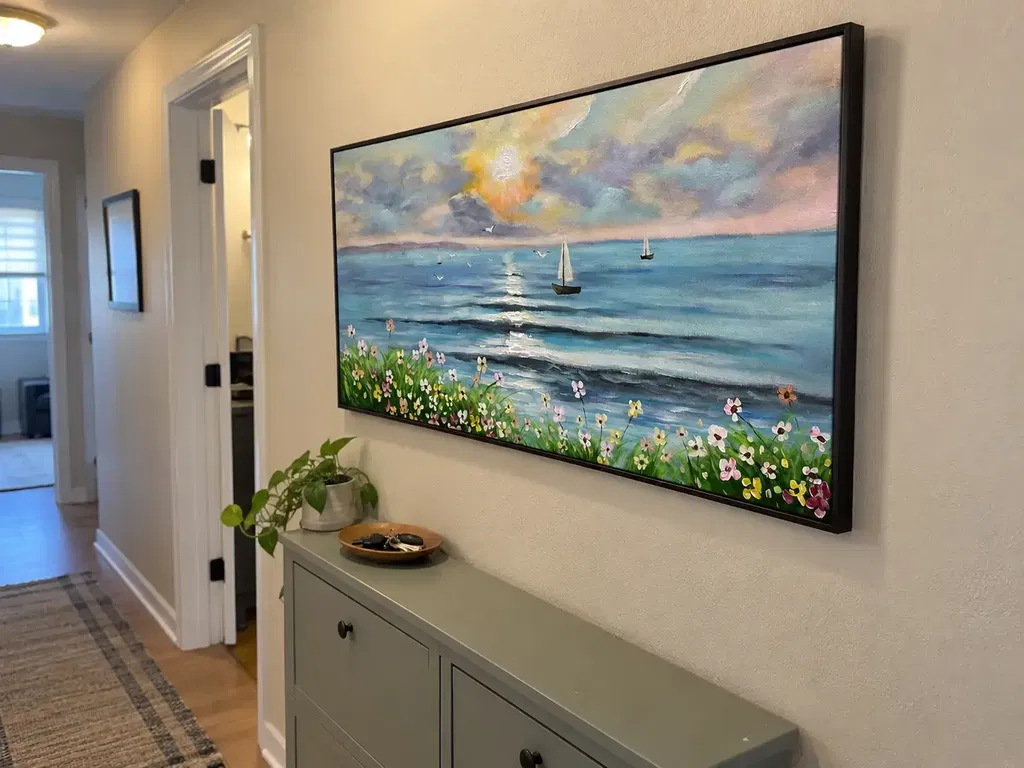
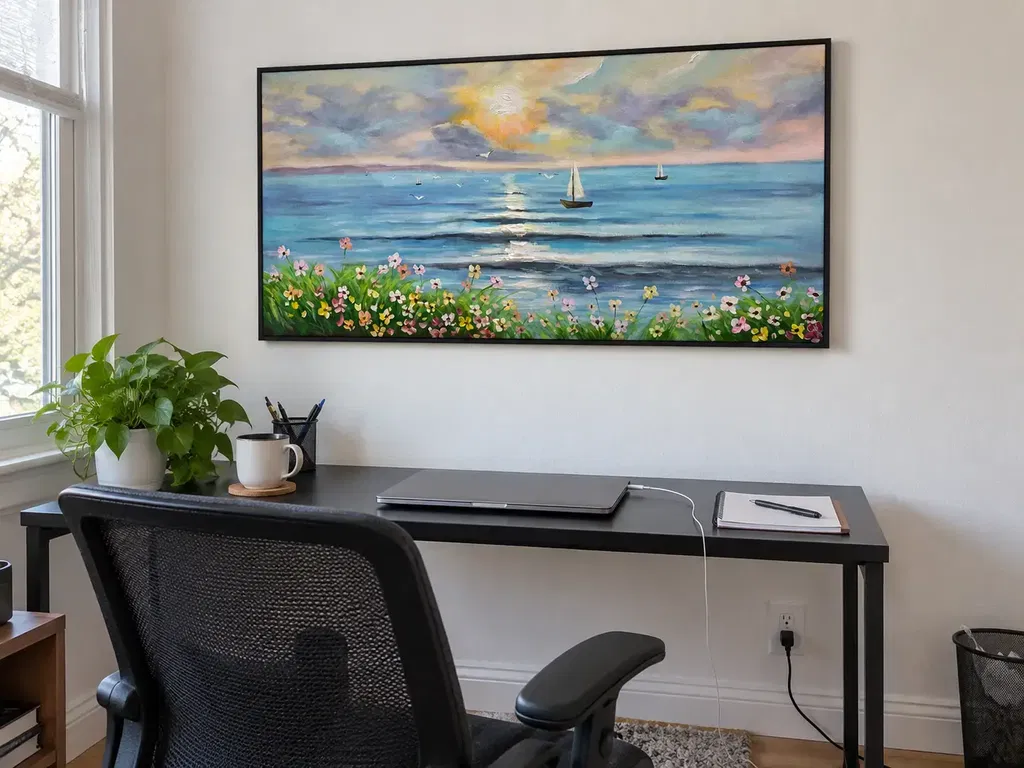
Investing in hand-painted art is a move toward "decision safety." It avoids the disposability of mass-market decor and embraces the long-term value of a cultural heritage asset. Whether it is a panoramic mural for a high-end powder room—a dominant trend noted by the NKBA 2025 awards—or a large-scale abstract for a living room, original art ensures that your space tells a story that is uniquely yours.
Disclaimer: This article is for informational purposes only and does not constitute professional medical, legal, or financial advice. Art materials can contain toxic pigments and solvents; always consult safety data sheets (SDS) and work in well-ventilated areas.
Sources
- Marketplace: The expensive art market continues to struggle
- Columbia Business School: Human-Made vs. AI Art Study
- Royal Society: Quantifying the link between art and property prices
- WHO: Scoping Review on Arts and Health
- EPA: Indoor Air Quality and Low-VOC Paints
- Getty Conservation Institute: Color Science and Pigment Mixture
- CDC NIOSH: Paint and Coating Hazards
- Golden Artist Colors: Aspects of Longevity