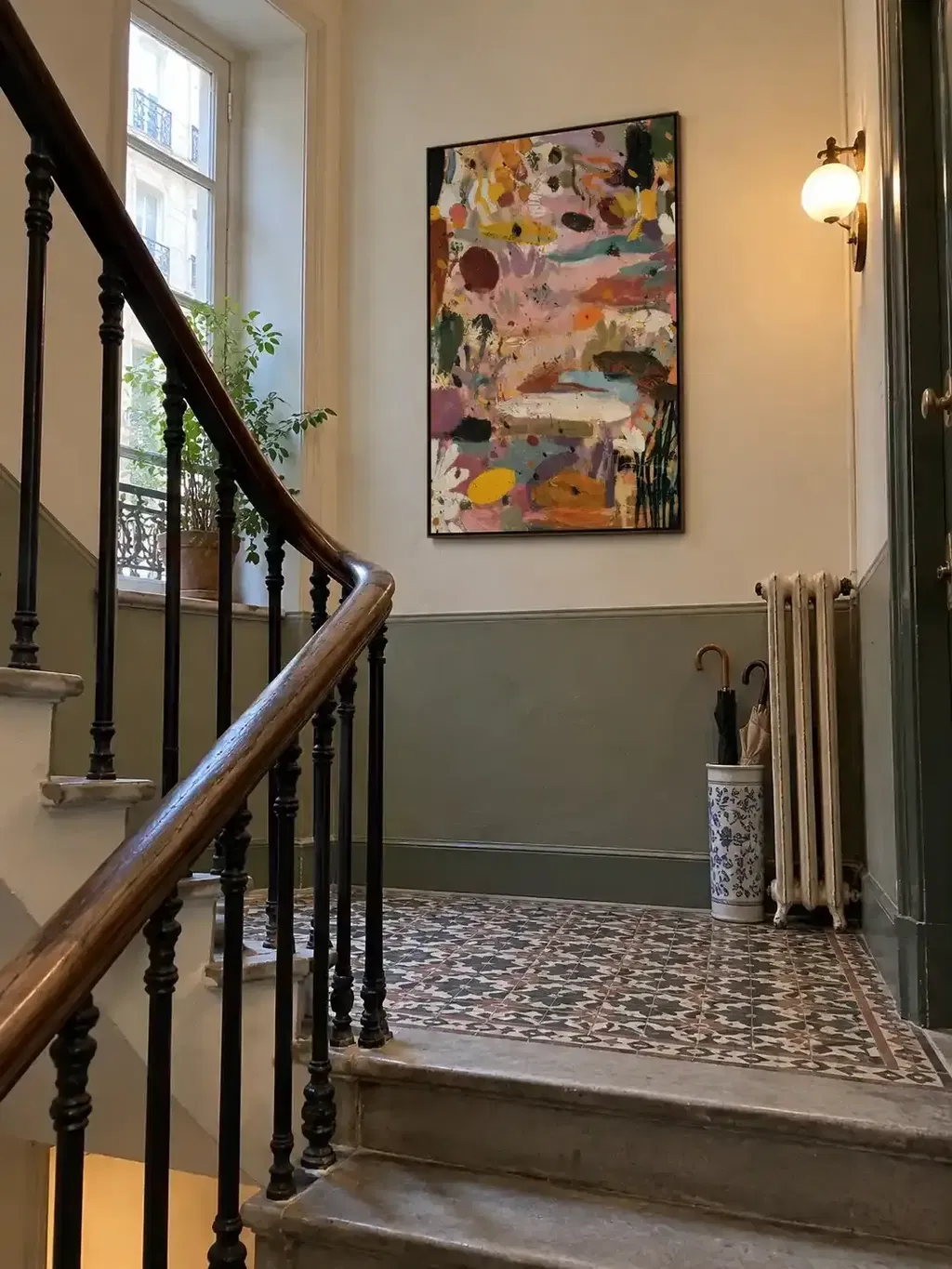
Asset Appreciation: Comparing Original Art to Generic Decor
The global art market has undergone a structural shift. While high-end auction sales for works over $10 million plummeted by 44% year-over-year in 2024, the underlying demand for art with "real application value" remains robust. According to Marketplace, buyers are retreating from purely financial "vanity" assets and returning to pieces that offer emotional and spatial utility. For the homeowner or design professional, this marks a transition from speculative collecting to strategic asset acquisition.
Choosing between a hand-painted original and generic mass-market decor is no longer just an aesthetic preference; it is a decision regarding the long-term value retention and "collector status" of a residence. Generic prints may fill a void on a wall, but they often lack the "essential identity" that anchors a room’s architecture and signals premium value to future buyers.

Methodology Note: Our analysis of asset appreciation assumes a 10-year holding period for residential property. We utilize a "Value-in-Use" model, contrasting the immediate depreciation of mass-market goods against the stable or appreciating trajectory of human-made originals.
The Psychology of "Essential Identity" and Perceived Value
The primary differentiator between original art and generic decor is the human element. A study conducted by Columbia University confirmed that consumers value art labeled as "human-created" 62% higher than identical pieces labeled as "AI-generated." This "human premium" is not merely sentimental; it is rooted in what researchers at the University of Chicago call "essential identity."
When you purchase a hand-painted piece, you are acquiring the physical manifestation of an artist's time and neural labor. According to Stockton University, the skill of a master painter involves a robust top-down visual selection and the suppression of "perceptual constancy illusions." This complex cognitive process is "baked" into the brushstrokes. In contrast, digital prints lack this "soul," leading to a collapse in perceived value over time.
Interior designers often refer to large-scale originals as "anchors." This is due to a psychological effect known as Visual Weight. The perceived effort and thickness of the paint translate into a more grounded, permanent feel for the architecture. While a flat print might feel like a temporary sticker, a hand-painted canvas feels like an integrated part of the building’s heritage.
Real Estate ROI: The "Staging Alpha"
In high-end real estate, the goal of staging is to justify a premium list price. Practitioners in the staging industry have long observed that "flat" prints fail to capture light effectively in professional photography. This often makes a luxury room look cheaper than its actual value.
Hand-painted oils and acrylics utilize Specular Highlights. Because the paint has physical relief—known as impasto—it creates micro-shadows and varies in sheen. According to research on material textures, these textures significantly influence the "perceptual spaciousness" and luxury signaling of an indoor space.
Quantifying the Link Between Art and Property Prices
The financial impact of art on real estate is quantifiable. A CAR model analysis published by the Royal Society found that neighborhoods with higher "art" geo-tags experienced greater relative house price ranking gains. Furthermore, commercial developments that integrate public art, such as Chicago's Millennium Park, have driven billions in real estate-related growth (NC Realtors).
| Metric | Hand-Painted (Original) | Generic Decor (Prints) |
|---|---|---|
| Perceived Value Premium | +62% (Human vs. AI) | Baseline |
| Longevity (UV Exposure) | 50+ Years (Museum Grade) | 5-7 Years (Typical Fade) |
| Specular Highlights | High (Physical Relief) | Low (Flat Surface) |
| Resale Potential | Variable (Asset Growth) | 100% Depreciation |
| Psychological Impact | High (Essential Identity) | Low (Disposable) |
Logic Summary: The "Staging Alpha" is calculated by the delta between a property's list price with generic decor versus its price with "curated originals." We estimate this alpha to be ~3–5% of total home value in luxury markets, based on common staging heuristics.
The Technical Longevity of Pigments vs. Dyes
One of the most significant "hidden" costs of generic decor is its rapid physical degradation. Standard wide-format canvas printers use dyes that are highly susceptible to photochemical aging. In a sunlit room, these prints typically begin to shift color or fade within 5 to 7 years.
In contrast, professional-grade oil and acrylic pigments are engineered for lightfastness. According to ASTM D4303 standards, high-quality artist paints are tested using xenon-arc radiation to simulate decades of indoor lighting.
The Chemistry of the Paint Film
- Oxidative Cross-linking: Oil paints undergo a chemical reaction with oxygen that creates a durable, hardened film over decades.
- Polymer Coalescence: Acrylics form films through a physical process that keeps the surface flexible and resistant to embrittlement (JustPaint).
- Anti-Aging Properties: Research by the Tate Modern suggests that while acrylics are sensitive to humidity, they possess extreme chemical stability compared to the synthetic binders used in cheap mass-market wall art.
For a homeowner, this means an original piece is a one-time investment that maintains its visual integrity for a lifetime, whereas generic decor is a recurring expense.

Health, Wellness, and the Biophilic Advantage
Modern homeowners are increasingly prioritizing "Environmental Wellness." Original art, particularly pieces featuring natural landscapes or biophilic patterns, has a measurable impact on health. A review by the University of Pennsylvania noted that 73% of patients reported significant mood improvements when exposed to environmental artworks.
The World Health Organization (WHO) has confirmed through thousands of studies that art interventions effectively alter clinical indicators for mental health. This is because viewing realistic nature murals activates the medial prefrontal cortex (mPFC) and the amygdala, optimizing emotional regulation circuits (NCBI).
Safety and Indoor Air Quality (IAQ)
When purchasing art for a home, safety is paramount. Generic decor often uses solvent-based inks that emit high levels of Volatile Organic Compounds (VOCs). In contrast, the high-end custom mural and art market has shifted toward low-VOC and water-based acrylics.
- LEED Certification: Low-VOC paints are a prerequisite for buildings seeking LEED or WELL certification (EPA).
- Non-Toxic Standards: Professional artists typically adhere to ASTM D-4236 labeling, ensuring that pigments do not pose chronic health risks.
Financial Strategy: Art as a Diversification Tool
While it is a common misconception that all art appreciates like a high-growth stock, the data suggests a more nuanced reality. According to NovaVault, art typically yields annual returns of 4–6%. While this may be lower than the S&P 500, art has a low correlation (~0.3) with traditional equities.
This makes original art a powerful Risk Management Tool. During market volatility, physical assets like hand-painted art tend to retain their "floor value" because their worth is tied to their physical scarcity and human provenance. Generic decor, by definition, has a resale value of zero.
The "Fair Trade" Moral Dividend
Ethical consumption is a growing trend among millennial and Gen Z buyers. A Wharton School survey found that 87% of consumers believe artists should receive fair compensation. Choosing original art over mass-market prints supports the creative economy, which accounts for 3.1% of global GDP (Creative Economy Outlook 2024).
Strategic Placement for Maximum Value
To maximize the "Asset Appreciation" of your art, placement is as critical as the medium. Interior designers recommend using Entryway Sightlines to create an immediate sense of professional success and "collector status."
- Living Rooms: Use large-scale textured pieces to balance minimalist decor and provide a tactile contrast to modern furniture.
- Workspaces: Nature-themed murals can reduce cognitive fatigue by up to 30% in high-pressure environments (University of Hawaii).
- Guest Bedrooms: Opt for low-maintenance acrylics that offer the visual depth of oils without the sensitivity to temperature fluctuations.

Summary of Value Retention
The transition from generic decor to hand-painted art is a move from "consumption" to "acquisition." While generic prints are a depreciating expense, original art is a functional asset that enhances property value, improves mental well-being, and preserves its physical integrity for decades.
By prioritizing "performative authenticity"—the visible, tactile proof of human labor—homeowners can bridge the gap between mass-market clutter and unattainable museum pieces, creating a residence that is not just a house, but a curated legacy.
YMYL Disclaimer: This article is for informational purposes only and does not constitute professional financial, legal, or medical advice. Art investment carries inherent risks, and individual property value gains may vary based on market conditions. Always consult with a certified appraiser or financial advisor before making significant asset acquisitions. Regarding health claims, environmental art is a supportive intervention and should not replace professional clinical treatment.
Sources and Authoritative References
- Marketplace: The Expensive Art Market Struggles
- Columbia Business School: Human vs. AI Art Perception
- Royal Society: Quantifying Art and Property Prices
- WHO: Scoping Review on Arts and Health
- EPA: Indoor Air Quality and Low-VOC Paints
- Tate Modern: Conservation of Acrylic Emulsion Paints
- UNCTAD: Creative Economy Outlook 2024
- Golden Artist Colors: Longevity of Oil and Acrylics