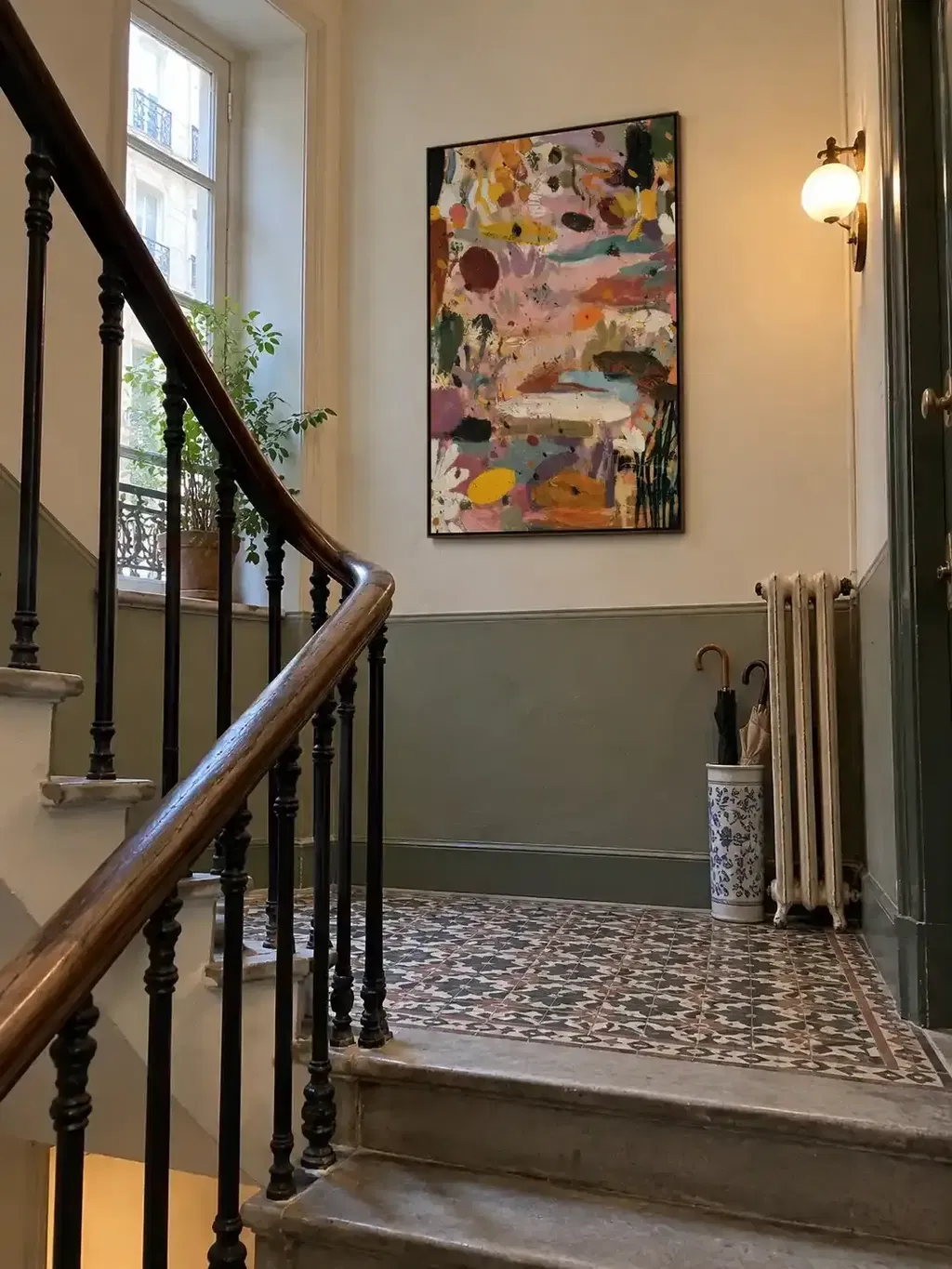
The landscape of art ownership is undergoing a fundamental shift. While the high-end auction market saw sales of pieces over $10 million plummet by 44% in 2024, according to Marketplace.org, a different trend is emerging within the home. Consumers are moving away from purely financial "vanity assets" and toward hand-painted works with deep emotional resonance. This "return to value" means the artwork on your living room wall isn't just decor—it is a repository of what University of Chicago researchers call "essential identity," a quality that digital prints and AI-generated replicas simply cannot replicate.
For enthusiasts who practice seasonal rotation—changing artwork to reflect the mood of winter or the vibrancy of summer—the logistics of "off-season" storage can be a source of significant anxiety. How do you protect a heavily textured canvas from the invisible threats of humidity, pressure, and chemical degradation?
In this guide, we move beyond generic gallery advice to provide practical, residential-focused storage solutions. We will explore the material science of canvas preservation, debunk common storage myths, and provide a roadmap for maintaining your collection's "soul" while it waits for its next turn in the spotlight.

The Physics of Preservation: Why Your Canvas is a "Living" Object
To store art safely, you must first understand that a canvas is not a static object. It is a complex sandwich of organic and synthetic materials—wood, fabric, primers, and pigments—all of which react differently to their environment.
Our observations from years of handling residential art rotations suggest that most damage occurs not on the wall, but during the transition to storage. The stakes are high: ResearchGate data on the ageing of commercial paints reveals that under high humidity (~83% RH), acrylic yellow pigments can swell by roughly 7% in mass due to water absorption. Conversely, oil-based pigments exposed to extreme heat can lose ~7.5% of their mass, leading to binder separation and melting.
Understanding the "Breathability" Requirement
A common mistake we see is the use of standard plastic "cling" wrap directly against the paint surface. While it seems like a shield against dust, it creates a non-breathable seal. In residential settings like basements or attics, temperature fluctuations lead to condensation buildup inside the plastic. This moisture can trigger "Support Induced Discoloration" (SID), a phenomenon identified by Golden Artist Colors where water-soluble impurities from the wood or canvas substrate are pulled into the paint layer, causing permanent yellowing.
Logic Summary: Our preservation model prioritizes moisture buffering over airtight sealing. By using breathable barriers, we allow the canvas to reach equilibrium with its environment without trapping liquid water.
| Parameter | Value or Range | Unit | Rationale / Source Category |
|---|---|---|---|
| Target Humidity | 40–60 | % RH | Residential tolerance (Keller Kunst) |
| Temp Variance | 65–75 | °F | Acceptable seasonal shift (Storables) |
| Mass Change (Acrylic) | ~7 | % | Swelling at 83% RH (ResearchGate) |
| Mass Change (Oil) | ~7.5 | % | Loss at 100°C (ResearchGate) |
| Barrier Layer | Acid-Free Paper | N/A | Prevents pigment transfer & SID |
Protective Wrapping: The Acid-Free Barrier
The most effective way to protect a canvas for 3–6 months is a "multi-layer buffer" approach. Before any bubble wrap or cardboard touches the piece, you must apply a primary barrier.
- The Primary Layer: Use acid-free glassine or pH-neutral archival paper. This is non-negotiable for textured works. Optical microprofilometry proves that the mm-scale texture of hand-painted art is crucial to its aesthetic value; acid-free paper ensures that these peaks and valleys don't stick to the outer packaging.
- The Impact Layer: Once the surface is shielded, use high-quality bubble wrap—but ensure the "bubbles" face outward. If the bubbles face the art, they can leave circular indentations in the paint film over time, especially if the piece hasn't reached a state of full internal curing.
- The Corner Guards: Most physical damage occurs at the corners. We recommend using foam or cardboard corner protectors before the final wrap. This prevents the "edge-crushing" that often happens when canvases are moved in tight hallways.
For those managing collections in small-space apartments, keeping wrapping materials minimal but high-quality is key to maintaining a clutter-free home.

Structural Integrity: The Vertical vs. Horizontal Debate
There is a persistent myth that storing canvases flat (stacked like pancakes) is a space-saving "hack." In reality, this is a primary cause of structural failure.
The Warping Mechanism
When canvases are stacked horizontally, the weight of the top pieces puts uneven pressure on the bottom stretchers. Over 6–12 months, this leads to "corner draw" or permanent warping of the wooden frame. Furthermore, any debris trapped between the layers can be pressed into the paint surface, creating permanent "craters" in the impasto.
The Solution: Vertical Racking We advocate for vertical storage, even in residential settings. You don't need industrial racks; a simple "bin" system works effectively.
- Use Dividers: Place sheets of rigid cardboard or Coroplast between each vertical canvas. This prevents the "domino effect" where one heavy frame leans its entire weight onto the center of the canvas next to it.
- Elevate from the Floor: Never store canvases directly on a concrete floor. Concrete is porous and "breathes" moisture, which can lead to mold growth on the wooden stretchers. Use a simple wooden pallet or a low shelf to provide at least 2 inches of clearance.
For those with heavily textured art, vertical storage is the only way to ensure the "relief" of the paint remains crisp and undistorted.
Environmental Hazards: Managing the "Uncomfortable" Space
A reliable heuristic for art storage is this: If a space feels uncomfortable for you, it is damaging for your art. Basements, attics, and garages are the most common "art graveyards" due to extreme seasonal swings.
The Thermal Threshold
While museums aim for a perfect 68°F, residential experts at Storables note that gradual fluctuations between 65°F and 75°F are typically acceptable. The danger lies in "thermal shock"—the sudden blast of heat when an attic reaches 100°F in July. This can cause the binder in oil paintings to soften, making them "tacky" and prone to sticking to their wrapping.
Light and UV Protection
Even in storage, light can be a silent predator. If your storage area has windows, ensure your canvases are facing away from the light source. ASTM D4303 protocols quantify how accelerated light exposure fades pigments. Even the most low-maintenance acrylics can experience color shifts if exposed to UV rays reflecting off storage surfaces.
Health and Safety: The "Invisible" Chemistry of Art
When handling and storing art, we must also consider the health of the residents. Many historical and even modern pigments contain heavy metals that require respect.
Pigment Toxicity and Indoor Air Quality (IAQ)
The CDC's NIOSH reports warn that chronic inhalation of volatile compounds from certain paints can impact the central nervous system. When you bring multiple canvases into a confined storage space, you are concentrating these emissions.
- The VOC Promise: If you are rotating art in shared living and workspace areas, prioritize works created with low-VOC paints. Aalto University experiments show that coatings on wood emit significantly fewer toxins once cured, but "off-gassing" can still occur in poorly ventilated closets.
- Heavy Metal Awareness: The International Agency for Research on Cancer (IARC) classifies cadmium compounds—common in vibrant reds and yellows—as Group 1 carcinogens. While safe on the wall, these pigments can be hazardous if the paint film is flaking or if you use industrial solvents to clean a stored piece. Never clean your skin with solvents if you get pigment on your hands during rotation; use soap and water to prevent toxins from entering the bloodstream.
Methodology Note: These safety guidelines are derived from intergovernmental health audits (WHO/OECD) and represent a "best practice" for residential safety, not a clinical diagnosis.

The Inventory System: Preventing the "Forgotten" Piece
The final step in a successful seasonal rotation is organization. We often see homeowners "lose" beautiful pieces to the back of a dark closet, where they deteriorate unnoticed.
- Inventory Tags: Attach a simple, acid-free tag to the wire or stretcher of each wrapped canvas. Include the title, artist, and the date it was last rotated.
- Rotation Schedule: If you have art in low-light bedrooms, you might want to swap it for a brighter piece every 4 months to prevent "visual fatigue."
- The 6-Month Check: Set a calendar reminder to inspect your stored art every six months. Check for "haziness" on acrylic surfaces—a result of surfactant migration—which can often be gently removed with a damp cotton swab if caught early.
Investing in Cultural Heritage
By following these guidelines, you are doing more than just "cleaning up." You are acting as a steward of a non-renewable cultural asset. Whether it’s a Dali-inspired surrealist piece or a biophilic landscape designed to reduce stress, your hand-painted canvases deserve a storage environment that respects their "essential identity."
Art rotation allows your home to evolve with your life. With a few simple tools—acid-free paper, vertical bins, and a climate-conscious mindset—you can ensure that every time you bring a piece out of storage, it looks as vibrant and soulful as the day it was first painted.
YMYL Disclaimer: This article is for informational purposes only and does not constitute professional conservation, medical, or safety advice. Certain art materials contain toxic pigments or volatile organic compounds (VOCs). Always consult a professional conservator for high-value assets and refer to manufacturer Safety Data Sheets (SDS) for specific material hazards. If you have pre-existing respiratory conditions, ensure proper ventilation when handling art supplies or stored collections.
Sources
- Marketplace: The expensive art market continues to struggle
- University of Chicago: Does Artwork Preserve Essential Identity?
- ResearchGate: Ageing of Commercial Oil and Acrylic Paints
- CDC NIOSH: Paint and Coating Hazards
- WHO: Cadmium Environmental Health Criteria
- Tate: Conservation Concerns for Acrylic Emulsion Paints