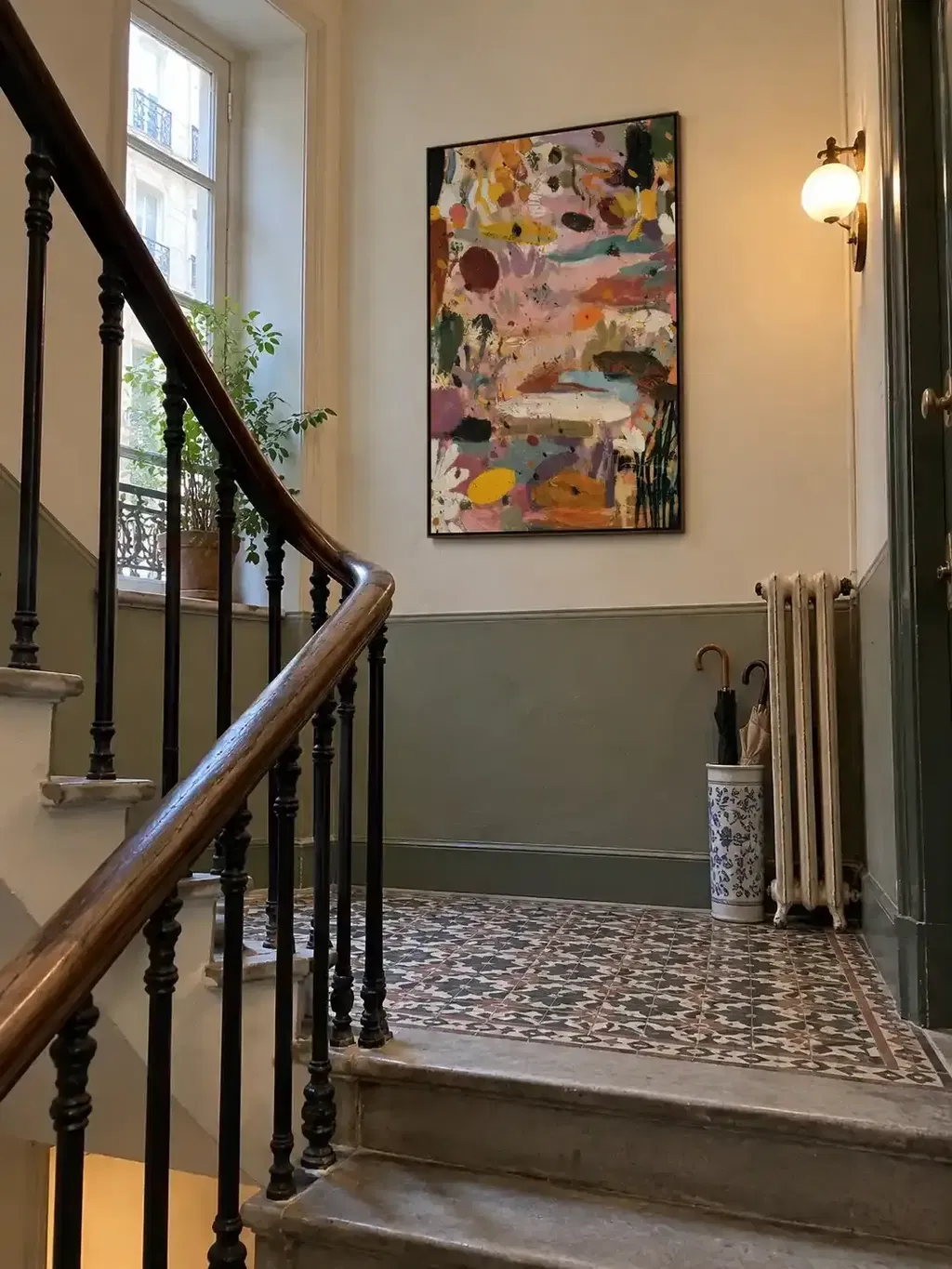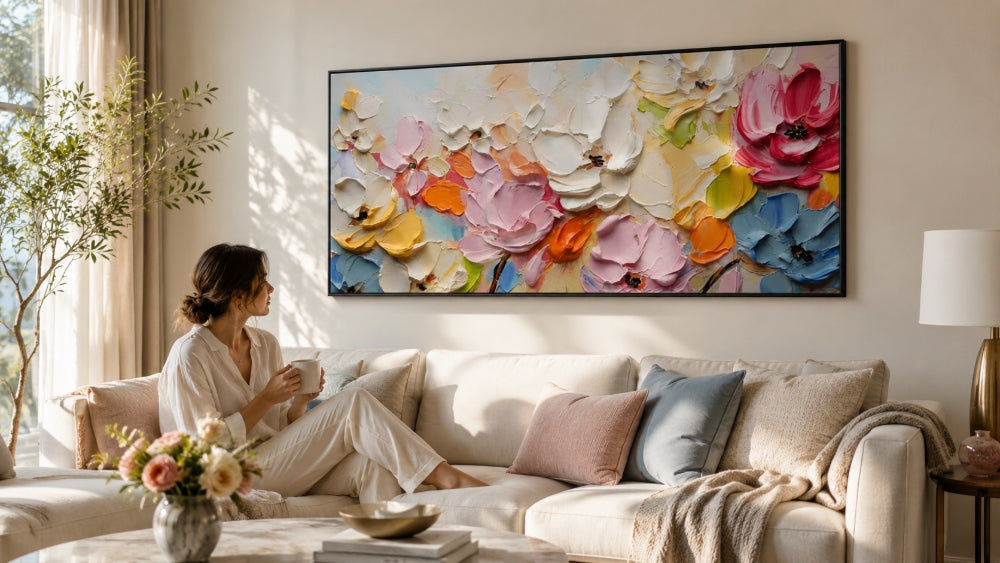
Selecting a massive piece of decor is a bold design move that can define an entire room. To get the best results, your art should cover roughly 60% to 75% of the available wall space or measure two-thirds to three-quarters the width of the furniture positioned beneath it. This ensures the piece acts as a cohesive anchor rather than an afterthought.
Buying large wall art is often a significant investment, both financially and in terms of visual real estate. When executed correctly, a large-scale piece creates a sophisticated focal point that eliminates the need for cluttered gallery walls. However, common mistakes like poor proportions or incorrect hanging height can make even the most beautiful artwork feel out of place. This guide provides the technical rules and aesthetic checklists you need to choose and install oversized art like a professional curator.
The Golden Rules for Sizing Large Wall Art
The most frequent error in home decor is selecting a piece that is too small for the wall. Proportions matter because the human eye naturally seeks balance between a central object and the surrounding "white space" of a wall. There are two primary standards to follow based on where you are placing the art. If the wall is empty and hard to judge, use the guide on when a blank wall needs oversized art.
Matching Art to Furniture: The 2/3 Rule
When hanging a piece above a sofa, sideboard, or bed, the artwork should be approximately 2/3 to 3/4 the width of the furniture. If your sofa is 90 inches long, you should aim for art that is between 60 and 67 inches wide. If a single piece is not available in that size, consider a diptych (two pieces) or triptych (three pieces) that combined reach that width. This prevents the furniture from "swallowing" the art visually.
Filling Empty Wall Spaces
For a large, open wall without furniture directly below it, follow the 60-75% rule. Measure the height and width of the empty space and multiply those dimensions by 0.60 and 0.75. This gives you the ideal range for the art's dimensions. To prevent a piece from looking lost on a high-ceiling or wide wall, follow the 48-inch rule: ensure the longest side of the piece is at least 48 inches to maintain a presence in the room.
How to Hang Oversized Art at the Perfect Height

Once you have found the right piece, the installation determines its final impact. A common mistake is hanging art too high, which disconnects the piece from the room’s furniture and makes the ceiling feel lower. For room styling after installation, see how to style a large painting without clutter.
The 57-Inch Eye-Level Standard
Galleries and museums typically follow the 57-inch rule. This means the center of the artwork—not the top or the hook—should sit exactly 57 inches from the floor. This height reflects the average human eye level and ensures a comfortable viewing experience. If your household is taller, you can adjust this to 60 inches, but consistency across the home is key to a professional look.
Clearance Above Furniture
When placing art above a sofa, headboard, or console table, the 57-inch rule may be secondary to the furniture clearance rule. You should leave between 4 and 9 inches of space between the bottom of the frame and the top of the furniture. This creates enough breathing room so the pieces don't feel crowded, but keeps them close enough to be perceived as a single visual unit.
Material Comparison: Canvas vs Acrylic vs Metal Prints
The material of your art affects its durability, weight, and how it interacts with the room's lighting. Choosing between canvas, acrylic, and metal depends largely on the atmosphere you want to create and the light sources in your space. For larger format room ideas, compare options in the best oversized wall art guide.
| Feature | Canvas Prints | Acrylic Prints | Metal Prints |
|---|---|---|---|
| Visual Style | Classic, painterly, textured | Modern, sleek, high-gloss | Industrial, vibrant, sharp |
| Glare Level | Very Low (Matte) | High (can be reflective) | Medium to High |
| Weight | Lightweight | Heavy | Moderate |
| Durability | Sensitive to humidity | High; moisture-resistant | Highest; very durable |
| Best Use Case | Living rooms, bedrooms | Modern offices, kitchens | High-traffic areas, patios |
For rooms with large windows, glare is a significant concern. While glass-fronted frames are traditional, light damage is cumulative and irreversible, and reflections can obscure the image. In these scenarios, canvas is often preferred for its matte finish. If you prefer a modern look, acrylic is a great alternative to glass because it is lighter and can be treated with anti-reflective coatings.
Selecting Subject Matter and Color to Match Your Decor
Technical sizing is the foundation, but the subject matter and color palette provide the emotional impact. If you are looking for modern abstract art, consider how the shapes interact with the lines of your furniture.
Color Theory and Palette Integration
Use the 60-30-10 rule for color balance. If your room is 60% neutral and 30% a secondary color (like navy), your art can provide the final 10% "accent" color. Alternatively, use an analogous palette—colors next to each other on the color wheel—to create a calming environment. For example, a landscape canvas wall art piece featuring various shades of blue and green can harmonize a room without overwhelming it.
The Impact of Subject Matter
Research suggests that the subject of your art can influence your well-being. A study published in Frontiers in Psychology indicates that nature-themed art can lower blood pressure and improve perceived restoration. This makes landscapes particularly effective for bedrooms or home offices. Conversely, abstract art for sale often works well in dining or living areas where you want to spark conversation and energy.
Practical Checklist for Measuring and Visualizing Your Space

Before you click "buy" on a huge wall art decor piece, you must confirm that the scale works in reality. Use this checklist to prepare for your installation: When the final choice is between one large piece and panels, compare oversized wall art vs sets of 2 or 3.
- Use Painter's Tape: Outline the dimensions of the potential art on your wall using blue painter's tape. Leave it up for 24 hours to see how the size feels at different times of the day.
- Check the Depth: For oversized pieces, note the depth of the frame. If it is in a hallway, ensure it won't be bumped by people walking past.
- Identify Wall Studs: Large art can be heavy. Use a stud finder to locate support or use high-quality, weight-rated toggle bolts. Hardware failure is a leading cause of damage for large-scale works.
- Enlist Help: Always have at least one other person to help with the installation. Attempting to level a 60-inch frame alone often leads to wall damage or injury.
Sourcing Quality Large Scale Art on a Budget
Acquiring massive art doesn't always require a gallery-level budget. You can find high-quality, high-resolution files through museum public domain archives. Institutions like the Art Institute of Chicago or the Met offer thousands of images that can be legally downloaded and printed at a large scale for the cost of the material alone.
Another cost-effective option is visiting local university art shows. Graduating students often produce large-scale experimental works that are sold at a fraction of gallery prices. Finally, consider interchangeable fabric art frames. These systems allow you to tension a printed fabric over a large frame, making it easy to swap the image out and reducing shipping costs for large-scale items.
Conclusion: Finding the Perfect Large Wall Art
Selecting the right large wall art is a balance of technical measurement and personal expression. By following the 2/3 rule for furniture and the 57-inch eye-level standard, you ensure that your investment looks intentional and professional. Whether you choose a vibrant acrylic print or a calming landscape, the right proportions will anchor your room and reflect your unique style. Remember to prioritize material choices that handle your room's light and always use the painter's tape method to visualize the scale before making a final commitment.
Safety Notice
This article provides general guidance only. Always follow the manufacturer's instructions, applicable local requirements, and appropriate safety practices. For installations involving heavy frames, structural loads, or mounting on specialized wall types like masonry or plaster, consult a qualified professional to prevent injury or property damage.
FAQs
How high should I hang art above a sofa?
The bottom of the frame should typically sit 4 to 9 inches above the top of the sofa back to ensure the art feels connected to the furniture.
What is the best material for art in a bright room with many windows?
Canvas or acrylic with anti-reflective coatings are preferred over traditional glass because they minimize distracting reflections and glare.
How do I make sure my large art doesn't look lost on a high-ceiling wall?
Follow the 48-inch rule: ensure the longest side of the artwork is at least 48 inches to maintain visual impact on expansive walls.