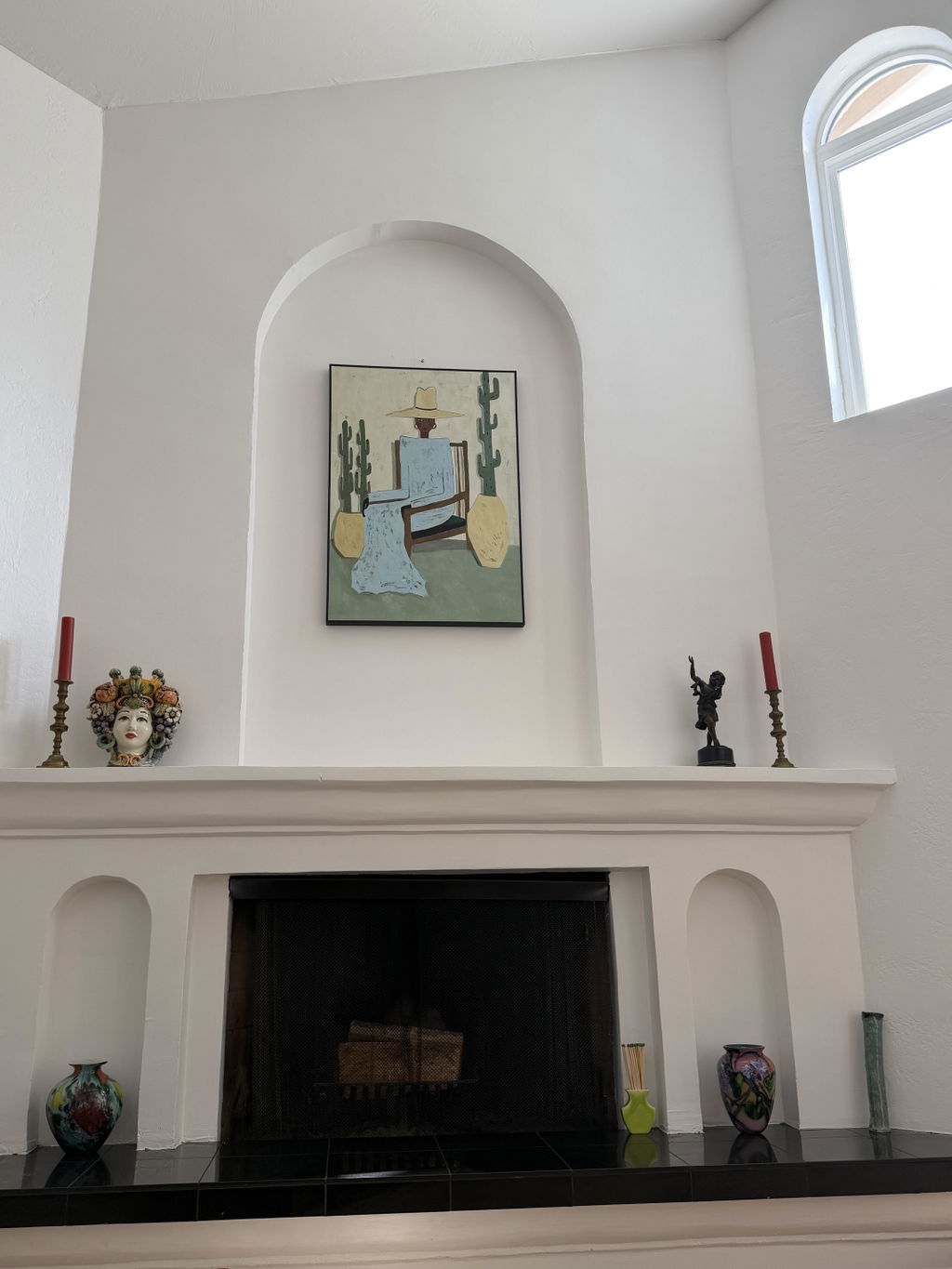
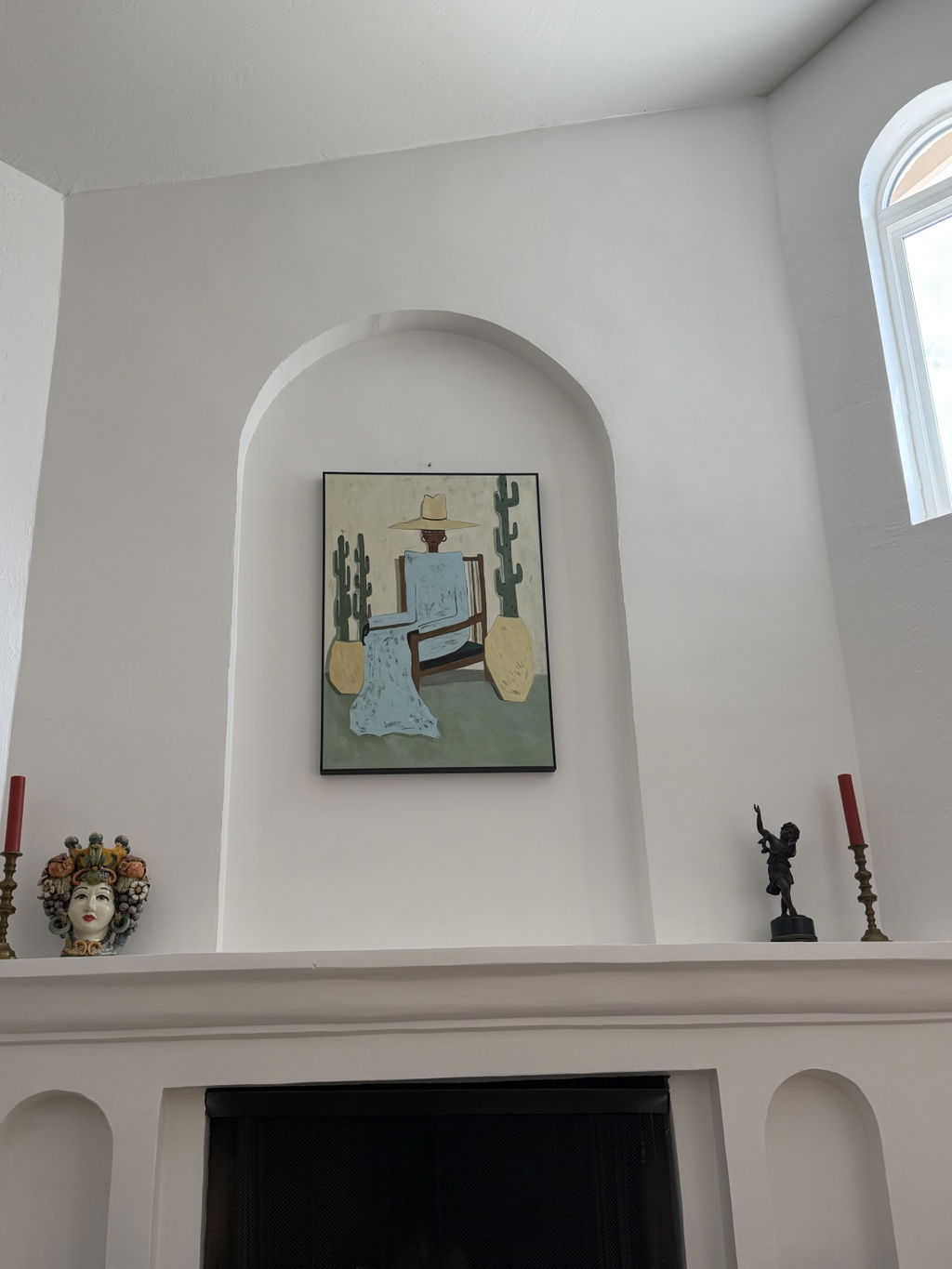
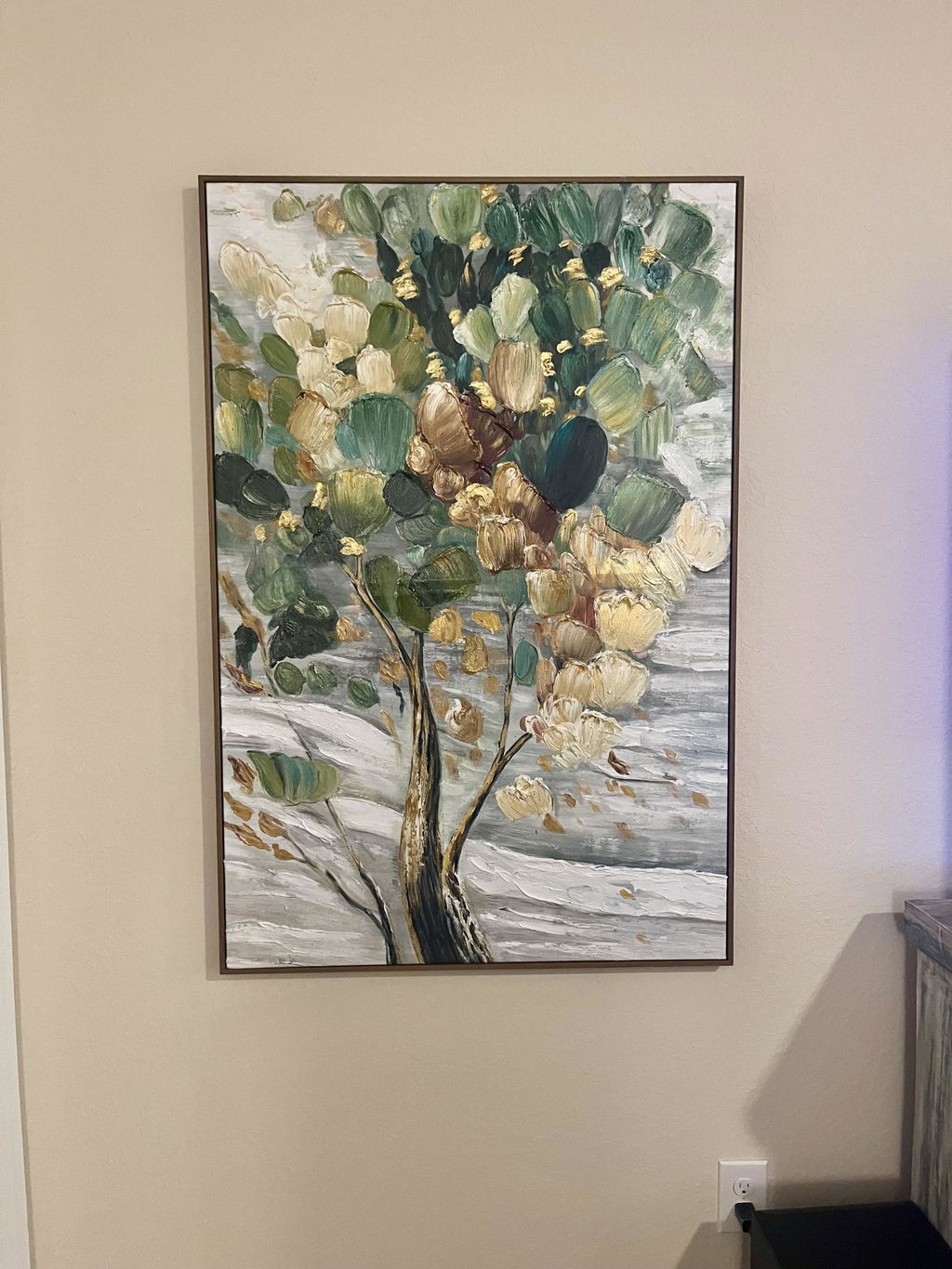
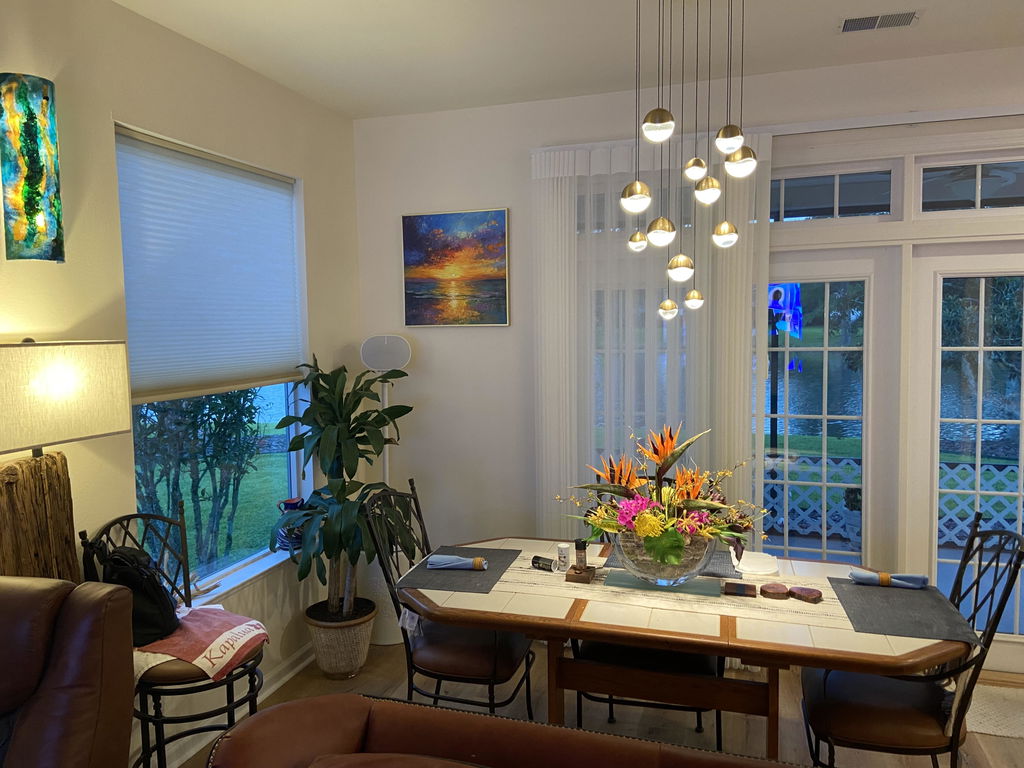
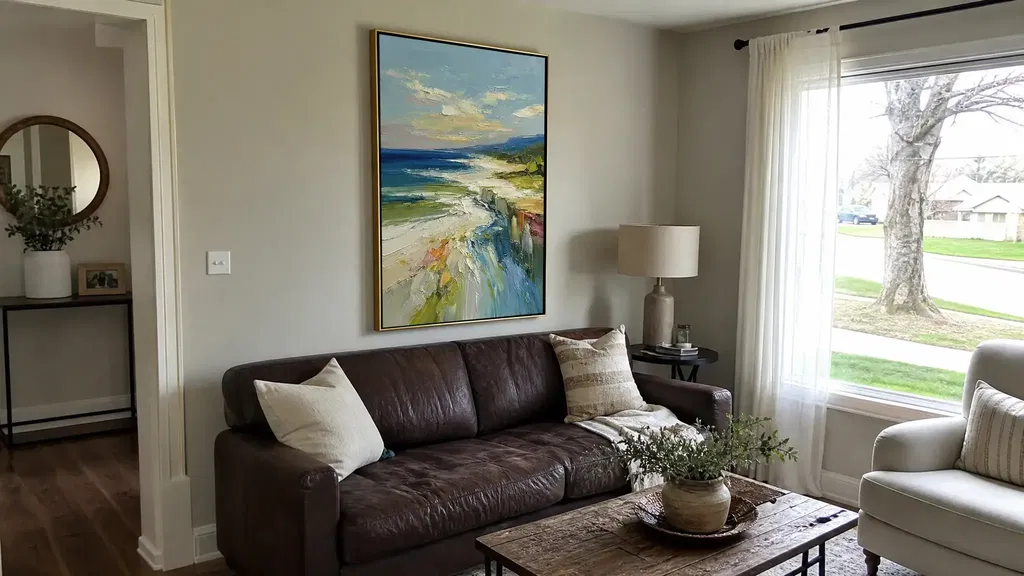
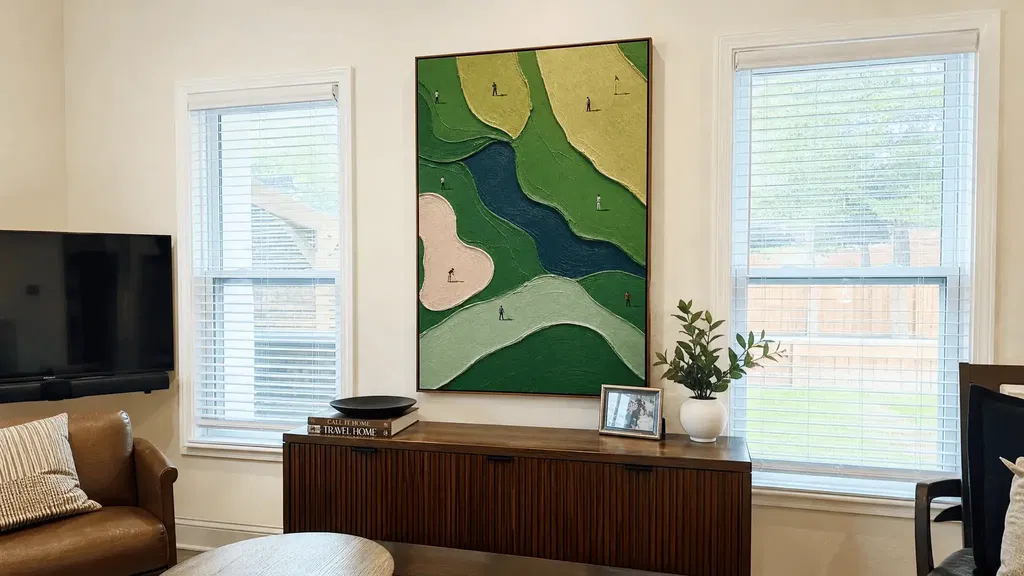
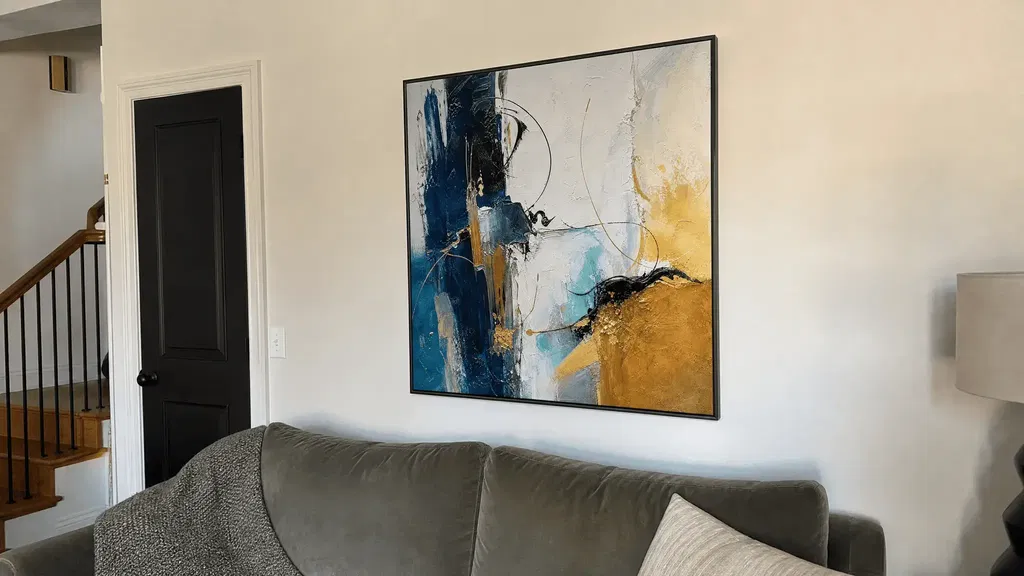
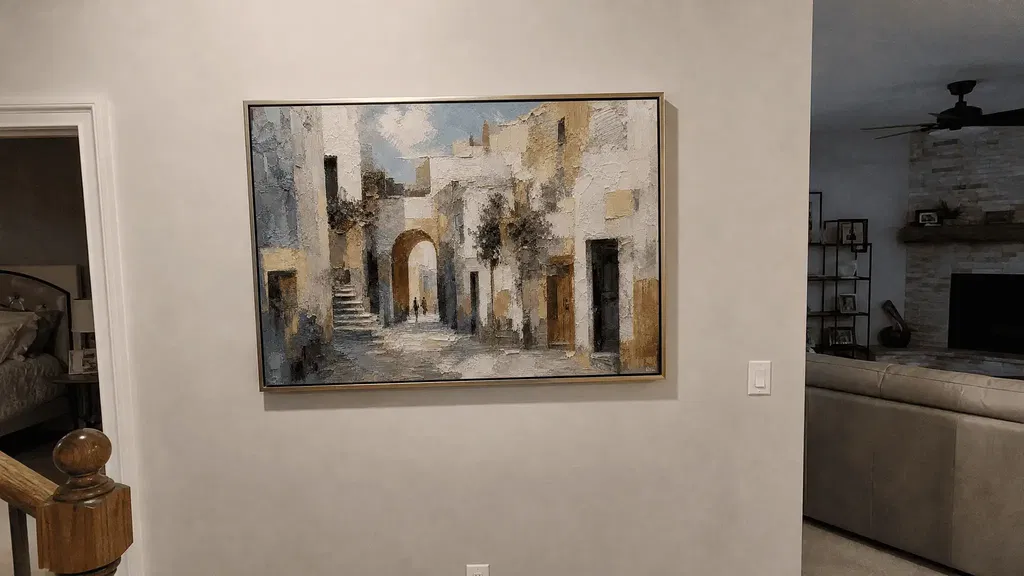
An online painting listing usually falls into one of three categories: it shows one finished work for sale, it shows a representative example of what will be made, or it leaves the deliverable unclear. The first step in buying online art is to identify which promise the listing makes—not to assume the hero image is the item that will arrive. Then compare the gallery, dimensions, captions, and production wording, and request written confirmation when those details do not line up.
Classify the Online Art Listing Before Judging Its Photos
Start by deciding whether the seller is offering one existing painting, an example of a style or process, or a work that will be produced after you order. This classification determines what the photos can reasonably prove.
Exact-Work Listings
An exact-work listing connects the gallery and description to one finished painting that is available or specifically reserved for sale. Stronger corroborating clues include a consistent subject, matching dimensions, a visible signature in the same position, and surface views that plausibly show the same object. These details support a match, but no single photo or signature guarantees that the pictured work will ship.
Look for language such as "original available," a specific title, a stated inventory status, and "the painting shown," rather than only a description of the style. On Etsy, the platform's policy generally requires original photos of the actual product buyers will receive, with exceptions. That is a platform-specific benchmark, not a rule for every art website. Etsy's listing-image policy can help you recognize the distinction.

Representative-Image Listings
A representative-image listing uses the photo to show a style, composition, color direction, or expected finish, while the ordered work may vary. "Made to order," "custom," "commission," "recreated," "reproduction," and "choose your size" are signals to ask what changes between the example and the deliverable.
The image may still show a real original painting, but that does not mean the same physical object is included in your order. Ask whether the seller will create a new work, reproduce the composition, or customize the size, colors, orientation, or surface treatment.
Unclear Listings
Treat the listing as unclear when it combines an individual-looking gallery with production language but never says whether the photographed painting is included. Missing availability, generic captions, selectable options that do not explain their effect, and conflicting dimensions are additional warning signs.
Before payment, check these points:
- Does the listing identify one finished painting, or only a style or format?
- Do the selected size and options clearly apply to the photographed work?
- Does the seller state whether the pictured painting is the exact work that will ship?
Send one precise question: "Is the painting shown in the listing the exact finished work that will ship with the selected options?" If the seller does not answer clearly, the listing remains unresolved, regardless of how polished the photos look.
Inspect the Photo Gallery for Identity-Bearing Details
The most useful practical photo evidence is a consistent set of full-front, detail, and edge views that appear to show one physical painting. Room styling and image quality help with context or inspection, but neither establishes delivery identity by itself.
Gallery Views of the Finished Work
Compare the gallery instead of trusting one hero image. Check whether these views plausibly show the same work:
- Full-front image: match the overall composition, proportions, crop, and orientation.
- Alternate-angle image: look for the same subject placement, distinctive marks, and lighting behavior.
- Edge or side view: compare the painted edges and thickness when those details matter.
- Detail image: match unusual brush marks, color transitions, or other visible features to the full view.
A crop, filter, dramatic lighting change, or inconsistent proportion is a reason to ask for clarification—not automatic proof that the seller is showing a different work. Request a current, unedited view that addresses the specific mismatch.

Texture, Signature, and Edge Close-Ups
Close-ups can show surface variation, signature placement, and painted edges on the photographed object. They are useful inspection aids, especially for highly textured wall art online, but the seller still needs to connect those features to your order. A close-up may document that one pictured painting has heavy texture; it does not guarantee that a future reproduction or custom version will have the same surface.
If texture is central to your decision, ask for a detail view taken in ordinary light and, when available, a side angle. You can also review these real impasto texture checks for a deeper inspection approach. Treat visible brushwork as a buyer signal, not expert authentication.
Room Mockups and Styled Photos
A room mockup answers "How might this look above a sofa?" and "What is the approximate scale?" It does not automatically answer "Is this the exact painting I will receive?" When the mockup is the only or dominant image, request an unedited artwork view.
| Photo type | What it can help establish | What it cannot establish alone |
|---|---|---|
| Full-front artwork view | Composition, proportions, and orientation | That this object will ship |
| Texture, signature, or edge close-up | Surface and construction details of the photographed work | That a custom version has the same details |
| Room mockup or styled image | Placement and approximate scale | Exact-work identity |
A high-resolution image may make details easier to inspect, but clarity is not identity proof. The question is whether the seller ties the visible work to the specific order you are considering.
Read Captions and Dimensions as Identity Clues
Captions and specifications strengthen an identity trail when they describe one finished painting. Generic style language or option ranges do not resolve which physical object will be part of the order.
Captions That Identify One Finished Piece
Look for a specific title, availability statement, exact measurements, and explicit wording that the pictured original is for sale. A caption such as "blue abstract wall art" describes a category; it does not identify one painting. "Original, 24 by 36 inches, signed lower right, shown in the photos, available to ship" gives you more useful points to compare.
The strongest clues work together. If the title and dimensions describe one available work but the options also promise multiple sizes, ask which details apply to the photographed piece and which apply to a new production order.
Dimensions, Orientation, and Signature Placement
Match the listed width, height, orientation, and visible signature position against the gallery. Use this check to catch obvious mismatches, then ask whether the specifications describe the exact photographed work or an option range:
- Compare width and height with the image's orientation and proportions.
- Check whether the listed size includes the frame, canvas, or only the painted area.
- Note where the signature appears and whether the description promises a signature on the ordered version.
- Ask whether the same dimensions are used for a future or customizable work.
Matching dimensions do not uniquely identify a painting; another work can be made to the same size. Likewise, a signature shown in a photo is a detail to confirm, not a guarantee that every ordered version carries it. For custom listings, compare made-to-order dimensions before treating the size selector as evidence of an existing work.
Decode Production Wording Before You Add the Painting to Your Cart
Production wording changes the question you need to answer. An existing-work listing asks, "Which pictured object will ship?" A made-to-order or reproduction listing asks, "What will be produced after I order, and how much may it vary?" Terms vary by seller and are not universal legal definitions.
| Listing wording | What it may mean for the deliverable | Next buyer check |
|---|---|---|
| "Original available" or "ready to ship" | One finished work may be available now | Is the pictured original the selected item, and do its dimensions match? |
| "Made to order," "custom," or "commission" | A new work may be produced after purchase | What remains consistent, what may vary, and when is a preview or approval available? |
| "Reproduction," "recreated," or "choose your size" | The order may be a copy, interpretation, or size-specific production | Is it a print, a newly painted version, or another format, and what texture or color variation should you expect? |
If exact-work and production language appear together, treat that as a conflict to resolve rather than assuming the more favorable interpretation. Ask whether a size change affects the composition, brushwork, texture, color, or dimensions. If a seller offers a finished preview or approval step, confirm when it occurs and what happens if the preview does not meet the stated description. If video confirmation is offered, high-resolution approval videos may be a useful follow-up, but a video still does not guarantee a particular remedy.
Resolve Uncertainty With Proof, Then Choose Whether to Buy
Request proof tied to the actual order, save the response, and buy only when the confirmed deliverable fits your tolerance for variation. Documentation helps preserve what was represented; it does not guarantee a refund, chargeback, or other remedy.
Request the Missing Proof
Use the smallest request that resolves the remaining uncertainty:
- Ask whether the pictured painting is the exact finished work that will ship.
- If the seller says yes, request a current, unedited front view plus the detail view that matters most, such as texture, signature, or edge.
- If the answer is no, ask what will vary, whether the selected size changes the result, and whether a finished preview or approval point is available before shipment.
Use This Seller Message
Hi, I'm considering [listing title] in [selected size] with [customization or option]. Is the painting shown in the listing the exact finished work that will ship, or is it a representative example? If it is the exact work, could you send a current, unedited front view and a close-up of [texture/signature/edge]? If it is made to order, what may vary, and is a finished preview or approval available before shipment? Thank you.
Keep the answer tied to the actual listing, size, and customization. A general statement such as "each piece is unique" does not tell you whether the image is the deliverable or an example.
Make the Buy, Pause, or Pass Decision
| Status | Evidence | Action |
|---|---|---|
| Confirmed exact work | Seller identifies the pictured piece and provides matching current proof | Buy if the condition, size, and return terms fit your expectations |
| Representative or made to order | Seller clearly explains what stays consistent, what varies, and any preview step | Buy only if the expected variation suits you |
| Conflicting or unanswered | Listing copy and seller response do not identify the deliverable | Pause or pass; do not fill the gap with assumptions |
Before checkout, save copies of the listing images, description, price, selected options, dimensions, production wording, receipt, seller messages, and any preview. The FTC advises online shoppers to keep receipts and emails, and earlier FTC record-keeping guidance recommends saving the product description, price, receipt, and correspondence. These records document what was represented; they do not promise a particular dispute outcome.
Before you add online art to your cart, confirm whether the image shows the exact work, a representative example, or an unresolved offer. Ask one targeted question, save the answer, and pause if the seller cannot identify the deliverable or explain expected variation.
FAQ
Can a Painting Be Listed as an Original if the Image Is Only Representative?
Yes. "Original" can describe the type of work or the fact that a new painting will be hand-created, while the displayed image remains an example. Ask whether the physical painting pictured is the one being sold; if not, ask whether the new work will be signed, titled, and previewed separately.
What Should I Ask if the Seller Says the Painting Is Made to Order?
Ask what remains consistent, what may vary, whether the selected size changes the composition or texture, and whether you can approve a finished preview before shipment. Also ask whether the preview is optional, how quickly you must respond, and what happens if you do not approve it.
Is a Certificate of Authenticity Enough to Prove I Will Receive the Painting Shown?
No. A certificate may document an item, artist, or edition, but it does not by itself connect your order to the pictured work. Request confirmation that the certificate applies to the selected piece and keep the image, order details, and seller's written answer together.
What If the Seller Will Not Send a Current Photo Before I Buy?
Treat exact-work identity as unresolved if the current photo is necessary to your decision. Review the platform's payment, cancellation, and return terms, then pause or choose another listing if the pictured painting—not merely the style—is what you want.