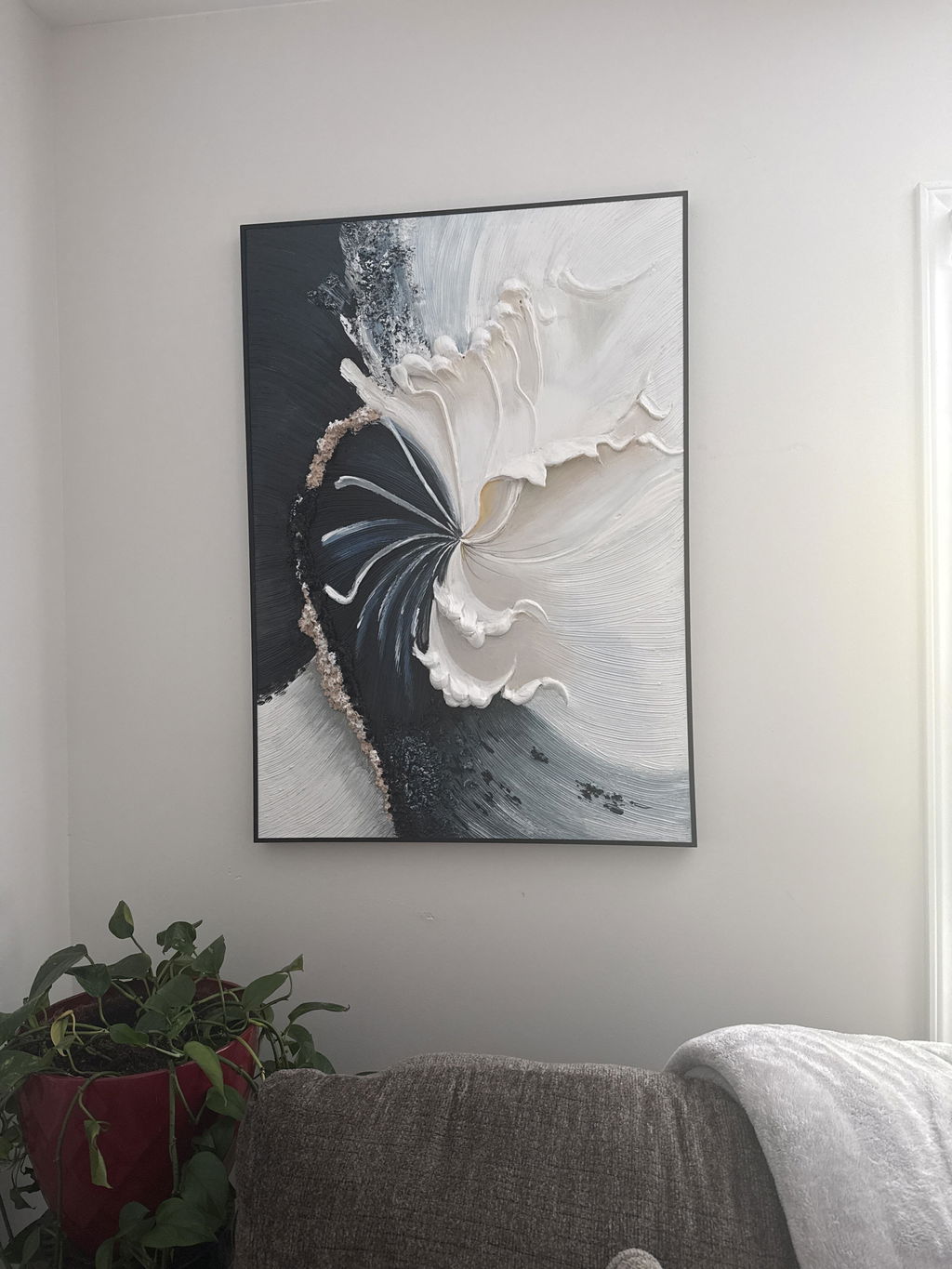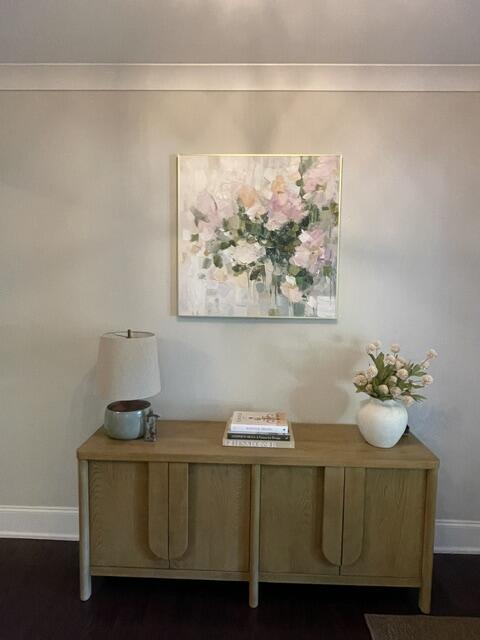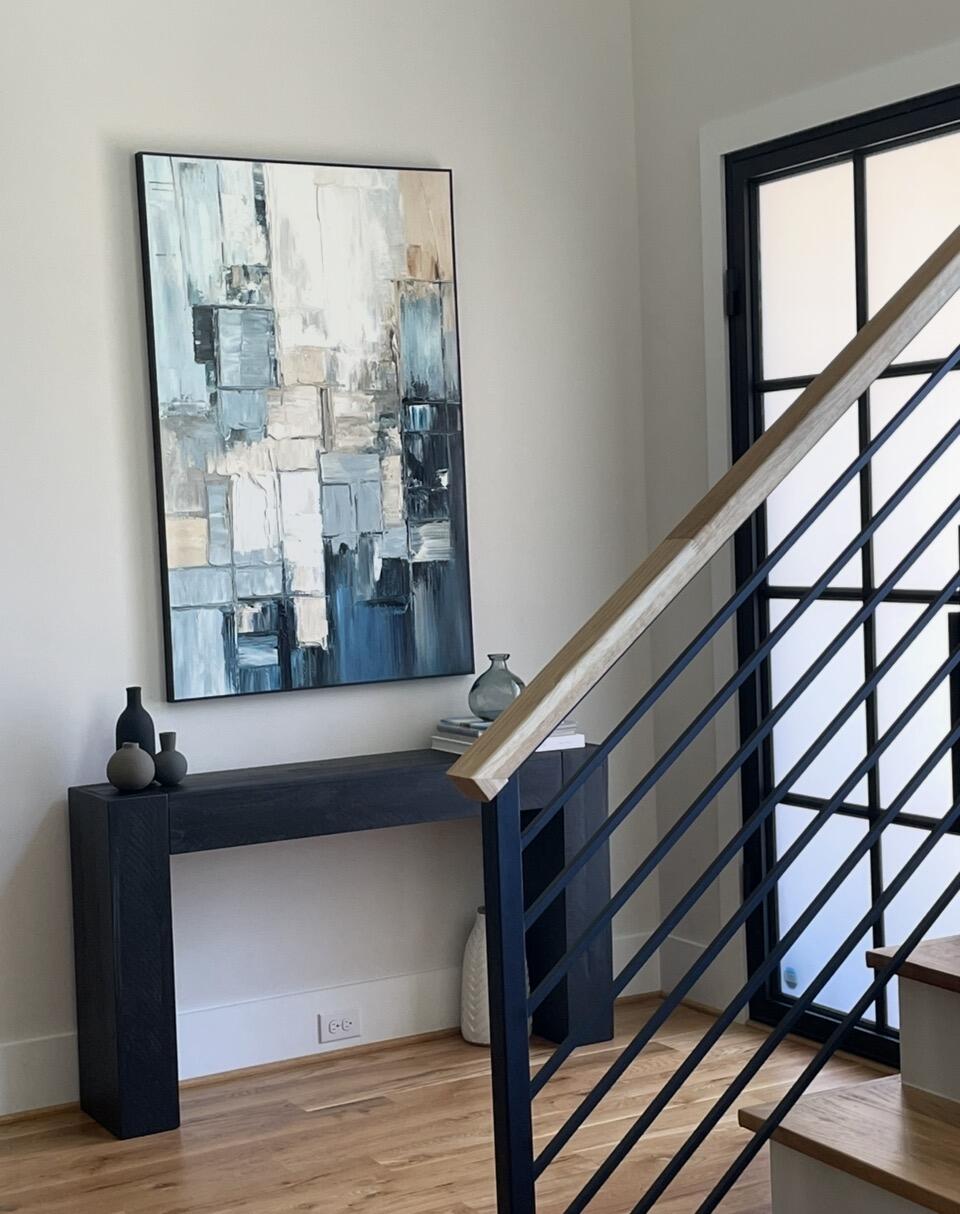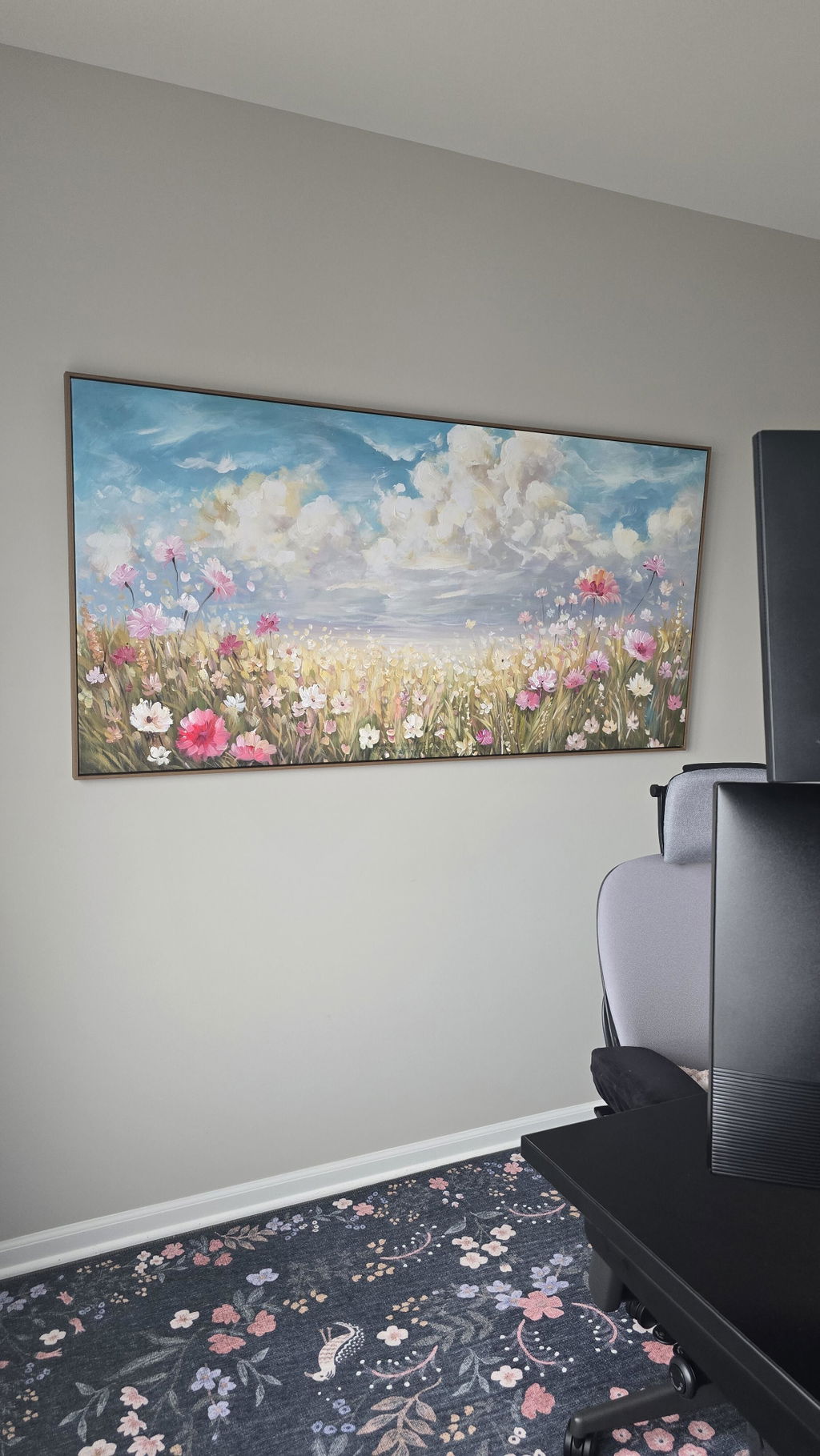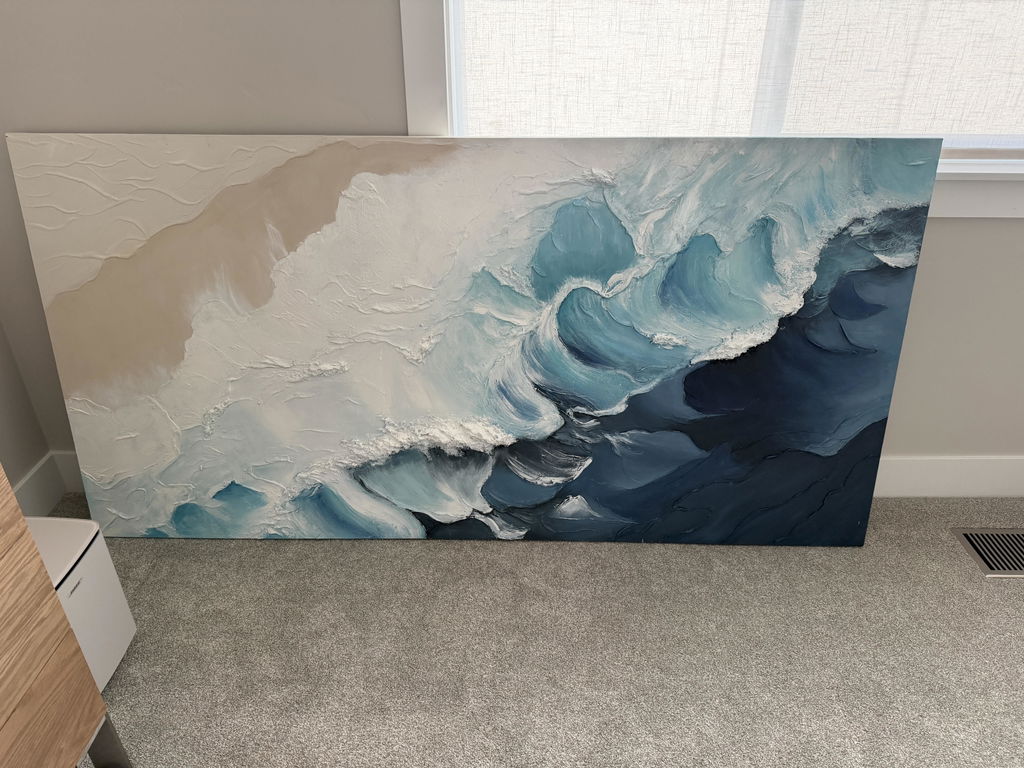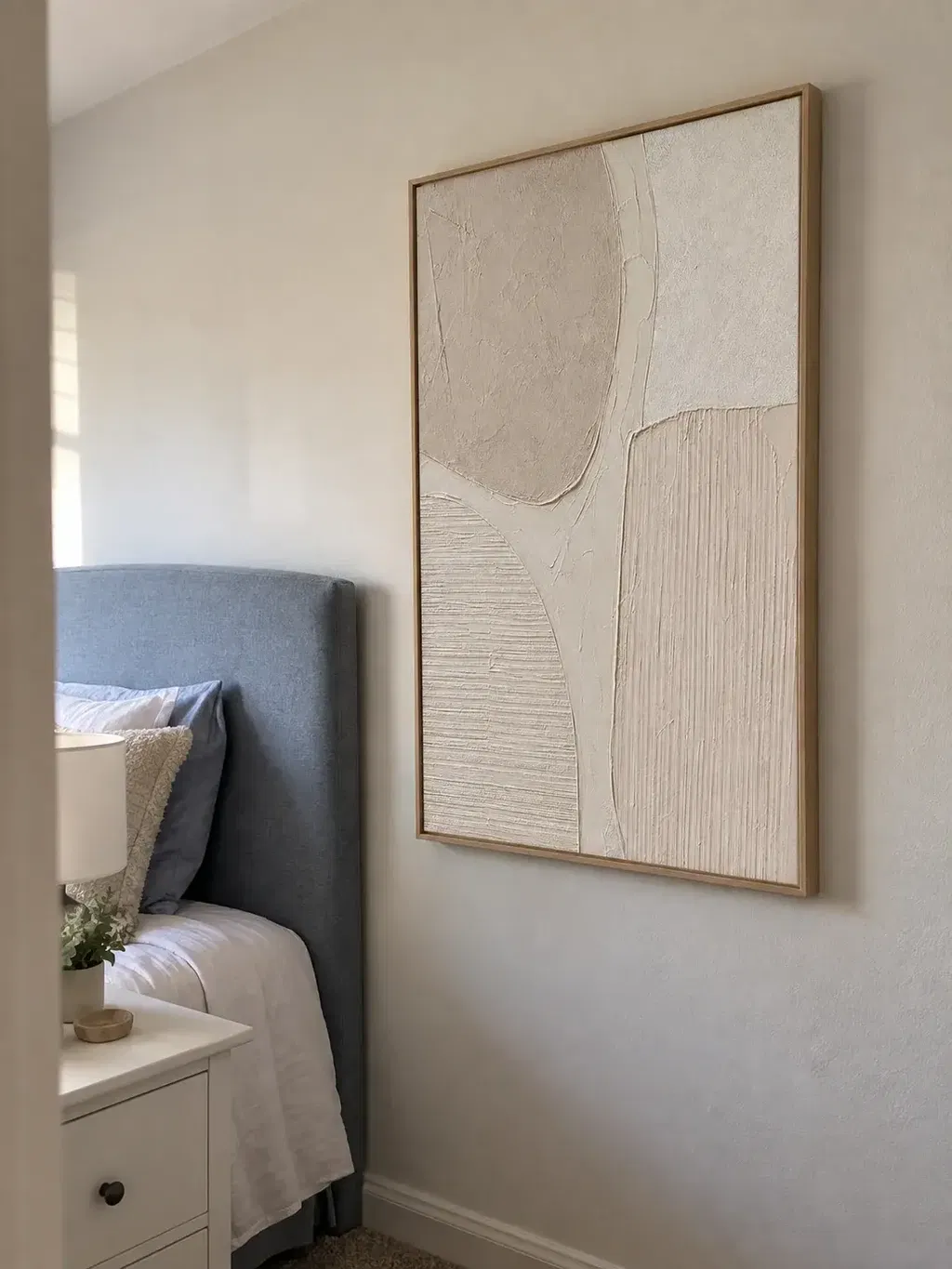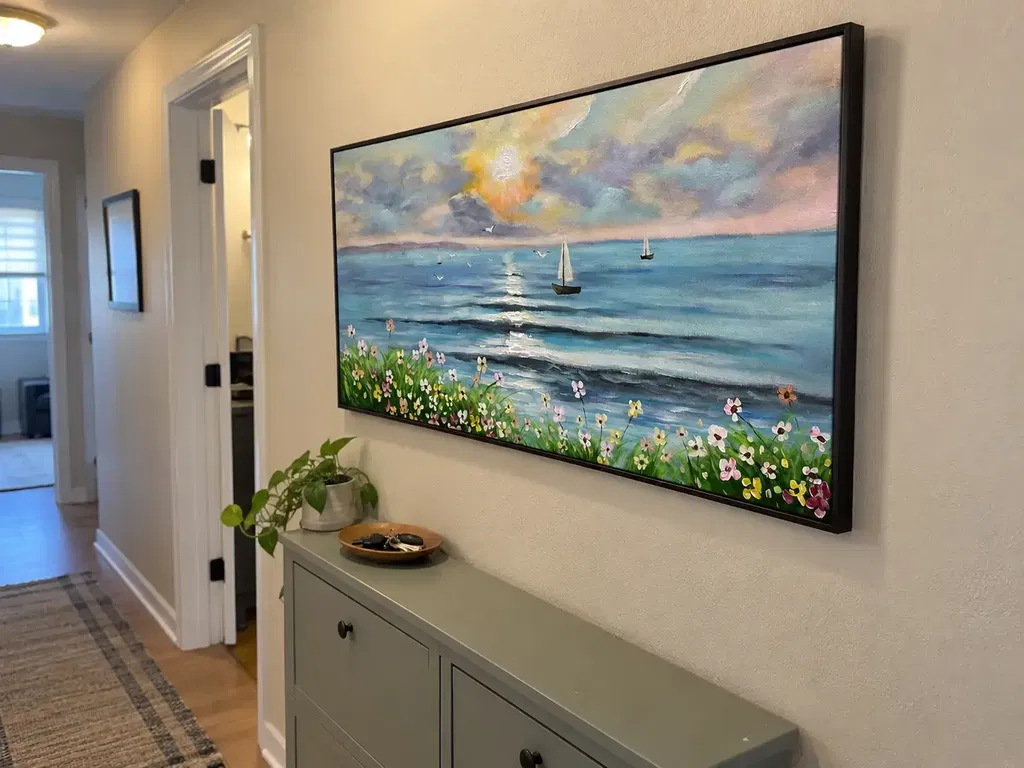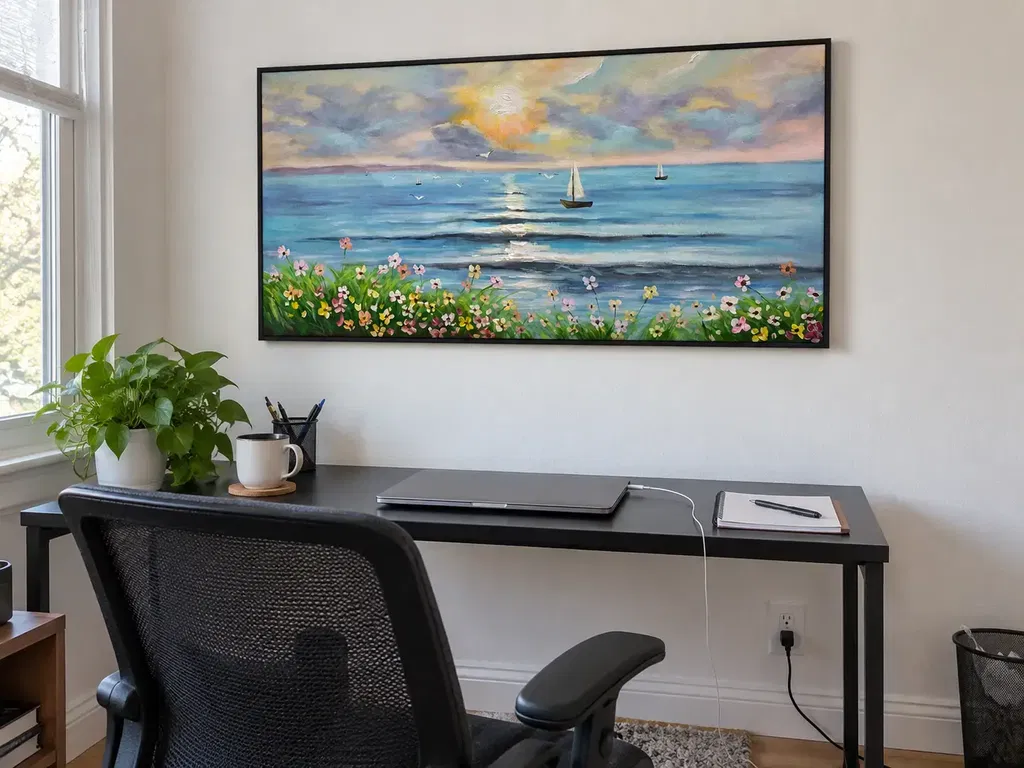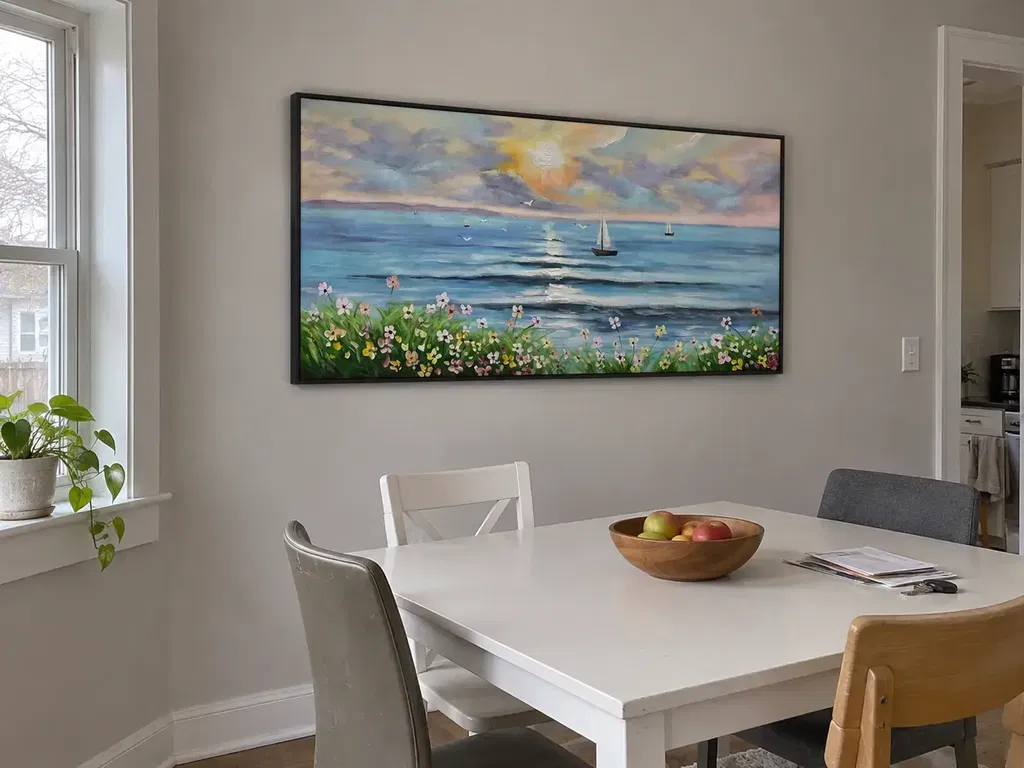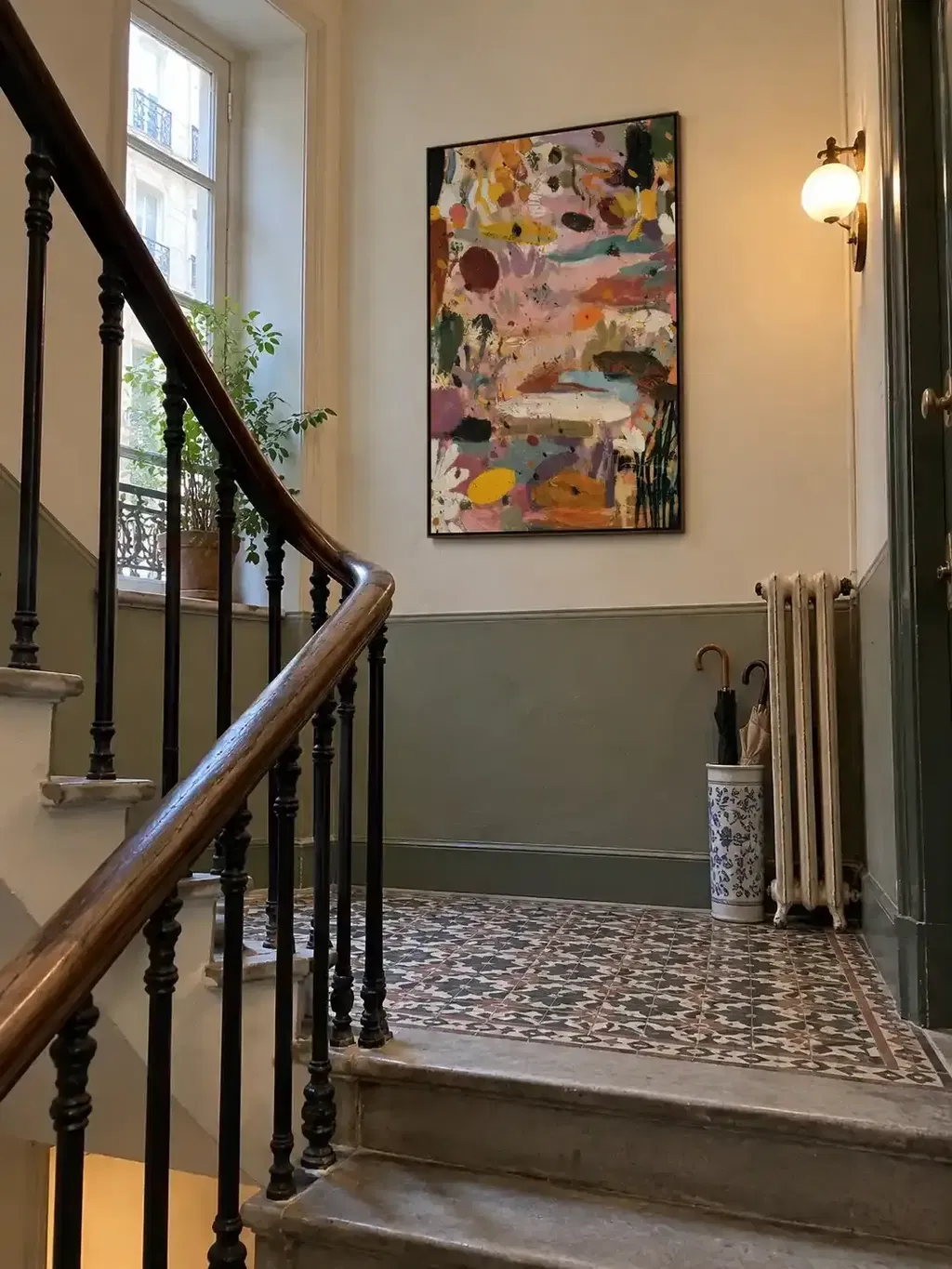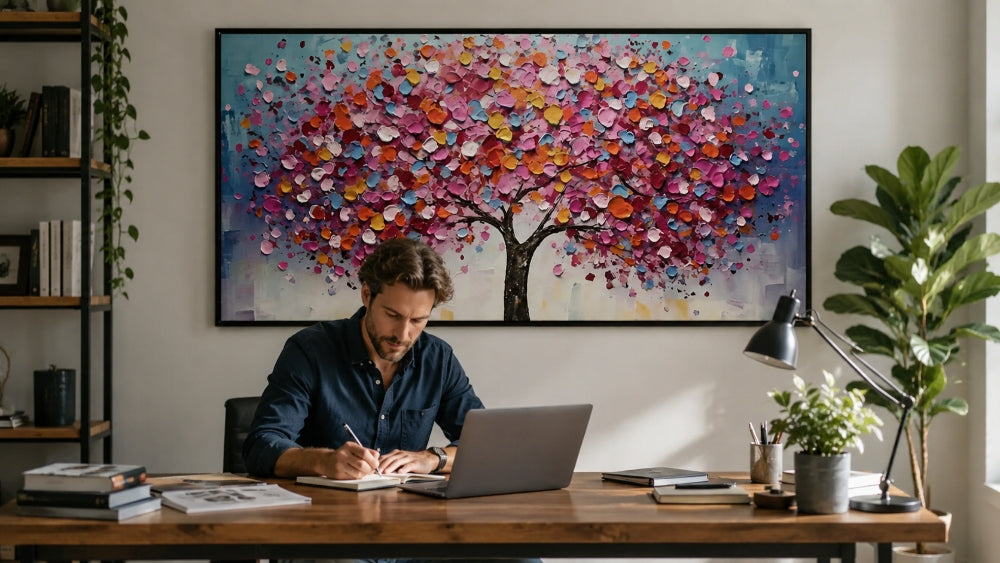
To style a large painting without overcrowding a room, you must treat the piece as a single anchor point that replaces smaller decorative clusters rather than adding to them. Professional designers recommend maintaining at least 6 to 12 inches of negative space around the artwork’s frame to allow the wall to breathe. By prioritizing a single focal point, you eliminate visual competition and create a sophisticated, open atmosphere even in compact living spaces.
Integrating oversized art requires a blend of mathematical precision and aesthetic restraint. When you choose a substantial piece, you are making a commitment to a minimalist philosophy where the art does the heavy lifting for the entire room's decor. This guide provides a step-by-step methodology for selecting, measuring, and mounting your masterpiece to ensure it enhances your home’s architecture.
The Key Principles of Styling Oversized Art Without Visual Clutter
The primary mistake most homeowners make is attempting to surround a large painting with additional decor. A statement piece, such as a large abstract wall art installation, works best when it functions as the room's "single anchor." This concept suggests that once a massive canvas is placed on a wall, that wall is essentially "finished." Adding sconces, smaller photos, or shelving nearby creates visual noise that makes the room feel cramped. For room-specific selection ideas, see the best oversized wall art guide.
Negative space is your most powerful tool. You should aim for a "buffer zone" where no other objects intersect with the visual path of the painting. In a standard room, leaving a foot of bare wall on either side of a large frame prevents the art from looking like it is being squeezed into the architecture. This breathing room is what separates a professional gallery look from a cluttered residential basement.
Furthermore, consider the physical weight of the piece. A canvas wall art piece often feels lighter than a glass-fronted framed work because it lacks the reflective surface that can bounce light around the room in a distracting way. To avoid physical crowding, keep the walking paths in the room clear. If the art is placed in a hallway, ensure that its depth doesn't encroach on the space needed for two people to pass comfortably.
Applying the 57-Inch Rule for Professional Hanging Height

One of the fastest ways to make a room feel overcrowded or "off" is to hang art too high. When a painting is too close to the ceiling, it draws the eye upward and makes the walls feel shorter, contributing to a sense of claustrophobia. The industry standard for eye level is the 57-inch rule, which ensures a harmonious relationship between the viewer and the work. The large wall art buying guide explains height, size, color, and material checks together.
To apply the 57-inch rule effectively, follow these steps:
- Measure the Center: Identify the vertical center of your painting. If your painting is 40 inches tall, the center is at 20 inches.
- Measure the Floor: Mark a spot on your wall 57 inches from the floor.
- Adjust for Hardware: Measure the distance from the top of the frame to the hanging wire or hook. Subtract this from your center measurement and align your wall hook accordingly.
- Consider the Ceiling: In rooms with exceptionally high ceilings (10 feet or higher), you may shift the center up to 60 inches, but rarely higher. Eye level remains the anchor for human perspective.
Using this standardized system prevents the awkward placement that makes a room feel cluttered or disjointed. It is also a matter of safety; falling damage often results from aged hanging hardware or poor wall-attachment failure, so ensuring your piece is hung at a stable, accessible height is vital for long-term maintenance.
Using the Two-Thirds Ratio to Anchor Art Above Furniture
When positioning original artwork for sale above a sofa, bed, or console table, the relationship between the furniture and the art determines whether the room feels balanced or overwhelmed. The "Two-Thirds Ratio" is the gold standard used by interior designers to create a sense of scale.
The math is straightforward: the width of your painting (including the frame) should be approximately two-thirds to three-quarters of the width of the furniture below it. If a painting is wider than the furniture, it will feel "top-heavy" and make the furniture look flimsy. If it is significantly smaller than half the width, it will appear to "float" aimlessly, losing its ability to anchor the space.
| Furniture Item | Average Furniture Width | Recommended Art Width (2/3 Ratio) |
|---|---|---|
| Standard Sofa | 84 inches | 56 inches |
| Queen Bed | 60 inches | 40 inches |
| Large Console Table | 60 inches | 40 inches |
| Loveseat | 60 inches | 40 inches |
Maintaining a 6-to-10-inch gap between the bottom of the frame and the top of the furniture is also essential. This gap creates a visual connection without physical crowding. If the painting is hung too high above the furniture, the "conversation" between the two pieces is broken, making the wall space feel fragmented and messy.
Choosing Slim Frames and Low Profile Lighting
The choice of hardware can significantly impact the physical and visual footprint of your art. Heavy, ornate gold moldings might suit a traditional mansion, but in a modern apartment, they can swallow the room's available light and space. A framed wall art piece with a slim profile—such as a floating frame—is often the better choice for large works.
Floating frames leave a small gap between the edge of the canvas and the frame, which creates a shadow line. This adds depth without adding bulk. Because the frame is thin, it doesn't extend the painting's dimensions unnecessarily, allowing it to fit into tighter spaces without feeling cramped.
Lighting also plays a role in how "heavy" a painting feels. Avoid bulky traditional picture lamps that protrude several inches from the wall. Instead, opt for "wash lighting" using recessed ceiling spotlights. This highlights the art while keeping the room’s physical footprint small. Be mindful of light intensity, as light damage is cumulative and irreversible. Controlled museum-level lighting not only protects your investment but also ensures the colors remain vibrant without the glare that can make a room feel visually busy.
Large Statement Paintings versus Gallery Walls

A common debate when decorating large walls is whether to use one large format paintings installation or a gallery wall consisting of many smaller pieces. For those looking to avoid overcrowding, the single large piece is almost always the winner. For a closer comparison of layout styles, review art sets vs statement paintings.
Gallery walls require the eye to process dozens of individual shapes, colors, and frame edges. This creates a high level of visual activity that can be exhausting in a small room. A single large painting, by contrast, provides a calm, singular focal point. It simplifies the room's geometry and makes the space feel larger by emphasizing the scale of the wall itself.
| Feature | Single Large Painting | Gallery Wall |
|---|---|---|
| Visual Impact | High / Bold | Moderate / Busy |
| Space Perception | Makes room feel larger | Can feel cluttered |
| Maintenance | Minimal dusting | High (cleaning many frames) |
| Install Difficulty | Single heavy mount | Multiple precise levels |
| Focal Point | Clear and definitive | Diffused and varied |
In minimalist or modern interiors, the "less is more" approach is essential. A single large canvas creates a sense of luxury and intentionality that a collection of smaller items rarely achieves. It allows the viewer to focus on the textures and brushstrokes of the work rather than the arrangement of the frames.
Comparing Wall Mounting and Leaning Techniques
You do not always have to drill holes to display large art. Leaning a painting against a wall can provide a more casual, airy vibe that reduces the formal "weight" of the room. This technique is particularly effective on top of low credenzas or even on the floor in larger lofts. If you are working with an empty wall, check when a blank wall needs oversized art before choosing the final placement.
However, leaning requires careful consideration of safety and room flow. If a painting is leaned on the floor, it must be in a low-traffic area where it won't be bumped. It should also be secured at the base to prevent it from sliding. For those with children or pets, wall mounting is significantly safer. Large panels or canvases should be carried by two or more people during installation to prevent injury or damage to the piece.
Wall mounting is the preferred method for creating a structured, formal environment. It allows the art to be positioned at the perfect eye level (the 57-inch rule) and ensures that the floor remains clear, which is a major factor in making a room feel spacious. If you choose to lean, ensure the piece is large enough that it doesn't look like it was simply forgotten against the wall; it should be a deliberate design choice.
Coordinating Room Colors with Your Statement Piece
To prevent a large painting from feeling like an intruder in the room, you must integrate its color palette into the surrounding environment. This doesn't mean matching the wall color to the painting; rather, it means mirroring specific tones in small, scattered accents.
Use this checklist to create cohesion:
- Identify 1-2 Dominant Colors: Look for the most prominent non-neutral shades in the painting.
- Mirror with Accessories: Find a rug, a throw pillow, or a ceramic vase that shares one of those colors.
- Balance with Neutrals: If the painting is very colorful, keep the furniture and walls neutral to avoid sensory overload.
- Use Texture: If the painting has thick impasto (raised paint), mirror that texture with chunky knit blankets or woven baskets.
- Avoid Perfect Matching: Subtle variations in shade look more sophisticated than an exact match, which can feel forced.
When a painting's colors are echoed elsewhere in the room, the piece feels like it belongs to the space rather than just sitting on top of it. This integration helps the artwork blend into the room's overall flow, reducing the "heavy" feeling that often comes with oversized decor.
Perfecting Your Interior with Large Format Paintings
Successfully styling a large painting is about mastering the balance between the art and the architecture. By adhering to the 57-inch rule for height and the two-thirds ratio for furniture placement, you ensure that your piece feels anchored rather than overwhelming. Remember that negative space is not "wasted" space—it is the essential frame that allows your artwork to shine. Whether you are displaying a bold large format paintings piece or a quiet, monochromatic canvas, the goal is to create a focal point that invites contemplation without causing clutter. By following these professional styling principles, you can enjoy the transformative power of oversized art while maintaining a room that feels open, intentional, and perfectly balanced.
Safety Notice
This article provides general guidance for styling and hanging artwork. Always follow the manufacturer's instructions for hanging hardware and wall anchors. For large paintings weighing over 50 pounds, or for installations on non-standard wall materials like plaster or masonry, consult a qualified professional to ensure the structural integrity of the mount and the safety of the room's occupants.
FAQs
How do I hang a heavy painting safely on drywall?
To hang a heavy painting on drywall, you must use wall anchors rated for the specific weight of the piece or screw directly into a wall stud. Using a stud finder is the most secure method. For pieces over 50 pounds, a French cleat or heavy-duty togglers are recommended to distribute weight evenly.
Can I place other decor items around a large painting?
While a statement painting is best left as a single anchor, you can place minimal accents nearby if they don't overlap the 6-12 inch negative space buffer. A single tall plant or a low-profile floor lamp at a distance can balance an off-center painting without creating clutter.
How high should art be hung over a console table?
Art should be hung so that the bottom of the frame is between 6 and 10 inches above the top of the console table. This ensures the art feels visually anchored to the furniture rather than disconnected and floating on the wall.