The Evolution of Functional Art: From Aesthetics to Acoustic Engineering
The global art market is undergoing a fundamental structural shift. Recent data indicates that high-end auction sales (over $10 million) plummeted by 44% year-over-year in 2024, signaling a retreat from purely financial art assets as buyers return to real application value according to Marketplace.org. In modern interior design, this "application value" is increasingly defined by how a piece of art interacts with the physical environment—specifically, how it manages the acoustic challenges of open-plan living.
Modern architecture favors hard surfaces: polished concrete, floor-to-ceiling glass, and minimalist plaster. While visually stunning, these materials create an acoustic environment characterized by high reverberation and "flutter echoes." For homeowners and designers, the challenge is finding solutions that mitigate noise without compromising the high-end aesthetic of the space. Large-scale canvases, when engineered correctly, bridge the gap between decorative art and acoustic treatment.
The Psychology of Authenticity and Value
When investing in large-scale art for acoustic purposes, the "human element" is not just a preference; it is a value driver. Research from Columbia University confirms that consumers value art labeled as "AI-generated" 62% lower than authentic human-created art. Furthermore, research from the University of Chicago suggests that digital replicas lack the artist's "essential identity," which collapses the perceived long-term value of the piece.
For the purpose of room acoustics, this distinction is critical. Mass-produced digital prints on thin polyester canvas often act as hard, reflective surfaces, bouncing sound waves back into the room. In contrast, a hand-painted acrylic mural or heavy-duty canvas possesses a complex microtopography that aids in sound diffusion.

The Physics of Sound Dampening with Canvas
To understand how a painting can act as a sound absorber, we must look at the interaction between sound waves and porous materials. Standard thin canvases (0.5–1mm) provide negligible acoustic benefit. However, heavy-duty gallery-wrapped canvases (2–3mm) with high-tension stretching begin to function as low-efficiency porous absorbers.
The Mechanism of Diffusion and Absorption
Sound dampening through art relies on three primary mechanisms:
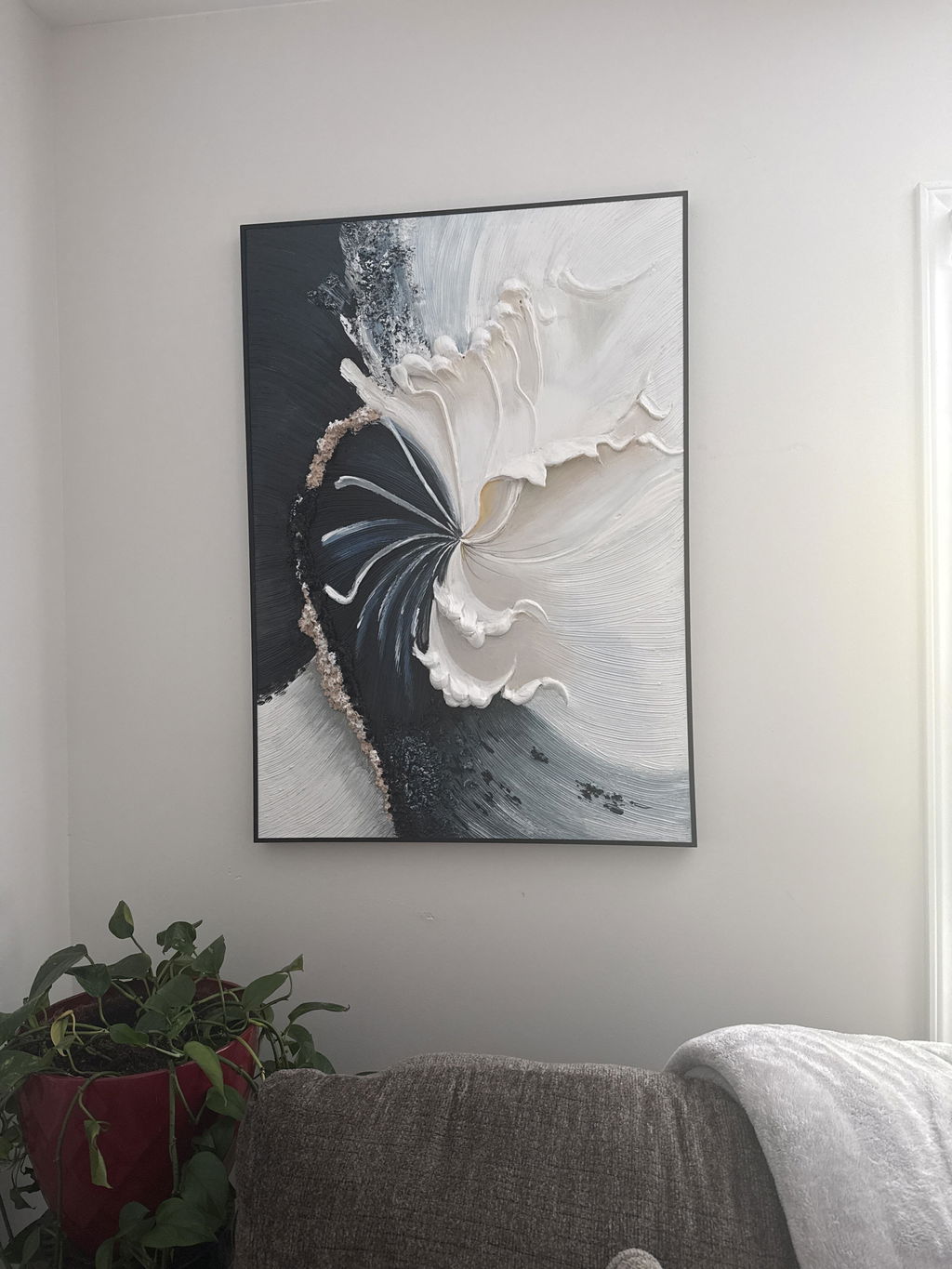
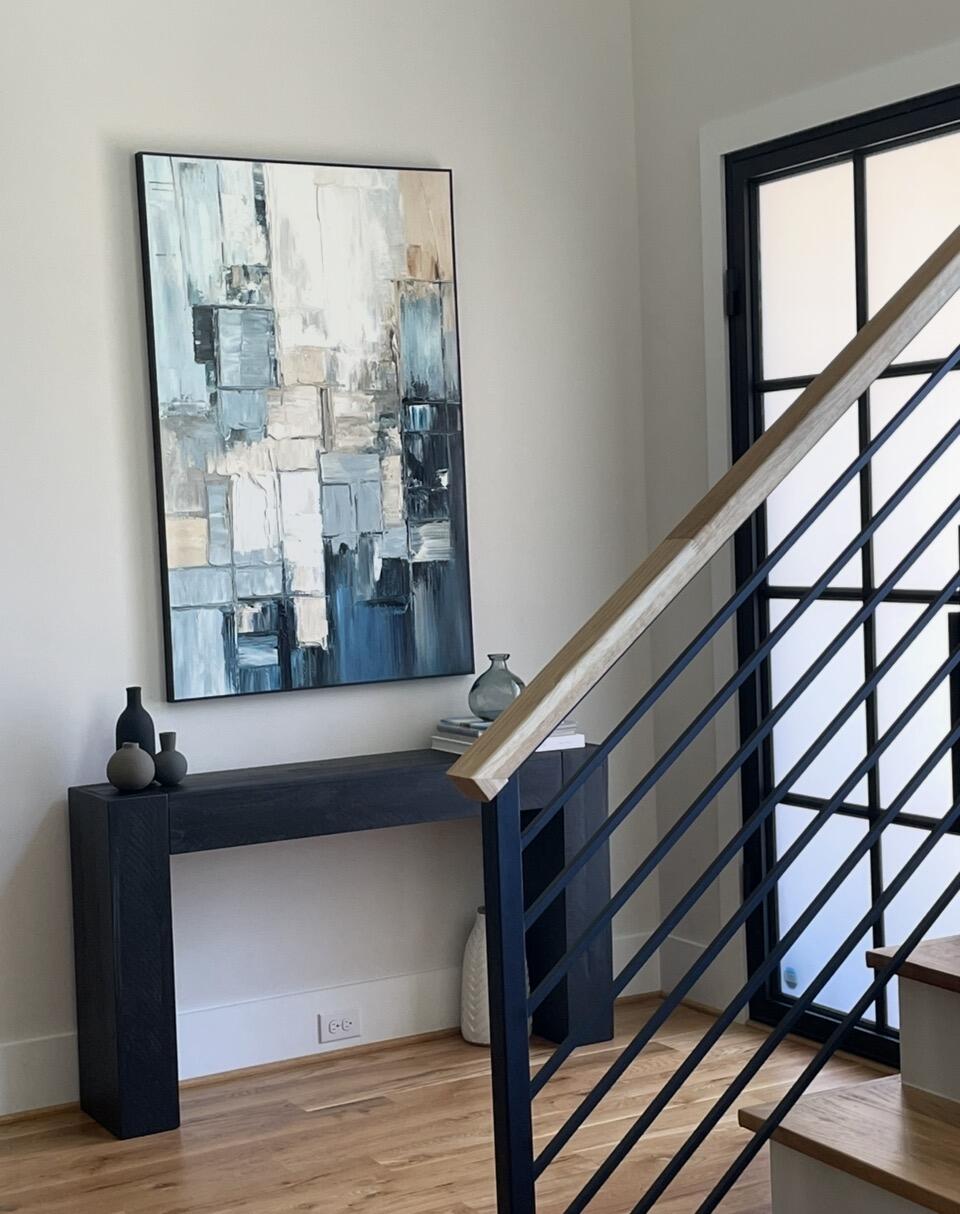
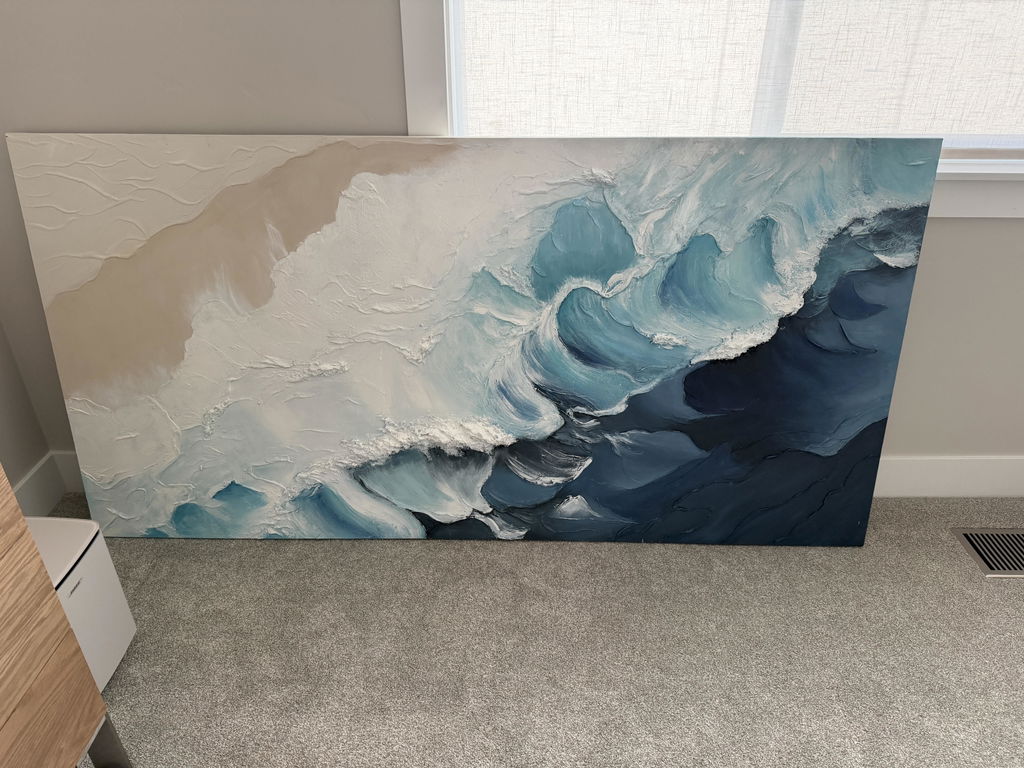
- Surface Scattering (Diffusion): Heavy impasto techniques—where paint is applied thickly to create a 3D texture—outperform smooth finishes. The irregular surface breaks up incoming sound waves, scattering them in multiple directions rather than reflecting them as a coherent echo.
- Porous Absorption: The canvas weave and the layers of acrylic polymer allow some sound energy to penetrate and become trapped as heat within the fibers.
- The Air Cavity Effect: This is the most critical and often overlooked factor. Mounting a canvas flush against a wall limits its effectiveness.
Methodology Note (Acoustic Modeling): Our analysis of acoustic performance is based on standard absorption heuristics derived from the ASTM E1050-24 impedance tube testing principles. We assume a standard room temperature of 20°C and 50% humidity.
Parameter Value/Range Unit Rationale Canvas Thickness 2.5 - 3.0 mm Required for structural integrity and mass Mounting Gap 50 - 75 mm Enhances Helmholtz resonance effect Coverage Ratio 20 - 25 % Minimum wall surface area for audible change Surface Texture 3 - 8 mm Impasto depth for broadband scattering Binder Type Acrylic - Polymer flexibility vs. brittle oil films
The Helmholtz Resonance Factor
Professional installers often utilize a "2-3 inch gap" technique. By leaving this space between the canvas and the wall, you create an air cavity. This setup mimics a Helmholtz Resonator, where the air inside the cavity acts as a spring, absorbing low-frequency sound energy that would otherwise cause "boomy" bass in a room. This is a non-obvious hack that allows a decorative object to perform like a specialized acoustic panel.
Material Science: Why Hand-Painted Acrylic Wins
The choice of medium is not just an aesthetic one; it is a chemical and physical decision. According to research from Aalto University, modern acrylic coatings on wood or canvas substrates emit significantly lower toxic VOCs than traditional oil-based systems once cured. This makes them safer for large-scale indoor applications, particularly in healthcare or residential settings where Indoor Air Quality (IAQ) is a priority.
Texture as a Sound Diffuser
Optical microprofilometry proves that the microtopography of a painting is crucial to its aesthetic and physical properties. Research published by MDPI highlights how the physical relief of paint—the mm-scale texture—is what separates authentic art from flat prints. For acoustics, this texture is a "broadband scatterer."
- Oil vs. Acrylic: While oil paintings offer smooth gradients, they can become brittle over time. Acrylic polymers consist of long-chain molecules that form films through a physical "coalescence" process, making them softer and more resilient to the vibrations inherent in acoustic absorption.
- Impasto Techniques: Heavy palette-knife work creates "peaks and valleys" on the canvas. These irregularities are essential for breaking up high-frequency sound waves that cause harshness in a room's "brightness."

Scenario Analysis: Implementing Acoustic Art
To achieve noticeable results, one must move beyond the "one big painting" approach. Our observations from design consultations suggest two distinct strategies based on the space's function.
Scenario A: The Residential Open-Plan Great Room
In a large living area with high ceilings and hard floors, the primary goal is reducing "speech intelligibility interference"—meaning, making it easier to hear conversations without them being drowned out by echoes.
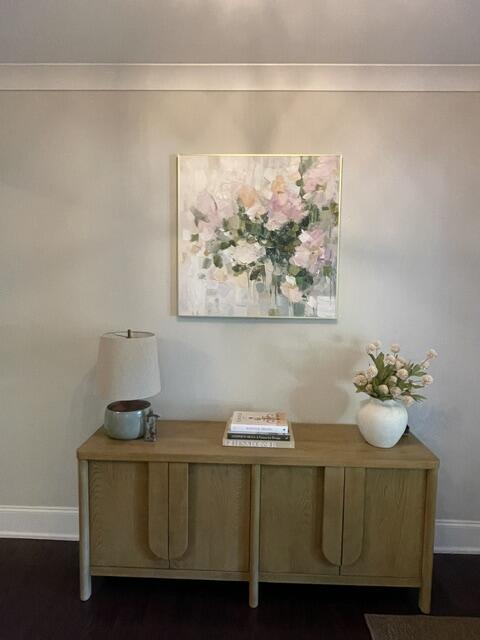
- Strategy: Distributed Placement. Instead of one massive central piece, position three to four medium-large canvases around the room's perimeter.
- Implementation: Cover approximately 20% of the total wall surface area. Use heavy-duty stretcher bars to prevent sagging and maintain the necessary tension for sound wave interaction.
Scenario B: The Commercial Lobby or Clinic
In high-traffic commercial spaces, art serves a public health function. The Cleveland Clinic found that 73% of patients reported significant mood improvements when exposed to environmental art.
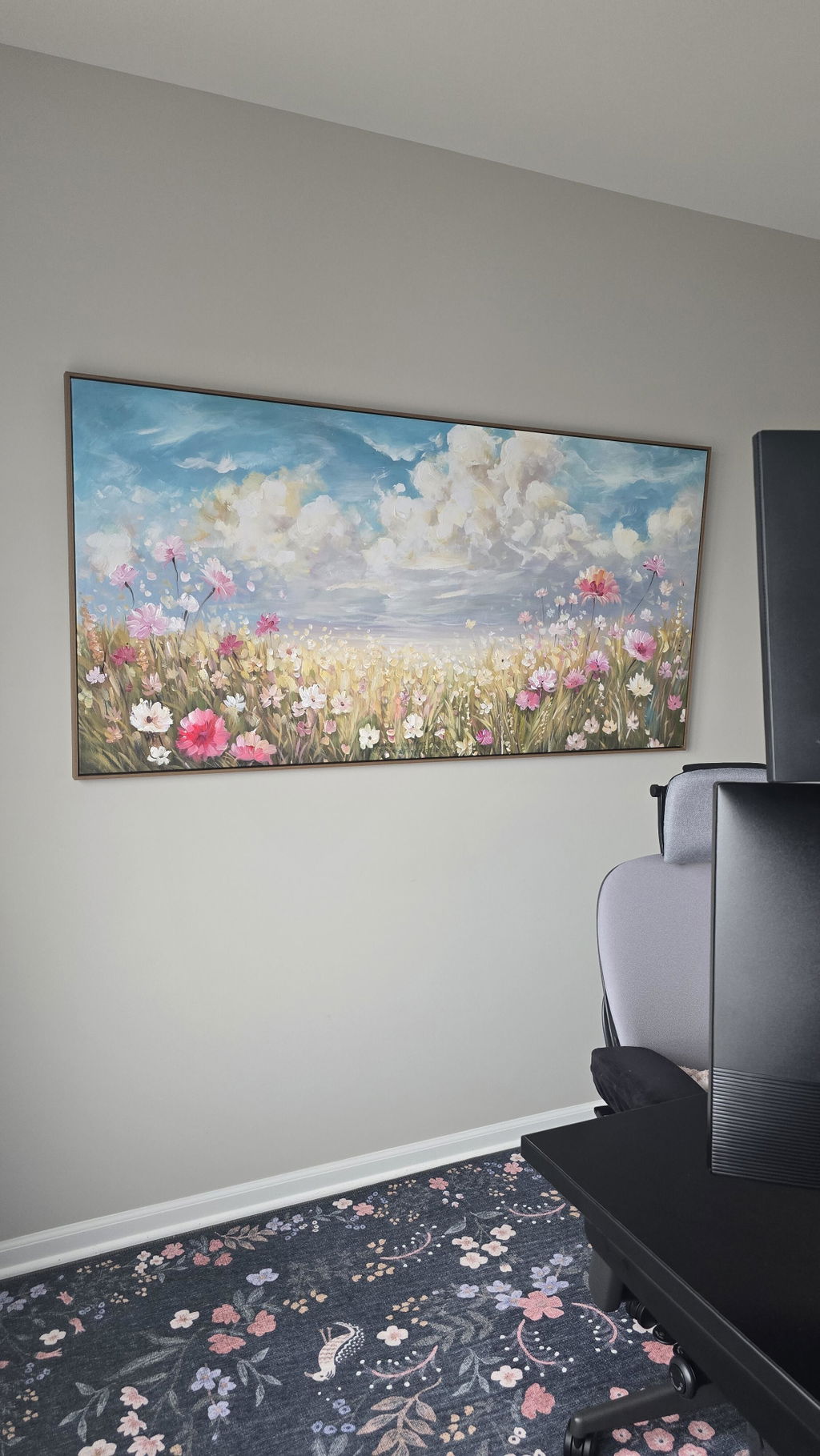
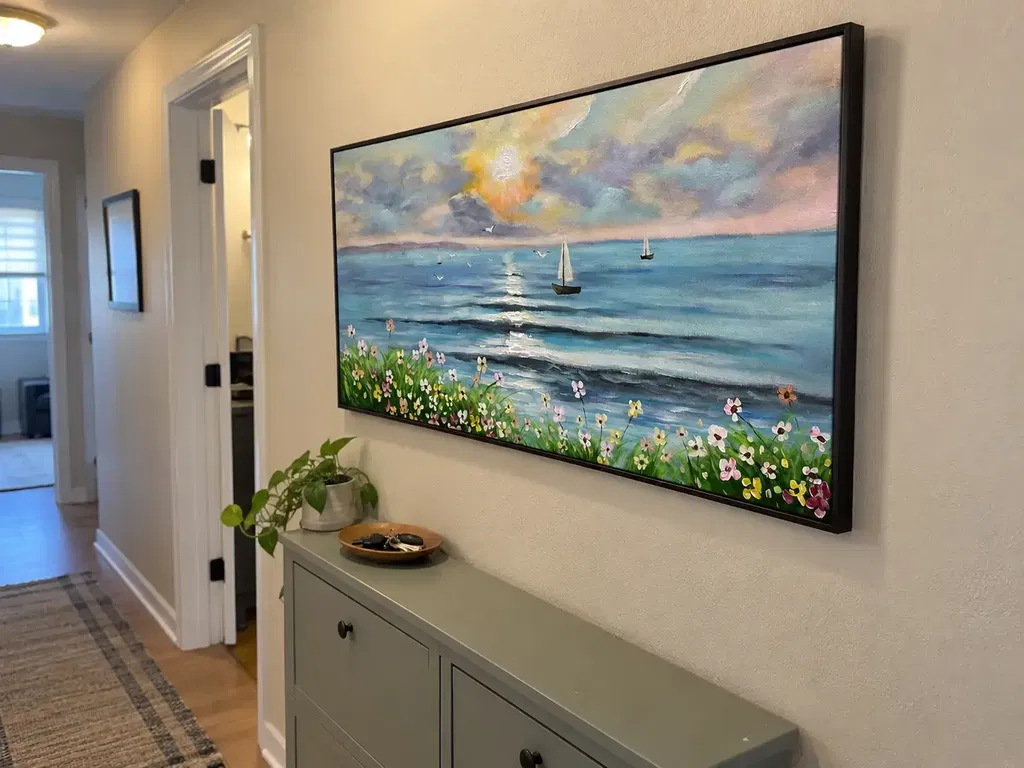
- Strategy: Large-Scale Biophilic Murals. Use nature-themed landscapes, which the WHO suggests can alter clinical indicators for stress.
- Implementation: Use specialized mounting systems that ensure structural stability while maintaining the 2-inch air gap. This is vital for safety in public spaces while maximizing the acoustic "trap" for ambient noise.
Economic and Real Estate Impact
Commissioning large-scale murals or canvases is no longer just a "vanity spend." It is a strategic investment in property value. A Royal Society analysis found that neighborhoods with higher "art" geo-tags experienced greater relative house price ranking gains.
For commercial developers, the ROI is even more direct. In Chicago, public art projects drove $1.4 billion in real estate-related growth according to NCREALTORS. By integrating acoustic-engineered canvases into office spaces, developers can combat post-pandemic vacancy rates. Top developers are utilizing unique art installations as "marketing trump cards" to lease up millions of square feet of office space, as noted by NAIOP.
Health, Safety, and Sustainability in Large-Scale Art
When placing 100+ square feet of painted surface in a room, the chemistry of the materials becomes a health concern.
The VOC and Pigment Safety Guide
Chronic inhalation of low-level volatile compounds in certain paints can lead to central nervous system issues according to CDC NIOSH.
- The Lead/Cadmium Myth: While the industry has largely moved away from lead, some heavy metal pigments like Cadmium are still used for their vibrancy. However, IARC classifies cadmium as a Group 1 carcinogen.
- Eco-Friendly Alternatives: Modern high-end studios are shifting toward walnut oil or water-based acrylics and canvases made from hemp or flax, which consume half the water of cotton according to the Cincinnati Art Museum.
Maintenance and Longevity
A common concern with large canvases is "haziness" or "blooming" over time. Research from Tate suggests this is often due to surfactants migrating to the surface in high humidity. For acoustic art, keeping the surface clean is vital; dust buildup in the canvas weave can actually reduce its porous absorption efficiency over decades.
Installation Best Practices for Acoustic Performance
To maximize the "functional" side of functional art, follow these professional installation rules of thumb:
- The 25% Rule: Aim to cover 20-25% of the wall surface in a "bright" (echoey) room.
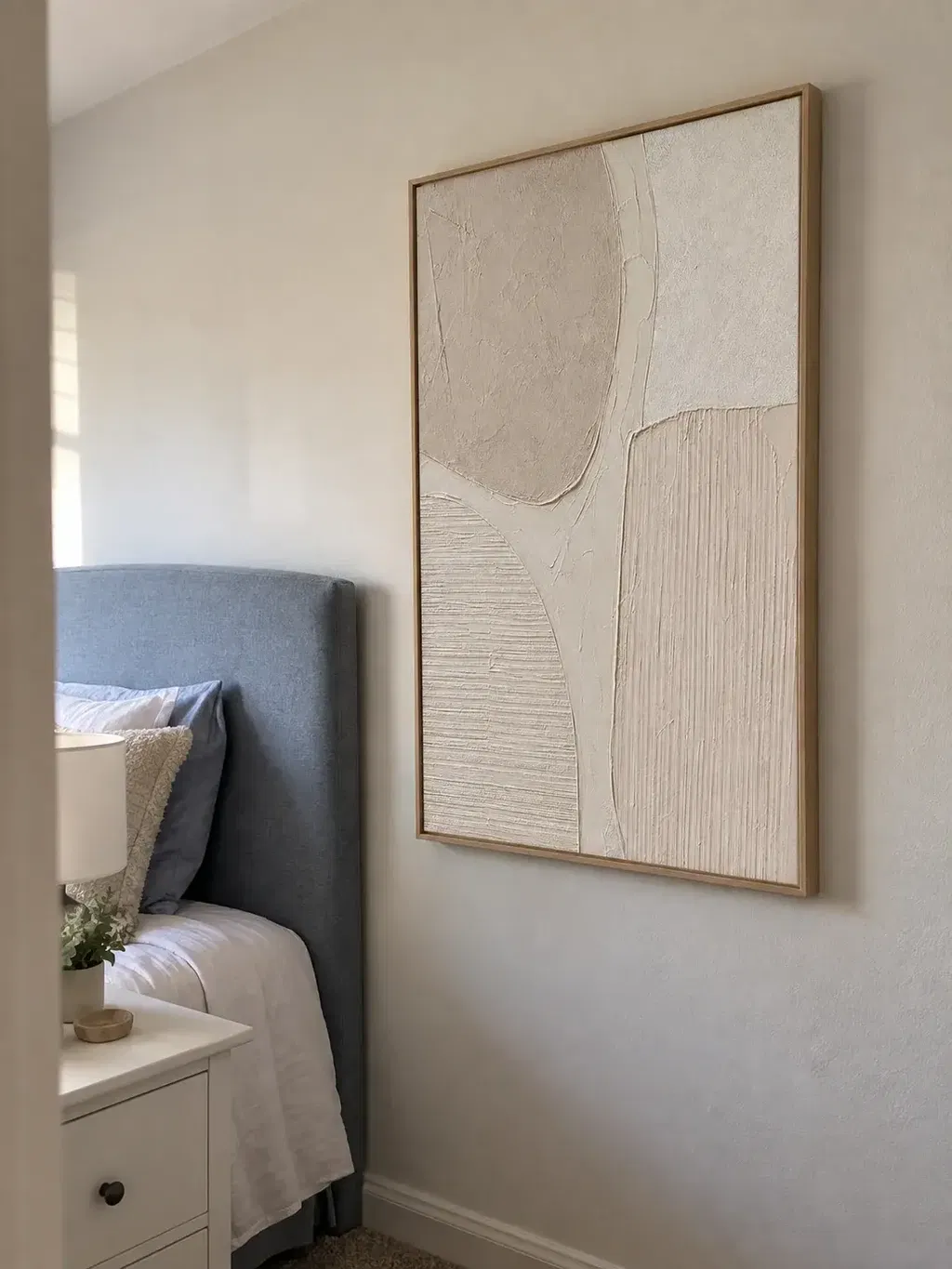
- Avoid Flush Mounting: Use "Z-clips" or specialized stand-offs to maintain a 2-3 inch air gap.
- Strategic Positioning: Place art at "ear level" (the primary reflection zone) rather than high up near the ceiling.
- Texture Priority: Prioritize heavily textured art over smooth finishes.
- Check the Backing: Ensure the canvas is not backed by a hard board (like MDF), which would reflect sound immediately. It should be open to the air cavity behind it.
Summary of Benefits
| Feature | Aesthetic Benefit | Acoustic Benefit |
|---|---|---|
| Large Scale | Visual focal point, anchors the room | Higher surface area for wave interaction |
| Impasto Texture | Adds depth, highlights craftsmanship | Scatters high-frequency reflections |
| Heavy Canvas | Premium feel, prevents sagging | Increases mass for better absorption |
| 2-Inch Air Gap | Creates "floating" gallery look | Enables Helmholtz resonance for bass control |
A Final Note on Professional Guidance
While large canvases offer a significant improvement in room acoustics, they are part of a holistic solution. For spaces with severe acoustic "slap echoes" or industrial-level noise, art should be used in conjunction with hidden acoustic clouds or specialized insulation. However, for the discerning homeowner or designer, the transition from "flat decor" to "engineered canvas" represents the pinnacle of modern, functional luxury.
Disclaimer: This article is for informational purposes only. Acoustic performance can vary based on specific room geometry, materials, and installation techniques. For critical acoustic engineering needs, consult with a certified acoustic consultant. Ensure all large-scale art installations meet local building and safety codes regarding weight and mounting.
Sources: