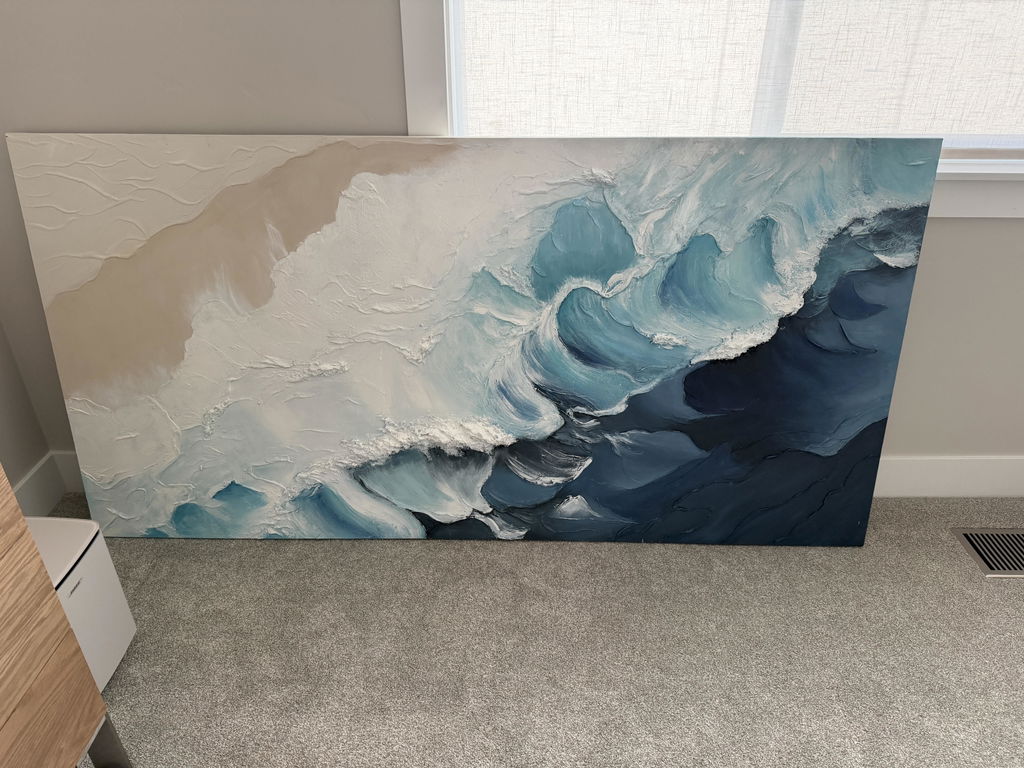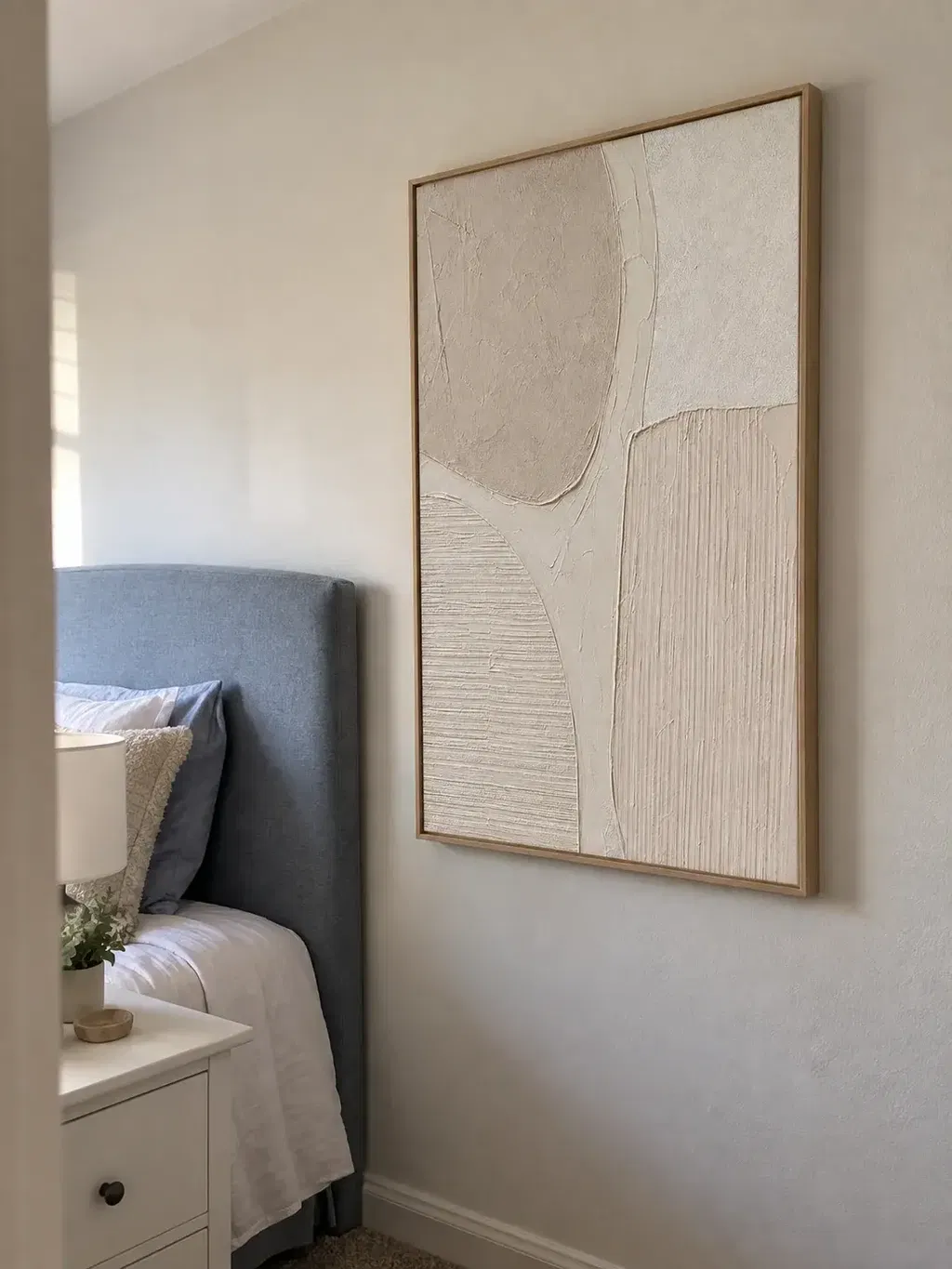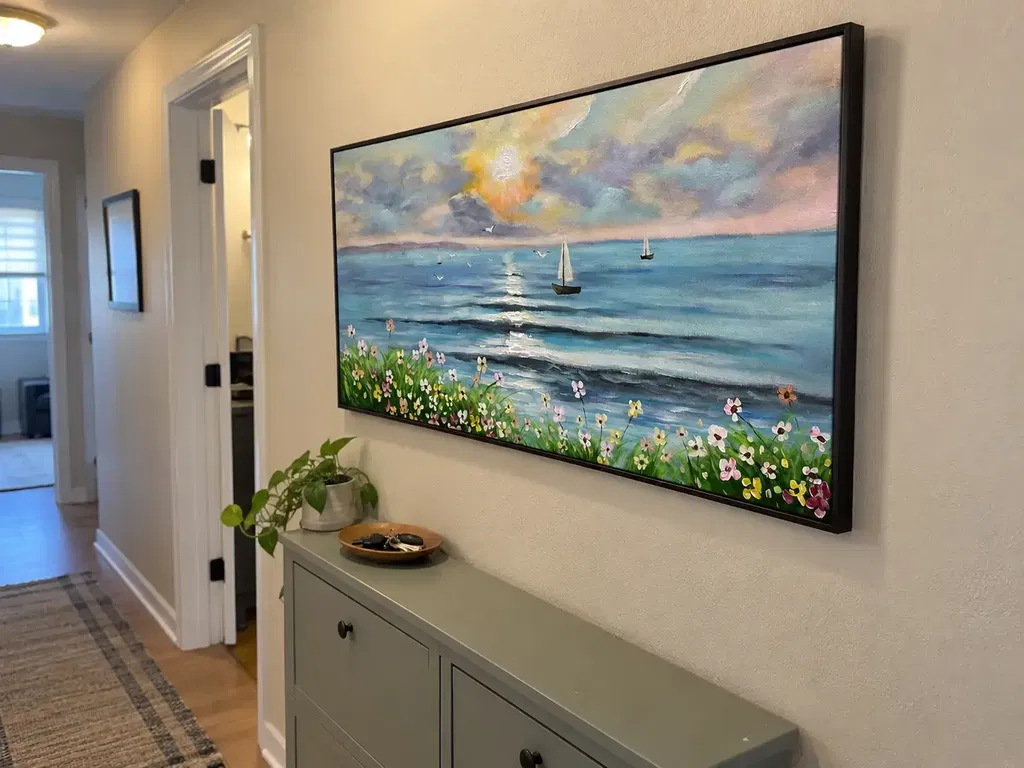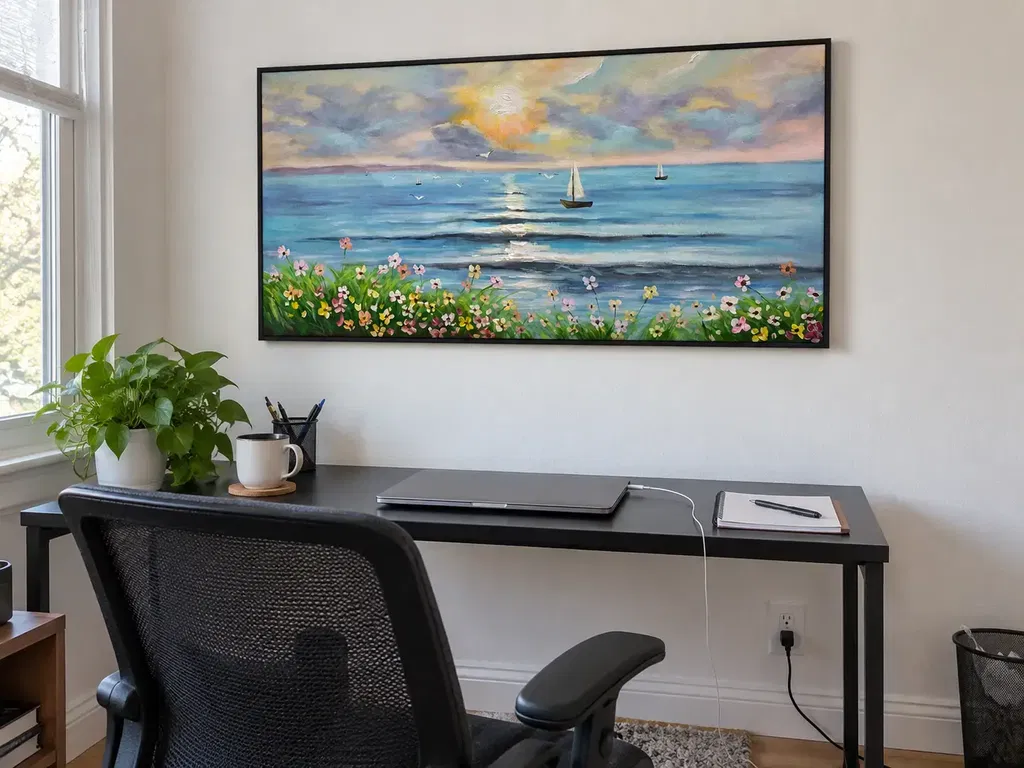
The Physics of the "Lost Edge": Why Oil Remains the Gold Standard for Blending
In an era where the global art market is undergoing a seismic shift—moving away from overpriced vanity auction pieces (which saw a 44% decline in $10 million+ sales in 2024, according to Marketplace) toward authentic, hand-painted works with real emotional value—the choice of medium has never been more critical for the discerning collector. While the global art market remains a robust $65 billion industry (The Art Basel and UBS Art Market Report 2024), the technical nuances of how a painting is created define its long-term aesthetic and financial worth.
For interior design enthusiasts and home decorators, the most frequent point of contention is the "Oil vs. Acrylic" debate. Specifically, why do oil paintings possess that ethereal, seamless transition of color—the "lost edge"—that acrylics often struggle to replicate? The answer lies not just in tradition, but in the complex molecular chemistry of binders and the physics of light scattering.
Logic Summary: Our analysis of medium performance is based on the chemical drying mechanisms (oxidation vs. coalescence) and optical physics (refractive index) observed in professional commission environments, rather than purely subjective aesthetic preference.

Molecular Mechanics: Oxidation vs. Coalescence
The fundamental difference between oil and acrylic is how they transform from a liquid to a solid. This process dictates the "open time"—the window during which an artist can manipulate the paint.
The Oil Window: A 48-Hour Gradient
Oil paint consists of pigments suspended in a drying oil, typically linseed or walnut. It dries through a chemical process called oxidative cross-linking. This is not a "drying" in the sense of water evaporating; it is a slow chemical reaction with oxygen that creates a flexible, durable film.
In our professional practice, we observe that this provides a 24-48 hour window between layers. This extended time allows for "gradual gradient building," where an artist can revisit a transition hours later to soften a shadow or adjust a skin tone. According to the National Gallery of Art, the migration of free fatty acids in these oily matrices allows for a level of blending depth that fast-drying mediums cannot match.
The Acrylic Snap: Physical Coalescence
Acrylics, conversely, dry through physical coalescence. As the water in the emulsion evaporates, the polymer spheres are forced together, fusing into a solid plastic film. This happens rapidly—often in minutes. While modern retarders can extend this (a point we will explore later), the fundamental mechanics of particle fusion create a more abrupt transition point compared to the viscous suspension of oil.
Methodology Note (Medium Comparison Model):
Feature Oil (Oxidative) Acrylic (Coalescence) Rationale Blending Window 24 - 72 Hours 10 - 30 Minutes Based on chemical reaction vs. evaporation rates. Viscosity Retention High (Consistent) Low (Thins as it dries) Oil maintains "brush load" throughout the stroke. Pigment Saturation High (1.48 Refractive Index) Medium (1.3-1.4 RI) Getty Conservation data on refractive index. Surface Elasticity High (Flexible film) Moderate (Becomes brittle over decades) JustPaint longevity research. Health Risk Solvent Exposure (Low if managed) Microplastic Shedding Stanford University warning on polymer breakdown.
The "Viscosity Advantage" in Portraiture
For portrait work, the consensus among commercial artists is that oil’s forgiving nature reduces client dissatisfaction. If a gradient isn't perfect, it can be softened later. Acrylic errors, because they dry so quickly and irreversibly, often require complete repainting of a section.
Furthermore, oil’s natural viscosity allows painters to maintain brush-loaded pigment consistency. In a long blending stroke—say, across the curve of a cheek—oil remains buttery and workable. Acrylics tend to dry unevenly on the brush, creating inconsistent transitions and "ghosting" where the paint film begins to set before the stroke is finished.

Optical Depth and the Kubelka-Munk Equation
Beyond the "feel" of the paint, there is the science of how it looks. The Getty Conservation Institute utilizes the Kubelka-Munk equation to explain why different binders produce different visual results.
This equation dictates that a pigment's reflection is dominated by its absorption (K) and scattering (S) coefficients. Because oil has a higher refractive index (~1.48) than acrylic (~1.3-1.4), it allows light to penetrate deeper into the paint film before scattering back to the eye. This creates a "glow" or "inner light" that is the hallmark of masterworks.
The Metamerism Factor
Geometric metamerism—where color appears to change based on the angle of light—is more pronounced in acrylics due to the surface roughness created by rapid evaporation. Oil’s slow cure allows the surface to level out, resulting in a smoother microtopography. Research published in Optica confirms that when pigment particle diameter approaches half the wavelength of visible light, the scattering capability reaches its theoretical extreme. Oil binders optimize this interaction, whereas the rapid "snap" of acrylic can trap micro-bubbles or create uneven textures that dull the final color.
Health, Safety, and the "Odorless" Myth
A common misconception is that acrylics are "safer" because they lack the smell of turpentine. However, we must look at the data.
- VOC Emissions: While oils use solvents, modern "green" studios utilize walnut oil and scentless mineral spirits. Conversely, Aalto University research shows that synthetic coatings can emit volatile organic compounds (VOCs) during the curing process that are often overlooked.
- Heavy Metal Migration: Laboratory tests using ICP-MS (Inductively Coupled Plasma Mass Spectrometry) have detected heavy metals in some commercial acrylics. A study in PMC found zinc and even burnt umber pigments reaching contamination peaks of 526 $\mu g/g$.
- The Solvent Warning: Princeton University EHS warns that even "odorless" solvents can cause skin defatting and respiratory issues if ventilation is inadequate.
At our studio, we prioritize health by using low-VOC, LEED-compliant materials, ensuring that the art in your home doesn't just look good—it supports a healthy indoor environment. This is particularly vital for healthcare facilities, where 61% of patients report that environmental artwork reduces stress (UPenn Neuroaesthetics).
The ROI of Authenticity: Property and Psychology
Choosing hand-painted oil over digital prints or mass-produced acrylics isn't just an aesthetic choice; it's a financial one.
Real Estate Appreciation
Data from the Royal Society shows a direct link between "art-dense" environments and property value gains. In commercial settings, murals and high-quality art have driven $1.4 billion in real estate-related growth in projects like Chicago’s Millennium Park (NC REALTORS).
The "Essential Identity"
Why do we value human-made art so much more? Columbia University found that consumers value art labeled as "AI-generated" 62% lower than human-created art. Furthermore, research from UChicago suggests that physical canvas retains an "essential identity" of the artist that digital replicas simply cannot possess. When you buy an oil painting, you are buying the biochemical crystallization of apex human attention and neural control.

Addressing the "Acrylic Retarder" Counter-Argument
It is often argued that modern acrylic retarders (like GOLDEN Retarder) can extend the drying time by several hours, making them "just as good" as oils. While these tools are excellent for certain applications, they do not change the fundamental physics of the binder.
Even with retarders, acrylics undergo Support Induced Discoloration (SID). As Golden Artist Colors notes, water-soluble impurities in the canvas can be drawn into the acrylic medium as it dries, leading to yellowing. Oil, being non-aqueous, is immune to this specific chemical failure. Furthermore, adding more than 20% water or retarder to acrylic can destroy the paint film's adhesion, a risk that simply doesn't exist with the natural viscosity of oil.
Selecting the Right Medium for Your Space
How do you choose? Based on our experience with hundreds of designer commissions, we suggest the following framework:
- Choose Oil for: Portraits, atmospheric landscapes, and statement pieces where "depth" and "glow" are paramount. If the room has high-end, natural materials (wood, stone), the organic nature of oil will harmonize better.
- Choose Acrylic for: High-traffic commercial areas where the art might need frequent cleaning (acrylics are more water-resistant once cured, according to Tate), or projects with extremely tight 48-hour deadlines.
The Biophilic Connection
If you are designing for wellness—such as a home office or a clinic—consider "nature-themed" oil murals. Biophilic design featuring natural landscapes has been shown to produce the same stress-reduction effects as being outdoors. In high-density environments like Tokyo, this has been used to combat employee burnout (University of Hawaii).
Final Perspective: The Soul of the Brushstroke
Ultimately, the choice of oil is a choice for longevity and "absolute authenticity." As the European Crafts Alliance states, the ultimate luxury for the 2025 consumer is the fusion of avant-garde design with authentic handcrafting techniques.
While acrylics offer convenience, they are a product of the industrial age—a plastic solution for a fast-paced world. Oil remains a medium of patience, chemistry, and light. When you stand before a well-blended oil gradient, you aren't just looking at paint; you are looking at a 500-year-old technology that still outperforms its modern rivals in the one metric that matters most: the ability to move the human spirit.
YMYL Disclaimer: This article is for informational purposes only. While we discuss the health and safety aspects of art materials, this does not constitute medical advice. Always consult a certified industrial hygienist or medical professional regarding chemical exposure, and ensure proper ventilation in any studio environment. For property investment, consult with a licensed real estate professional to understand the specific market drivers in your area.
Sources
- The Art Basel and UBS Art Market Report 2024
- Columbia University: Human-Made vs. AI Art Study
- Getty Conservation Institute: Color Science and Pigment Mixture
- CDC NIOSH: Paint and Coating Hazards
- Royal Society: Quantifying the link between art and property prices
- Tate: The Tate AXA Art Modern Paints Project (TAAMPP)