The Shift Toward Authentic Grandeur
The global art market is undergoing a structural realignment. While high-end auction sales for purely financial assets saw a 44% decline in 2024, the demand for art with "real application value" remains resilient. According to the Marketplace report on the struggling expensive art market, collectors are retreating from overpriced vanity pieces in favor of custom, hand-painted works that offer emotional and spatial value.
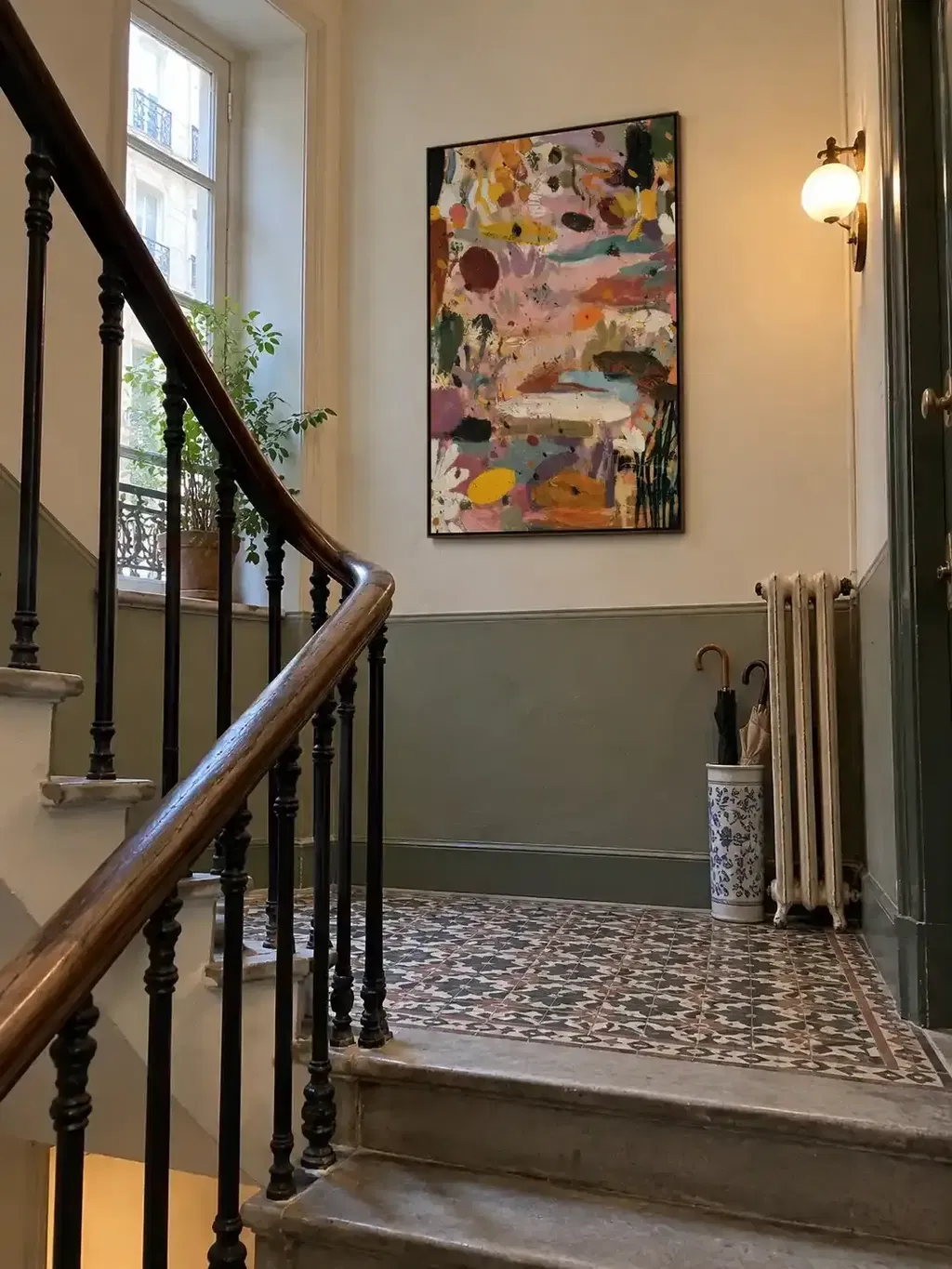
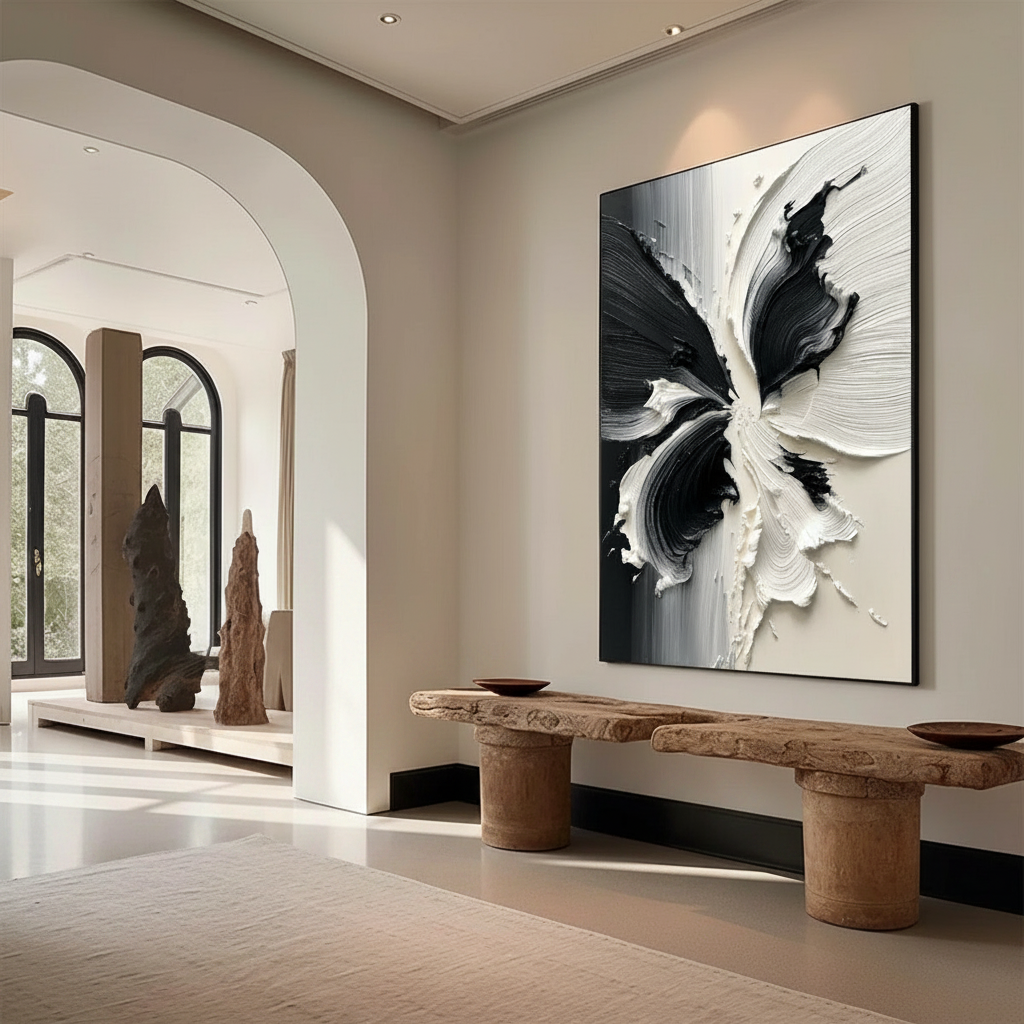
For interior designers and homeowners, this shift often manifests in the desire for oversized statement pieces. However, as the physical scale of an oil painting increases, so do the mechanical demands on the canvas and its support structure. A common frustration in premium installations is the "sagging" effect—a loss of surface tension that creates unsightly ripples or a concave dip in the center of the work.
In our experience managing large-scale commissions, we have found that preventing this deformation is not a matter of "tightening the canvas more," but rather understanding the physical thresholds where traditional wood stretchers fail and specialized structural reinforcement becomes mandatory.

The Physics of Tension: Why Canvases Sag
To prevent structural failure, we must first view the canvas as a tensioned membrane. The stability of the painting surface is governed by the relationship between the tension applied during stretching, the material modulus of the fabric, and the distributed load of the paint layers.
The Maximum Span Formula
Based on our scenario modeling of tension mechanics, the maximum unsupported span of a canvas can be estimated using the following heuristic:
Maximum Span ≈ √(Tension × Material Modulus / Distributed Load)
For a typical high-quality linen canvas with a tension of 10–15 lb/in², this formula suggests that any span exceeding 3 to 4 feet (36–48 inches) will begin to experience measurable deflection without internal support. This occurs regardless of environmental humidity, though fluctuations in moisture can accelerate the process by causing the fibers to expand and contract.
Weave Density and Structural Capacity
Not all canvases are created equal. The structural capacity of the substrate is heavily influenced by weave density and thread thickness. According to our analysis of common material parameters, a heavy-duty 12 oz canvas can support significantly longer spans than a standard 6 oz canvas.
| Parameter | 6 oz Cotton Duck | 12 oz Heavy Linen | Unit | Rationale |
|---|---|---|---|---|
| Thread Count | ~15 | ~30 | threads/inch | Weave density |
| Max Unsupported Span | 24–30 | 48–60 | inches | Structural limit |
| Elastic Limit | Low | High | - | Resistance to creep |
| Tension Retention | ~65% | ~90% | % over 5 years | Material fatigue |
Logic Summary: This modeling assumes a standard distribution of oil paint (approx. 1.0 lb/sq ft) and a consistent indoor climate. The "creep deformation" mentioned here refers to the permanent elongation of fibers over time, a phenomenon that cannot be corrected by simply hammering in stretcher wedges.
Three Critical Structural Thresholds
When planning an installation, we categorize canvas sizes into three distinct structural tiers. Each tier requires a different approach to framing and mounting to ensure the work remains "gallery-flat" for decades.
1. The Standard Tier (Under 48 Inches)
For paintings where the longest dimension is under 48 inches, standard gallery-wrap stretcher bars (typically 1.25" to 1.5" deep) are generally sufficient. At this scale, the internal torque generated by the canvas tension is low enough that the wood frame can maintain its rectangular integrity without bowing inward.
2. The Bracing Tier (48 to 72 Inches)
Once a canvas exceeds 48 inches, cross-bracing becomes essential. We follow a professional framing rule of thumb: a 3:1 ratio (canvas height to brace spacing). For a 60-inch tall painting, at least two horizontal braces should be installed to prevent the long vertical bars from bowing under the hundreds of pounds of cumulative tension.
Failure to include these braces often leads to "corner twist," where the frame no longer sits flush against the wall. For more on the mechanics of frame bowing, see our guide on Structural Stability and Cross-Bracing.
3. The Reinforcement Tier (Over 72 Inches)
For monumental works exceeding 6 feet in any direction, traditional wood stretchers—no matter how thick—are often inadequate. The weight of the paint layers alone can exceed 1.5 lbs per square foot, creating a downward "slump" in the fabric.
At this scale, we recommend:
- Aluminum or Steel Subframes: These provide a high strength-to-weight ratio and zero susceptibility to the warping that affects timber.
- Hybrid Stretchers: Wood-cladded metal bars allow for traditional stapling while maintaining industrial-grade rigidity.
- Tension Spring Systems: Professional conservation-grade frames sometimes use spring-loaded corners that automatically adjust to maintain constant tension as the canvas ages.

Material Science: Preventing Chemical and Physical Decay
Beyond the frame, the chemistry of the painting itself affects its structural longevity. Large-scale oil paintings are living systems that interact with their environment.
The SID Phenomenon
One non-obvious risk for large canvases is Support Induced Discoloration (SID). According to technical bulletins from Golden Artist Colors, water-soluble impurities in common cotton or linen substrates can be drawn into the paint layers during the drying process, especially if the artist uses thick transparent mediums. This can result in a yellow or brown tint that appears weeks after the painting is finished. Using a properly sized and primed canvas is the only defense. For a deeper look at this, refer to our article on Preventing Canvas Rot and Discoloration.
Breathability vs. Moisture Traps
A common mistake in oversized framing is sealing the back of the painting with airtight boards. While this might seem like a good way to protect the art from dust, it creates a moisture trap. According to museum conservation standards, oil paintings require breathable backing systems. Sealed environments can lead to localized humidity spikes behind the canvas, accelerating the degradation of the oil binder and causing the fabric to slacken prematurely.
The Psychological and Economic Value of Authentic Scale
Why invest in the structural engineering required for a 100-inch hand-painted canvas when a digital print is lighter and easier to hang? The answer lies in the "essential identity" of the work.
The Perception of Authenticity
Research from the University of Chicago suggests that consumers perceive a "collapse in value" when art is revealed to be a digital replica. Authentic hand-painted works possess a physical "soul"—a microtopography of brushstrokes and pigment scattering that digital prints cannot replicate. Furthermore, a Columbia Business School study found that consumers value art labeled as "AI-generated" or "printed" 62% lower than authentic human-created art.
Boosting Property Value
For commercial developers and homeowners, large-scale art is a strategic asset. A study published by the Royal Society found that neighborhoods with higher art engagement saw relative gains in property price rankings. In the commercial sector, the Urban Institute reports that public art installations can drive significant foot traffic and revenue, effectively turning a physical wall into a commercial landmark.

Health, Safety, and Environmental Standards
As a premium provider, we emphasize that structural integrity must be matched by chemical safety. Indoor Air Quality (IAQ) is a critical concern for modern builds, particularly those seeking LEED or WELL certifications.
VOCs and Pigment Safety
Traditional oil painting often involved toxic solvents like turpentine. However, modern professional practices have shifted toward low-VOC (Volatile Organic Compound) alternatives. According to the EPA's guidelines on Indoor Air Quality, selecting low-emission art materials is a prerequisite for healthy indoor environments.
Furthermore, we strictly adhere to safety protocols regarding heavy metal pigments. While cadmium pigments are prized for their vibrancy, they are classified as carcinogens and must be handled with extreme care or replaced with modern organic hues that meet ASTM D-4236 standards for chronic health hazard labeling.
Implementation Checklist for Large-Scale Art
To ensure your oversized installation remains a lasting asset, use this checklist derived from our internal mounting standards:
- Verify the Weight: Ensure the total weight (canvas + paint + frame) does not exceed the load-bearing capacity of your wall anchors. Standard drywall usually requires toggle bolts for anything over 50 lbs.
- Check the Depth: For spans over 4 feet, ensure the stretcher bars are at least 1.5 inches deep to provide sufficient torque resistance (based on the D³ torque equation).
- Assess the Environment: Avoid hanging large canvases directly opposite HVAC vents or in direct sunlight. While ASTM D4303 defines lightfastness ratings for pigments, the physical canvas fibers are still susceptible to UV degradation.
- Confirm Breathability: Ensure the framer has used an acid-free, breathable dust cover rather than a solid plastic or wood backing.
Modeling Note: Structural Assumptions
The recommendations provided in this article are based on a deterministic structural model of canvas tension.
- Assumed Canvas Material: Grade A Belgian Linen.
- Assumed Paint Load: 1.2 lbs/sq ft (Heavy Impasto).
- Environmental Baseline: 45%–55% Relative Humidity.
- Boundary Conditions: These limits may not apply to "unprimed" canvases or works using heavy mixed-media elements (e.g., sand, cement, or lead), which require custom engineering.
Disclaimer: This article is for informational purposes only. Large-scale art installations involve significant weight and structural complexity. Always consult with a professional art handler or structural engineer for pieces exceeding 100 inches or for installations in public spaces to ensure compliance with local safety codes.
Sources
- Marketplace: The expensive art market continues to struggle
- UChicago: Does Artwork Preserve Essential Identity?
- Royal Society: Quantifying the link between art and property prices
- Columbia University: Human-Made vs. AI Art Perception Study
- Golden Artist Colors: Support Induced Discoloration (SID)
- ASTM D4303: Standard Test Methods for Lightfastness
- WHO: Scoping Review on Arts and Health
- EPA: Indoor Air Quality and Low-VOC Paints