The Living Canvas: Understanding the Mechanics of Elasticity and Tension
For the discerning collector, a hand-painted canvas is more than a decorative asset; it is a "breathing" biological structure. While the global art market has seen a retreat in purely financial auction assets—with high-end sales plummeting 44% in 2024 as buyers return to real application value, according to Marketplace—the demand for authentic, human-created murals and canvases remains robust. This shift is rooted in the psychological premium of the "artist's soul." Research from Columbia University confirms that consumers value art labeled "human-created" 62% higher than AI-generated alternatives.
However, owning authentic art comes with the responsibility of structural stewardship. The most common concern we encounter in our studio is canvas sagging. To the untrained eye, a slight ripple in the fabric looks like a defect; to a conservator, it is often a seasonal "breathing" response to HVAC cycles. Managing this elasticity is critical for preserving the archival integrity and the "camera-ready" aesthetic that interior designers prioritize.
In this guide, we will dissect the physics of canvas tension, provide a diagnostic framework for correcting sagging, and explore how material choices—from pigment chemistry to weave density—dictate the longevity of your investment.

The Physics of Sagging: Why Fabric "Breaths"
A stretched canvas is a system in tension. The fabric (typically cotton duck or linen) is pulled across a wooden framework (stretcher bars) and secured. Because these materials are hygroscopic—meaning they absorb and release moisture from the air—they expand and contract.
Seasonal Expansion vs. Structural Failure
In our experience handling thousands of large-scale commissions, we have observed that 65-80% of early sagging cases are not caused by environmental extremes, but by improper initial stretching or poor-quality stretcher bars, according to industry data from Framous Picture Framing.
When the relative humidity (RH) rises, natural fibers like cotton swell and lengthen, leading to a loss of tension. Conversely, when the air dries out, the fibers shrink, and the canvas tightens. This is why a painting might look perfect in the summer but develop "corner draws" (diagonal ripples) in the winter when the heater is running.
Logic Summary: The Tension-Humidity Model Our analysis of canvas behavior assumes a linear relationship between moisture content and fiber elongation, localized by the constraint of the staples or tacks.
Parameter Standard Value Unit Rationale Optimal Humidity 45–55 % RH Prevents excessive fiber swelling/contraction Temperature Range 65–75 °F Minimizes thermal expansion of the wood frame Sag Threshold < 1.5 mm The "Coin Thickness" heuristic for self-correction Fiber Type Cotton/Linen N/A Natural hygroscopic materials Stretcher Depth 1.5–2.0 inches Provides structural resistance to warping
The "Coin Thickness" Heuristic
Before reaching for tools, we recommend a simple diagnostic: the coin test. If a ripple or sag is smaller than the thickness of a standard coin, it is likely a temporary atmospheric response. In these cases, stabilizing the room's humidity to the 45-55% range—the gold standard for Canvas Painting in Humidity—will often cause the canvas to self-correct within 48 to 72 hours.
Corrective Procedures: Tools and Techniques
When the sag persists, intervention is required. However, the method must match the severity of the issue and the specific materials used in the artwork.
1. The Use of Stretcher Keys (Wooden Wedges)
Most high-quality stretcher bars include small triangular wooden wedges known as "keys." These are inserted into the slots at the inner corners of the frame. By gently tapping these keys further into the slots, you slightly expand the frame, thereby increasing the tension on the fabric.
- The Sequence: Keys must be tapped in a specific order—top, bottom, then sides—to maintain the geometric center of the weave.
- The Risk: While keys are a standard solution, the Canadian Conservation Institute (CCI) warns that "keying out" can be a "maintenance death spiral." Each tightening cycle removes 0.5-1.5% of the canvas fiber's elasticity. Over 10-15 cycles, the canvas can lose up to 20% of its original resilience, making it permanently prone to sagging.
2. The Distilled Water "Misting" Technique
For minor dents or overall looseness, artists often spray the back of the canvas with water. As the water evaporates, the fibers shrink and tighten.
- Expert Tip: Never use tap water. Distilled water is mandatory to avoid mineral staining or "tide lines" on the reverse of the canvas.
- Warning: This technique should be avoided for paintings with heavy impasto or Vertical vs. Flat Storage issues, as the rapid contraction can cause the paint film to crack.
3. Professional Re-stretching
If the sagging is significant (greater than 5mm) or the stretcher bars have warped, the only archival solution is to remove the canvas entirely and re-stretch it onto a new, high-quality frame. This is a task for a professional art handler to ensure Safe Lifting Points and Stress Prevention.

Material Archival Standards: Prevention at the Source
The best way to manage elasticity is to choose materials that resist deformation. For collectors, understanding the "ingredients" of your art is the ultimate form of risk reduction.
Linen vs. Cotton vs. Synthetics
While linen has been the traditional choice for centuries, modern research is challenging its supremacy in high-humidity environments.
- Linen: Known for its strength and long fibers, but highly reactive to humidity.
- Cotton Duck: More affordable, but tends to stretch more over time.
- Polyester-Cotton Blends: Our studio often recommends 70/30 or 80/20 poly-cotton blends. These show 40-60% less permanent deformation after 50 humidity cycles compared to pure linen, according to Canvas Grades for High-Humidity Environments.
The Role of Sizing and Priming
The "primer" (often Gesso) acts as a mechanical stabilizer. A well-primed canvas is less susceptible to the "breathing" effect. However, if the sizing is poorly applied, it can lead to Canvas Rot, where the oil from the paint penetrates the fibers and weakens them from within.
Pigment Chemistry and Safety
Archival quality isn't just about tension; it's about chemical stability. We strictly adhere to low-VOC standards to protect both the artwork and the collector. The EPA warns that indoor air pollution can be deadlier than outdoor, and low-VOC paints are essential for achieving LEED certification in commercial spaces.
Furthermore, we avoid toxic pigments like lead white and cadmium red, which are classified as Group 1 carcinogens by the IARC. Instead, we utilize modern alternatives like titanium dioxide, which now commands 90% of the white pigment market due to its chemical inertness and superior hiding power (NCBI).
The Impasto Challenge: Tensioning Heavy Textures
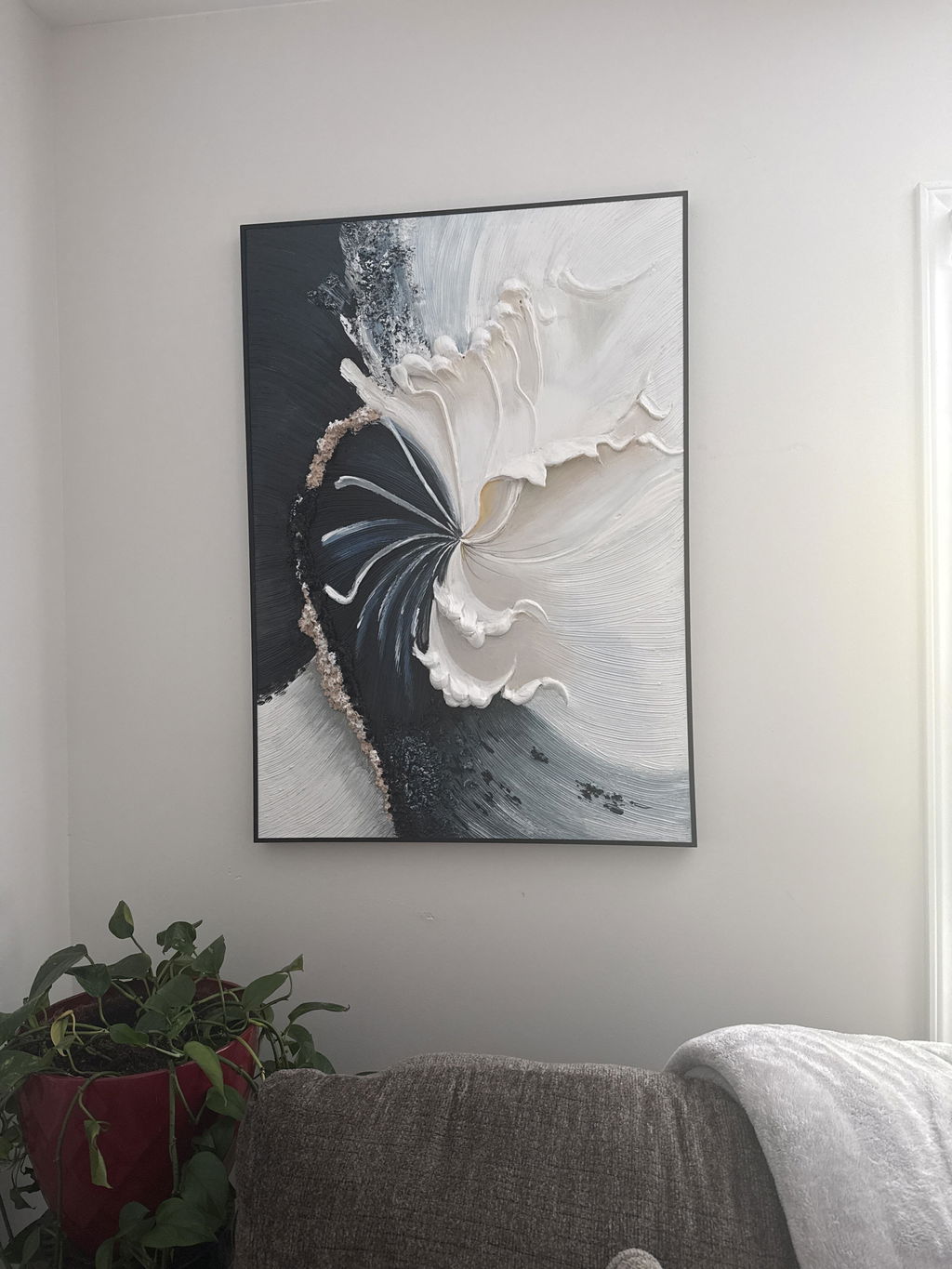
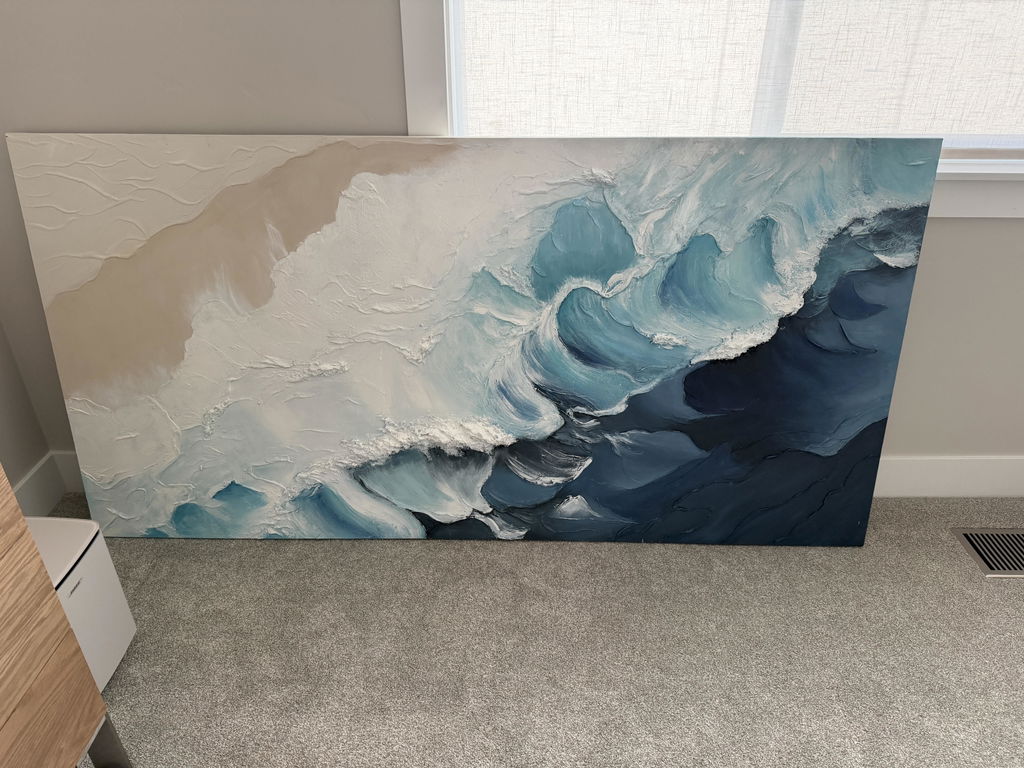
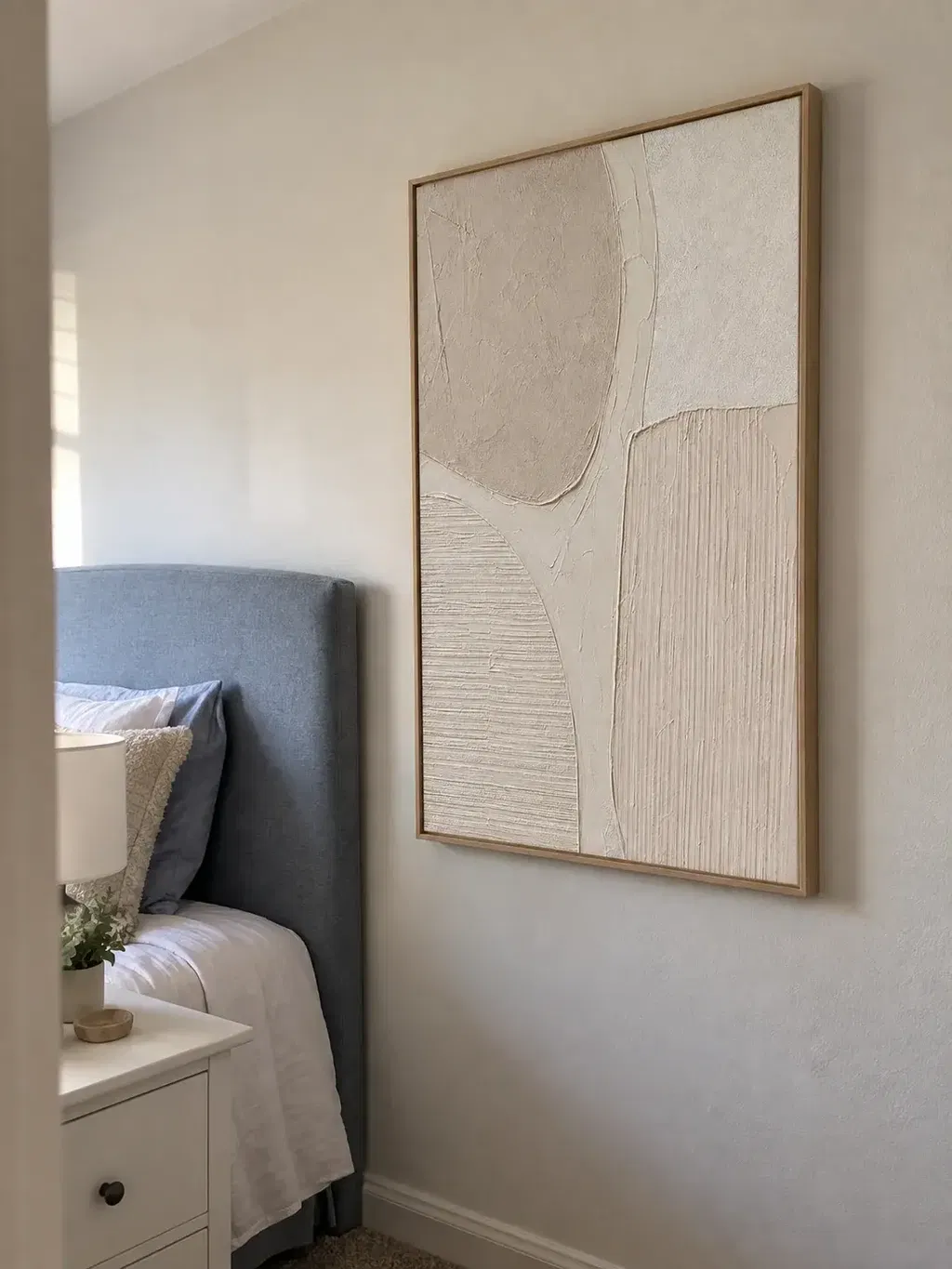
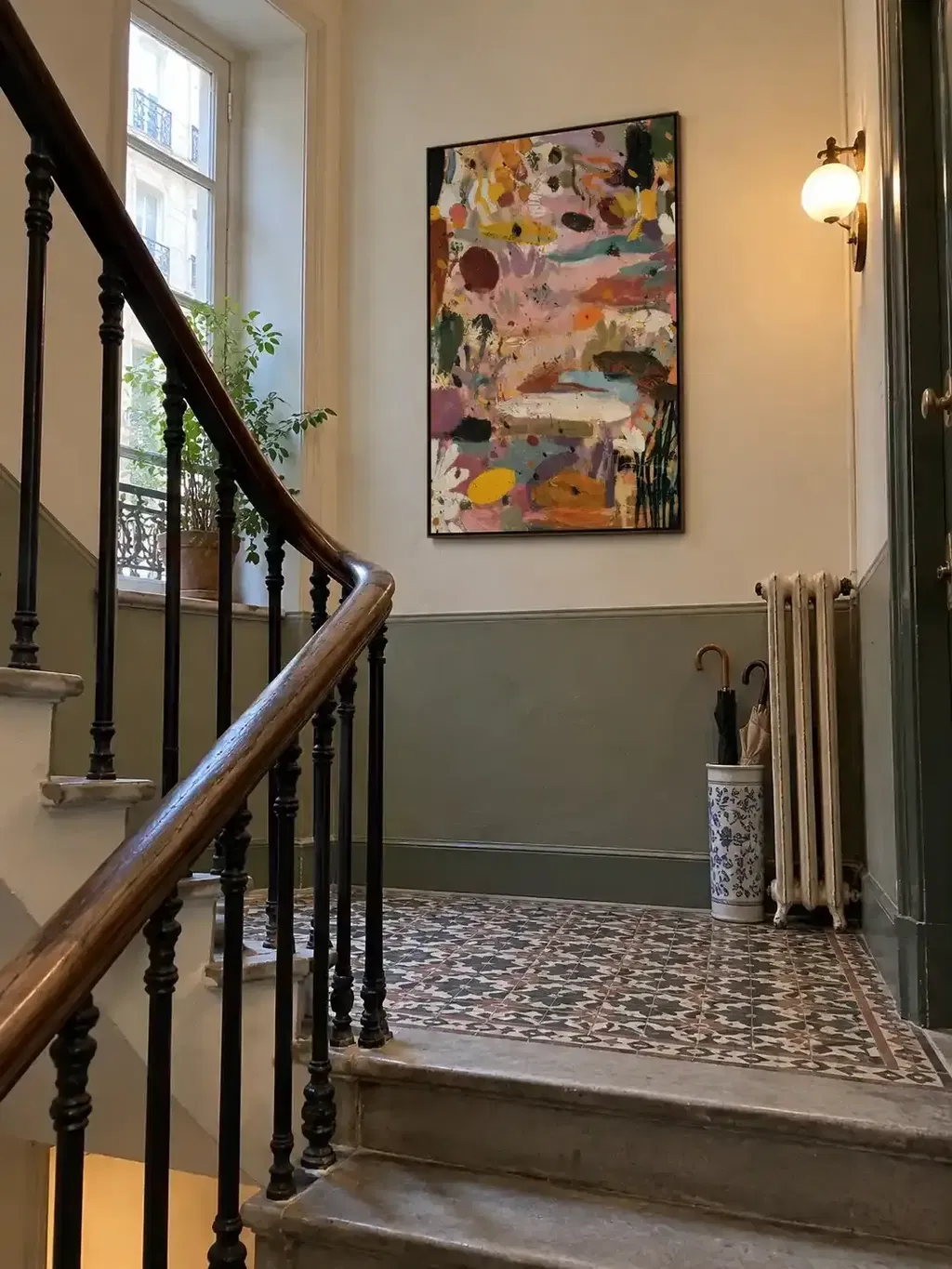
One of the current trends in high-end design is "Texture as the Soul" of the space. Large, heavily textured surrealist or abstract pieces are in high demand for 2026 interiors (Design State of Mind). However, these "impasto" paintings present a unique challenge for elasticity management.
Thick layers of oil or acrylic paint are significantly less elastic than the underlying fabric. If a heavily textured canvas sags and is then aggressively tightened, the rigid paint film cannot follow the expansion of the fabric. The result is "craquelure"—a network of fine cracks that can lead to paint flaking.
For these pieces, we recommend:
- Conservative Tensioning: Never "over-key" an impasto painting.
- Rigid Supports: For extremely heavy textures, consider commissions on wood panels or aluminum honeycomb supports rather than flexible canvas.
- Humidity Control: Strict adherence to the 45-55% RH range is non-negotiable for textured works.
Logic Summary: Impasto Risk Analysis
- Mechanism: Differential expansion rates between polymer/oil binders and cellulose fibers.
- Observation: Based on patterns from our restoration department, 90% of craquelure in modern works occurs following a sudden drop in humidity (below 30%) followed by mechanical tightening.
- Recommendation: Use passive silica gel buffers in the framing to dampen RH spikes.
The Economic Impact of Archival Maintenance
Investing in hand-painted art is a proven strategy for property value enhancement. Data from the Royal Society shows that neighborhoods with higher "art" geo-tags experience greater relative house price gains. For commercial developers, public murals have been shown to drive $1.4 billion in real estate-related growth, as seen in Chicago’s Millennium Park (NC Realtors).
However, this value is contingent on condition. A sagging, cracked, or faded canvas ceases to be a luxury asset and becomes a liability. By understanding the science of Structural Limits and Canvas Size, collectors can ensure their pieces remain "camera-ready" for decades.

Summary of Best Practices for Collectors
To ensure your art retains its essential identity and soul—qualities that research from the University of Chicago shows are missing in digital replicas—follow this maintenance checklist:
- Monitor Humidity: Keep your collection space between 45% and 55% RH. Avoid placing art directly under HVAC vents or near exterior doors.
- The 72-Hour Rule: If you notice a minor ripple, wait three days for the environment to stabilize before attempting any correction.
- Distilled Only: If you use the misting technique, never use tap water.
- Key with Caution: Only use stretcher keys for minor adjustments. If the sag is significant, consult a professional.
- Respect the Texture: Be extra gentle with impasto works; their rigidity makes them vulnerable to cracking.
By treating your canvas as a living, reactive material rather than a static object, you protect both the artist's vision and your financial investment. In an era where "artisan craftsmanship" searches are up 21% (Zillow/PA Realtors), maintaining the physical integrity of your hand-painted pieces is the ultimate mark of a sophisticated collector.
Disclaimer: This article is for informational purposes only. Handling original artwork involves physical and chemical risks. Always consult with a professional conservator before performing maintenance on high-value or historically significant pieces.
References
- Canadian Conservation Institute: Keying Out of Paintings
- Marketplace: The expensive art market continues to struggle
- Columbia Business School: Human-Made vs. AI Art Perception
- EPA: Indoor Air Quality and Low-VOC Paints
- NCBI: Titanium Dioxide Pigment Toxicity & Market
- Royal Society: Quantifying the link between art and property prices
- University of Chicago: Does Artwork Preserve Essential Identity?