Handling Large Art: Safe Lifting Points to Prevent Canvas Stress
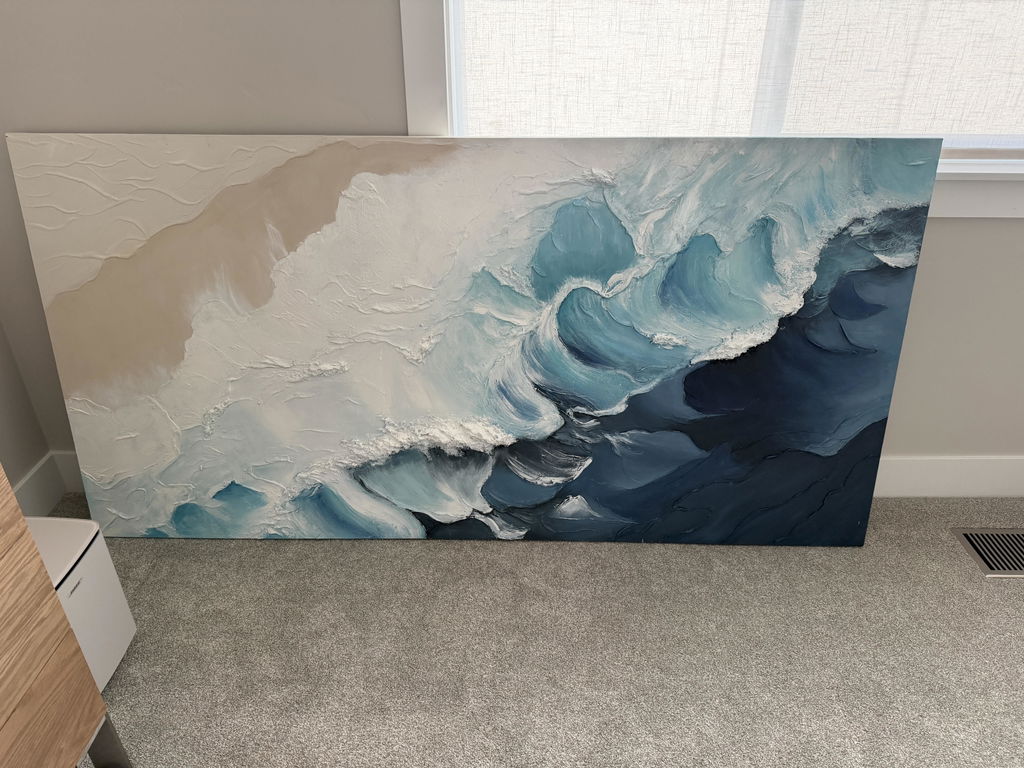
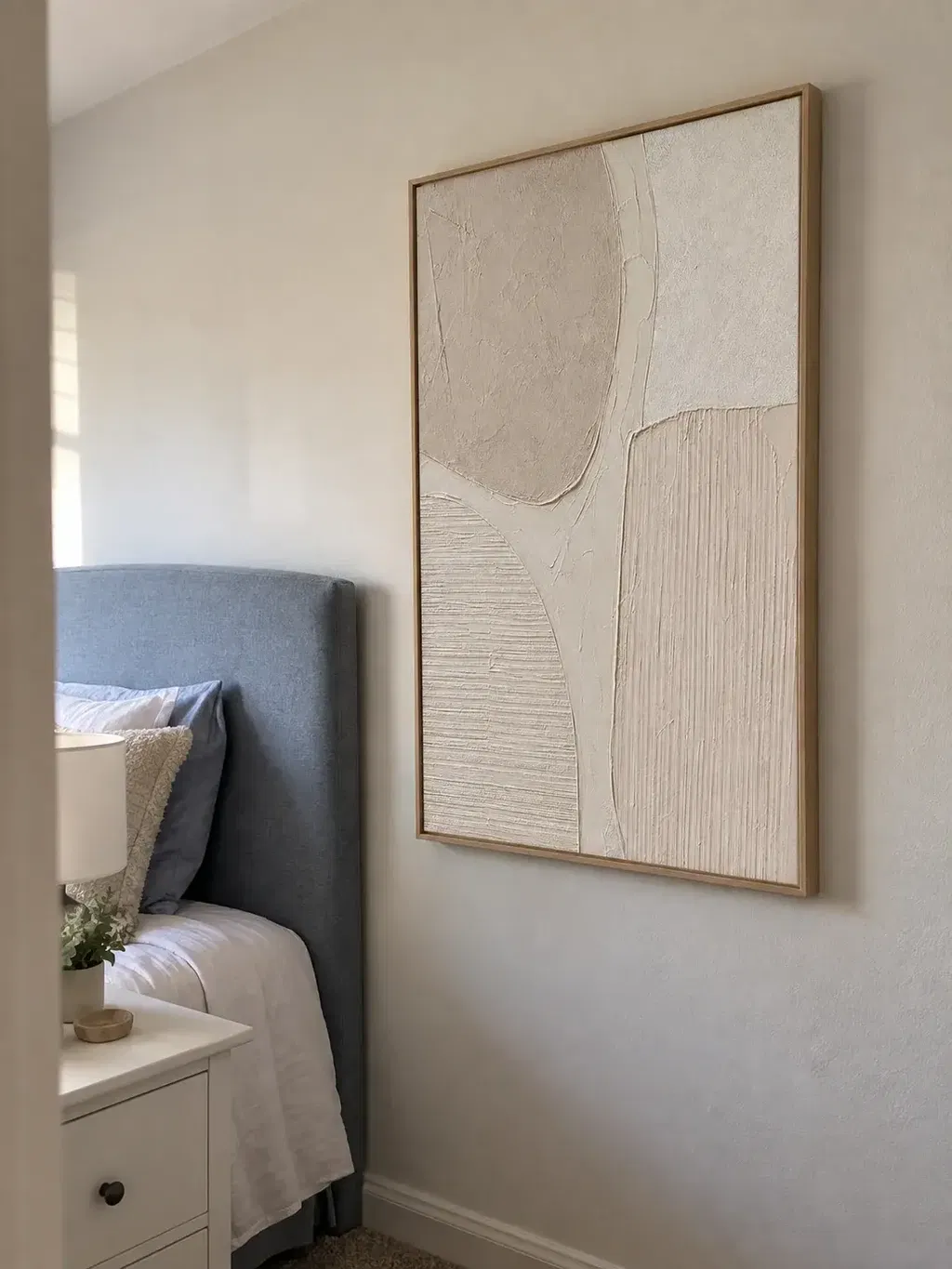
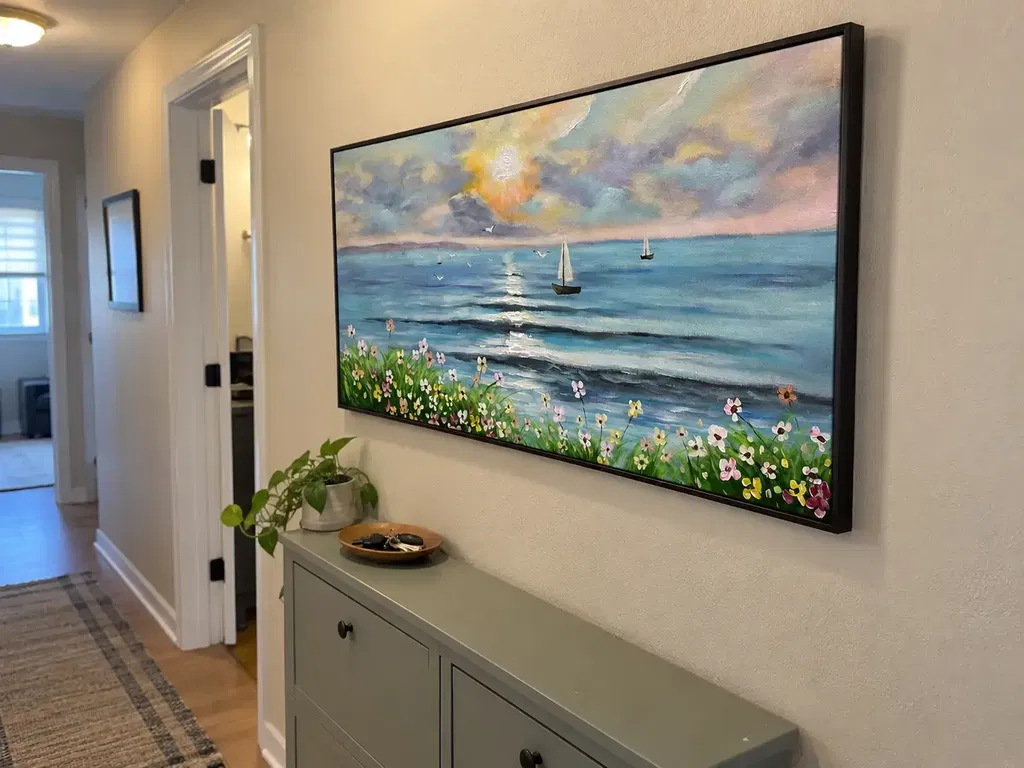
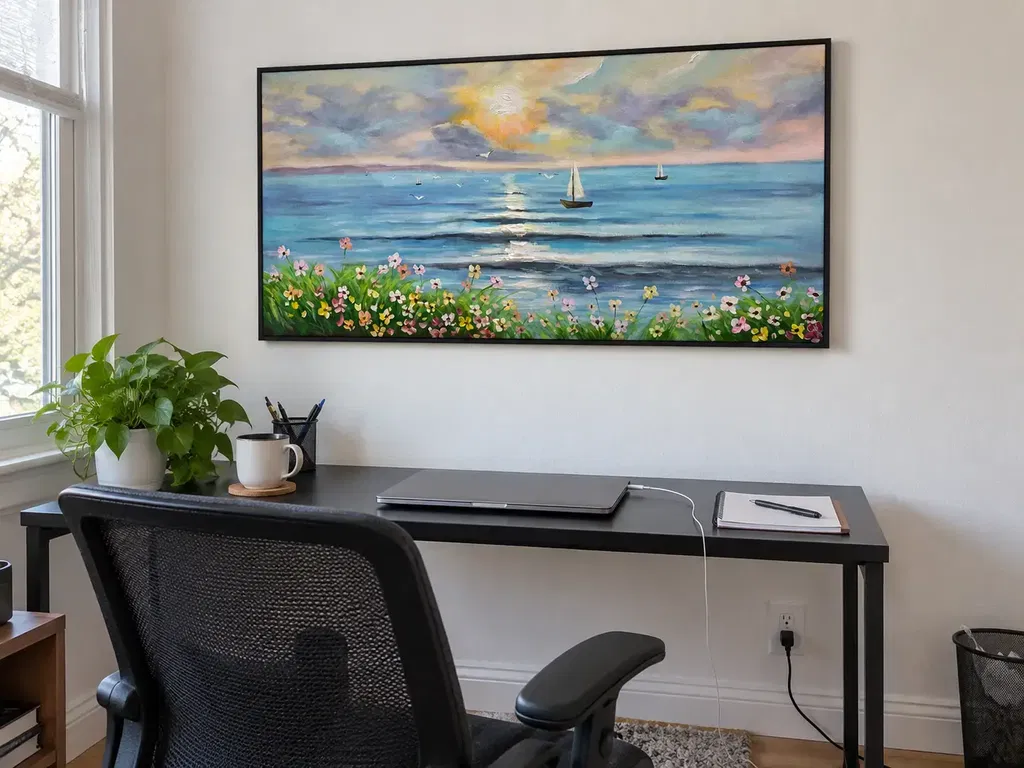
In the high-stakes world of premium interior design, a large-format hand-painted canvas is more than décor; it is a significant financial and emotional investment. Recent market shifts indicate that while high-end auction sales for "vanity" pieces plummeted 44% in 2024, buyers are increasingly returning to custom, hand-painted works that offer real application value and emotional resonance. However, the sheer scale of these statement pieces introduces a set of engineering challenges that many homeowners and even some professional installers overlook.
The moment a large-scale work arrives, its structural integrity is at its most vulnerable. Professional art handlers consistently observe that most canvas damage—specifically indentations and stretcher-bar "ghosting"—occurs during the initial unboxing and handling phase, rather than during transit. To preserve the "essential identity" and soul that human-made art retains over digital replicas, a rigorous, physics-based approach to handling is required.

The Physics of Large-Scale Canvas Engineering
When dealing with oversized art, we cannot simply treat it as a "scaled-up" version of a small painting. The structural physics change exponentially with size. According to our internal handling analysis, canvas sag follows a predictable geometric progression: doubling the dimensions of a canvas quadruples its stress vulnerability at the center point.
Geometric Progression of Stress
Conventional wisdom suggests that two people supporting the lower stretcher bar is sufficient. However, reality is more complex. Stress in a large canvas concentrates diagonally from the lower corners toward the upper center. This creates permanent warping patterns if the weight is not distributed correctly.
Modeling Note: Stress Distribution Analysis This model assumes a standard 72" x 96" canvas with a 1.5" deep heavy-duty stretcher bar. It is a scenario model based on industry heuristics, not a controlled laboratory study.
Parameter Value or Range Unit Rationale Total Weight 45–65 lbs Standard for large-scale acrylic works Lifting Point Vertical Sides - Distributes load along the grain Stress Concentration 4x Factor Penalty for corner-only lifting Tilt Limit 30 Degrees Maximum angle before tension shift Acclimation Time 24 Hours Required for fiber stabilization
For users handling massive pieces, understanding that a 50-pound canvas lifted from the corners creates four times the stress concentration points compared to distributed edge lifting is vital for long-term preservation.
Professional Unboxing: The 30-Degree Rule
The most common mistake made during unboxing is applying pressure to the canvas face while lifting. Even a slight touch can leave an indentation that becomes visible under gallery lighting.
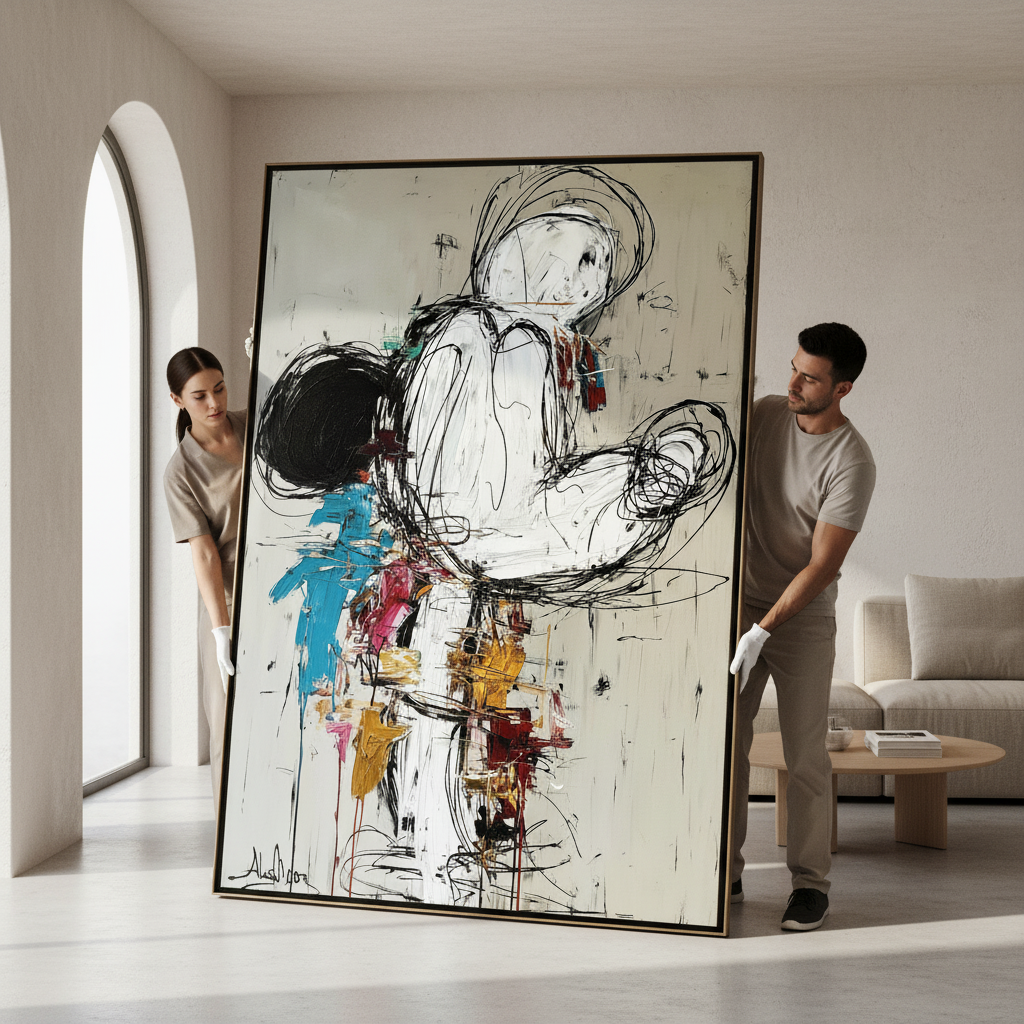
Experienced installers use a technique called "palming." Instead of gripping the frame with fingers—which can slip or apply localized pressure—they use flat hands to support the vertical sides of the stretcher bars. This distributes the weight across the entire palm and forearm.
The 30-Degree Heuristic
A practical industry rule of thumb is the 30-degree rule: never tilt a large canvas more than 30 degrees during movement. Tilting beyond this angle shifts the center of gravity significantly, putting immense structural stress on the joinery of the stretcher bars and causing the canvas to "belly" or sag. If the canvas sags too far, it can touch the cross-braces, leading to permanent marks known as "stretcher bar ghosting."

Acrylic vs. Oil: Material-Specific Handling
While both mediums require care, acrylic canvases possess unique physical properties that dictate specific handling protocols. According to research by Golden Artist Colors, acrylic polymers consist of massive long-chain molecules that form films through physical coalescence. This makes newly dried acrylic films softer and more resistant to embrittlement than traditional oils, but it also makes them more susceptible to "Support Induced Discoloration" (SID).
The Brittleness Factor
As acrylic paintings age, they become more rigid. In colder temperatures, the surface becomes brittle. Professional handlers typically acclimate large pieces in the installation room for at least 24 hours before hanging. This allows the canvas fibers and the polymer film to stabilize at the room’s ambient temperature and humidity, preventing micro-cracking during the final mounting.
Furthermore, laboratory data from Aalto University confirms that coatings on wood with specific moisture levels emit significantly lower VOCs during curing. For homeowners, this means that high-quality, hand-painted art is not only a visual asset but also a safe one for indoor air quality (IAQ).
Environmental Integrity and Health Benefits
The decision to invest in large-scale, hand-painted art often stems from a desire to improve the quality of a space. The World Health Organization (WHO) has reviewed over 3,000 studies confirming that art interventions effectively alter clinical indicators for mental wellness.
In commercial environments, the impact is even more quantifiable. A University of Pennsylvania review noted that 73% of patients reported significant mood improvements when exposed to environmental artworks. For corporate offices, biophilic designs—those featuring natural landscapes—have been shown to reduce employee cognitive fatigue and burnout by up to 30% (based on targeted research in high-density Tokyo offices).
Proper handling ensures these benefits are not compromised by unsightly damage. A pristine canvas maintains its "micro-physical texture," which optical microprofilometry proves is crucial to the aesthetic experience. This texture is what creates the commercial premium; consumers value art labeled "human-created" 62% higher than AI-generated alternatives, according to Columbia University experiments.
Installation Strategy: Avoiding the Lever Effect
The final stage of handling is the transition from the floor to the wall. This is where the "lever effect" often causes failure. When a large canvas is hung even an inch away from the wall (due to improper bracket selection), its weight multiplies the stress on the mounting points.
Professional Mounting Checklist:
- Wall Anchor Selection: For pieces over 40 lbs, use toggle bolts or heavy-duty French cleats. Avoid simple wire hanging for oversized art, as it concentrates all weight on two small points on the frame, leading to bowing over time.
- Weight Distribution: Ensure the weight is distributed across at least two studs if using a cleat system.
- Glove Protocol: Use clean cotton gloves. This isn't just for surface protection; it improves grip without requiring the excessive "squeezing" pressure that leads to canvas dents.

Long-Term Preservation and Real Estate Value
Investing in large-format art is also an investment in property value. A Royal Society CAR model analysis found that neighborhoods with higher "art" geo-tags experienced greater relative house price ranking gains. In the commercial sector, public art projects have driven as much as $1.4 billion in real estate-related growth, as seen in Chicago’s Millennium Park.
To maintain this value, one must be aware of the chemical "invisible labor" within the paint. For example, Tate's research reveals that surfactants in acrylic paint can migrate to the surface in high humidity, causing a "hazy" appearance. Understanding these material behaviors—and handling the art to avoid disrupting the paint film—is the difference between a temporary decoration and a lasting legacy.
Safety and Compliance
When selecting art for residential spaces, especially those with children or respiratory sensitivities, ensure the materials are non-toxic. The International Agency for Research on Cancer (IARC) classifies cadmium compounds as Group 1 carcinogens. Premium hand-painted works should utilize modern, safe pigments like titanium dioxide, which now dominates 90% of the white pigment market due to its safety and superior hiding power.
Preserving the Legacy of Custom Art
Handling large art is a blend of physical discipline and technical knowledge. By respecting the 30-degree rule, utilizing palming techniques, and allowing for proper environmental acclimation, you protect the structural integrity of the piece. As the market shifts away from mass-produced digital prints toward authentic artisan craftsmanship, the ability to safely install and maintain these works becomes a vital skill for designers and collectors alike.
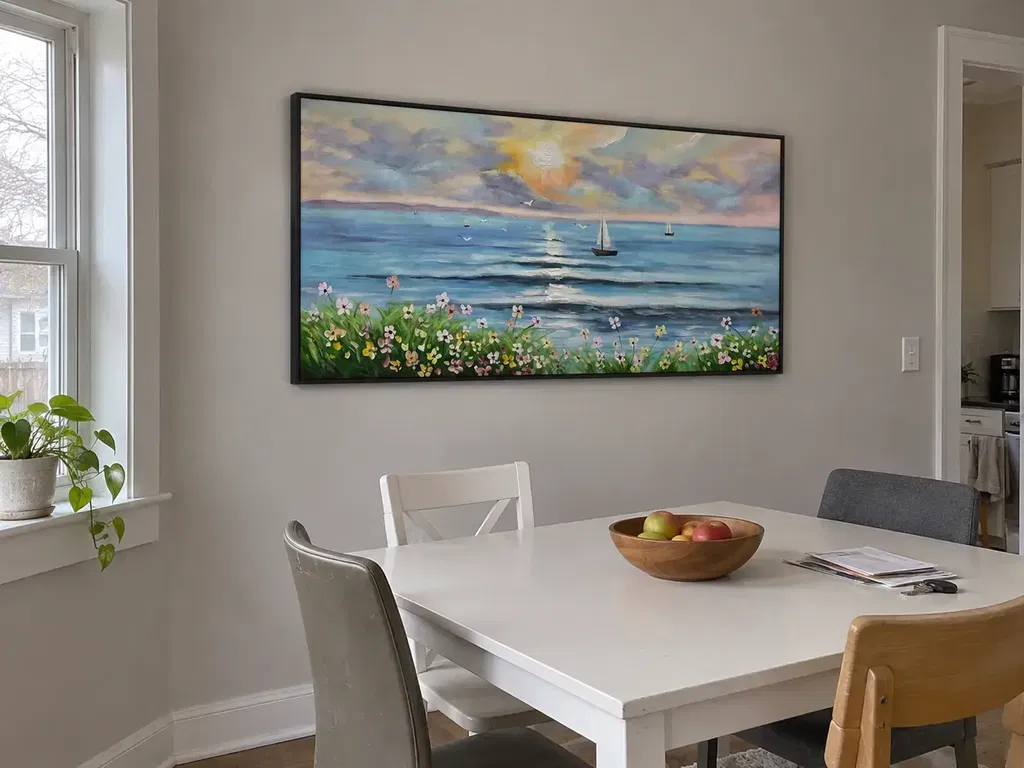
Whether you are anchoring a biophilic landscape to reduce stress or installing a surrealist statement piece, remember that the value lies in the details—the brushstrokes, the texture, and the human touch. Proper handling ensures those details remain unmarred for generations.
Disclaimer: This article is for informational purposes only and does not constitute professional installation or engineering advice. Always consult with a certified art handler or structural engineer for specific mounting requirements, especially for exceptionally heavy or oversized works. Handling art involves physical risks; use proper safety equipment and lifting techniques.
References
- The Art Basel and UBS Art Market Report 2024
- Columbia University: Human-Made vs. AI Art Study
- WHO Scoping Review on Arts and Health
- Getty Conservation: Organic Materials in Wall Paintings
- Canadian Conservation Institute: Basic Handling of Paintings
- Royal Society: Quantifying the link between art and property prices
- CDC NIOSH: Paint and Coating Hazards