Beyond the Frame: The Chemical Necessity of Glass-Free Art
The high-end art market is undergoing a seismic shift. According to recent data from Marketplace.org, sales of vanity auction pieces over $10 million plummeted 44% year-over-year in 2024. As the era of "financialized art" retreats, we are seeing a return to real application value. Homeowners and interior designers are moving away from sterile, overpriced assets and toward custom, hand-painted works that offer what we call "performative authenticity"—the visible, tactile evidence of the artist’s hand.
However, a common instinct among new collectors is to immediately "protect" these investments behind glass. While well-intentioned, this is often a fundamental mistake for oil-based artworks. In our studio practice, we have observed that sealing a curing oil painting behind glass is less like putting it in a safe and more like placing it in a vacuum seal before it’s finished cooking.
Hand-painted oil art possesses what University of Chicago research calls an "essential identity"—a soul that digital replicas and NFTs simply cannot replicate. Preserving that identity requires understanding the living, breathing chemistry of the medium. To ensure your artwork retains its physical integrity and investment value, you must allow it to interact with its environment.
The Chemistry of "Breathing": Why Oil Paint Never Truly Stops Moving
The most critical distinction to understand is that oil paint does not "dry" in the way a watercolor or a house paint does. Water-based paints dry through evaporation; once the liquid is gone, the process is largely complete. Oil paint, conversely, cures through oxidation.
According to a study published in ACS Applied Polymer Materials, the curing process of artist-grade oil paint involves the absorption of oxygen from the air, which triggers a complex series of chemical cross-linking. This process is not measured in hours, but in months and even years.
The 24-Month Curing Window
While a painting might feel dry to the touch within a week, the underlying layers are still actively absorbing oxygen and releasing volatile organic compounds (VOCs). Sealing the work behind glass creates a stagnant micro-climate that "suffocates" these chemical bonds. When the oxidation process is interrupted, the paint film can become unstable, leading to cracking, delamination, or a permanent softening of the impasto.
Logic Summary: Our preservation model assumes a standard curing timeline based on atmospheric oxygen levels and typical indoor humidity (~45-55%). We categorize "dryness" into three stages to help collectors manage their expectations:
- Touch-Dry (2–4 weeks): The surface skin has oxidized enough to resist light contact.
- Stabilized (6–12 months): The deep impasto layers have reached a state of relative equilibrium.
- Fully Cured (24+ months): Cross-linking is largely complete, though oxidation technically continues at a microscopic rate for decades.

The "Bloom" Phenomenon: The Hidden Risk of Trapped Moisture
One of the most frequent issues we see in our support tickets is the appearance of "bloom"—a cloudy, whitish haze that develops on the surface of a painting. This is almost exclusively a result of sealing oil art behind glass too early.
When an oil painting is encased, it traps residual moisture and solvents. As temperatures fluctuate, this trapped moisture can condense on the underside of the glass or, worse, react with the free fatty acids in the oil binder. Research from the Tate Modern identifies these migrating fatty acids as the primary culprits behind late-stage turbidity or "haziness."
Without airflow, these molecules have nowhere to go but the surface of the paint, where they crystallize into an unsightly film. This not only obscures the vibrancy of the pigments but can also become a breeding ground for mold in high-humidity environments.
The Commercial Premium of Texture
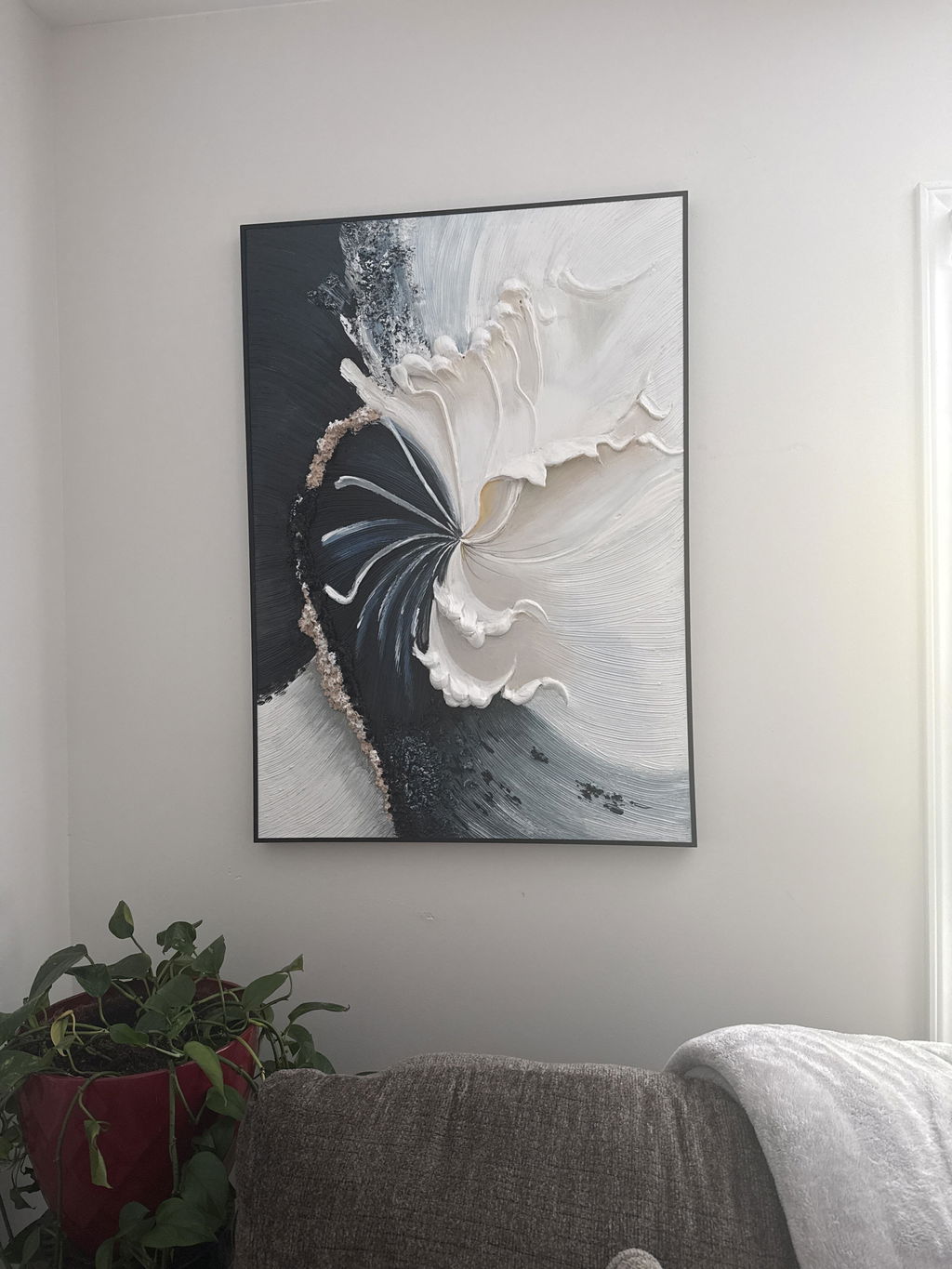
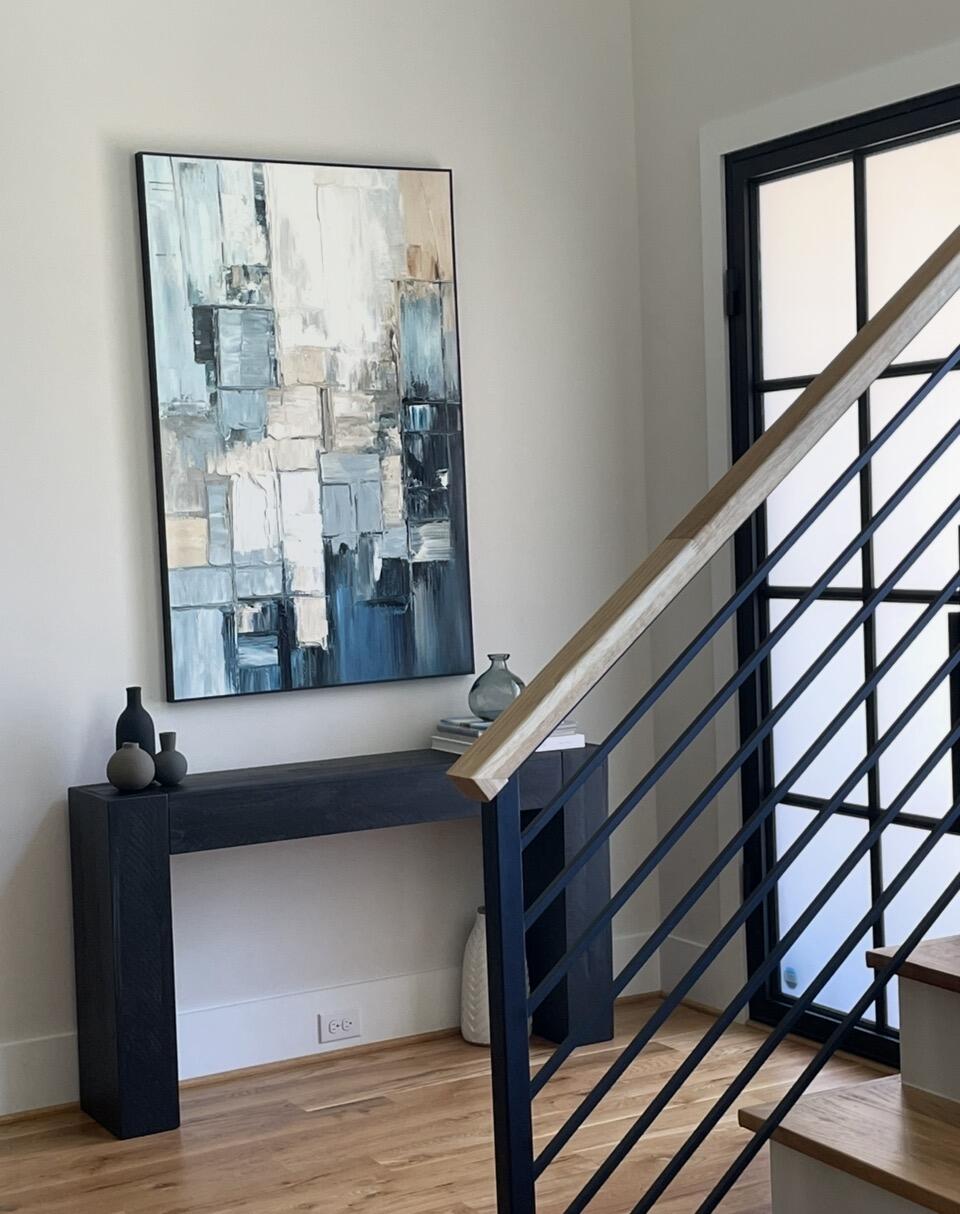
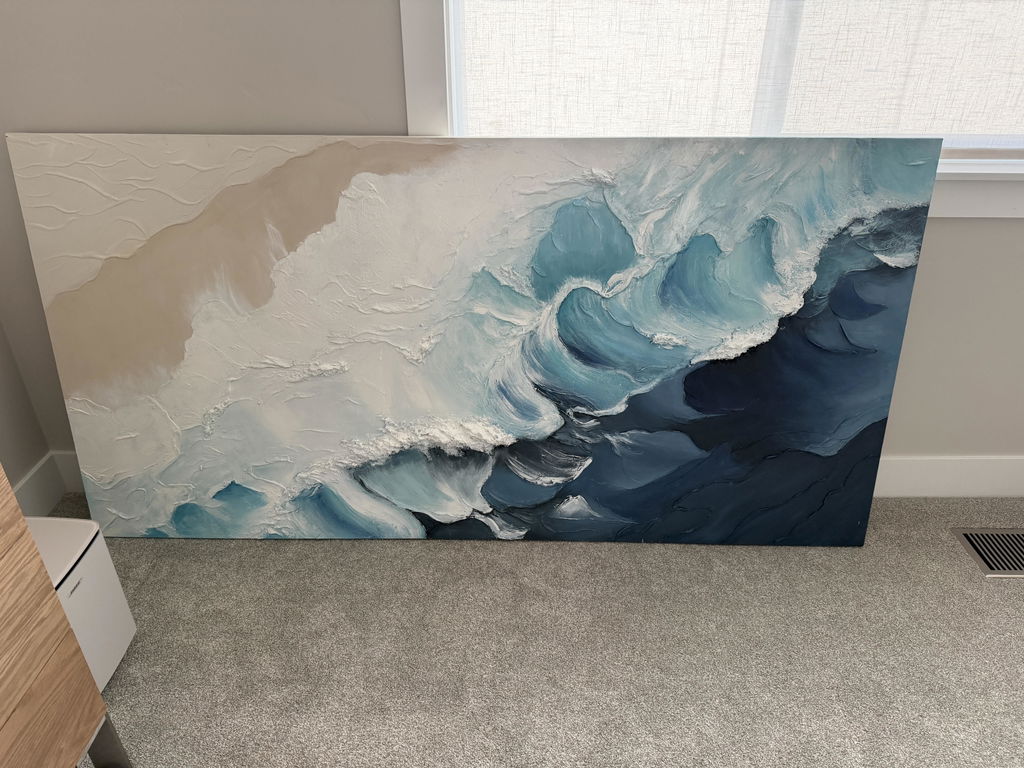
Why do we care so much about the surface of the painting? Because texture is where the value lives. A Columbia University study found that consumers value art labeled as "human-created" 62% higher than AI-generated prints. This premium is driven by the "microtopography" of the canvas—the millimeter-scale relief of the brushstrokes.
Optical microprofilometry, as discussed in MDPI Sensors, proves that this physical texture is crucial to the aesthetic experience. It changes how light scatters, creating a depth that glass inevitably flattens. By placing a sheet of glass between the viewer and the impasto, you are essentially "devaluing" the work by 62% in terms of perceived human effort and authenticity.
Furthermore, experiments at the MUNCH Museum confirm that interacting with the physical relief of art—even just visually—exponentially stimulates intrinsic motivation and satisfaction in the viewer. Glass acts as a psychological and physical barrier to this connection.
Practical Preservation: The Homeowner’s Checklist
If you are displaying a hand-painted oil work, follow these expert heuristics to ensure longevity without sacrificing the "camera-ready" results our clients expect.
1. The Fingernail Test
Before considering any form of enclosure or even a final varnish, use the "fingernail test." Find the thickest impasto area—usually at the very edge of the canvas near the frame—and press gently with a clean fingernail. If the paint feels soft or leaves an indentation, the internal layers are still oxidizing. It is not ready to be sealed.
2. Environmental Buffering Over Physical Barriers
Instead of glass, focus on the room's climate. The Royal Society has quantified the link between art and property value, showing that well-maintained art environments correlate with higher house price rankings.
- Avoid Direct Sunlight: Use UV-filtering window films rather than putting UV glass on the painting itself.
- Maintain Humidity: Aim for a stable 45-55% relative humidity. Fluctuations are more damaging than the absolute level of humidity. Sherman Gallery research shows that artworks in fluctuating environments are 60% more likely to suffer from paint cracking.
3. The "Spacer" Rule (The Professional Compromise)
If a client insists on glass—perhaps for a high-traffic commercial lobby or a kitchen where grease is a concern—you must never let the glass touch the paint. Professionals use "spacers" to ensure a minimum 1/4-inch air gap. This prevents the paint from physically bonding to the glass surface during temperature fluctuations and allows for a small amount of internal airflow.
| Feature | Glass-Free (Recommended) | Sealed Behind Glass (Not Recommended) |
|---|---|---|
| Oxygen Access | Unrestricted; optimal curing | Restricted; risks "suffocation" |
| Texture Visibility | High; preserves impasto relief | Low; flattens visual depth |
| Moisture Risk | Low; natural evaporation | High; risks "bloom" and condensation |
| Maintenance | Occasional light dusting | Requires professional cleaning of glass |
| Value Perception | High (Authentic Human Work) | Lower (Resembles a print) |
Health and Safety: The Indoor Air Quality Promise
Choosing glass-free display isn't just about the art; it's about the health of your home. Hand-painted art involves pigments that require respect. While modern professional paints are safer than historical versions, some still contain heavy metals. For instance, IARC classifies cadmium compounds as Group 1 carcinogens.
When a painting is allowed to "breathe" in a well-ventilated room, the trace VOCs and off-gassing are diluted into the air and removed. Aalto University chamber experiments prove that VOC emissions from coatings plummet during the curing phase but remain significantly lower when the substrate is allowed to reach equilibrium with the room. Sealing a painting prematurely can concentrate these compounds, creating a "toxic pocket" that may release all at once if the seal is broken or the glass is removed years later.
For families with small children or pets, we recommend choosing works that use eco-friendly alternatives. As noted by the Cincinnati Art Museum, walnut oil and flax-based mediums are excellent, non-toxic replacements for traditional turpentine-heavy solvents.
The ROI of Proper Maintenance
Investing in hand-painted art is a significant financial and emotional decision. Americans for the Arts reports that government tax investments in the arts yield a 7:1 ROI. On a personal level, that ROI is realized through the appreciation of the work and the atmosphere it creates.
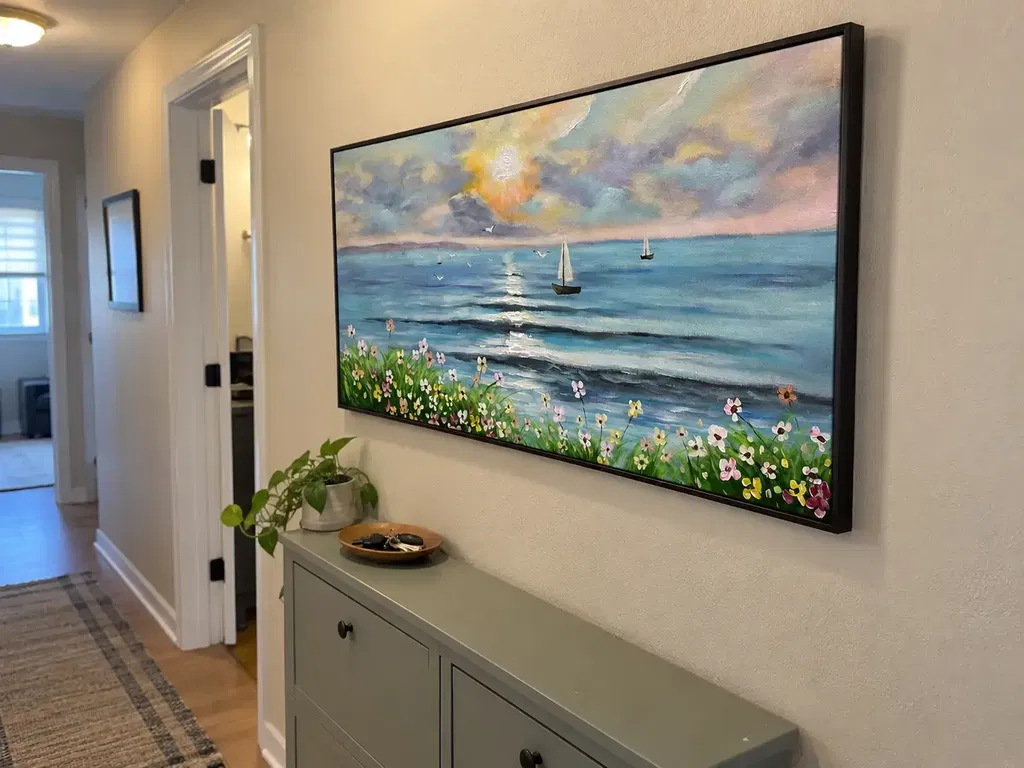
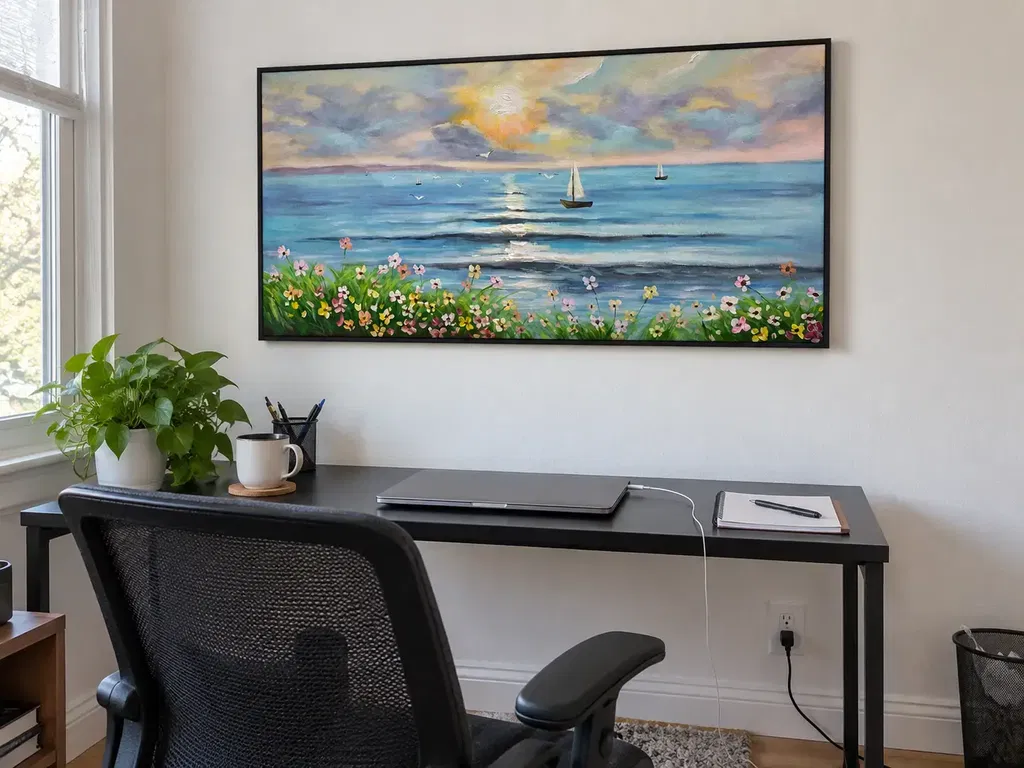
A large, unglazed mural or canvas can transform a space. In healthcare settings, UPenn research found that 73% of patients reported significant mood improvements when exposed to environmental artworks. In the workplace, nature-themed murals can reduce cognitive fatigue and burnout (University of Hawaii).
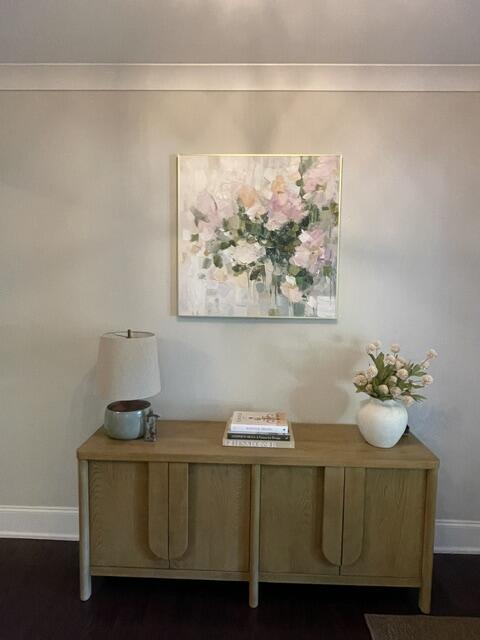
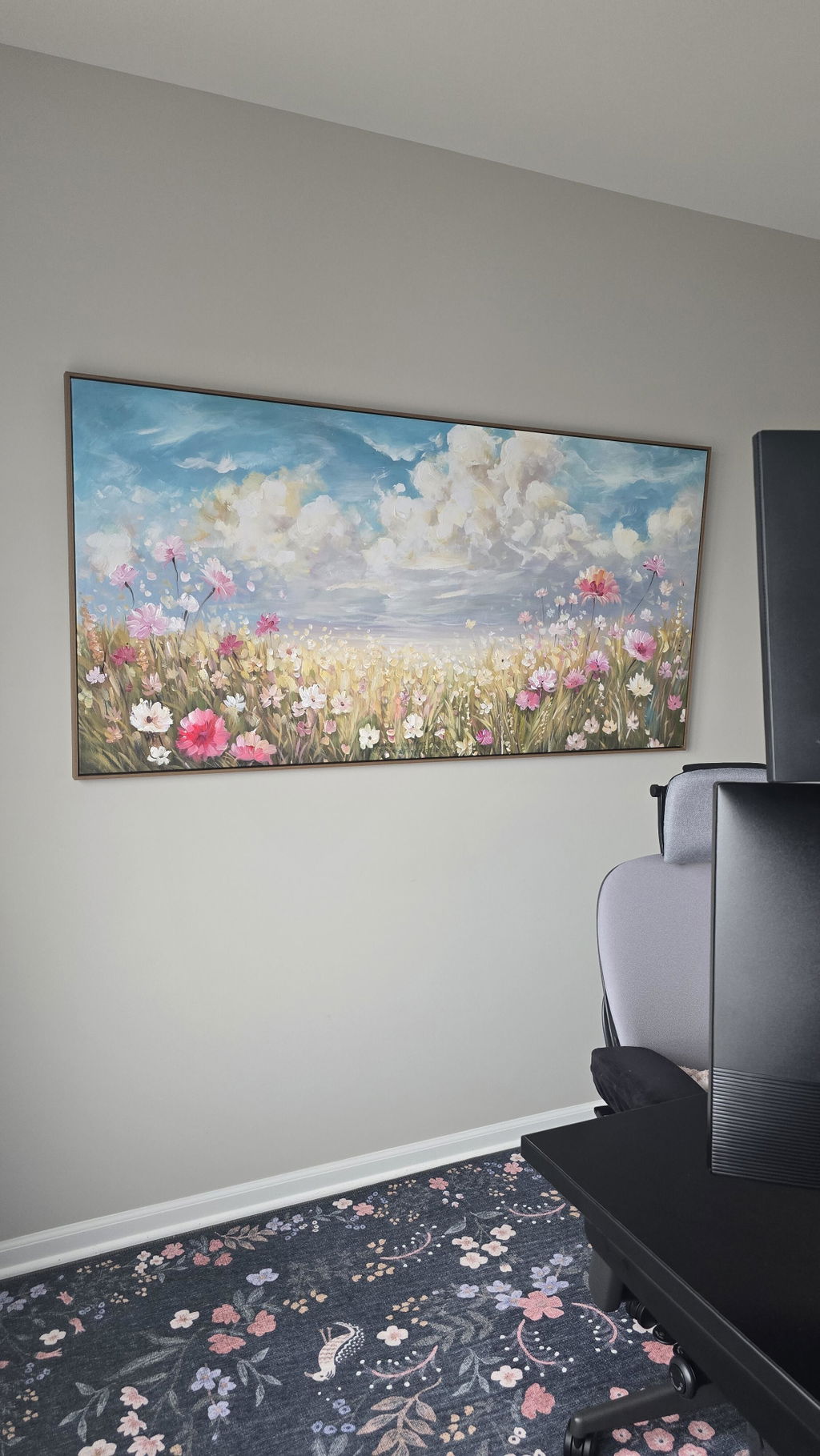
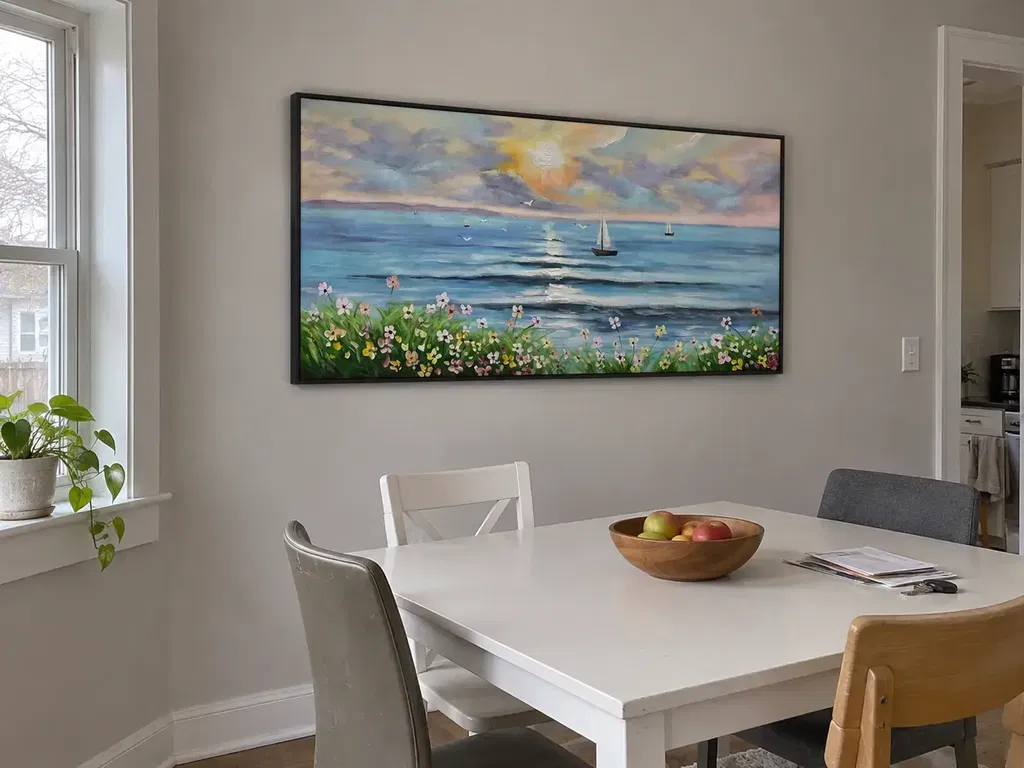
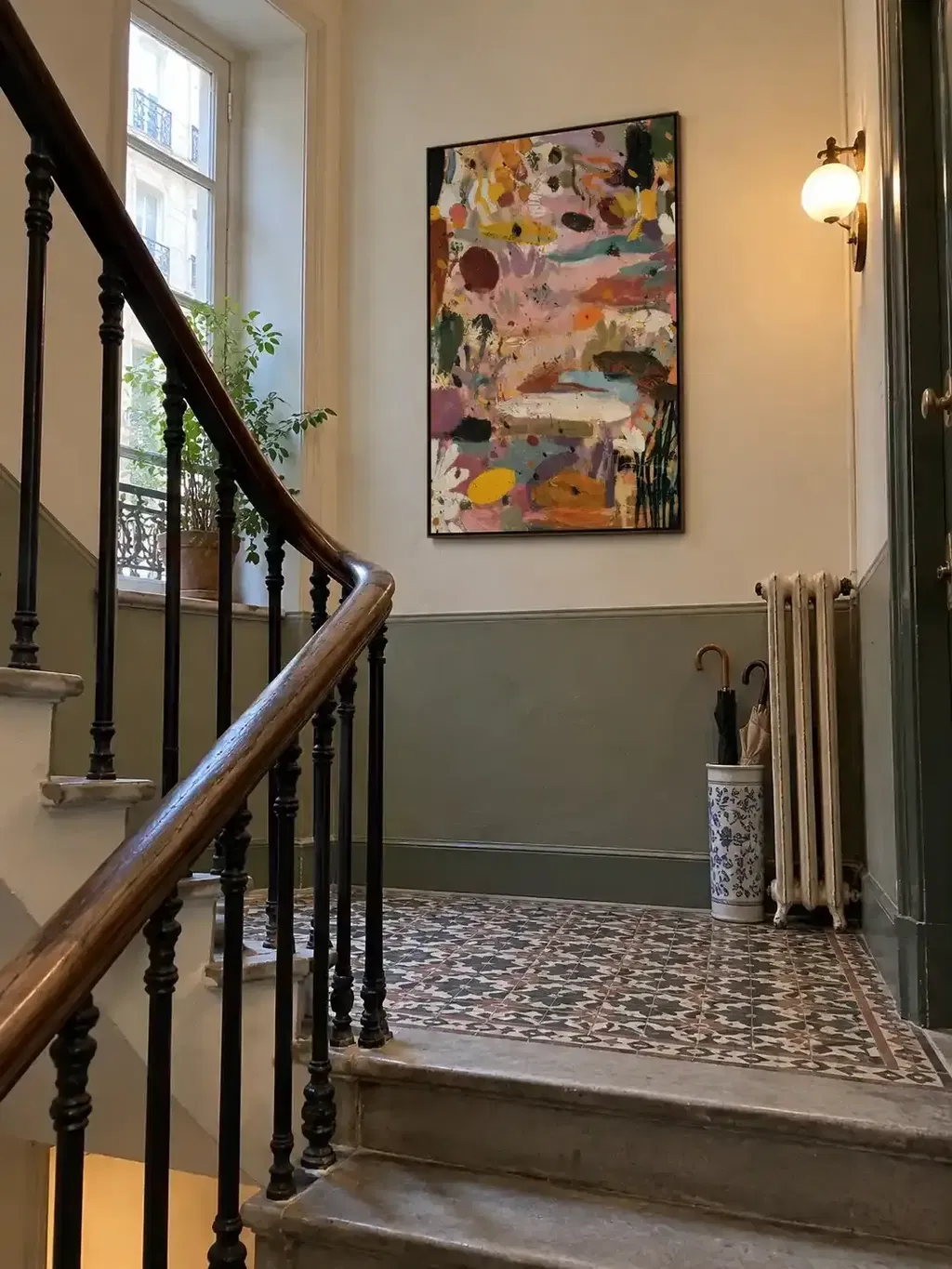
To maximize this impact, the art must be visible in its rawest form. When you remove the glass, you remove the glare, the "haze," and the barrier between the viewer and the artist’s intent.

Summary of Best Practices for Collectors
To ensure your collection remains a source of pride and value, adopt a "curatorial mindset":
- Wait for the Varnish: Do not apply a final picture varnish until the painting has cured for at least 6 months. Varnish provides a protective layer against dust and UV without the risks of glass.
- Dust, Don't Scrub: Use a soft, natural-hair brush (like a hake brush) to remove dust. Never use damp cloths or cleaning chemicals on an unvarnished oil painting.
- Trust the Texture: Embrace the "whimsy" and "artisan craftsmanship" that Zillow and Yelp trends show are the top interior design drivers for 2026.
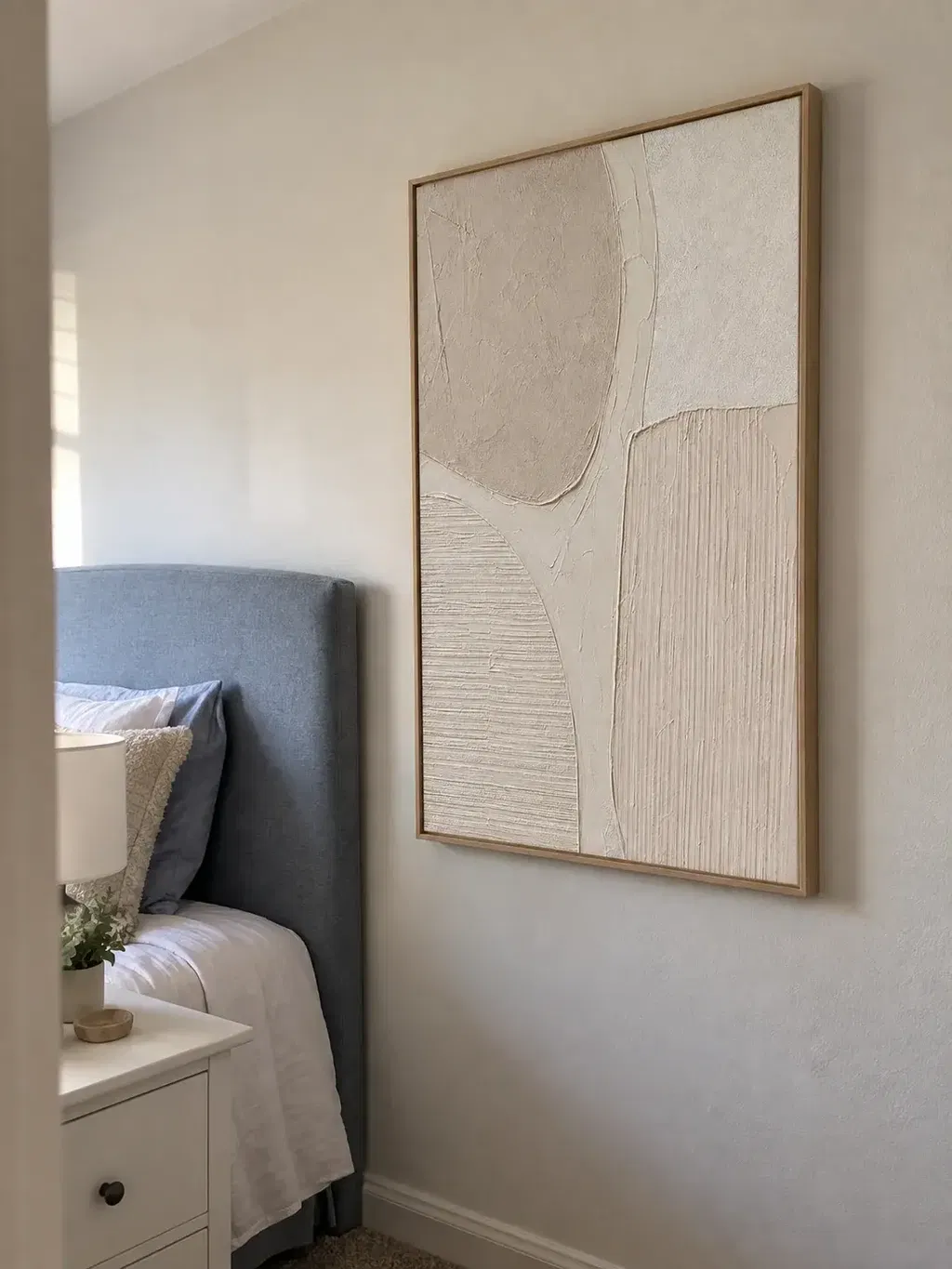
- Prioritize Airflow: If you must frame, choose "floater frames" which leave the edges of the canvas exposed, further aiding the oxidation process.
By allowing your oil paintings to breathe, you are not just following a technical rule—you are participating in the ongoing life of the artwork. You are ensuring that the rich textures, vibrant pigments, and "essential identity" of the piece remain as vivid on day 5,000 as they were on day one.
YMYL Disclaimer: This article is for informational purposes only and does not constitute professional art conservation, medical, or financial advice. Always consult with a certified art conservator before making significant changes to high-value artworks or if you have concerns about indoor air quality and specific pigment toxicities.
References
- Marketplace.org: The expensive art market continues to struggle
- ACS Applied Polymer Materials: Oxidation and Cross-Linking in Oil Paint
- Columbia University: Human-Made vs. AI Art Perception
- University of Chicago: Does Artwork Preserve Essential Identity?
- WHO: Scoping Review on Arts and Health
- EPA: Indoor Air Quality and Low-VOC Paints
- Tate Modern: Conservation Concerns for Acrylic and Oil Emulsions
- MDPI Sensors: Tactile Fruition of Artworks via 3D Printing