Tonal Gravity: Using Dark Art to Anchor High Ceilings
Spacious living rooms with soaring ceilings are often the crown jewels of modern architecture, yet they present a persistent psychological challenge: the "cavernous" effect. While high-volume spaces offer a sense of grandeur, they frequently lack the visual boundaries required for human comfort. Without a strategic focal point, the eye wanders aimlessly, and the room can feel cold or disconnected from the inhabitants below.
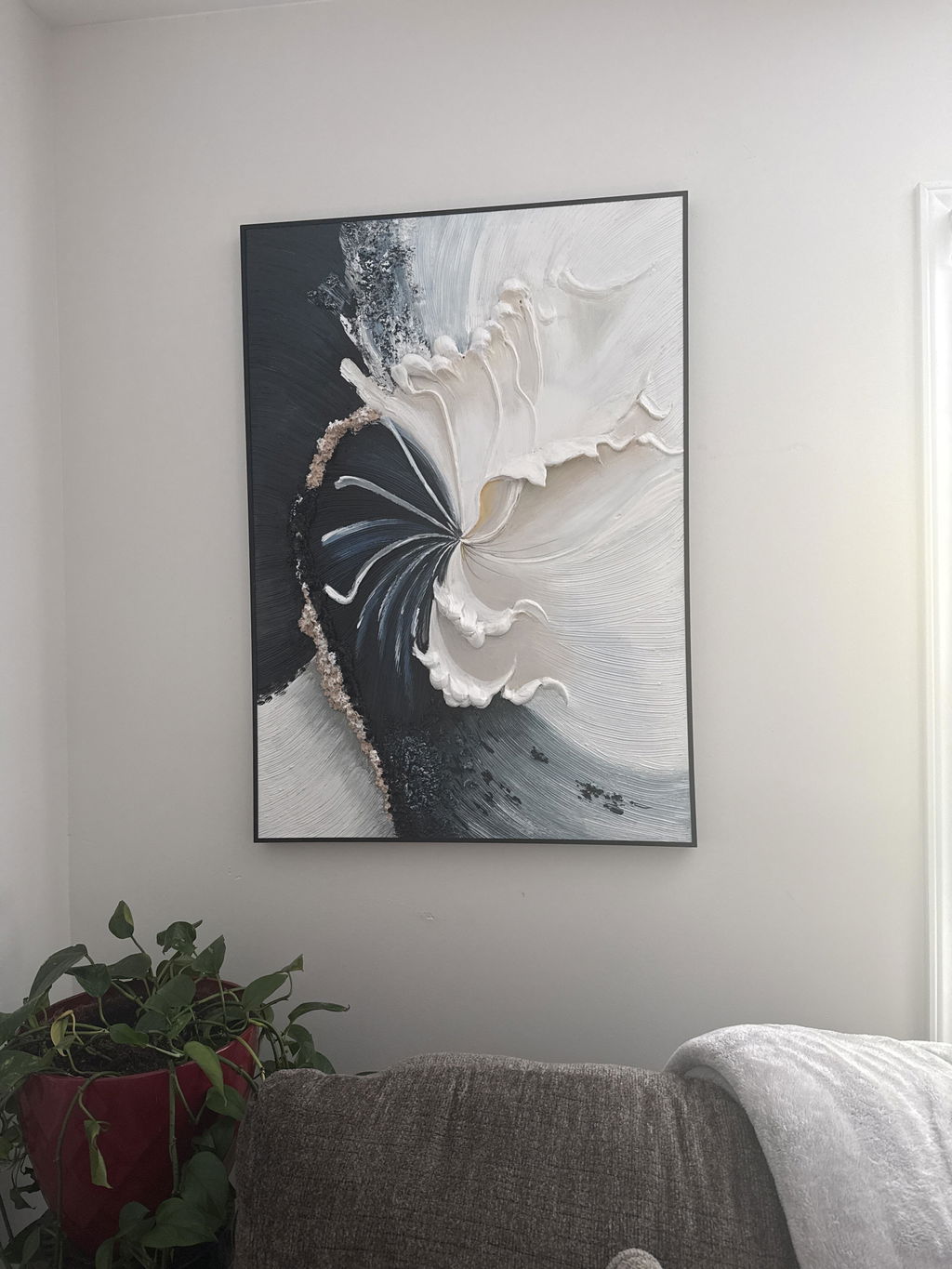
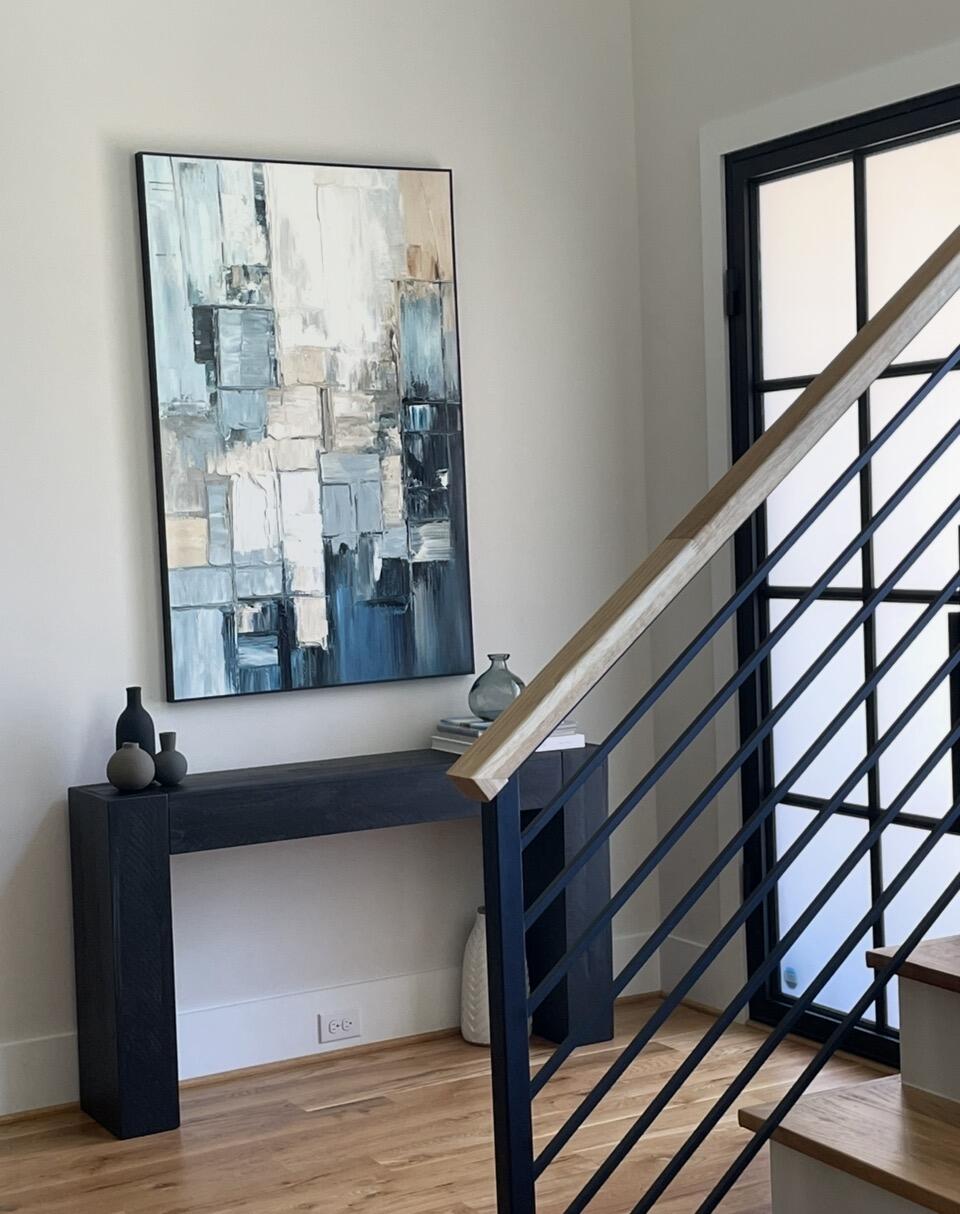
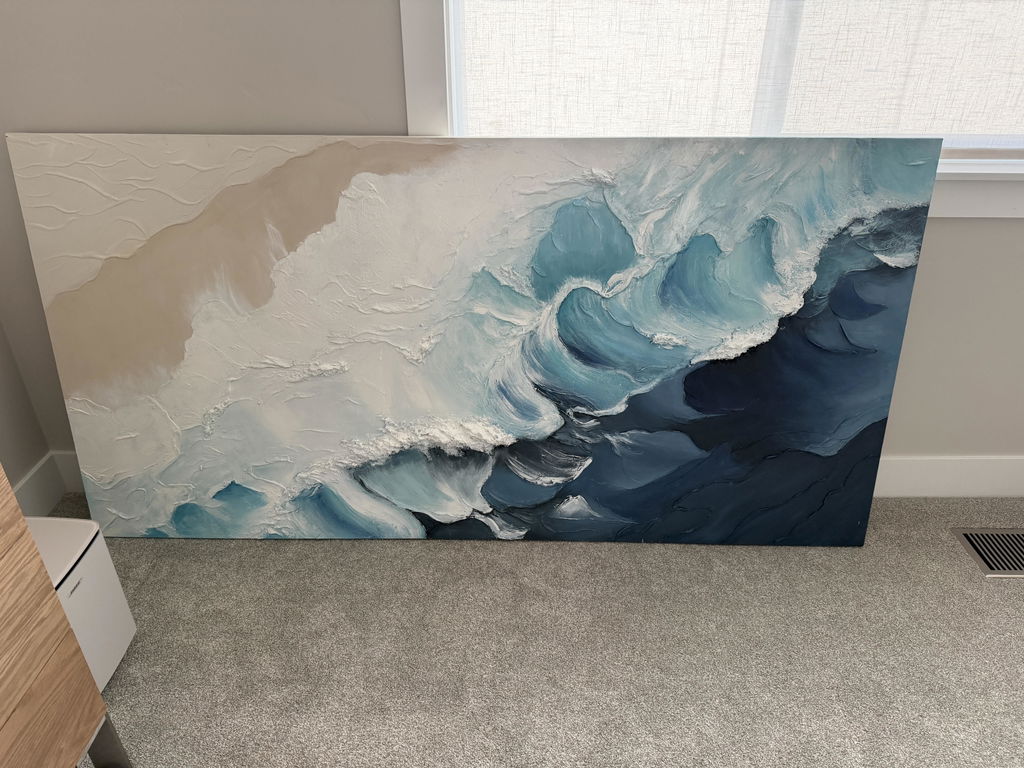
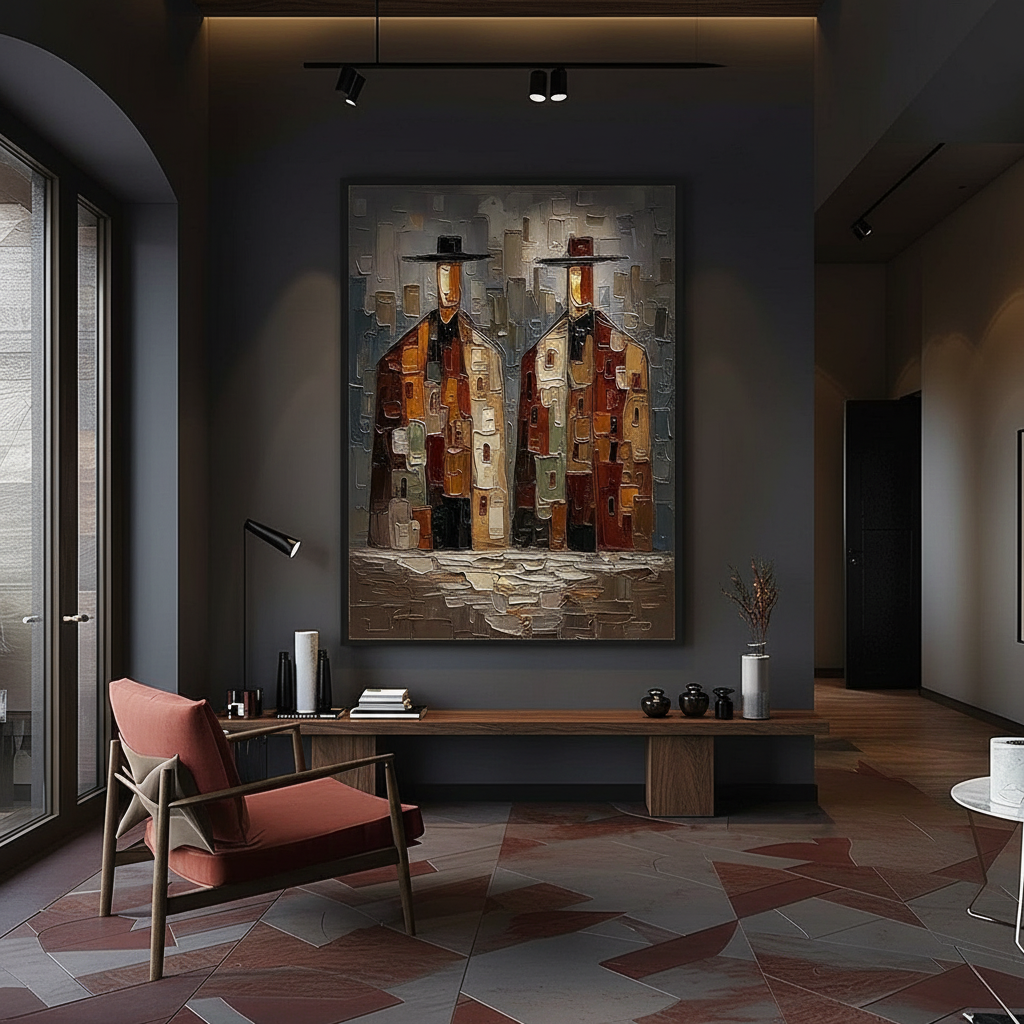
This is where the concept of "Tonal Gravity" becomes essential. By utilizing dark-toned, large-scale artwork, homeowners can create a visual "anchor" that pulls the room’s perceived center of gravity back to eye level. This strategy isn't merely about decoration; it is a calculated application of neuroaesthetics and spatial psychology designed to balance architectural proportions.
Recent shifts in the art market reflect a growing preference for this type of functional, high-value art. According to Marketplace.org, high-end auction sales for purely financial "vanity" assets plummeted 44% in 2024. In their place, collectors are turning toward custom, human-made pieces that offer real application value within the home—art that solves spatial problems while providing an emotional resonance that digital prints cannot replicate.
The Science of Visual Weight and Anchoring
In interior design, "visual weight" refers to the psychological force an object exerts based on its color, size, and placement. Darker colors possess a higher "gravity" because they absorb more light and appear denser to the human brain. When a room features high ceilings, the upper third of the space often becomes a "dead zone" of white or neutral space.
Research from the University of Mainz demonstrates that darker elements are systematically perceived as lower or "heavier" than lighter ones, regardless of hue. By placing a dark, high-contrast artwork on a large wall, you create a point of stability. This "anchoring effect" prevents the room from feeling as though it is floating away, grounding the seating area and making the voluminous space feel more intimate.
The 60-40 Rule: A Heuristic for Connection
A common mistake in high-ceiling rooms is hanging art too high in an attempt to "fill the wall." This actually exacerbates the problem by creating a visual rift between the furniture and the art. Experienced practitioners often follow the 60-40 Rule.
Logic Summary: This heuristic is used to ensure a visual "conversation" between the art and the living area. It suggests hanging artwork so that it occupies approximately 60% of the distance between the top of the key furniture (like a sofa) and the ceiling. This keeps the art's center near eye level while still acknowledging the height of the room.

The Anchoring Model: Heuristics for High-Volume Spaces
To successfully implement tonal gravity, one must move beyond intuition and into systematic placement. Based on common patterns observed in high-end spatial curation (not a controlled lab study), we have developed a baseline for anchoring voluminous rooms.
Modeling Note (Method & Assumptions)
Our spatial model assumes a standard high-ceiling living room (12–18 feet) with a primary seating focal point. The goal is to maximize "anchoring force" without overwhelming the room's natural light.
| Parameter | Value or Range | Unit | Rationale / Source Category |
|---|---|---|---|
| Minimum Art Width | >33 | % of Wall Width | Heuristic: Prevents art from being "lost" in scale |
| Hanging Height | 57 - 60 | Inches from Floor | Industry standard: Art center at eye level |
| Furniture-Art Gap | 6 - 10 | Inches | Practical baseline: Maintains visual cohesion |
| Lighting Angle | 30 - 45 | Degrees | Alcon Lighting: Minimizes glare on dark pigments |
| Tonal Contrast | >3 | Contrast Ratio | Modeling: Ensures the anchor is distinct from wall color |
Boundary Conditions: These rules may vary if the wall includes architectural features like fireplaces or floor-to-ceiling windows, which act as secondary anchors.
Why Human Hand-Painting Outperforms Digital Prints
In large spaces, the "soul" of the artwork is as important as its size. A common frustration with oversized digital prints is that they appear "flat" or "plastic" when viewed under the intense natural light of a high-ceiling room.
A study by Columbia University confirms that consumers value art labeled as "human-created" 62% higher than AI-generated or mass-produced digital alternatives. This isn't just sentiment; it's rooted in the physical properties of the medium.
The Physics of Texture and Light
Hand-painted works, particularly those using heavy impasto or layered oils, interact with light through complex scattering. According to the Getty Conservation Institute, the surface refractive index of physical pigments creates a sense of depth that digital ink cannot mimic.
- Tactile Satisfaction: Physical relief on a canvas stimulates intrinsic motivation and satisfaction in the viewer, a phenomenon confirmed by tests at the MUNCH Museum.
- Color Saturation: Using the Kubelka-Munk equation, we know that pigment reflection is dominated by absorption and scattering coefficients. Real pigments provide a "vibrancy" that holds its own even in cavernous, sun-drenched rooms.
For those interested in how these materials age and maintain their impact, understanding pigment lightfastness is critical for long-term investments in high-light environments.

Lighting Strategy: Illuminating the Anchor
Dark art requires precise lighting to reveal its depth without creating distracting reflections. In high-ceiling rooms, the distance between the light source and the art is often greater, requiring higher-intensity lamps but softer delivery.
- The 30-Degree Angle: To avoid "hot spots" on dark, glossy surfaces, angle your spotlights at approximately 30 to 45 degrees. This ensures that the light "grazes" the texture of the paint, highlighting the blending mastery of the artist while reflecting glare away from the viewer’s eyes.
- Ambient Gradients: Don't rely solely on spotlights. Use ambient lighting to create a gradual illumination gradient around the artwork. This prevents the dark piece from looking like a "black hole" on the wall and helps it integrate into the room’s overall hierarchy.
- Light Reflectance Value (LRV): When selecting a dark piece, consider the room's LRV. If your walls are very light (LRV > 70), a very dark anchor (LRV < 10) will provide maximum "tonal gravity."
Health, Safety, and Environmental Integrity (YMYL)
When commissioning or purchasing large-scale murals or canvases, the chemical composition of the materials is a significant safety concern. Large surface areas of paint can emit Volatile Organic Compounds (VOCs), which the EPA warns can lead to indoor air pollution levels significantly higher than outdoors.
The "Non-Toxic" Promise
For a home to be truly "anchored" and comfortable, it must also be safe.
- Low-VOC Standards: For large installations, prioritize water-based acrylics or walnut-oil-based paints, which eliminate the need for toxic solvents like turpentine. This is especially vital for achieving LEED or WELL building certifications in high-end developments.
- Pigment Safety: Avoid historical pigments like "Lead White" or certain cadmium compounds. The International Agency for Research on Cancer (IARC) classifies cadmium as a Group 1 carcinogen. Modern synthetic alternatives offer the same "tonal gravity" without the neurological risks.
Methodology Note: Our recommendation for water-based or walnut-oil mediums is based on a review of Aalto University chamber experiments, which show that properly cured coatings on indoor substrates emit significantly lower VOCs over time compared to traditional solvent-heavy methods.
The ROI of Spatial Curation: Emotional and Economic
Investing in a large-scale, dark anchor piece provides more than just aesthetic balance; it offers measurable returns in well-being and property value.
Neuroaesthetics and Stress Reduction
A critical review by the University of Pennsylvania found that 73% of individuals reported significant mood improvements when exposed to high-quality environmental artwork. Furthermore, the World Health Organization (WHO) has confirmed through thousands of studies that art interventions can effectively alter clinical indicators for stress and mental fatigue. In a soaring living room, a well-placed anchor piece transforms a "stressful" void into a sanctuary of emotional regulation.
Real Estate Appreciation
From a financial perspective, art is a "catalytic" infrastructure. Data from the Royal Society indicates that neighborhoods and homes with high "art density" see greater relative gains in property value. Large-scale, custom artwork signals a level of "artisan craftsmanship" that Zillow data suggests is becoming a primary driver for high-end home searches in 2026.
Balancing the Void
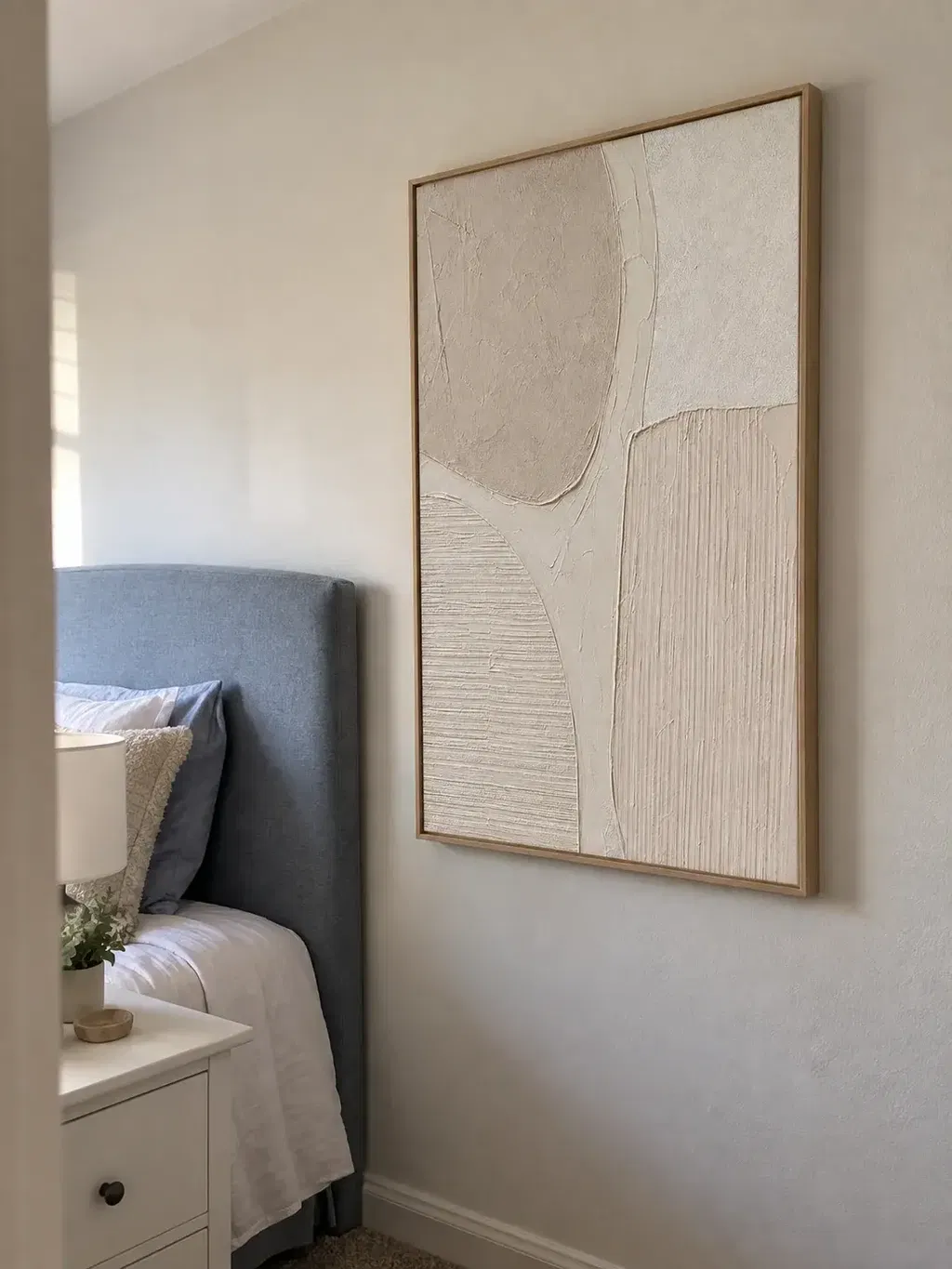
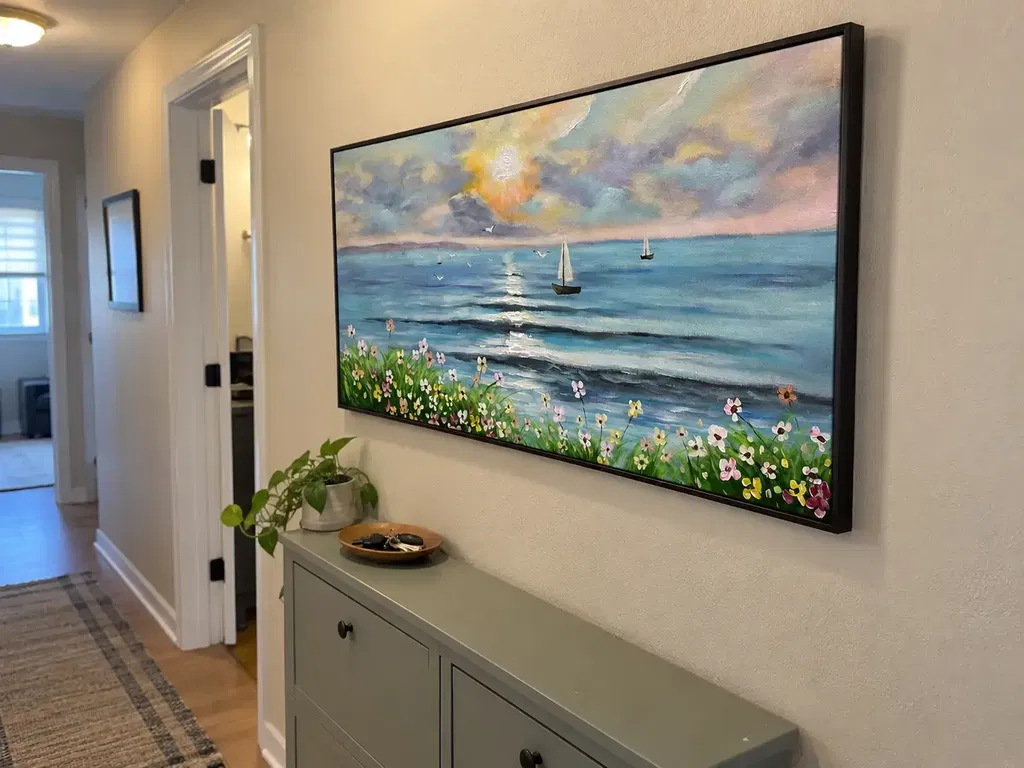
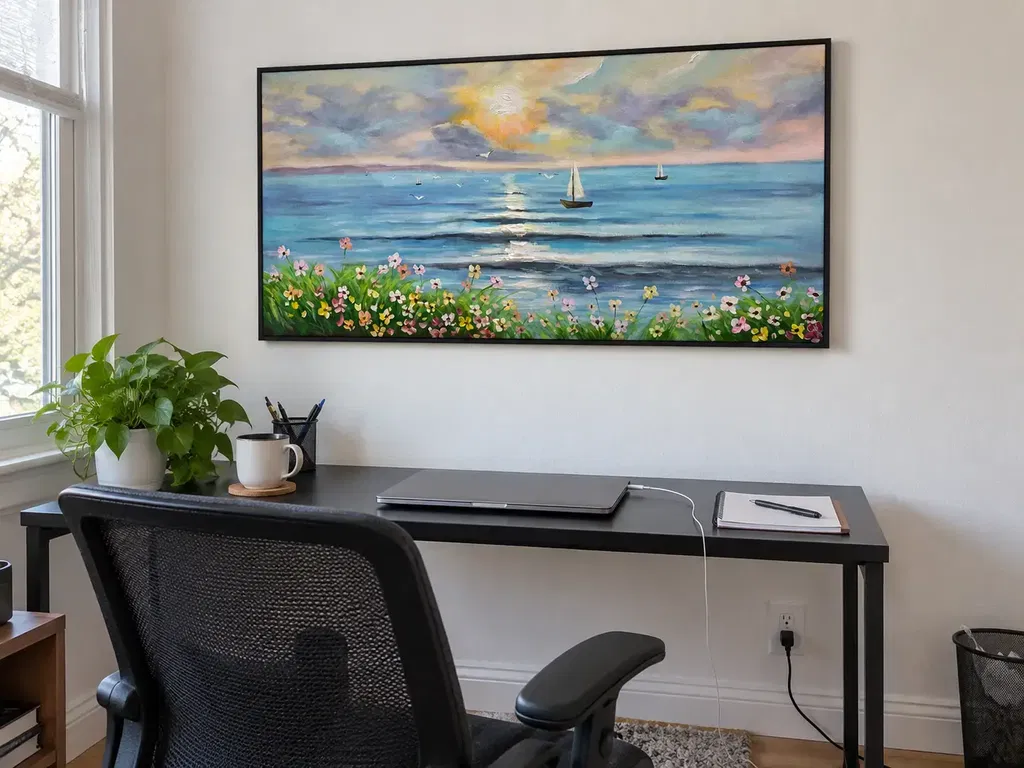
Curation in a high-ceiling space is a delicate act of balancing heavily textured art with minimalist decor. The goal of "Tonal Gravity" is not to make the room feel smaller, but to make the scale feel intentional. By choosing a human-made, dark-toned anchor and placing it with mathematical precision, you turn a cavernous house into a grounded, sophisticated home.
Disclaimer: This article is for informational purposes only and does not constitute professional architectural, medical, or financial advice. Always consult with a qualified interior designer or structural engineer before installing large-scale artwork, and ensure all materials used meet local safety and VOC regulations.
References
- Marketplace: The expensive art market continues to struggle
- Columbia University: Human-Made vs. AI Art Perception Study
- University of Mainz: The Effect of Ceiling Color on Interior Space Perception
- Royal Society: Quantifying the link between art and property prices
- WHO: Scoping Review on Arts and Health
- EPA: Indoor Air Quality and Low-VOC Paints
- Getty Conservation Institute: Color Science and Pigment Mixture
- University of Pennsylvania: Visual Art in the Built Environment