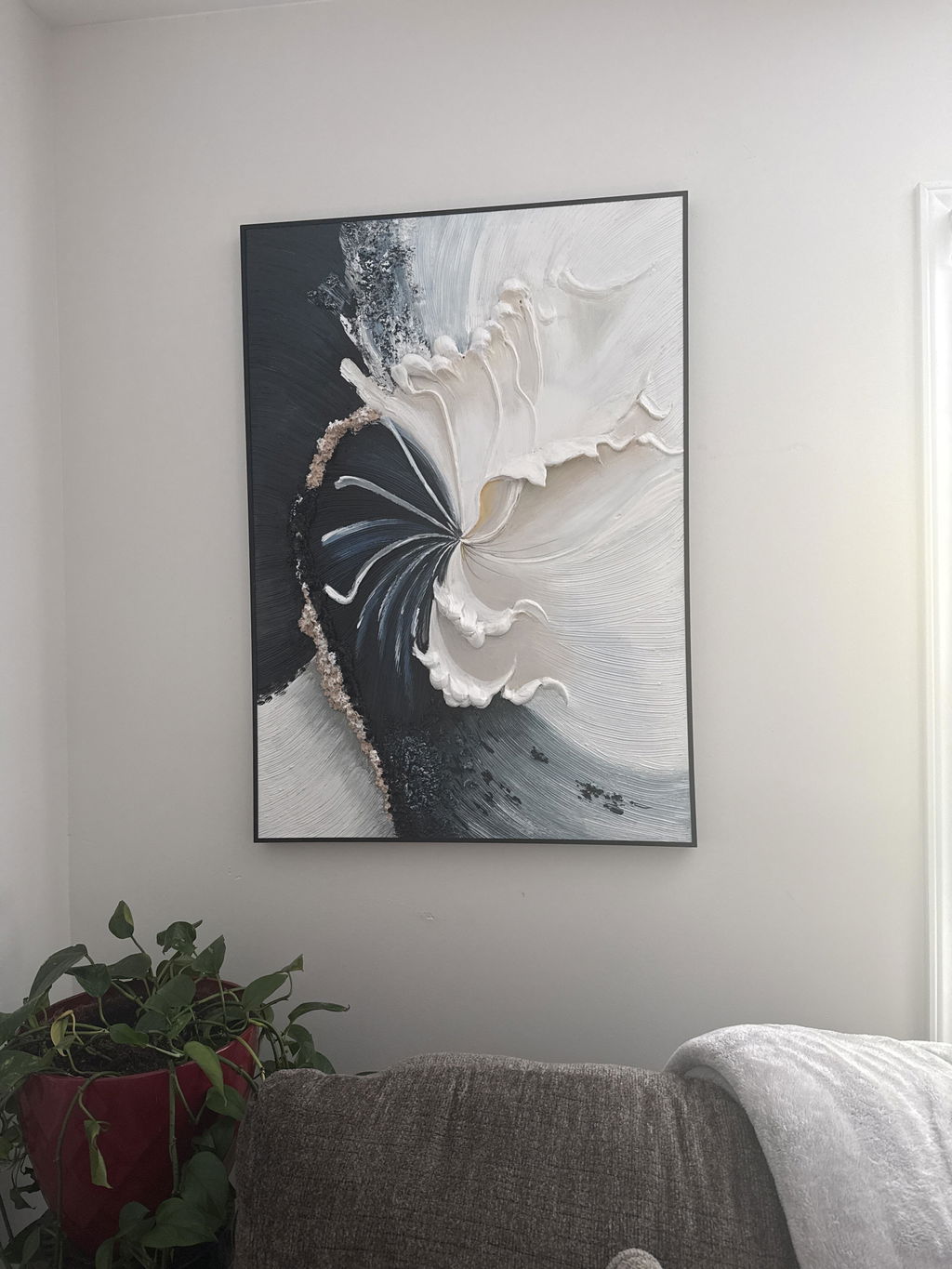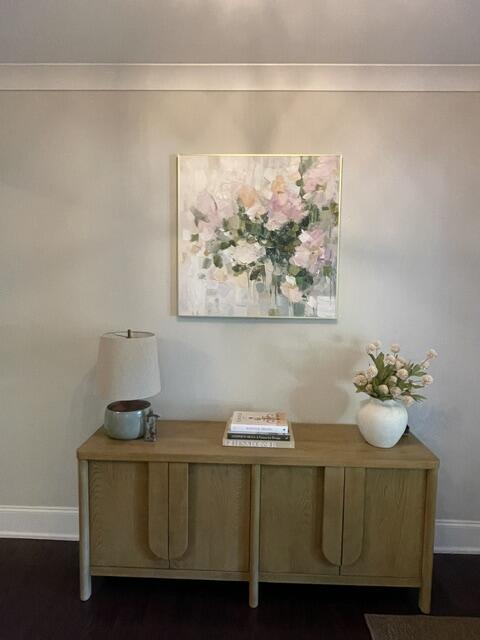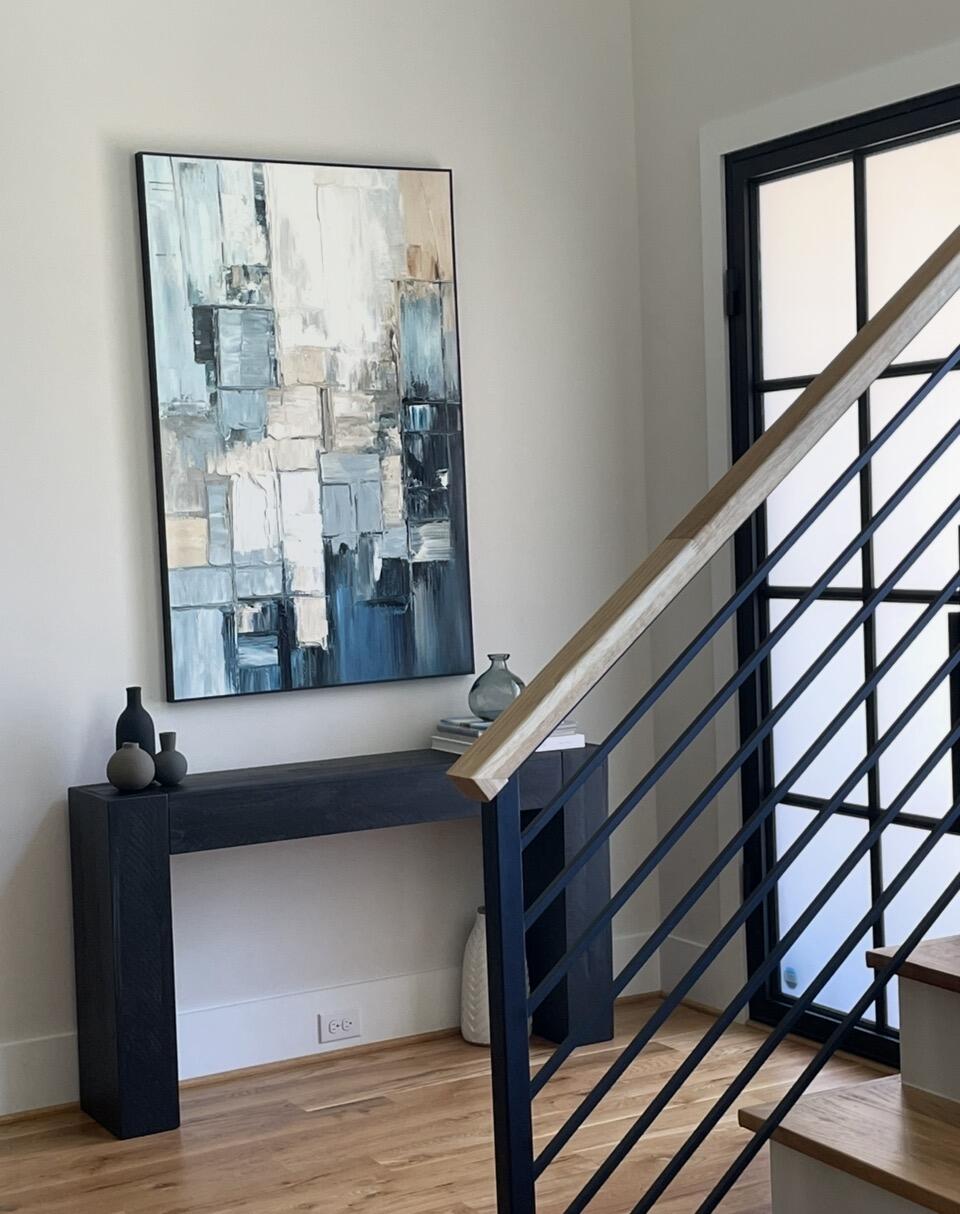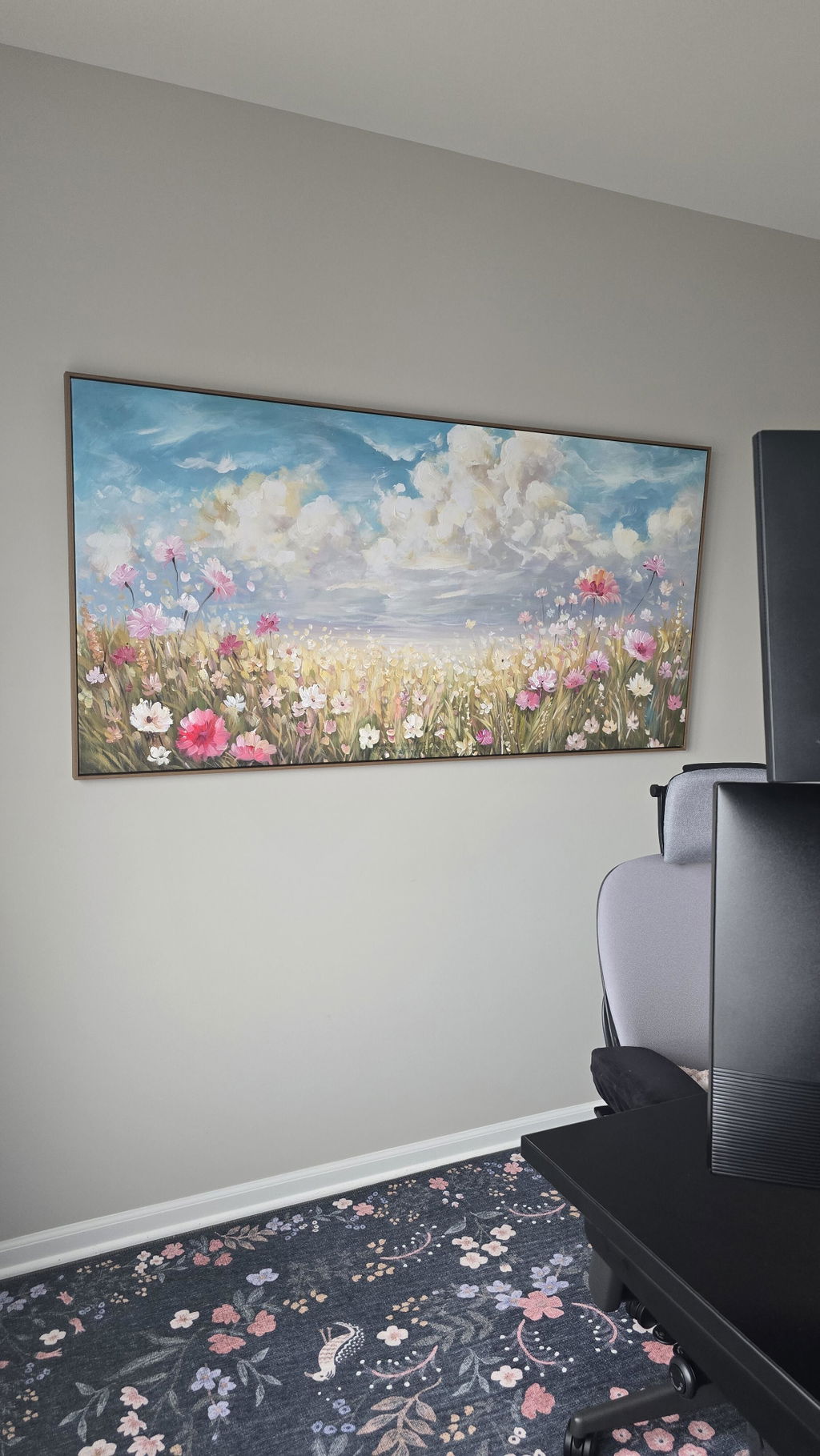
The Psychology of the Forgotten Corner
In the landscape of modern interior design, corners are frequently treated as spatial leftovers—the "junk drawers" of architecture where floor lamps or stray plants go to disappear. However, we have found that these intersections offer a unique opportunity for what we call "Intimate Curation." By shifting focus from the vast, open walls of a living room to these enclosed junctions, you can create a localized sensory experience that anchors the entire room’s flow.
Current market data suggests a fundamental shift in how we value these spaces. While high-end auction sales for purely financial art assets plummeted 44% in 2024 according to Marketplace, buyers are returning to "real application value." This means moving away from overpriced vanity pieces and toward custom, hand-painted works that provide emotional resonance within the home.
When you curate a corner vignette, you aren't just decorating; you are engaging the brain's emotional regulation circuits. Research published in PMC indicates that passive viewing of art consistently activates the medial prefrontal cortex (mPFC) and the amygdala. In an enclosed corner, this effect is intensified, creating a "nesting" sensation that reduces environmental stress.
Logic Summary: Our approach to corner curation is based on the "Micro-Environment Heuristic," which assumes that localized high-density aesthetic zones provide greater psychological "rest" than dispersed, low-density decor across a large room.

The 70-20-10 Rule: A Heuristic for Visual Weight
Successful vignettes are rarely accidental. In our experience working with aesthetic-driven home improvers, the most cohesive arrangements follow a specific ratio of visual weight. We recommend the 70-20-10 Rule to ensure the corner feels intentional rather than cluttered.
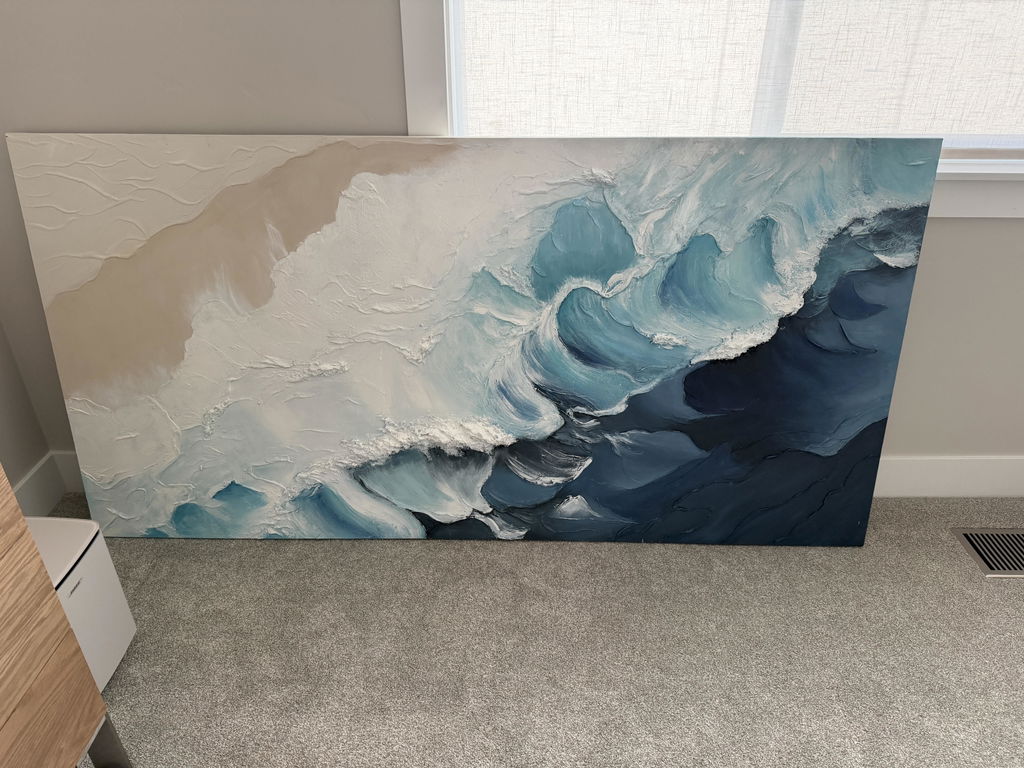
- 70% Visual Weight (The Primary Art Piece): This is your anchor. It should be a high-visibility, hand-painted canvas or a custom mural. The goal is to capture the "essential identity" of the space. According to research from the University of Chicago, consumers perceive a significantly higher value in art that retains the artist’s physical touch, a quality that digital replicas and AI-generated prints fail to replicate.
- 20% Supporting Elements (Furniture or Pedestals): This provides the "stage." A low-profile armchair, a vintage credenza, or a stone pedestal grounds the artwork and connects it to the floor.
- 10% Accent Objects (The "Whimsy" Factor): This is where you add personal social proof—a single ceramic vase, a stack of curated books, or a brass candlestick. Trends for 2026, as noted by Zillow and Yelp data, show a 15% rise in "whimsy" and a massive 329% spike in custom framing searches, suggesting that these small details are what make a room "camera-ready."
| Component | Role | Target Visual Weight | Recommended Material |
|---|---|---|---|
| Primary Art | Anchor / Focal Point | 70% | Hand-painted canvas (Impasto) |
| Furniture | Grounding / Utility | 20% | Natural wood or stone |
| Accents | Texture / Personality | 10% | Ceramic, brass, or organic fiber |
Methodology Note: This ratio is a scenario-based model derived from standard interior staging patterns. It assumes a standard corner with approximately 15-25 square feet of visible floor-and-wall interaction.
Technical Curation: The "Eye-Level Drop" and Lighting
The most common mistake we observe in client homes is hanging artwork too high. In a corner, the eye naturally tracks upward along the vertical seam of the walls. To counteract this and create intimacy, we suggest the "Eye-Level Drop."
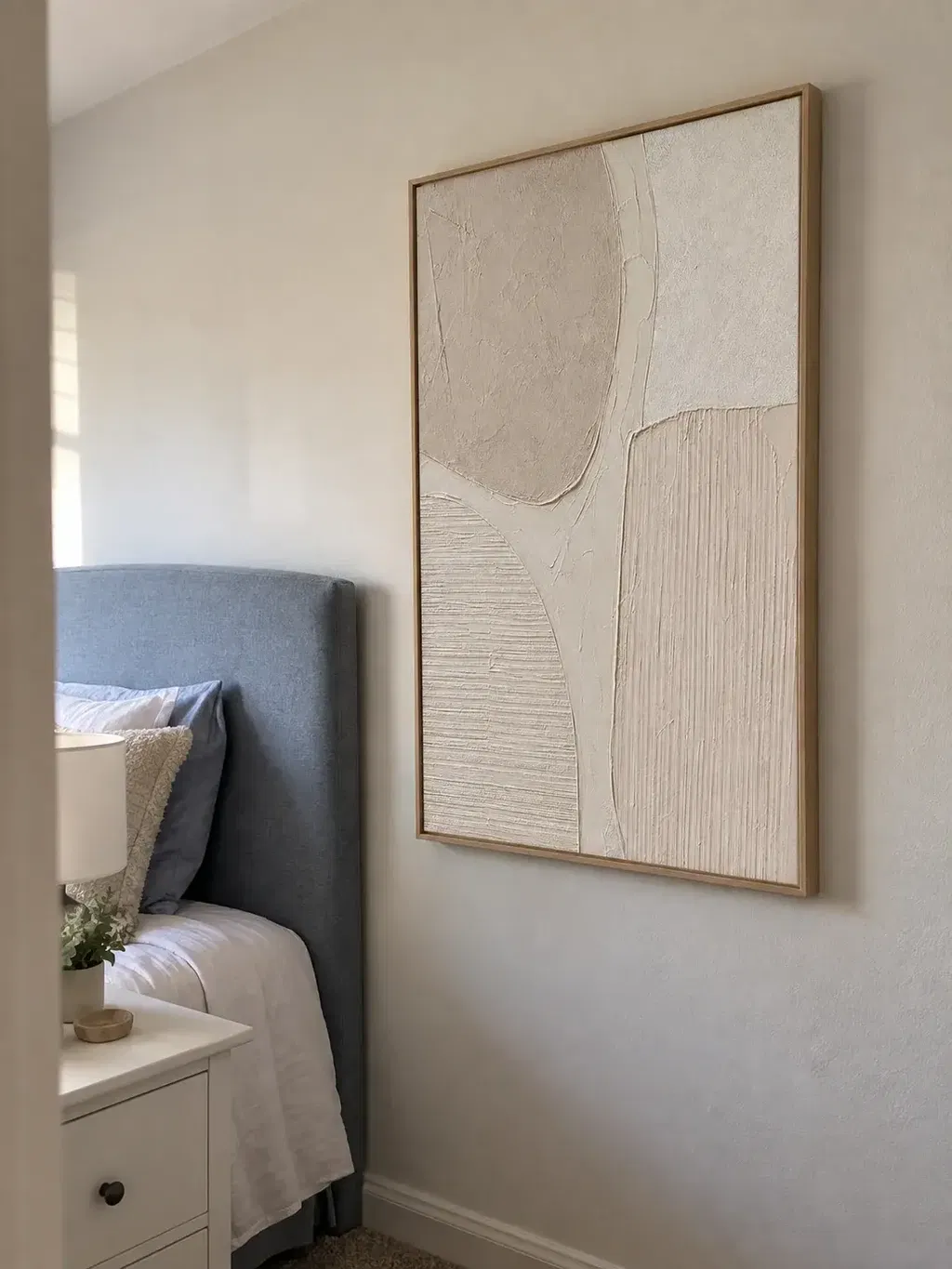
Ideal placement for corner art is typically 3-6 inches lower than standard wall art. This lower positioning forces the viewer to "enter" the vignette's space, creating a sense of enclosure and privacy. This is particularly effective in "Panoramic Powder Rooms" or intimate reading nooks, which NKBA 2025 trends highlight as a dominant design movement.
The Gloss vs. Matte Dilemma
Corners often act as light traps, especially those adjacent to windows. In these scenarios, the physical properties of the paint become critical.
- Glossy Finishes: These can create "geometric metamerism," where the refractive index of the surface causes distracting glare from multiple light sources (window + floor lamp).
- Matte/Satin Finishes: These are typically superior for corners. According to Getty Conservation research, pigment reflection is dominated by absorption and scattering coefficients. A matte surface scatters light more evenly, preserving the color saturation even in shadows.

Material Integrity: Why Human-Made Matters
For the segment of home improvers who value risk reduction and authenticity, the choice between a digital print and a hand-painted piece is more than aesthetic—it is an investment in health and social ethics.
The "Nuclear Weapon" Against AI Art
A study by Columbia University confirmed that consumers value art labeled "AI-generated" 62% lower than authentic human-created art. This is because hand-painted works contain "micro-topography"—mm-scale textures and physical relief that 3D printing and optical microprofilometry prove are crucial to the aesthetic experience. When you buy a hand-painted piece, you are consuming the "biochemical crystallization of apex human visual attention."
The Indoor Air Quality (IAQ) Promise
Health safety is a non-negotiable for premium home projects. Many mass-produced prints use industrial inks that emit high levels of Volatile Organic Compounds (VOCs). In contrast, high-quality artist acrylics and oils, when used correctly, can meet strict safety standards.
- VOC Mitigation: Aalto University experiments show that coatings on wood (common in frames and stretchers) emit significantly lower VOCs during curing than dry wood.
- The ASTM D-4236 Trap: It is important to note that the ASTM D-4236 label on paint tubes only means warning labels comply with regulations, not that the pigment is "non-toxic." We prioritize water-based acrylics that avoid heavy metals like Cadmium (a Group 1 carcinogen) and Lead.
Logic Summary: Our material selection logic prioritizes "Bioaccessibility." We look for pigments that pass the BS EN 71-3 standard, which measures the migration of elements in saliva and gastric acid models—the gold standard for home safety.
Scenario Analysis: Navigating the Corner Environment
Not all corners are created equal. We have modeled two distinct scenarios based on common home layouts to help you choose the right materials and placement.
Scenario A: The Sunlit Window Corner
In rooms with high natural light, the primary risk is photochemical aging (fading).
- The Solution: Use pigments with a high lightfastness rating. According to ASTM D4303 protocols, Method C (xenon-arc testing) simulates fading behind filtered glass.
- Pro Tip: Apply a UV-protective varnish. Research in PMC shows that UV absorbers block harmful light waves at the molecular level, significantly slowing the "chalking" of outdoor or sun-exposed acrylics.
Scenario B: The High-Traffic Pathway
Corners near hallways or entryways face "physical stress"—dust accumulation and accidental bumps.
- The Reality of Dust: Corners naturally accumulate 2-3x more dust than open spaces due to stagnant airflow patterns (Biology Insights).
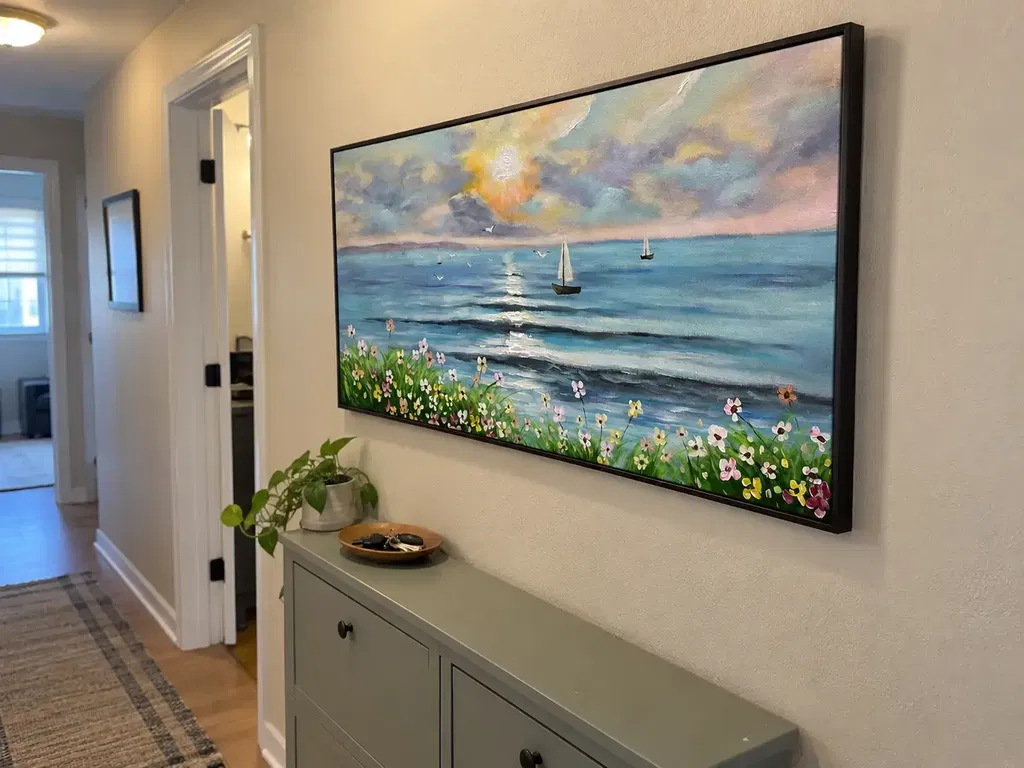
- The Solution: Acrylics are often better here than oils. Tate Modern research confirms that acrylic paint has strong anti-aging properties and can be gently wiped with water-based swabs to remove free surfactants, which reduces dirt adhesion.
The ROI of Art: Beyond Decoration
Investing in a hand-painted corner vignette isn't just a lifestyle choice; it has measurable financial implications. A Royal Society CAR model analysis found that neighborhoods (and by extension, individual properties) with higher "art" indicators saw significant relative house price gains.
For commercial developers or those looking to "flip" a property, the impact is even more pronounced. Case studies on vacant properties show that "creative placemaking"—such as a high-quality mural or art vignette—instantly reverses feelings of blight, making the space attractive to long-term buyers.
| Metric | Impact of Art Integration | Source |
|---|---|---|
| Property Value | Significant relative ranking gain | Royal Society |
| Mood Improvement | 73% of subjects reported "significant" boost | UPenn Neuroaesthetics |
| Foot Traffic | Directly correlated increase | UCincinnati |
| Safety | 40% drop in neighborhood violent crime | UMich (Busy Streets Theory) |
Maintaining the Intimate Bond
To keep your vignette feeling premium, you must manage the "invisible labor" of art maintenance. Beyond regular dusting, be aware of Support Induced Discoloration (SID). Golden Artist Colors technical bulletins reveal that water-soluble impurities in cotton or linen canvases can be drawn into thick acrylic layers, causing a yellow tint. Using a high-quality primer or "Gesso" is the essential barrier against this chemical migration.
By treating the corner as a dedicated gallery space—paying attention to the 70-20-10 ratio, the eye-level drop, and the chemical integrity of the pigments—you transform a "dead space" into a visual nexus that defines the soul of your home.
YMYL Disclaimer: This article provides information on interior design and art materials for educational purposes. It does not constitute professional medical, legal, or financial advice. When handling art materials containing solvents or heavy metals, always consult the manufacturer's Safety Data Sheet (SDS) and ensure proper ventilation. If you have pre-existing respiratory or skin conditions, consult a healthcare professional before beginning a DIY painting project.
References
- Marketplace: The expensive art market continues to struggle
- Columbia Business School: Human-Made vs. AI Art Study
- Royal Society: Quantifying the link between art and property prices
- EPA: Indoor Air Quality and Low-VOC Paints
- Tate: The Tate AXA Art Modern Paints Project (TAAMPP)
- WHO: Cadmium Environmental Health Criteria