Before a custom painting ships, the usual buyer journey is: confirm the written brief, review whatever preview or progress checkpoint the seller offers, request specific changes if the work differs materially from that brief, record approval, and separately verify dispatch details. That sequence describes a practical custom painting approval workflow—not a universal promise that every seller provides finished-work photos, unlimited revisions, or approval before shipping.
The safest decision rule is simple: approve when the visible work aligns with the agreed brief, remaining uncertainties are understood, and the seller's current revision and delivery terms are clear. If a significant question about composition, color direction, size, or logistics is still open, hold approval and ask for a written answer.
What to Confirm in the Custom Painting Brief
The brief is your comparison baseline. Before the artist starts, put the reference roles, composition priorities, color direction, dimensions, room context, revision expectations, and delivery responsibility in writing. Then ask which details the seller will use when reviewing the finished work.
Reference Images and Composition Priorities
Each reference should have a defined job rather than being uploaded as an unexplained group. Label whether it supplies the subject, palette, crop, orientation, texture direction, focal area, or broader composition.
- Subject: Identify the person, place, object, or scene that must remain recognizable.
- Crop and orientation: State whether the artwork should be vertical, horizontal, square, tightly cropped, or more open.
- Focal area: Point out the feature that should receive the most visual attention.
- Must-keep elements: List details the artist should preserve.
- Flexible elements: Mark details the artist may interpret, simplify, or rearrange.
A reference photo may show the subject while a second image supplies the palette or composition. Saying so explicitly reduces the chance that the artist treats every reference as an instruction to copy.
For a useful follow-up on planning palette and composition, see these custom wall art choices.
Color, Texture, and Finish Expectations
Describe color and finish as reviewable directions, not as a promise of an exact screen match. Note the dominant palette, preferred contrast, warmer or cooler tendencies, texture direction, and whether the finish should feel restrained, pronounced, matte, or glossy if that distinction matters to your decision.
Screens, room lighting, wall color, and nearby furnishings can change how the finished piece appears. If the room matters, include photos taken from the intended viewing area and identify the lighting conditions. Those details help with comparison, but they do not guarantee that the painting will look identical in every setting.
Also ask where these preferences are recorded. A message, order note, or separate commission document may be useful, but confirm which version is the current brief and whether later messages replace earlier instructions. A commission contract checklist can help you identify details to document, but it is not a legal or universal requirement.
Size and Room-Fit Details
Use measured information instead of relying on a general statement such as "large enough for the wall." Record the following in order:
- Measure the usable wall width and height, excluding trim or areas blocked by doors and windows.
- Confirm the artwork's dimensions, orientation, and any framing or display assumptions.
- Note furniture clearance, nearby fixtures, and the intended placement height.
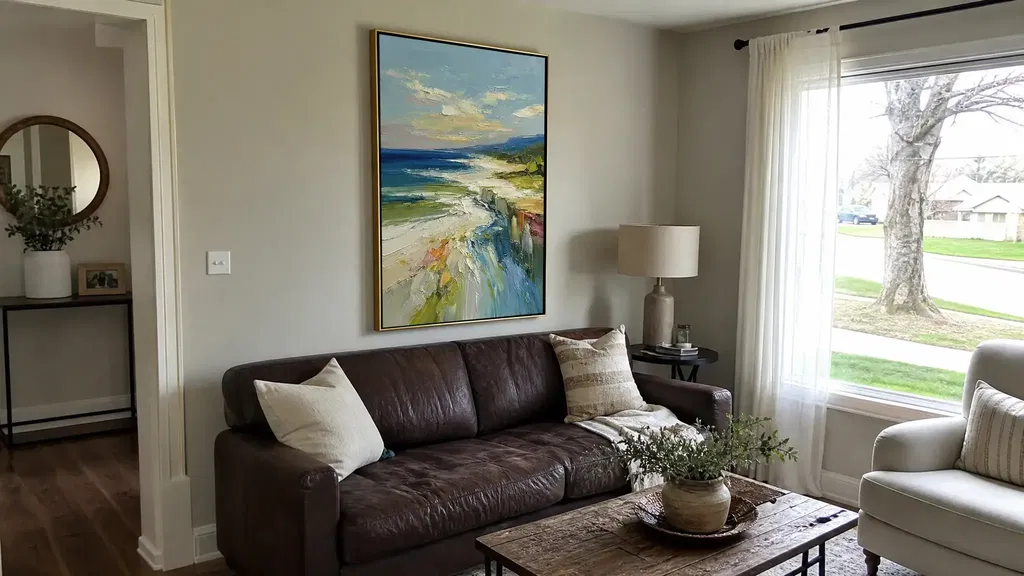
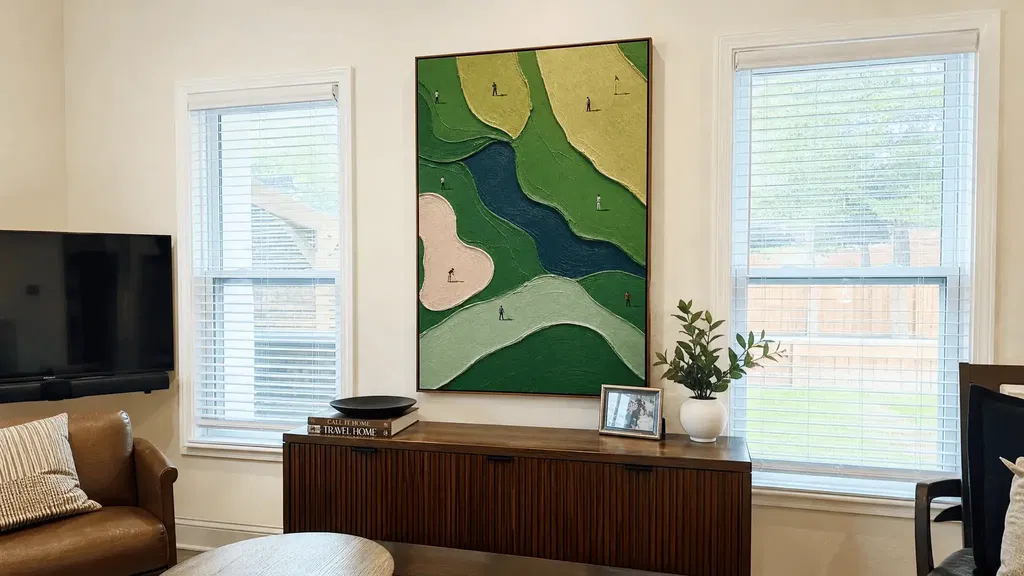
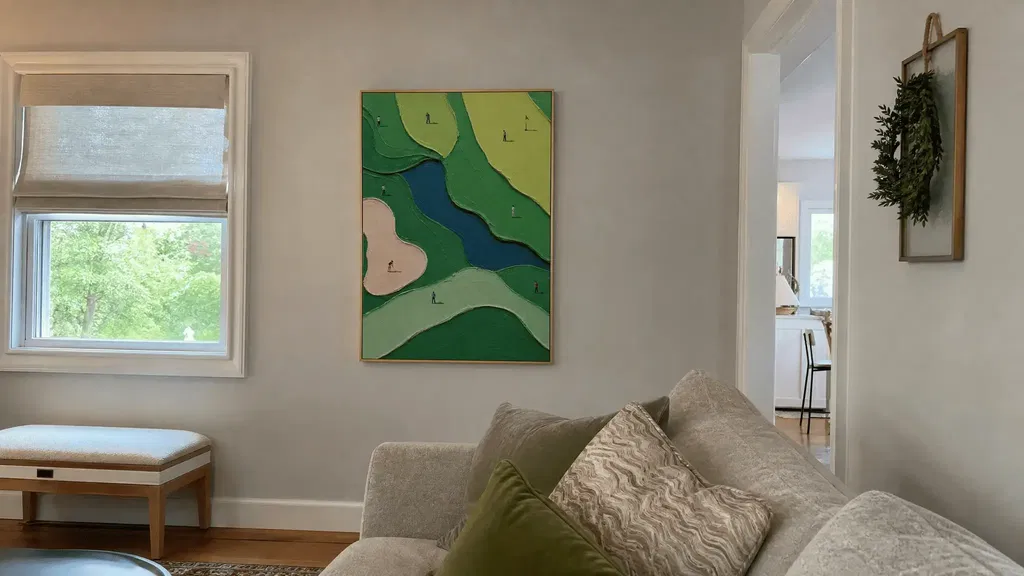
- Add a room photo or a known-size reference so apparent scale can be judged more concretely.
- Record the viewing distance and whether the piece will be seen mainly in daylight, artificial light, or both.
Ask the seller which measurements become part of the approval standard. A measured wall helps you evaluate fit, but it cannot guarantee the final piece will feel proportionate once lighting, furniture, and surrounding finishes are in place.
How Custom Painting Approval Moves From Brief to Preview
A seller may use a sketch, progress checkpoint, finished-work photo, or another review stage. If a preview is offered, use it to compare visible features with the brief; staged approval can reveal a major deviation before the work progresses further, as described in this guide to staged commission approvals. The exact stages and dispatch trigger depend on the seller's process.
| Buyer check | What a preview may show | Limitation or question to ask |
|---|---|---|
| Subject and composition | Whether the subject, crop, focal area, and major arrangement appear consistent with the brief | Ask whether a visible difference is intentional interpretation or a change that can still be addressed. |
| Color direction | Dominant color relationships, contrast, and broad warm or cool tendencies | A photo or screen cannot guarantee exact in-room color. Ask which palette direction the seller is treating as the agreed target. |
| Dimensions and orientation | Apparent proportions, vertical or horizontal orientation, and sometimes a size reference | Confirm the actual dimensions and display assumptions; a preview does not prove how the piece will scale on your wall. |
| Visible texture or finish | Surface details that are visible in the image, such as raised marks or overall finish direction | Ask what the image cannot show about tactile texture, sheen, or surface depth. |
| Room fit and exact color | A rough comparison with your room photo or intended placement | Lighting, wall color, furnishings, and viewing distance remain variables. Do not treat the preview as proof of perfect room fit. |
Before ordering, ask what form the finished painting preview before delivery takes, whether you can comment on it, how long you have to respond, and whether approval starts packing or dispatch. If the answer is unclear, do not assume that a preview is included or that silence counts as approval.
The purpose of the approval process for custom art is consistency with the brief. It is not a guarantee of satisfaction, exact texture reproduction, or an undamaged delivery.
Revision Requests and the Final Approval Gate
Request changes when the visible work conflicts with an agreed requirement, not merely because the image feels unfamiliar. A useful revision request identifies the location, the brief requirement, the visible difference, and the specific outcome you want, while leaving the seller's current terms to determine whether the change is available.
Writing a Specific Revision Request
Organize one message so the artist can distinguish a composition issue from a color or finish issue. Use this sequence:
- Composition: "In the upper-right area, the brief requested more open space; the preview shows the subject extending into that area. Can you confirm whether the spacing can be adjusted?"
- Color relationships: Identify the visible area and the agreed direction, such as a warmer background or lower contrast, rather than saying only that the color is wrong.
- Size or orientation: Point to the proportion or orientation shown and compare it with the dimensions recorded in the brief.
- Texture or finish: Describe the visible surface difference and ask what change is possible, without assuming a photograph captures the full tactile result.
- Visible details: Name the feature, its location, and whether it must be preserved, removed, simplified, or emphasized.
A feedback template can keep the request precise: "In [area], the brief requested [requirement]; the preview shows [difference]; can you confirm whether [specific change] is possible?" Ask whether the seller prefers one consolidated message and whether the request falls within the current revision scope. A commission agreement template may help you list scope and approvals, but it does not establish guaranteed revision rights or a standard number of rounds.
Deciding Whether to Approve the Preview
Approval should be a deliberate gate, not a quick response to a visually appealing image. Move through these checks:
- Compare: Match the subject, composition, orientation, dimensions, color direction, and visible finish against the written brief.
- Question: List every material difference and ask which are intentional, adjustable, or outside the preview's ability to show.
- Record: Keep the preview, feedback, and the seller's response together so the approved version is identifiable.
- Confirm policy: Ask what revisions remain possible, how they are submitted, whether fees or timing can change, and what approval changes under the current order terms.
- Approve or hold: Approve only when the material brief questions are resolved or you consciously accept them. Hold approval when a significant discrepancy remains unexplained.
The number of revision rounds, any deadline, cancellation boundary, or additional charge must come from the seller's current terms. Do not assume revisions are free, unlimited, or reversible after sign-off. Likewise, artwork approval does not automatically settle packing, transit, tracking, or delivery responsibility.
Packing and Dispatch Checks After Sign-Off
After approving the artwork, make a second decision about logistics. Save the approved version first, then confirm the recipient, address, delivery method, tracking communication, and the seller's current responsibilities for packing and transport.
- Save the approved version. Retain the final brief, preview, requested changes, approval message, and order confirmation.
- Verify recipient details. Check the recipient name, shipping address, phone or email contact, delivery instructions, and artwork dimensions recorded on the order.
- Confirm delivery responsibility. Ask who handles packing, carrier selection, tracking, insurance, and damage reporting. Approval of the image does not answer these questions.
- Retain dispatch communication. Keep the shipment notice, tracking information, and any instructions about delivery or inspection.
- Follow arrival instructions. When the package arrives, use the seller's current process for checking the package and reporting an issue. Do not infer a claim deadline or remedy unless the seller states it.
Delivery responsibility should be specified separately from the artwork brief. A commission agreement may identify who arranges delivery, but that general principle does not establish MontCarta's current carrier, packing materials, insurance, tracking, timing, or damage policy. Ask for those details before you approve or place the order.
A Buyer's Final Check Before Approving Custom Art
Use this short gate before you approve a custom painting or commit to a made-to-order piece. A "no" answer does not automatically mean the work is unsuitable; it means you have a question to resolve before sign-off.
- Brief match: Does the subject, composition, orientation, dimensions, color direction, and visible finish align with the written brief?
- Preview limits: Have you separated what the image shows from what it cannot settle, including exact room color, tactile texture, and in-room scale?
- Revision terms: Do you know whether changes are still possible, how to submit them, and whether the current terms mention limits, fees, or timing effects?
- Cancellation boundary: Have you asked what approval changes under the seller's current cancellation and production-stage policy?
- Dispatch details: Are the recipient, address, delivery method, tracking communication, and logistics responsibilities confirmed separately?
- Records: Do you have the final brief, approved preview, feedback, approval message, order details, and dispatch correspondence saved in one place?
If any material answer is "no," hold approval and request the seller's current preview, revision, approval, and dispatch terms in writing. That is especially important when you are trying to approve the custom painting before it ships or when the piece is a gift and you cannot inspect the recipient's room in advance.
For record-keeping, you can use these approval records as a practical reference. If surface detail is central to your decision, separate the question of texture authenticity checks from the approval workflow itself; an authenticity guide cannot establish a seller's revision or shipping policy.
FAQs
These questions address seller-dependent conditions that can affect a custom painting approval, including preview access, revision scope, cancellation, and the records to keep.
Can I Approve a Custom Painting Before It Ships?
Possibly, but it depends on the seller's stated workflow. Ask whether a finished-work preview is provided, how you must respond, and what event triggers packing or dispatch. If those points are not documented, do not treat pre-shipping approval as included.
What Should I Do If the Preview Looks Different on My Screen?
Compare it on another device and, if possible, under neutral indoor lighting. Focus on broad color relationships, then ask which color direction was intended. A screen difference does not prove the painting is wrong or establish an exact color match.
How Should I Combine Feedback on a Custom Painting?
If the seller permits it, send one organized message grouped by composition, color, size or orientation, texture or finish, and visible details. Tie each point to the brief and ask whether any request falls outside the current revision scope.
Can I Cancel a Custom Order After Preview Approval?
Ask about cancellation before approval, including what changes after sign-off and whether the production stage affects the current policy. Do not infer a cancellation right or refund outcome from a general preview practice.
What Records Should I Keep After Approving Custom Artwork?
Keep the final brief, reference images, approved preview, change requests, seller responses, approval message, order confirmation, shipping address, and dispatch communication. These records help identify the approved version if a delivery question arises.