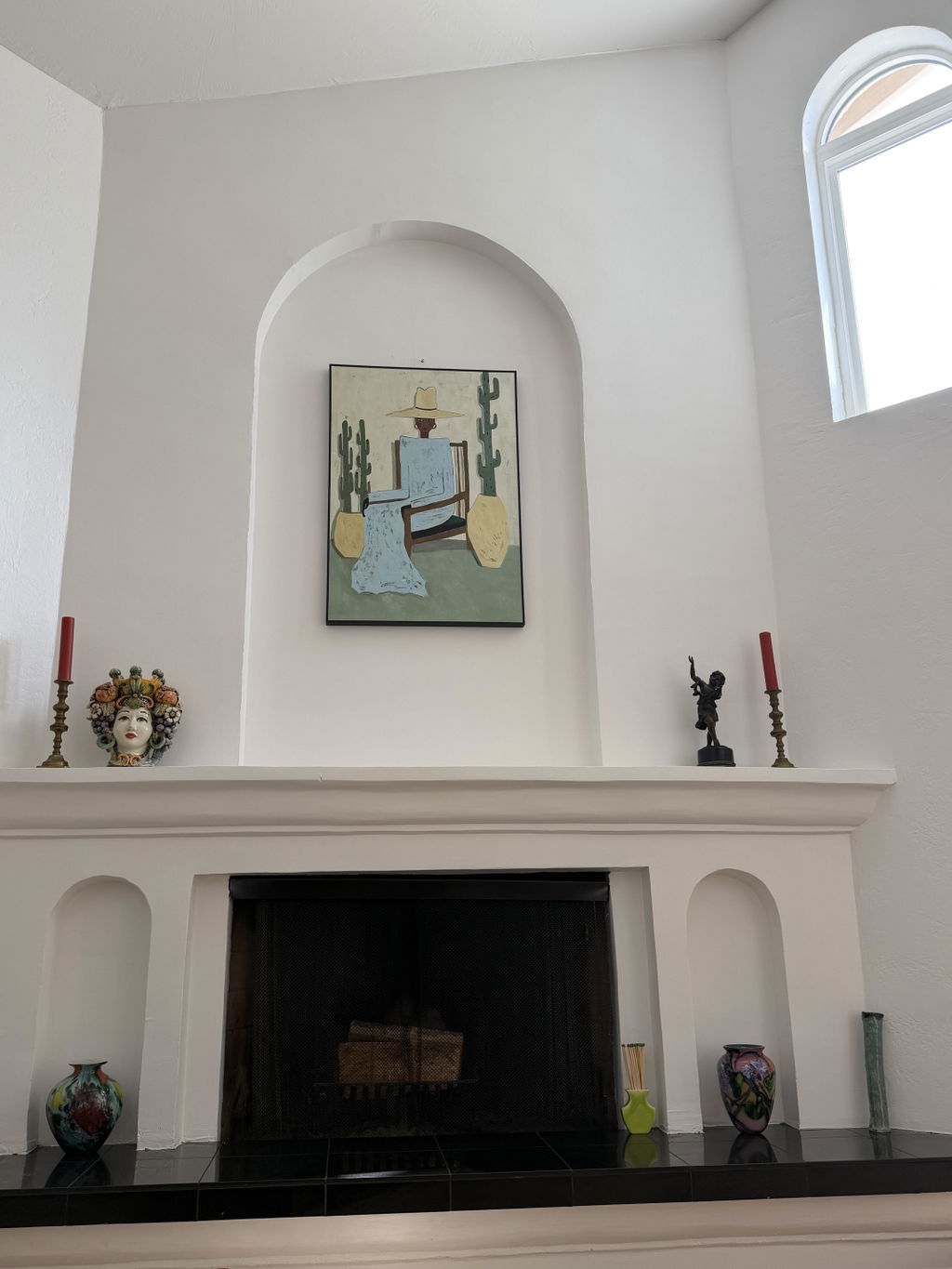
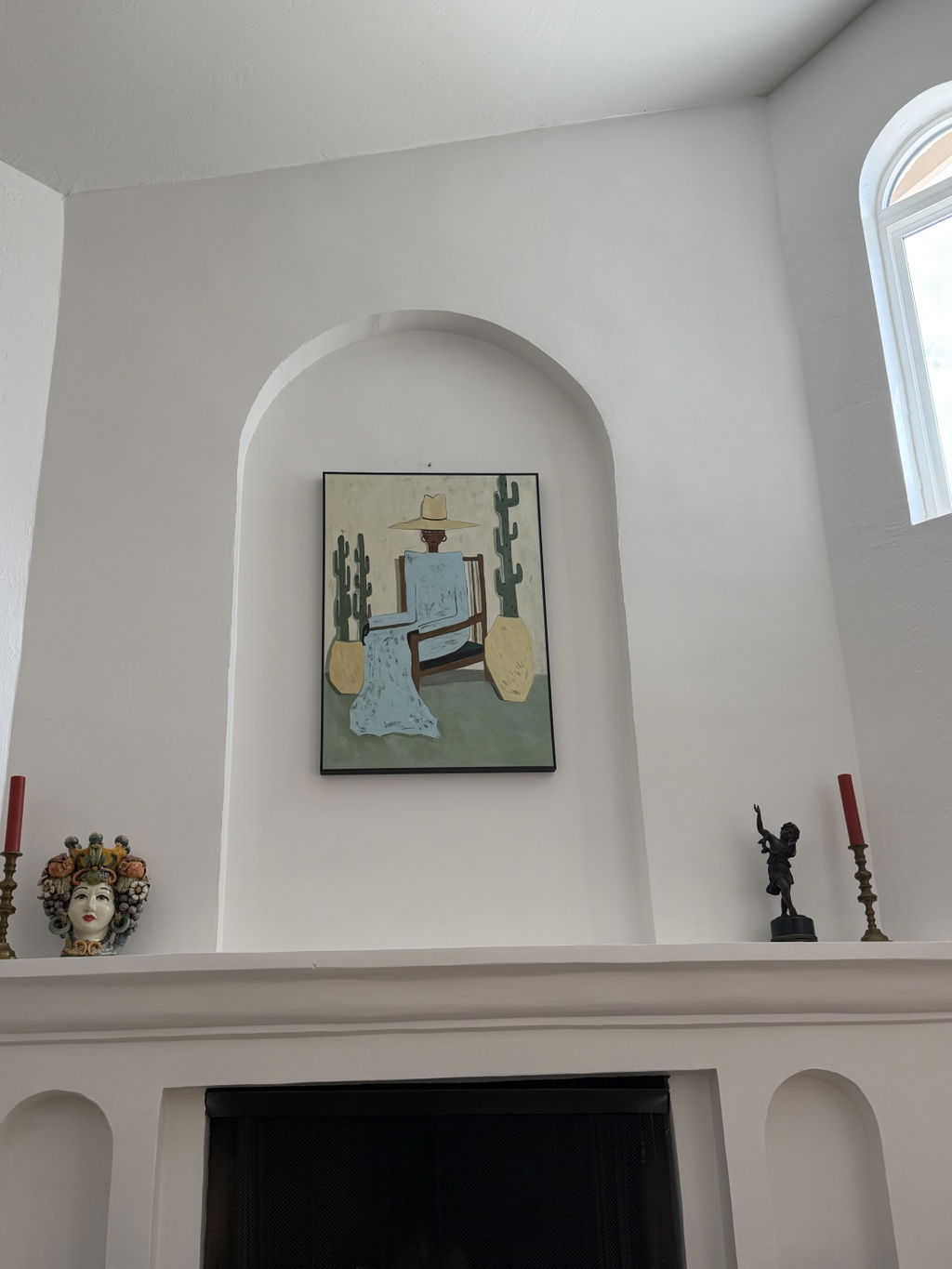
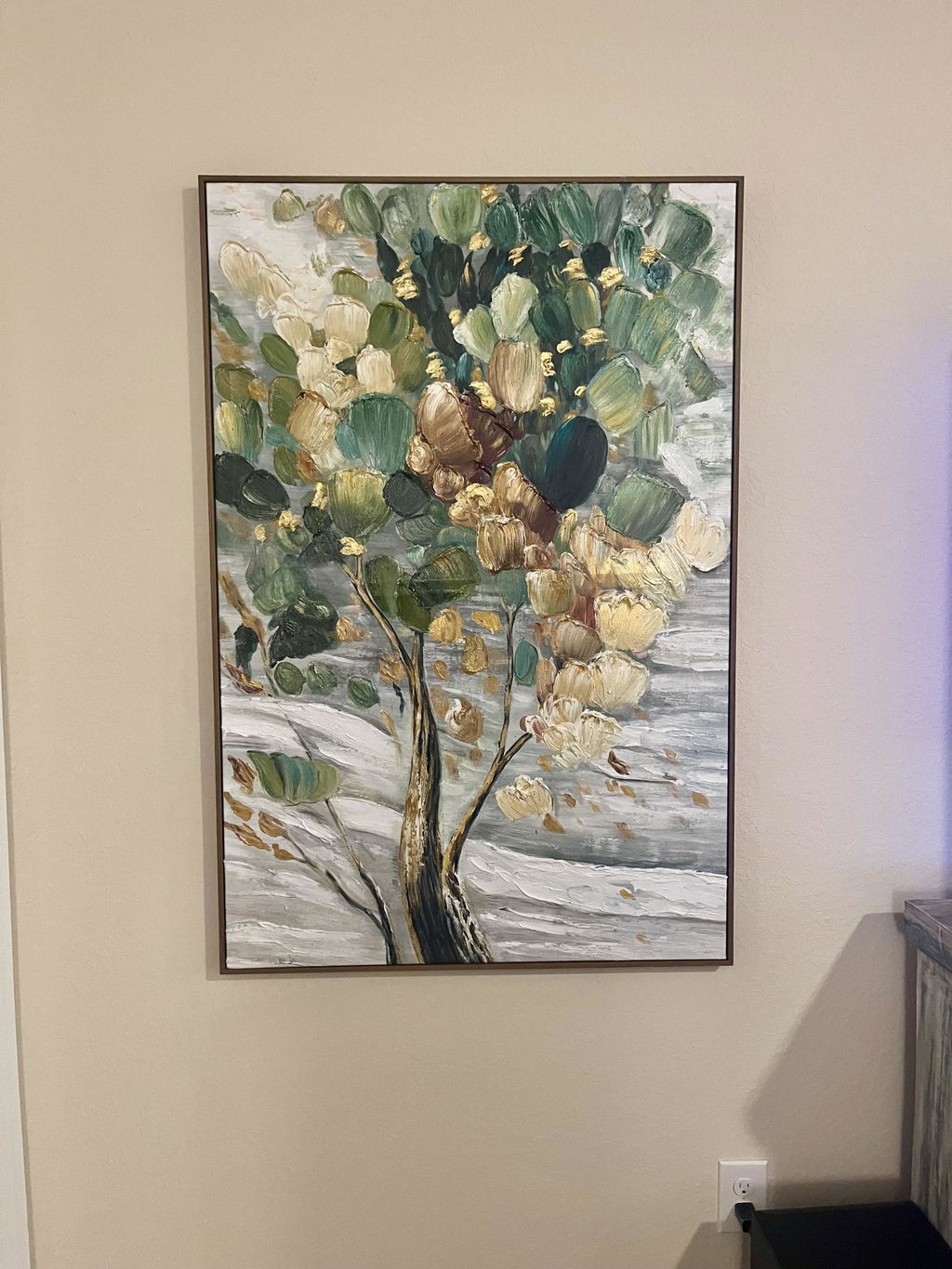
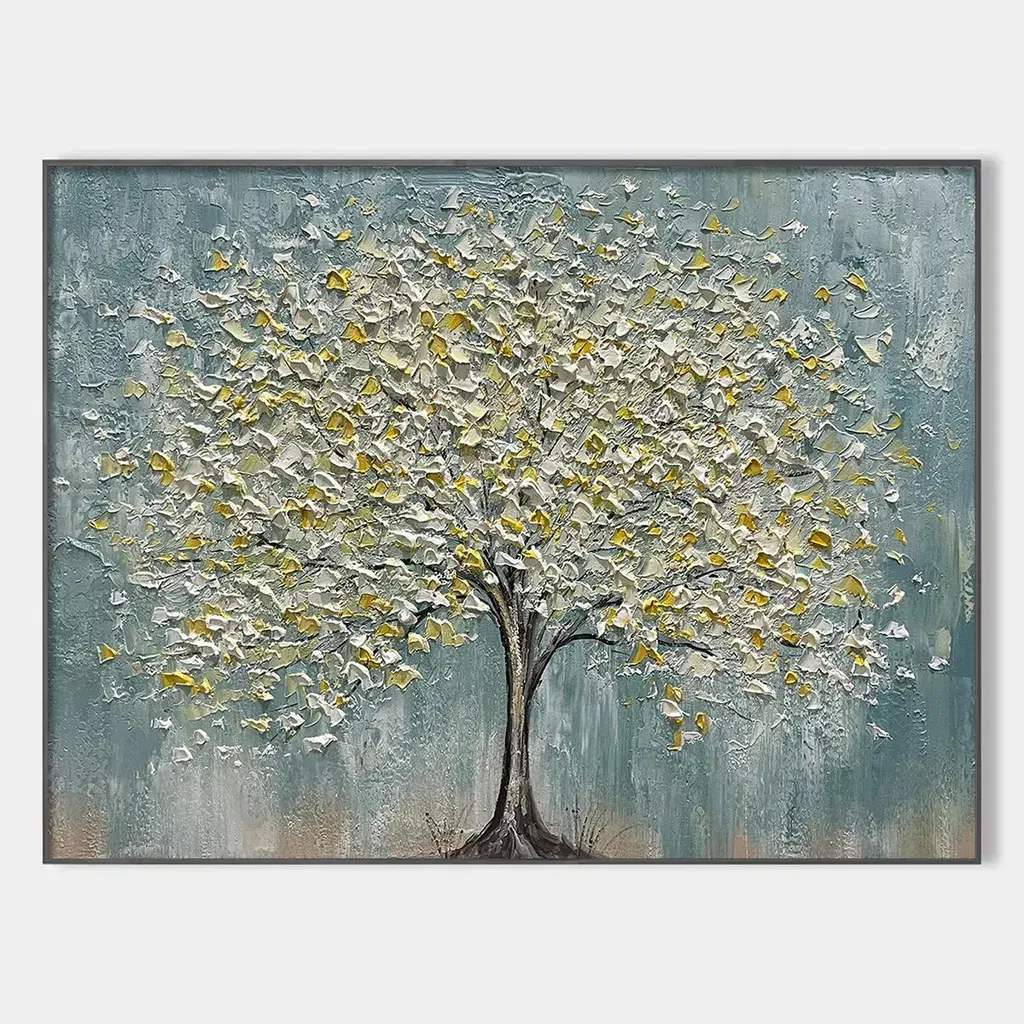
Unique wall decor usually feels personal because several signals work together: visible surface character, a meaningful subject, deliberate scale, a good relationship with the room, and credible information about the maker and object. The word "unique" in a title is only a prompt to look more closely, not proof.
A useful test is simple: What would you remember about the piece if its product title disappeared? If the answer is a specific surface, composition, color story, place, memory, or artist context—and the work also fits your wall—it is more likely to feel considered than interchangeable.
The Signals Behind Unique Wall Decor
A piece feels distinctive when its physical character, subject, scale, and context give it an identity you can recognize. None of these signals is a universal definition, but together they offer a practical way to judge whether unique wall decor feels personal rather than merely marketed that way.
Start with what the eye can actually find. Surface variation, an unusual composition, a restrained palette, or a recognizable mark can give the artwork something specific to hold onto. Then ask whether the subject or mood connects to your life, your home, or the atmosphere you want to create. A popular style can still feel personal when the particular image or arrangement means something to you.

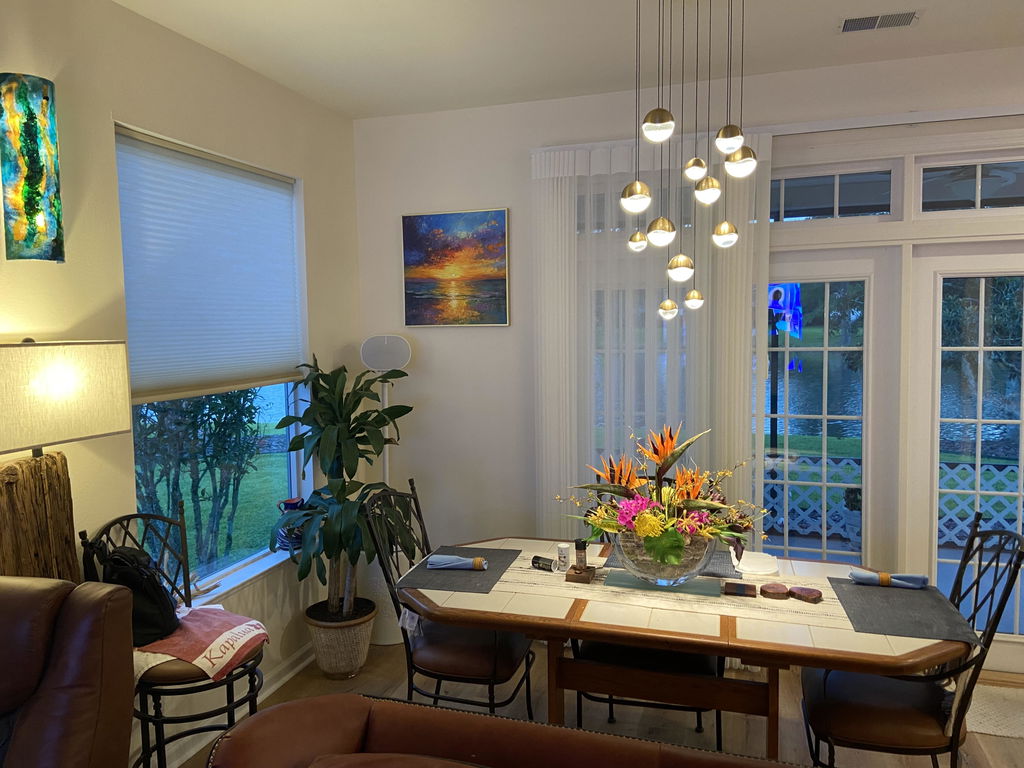
Scale matters just as much. An otherwise distinctive work can look like an afterthought if it is isolated on a large wall or crowded beside competing objects. The room should make the piece feel intentional, not simply available.
Artist information can add useful context, especially when it explains the work's process or point of view. It should support what you can see, however, rather than replace it. If you are beginning a comparison, browsing an original art collection can help you compare how listings describe the object's status, medium, and visual character.
Material and Surface Details That Resist a Mass-Produced Look
Material and surface details can make wall art look less generic when they create visible variation and a clear physical identity. Texture is worth inspecting, but it is not automatic proof of quality, handmade construction, or originality.
Texture That Changes With Light
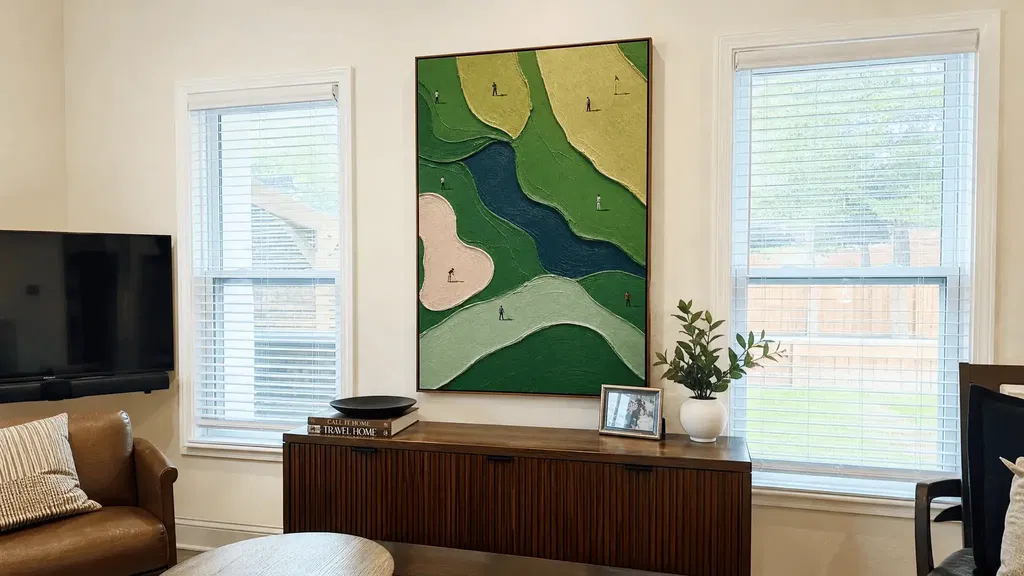
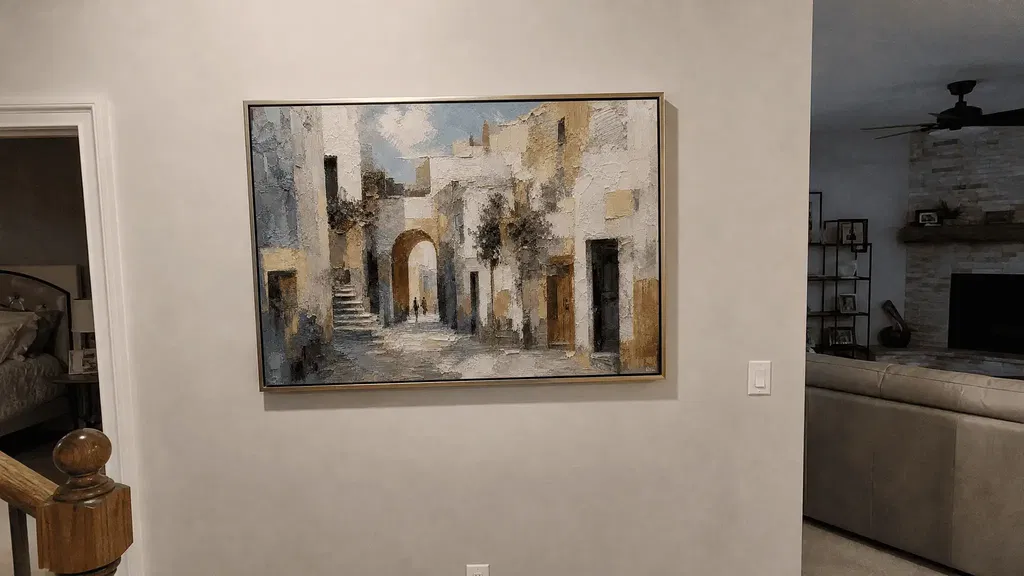
Ridges, recessed marks, layered areas, and uneven edges may respond differently as the viewing angle or room light changes. Online, look for a close-up, a side-angle image, and a room view rather than relying on adjectives such as "textured" or "dimensional." These views can raise useful questions about the surface, but photographs alone cannot establish that a piece is one of a kind.
A flat print can also use shading to suggest depth, while a dimensional work may show actual edge variation. If that distinction affects your decision, ask the seller how the surface was made and what material the listing describes.

Material Honesty Before the Purchase
Use the listing as a comparison document, not just a mood board. Check:
- The stated medium and whether the work is a painting, print, edition, or reproduction.
- The dimensions, orientation, finish, and whether a frame or hanging components are included.
- Full-room, close-up, and edge imagery, when available.
- Any wording that explains the artist's involvement in making the image or object.
An original print is not necessarily the same category as a unique painting: multiple impressions may exist, and the process and artist involvement matter. The Print Council of America's guidance provides useful category context, but seller-specific wording still determines what you should verify for a decor listing.
If "original," "handmade," "limited," and "unique" appear without a clear explanation, send a direct question before buying. Ask what object will arrive, how many examples exist if that matters to you, and whether the pictured surface and finish describe the actual item.
Finish, Framing, and the Surrounding Wall
Presentation can reinforce the artwork's character or compete with it. Compare the likely effect of different formats before treating the surface alone as the deciding feature.
| Format | What to inspect | How the wall relationship may change |
|---|---|---|
| Smooth print | Even surface, sheen, image sharpness, and frame presence | May need stronger composition, scale, or color contrast to become the focal point |
| Textured original | Ridges, recesses, edges, close-up detail, and light response | May need visual breathing room so surface variation is not lost in nearby clutter |
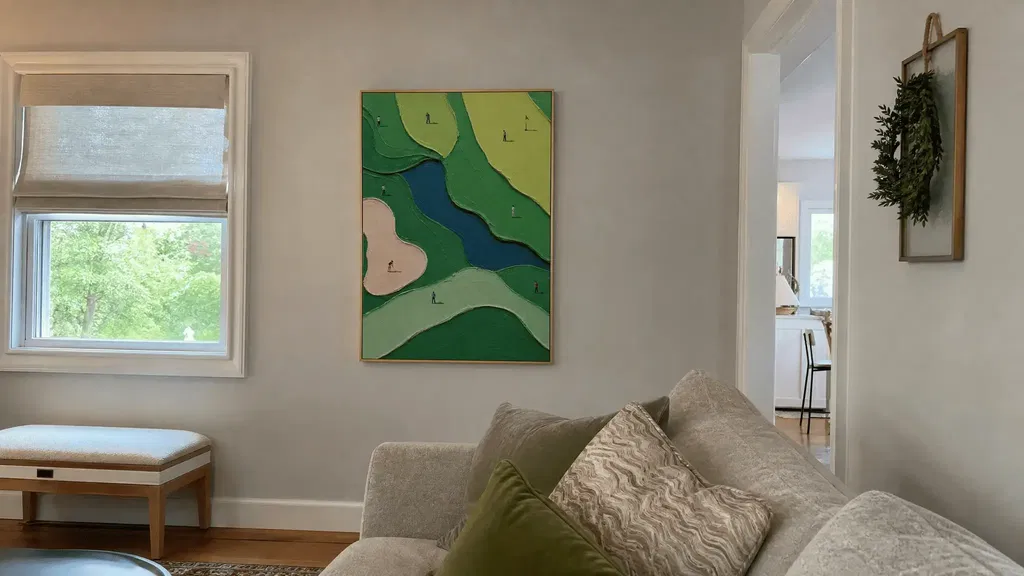
| Minimally framed piece | Edge visibility, finish, backing, and hardware information | Can read as lighter or more object-like, but the surrounding wall becomes part of the presentation |
This is a comparison framework, not a quality ranking. A smooth print can be deeply personal, and texture can be decorative rather than meaningful. The strongest choice is the one whose material description, images, and room context agree.
Meaningful Subjects Make Art Feel Owned, Not Just Styled
Wall art feels more personally owned when its subject, colors, place, or visual language connects to your life or the mood you want in the room. A familiar style does not make a piece generic; an interchangeable composition can feel generic even when its style is fashionable.
Test the connection in specific terms. Does the work recall a landscape you visit, a color combination from your home, a family memory, a cultural reference, or a feeling you want to bring into the room? "I like this style" is a valid starting point, but "this reminds me of the coast where we spend summers" gives the purchase a more durable reason.
Composition matters too. Two works may both be abstract, botanical, or neutral, yet differ in the movement, balance, subject cues, and palette that make one feel more like your point of view. Browsing abstract art paintings can be useful when you compare visual language, but a category label does not make every piece original or one of a kind.
Artist context may deepen that response when it is specific and relevant: a stated process, place, influence, or intention can help you understand why the work looks the way it does. Treat this as context, not as proof of authenticity. Provenance refers to ownership history, and museum-level records are not a normal requirement for every home decor purchase. Yale University Art Gallery explains provenance research in a collecting context; for ordinary shopping, focus on the artist, medium, edition or reproduction status, and documentation the seller actually provides.
Scale and Placement That Keep a Room From Feeling Generic
Scale and placement determine whether distinctive art becomes a deliberate focal point or an isolated object. Preview the work in relation to the wall, furniture, viewing position, nearby visual activity, and installation limits before deciding that it belongs in the room.
| Room situation | Compare first | Common mismatch to avoid | Low-risk test |
|---|---|---|---|
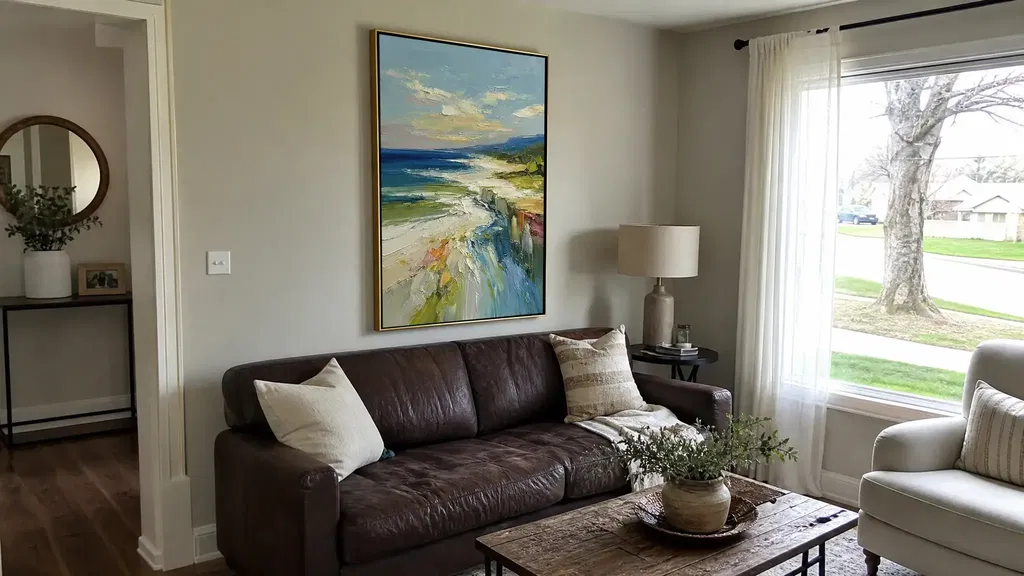
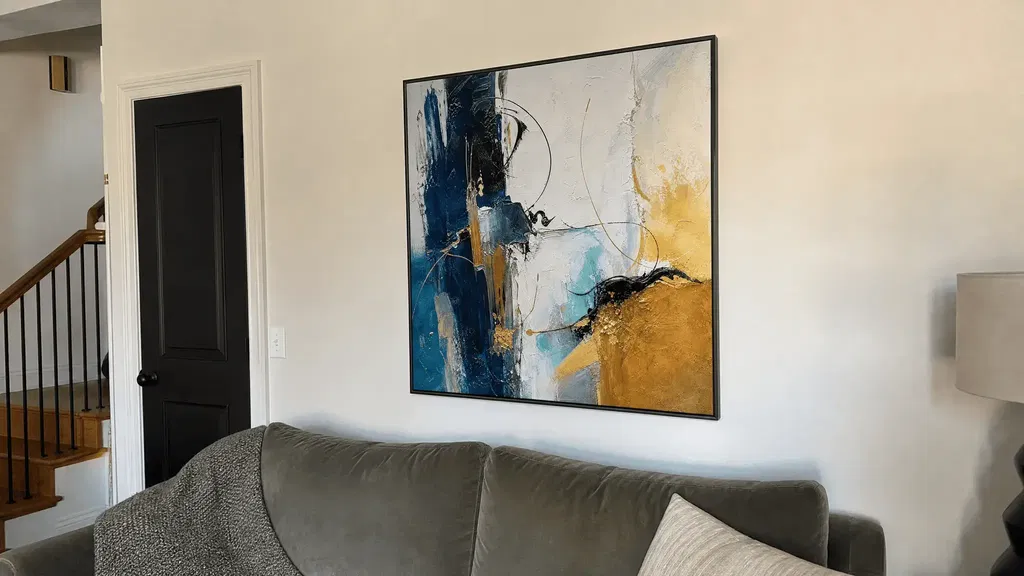
| Living-room furniture wall | Artwork orientation, furniture width, wall width, and seated viewing distance | A piece feels undersized above a substantial sofa or disappears among nearby decor | Tape a paper outline above the furniture and view it from the main seating positions |
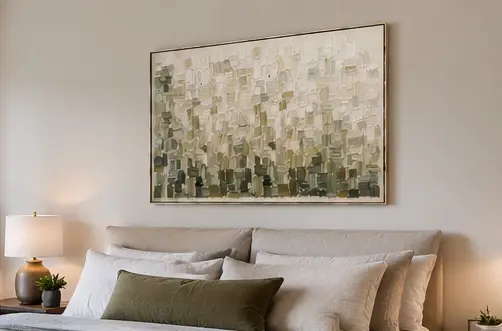
| Bedroom wall | Bed or dresser relationship, visual calm, and nighttime viewing distance | A busy or overly crowded arrangement competes with the room's quieter function | Test the outline with lamps, headboard, and other objects in place |
| Entryway | Approach distance, sightline, wall activity, and clearance | Detail is missed because the piece is too small or blocked by adjacent objects | View the template from the doorway and the path into the room |
| Gallery grouping | Orientation, spacing, shared palette, and total group shape | Several individually interesting works create an accidental cluster | Tape each outline first, then adjust the group as one composition |
Measure the wall and the furniture relationship rather than guessing from a product thumbnail. Orientation changes the visual weight of the piece, while viewing distance determines whether small details will register. A paper template or painter's tape can help you preview the arrangement before making holes; Iowa State University Extension and Outreach recommends this adjustable approach.
Also check the wall itself. Rental restrictions, surface type, artwork weight, and the available hanging method can change whether a visually perfect choice is practical. For a more detailed selection path, use these wall-art placement rules as a starting point, then test the actual room instead of applying one universal measurement.
A Practical Pre-Purchase Check for Originality
The safest way to judge unique wall decor is to combine personal relevance and visible character with listing-specific checks. Separate what you feel about the image from what the seller can verify about the object, its fit, and the purchase terms.
- Define the response you want. Write down the memory, mood, subject, or color relationship that makes the piece worth considering. This keeps a trend label from doing all the persuasive work.
- Inspect the visual evidence. Compare the composition, surface, edges, close-up images, side views, and room photos. Treat irregularity or texture as something to investigate, not as proof of authenticity.
- Identify the object category. Confirm whether the listing describes a unique painting, an original print, a limited edition, or a reproduction. These categories are not interchangeable, and a signature or textured appearance does not settle the question.
- Translate status terms into a direct question. Ask what "original," "handmade," "limited," or "unique" means for this specific listing and how many examples exist when that matters. The Print Council of America offers category vocabulary, while the seller must clarify the item being sold.
- Test the room relationship. Measure the wall, furniture, and nearby decor; compare orientation and viewing distance; and use a paper or tape template before installation.
- Verify what will physically arrive. Confirm the medium, dimensions, finish, frame or hardware, included components, care instructions, shipping terms, return terms, and warranty information. If any item is missing, treat it as an open question rather than filling the gap with assumptions.
- Shortlist, then verify. Keep one or two pieces that pass the visual, personal, room-fit, and listing checks. You can use descriptive browsing paths such as horizontal textured artwork, minimalist white abstract, or earth-toned textured artwork as starting points, but check each current listing before adding anything to your cart.
This process does not guarantee that a piece will feel perfect once installed. It does reduce the most avoidable surprises: a surface that looks flatter than expected, a status term that means something different from what you assumed, or art that is distinctive on its own but wrong for the wall.
Questions Shoppers Ask About Unique Wall Decor
These questions address shopping conditions that vary by buyer, room, and purchase risk. Use the answers as next steps when the main comparison is not enough.
Where Do People Find Wall Art That Feels Less Mass-Market?
Try artist-run shops, local galleries, art fairs, open-studio events, original-art collections, and specialty sellers with clear listings. Compare the medium, object status, artist information, images, and seller answers across channels. No source guarantees originality, so transparency matters more than the channel name.
How Can You Tell Whether Wall Art Is Original or a Reproduction?
Look for the exact medium and status language, then ask whether the item is a unique painting, original print, edition, or reproduction. Check whether the artist's role and edition information are stated. Photos cannot establish status by themselves, and a signature, texture, or "original" title is not enough without listing-specific clarification.
Can Unique Wall Art for Home Work in a Small Apartment or Rental?
Yes, but choose the focal point around the available wall rather than forcing a large arrangement into the room. Use a paper template, check the landlord's installation rules, and consider a movable or lightweight format when appropriate. Confirm the required hardware and return terms before choosing a piece that may be difficult to reposition.
Is Textured Wall Art Harder to Clean Than a Flat Print?
It can raise more care questions, but the answer depends on the medium, finish, exposed surface, frame, and seller instructions. Follow the listing's product-specific guidance, and do not improvise with liquids, abrasive tools, or pressure. Ask for care details before purchase if the texture is open, deep, or difficult to reach.
What Makes Wall Art a Thoughtful Gift Without Knowing Someone's Exact Style?
Start with a meaningful subject cue—a place, interest, season, or color family—rather than guessing a precise trend. Choose a broadly adaptable scale and confirm flexible returns or a gift-card option when available. If the recipient's wall space is unknown, personal relevance plus lower commitment is safer than a highly specific size or installation format.