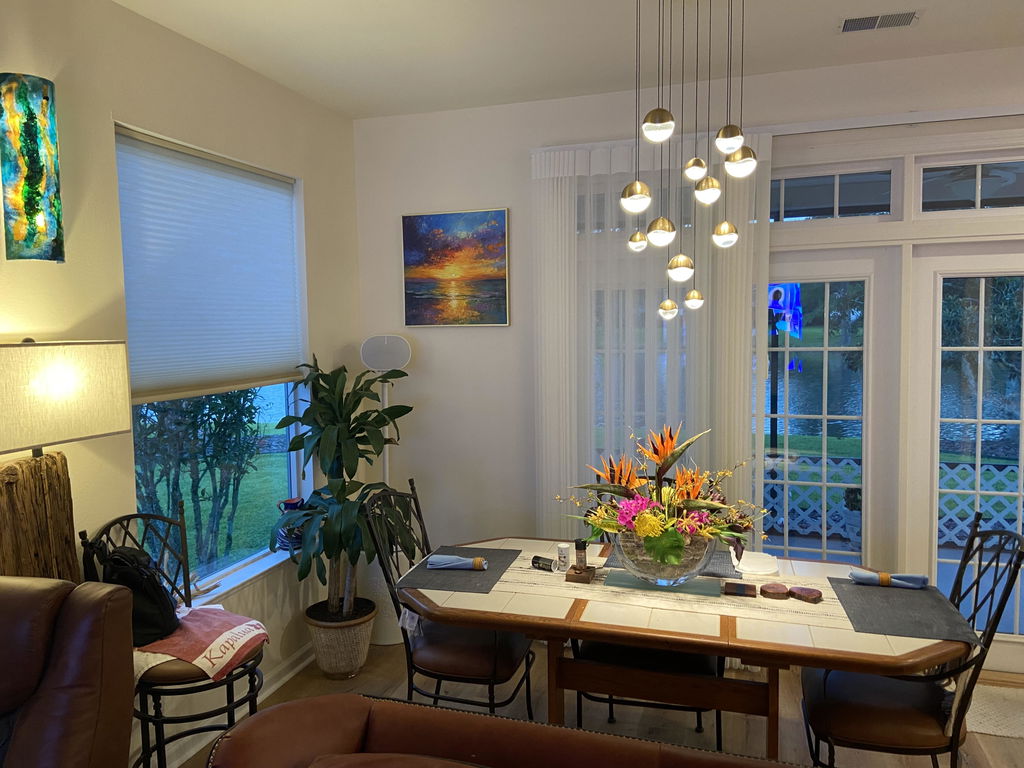
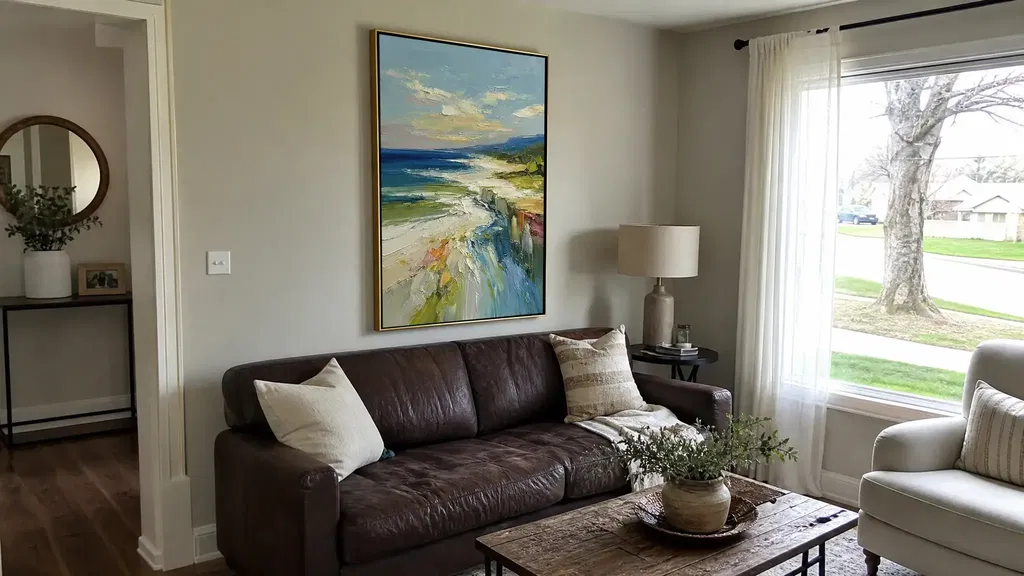
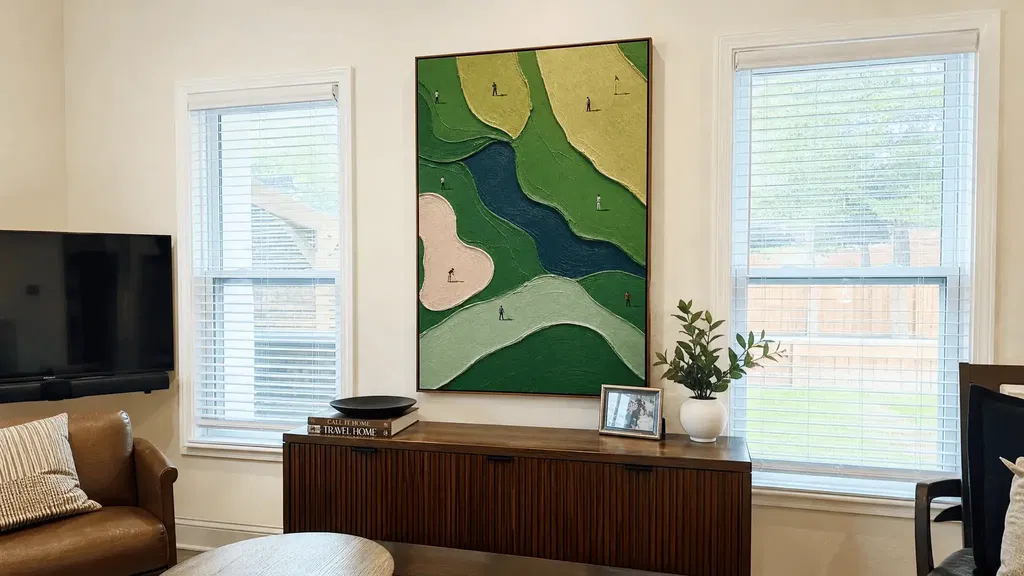
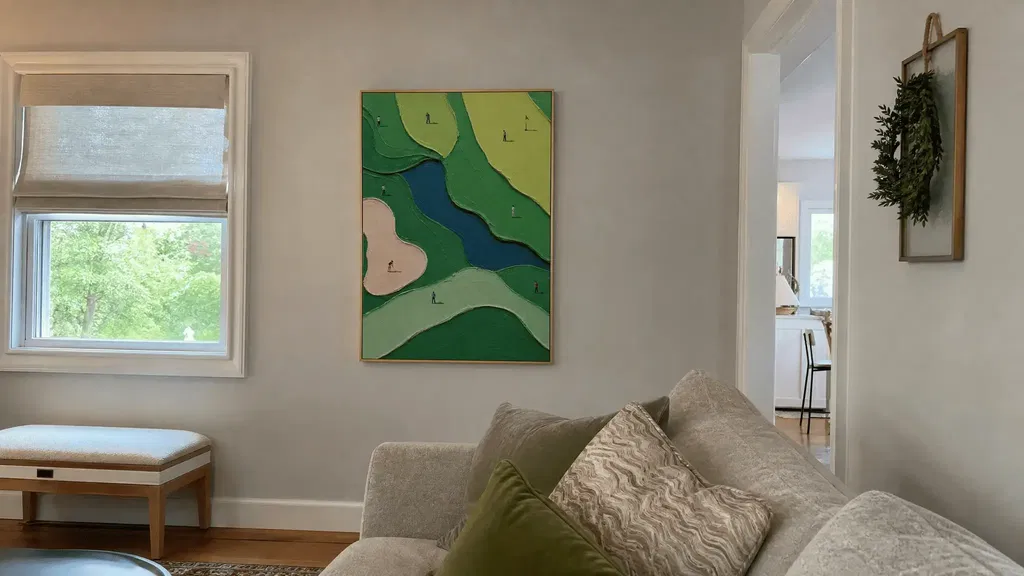
Large landscape paintings can make a small room feel more open—but they do not make the room physically larger. The effect is most likely when the image gives the eye somewhere to travel, leaves enough visual breathing room, and fits the usable wall, nearby furniture, lighting, and existing decor. A dark, crowded, highly textured piece can have the opposite effect, reading as a heavy visual block.
When Large Landscape Paintings Open Up a Small Room
The best answer to "does landscape art make a room look bigger?" is a qualified yes: a scene with depth and a measured, cohesive footprint may create a more spacious impression. That impression depends on the artwork and the room together, not on size alone.
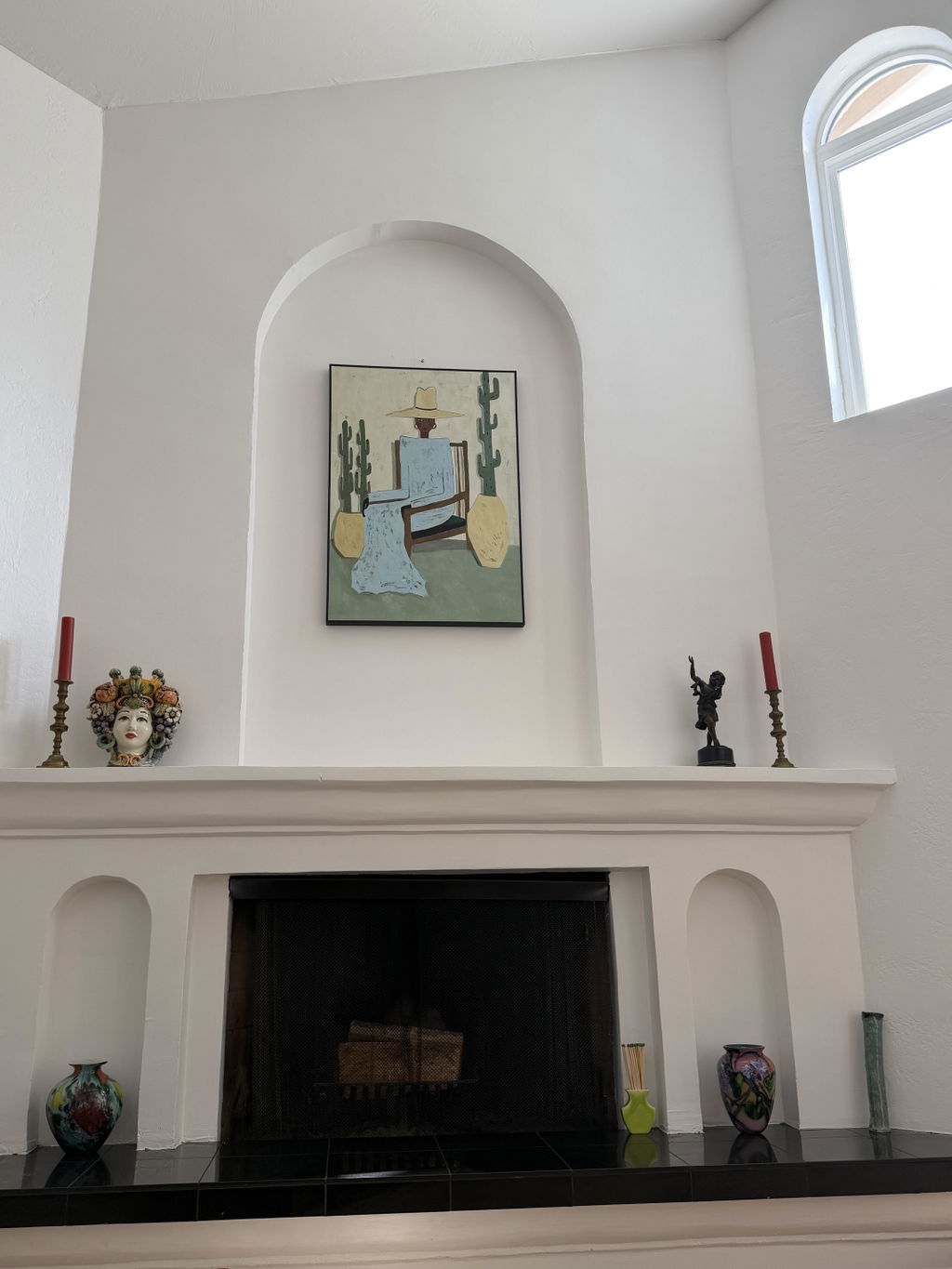
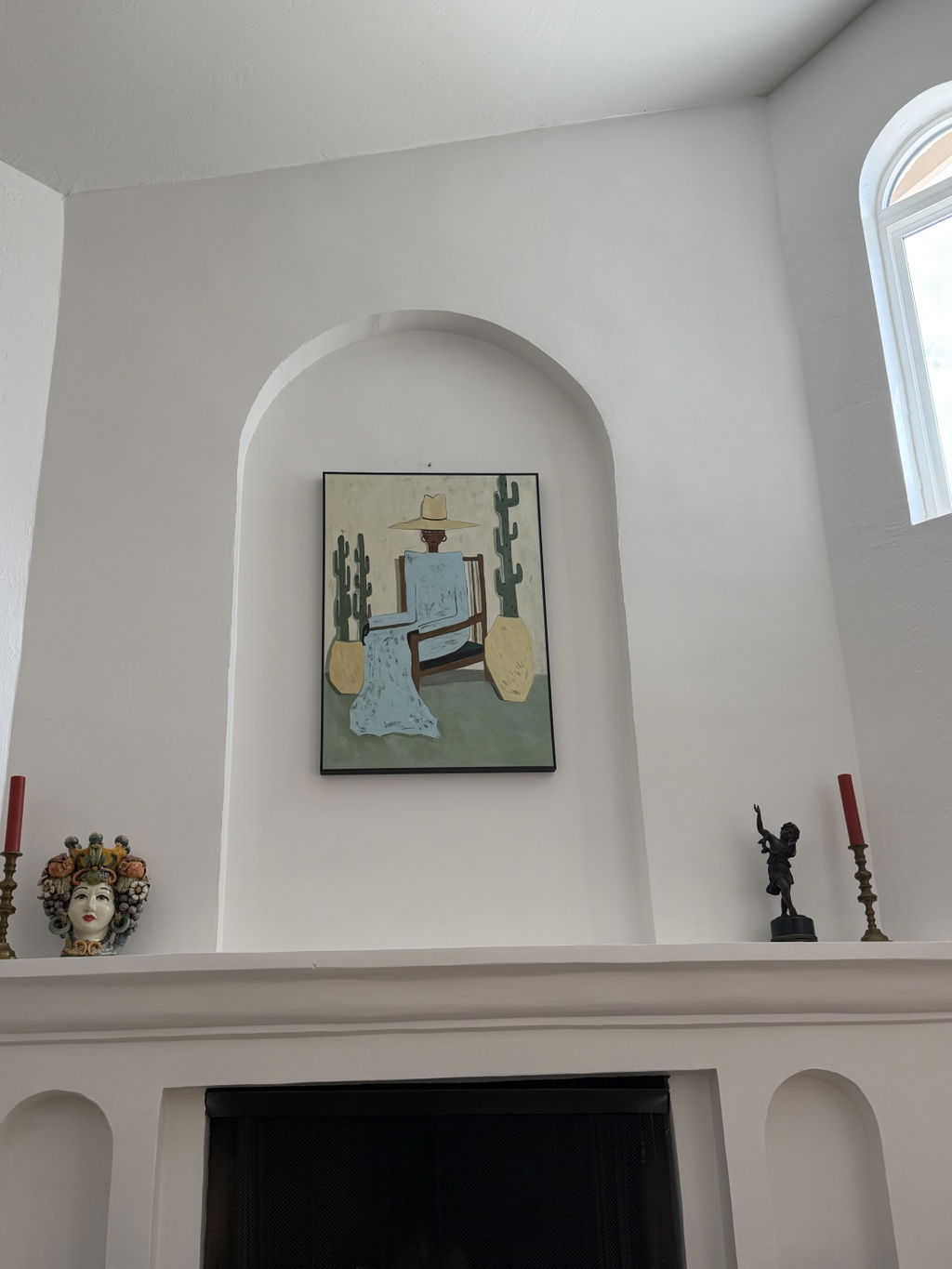
Start with four checks: Can you see a clear distance into the scene? Does the wall have enough quiet space around the piece? Does its outer footprint relate to the furniture? Will the room's lighting keep the image from becoming too dark? Also look at existing focal points. A single statement piece may feel calmer than several competing pieces, but only when the wall and surrounding furnishings can support it. Interior design guidance also presents one larger piece as a practical focal-point option in a small living room; see small-room focal-point ideas for context. For a related comparison, see this guide to oversized painting layout.
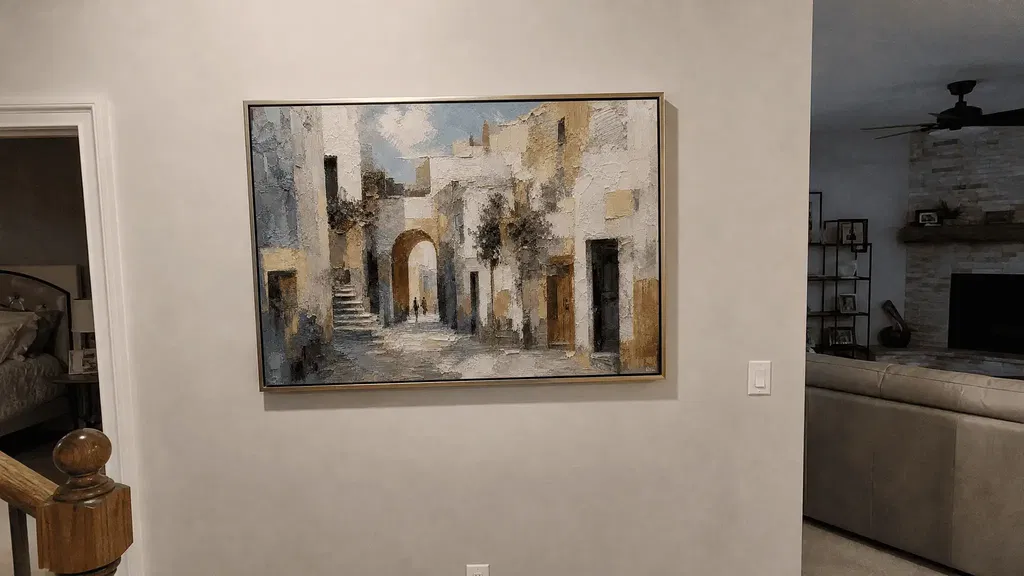
A landscape that resembles a view beyond the wall can suggest window-like depth. That is a visual impression, not a guarantee: dense foreground detail, strong contrast, or a frame that takes up most of the usable wall can cancel it out. In a narrow apartment living room, for example, a quiet horizontal scene may act as an anchor, while the same wall filled with dark detail and adjacent decor may feel crowded.
Choose Composition and Color for Visual Depth
For landscape wall art that feels lighter in a compact room, look first for a clear depth cue and areas of visual rest. Perspective, layering, horizons, and other pictorial cues can create the illusion of depth on a flat image, although that evidence does not prove that a painting enlarges a room, as described in research on pictorial depth cues.
Favor Receding Views and Open Negative Space
Choose a scene where the eye can move from the foreground toward a horizon or distant layer instead of stopping immediately at a solid, dark subject. A path, shoreline, receding trail, or layered transition from near to far can help establish that direction.
Use this quick visual check before comparing styles:

- Find one clear distance cue, such as a horizon, path, shoreline, or overlapping foreground and background.
- Look for open sky, water, land, or another relatively quiet area around the main subject.
- View the image at the approximate size you plan to buy; a thumbnail can hide detail density and tonal weight.
Open space does not have to mean a pale or empty painting. It means the composition gives the eye room to move and does not place every high-contrast detail at the same visual distance.
Control Dark, Busy, and Highly Detailed Scenes
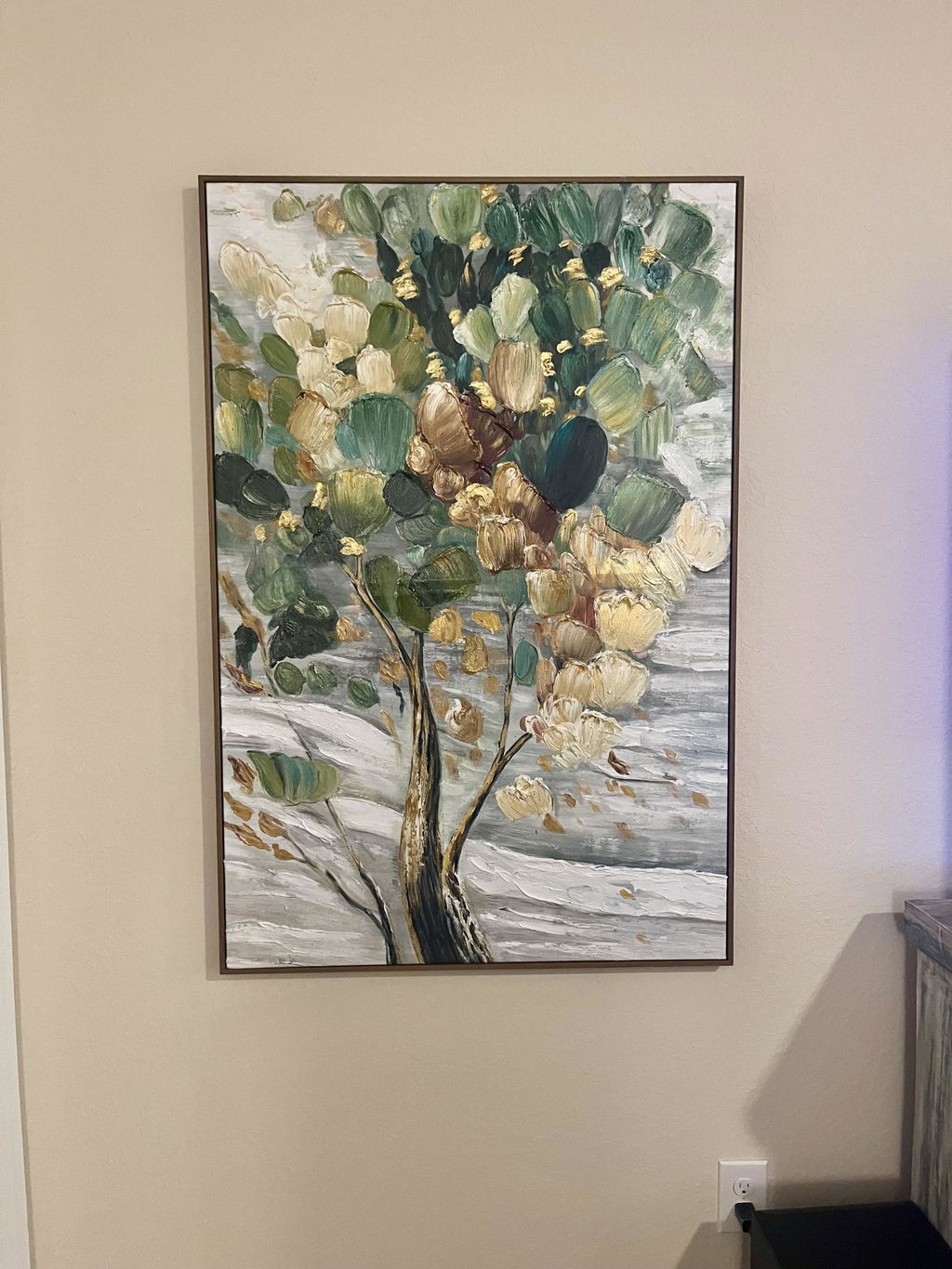
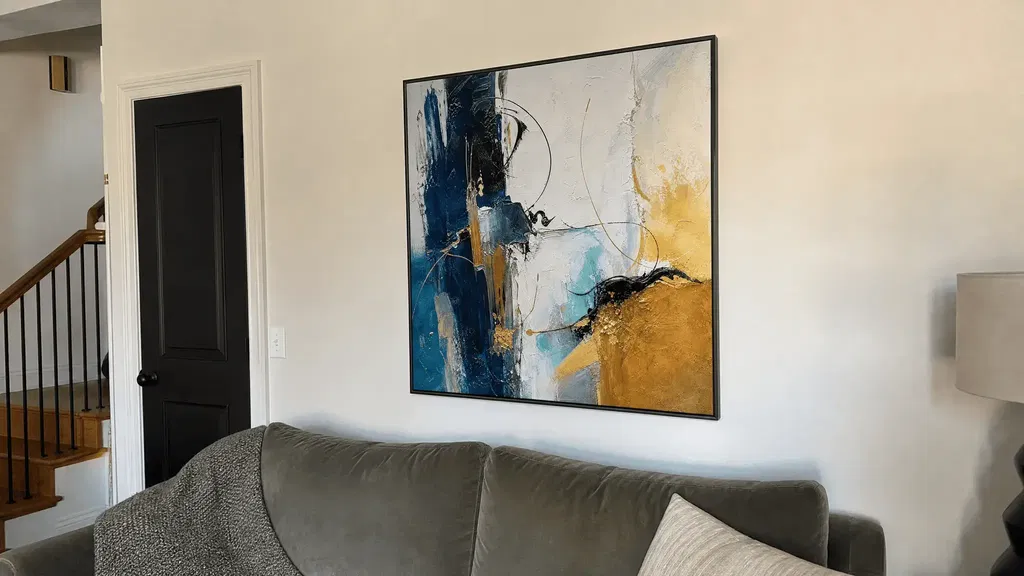
Dark foregrounds, dense brushwork, sharp contrast, and heavy texture may make a landscape read as a stronger visual block in a small room. That does not make such art unsuitable; it means the room needs enough quiet surrounding surfaces for the piece to feel intentional rather than like one of several competing focal points.
A busy scene can work above a simple sofa, dresser, or desk when nearby textiles and accessories are restrained. It is riskier in a room that already has patterned upholstery, open shelving, bold lighting, and several small decorations. If a large image is both dark and highly detailed, use painter's tape to test its footprint under the room's actual lighting before treating it as the best landscape wall art for small spaces.
Balance Contrast With the Existing Room
Brightness and surrounding wall conditions can influence perceived depth. In one interior-simulation study, perceived depth increased as rear-wall luminance increased; the study tested interior surfaces rather than paintings, so use it as a context clue—not proof that light artwork expands every room. See the luminance and perceived depth study for the study's scope.
| Room condition | Suitable landscape direction | Buying check |
|---|---|---|
| Pale or neutral wall | A scene with moderate contrast and visible distance can preserve the wall's visual breathing room. | Compare the darkest area of the image with the wall and nearby furniture, not with the product-page background. |
| Busy textiles or decor | Choose a simpler composition or a scene with larger quiet areas so the artwork has one clear job. | Remove or temporarily cover competing decor when testing the taped outline. |
| Dim lighting | Favor legible layers and avoid assuming subtle details will remain visible. | Review the candidate at night and during the day; check for glare and whether the foreground turns into one dark mass. |
Color can support a sense of depth for some viewers, but there is no universal cool-color or light-color formula. The wall, bulbs, contrast, and neighboring materials all change how a landscape reads. Use seascape selection ideas when comparing composition, then judge each option in your own room rather than by palette alone.
Set Scale and Placement Before You Shop
The right size for a large landscape painting in a small room comes from the usable wall and actual sightline—not from the room label or a universal percentage. Measure first, simulate the outer footprint, and then decide whether a horizontal or vertical orientation leaves enough clearance and visual breathing room.
Measure the usable wall width and height, the furniture width, and the space around doors, windows, outlets, switches, and walking paths. "Usable" excludes areas that the artwork would cover awkwardly or that would interfere with fixtures. Painter's tape or cut paper can show the proposed outside dimensions; view it from the main seat, bed, entry route, or desk rather than only from directly in front.
| Room situation | Scale and orientation starting point | Placement check | Visual risk |
|---|---|---|---|
| Above a sofa or console | Compare the artwork's footprint with the furniture's horizontal line; a horizontal scene may follow that line, but do not choose orientation by habit. | Stand at the usual seating position and check whether the piece feels connected to the furniture rather than stranded above it. | A piece that nearly fills the wall or competes with a tall lamp can feel heavy even if the sofa is wide. |
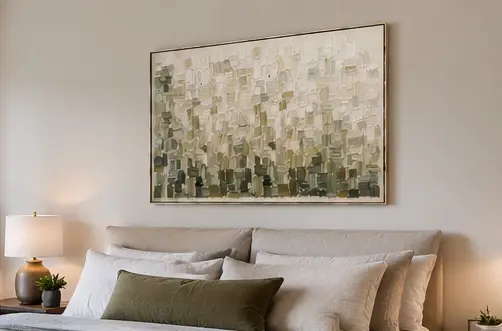
| Above a bed or dresser | Start with the fixed width of the headboard or dresser and consider the short viewing distance. | Check doors, windows, sconces, and the area needed for installation before finalizing the footprint. | Fine detail or intense contrast may feel dominant when viewed from close range. |
| Narrow entryway or hallway | Measure the narrowest usable wall section and consider whether a slimmer orientation leaves the route visually and physically clear. | Check door swings, switches, trim, and oblique viewing angles along the walking path. | A deep-looking image cannot compensate for an oversized footprint or a crowded corridor. |
| Behind a home-office desk | Relate the artwork to the desk and monitor arrangement; prioritize a calm focal intensity at the distance where you work. | Look for glare, screen reflections, and alignment with the desk and nearby shelves. | A dark or highly active scene may compete with work or make the background feel denser. |
Treat this as a room-specific starting framework, not a guarantee. A sizing resource such as condo art sizing can provide additional planning context, but the taped outline and actual sightline are more useful than a generic rule when walls and furniture vary.
Shop for Landscape Wall Art With a Small Room in Mind
Before adding landscape wall art to your cart, use this short check:
- Verify dimensions, orientation, finish, installation details, and current purchase policies on the product page.
- Tape the proposed footprint and compare its visual weight in daylight and evening light.
- Look for close-up and side-angle views if texture matters; treat them as checks, not proof of authenticity or handwork.
- Buy when the footprint, sightline, visual weight, and product facts line up; keep researching when a key fact is missing, or choose a lighter or smaller option if the outline overwhelms the room.
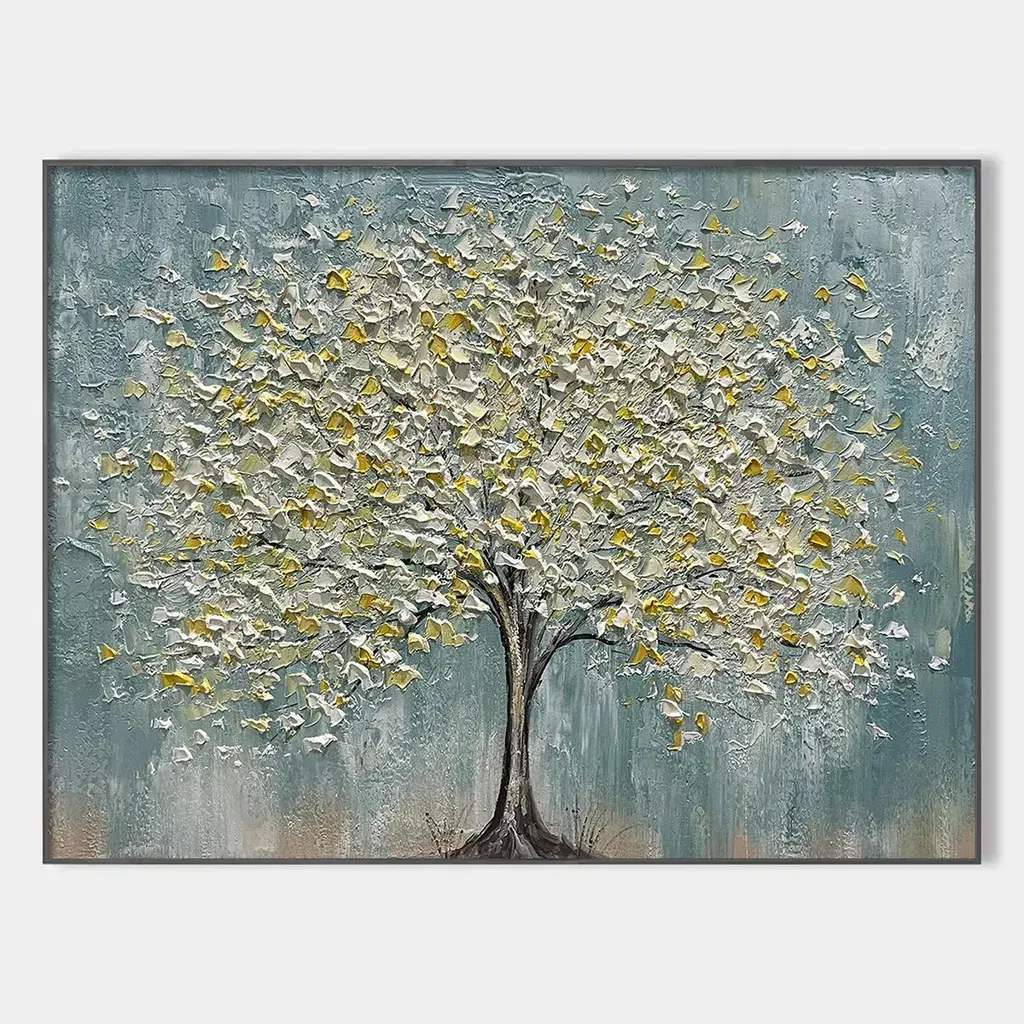
Use large wall artwork and extra-large wall art to browse, then confirm each candidate's details on its current product page. A neutral landscape painting is a style reference only, not proof of dimensions or room suitability.
FAQs
What Kind of Art Makes a Small Room Look Bigger?
Art with a clear distance cue, open areas, and controlled contrast may create a lighter visual impression. First compare it with the wall color and the room's clutter; a spacious composition can still feel dense if it is surrounded by busy textiles, shelves, or competing focal points.
Can a Large Painting Work in a Small Room?
Yes, if the usable wall and nearby furniture support its footprint and it does not interfere with circulation, doors, fixtures, or sightlines. The exception is a wall that leaves little visual breathing room: even a well-composed piece may feel oversized when the taped outline crowds the surrounding layout.
Are Landscapes Good for Small Spaces?
They can be a strong choice when the room benefits from a depth cue and does not already have excessive pattern or contrast. If the space is visually crowded, simpler art—or a mirror where reflection and glare are manageable—may be easier to balance than a detailed landscape.
How Can I Test a Large Landscape Before Buying It?
Mark the proposed outer dimensions with painter's tape or paper, then view the outline from the room's main seat, bed, entry path, or desk. Before buying, check alignment with furniture and confirm that doors, outlets, switches, windows, fixtures, and walking paths remain usable.
A measured wall and a calm visual hierarchy matter more than a promise that any large landscape will make a room look bigger. Compare the footprint, depth cues, contrast, lighting, and current product details first, then browse our landscape wall art options with that room-specific checklist in hand.