If you want to buy original art online, compare the complete purchase—not just the number beside the painting. Record what each listing includes, normalize dimensions and scope, add disclosed mandatory charges, and keep missing shipping, return, or production details unresolved until you verify them. The lower-priced listing is not automatically the lower-burden choice.
Listing Facts That Change What You Are Buying
Before comparing prices, establish whether the listings describe comparable objects. Record the medium, surface, dimensions, production type, framing, documentation, and one-piece-versus-set scope; do not infer any of these from a title or photograph.
Medium, Surface, and Dimensions
Use the same units and define exactly what the measurements cover. A useful specification record looks like this:
| Field | What to record | Why it changes the comparison |
|---|---|---|
| Medium | Oil, acrylic, mixed media, or another stated medium | Similar-looking works may use different materials and processes |
| Surface | Canvas, panel, board, paper, or another stated substrate | Surface affects what is included and how the work is presented |
| Width and height | Artwork measurements in the stated units | A framed or set measurement may not match the artwork itself |
| Depth | Artwork or frame depth, if supplied | Depth can affect placement and presentation |
| Units | Inches, centimeters, or another unit | Convert both listings before comparing size |
| Frame inclusion | Unframed, framed, or not stated | A frame may change the delivered scope and cost |
| Orientation | Portrait, landscape, square, or not stated | It affects fit on the intended wall |
| Scope | One piece, diptych, triptych, or another set | A single price cannot be compared with a set price without labeling scope |
Guides such as the Fine Art Buyer's Guide also point buyers toward checking descriptions, photos, dimensions, framing, and shipping before judging a listing. Treat that as practical checklist guidance, not as a universal pricing formula. If a dimension comes only from a photo, title, or vague phrase, mark it unresolved. You can also read about gallery wraps versus framed art when presentation is part of your decision.

Original, Handmade, Reproduction, or Made to Order
Confirm the production category in clear terms. Ask whether the item is a one-of-a-kind original, a handmade multiple, a limited edition, a reproduction, or made to order, and whether the pictured work is the exact piece being purchased. A listing that simply says "handmade" or "artwork" does not, by itself, establish that the item is a one-of-a-kind original.
Availability and customization matter too. A made-to-order painting may have a different scope and timeline from an in-stock work, while a reproduction or edition may be offered in multiple copies. The buyer's guide's production distinctions support checking this category before comparing prices; they do not establish that one category is automatically more valuable.
Framing and Documentation
Treat presentation and records as separate fields rather than folding them into a vague quality impression. Check:
- Whether a frame is included, and what its material, finish, and dimensions are if stated.
- Whether hanging hardware or other components are included.
- Whether the listing identifies the artist and the work's production status.
- Whether documentation, origin information, signature details, or condition records are supplied.
- Which exclusions or unanswered fields could change your decision.
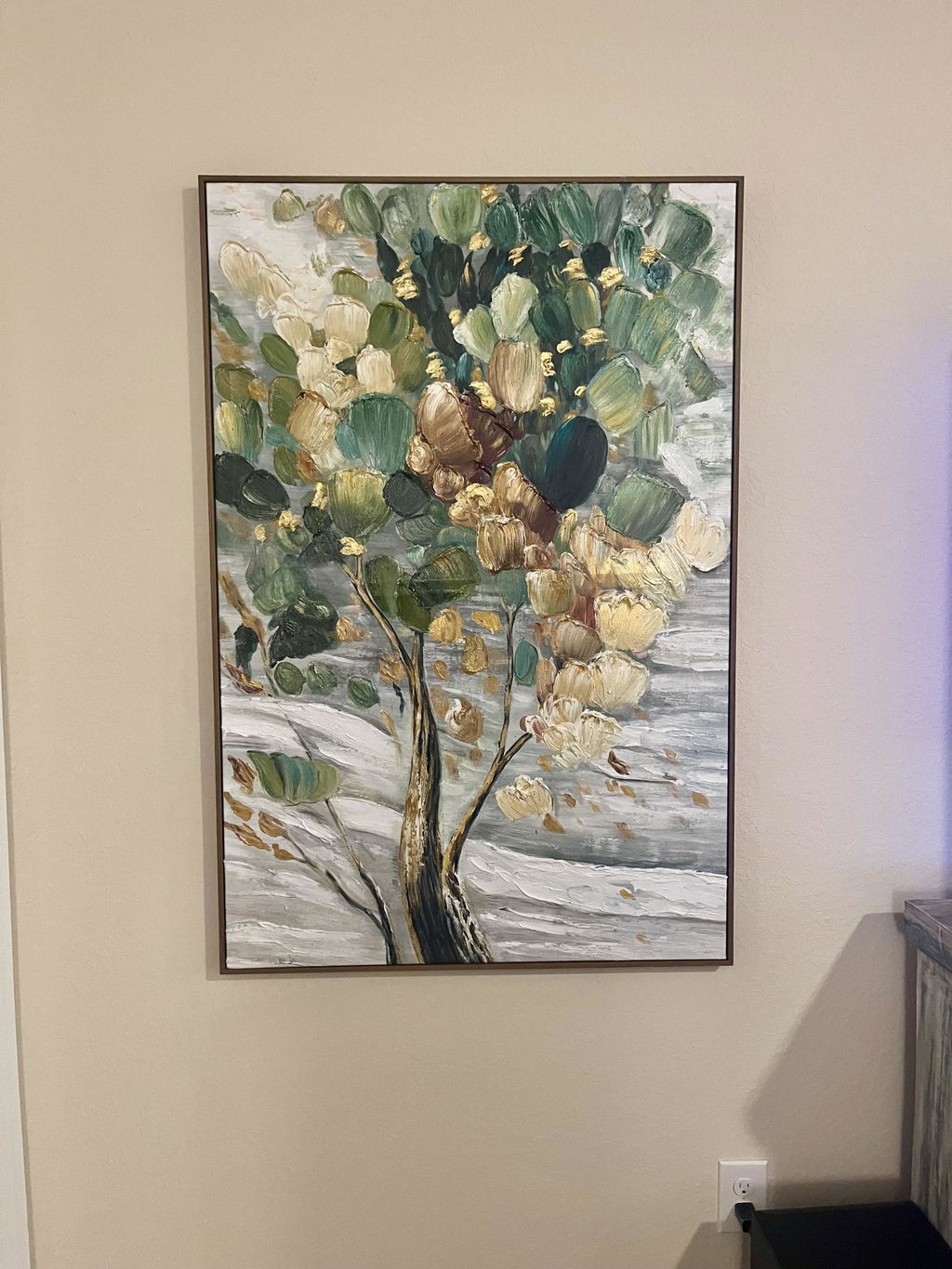
When documentation matters, ask what records identify the work, artist, origin, or condition. The Smithsonian American Art Museum explains that provenance can be one research input when assessing an artwork; it is not, by itself, a formula for a fair online price. Close-up or side-angle images may help you inspect surface detail, especially on textured work, but imagery alone does not prove originality or authenticity.
How to Compare Listings When You Buy Original Art Online
The simplest way to compare art listings online is to place every work in the same worksheet before forming a value opinion. Use one row per listing, normalize units and scope, and leave unknown information visible instead of turning it into an assumption.
| Comparison field | Listing A | Listing B | Unresolved question or scope note |
|---|---|---|---|
| Artwork price | Is this for one piece or a set? | ||
| Medium and production type | Original, edition, reproduction, or made to order? | ||
| Artwork dimensions and units | Do measurements exclude the frame? | ||
| Surface or substrate | Canvas, panel, paper, or not stated? | ||
| Frame status and presentation | Is the pictured frame included? | ||
| Documentation and artist information | What records are supplied? | ||
| Shipping charge and delivery scope | Does delivery include the full destination? | ||
| Signature or condition process | What must be checked on arrival? | ||
| Insurance or damage language | Who is responsible, and what is the process? | ||
| Approval or return conditions | What timing, costs, and exclusions apply? | ||
| Known purchase burden | Which required amounts remain unstated? | ||
| Decision flag | Proceed, trade off, or stop and verify? |
Keep sets, custom work, and made-to-order pieces distinct unless the worksheet clearly labels the normalized scope. For example, do not divide a diptych's price by two and compare that result with a single painting without also recording the combined dimensions, presentation, and included components. Online buying guidance commonly separates production status, artist information, documentation, shipping, and returns into different checks; this checklist-style guide can support the worksheet structure, while this original-painting checklist reinforces recording medium, dimensions, documentation, shipping, and return terms.

A missing field is not proof that the listing is poor, but it is a reason to pause when that field could change the decision. Use a question such as "Are the listed dimensions unframed?" rather than silently assuming the answer.
Calculate the Real Purchase Cost Before Checkout
Start with the stated artwork price and disclosed mandatory charges. Then assess shipping, delivery exposure, approval, and return conditions separately. A known subtotal is not the same as a guaranteed final amount when taxes, fees, responsibilities, or remedies are not stated.
Shipping, Packaging, and Delivery Exposure
Compare more than the shipping charge. Record the following where the listing or current policy states them:
| Cost or delivery field | Listing A | Listing B |
|---|---|---|
| Artwork price | ||
| Stated shipping charge | ||
| Taxes or other shown mandatory charges | ||
| Delivery scope and carrier arrangement | ||
| Signature requirement | ||
| Condition documentation or inspection process | ||
| Insurance language | ||
| Damage-reporting deadline | ||
| Responsible party or claims process |
Artwork shipping guidance supports checking delivery arrangements, condition procedures, insurance language, and damage responsibility—not just the shipping line item. Because seller terms vary, do not assume that insurance, special packaging, a signature, or a particular remedy is included. If a charge or responsibility is not stated, label it unknown and check the current listing or policy before checkout.
Approval Windows and Return Conditions
Read the actual approval or return terms for timing, eligibility, cost, process, and exclusions. Do not rely on a short promise such as "returns accepted" without checking whether the work is custom, made to order, on sale, framed, or otherwise treated differently by the current policy.
Keep three categories separate in your worksheet: known cost, conditional cost, and unresolved exposure. A return may involve a cost or requirement that is not visible in the artwork price, but you should not estimate it without current seller terms. If the policy does not state the deadline, return-shipping responsibility, refund conditions, or exclusions, ask before placing the order.
Choose the Listing That Best Fits Your Trade-Offs
Choose the listing that meets your highest-priority documented requirements with the least unresolved risk—not automatically the listing with the lowest headline price. If a missing fact could change the outcome, the right move may be to request information or keep browsing.
| Decision area | Must-have | Acceptable trade-off | Stop and verify |
|---|---|---|---|
| Room fit | Dimensions and orientation fit the wall | Minor size difference you have measured for | Dimensions or frame inclusion are unclear |
| Artwork type | Production category matches your intent | A clearly disclosed edition or reproduction is acceptable | "Handmade" or "artwork" is the only category given |
| Size and surface | Medium, surface, and scope are documented | Surface differs but still suits the installation | Measurements come only from the image or title |
| Framing | You need the stated frame and it is included | You can source framing separately | Frame status or dimensions are missing |
| Documentation | The records you need are supplied or explained | Less documentation is acceptable for your purpose | Origin or condition information affects the purchase but is absent |
| Known cost | Stated charges fit your budget | A disclosed difference is acceptable for a better fit | Mandatory charges or taxes are unclear |
| Delivery exposure | Delivery and damage process are stated | You accept a clearly described limitation | Insurance, inspection, or responsibility is not explained |
| Return exposure | Current eligibility and process fit your plans | You accept a stated restriction | Deadline, cost, or exclusion is missing |
| Uncertainty | Core fields are complete | Nonessential details remain open | A core comparison field could reverse your choice |
Use three outcomes: proceed when must-haves and terms are documented; acceptable trade-off when the difference is known and fits your priorities; or stop and verify when a missing field could alter the purchase. This keeps "what original art costs" separate from what a particular listing actually includes.
After completing the neutral comparison, you can continue browsing canvas paintings or abstract paintings for sale using the same worksheet. A textured diptych set can be a useful example of a multi-piece scope to document, but the link is navigation only and does not establish superior value, complete specifications, or better terms.
FAQs: How to Buy Original Art Online
These questions cover exceptions that can make two listings look comparable when they are not. When a key detail is missing, verify the current listing or policy before checkout.
Why Do Similar Paintings Have Different Prices After Their Dimensions Are Matched?
Medium, production type, framing, documentation, or included terms may still differ. Ask about any unstated feature behind the price gap.
What Should Be Included in an Online Art Listing Before I Buy?
Check medium, production status, dimensions, surface, frame status, documentation, shipping scope, and return terms. Treat missing fields as questions.
Does a Framed Painting Always Offer Better Value Than an Unframed One?
No. Compare included framing, delivered dimensions, condition, stated price, and the framing you would otherwise need.
How Should I Compare a Diptych With a Single Painting?
Record the piece count, combined and individual dimensions, arrangement, components, and total price. Do not compare only a per-piece figure.
What Should I Do When a Listing Does Not Clearly Say Whether the Painting Is Original?
Ask the seller to define the production type, confirm whether the pictured work is the exact item, and identify supplied documentation. If the answer remains unclear, choose neither listing yet.