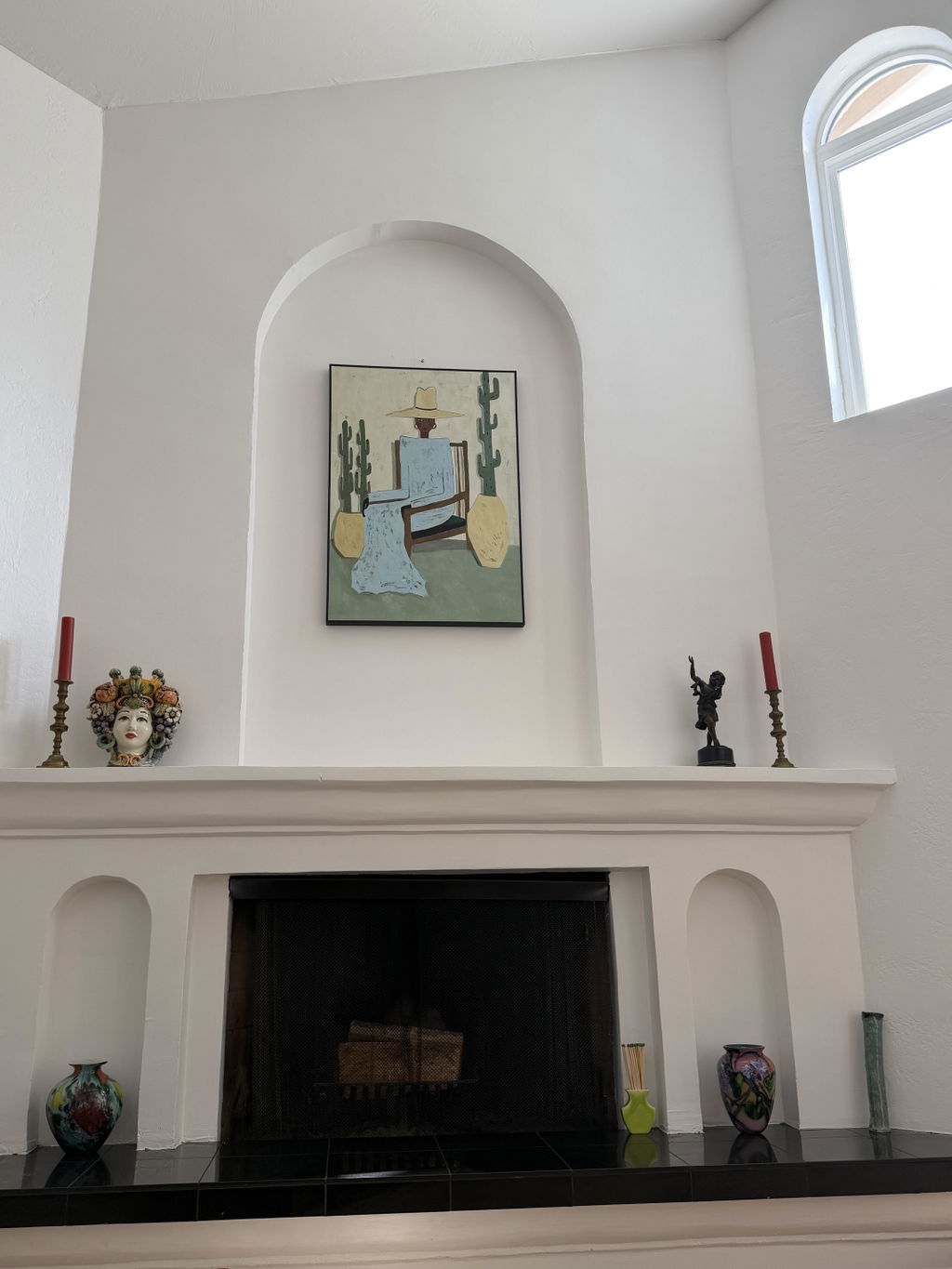
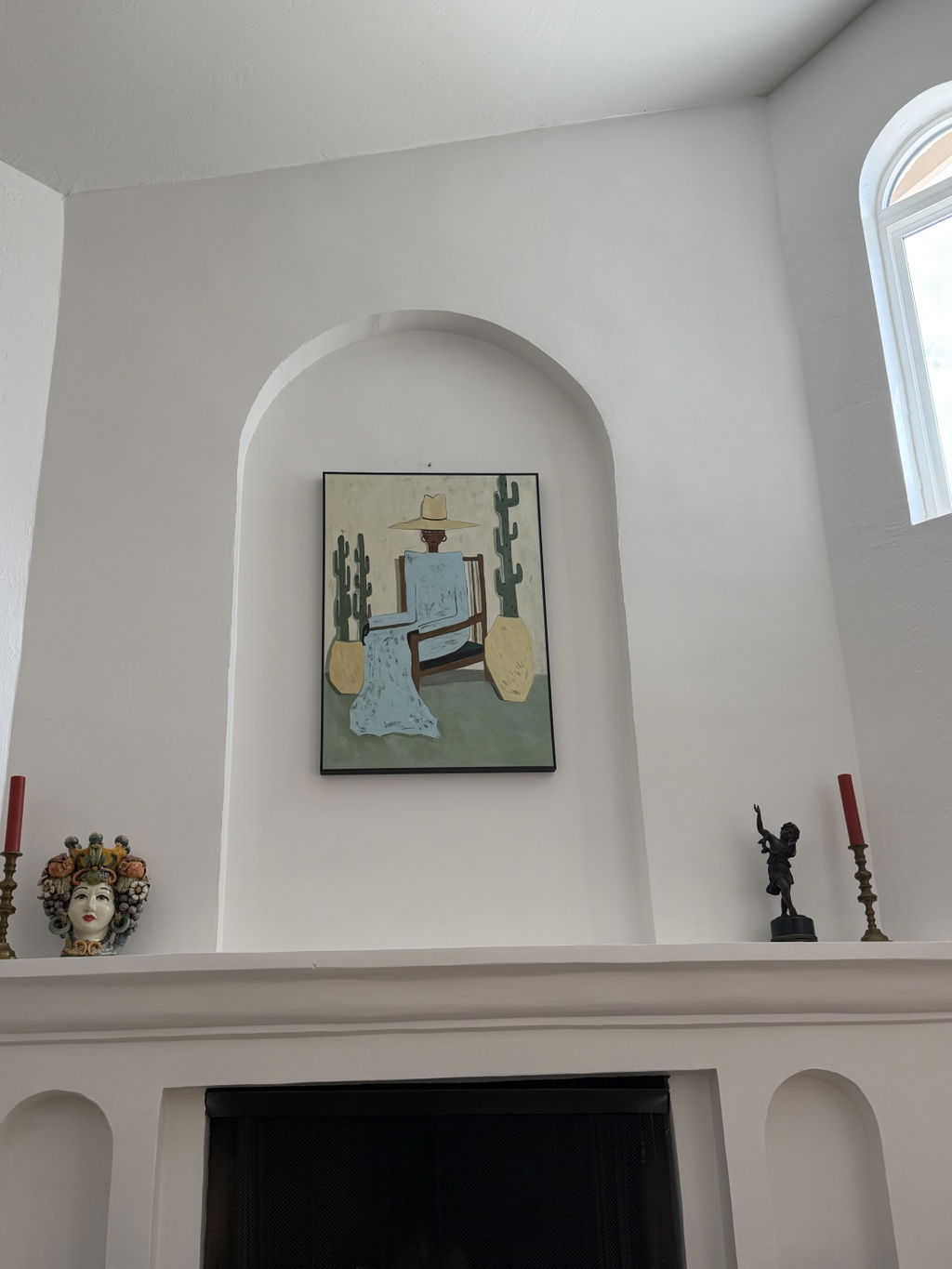
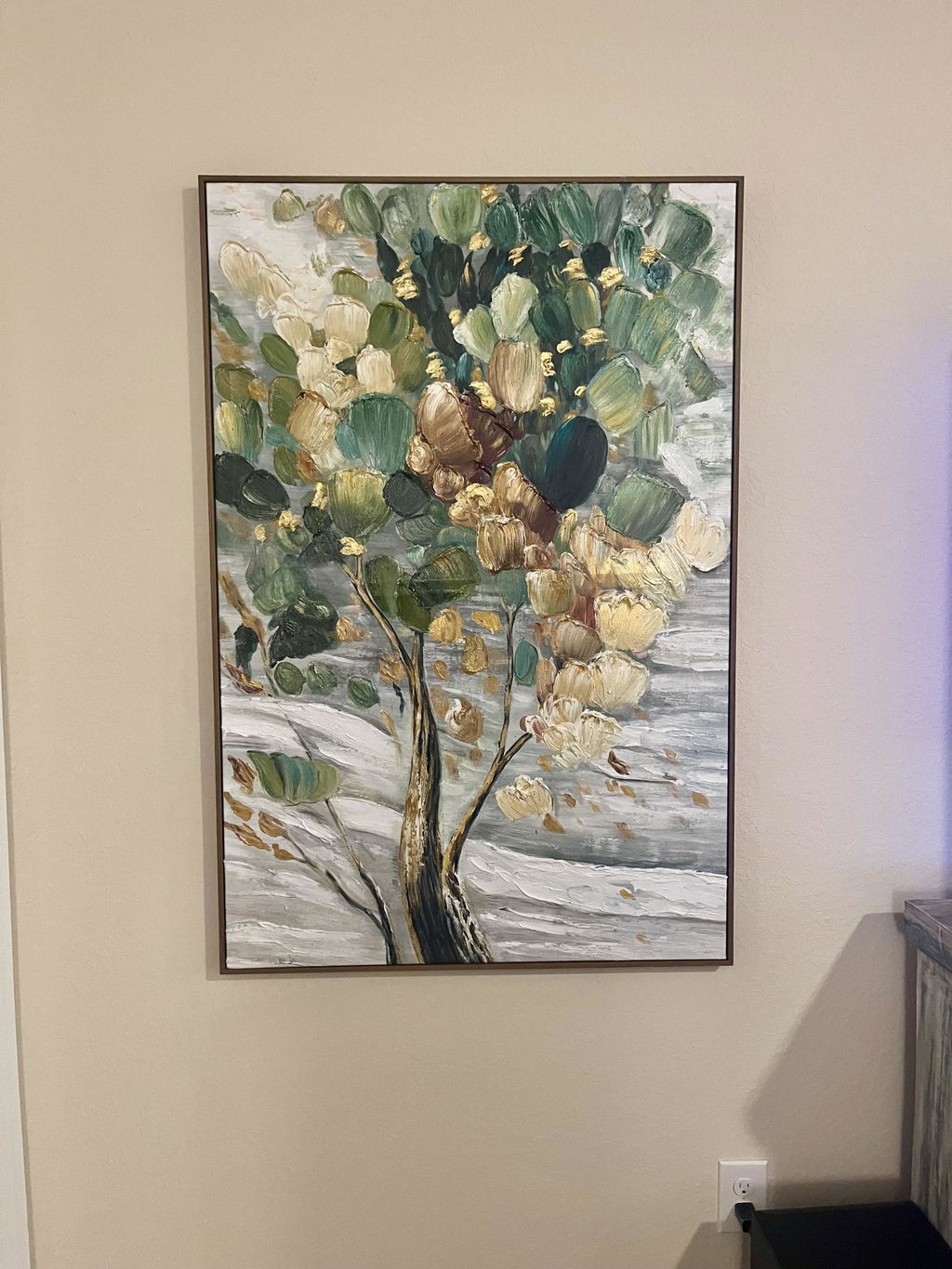
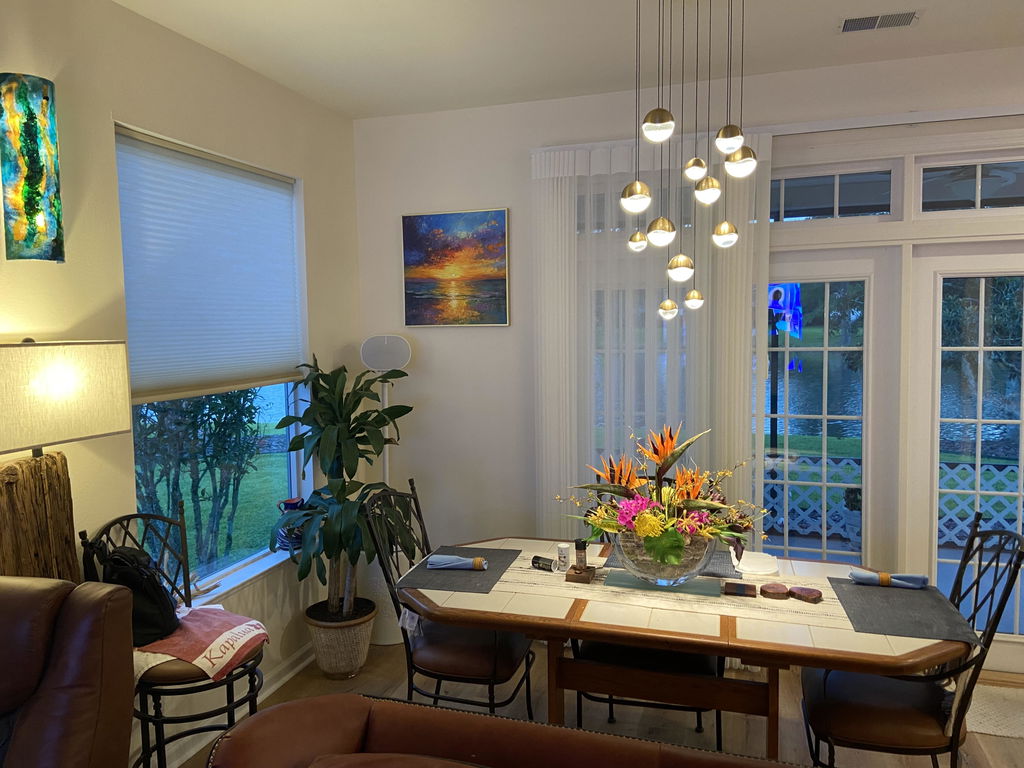
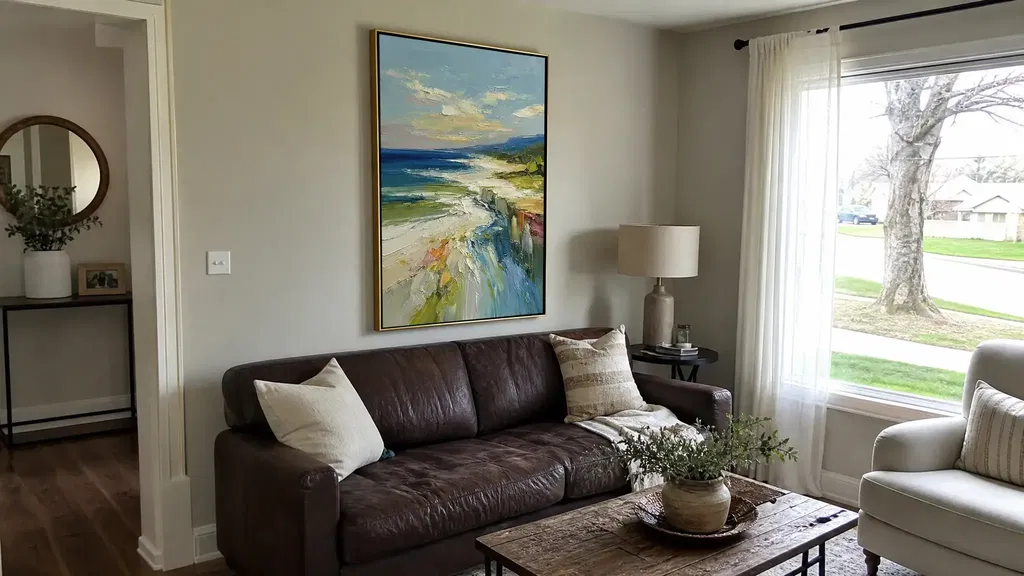
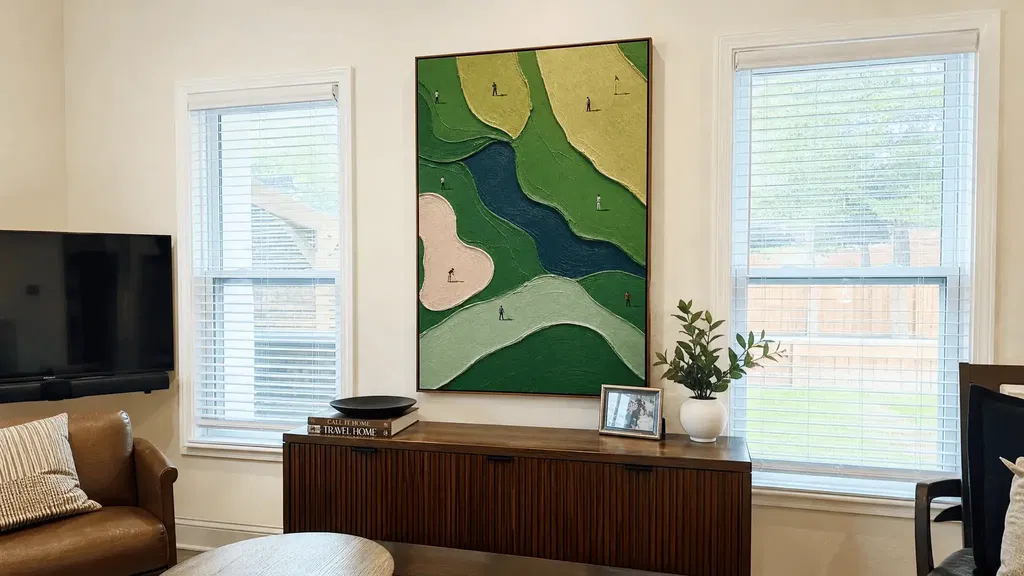
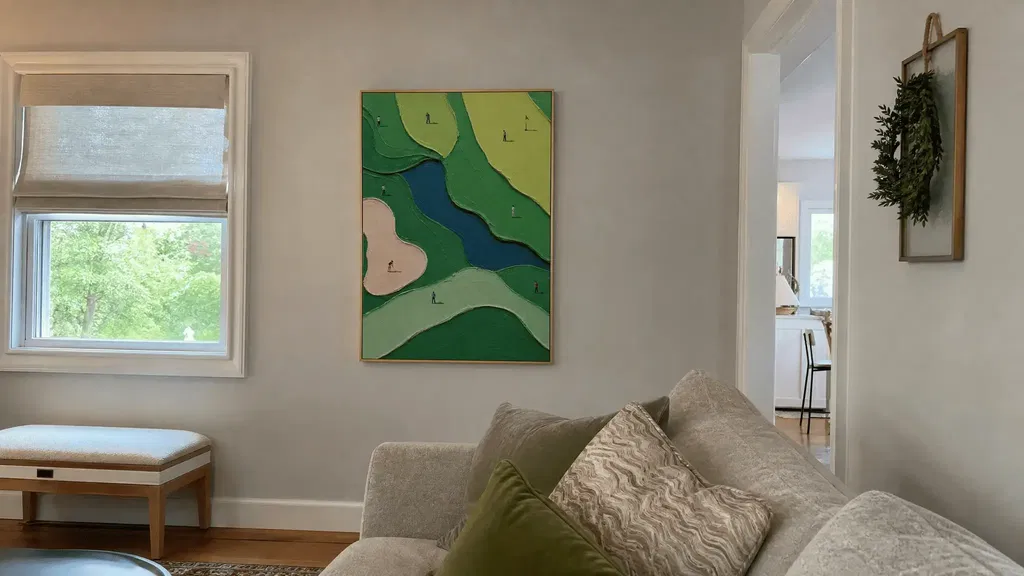
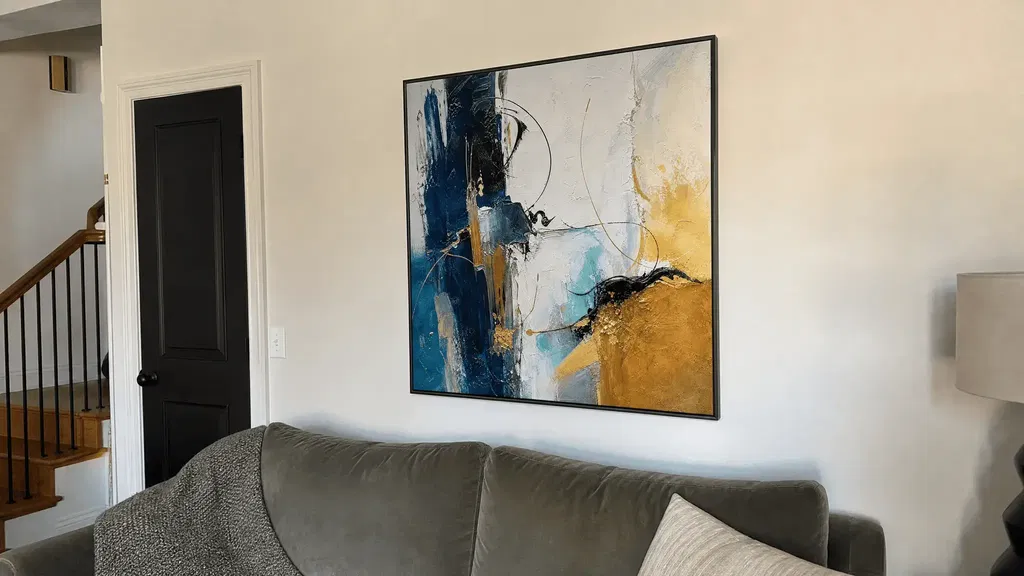
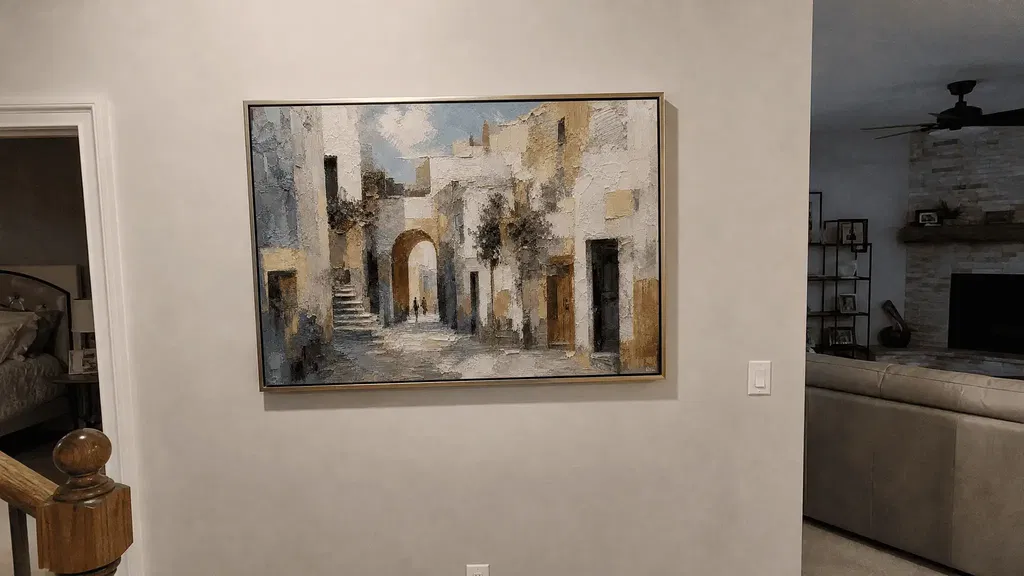
Texture wall art is a surface-focused decor choice: relief changes how a piece catches light, casts shadows, and looks from different viewing distances. The best option balances that surface with your room's color, subject, scale, and visual activity. Use the process below to compare styles, verify online details, measure the wall, review purchase terms, plan installation, and care for the finished piece.
Match Texture Wall Art to Your Room
Start with the room rather than the artwork photo. Choose a piece whose palette and subject echo a few existing cues, while its relief, contrast, and response to light suit the room's overall visual weight.
Coordinate Color and Subject
Look at the room's largest visual anchors first: a sofa, rug, bedding, curtains, flooring, or prominent finish. Repeat one or two cues instead of matching every surface. A neutral, organic subject can calm a room that already has a lot of pattern, while stronger contrast or geometry can create a focal point in a restrained space.
Subject matters as much as color. Calm, open forms tend to suit a low-activity room; dense marks or vivid contrast draw more attention. If you are drawn to imperfect, organic simplicity, Wabi Sabi wall art is a useful style-led place to browse. For a wider range of relief-focused options, explore the textured wall art collection after identifying the room cues you want to repeat.

Choose Relief for the Room's Visual Weight
More relief is not automatically better. Compare the surface's visual emphasis with your viewing distance, available light, and willingness to monitor dust or finish changes.
| Relief level | Visual effect | Viewing-distance question | Lighting and upkeep question |
|---|---|---|---|
| Low | Adds subtle variation without becoming the main event | Will the surface still read from the usual seat or walkway? | Is the room bright enough to reveal gentle changes without glare? |
| Medium | Creates noticeable shadow and dimension while remaining versatile | Can you see the relief clearly without standing close? | Does changing daylight make the texture look different, and can you follow the stated care routine? |
| High | Becomes a strong focal point with more pronounced shadow and presence | Is there enough distance and negative space for the surface to breathe? | Will directional light exaggerate the texture, and are raised areas practical for the intended location? |
These are qualitative categories, not universal depth measurements. Let the listing details and the room's actual lighting determine whether a particular piece fits.
Check the Surface and Finish Before Buying
A listing is easier to assess when it combines close, angled images with written construction and finish details. If those details are missing, keep your confidence tentative rather than assuming that a smooth-looking photo proves the piece is flat—or that a dramatic shadow proves quality.
Read the Images for Physical Texture
Prioritize views that let you compare the surface under different lighting. A close-up may show raised areas; an oblique view can reveal cast shadows and unevenness; an edge or scale-revealing view can help distinguish relief from canvas grain, glare, or a digital effect. These are useful confidence clues, not proof of authenticity, craftsmanship, or the exact finish you will receive.
A single front-facing styled image is not enough evidence for a high-confidence purchase. If the listing does not show the surface from an angle, ask whether additional photos, process details, or a video are available. For background on one type of built-up paint texture, see these impasto texture basics; that educational article does not establish how any individual listing was made.

Confirm Materials and Finish Details
Before comparing prices, check the details that affect appearance, placement, and care:
- Construction or base: Is the stated base clear, and is the format suitable for your intended wall?
- Relief medium: Does the listing identify what creates the raised surface, or is that still unanswered?
- Paint or coating: Is the finish described, including whether it is matte, satin, glossy, or unspecified?
- Sheen and edge treatment: Could glare, exposed edges, or framing affect where the piece works?
- Variation: Does the seller explain expected color or surface variation without using it as a substitute for product facts?
- Care instructions: Are approved cleaning and placement limits provided for this material and finish?
Light, moisture, dust, and surrounding conditions can affect preservation, so verify the finish and placement limits before purchase rather than applying a generic rule from another artwork format. The Library of Congress preservation guidance provides useful context for why finish and exposure deserve attention, but it does not certify a particular product.
Size the Piece for the Wall and Viewing Distance
Choose size and orientation from measurements, not from the proportions of a listing photo. Measure the usable wall, nearby furniture, viewing distance, artwork depth, and delivery route, then compare those facts with the listing's actual dimensions and orientation.
| Setting | Measurements to take | Orientation or scale question | Pre-purchase fit check |
|---|---|---|---|
| Living room | Usable wall width and height, sofa or console width, seated viewing distance, depth, and path through doors | Will the piece read from the main seat without crowding lighting, trim, or nearby decor? | Mock the listed dimensions with painter's tape and confirm the package can reach the room. |
| Bedroom | Wall area above or beside the bed, furniture clearance, viewing distance, depth, and door path | Does the orientation support the bed and leave comfortable visual space around it? | Compare the actual height and width with lamps, headboard, doors, and trim. |
| Hallway | Clear wall width, walkway width, turns, door swing, lighting, and depth | Will a dimensional surface project into movement space or catch harsh side light? | Check clearance and delivery turns before ordering; do not rely on a straight-on photo. |
| Entryway | Wall width and height, console or bench dimensions, door swing, traffic path, and depth | Can the artwork act as a focal point without competing with functional movement? | Confirm the wall is usable, the piece fits the route, and its orientation matches the entry. |
There is no universal furniture-to-art ratio here. If you need a size-oriented starting point, browse large wall artwork, then verify every candidate's listed dimensions instead of assuming the collection label determines fit.
Complete the Product-Page and Purchase Checks
Commit only when the product facts and transaction terms answer questions that could change your decision. Save the listing and order details before checkout so you can compare the delivered piece with what was represented and follow the stated process if an issue arises.
Verify the Listing and Order Terms
| Check | Why it matters | Where to verify |
|---|---|---|
| Dimensions, orientation, and depth | Determines wall fit, clearance, and delivery planning | Current product listing and any specification section |
| Materials, relief method, finish, and edge treatment | Affects appearance, placement questions, and care | Product description, photos, and seller clarification |
| Included hardware and instructions | Determines what must be assessed before mounting | Listing, package contents, and supplied instructions |
| Condition and expected variation | Separates disclosed variation from an unresolved condition question | Listing language and pre-purchase messages |
| Processing, packaging, and shipping terms | Sets expectations for timing and arrival inspection | Current shipping policy and order confirmation |
| Damage-reporting process | Gives you a defined next step if the piece arrives damaged | Seller policy; save photos and packaging until resolved |
| Returns and warranty | Clarifies the remedy if the delivered piece does not meet the stated terms | Current returns and warranty pages |
If a detail could change the purchase decision, confirm it on the current listing or with the seller. Product pages for Terra Weave wall art and other pieces should be treated the same way: the link is a starting point for checking current facts, not evidence of materials, quality, hardware, or coverage.
Compare Online and In-Person Confidence
Online buying can work when the visual and written evidence is adequate, but confidence is not the same as certainty. A gallery or showroom visit allows direct inspection of color, sheen, edge treatment, and surface response; it still does not guarantee how a piece will look under your home's light or how it will arrive after shipping.
Ask for clarification instead of filling gaps with assumptions. Compare delivered-risk details—dimensions, condition language, packaging, reporting, returns, and warranty—not just image appeal or price.
Install Relief Work With the Wall in Mind
Installation is a compatibility task, not a universal hanging recipe. Check the artwork's actual weight, hardware, wall construction, product instructions, and installation conditions before proceeding. If any critical fact is unclear, pause rather than improvise.
Conservation guidance on checking hanging systems supports this cautious approach, although the source is not a universal manual for contemporary relief products.
- Inspect the delivered piece and hardware. Look for movement, damage, loose components, or instructions that differ from the listing. Do not install a damaged or uncertain piece until the seller responds.
- Measure and mark the intended position. Account for the actual dimensions, orientation, depth, doors, trim, furniture, lighting, and clearance. Marking is a planning step, not proof that the wall can carry the load.
- Identify the wall construction. Determine what the mounting surface is and whether its condition changes the installation method. Renters should also check lease rules and permission before making holes or other changes.
- Select hardware compatible with the actual load and wall. Use the product instructions and hardware rating for the real piece and wall condition. Do not substitute a generic anchor, adhesive, or hook based only on appearance.
- Follow the product instructions. If the instructions do not address your wall, load, or mounting situation, contact the seller or seek qualified help before continuing.
- Check level, clearance, and stability. Confirm that the work sits as intended, does not interfere with movement, and does not shift when handled as directed.
- Recheck later. Recheck the hanging system periodically, especially after moving the artwork, noticing movement, or changing the surrounding setup. Stop if the installation becomes unstable.
Protect the Texture After Installation
Let the seller's material-specific instructions control cleaning and placement. Use the least invasive permitted routine, monitor the surface and mounting condition, and do not assume that textured wall art is suitable for a bathroom, high-moisture location, intense light, or heat exposure.
Use a Low-Risk Care Routine
- Confirm the approved dusting method before touching the raised surface.
- If dry dusting is permitted, start with a clean, dry, non-abrasive method and observe the surface while working; stop if it responds unexpectedly. Museum care guidance is useful conservative context, not a substitute for product instructions.
- Keep moisture, sprays, oils, and abrasive tools away unless the seller specifically approves them for the material and finish.
- Handle structural areas rather than pressing on raised texture when moving or inspecting the piece.
- Contact the seller before attempting repairs if you see a change that is not covered by the care instructions.
Watch for Placement Risks
Before choosing a high-risk location, verify limits for moisture, heat, light, ventilation, and contact with people or objects. Stable indoor conditions are a sensible preservation principle, but museum or government guidance should not be converted into a universal household humidity target; the seller's instructions control. Federal care guidance and MoMA's conservation FAQ support treating environmental exposure as a product-specific question.
Make occasional visual checks for cracking, flaking, warping, discoloration, or mounting movement. Photograph changes, note when you noticed them, and ask the seller for next steps before cleaning more aggressively or attempting a repair. For a neutral example of a textured listing to investigate, Static Rhythm wall art still requires its own current finish and care details.
FAQs
The right choice depends on the room, listing evidence, measurements, wall conditions, and product-specific care instructions. Use these questions to resolve common fit and installation uncertainties before checkout.
How Do I Tell Whether Online Texture Is Real?
Use side-angle and close-up images, visible cast shadows or irregularity, and written construction details as clues. Ask for more evidence when the material or finish affects your decision.
Can Textured Wall Art Work in a Small Room?
Yes, when the measured wall area, viewing distance, contrast, and negative space suit its visual weight. Mock the listed dimensions before ordering.
What Should Renters Check Before Mounting Relief Wall Art?
Review the lease and obtain permission where required. Confirm the wall construction, actual load, approved hardware, and product instructions; seek qualified help if the method is unclear.
Should Textured Wall Art Be Placed in a Bathroom?
Do not assume it is bathroom-safe. Confirm the specific materials, finish, ventilation, water exposure, and seller guidance before placing it there.
Before adding a piece to your cart, match room cues, measure the wall and delivery path, verify the listing and transaction terms, confirm mounting compatibility, and save the care instructions. Then verify the current product-specific facts before checkout.